
Introduction
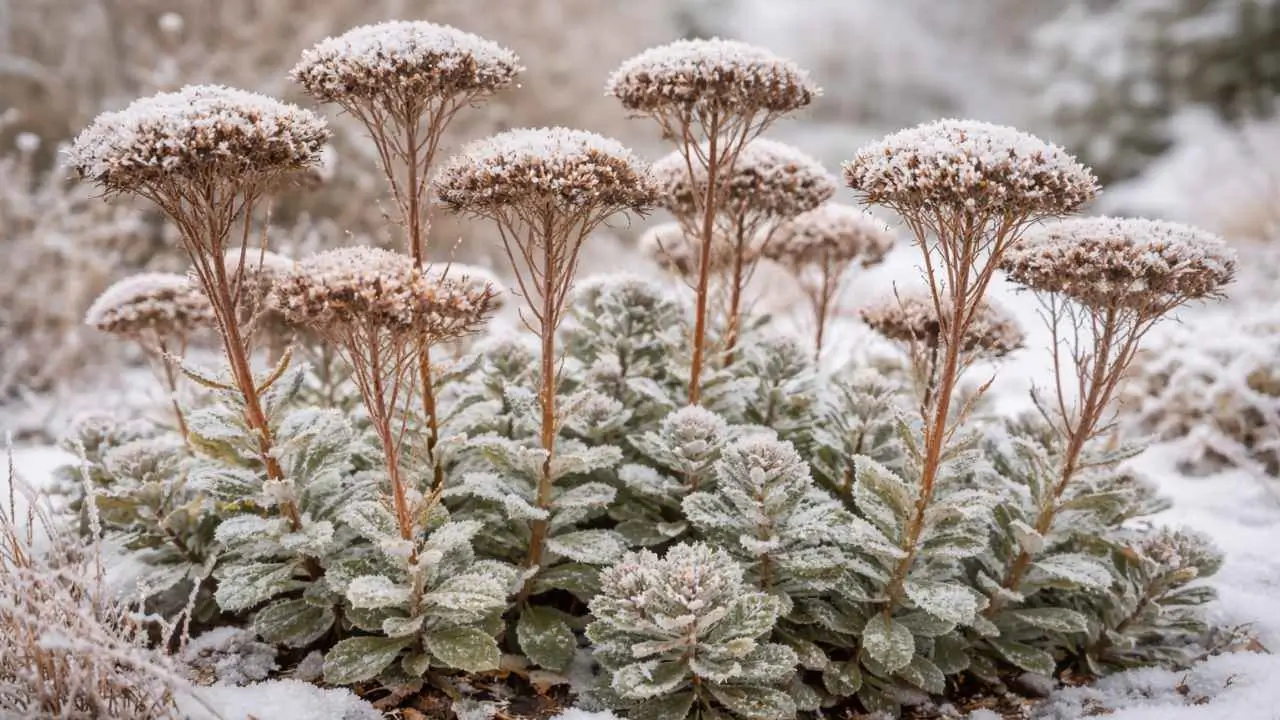
Sedum in winter enters a natural resting phase that can surprise gardeners who are used to its full, vibrant summer growth. As temperatures drop, these hardy succulents slow their growth to conserve energy, shifting their focus from foliage and flowers to root survival. Winter care matters because improper watering, poor drainage, or unnecessary pruning during this period can lead to rot or weakened plants in spring. Most sedum varieties are cold-tolerant and well adapted to seasonal changes, but their appearance often shifts noticeably. Dormancy may bring leaf drop, muted colors, and dried flower heads, all of which are normal signs of healthy winter adaptation rather than plant decline.
Understanding Sedum in Winter
What Happens to Sedum During Winter
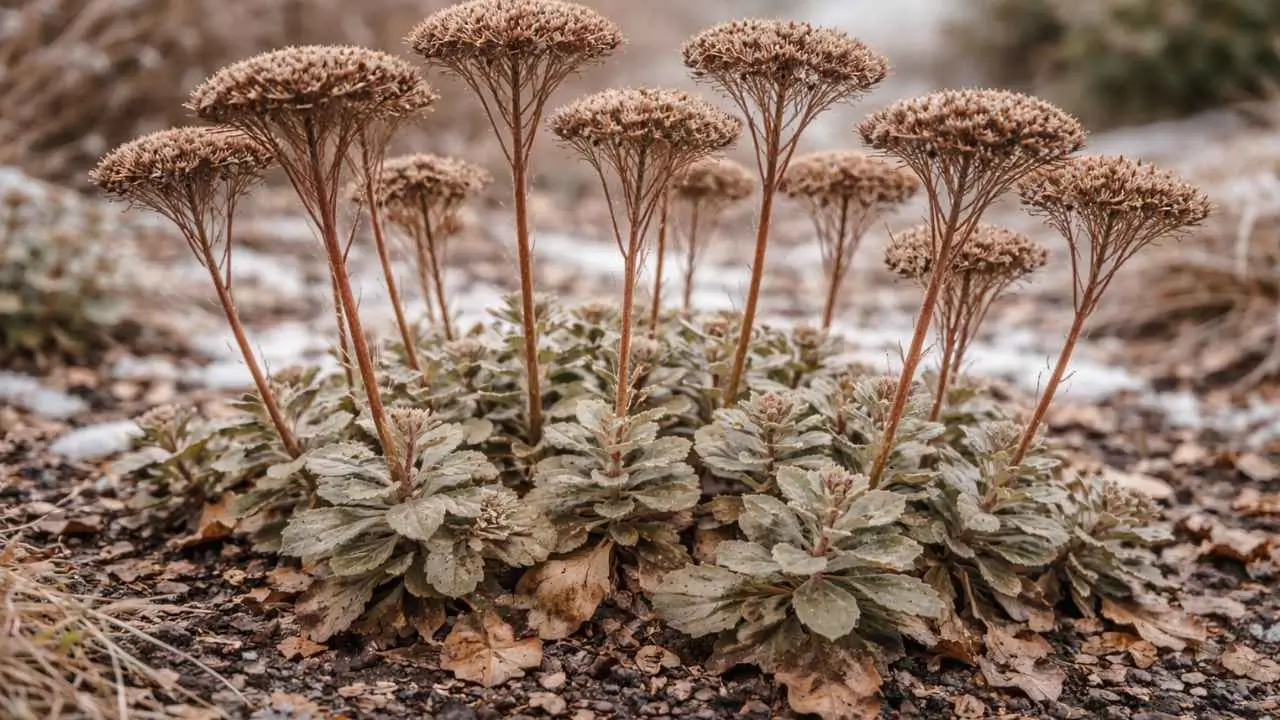
During winter, sedum enters a natural dormancy process that allows the plant to survive cold temperatures with minimal stress. Growth slows or stops entirely as the plant shifts its energy away from producing leaves and flowers and focuses on protecting its root system. This energy conservation during cold months is essential for long-term health and ensures strong regrowth once temperatures rise.
Sedum behavior in winter also depends on plant type. Evergreen sedum varieties retain some foliage year-round, although growth remains minimal and leaf color may darken. Deciduous sedum types, including many upright stonecrops, die back above ground after frost, leaving stems and roots dormant beneath the soil. Both responses are normal and indicate proper seasonal adaptation.
What Do Sedum Look Like in Winter
The winter appearance of sedum often includes leaf drop, color changes, and dried flower heads. Upright sedums may lose leaves completely, while ground-cover types can develop reddish, bronze, or purplish tones as a response to cold. Flower heads typically dry out and remain attached, creating a distinct winter silhouette.
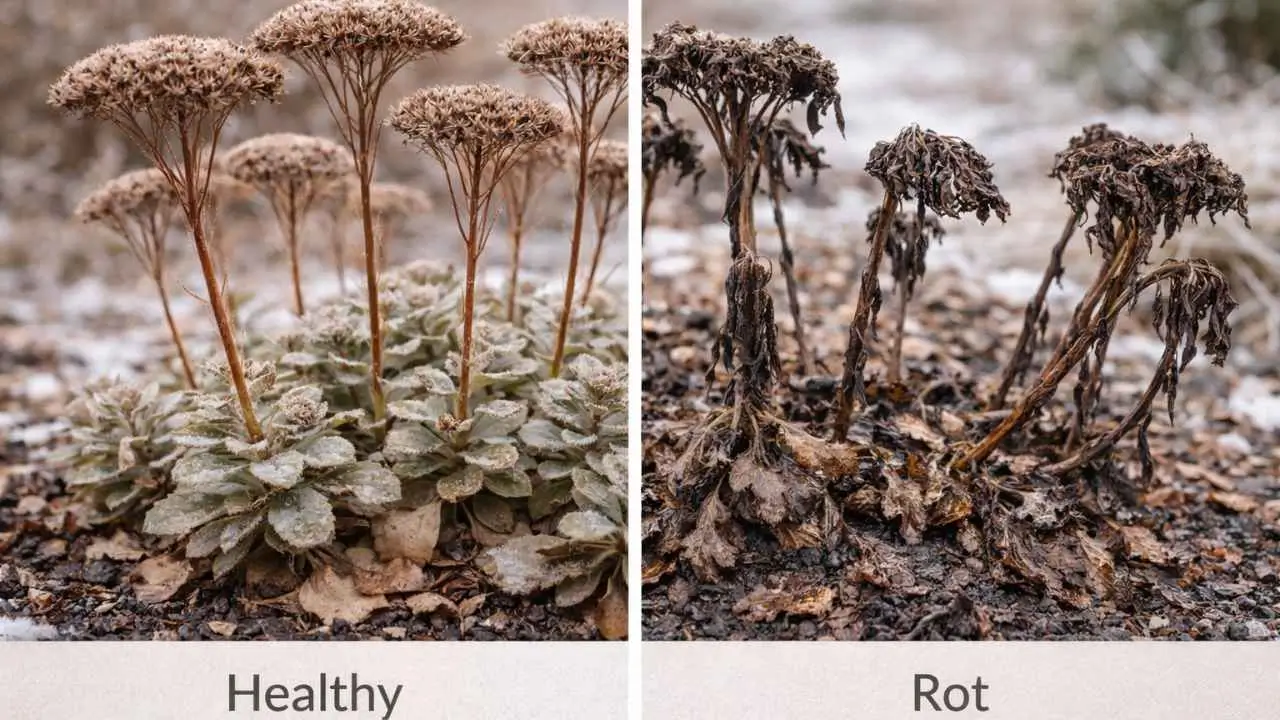
Many gardeners appreciate the structural beauty of dried sedum stems, especially when covered with frost or light snow. These structures add visual interest to winter gardens and help protect the plant crown. A normal winter appearance includes firm stems, intact crowns, and dry foliage. In contrast, an unhealthy winter appearance may show mushy stems, blackened tissue, or signs of rot—often caused by excess moisture rather than cold itself.
Sedum in Winter Zone Considerations
Sedum Winter Hardiness by Growing Zone
Sedum in winter behaves differently depending on the growing zone and overall winter severity. Most sedum varieties are considered cold-hardy plants and perform well in USDA zones with regular freezing temperatures. In colder zones, sedum naturally dies back above ground while the roots remain protected below the soil surface. This dieback is a normal survival strategy and does not affect spring regrowth.
In milder zones, sedum may retain partial foliage throughout winter, especially low-growing or evergreen types. Winter severity directly affects sedum survival, as prolonged wet cold is more damaging than consistent freezing. Regions with fluctuating freeze–thaw cycles pose a higher risk of root rot and crown damage, while stable cold climates generally support better dormancy conditions.
Protecting Sedum in Harsh Winter Zones
In harsh winter zones, light protection helps sedum survive extreme conditions without stress.
- Mulching benefits include insulating the soil, reducing temperature fluctuations, and protecting the plant crown. Organic mulch such as straw, pine needles, or shredded bark works best when applied after the ground has frozen.
- Drainage importance during freezing temperatures cannot be overstated. Sedum roots are highly sensitive to excess moisture, and poorly drained soil increases the risk of winter rot more than cold exposure itself.
Understanding how root systems react to excess moisture, as explained in the firestick plant root system, can help prevent winter damage.
- Snow and frost impact can be beneficial when consistent, as snow acts as a natural insulator. However, heavy ice buildup or repeated thawing can damage stems and crowns, making proper soil preparation and placement critical for winter survival.
Should I Cut Back Sedum Before Winter
Pros and Cons of Cutting Back Sedum in Fall
Deciding whether to cut back sedum before winter depends on climate, plant type, and garden goals. One major advantage of leaving sedum standing over winter is natural protection. Upright sedum stems help shield the plant crown from freezing temperatures and sudden weather changes. Dried flower heads and stems also trap snow, which acts as insulation during cold months.
There are also wildlife and insulation advantages to leaving sedum uncut. Birds often use dried seed heads as a food source, and beneficial insects may shelter within the hollow stems. On the downside, leaving sedum standing can make spring cleanup more labor-intensive and may look untidy in highly formal garden spaces. However, from a plant health perspective, fall cutting is rarely necessary.
When to Cut Back Sedum for Winter
The best timing to cut back sedum for winter varies by climate. In colder regions, it is generally better to wait until early spring, once the risk of hard frost has passed. In mild climates, light trimming after the first frost may be acceptable, but full cutback is still optional.
There are clear signs that indicate it’s safe to cut back sedum. Stems should be completely dry, brittle, and no longer supporting wildlife activity. If winter moisture is a concern, delaying pruning helps reduce the risk of rot by keeping the crown elevated and protected until stable spring conditions return.
How to Prune Sedum in Winter
Proper Pruning Techniques for Winter Sedum Care
Proper pruning during winter focuses on plant safety rather than reshaping. Safe pruning methods include removing only dead, brittle stems that break easily by hand or with clean tools. Avoid cutting into soft or green tissue, as this can expose the crown to cold damage and moisture.
When pruning, how much to cut back depends on sedum type and climate. In cold regions, trim stems to a few inches above the soil surface or wait until early spring for a full cutback. In milder climates, light pruning is acceptable, but leaving some structure still offers protection.
Use sharp, clean pruners as part of essential tools and hygiene tips. Disinfect blades before and after use to prevent disease spread. Avoid pruning during wet or freezing conditions, as moisture combined with open cuts increases the risk of rot.
Common Pruning Mistakes to Avoid
One of the most frequent errors is over-pruning, which removes too much protective structure and exposes the plant crown to freezing temperatures. Excessive cutting can weaken sedum and delay healthy spring growth.
Another major issue is cutting too early or too late. Early pruning before dormancy interrupts the plant’s natural energy storage, while very late pruning during extreme cold can cause tissue damage. Timing pruning around stable, mild winter days—or waiting until early spring—helps avoid unnecessary stress and ensures better long-term plant health.
Autumn Joy Sedum in Winter
Winter Behavior of Autumn Joy Sedum
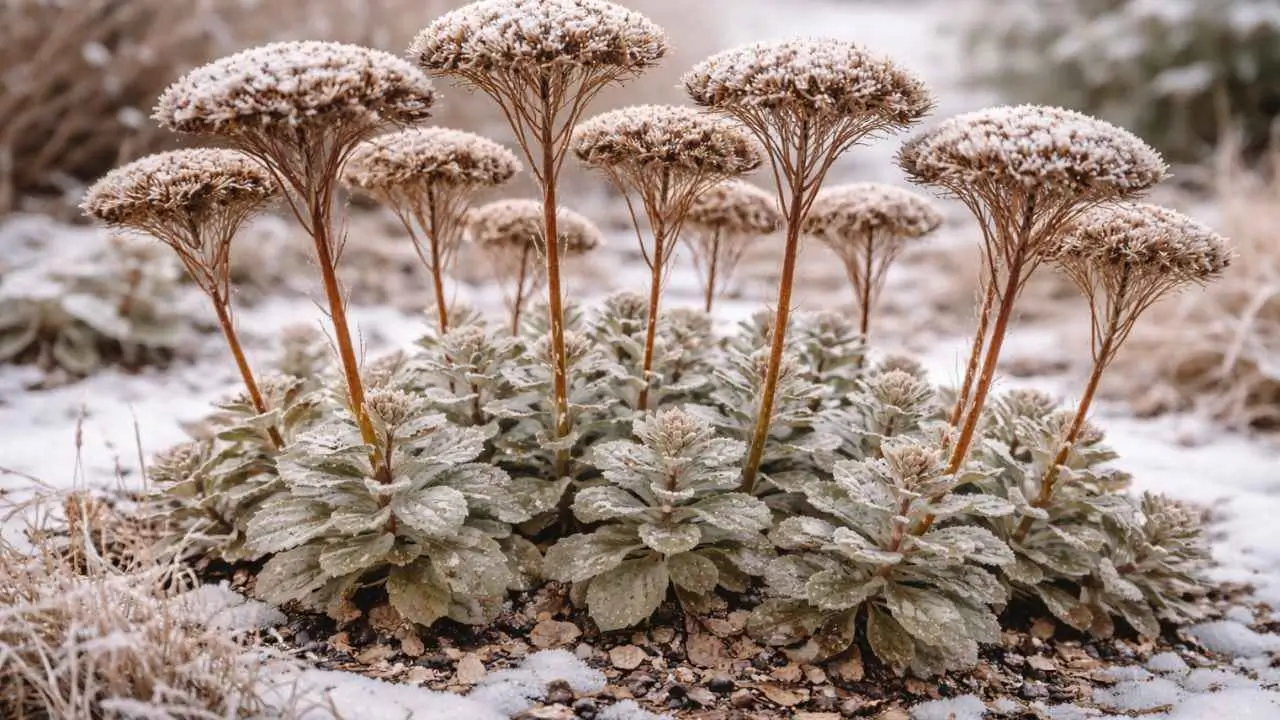
Autumn Joy sedum undergoes noticeable structural changes after flowering as winter approaches. Once blooms fade, the thick flower heads dry out and remain firmly attached to sturdy stems. Foliage gradually dies back, and the plant shifts fully into dormancy, conserving energy within the root system. These dried stems and seed heads hold their shape well through cold weather, even under frost or light snow.
This durability is a key reason Autumn Joy is popular for winter gardens. Its upright form adds height, texture, and visual interest when many other perennials disappear. The dried flower clusters create a sculptural effect that enhances winter landscapes without requiring active care.
Caring for Autumn Joy Sedum Through Winter
When caring for Autumn Joy sedum in winter, gardeners often question whether to leave flower heads intact. Leaving them in place is generally recommended, as they protect the crown, trap insulating snow, and support winter wildlife. Cutting them back too early removes these benefits and is unnecessary for plant health.
Autumn Joy has minimal winter maintenance needs. No fertilizing is required, and watering should be avoided unless winter conditions are unusually dry and unfrozen. Well-drained soil and natural dormancy are usually sufficient to keep the plant healthy until spring growth resumes.
Sedum Varieties and Their Winter Behavior
Cold-Hardy Sedum Varieties
Many stonecrop sedums that survive freezing temperatures are well adapted to winter conditions and require little to no protection. These cold-hardy sedum varieties naturally enter dormancy, with above-ground growth dying back while roots remain insulated in the soil. Upright stonecrops and creeping sedums tolerate snow cover and extended cold as long as drainage is good.
Common cold-hardy sedums are often used in outdoor landscapes because they rebound reliably in spring. Their ability to withstand freezing temperatures makes them suitable for colder growing zones, where winter dieback is expected and does not signal plant failure.
Tender Sedum Varieties in Winter
Some sedum types needing protection or indoor care are less tolerant of cold and frost. These tender sedum varieties are typically grown as houseplants or seasonal outdoor plants and may suffer damage when temperatures drop near freezing. Their leaves and stems are more susceptible to cold stress and moisture-related rot.
Similar care principles apply to indoor plants like silver squill, which also require controlled watering and well-draining soil to prevent rot.
In regions with harsh winters, tender sedums should be moved indoors or protected with containers that allow relocation to sheltered areas. Without protection, prolonged exposure to cold temperatures can permanently damage these varieties, preventing healthy regrowth in spring.
Essential Sedum Care During Winter
Watering and Soil Needs in Winter
Winter care for sedum focuses primarily on moisture control. Avoiding winter rot is critical, as sedum stores water in its leaves and stems and becomes highly vulnerable to excess moisture during dormancy. Overwatering in winter is one of the most common causes of plant failure, especially when combined with cold temperatures.
The importance of dry, well-drained soil cannot be overstated. Sedum roots need oxygen even during dormancy, and soggy soil restricts airflow while encouraging fungal problems. In most climates, natural rainfall provides sufficient moisture during winter, making supplemental watering unnecessary unless conditions are unusually dry and unfrozen.
Managing seasonal plant care becomes easier when you understand the fundamentals explained in a complete gardening and plant care guide, especially for moisture-sensitive plants like succulents.
Mulching and Winter Protection Tips
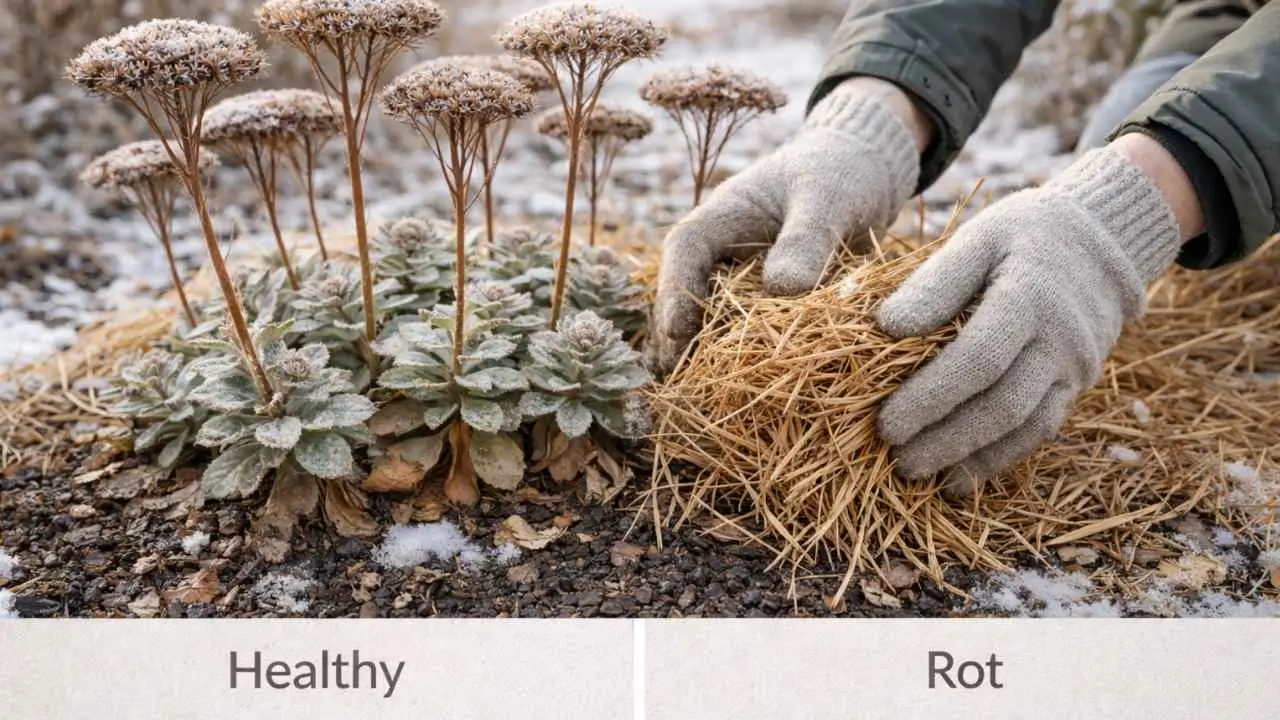
Mulching helps stabilize soil conditions without trapping excess moisture when applied correctly.
- Best mulch materials include straw, pine needles, shredded bark, or dry leaves, all of which provide insulation while allowing airflow.
- When and how to apply mulch matters—mulch should be added after the ground has frozen to prevent trapping warmth that could trigger premature growth. Apply a light, loose layer around the plant base rather than directly against the crown.
Proper mulching supports root protection while maintaining the dry conditions sedum requires for healthy winter survival.
Conclusion
Successfully caring for sedum in winter comes down to respecting its natural dormancy and adapting care to seasonal needs. Key winter care essentials include limiting moisture, maintaining well-drained soil, avoiding unnecessary pruning, and allowing the plant to rest without disturbance. Sedum is naturally resilient, and most winter damage results from excess water rather than cold itself.
Understanding pruning timing, growing zones, and sedum varieties plays a major role in winter success. Cold-hardy sedums tolerate freezing temperatures well, while tender types require protection or indoor care. Knowing when to cut back—and when to leave plants standing—helps preserve insulation and prevent crown damage.
With proper preparation and minimal intervention, sedum emerges stronger in spring. Allowing plants to overwinter naturally supports healthy regrowth, fuller flowering, and long-term plant vitality once the growing season returns.
FAQs
Does sedum die back completely in winter?
Many sedum varieties die back above ground during winter, especially upright and deciduous types. This is a normal dormancy response, and the roots remain alive beneath the soil. Evergreen sedums may retain some foliage but show reduced growth.
Can sedum survive freezing temperatures?
Yes, most sedum plants are cold-hardy and can survive freezing temperatures. Their ability to tolerate cold depends on the variety and growing zone, with well-drained soil playing a crucial role in winter survival.
Should sedum be watered during winter?
Sedum generally does not need watering during winter. Natural precipitation is usually sufficient, and extra moisture can cause root or crown rot. Water only during extended dry periods when the ground is not frozen.
Is it better to cut back sedum in fall or spring?
In most climates, it is better to cut back sedum in early spring. Leaving stems and flower heads intact through winter provides insulation and protects the plant crown from cold damage.
How do I protect sedum during extreme winter weather?
Protection includes ensuring excellent drainage, applying light mulch after the ground freezes, and avoiding overwatering. In severe conditions, snow cover can act as natural insulation, while tender sedum varieties may need to be moved indoors or sheltered.

Written by the LeafyHeaven Editorial Team
LeafyHeaven shares practical gardening tips and simple plant care guides to help you grow, nurture, and enjoy your plants with ease. Our goal is to make gardening feel natural, approachable, and rewarding for everyone.




[…] Read Also: 7+ Essential Secrets for Thriving Sedum in Winter Care […]