
Introduction
Dipladenia vs mandevilla is a common comparison among gardeners because these two tropical plants look very similar at first glance and are often sold interchangeably. Both belong to the same plant family, produce showy trumpet-shaped flowers, and thrive in warm conditions, which makes the confusion even more common. However, their growth habits, space needs, and care preferences are quite different. Understanding these differences is especially important when deciding between indoor and outdoor growing. Dipladenia is often favored for compact spaces and controlled environments, while mandevilla is better suited for outdoor landscapes. This distinction also matters for container gardening, seasonal movement, and winter care, particularly in regions with cooler climates where plants must be managed carefully throughout the year.
Dipladenia vs Mandevilla — Plant Overview
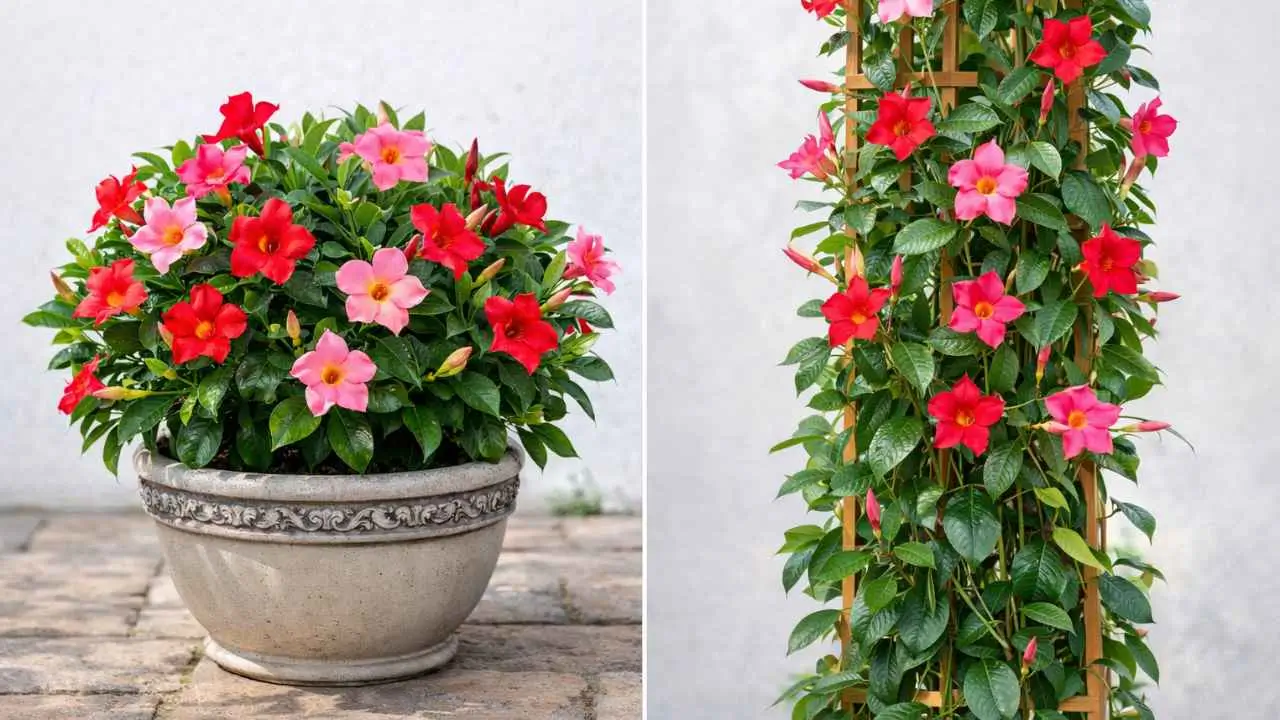
What Is Dipladenia?
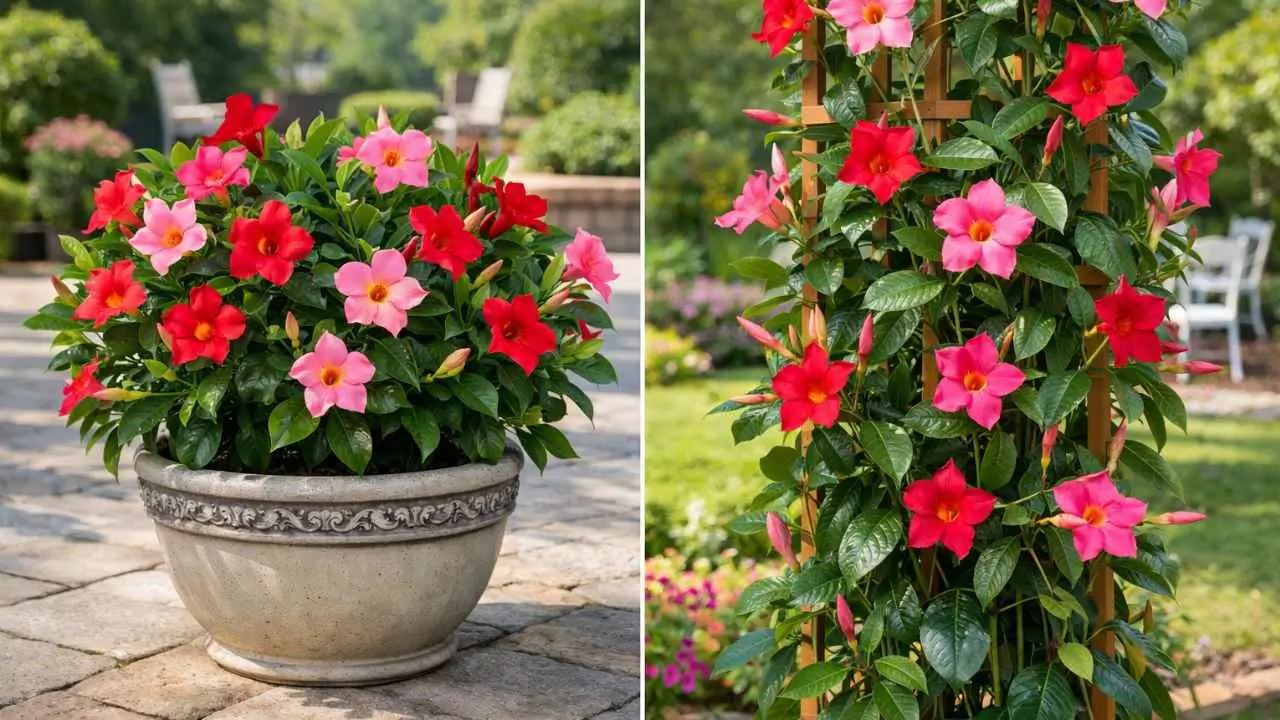
Dipladenia is a compact, bushy tropical plant known for its neat growth and manageable size. Instead of climbing, it grows outward and slightly upright, forming a dense, rounded shape. This controlled growth habit makes dipladenia ideal for containers, patios, balconies, and small outdoor spaces where spreading vines are not practical. It performs especially well in pots, hanging baskets, and decorative planters, requiring minimal structural support. In terms of climate adaptability, dipladenia tolerates a wider range of conditions compared to mandevilla. It handles cooler temperatures better, adapts well to container life, and can be moved indoors easily when temperatures drop, making it suitable for seasonal gardening.
What Is Mandevilla?
Mandevilla is a vigorous vining plant with a strong climbing growth habit. Unlike dipladenia, it produces long, flexible stems that naturally seek support and can quickly climb trellises, fences, pergolas, or garden structures. Because of this growth style, mandevilla is best used in outdoor landscapes, vertical gardens, and areas where it has space to spread upward. Its tropical growth behavior is more aggressive, especially in warm climates, where it can grow rapidly during the active season. Mandevilla thrives in consistently warm temperatures and high light conditions, making it a standout choice for creating bold, flowering displays outdoors rather than for compact or indoor settings.
Dipladenia vs Mandevilla — Key Visual Differences
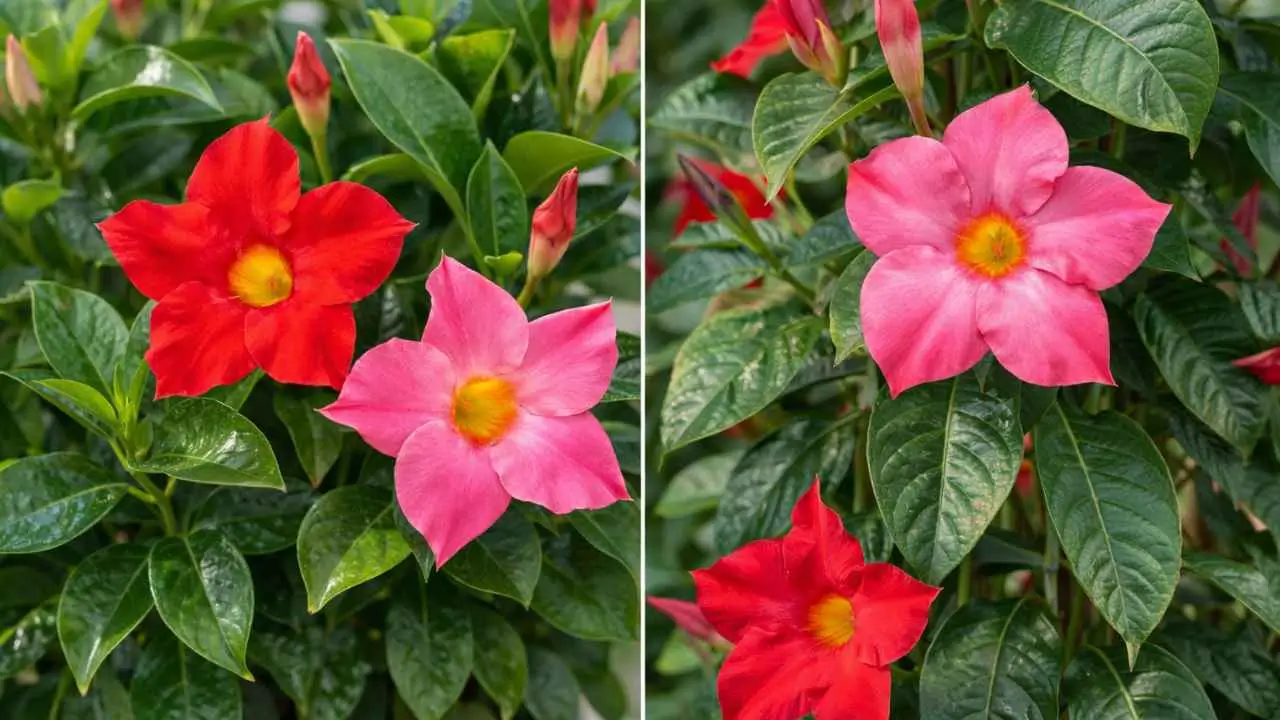
Leaf Shape, Size, and Texture
One of the easiest ways to tell dipladenia vs mandevilla apart is by looking closely at the leaves. Dipladenia leaves are smaller, thicker, and more oval-shaped, with a slightly leathery texture. They often feel firm to the touch and are designed to conserve moisture, which supports their compact growth habit. In contrast, mandevilla leaves are larger, longer, and more elongated, with a softer structure. While both plants have glossy green foliage, mandevilla leaves usually appear thinner and broader, reflecting their fast-growing, vining nature. The leaf structure alone often signals whether the plant is meant to stay compact or climb.
Flower Shape and Bloom Size
Flower appearance also highlights clear differences between dipladenia and mandevilla. Dipladenia flowers tend to be slightly smaller, with a more refined, uniform trumpet shape. The petals are thicker and hold their form well, even in containers or indoor settings. Mandevilla flowers are larger and more dramatic, often wider at the opening with more pronounced petal flaring. Color intensity is strong in both plants, but mandevilla blooms often appear bolder and more eye-catching in outdoor light, while dipladenia flowers maintain a polished look suited for patios and indoor displays.
Dipladenia vs Mandevilla Indoors
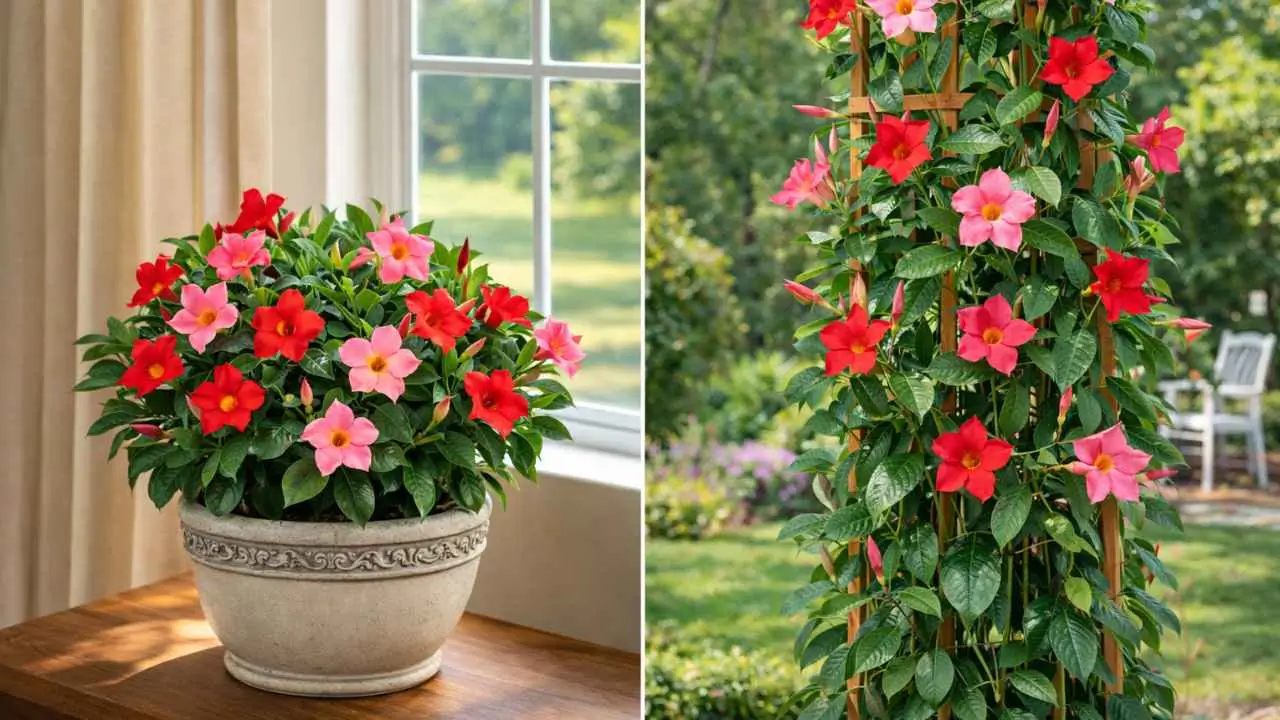
Which Plant Performs Better Indoors?
When comparing dipladenia vs mandevilla indoors, dipladenia clearly performs better in most home environments. Both plants require bright, indirect light, but dipladenia adapts more easily to indoor light levels and maintains steady growth without becoming leggy. Mandevilla, on the other hand, prefers intense sunlight and often struggles indoors unless placed in very bright locations. Space and growth control are also key factors. Dipladenia remains compact and controlled, making it easier to manage inside the home. Mandevilla’s natural vining habit quickly demands vertical space and support, which can become impractical indoors.
Knowing how different plants respond to indoor conditions becomes much easier when you understand the basics in a complete gardening and plant care guide, especially for container-friendly tropical plants.
Container Suitability and Maintenance
Dipladenia is especially well-suited for container growing indoors. Its bushy form allows it to stay balanced in pots without the need for stakes or trellises. This makes it ideal for windowsills, tabletops, balconies, and indoor plant corners. The space-saving benefits are significant, as dipladenia grows outward rather than upward, keeping maintenance simple. Growth management indoors is also easier, requiring only light pruning to maintain shape. In contrast, mandevilla containers need frequent training, pruning, and support structures, making them higher maintenance and less convenient for indoor settings.
Other compact indoor plants such as the spider plant varieties are also widely chosen for their easy maintenance and ability to thrive in containers without complex care routines.
Dipladenia vs Mandevilla Pictures Outdoor
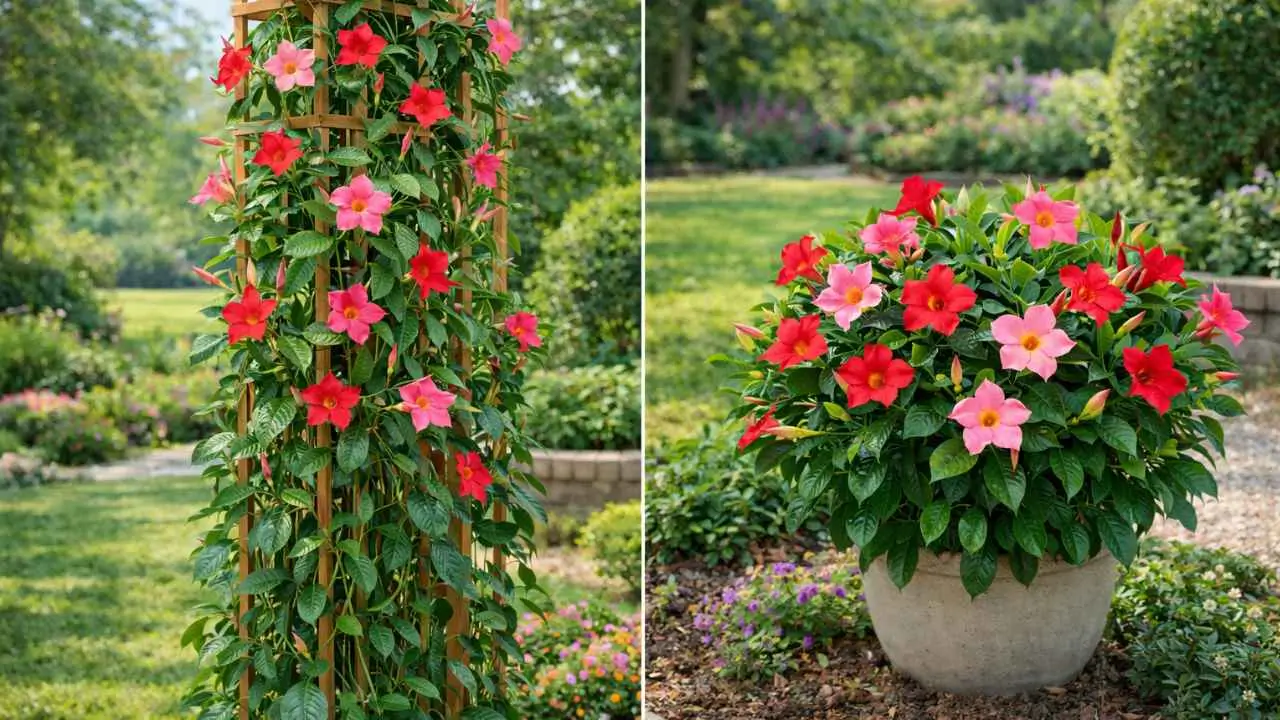
Landscape Appearance and Growth Pattern
In outdoor settings, the difference between dipladenia vs mandevilla becomes very clear. Dipladenia maintains a compact, bushy form, spreading outward in a controlled way without sending out long runners. This makes it ideal for borders, patio pots, and small garden sections where space is limited. Mandevilla shows a strong climbing growth pattern, producing long, flexible vines that quickly extend upward and outward. In landscapes, mandevilla often dominates vertical space, while dipladenia stays neat and contained, creating a more structured appearance.
Support Needs (Trellis vs Free-Standing)
Support requirements further separate these two plants outdoors. Dipladenia is largely free-standing and does not require trellises or frames to look attractive. It naturally holds its shape and works well in pots, raised beds, and along walkways. Mandevilla, by contrast, requires support to grow properly. Trellises, fences, pergolas, or arches are essential to guide its vines and prevent tangling. For garden placement, dipladenia fits best in open areas where a low, full plant is desired, while mandevilla should be positioned where vertical structures are available to support its climbing habit and maximize its visual impact.
Dipladenia vs Bougainvillea (Quick Comparison)
Growth Style and Aggressiveness
Dipladenia and bougainvillea differ significantly in growth behavior. Dipladenia has a controlled, compact growth style, staying bushy and manageable without spreading aggressively. It grows at a steady pace and does not overwhelm nearby plants, making it suitable for containers, patios, and small garden spaces. Bougainvillea, in contrast, is an aggressive climber with long, woody vines that can quickly take over fences, walls, and trellises. Without regular pruning and strong support, bougainvillea can become unruly, spreading rapidly in warm climates and dominating landscape areas.
Flowering and Maintenance Differences
Flowering and maintenance needs further separate dipladenia from bougainvillea. Dipladenia produces consistent blooms over a long period, with flowers that hold their shape well and require minimal deadheading. Its care routine is relatively simple, focusing on balanced watering and occasional pruning. Bougainvillea, while visually striking, produces its colorful display in intense bursts, followed by rest periods. Maintenance is more complex, requiring frequent pruning, careful watering, and strong sunlight to maintain flowering. Overall, dipladenia offers easier care and controlled beauty, while bougainvillea delivers dramatic impact at the cost of higher maintenance.
Mandevilla Dipladenia Care Basics
Soil, Water, and Light Needs
Mandevilla and dipladenia share very similar basic care requirements, which is why they are often grouped together in garden centers. Both plants prefer well-draining soil that prevents water from sitting around the roots. A loose, airy potting mix with added drainage material supports healthy root development. Watering should be consistent but controlled, allowing the top layer of soil to dry slightly between waterings. Overwatering can quickly lead to root issues in both plants. In terms of light, both thrive in bright light with several hours of direct sun, ideally morning sun with some afternoon protection. Proper balance between drainage and sunlight is essential for steady growth and flowering.
Fertilizing and Pruning Overview
Fertilizing plays a key role in growth control and bloom production for both mandevilla and dipladenia. A balanced or bloom-boosting fertilizer applied regularly during the growing season encourages continuous flowering and healthy foliage. Pruning helps manage size and shape while stimulating new growth. Dipladenia typically requires light pruning to maintain its compact form, while mandevilla benefits from more frequent trimming to control vine length and guide growth along supports. Proper pruning not only keeps the plant tidy but also enhances flowering by directing energy into fresh, productive stems.
Similar indoor and outdoor care principles can also be seen in dracaena fragrans care, where light balance, watering control, and pruning all shape long-term plant health.
How Do You Take Care of a Dipladenia in the Winter
Indoor Overwintering Tips
Caring for dipladenia during winter focuses on protecting it from cold and maintaining stable indoor conditions. Dipladenia should be moved indoors before temperatures drop below safe levels, as it is sensitive to frost. Temperature control is essential, with indoor environments kept consistently warm and away from cold drafts or sudden temperature changes. Bright, indirect light is still important during winter, though light intensity may be lower than in summer. Light adjustments such as placing the plant near a sunny window or using supplemental light help maintain healthy foliage without forcing active growth.
Watering and Dormancy Management
During winter, dipladenia enters a period of slower growth, and watering needs decrease significantly. Reduced watering prevents root rot and supports natural dormancy. Soil should be kept lightly moist but never saturated. Growth slowdown is normal and expected, with fewer leaves and little to no flowering during this period. By managing water carefully and accepting reduced activity, the plant can rest properly and return to strong growth when warmer conditions return.
Mandevilla Dipladenia — Annual or Perennial?
Climate-Based Lifespan
Whether mandevilla and dipladenia are grown as annuals or perennials depends largely on climate. In warm regions, where temperatures remain mild year-round, both plants behave as perennials and can continue growing and flowering for multiple seasons. In cold regions, frost sensitivity becomes a limiting factor. Neither plant tolerates freezing temperatures, and exposure to frost can cause severe damage or plant loss. As a result, gardeners in cooler climates must treat mandevilla and dipladenia as seasonal plants unless winter protection or indoor care is provided.
Growing as Annual vs Perennial
Growing mandevilla and dipladenia as annuals or perennials often comes down to container strategy. Containers allow plants to be moved indoors during cold months, supporting overwintering and long-term growth. Without this option, seasonal replanting becomes necessary in colder areas, where plants are replaced each year. Gardeners who overwinter their plants indoors can maintain them as perennials, while those who prefer low-maintenance seasonal color often choose to replant annually.
Which Plant Should You Choose? (Final Verdict)
Best Choice for Indoors and Containers
When deciding between dipladenia vs mandevilla for indoor spaces and containers, dipladenia offers clear advantages. Its compact, bushy growth habit makes it easy to manage in pots without constant pruning or structural support. Dipladenia adapts well to container life, maintains a balanced shape, and performs reliably in bright indoor light. These traits make it ideal for patios, balconies, and indoor plant displays where space is limited and low maintenance is preferred. Its controlled growth also simplifies seasonal movement and overwintering.
Best Choice for Outdoor Climbing Displays
Mandevilla is the stronger choice for outdoor climbing displays. Its vigorous vining habit allows it to cover trellises, fences, pergolas, and garden structures with ease. Mandevilla thrives in warm, sunny environments and creates bold vertical impact in landscapes. With proper support, it produces large, eye-catching blooms that stand out in outdoor settings. For gardeners seeking height, movement, and dramatic flowering outdoors, mandevilla delivers far greater visual presence than dipladenia.
Conclusion / Call-to-Action
The comparison of dipladenia vs mandevilla comes down to growth habit, space availability, and climate. Dipladenia stands out for its compact form, easy maintenance, and strong performance in containers and indoor settings. Mandevilla, by contrast, excels as a vigorous climber, offering dramatic vertical displays in warm outdoor environments. When choosing between the two, consider how much space you have, whether you plan to grow indoors or outdoors, and how much ongoing care you are willing to provide. Container gardeners and those in cooler regions often benefit from dipladenia, while gardeners with warm climates and structural supports will enjoy mandevilla’s impact. Select the plant that best fits your lifestyle and growing conditions for long-lasting success.
FAQs
What is the main difference between dipladenia and mandevilla?
The main difference between dipladenia and mandevilla is their growth habit. Dipladenia grows in a compact, bushy form, while mandevilla is a vining plant that climbs and spreads vertically. This difference affects where and how each plant is best used.
Is dipladenia better than mandevilla for indoor growing?
Yes, dipladenia is generally better for indoor growing. Its compact size, controlled growth, and lower support needs make it easier to manage indoors. Mandevilla typically requires more light, space, and structural support, which can be difficult to provide inside homes.
Can dipladenia and mandevilla grow in containers?
Both dipladenia and mandevilla can grow in containers. Dipladenia performs exceptionally well in pots without additional support, while mandevilla can also be grown in containers if trellises or stakes are provided to support its climbing growth.
Are dipladenia and mandevilla annual or perennial plants?
Dipladenia and mandevilla are perennial plants in warm climates where frost is not an issue. In colder regions, they are often grown as annuals unless brought indoors and overwintered during the cold season.
How do you take care of dipladenia during winter months?
During winter, dipladenia should be kept indoors in a warm environment with bright, indirect light. Watering should be reduced to prevent root problems, and growth will naturally slow. With proper temperature control and light management, dipladenia can rest and return to healthy growth in spring.

Written by the LeafyHeaven Editorial Team
LeafyHeaven shares practical gardening tips and simple plant care guides to help you grow, nurture, and enjoy your plants with ease. Our goal is to make gardening feel natural, approachable, and rewarding for everyone.