
Introduction
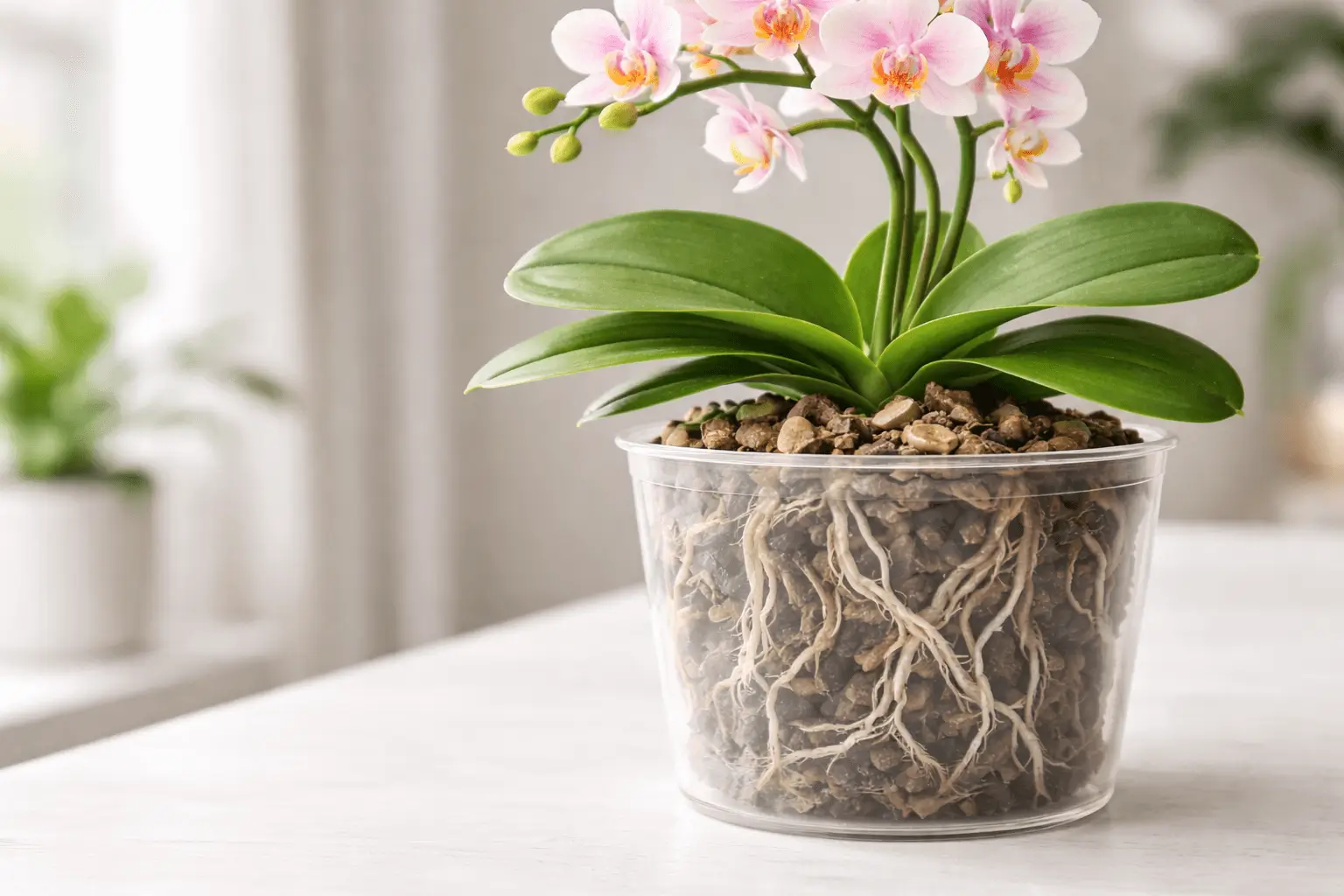
Underwatered orchid roots are one of the most common reasons orchids struggle, weaken, or stop blooming. Because orchids rely heavily on their roots for moisture, oxygen, and nutrient uptake, even mild orchid dehydration can quickly affect the entire plant. When orchid roots drying out becomes a regular issue, leaves often lose firmness, growth slows, and flowers drop early. Many growers mistake these symptoms for disease or aging, when the real problem lies below the surface. Understanding how underwatered orchid roots develop, how to recognize early warning signs, and how to correct watering habits is essential for long-term orchid survival and healthy growth.
Understanding Underwatered Orchid Roots
What Are Underwatered Orchid Roots?
Underwatered orchid roots occur when roots experience prolonged moisture stress and are unable to absorb sufficient water. Unlike brief drying cycles that orchids naturally tolerate, chronic dehydration leads to dehydrated orchid roots that lose their ability to function properly. Orchid dehydration causes root cells to collapse, reducing water uptake even after watering resumes. This differs from normal drying between waterings, where roots rehydrate quickly and remain structurally sound.
Why Orchids Become Underwatered
Several factors can turn a healthy plant into an underwatered orchid:
- Infrequent watering that does not match the orchid’s growth stage
- Fast-draining media that dries too quickly
- Environmental factors such as heat, strong airflow, or low humidity
These conditions accelerate moisture loss, leaving dry orchid roots unable to maintain hydration.
Visual Signs of Underwatered Orchid Roots
Color Changes in Orchid Roots
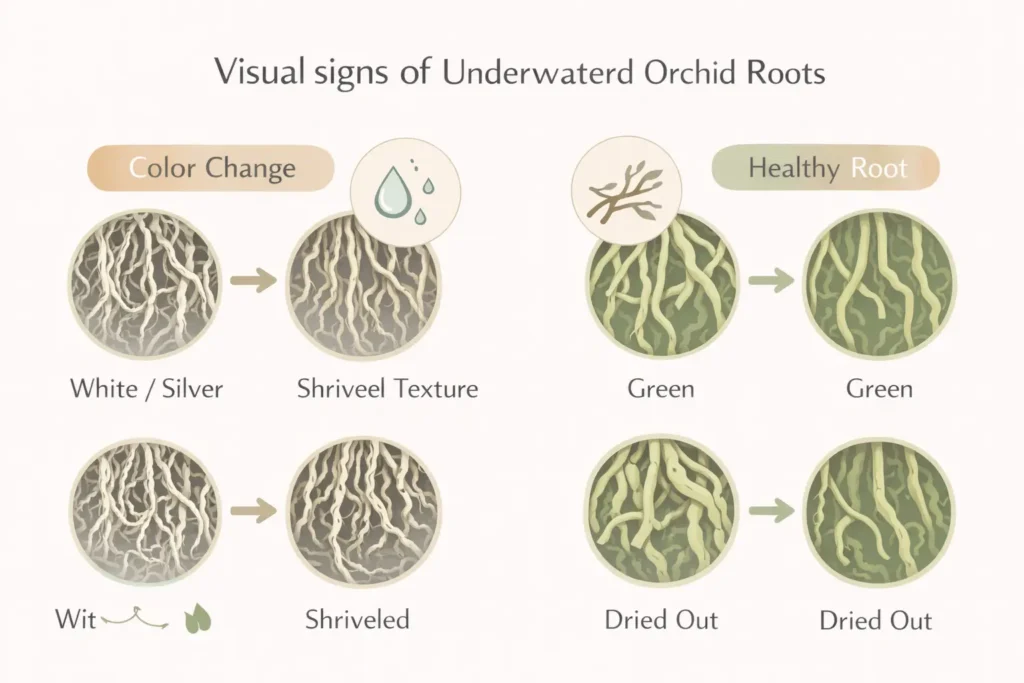
Root color is one of the clearest indicators of hydration. Orchid roots white or silver often indicate dryness, while healthy roots turn green after watering. Silver orchid roots are not always unhealthy, but if they remain silver for long periods, dehydration is likely. Using an orchid root color chart helps distinguish normal dry stages from prolonged moisture stress.
Texture & Structure Changes
Texture changes provide additional clues:
- Orchid roots shriveled or wrinkled from water loss
- Orchid roots dried out and stiff instead of flexible
- Dry plant roots appear thin and fragile compared to hydrated roots
Healthy vs Unhealthy Orchid Roots
What Do Healthy Orchid Roots Look Like?
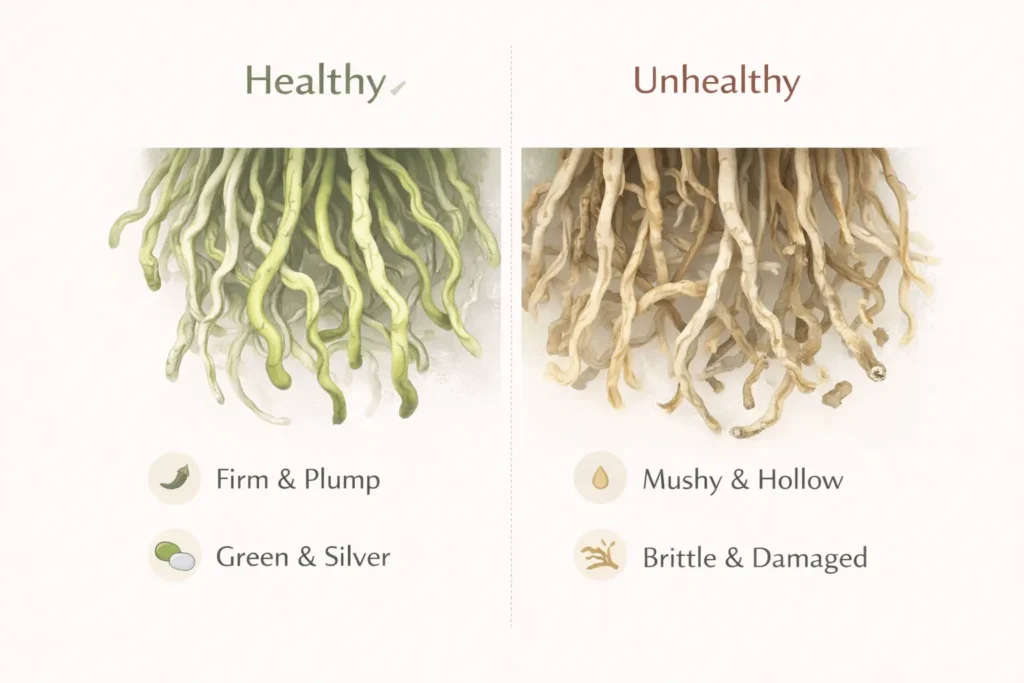
Healthy orchid roots are firm, plump, and resilient. They appear green when wet and silver when dry, without collapsing. When people ask what do healthy orchid roots look like, the answer is roots that bounce back after watering and show consistent color changes. These orchid roots healthy traits indicate proper hydration and oxygen balance.
What Do Dead or Damaged Orchid Roots Look Like?
Dead or damaged roots show clear warning signs:
- Mushy or hollow sections
- Brittle roots that snap easily
- Darkened areas indicating orchid root damage
If you wonder what do dead orchid roots look like, they are often lifeless, fragile, and unable to rehydrate. These are considered unhealthy orchid roots.
Underwatered vs Overwatered Orchid Roots
Key Differences You Can See
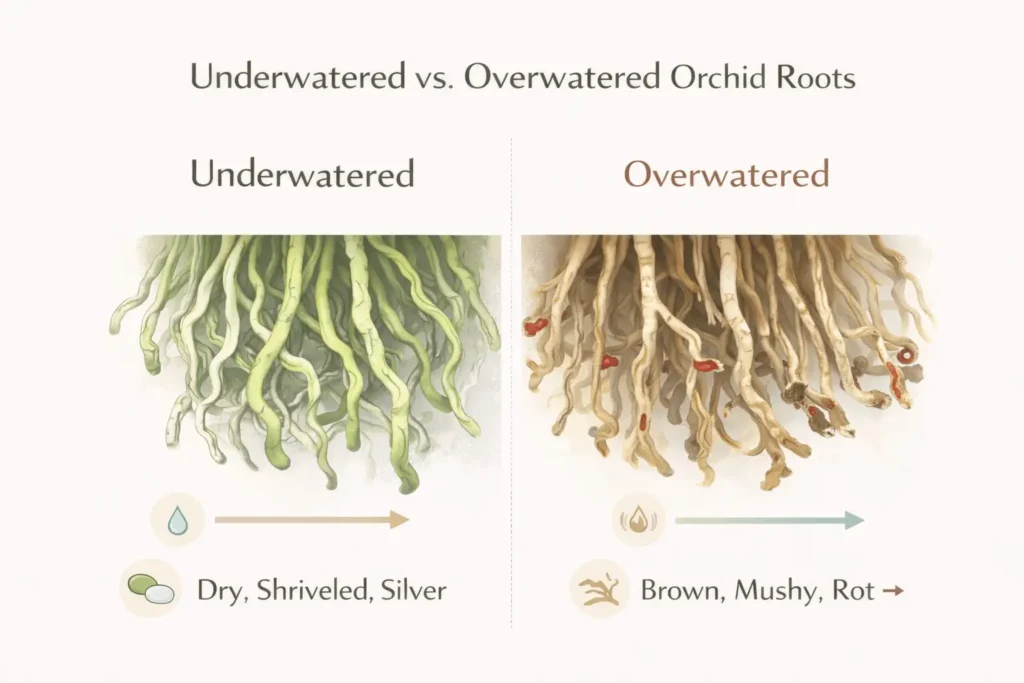
Understanding overwatered vs underwatered orchid roots prevents misdiagnosis:
- Underwatered roots are dry, shriveled, and firm
- Overwatered roots are soft, mushy, and often brown
Comparing orchid root rot vs healthy roots highlights how excess moisture destroys structure, while dehydration collapses it.
Leaf & Flower Clues That Support Root Diagnosis
Leaves offer supporting evidence:
- Underwatered orchid leaves appear limp and wrinkled
- Overwatered orchid leaves often turn yellow and soft
Wilting usually points to dehydration, while yellowing often signals excess moisture.
A deeper explanation of leaf health indicators can also be found in healthy orchid leaves signs, which helps confirm root-related stress through visible leaf changes.
How to Confirm If Orchid Roots Are Underwatered
How to Tell If an Orchid Needs Water
To determine how to tell if an orchid needs water:
- Check root color through a clear pot
- Use the pot weight method—dry pots feel noticeably lighter
These simple checks prevent guessing.
Examining Roots Safely
When visual checks are unclear:
- Remove the pot carefully to avoid damage
- Observe roots on orchids, including aerial roots in orchids
Healthy aerial roots should feel firm, not brittle.
How to Fix Underwatered Orchid Roots
Proper Rehydration Techniques
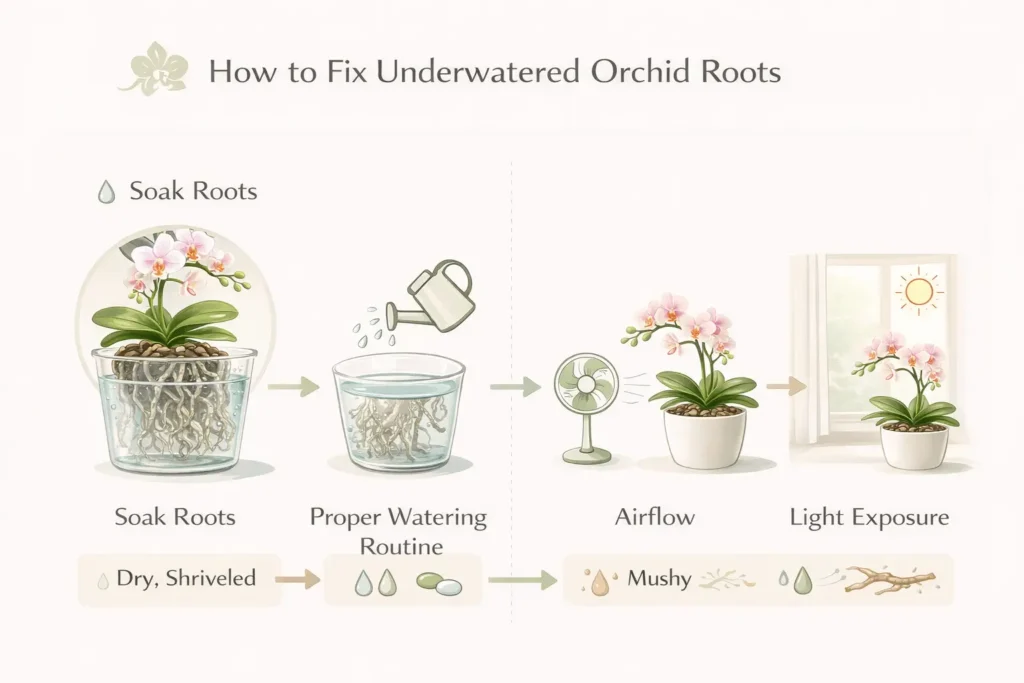
Correct rehydration is critical:
- Follow guidelines for how long to soak orchid roots in water, typically 10–20 minutes
- Use a safe bathing orchids method to rehydrate without suffocating roots
Avoid sudden overwatering after prolonged dryness.
Adjusting Watering Routine
Long-term correction requires:
- Establishing a consistent watering schedule
- Monitoring environment to prevent future dehydration
This supports proper orchid root care.
Understanding how watering, light, and plant environment interact becomes easier when you follow the fundamentals in a complete gardening and plant care guide, especially when managing sensitive orchid roots.
Trimming & Managing Damaged Roots
When and How to Trim Orchid Roots
Many growers ask, can you trim orchid roots? Yes, but only dead sections should be removed. Use sterile tools and understand trimming orchid roots properly. Knowing what to do with orchid roots ensures healthy growth resumes.
Supporting Root Recovery
Recovery depends on environment:
- Provide adequate light exposure
- Maintain gentle airflow
Understanding do orchid roots need light helps optimize recovery conditions.
Preventing Underwatered Orchid Roots in the Future
Best Practices for Long-Term Root Health
Prevention focuses on:
- Choosing appropriate growing media
- Selecting pots that balance drainage and moisture
These steps protect orchid root health and reduce dehydration risks over time.
Maintaining long-term root health is essential for plant survival, as explained in how long mini orchids live, where consistent care directly impacts lifespan.
Conclusion
Underwatered orchid roots can recover when the problem is identified early and corrected properly. Orchids are resilient plants, but their roots depend on consistent moisture, airflow, and oxygen balance to function well. Careful observation of root color, texture, and leaf condition helps catch orchid dehydration before permanent damage occurs. Establishing a steady watering routine, using the right potting media, and adjusting care based on environment are far more effective than occasional heavy watering. With balanced care, patience, and routine monitoring, most orchids can regain healthy roots and return to stable growth. Commit to consistent orchid care, and your plant will reward you with stronger roots and better long-term performance.
FAQs
What do underwatered orchid roots look like?
Underwatered orchid roots typically appear silver or white for extended periods, look shriveled or wrinkled, and feel stiff instead of flexible. Severe dehydration may cause roots to become brittle and thin.
Can white orchid roots still be healthy?
Yes, white or silver orchid roots can be healthy when dry. However, if they stay white after watering or do not turn green, it usually indicates dehydration or poor water absorption.
How often should I water orchids to avoid dehydration?
Most orchids need watering every 7–10 days, but frequency depends on pot size, media, temperature, and airflow. Always check root color and pot weight rather than following a fixed schedule.
How long should I soak dehydrated orchid roots?
Dehydrated orchid roots can be soaked for about 10–20 minutes in room-temperature water. This allows gradual rehydration without causing stress or suffocation.
Can orchids recover from severe underwatering?
Orchids can recover from severe underwatering if some roots are still alive. Recovery may take time, and new roots often develop once proper watering and care are restored.
Should I cut dry orchid roots or leave them?
Dry roots that are firm and intact should be left alone. Only roots that are hollow, brittle, or completely dead should be trimmed using clean, sterile tools.

Written by the LeafyHeaven Editorial Team
LeafyHeaven shares practical gardening tips and simple plant care guides to help you grow, nurture, and enjoy your plants with ease. Our goal is to make gardening feel natural, approachable, and rewarding for everyone.