
Introduction
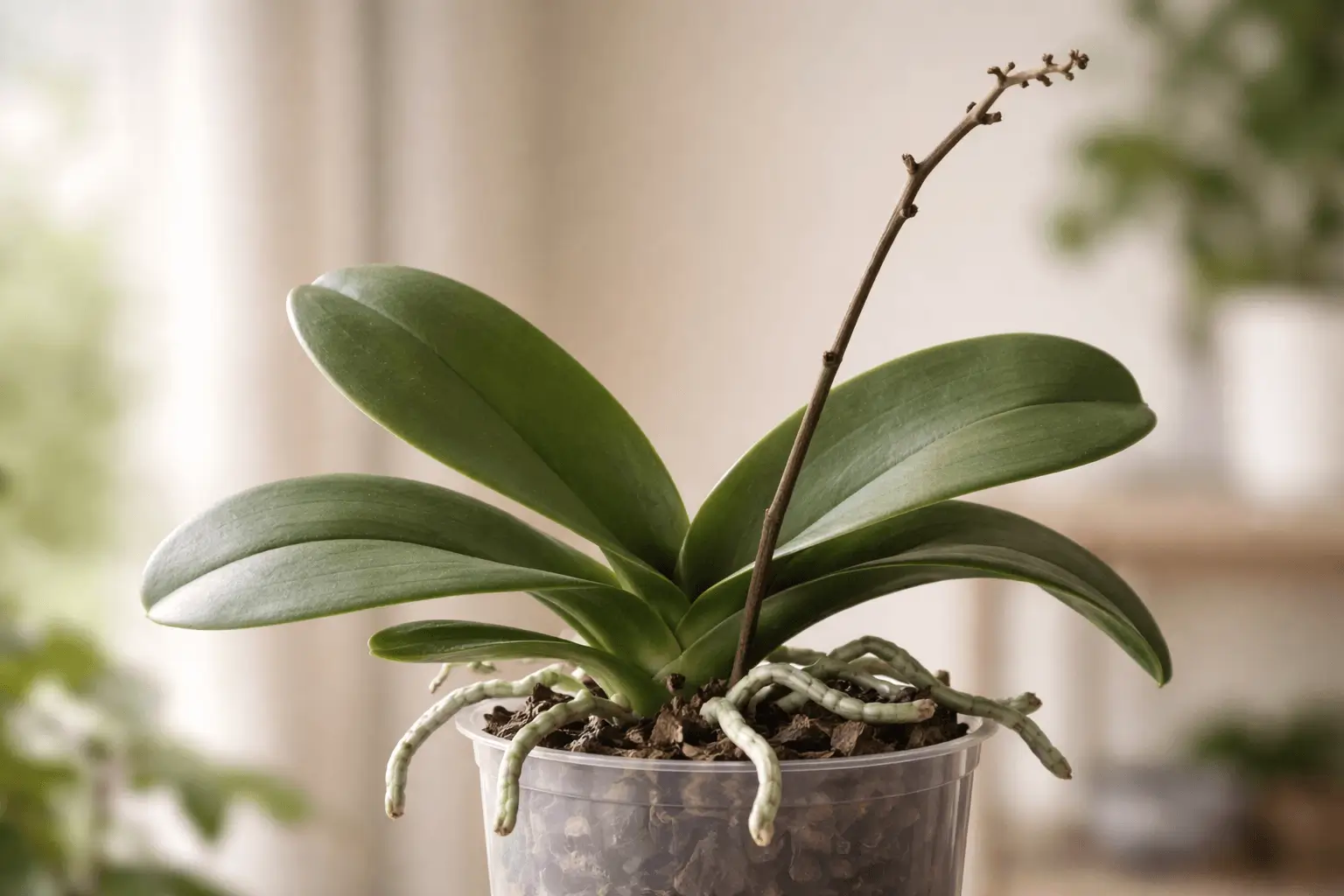
Orchid dormancy is a natural resting phase that many orchids enter after blooming, and it often worries growers who mistake it for decline. A dormant orchid may stop flowering, slow its growth, or appear unchanged for weeks, yet this does not mean it is dying. Many readers ask, do orchids go dormant, especially when blooms fall and spikes stop growing. The answer is yes—dormancy is a normal part of the orchid life cycle. During this period, the plant conserves energy, stabilizes its roots and leaves, and prepares for future growth. Understanding dormancy helps prevent overwatering, overfertilizing, or unnecessary stress that can harm an otherwise healthy orchid.
What Is Orchid Dormancy?
In orchids, “dormant” means a temporary pause in visible growth, not a shutdown of life processes. An orchid dormant phase involves reduced metabolic activity while roots and leaves remain alive. A dormant orchid differs from decline because decline shows ongoing damage—such as rotting roots or collapsing tissue—whereas dormancy shows stability without active flowering or spike growth. During dormancy, the orchid reallocates energy internally, maintaining essential structures while waiting for favorable conditions to resume growth.
Do Orchids Go Dormant? (The Honest Answer)
Yes, do orchids go dormant is a common question, and the honest answer is that some do more clearly than others. Many popular house orchids slow down after blooming, especially when orchids lose their blooms. Indoor orchids often show a mild dormancy with steady leaves and roots, while outdoor orchids may enter a stronger seasonal rest due to temperature and light changes. Not all orchids follow the same pattern, but a pause after flowering is common and expected.
When Do Orchids Go Dormant?
Most orchids enter dormancy shortly after their flowers finish and drop. This timing varies by type, but generally occurs following a completed bloom cycle. Indoors, seasonal light shifts—shorter days or cooler nights—can trigger rest. Gardeners often ask when do orchids go dormant, and the answer is usually “after blooming,” with dormancy lasting until conditions signal the plant to grow again.
What Does a Dormant Orchid Look Like?
-
Normal Dormancy Signs
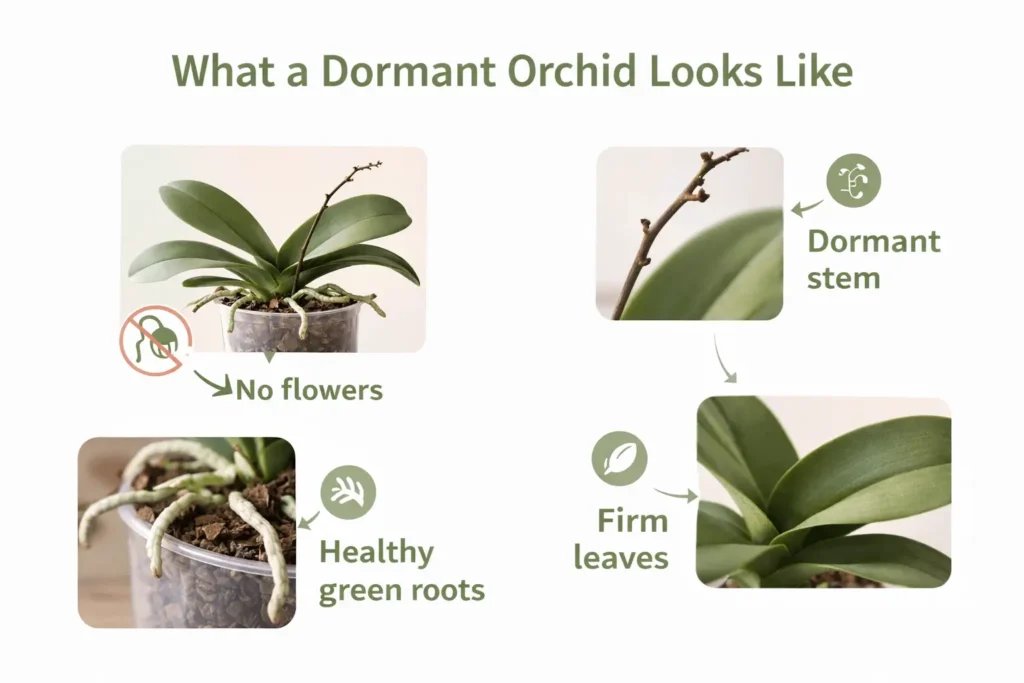
A dormant orchid commonly appears as an orchid without flowers once blooms fall naturally. The flower spike may stop growing, and a dormant orchid stem can look green but inactive or gradually dry back. These changes are expected and do not indicate failure.
-
What Is Still Healthy During Dormancy
Despite the lack of blooms, key structures remain healthy. Roots should stay green or silvery when hydrated, and leaves should feel firm. If you’re wondering what does a dormant orchid look like, it’s a plant with stable leaves and roots, no flowers, and minimal growth—yet no spreading damage.
Orchid Dormancy vs Death — How to Tell the Difference
-
Signs Your Orchid Is Dormant
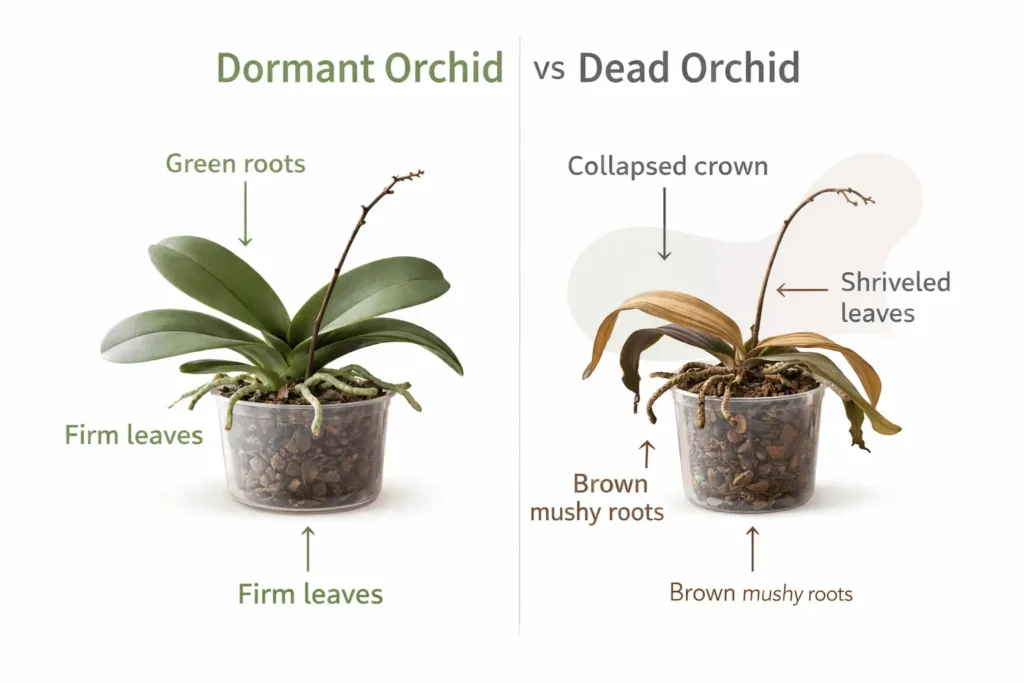
Dormant orchids retain firm leaves, resilient stems, and functional roots. If you’re asking is my orchid dead or dormant, look for steady color, no foul odor, and roots that turn green when watered.
A deeper understanding of root condition can also be found in underwatered orchid roots, which explains how hydration affects root health and overall plant stability.
-
Signs Your Orchid May Be Dead
Death shows irreversible damage. Mushy, blackened roots indicate rot, while a completely dry or collapsing crown signals failure. Questions like orchid dead or dormant, how to tell if an orchid is dead, or how to know if my orchid is dead are answered by checking whether tissue responds to water and remains firm.
Why Orchid Flowers Fall Off
Flower drop often follows the natural post-bloom cycle and leads into rest. When orchids flowers are falling off, it may be simple dormancy rather than stress. Stress-related drops usually accompany leaf yellowing or root issues, while dormancy-related drops occur with otherwise healthy plant parts.
How to Care for an Orchid During Dormancy
-
Watering Adjustments
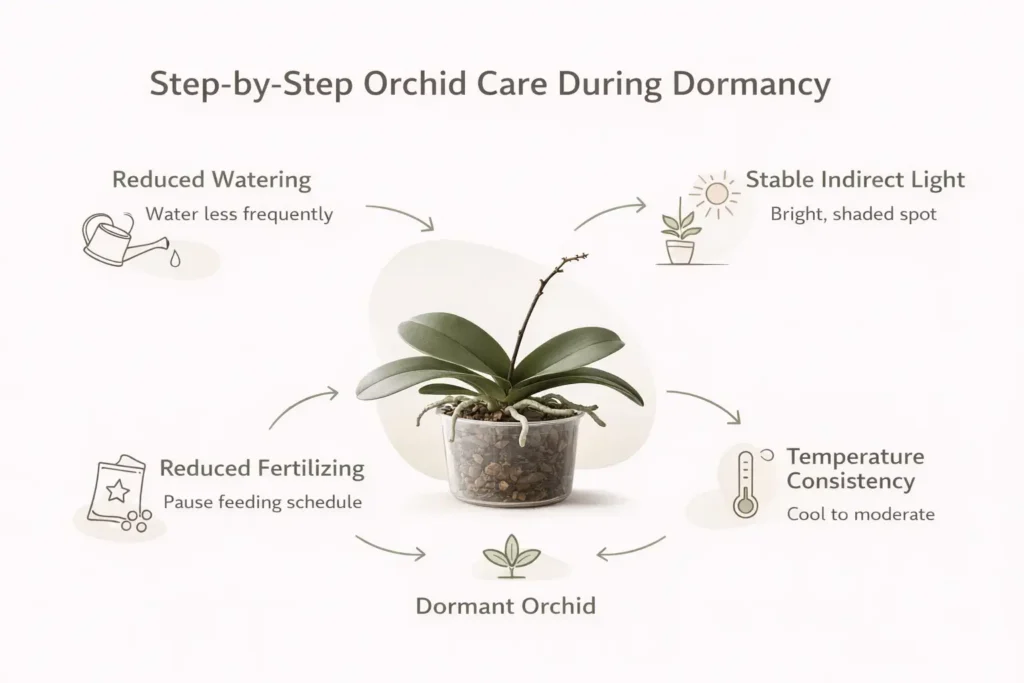
Reduce watering frequency to match slower uptake, but never let roots stay soggy. This balanced approach supports care for orchid health and prevents rot.
Understanding how watering, light, and plant environment interact becomes easier when you follow the fundamentals in a complete gardening and plant care guide, especially for managing orchid life cycles.
-
Light & Temperature Needs
Provide consistent, indirect light and stable temperatures. Avoid sudden changes that disrupt recovery and long-term orchid how to take care routines.
-
Fertilizing During Dormancy
Pause or greatly reduce feeding until new growth appears. This helps how to keep a orchid alive by preventing salt buildup and stress. Thoughtful adjustments answer how do you take care of orchid plants during rest.
How Long Does Orchid Dormancy Last?
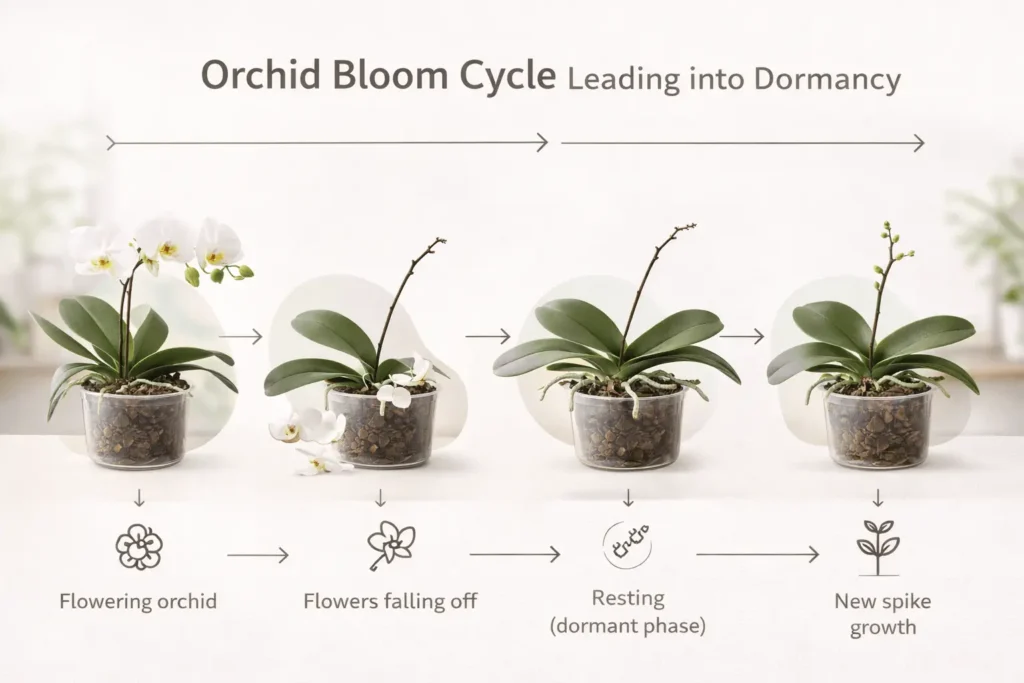
Dormancy typically lasts weeks to a few months, depending on type and environment. Light, temperature, and overall health influence duration. While considering the lifespan of orchid plants, remember that rest periods are normal and contribute to how long do indoor orchids live by supporting long-term vitality.
Long-term orchid performance and lifespan are also explained in how long mini orchids live, where consistent care plays a key role in plant longevity.
When Will a Dormant Orchid Bloom Again?
Dormancy ends when new leaves, root tips, or a fresh spike appear. These signs show energy has returned to growth. Patience is essential—consistent care and stable conditions allow the orchid to transition naturally from rest to blooming again.
Conclusion — Dormant Orchids Are Still Alive
Orchid dormancy is a healthy and natural phase, not a sign that your plant is failing. A dormant orchid is simply resting after flowering, conserving energy, and preparing for its next growth cycle. During this time, steady leaves, firm roots, and a stable stem are all positive signs. The most important approach is observation—watch how your orchid responds to water, light, and temperature rather than reacting out of worry. With consistent, gentle care and patience, dormancy supports long-term strength and future blooms. Continue practicing proper orchid care, and your plant will reward you when it’s ready.
FAQs
/how-long-do-mini-orchids-live/
Orchid dormancy is a resting period when growth and flowering slow or stop temporarily. The plant remains alive and healthy while conserving energy.
How long does orchid dormancy last?
Dormancy usually lasts a few weeks to several months, depending on the orchid type, light exposure, temperature, and overall plant health.
Is my orchid dead or just dormant?
A dormant orchid has firm leaves, healthy roots, and no spreading rot. A dead orchid shows mushy roots, a collapsing crown, or completely dried tissue.
Should I water a dormant orchid?
Yes, but less frequently. Water lightly when roots dry, and avoid constant moisture to prevent root rot during dormancy.
Do orchids lose flowers before dormancy?
Yes. Flower drop is a normal part of the post-bloom cycle and often signals the start of dormancy rather than a problem.
Can indoor orchids go dormant?
Yes. Indoor orchids often enter a mild dormancy after blooming, especially when light levels or temperatures change seasonally.

Written by the LeafyHeaven Editorial Team
LeafyHeaven shares practical gardening tips and simple plant care guides to help you grow, nurture, and enjoy your plants with ease. Our goal is to make gardening feel natural, approachable, and rewarding for everyone.