
Introduction
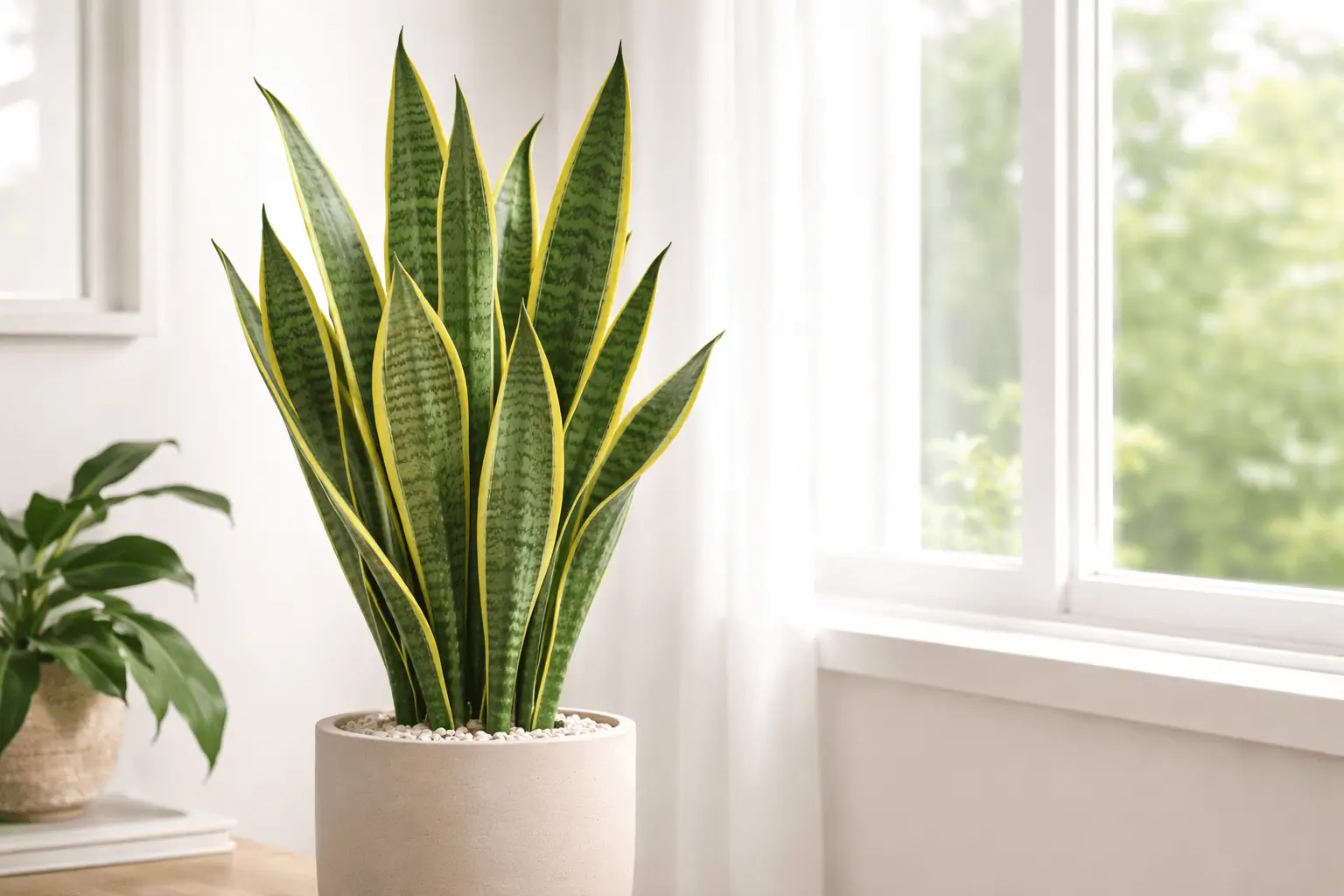
Sansevieria laurentii care is widely regarded as one of the easiest routines in indoor plant keeping, making this plant a staple in homes and offices worldwide. Known for its upright, sword-like leaves with striking yellow margins, Sansevieria Laurentii—often called the laurentii snake plant, mother-in-law plant, or snake tail plant—thrives with minimal attention. This indoor plant is naturally drought-tolerant, adapts well to varied lighting, and forgives occasional neglect. Its resilience and clean architectural form make it especially appealing to beginners seeking a reliable, beginner-friendly houseplant that still delivers strong visual impact.
What Is Sansevieria Laurentii?
Botanical Identity & Scientific Name
Sansevieria Laurentii is botanically classified as Sansevieria trifasciata ‘Laurentii’, a cultivated variety of the snake plant group. The snake plant scientific name is often confused with its many common names, but all refer to the same hardy species group. In recent botanical classification updates, sansevieria plants are now grouped under Dracaena, which is why the plant may also be labeled as dracaena sansevieria in some references and nurseries.
Sansevieria Laurentii vs Other Snake Plants
Laurentii sansevieria trifasciata is distinguished by its bold yellow leaf edges, a feature absent in many other sansevieria sp. Cylindrical snake plants have round, spear-like leaves, while masoniana types feature wide, paddle-shaped foliage. Compared to these, Sansevieria Laurentii maintains a more vertical, striped appearance and remains one of the most adaptable forms for indoor growing.
Ideal Light Requirements for Sansevieria Laurentii
Best Light Conditions
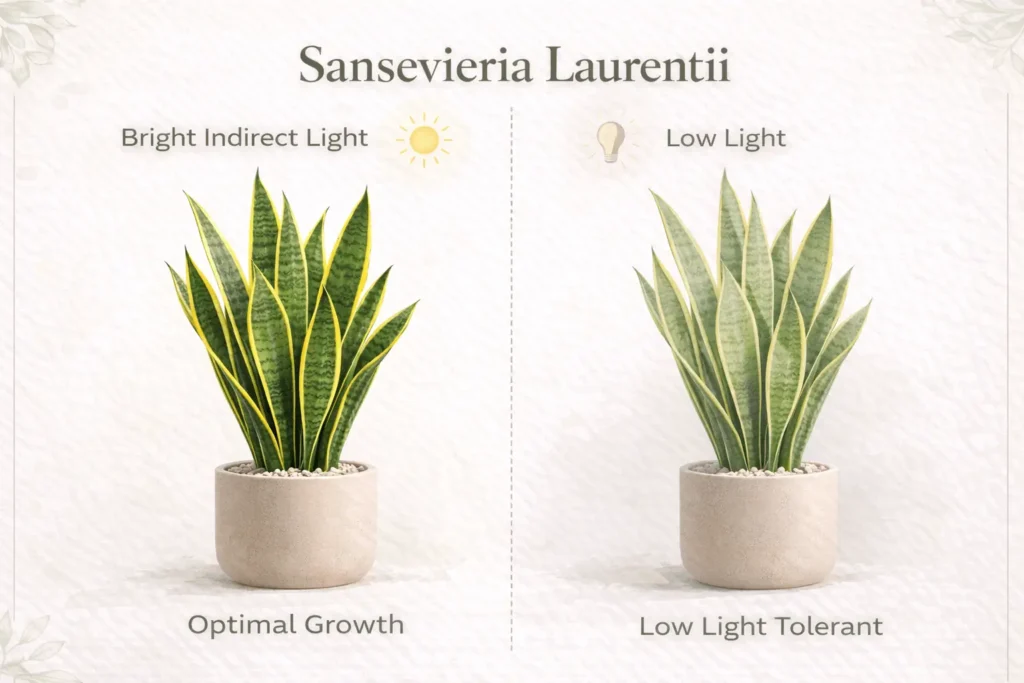
Understanding sansevieria light requirements is simple. Sansevieria Laurentii performs best in bright, indirect light, where growth is steady and leaf color remains vibrant. If you want to build a strong foundation in plant care, you can explore this complete gardening and plant care guide for broader insights. However, it also tolerates lower light levels, making it suitable for rooms with limited natural sunlight.
If you’re exploring more low-maintenance houseplants, you may also find our guide on indoor plant benefits helpful for choosing the right plant for your space.
Can Snake Plant Laurentii Survive Low Light?
Yes, snake plant laurentii can survive in low light, but growth will slow noticeably. In reduced light, the yellow margins may become less pronounced, and new leaves may emerge more slowly. For comparison with other bold indoor foliage plants, you can also explore our guide on elephant ear plant indoor benefits. While survival is not an issue, optimal lighting preserves its signature coloration.
Watering Sansevieria Laurentii Correctly
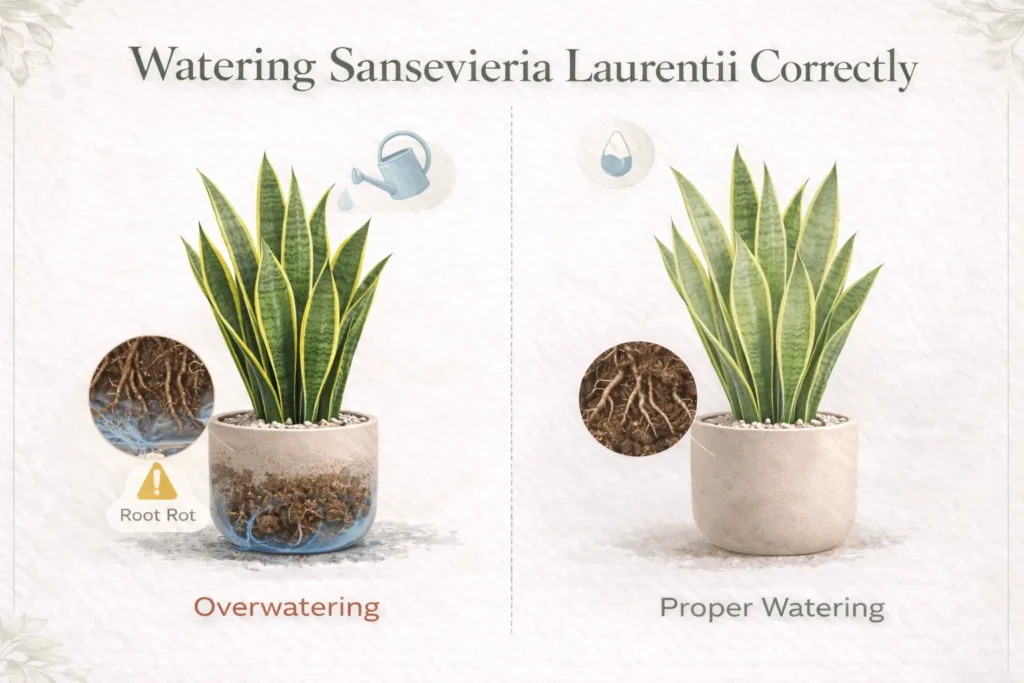
How Often to Water Sansevieria
Watering should follow a seasonal watering schedule:
- Spring and summer: water only when soil is completely dry
- Fall and winter: reduce watering frequency significantly
Signs of overwatering include mushy roots and drooping leaves, while underwatering may cause slight leaf wrinkling.
Common Watering Mistakes
The most common mistake is frequent watering, which increases root rot risk. Proper drainage is essential, as stagnant moisture can damage roots, a problem also seen in cylindrical snake plant root rot when drainage is ignored.
Best Soil & Potting Mix for Sansevieria Laurentii
Ideal Soil Composition
A well-draining soil mix is critical. A cactus or succulent mix works well, allowing excess water to escape quickly and preventing soggy roots.
Pot Type & Drainage Importance
Terracotta pots are preferred due to their breathable nature, while plastic pots retain moisture longer. Regardless of material, drainage holes are mandatory to avoid moisture retention.
Temperature & Humidity Needs
Ideal Indoor Temperature Range
Sansevieria Laurentii thrives in normal household temperatures between 60–85°F (16–29°C). It is sensitive to cold and should be protected from drafts and temperatures below 50°F (10°C).
Humidity Tolerance
This plant adapts easily to low humidity environments. Misting is unnecessary and can even promote fungal issues.
Fertilizing Sansevieria Laurentii
When and How to Fertilize
Use a light feeding schedule during the growing season with a balanced, diluted houseplant fertilizer. Feeding once every 6–8 weeks is sufficient.
Over-Fertilization Risks
Excess fertilizer can cause leaf damage, salt buildup, and stunted growth, reducing overall plant health.
Pruning & Maintenance Tips
Cleaning & Leaf Care
Dust should be wiped from leaves regularly to maintain photosynthesis. Upright leaf support is rarely needed due to the plant’s rigid structure.
When to Prune
Prune only to remove damaged or old leaves. Cuts should be clean and close to the soil for aesthetic shaping.
Propagation Methods for Sansevieria Laurentii
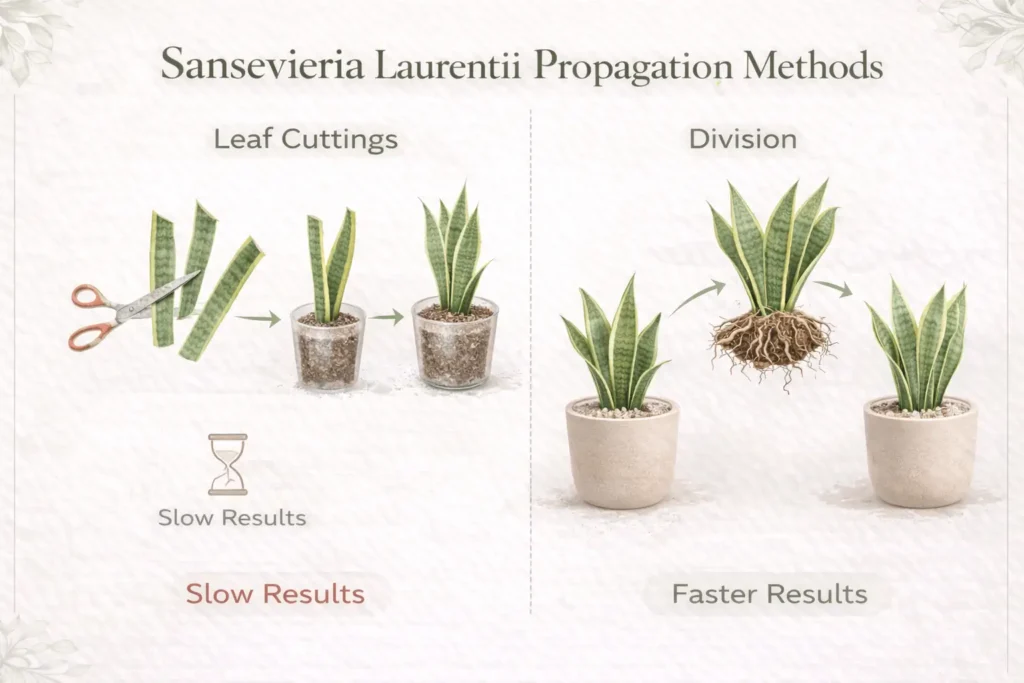
Leaf Cuttings
Propagation through leaf cuttings involves cutting healthy leaves, allowing them to callus, and placing them in soil. This method is reliable but slow.
Division Method
Division is best done when plants are mature. Separating rhizomes during repotting produces faster and more predictable results than cuttings.
Common Problems & Troubleshooting
Yellowing or Drooping Leaves
Overwatering is the primary cause, though improper light balance can also stress the plant.
Dry Tips & Leaf Curling
These issues often result from inconsistent watering or salt buildup from fertilizers.
Is Sansevieria Laurentii Safe for Pets?
Toxicity Information
Sansevieria Laurentii has mild toxicity to cats and dogs if ingested. Placing the plant out of reach reduces risk.
Benefits of Growing Sansevieria Laurentii Indoors
Air-Purifying Qualities
This plant contributes to improved indoor air quality by filtering common airborne pollutants, as highlighted in NASA’s Clean Air Study.
Decorative & Low-Care Appeal
Its clean lines complement modern interior styling, while its beginner plant advantages make it ideal for low-effort indoor gardening.
Conclusion — Mastering Sansevieria Laurentii Care
Mastering Sansevieria laurentii care comes down to a few consistent essentials: provide bright indirect light when possible, allow the soil to dry fully between waterings, use a well-draining soil mix, and ensure proper pot drainage. This plant’s natural tolerance for low light, infrequent watering, and dry indoor air makes it one of the most low-maintenance houseplants available. Rather than frequent attention, Sansevieria Laurentii responds best to a steady, minimal care routine. With simple observation and restraint, it will maintain strong structure, healthy color, and long-term performance as a dependable indoor plant.
FAQs
How often should I water sansevieria laurentii?
Water only when the soil is completely dry. In warmer months, this is usually every 2–3 weeks, while in winter watering may be needed just once a month.
Can snake plant laurentii grow in low light?
Yes, snake plant laurentii tolerates low light well. Growth will slow, and leaf color may soften, but the plant will remain healthy.
Why are my sansevieria laurentii leaves turning yellow?
Yellowing leaves are most commonly caused by overwatering. Poor drainage and consistently wet soil can damage roots and lead to discoloration.
What is the best soil for sansevieria laurentii?
A fast-draining cactus or succulent soil mix is ideal. This prevents excess moisture from sitting around the roots.
Is sansevieria laurentii safe for indoor bedrooms?
Yes, it is suitable for bedrooms. However, it has mild toxicity if ingested, so it should be kept out of reach of pets and small children.
How fast does sansevieria trifasciata ‘Laurentii’ grow?
Growth is slow to moderate. Under bright indirect light, new leaves may appear a few times per year, while low-light conditions slow growth significantly.

Written by the LeafyHeaven Editorial Team
LeafyHeaven shares practical gardening tips and simple plant care guides to help you grow, nurture, and enjoy your plants with ease. Our goal is to make gardening feel natural, approachable, and rewarding for everyone.