
Introduction
Purple marigolds often spark curiosity because traditional marigolds are known for yellow, orange, and red tones—not true purple. Gardeners and buyers frequently search for purple marigolds expecting a rare or newly bred flower with deep violet petals. In reality, most offerings labeled this way are deep red, burgundy, or maroon varieties photographed under specific lighting or enhanced through marketing. This article clarifies whether purple marigolds truly exist, how they appear in real gardens, and what to expect when buying seeds or plants. By separating scientific facts from promotional claims, you can make informed decisions about availability, appearance, pricing, and whether these flowers match your expectations.
What Are Purple Marigolds?
Do True Purple Marigolds Exist?
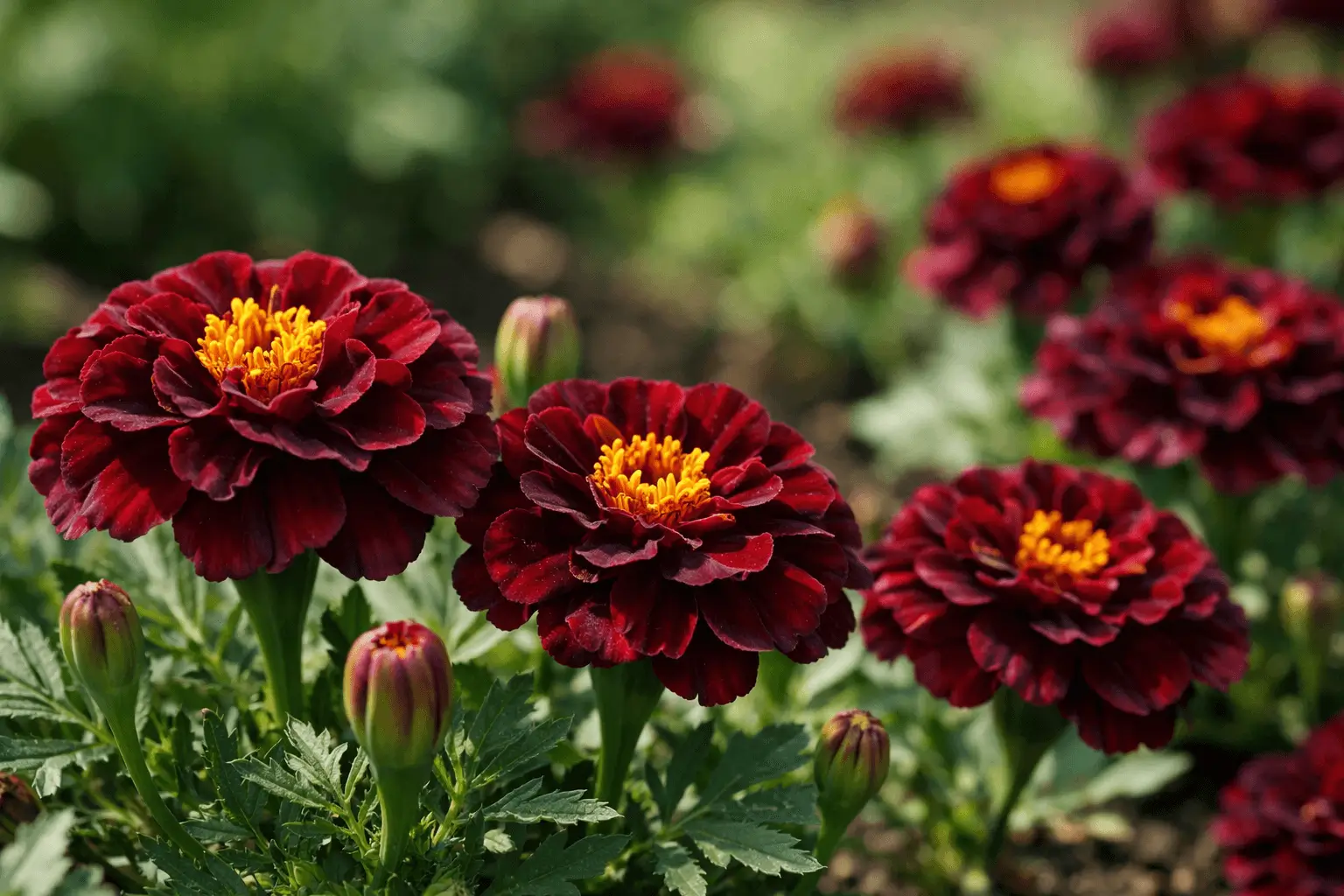
From a scientific standpoint, true purple marigolds do not exist. Marigolds lack the genetic ability to produce blue or violet pigments required for genuine purple coloration. Plant breeding has achieved very dark red and burgundy shades, but these remain within the red spectrum. When labeled as purple, they are typically deep maroon or wine-colored cultivars rather than a genetically purple flower.
To better understand how plant traits and color variations develop, you can explore our complete gardening and plant care guide.
Why Are They Called “Purple” Marigolds?
The name comes from perception and presentation rather than botany. Low light, shade, or dusk conditions can make dark red blooms appear purple. Marketing photos, filters, and selective editing further intensify this effect. As a result, terms like flower purple marigolds or new purple marigolds are used to attract interest, even though the plants themselves are not truly purple.
Appearance, Size, and Growth Habit
Flower Color Range and Visual Traits
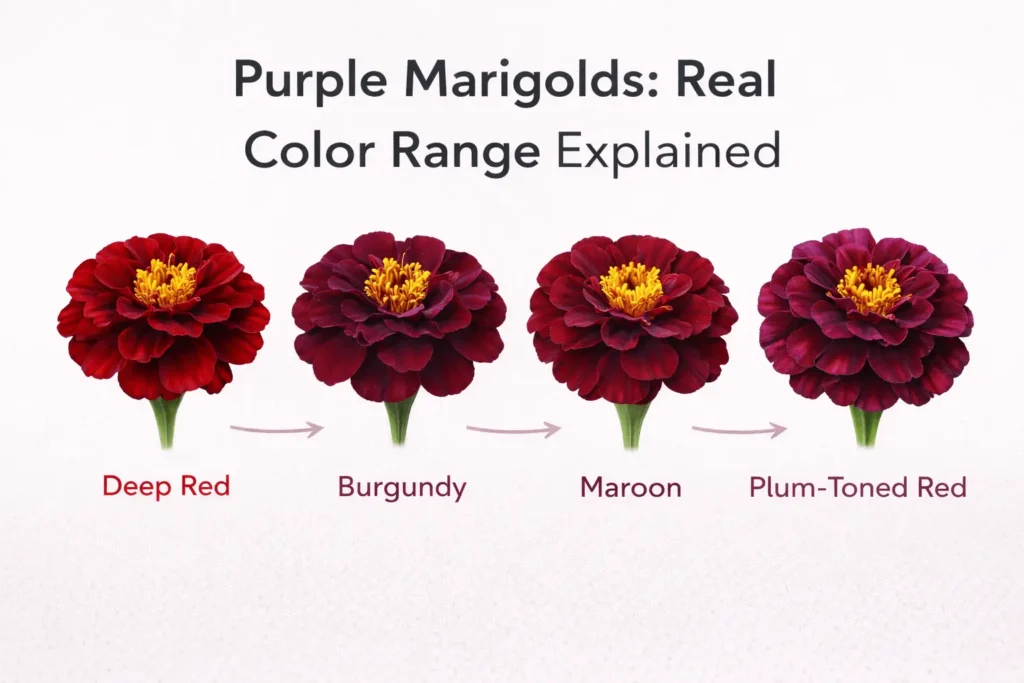
So-called purple marigolds usually display:
- Deep red petals with black or dark centers
- Burgundy or wine tones that shift with light
- Plum-like hues in cooler weather
Online galleries often show images purple marigolds that appear darker than real-life blooms. In full sun, most revert to rich red rather than purple.
If you’re interested in flowers that maintain consistent blooms throughout the year, you can also explore our guide on plants that flower all year round in Australia.
Plant Size and Bloom Form
Growth habits vary by cultivar:
- Compact plants (8–12 inches) for borders and containers
- Bushy plants (12–24 inches) for garden beds
Keywords like large purple marigolds, size purple marigolds, and bush purple marigolds usually describe plant form, not color depth. Bloom shape remains classic marigold—rounded and full.
Outdoor Growing and Care Expectations
Are Purple Marigolds Suitable for Outdoor Gardens?
Yes. These plants grow like standard marigolds and perform well outdoors. Outdoor purple marigolds prefer:
- Full sun (6–8 hours daily)
- Well-draining soil
- Moderate watering
They tolerate heat well and bloom consistently through the growing season.
For gardeners exploring more resilient outdoor plants, you can also check our guide on cocoa bean tree growing conditions.
Seeds vs Plants — What to Choose?
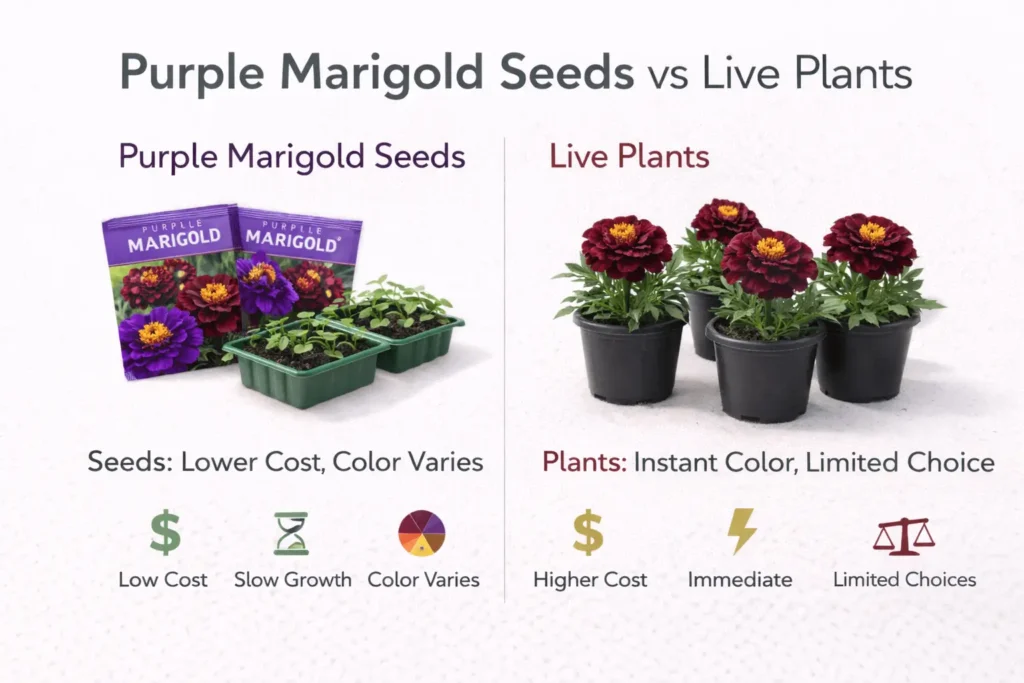
You can grow them either way:
- Seeds: More affordable, wider selection. Labels such as seeds & bulbs purple marigolds or flower seeds purple marigolds often refer to dark red varieties.
- Live plants: Immediate color, easier for beginners, but color accuracy depends on the seller.
Meaning and Symbolism of Purple Marigolds
Traditional Marigold Symbolism
Marigolds traditionally symbolize warmth, remembrance, celebration, and resilience. They are commonly associated with festivals and honoring loved ones.
Purple Color Meaning Applied to Marigolds
When purple symbolism is applied, meanings expand to include creativity, dignity, and uniqueness. The meaning purple marigolds therefore blends classic marigold symbolism with the emotional associations of the color purple, even if the hue itself is not botanically accurate.
Buying Purple Marigolds — What to Know
Where to Buy Purple Marigolds
Common sources include:
- Online nurseries and marketplaces
- Local garden centers during spring
Listings may use terms like purple marigolds for sale, buy purple marigolds, or purple marigolds nearby. Always check real customer photos.
Price Expectations and Budget Options
Typical pricing:
- Seed packets: low cost
- Live plants: moderate pricing depending on size
Phrases such as price purple marigolds, purple marigolds under $35, or purple marigolds free shipping usually reflect promotional bundles rather than rarity.
Real Plants vs Artificial Purple Marigolds
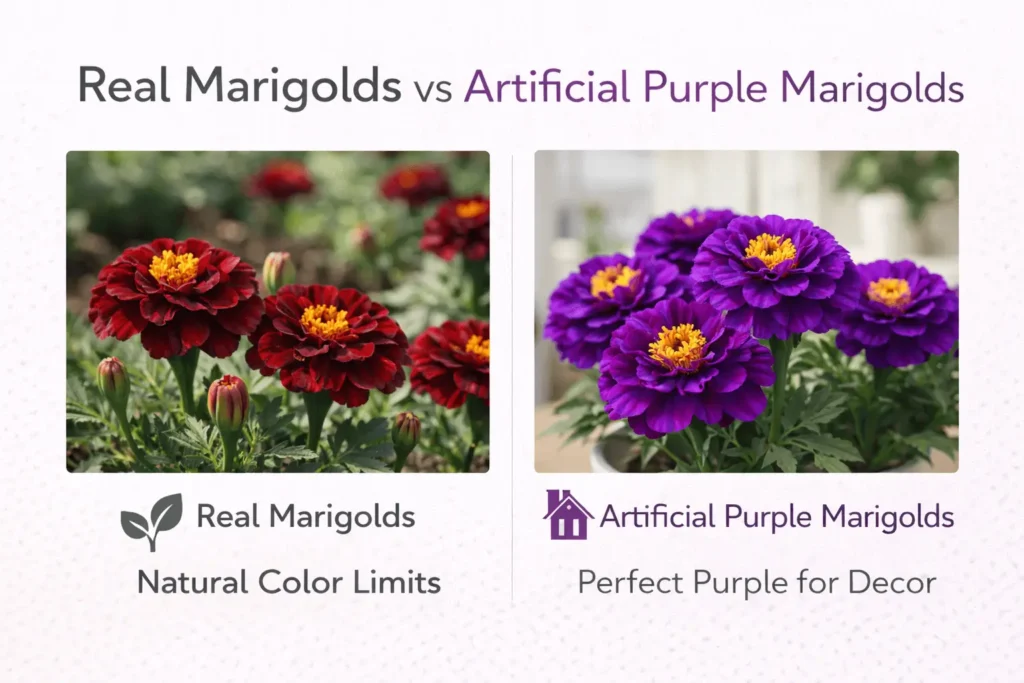
Artificial Decorative Options
Artificial versions provide consistent color and are useful for indoor décor or events. Artificial flora purple marigolds often display a true violet shade not possible in live plants.
Since true purple coloration is not naturally present in marigolds, artificial options are often used to achieve this effect, as noted by Royal Horticultural Society (RHS).
How to Avoid Misleading Listings
To avoid confusion:
- Look for unedited garden photos
- Read cultivar names carefully
- Check if the product is artificial or dyed
Are Purple Marigolds Worth Buying?
Who Should Consider Them?
They are suitable for:
- Gardeners who enjoy dark-toned flowers
- Decorators seeking rich color themes
- Collectors interested in unusual-looking marigolds
Best Alternatives to “Purple” Marigolds
Consider deep red or burgundy marigold varieties that naturally provide a purple-like appearance without unrealistic expectations.
Conclusion
Purple marigolds are best understood as a marketing term rather than a botanical reality. While true purple marigolds do not exist, many deep red and burgundy varieties offer dramatic, dark tones that can resemble purple under certain conditions. Understanding this distinction helps set realistic expectations when buying seeds or plants. With informed selection and proper care, these marigolds can still deliver strong visual impact and reliable garden performance.
FAQs
Are purple marigolds real flowers?
No. They are typically deep red or burgundy marigolds marketed as purple.
Why do purple marigolds look different online than in real life?
Lighting, photo editing, and color enhancement can make blooms appear more purple than they are.
Can I grow purple marigolds from seeds?
You can grow dark red varieties from seed, but they will not be truly purple.
Are purple marigolds suitable for outdoor gardens?
Yes. They grow and perform like standard marigolds outdoors.
What is the meaning of purple marigolds?
They combine traditional marigold symbolism with purple’s association with creativity and dignity.
Are artificial purple marigolds better for decoration?
For true purple color consistency, artificial options are often more reliable.

Written by the LeafyHeaven Editorial Team
LeafyHeaven shares practical gardening tips and simple plant care guides to help you grow, nurture, and enjoy your plants with ease. Our goal is to make gardening feel natural, approachable, and rewarding for everyone.