
Introduction
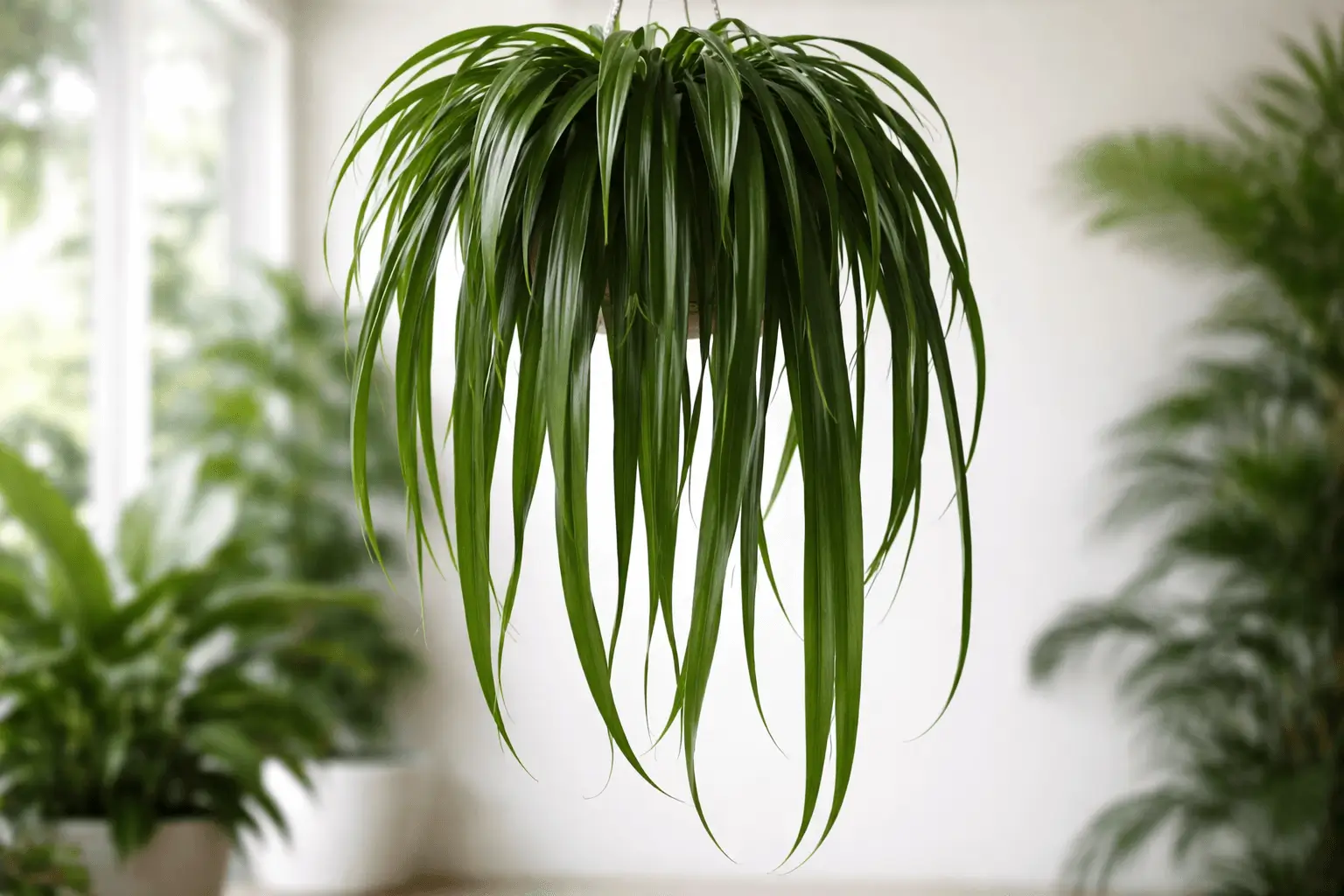
Anthurium vittarifolium is a distinctive strap-leaf anthurium prized for its long, ribbon-like foliage and elegant, cascading form. Native to tropical rainforests, it has become a sought-after species among serious aroid collectors due to its architectural presence and comparatively manageable care requirements. This strap-leaf anthurium stands out for its pendulous growth habit, making it ideal for hanging displays or elevated planters where the foliage can drape freely. Its clean leaf structure, steady growth, and rarity in mainstream plant markets contribute to its collector appeal, especially for those focused on foliage-driven Anthurium species rather than showy blooms.
What Is Anthurium Vittarifolium?
Botanical Background
Anthurium vittarifolium originates from humid South American rainforests, where it grows in warm, shaded environments with consistent moisture and airflow. It is naturally epiphytic, anchoring itself to tree trunks and branches rather than rooting in soil, as described by Royal Horticultural Society (RHS). This rainforest origin explains its preference for high humidity, filtered light, and well-aerated root conditions that mimic its native canopy habitat.
To better manage humidity, light, and root conditions across different plants, refer to our complete gardening and plant care guide.
Leaf Shape and Growth Pattern
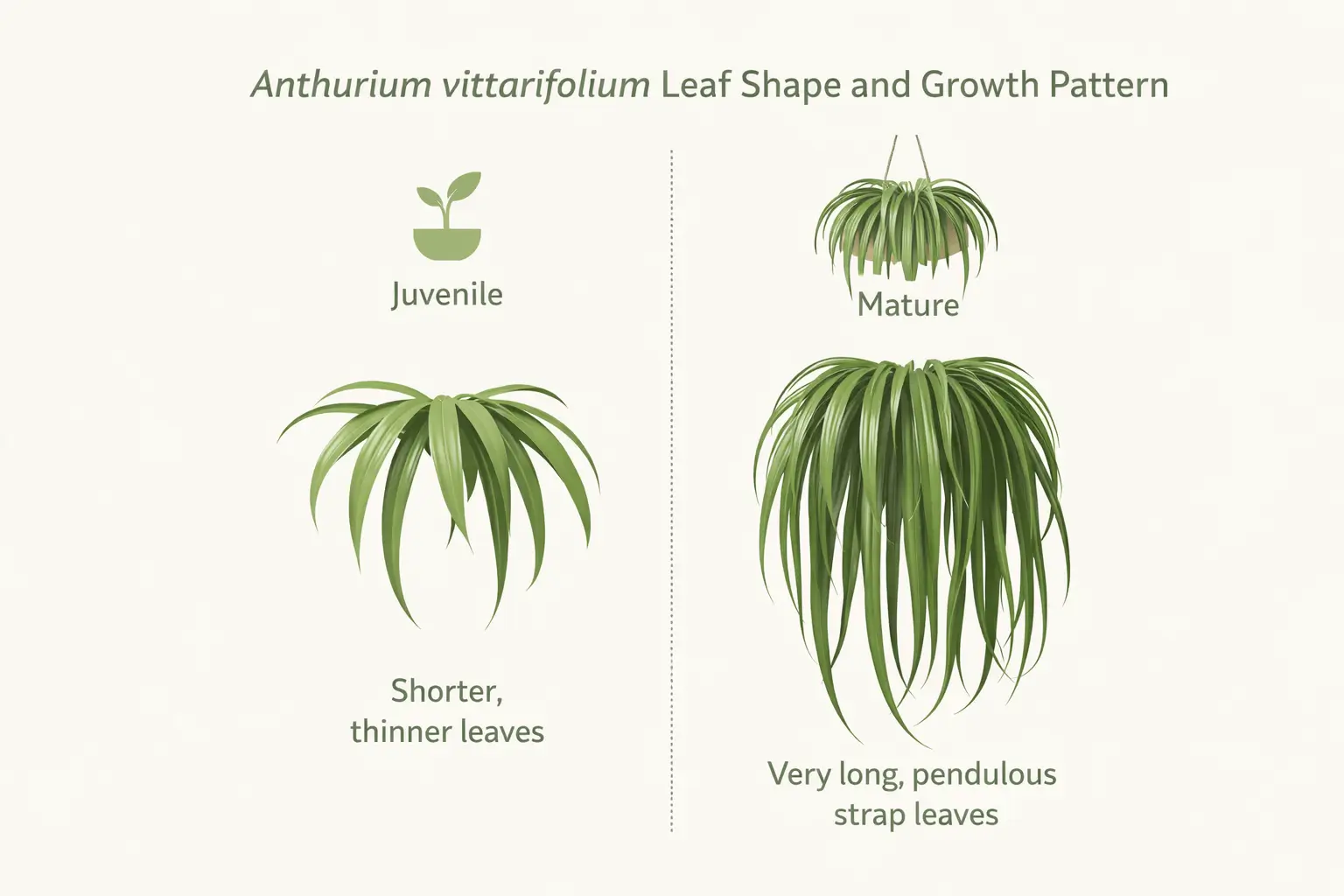
The plant is defined by long, narrow, pendulous strap leaves that can extend dramatically as the plant matures. Juvenile plants produce shorter, thinner foliage, while an anthurium vittarifolium mature specimen develops thicker, elongated leaves with a pronounced drooping habit. As maturity increases, leaf length becomes the dominant visual feature, often exceeding several feet under optimal conditions.
Anthurium Vittarifolium Flower Characteristics
Flower Structure
The anthurium vittarifolium flower consists of a slender spadix accompanied by a subtle spathe. Unlike ornamental Anthurium hybrids, the spathe is typically understated, appearing greenish to pale cream and relatively small compared to the foliage. The flower structure is functional rather than decorative, primarily supporting pollination and seed production.
Blooming Cycle
Indoors, flowering occurs intermittently when environmental conditions are stable. Blooms are more common on well-established plants receiving proper light, nutrition, and humidity. Healthy flowering generally indicates that the plant’s root system and overall care routine are well balanced.
Anthurium Vittarifolium Variegated Form
What Makes the Variegated Type Special
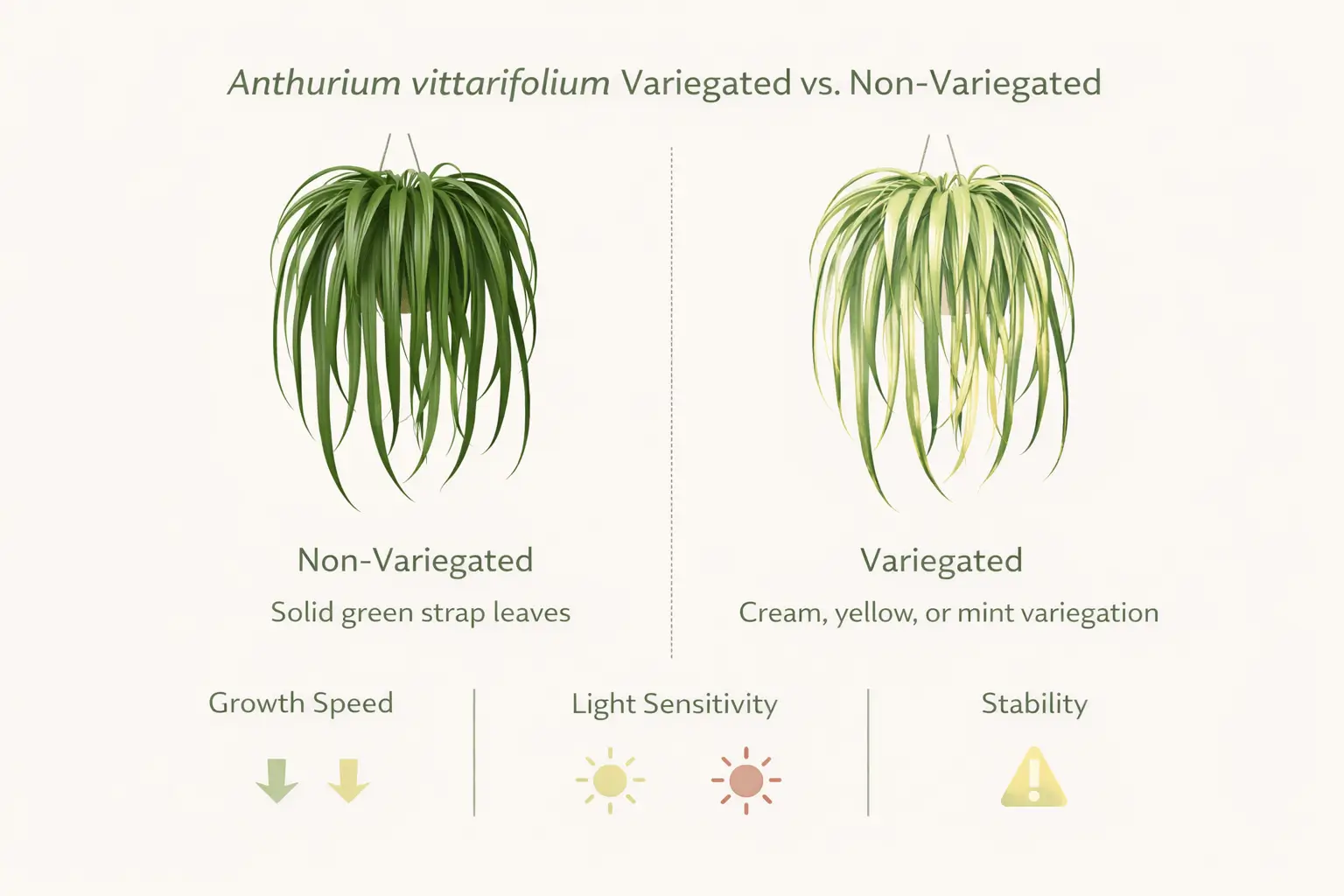
Anthurium vittarifolium variegated forms display irregular patterns of cream, yellow, or mint-colored variegation along the strap leaves. These patterns vary widely from plant to plant, increasing their visual uniqueness. Due to low occurrence rates and propagation difficulty, variegated forms are rare and highly valued in collector markets.
Variegated vs Non-Variegated Growth
Variegated plants typically grow slower and require more stable conditions than non-variegated types. An anthurium vittarifolium variegated mature specimen may take significantly longer to reach full size, as reduced chlorophyll affects energy production. Variegated plants are also more sensitive to light, requiring careful adjustment to avoid leaf burn while maintaining variegation clarity.
Anthurium Vittarifolium Care Guide
Light Requirements
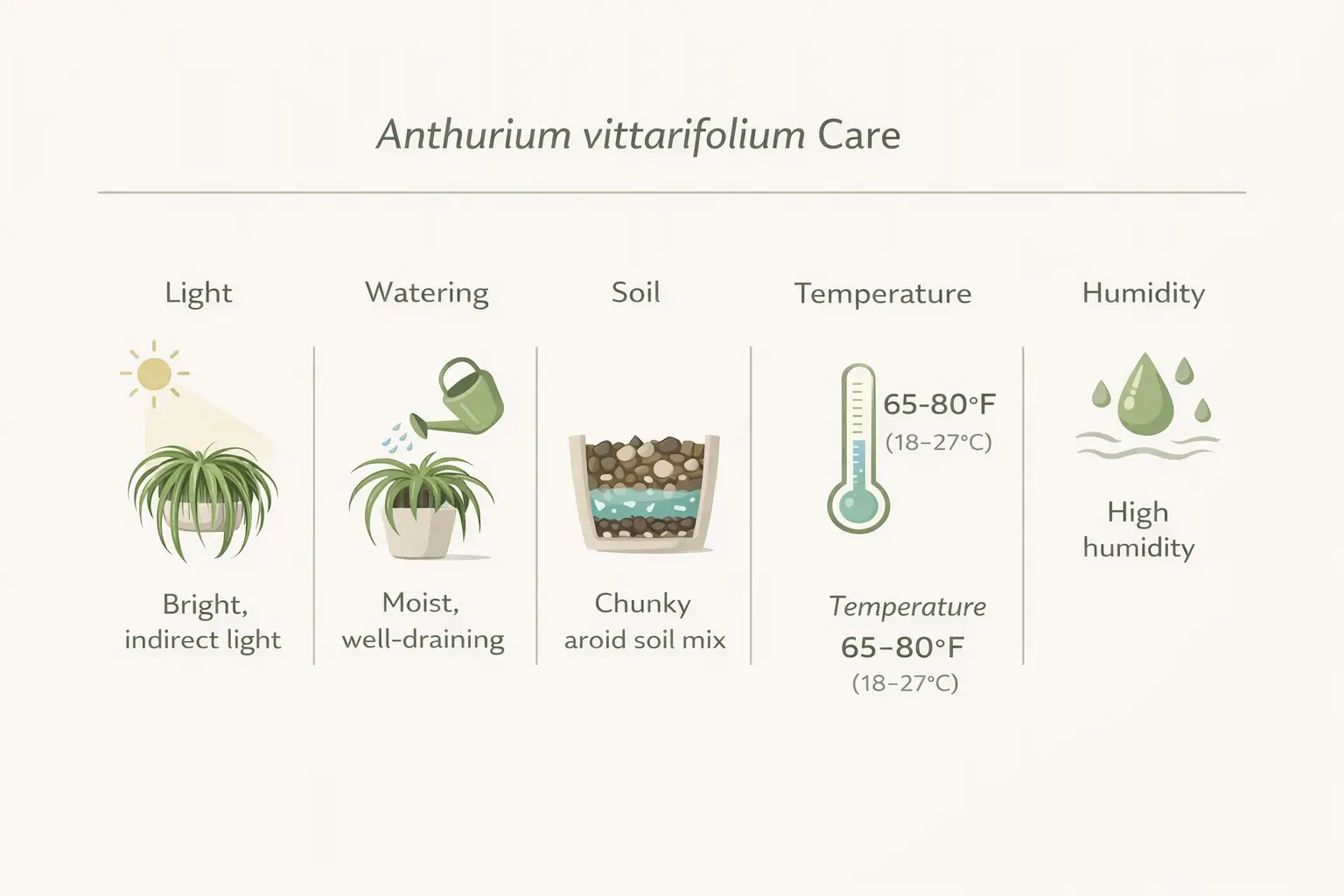
- Bright, indirect light is ideal for steady growth and leaf elongation
- Variegated plants benefit from slightly brighter exposure without direct sun
Watering Schedule
- Keep the growing medium consistently moist but never waterlogged
- Allow partial drying of the upper layer to reduce root rot risk
Proper watering balance is also essential in other indoor plants, as explained in our guide on spider plant indoor benefits.
Soil and Potting Mix
- Use a chunky aroid mix with bark, perlite, and coarse organic material
- Strong airflow around roots supports healthy epiphytic growth
Temperature and Humidity
- Optimal temperatures range between 18–27°C
- High humidity supports maximum leaf length and prevents edge browning
This care approach aligns closely with proper anthurium vittarifolium care standards.
Anthurium Vittarifolium Seeds and Propagation
Seed Production After Flowering
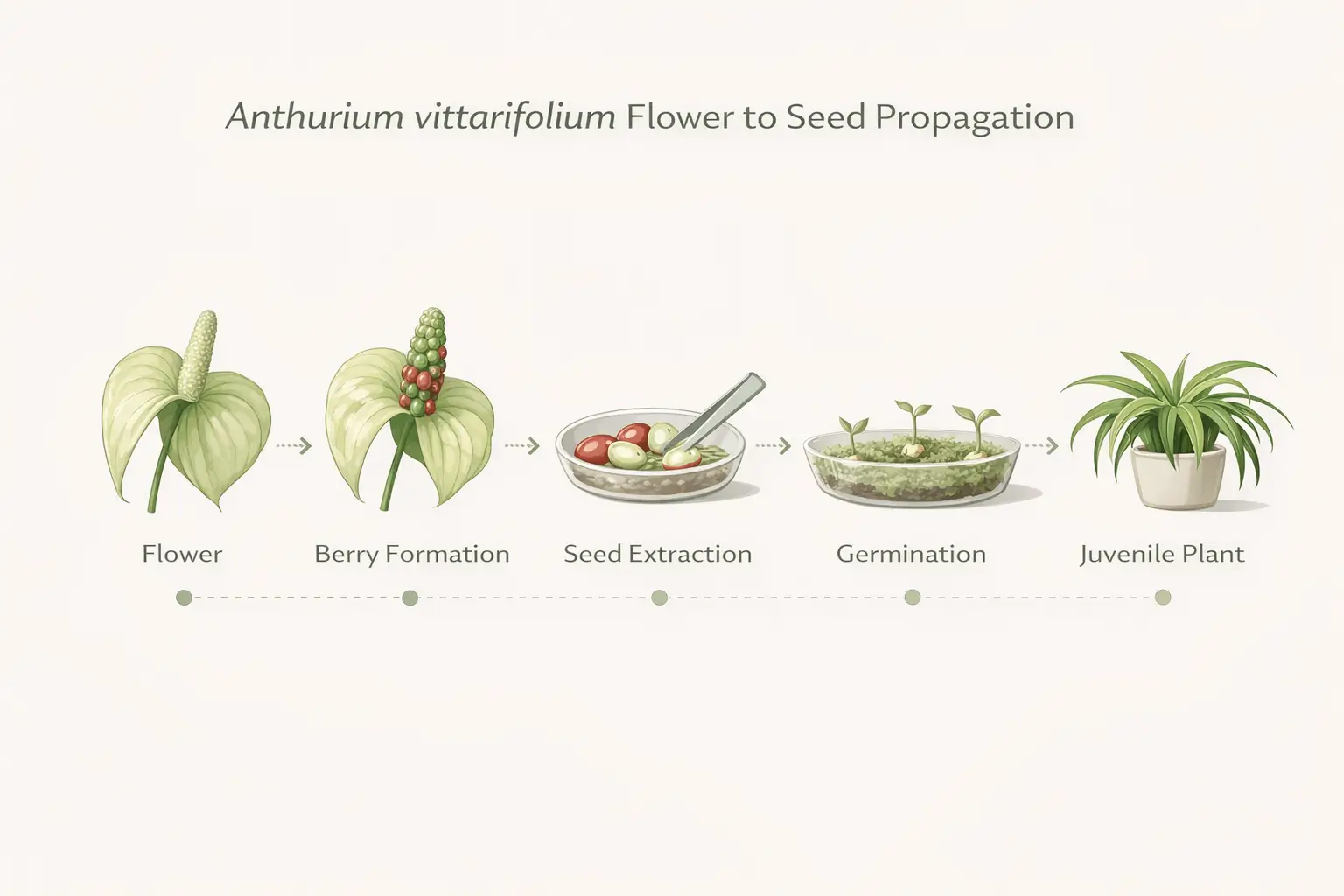
After successful pollination, berries develop along the spadix, each containing seeds. Anthurium vittarifolium seeds have a limited viability window and should be planted soon after harvest to ensure germination success.
Growing Anthurium Vittarifolium From Seeds
Seed propagation requires:
- Warm temperatures and constant humidity
- Light, sterile growing medium
- Several weeks for germination
Seedlings develop slowly, typically taking months to reach a recognizable juvenile stage.
Anthurium Vittarifolium vs Pallidiflorum
Leaf Length and Texture Comparison
When comparing anthurium vittarifolium vs pallidiflorum, vittarifolium generally produces longer, thinner leaves with a more pronounced pendulous form. Pallidiflorum leaves are often thicker with a denser texture and slightly different drape.
Care and Growth Speed Differences
Pallidiflorum is often considered marginally easier for beginners due to sturdier leaves and faster early growth. Vittarifolium, however, is favored by collectors for its extreme leaf length and refined appearance.
Buying Anthurium Vittarifolium
What to Check Before Buying
- Firm, well-established roots with no signs of rot
- Leaves free from mechanical damage, yellowing, or stress marks
Price Factors
- Plant size and maturity level
- Presence of variegation
- Overall market demand and availability
These factors heavily influence pricing when anthurium vittarifolium for sale listings appear.
Common Problems and Solutions
Yellowing or Browning Leaves
- Overwatering often causes yellowing due to root stress
- Underwatering leads to browning and dry leaf edges
Slow Growth Issues
- Insufficient light reduces energy production
Similar light-related growth behavior can also be seen in our article on sansevieria laurentii care.
- Nutrient deficiencies limit leaf expansion and vigor
Conclusion
Anthurium vittarifolium stands out among strap-leaf anthuriums for its dramatic, cascading foliage and refined growth habit. The exceptionally long, narrow leaves create a strong architectural presence that few other Anthurium species can match. This makes it especially appealing to collectors who value foliage form, maturity potential, and visual impact over showy flowers.
While it is not the fastest-growing aroid, anthurium vittarifolium rewards patience with increasingly impressive leaf length as it matures. Beginners can grow it successfully if they are willing to maintain stable humidity, proper light, and a well-aerated root environment. For long-term success, consistent care is essential—when its natural rainforest conditions are respected, this plant develops into a striking and long-lived specimen.
FAQs
Is anthurium vittarifolium easy to care for indoors?
Anthurium vittarifolium is moderately easy to care for indoors when basic requirements are met. It needs bright, indirect light, high humidity, and a well-draining aroid mix. It is more forgiving than many rare anthuriums but still requires consistency.
How long does it take for anthurium vittarifolium to mature?
Growth is gradual. Under good conditions, a juvenile plant may take several years to reach full maturity. As anthurium vittarifolium matures, leaf length increases significantly, which is the primary indicator of maturity.
Is the variegated anthurium vittarifolium stable?
Variegation stability varies by plant. Some variegated specimens maintain consistent patterns, while others may revert partially over time. Stable light, careful care, and healthy growth improve the chances of maintaining variegation.
Can anthurium vittarifolium be grown from seeds at home?
Yes, it can be grown from seeds at home, but the process is slow and requires controlled humidity, warmth, and fresh seeds. Germination is possible for experienced growers, but most hobbyists prefer established plants due to the long development timeline.
What is the difference between anthurium vittarifolium and pallidiflorum?
The main difference lies in leaf structure and growth habit. Anthurium vittarifolium produces longer, thinner, more pendulous strap leaves, while pallidiflorum typically has slightly thicker foliage and a different drape. Care requirements are similar, but pallidiflorum is often considered slightly easier for beginners.

Written by the LeafyHeaven Editorial Team
LeafyHeaven shares practical gardening tips and simple plant care guides to help you grow, nurture, and enjoy your plants with ease. Our goal is to make gardening feel natural, approachable, and rewarding for everyone.