
Introduction
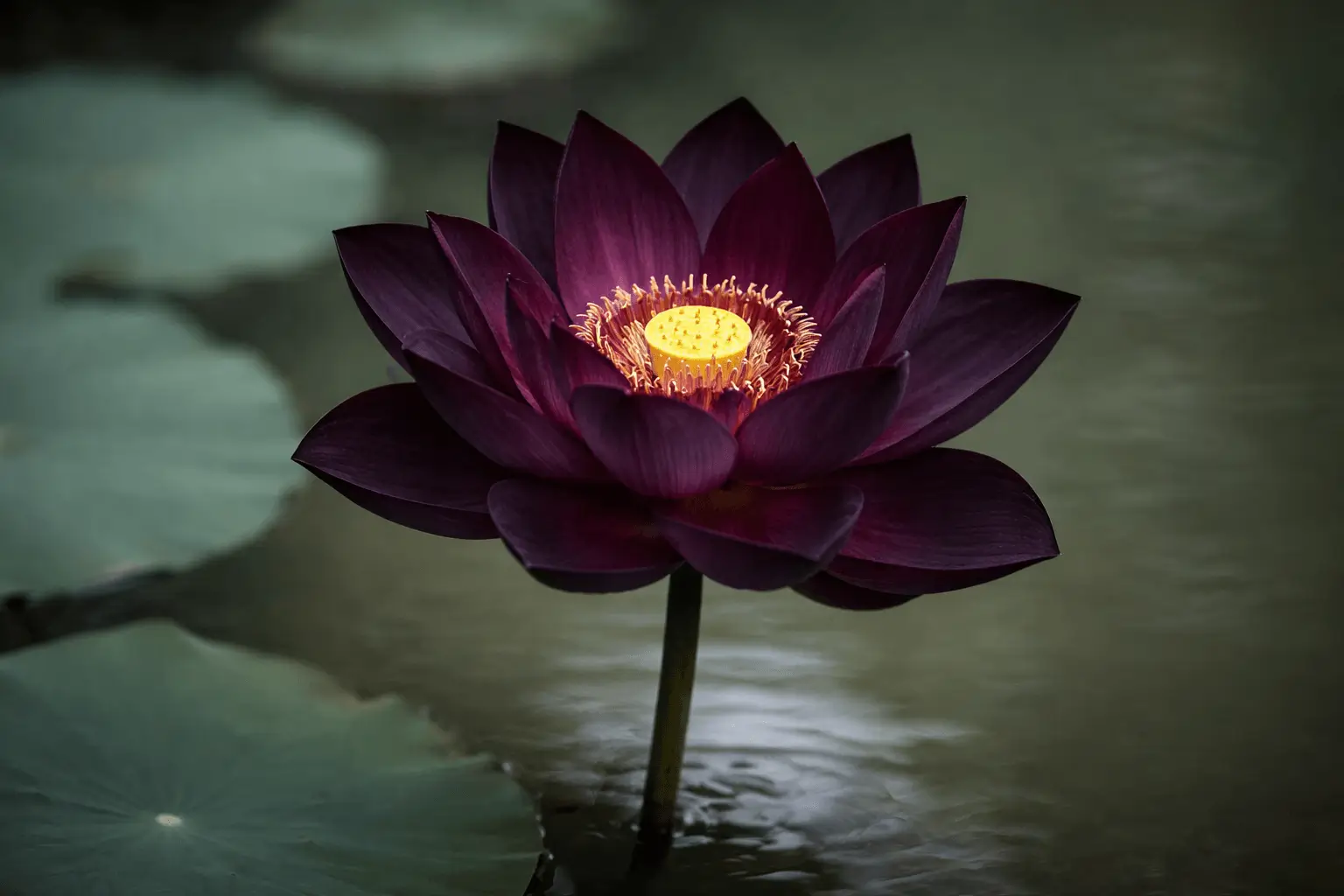
Black lotus flowers are often described as rare, mysterious blooms that appear almost jet black in images, artwork, and online listings. This perception has fueled widespread curiosity, especially among plant enthusiasts, spiritual seekers, and gardeners searching for something visually unique. Much of the fascination comes from photographs and descriptions of extremely dark lotus flowers that seem to defy natural color limits. In reality, the idea of a naturally black lotus is more complex. Understanding the difference between botanical reality and visual illusion is essential before believing claims about black lotus flowers.
Are Black Lotus Flowers Real?
No, black lotus flowers are not naturally real. True lotus plants do not produce pure black blooms. The darkest natural shades are deep purple, burgundy, or maroon.
| Claim | Scientific Reality |
|---|---|
| True black lotus exists | ❌ No |
| Dark purple lotus exists | ✅ Yes |
| Black lotus seeds grow black flowers | ❌ No |
| Black lotus is a species | ❌ Not recognized |
| Dark lotus shades occur | ✅ Yes |
What Are Black Lotus Flowers?
The term black lotus flowers is not a scientific classification. It is a descriptive phrase used to refer to lotus flowers that appear extremely dark in color. People commonly use this term when they encounter images or seeds advertised as producing black blooms.
Interest in black-colored lotus varieties is driven by rarity appeal, symbolism, and visual impact. Dark flowers are often associated with mystery and exclusivity, making the idea of a black lotus especially attractive.
It is also important to distinguish between true lotus plants and water lilies. True lotus belongs to the genus Nelumbo, while many dark “lotus-like” flowers seen online are actually water lilies from the genus Nymphaea. This distinction explains much of the confusion surrounding black lotus claims.
Black Lotus Flower vs Traditional Lotus
- Traditional lotus flowers are typically white, pink, or soft blue, with bright centers and clearly visible petal structure. In contrast, a dark lotus flower appears deep purple or maroon, especially under low light.
- From a botanical standpoint, traditional and dark-colored lotus flowers share the same structural traits: large circular leaves, upright flowers, and rhizome-based growth. The difference lies in pigment concentration rather than species.
- Visually, human perception plays a major role. Low light, shadows, and saturated colors can make deep-toned lotus flowers appear black, even though scientifically they are not.
Are Black Lotus Flowers Real? (expanded science)
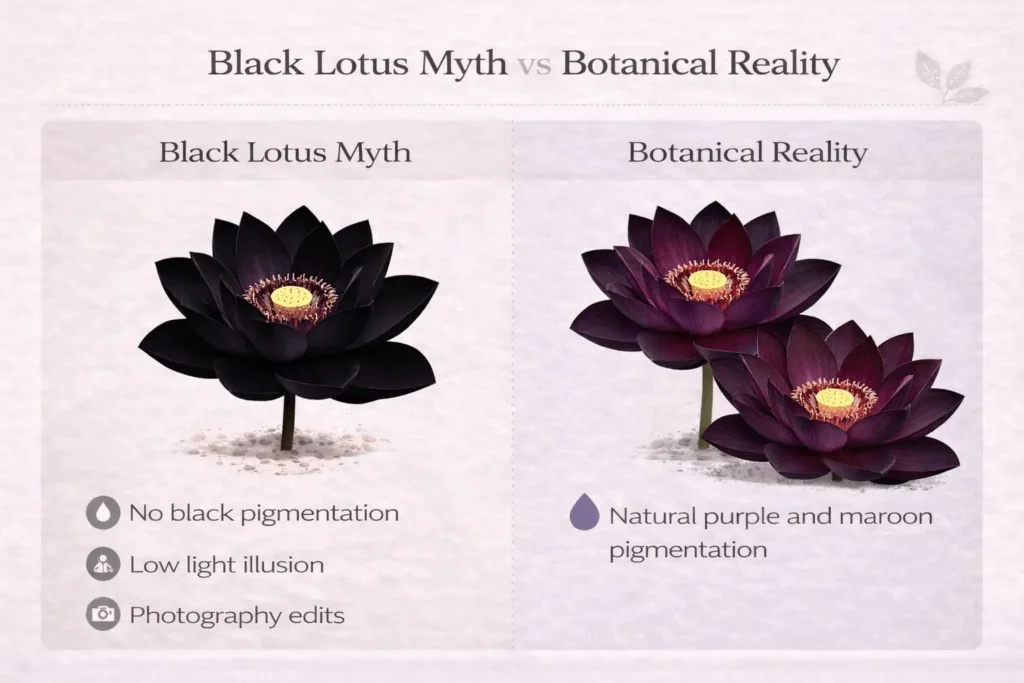
The question are black lotus flowers real has a clear scientific answer: no naturally occurring lotus produces a true black bloom. Lotus flower coloration is controlled by pigments, primarily anthocyanins, which create red, purple, and blue tones but cannot generate pure black. True black flowers are rare across all plant species because black pigment does not efficiently reflect light, which is essential for attracting pollinators. In lotus plants, genetics limit how dark the petals can become. Lighting conditions, flower age, and genetic variation all influence how dark a lotus appears. Older blooms often deepen in color, and strong contrast can create the illusion of a real black lotus flower.
Real Black Lotus Flower — Myth or Reality
- Very dark purple or maroon lotus varieties are the source of the black lotus myth. When petals absorb most light, especially during late blooming stages, they can look nearly black.
- These varieties are often marketed as “black lotus” for commercial appeal, despite lacking true black pigmentation.
- Photography also plays a major role. High contrast, shadow-heavy lighting, and post-processing filters exaggerate darkness, creating images that do not represent the flower’s natural color.
You can also explore similar color perception effects in our guide on cosmos flower blue, where lighting and image editing influence how flowers appear.
Black Lotus Plant — Botanical Overview
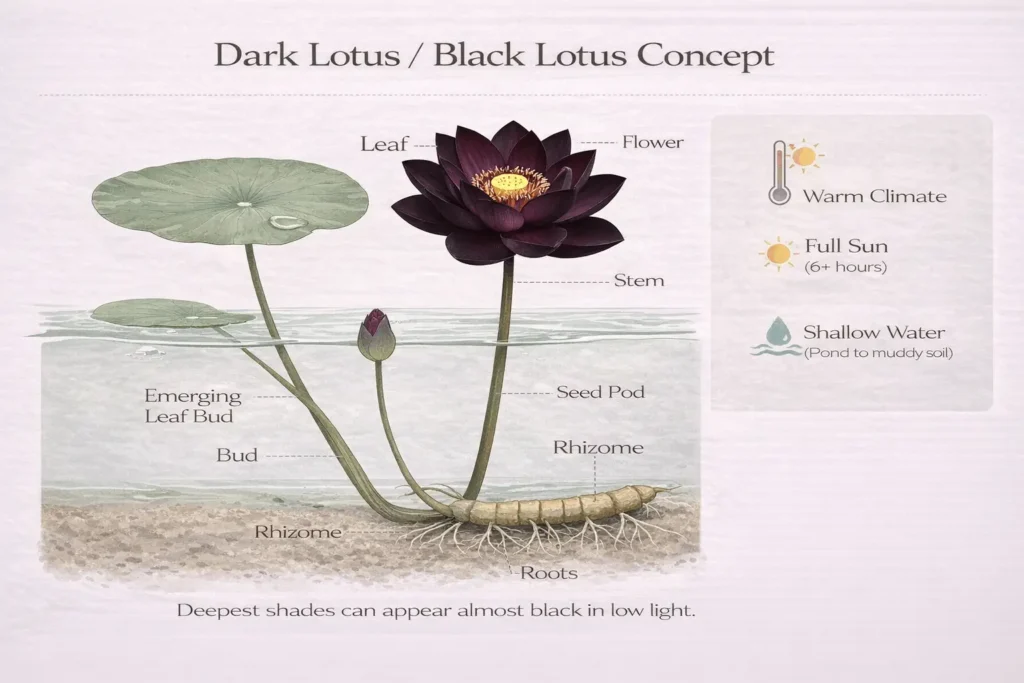
The black lotus plant, often marketed under this name, follows the same botanical structure as standard lotus plants. It grows from thick rhizomes anchored in muddy substrates, producing long stems that support floating leaves and upright flowers. Leaves are large, round, and water-repellent. Flowers emerge above the water surface and open gradually over several days. Climate requirements remain unchanged. Lotus plants thrive in warm temperatures, full sun, and still water environments such as ponds or large containers. For detailed structure, growth conditions, and care information, see our guide on the black lotus plant.
Black Lotus Flower Plant vs Other Dark Lotus Types
- A black lotus flower plant does not differ structurally from other dark lotus varieties. The distinction lies in naming rather than genetics.
- Dark lotus flower varieties represent the deepest pigment expressions available, while “black-flowered lotus” is a descriptive label rather than a botanical category.
- Cultivar development has limits, and no breeding program has produced a genetically black lotus. Commercial names often exaggerate color to attract buyers.
Black Lotus Seeds — What Buyers Should Know
Black lotus seeds are commonly sold online with promises of rare black blooms. In reality, these seeds typically produce standard pink, white, or dark purple lotus flowers.
Important points:
-
No verified lotus cultivar produces true black petals
-
Many product images are digitally enhanced
-
Germination depends on scarification and warm water
-
Flower color cannot be guaranteed
Gardeners should approach “real black lotus seeds” listings cautiously and verify cultivar details before purchasing.
Can You Grow a Real Black Lotus at Home?
- Gardeners should maintain realistic expectations. A real black lotus cannot be grown because it does not exist naturally.
- Environmental factors such as sunlight intensity, nutrient levels, and water temperature can deepen flower color but cannot create black pigmentation.
- Seed marketing frequently misleads buyers by using edited images and vague descriptions, contributing to ongoing misconceptions.
Black-Flowered Lotus — Scientific Explanation
The term black-flowered lotus is descriptive, not taxonomic. It refers to lotus flowers with exceptionally dark pigmentation rather than a distinct species. Anthocyanin pigments are responsible for these dark tones. These pigment mechanisms are also explained in detail by Encyclopaedia Britannica. Higher concentrations result in deeper purples and maroons, but pigment chemistry prevents true black coloration. Other plants labeled as black flowers follow the same pattern, relying on very dark shades rather than actual black pigment.
Lotus Flower Dark Shades Explained
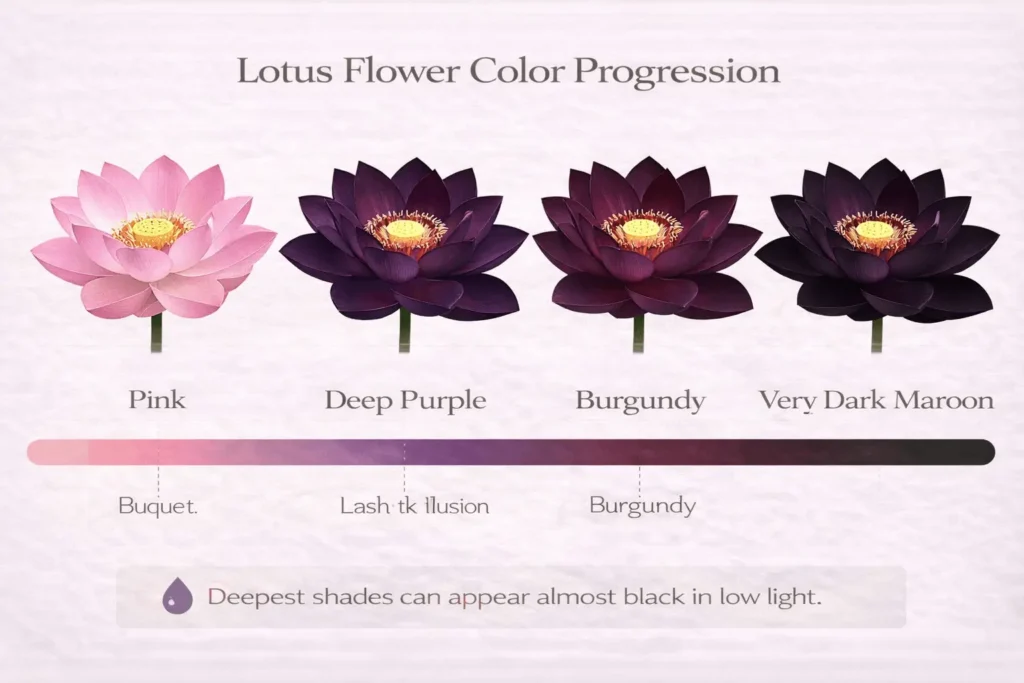
- A dark lotus flower may appear deep purple, burgundy, or maroon depending on genetics and growing conditions. These shades are the darkest expressions naturally produced by lotus plants.
- Such flowers are often mistaken for black due to low reflectivity and shadow effects.
- During blooming stages, lotus petals can darken as they mature, further reinforcing the illusion of a lotus flower dark enough to be black.
Cultural Symbolism of Black Lotus Flowers
In art and mythology, black lotus flowers symbolize mystery, rebirth, and the unknown. Their perceived rarity enhances their symbolic power.Modern media often uses the black lotus as a visual metaphor for transformation and inner strength.
These meanings have made black lotus imagery popular in tattoos, graphic designs, and spiritual interpretations, even though the flower itself is symbolic rather than botanical.
Black Lotus Flowers in Photography & Art
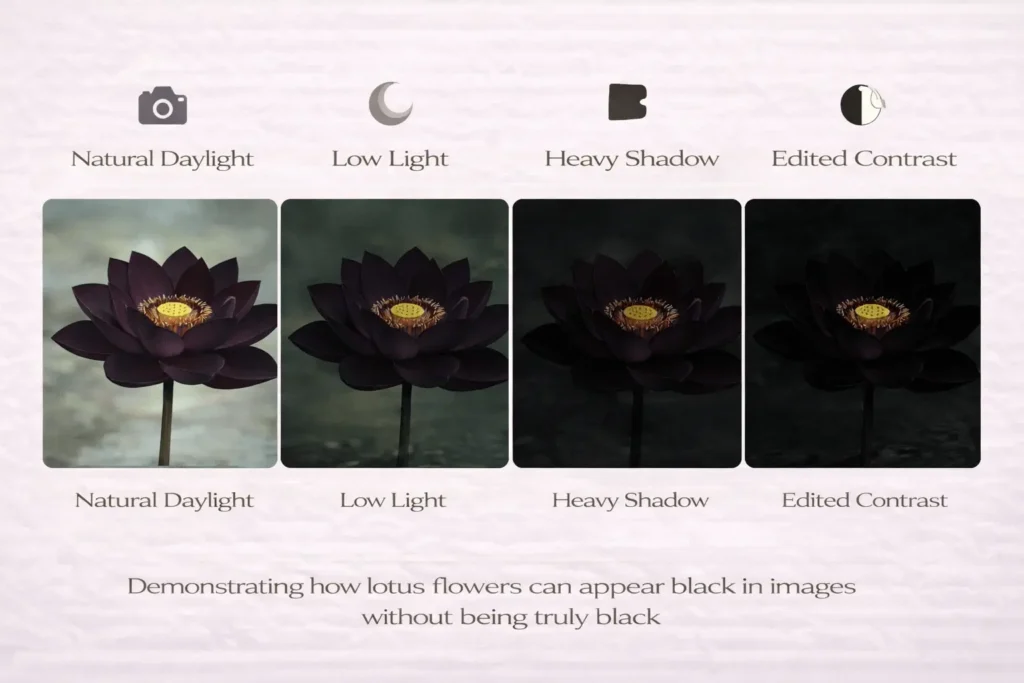
Lotus flowers appear black in photos due to controlled lighting, strong contrast, and background isolation. Shadows, exposure adjustments, and digital editing deepen existing dark tones. This creates a clear difference between a black lotus flower real appearance and edited visuals designed for dramatic effect. Similar color myths are discussed in our Moonflower Blue Truth article, where lighting and perception also influence how flowers appear.
How to Spot Fake Black Lotus Listings Online
-
Images look overly saturated or digitally altered
-
Seller provides no cultivar name
-
Description claims “pure black” without proof
-
Reviews mention color mismatch
-
Only edited stock photos are shown
This awareness helps buyers avoid misleading marketing.
Conclusion — The Truth About Black Lotus Flowers
Black lotus flowers exist primarily as a concept rather than a botanical reality. Science confirms that lotus plants cannot produce true black pigmentation. What appears black is simply the darkest natural expression of purple and maroon pigments combined with lighting and perception. Understanding this distinction protects buyers from unrealistic seed claims and helps gardeners set accurate expectations.
Frequently Asked Questions (FAQs)
Are black lotus flowers real in nature?
No. Black lotus flowers are not real in nature. Lotus plants do not produce true black petals; the darkest natural colors are deep purple or maroon.
What color is the darkest natural lotus flower?
The darkest natural lotus flower colors are deep purple, burgundy, or dark maroon. These shades may appear black under certain lighting conditions.
Can black lotus seeds grow true black flowers?
No. Black lotus seeds do not grow true black flowers. Seeds marketed as black lotus typically produce standard or dark-colored lotus varieties.
Why do some lotus flowers appear black in photos?
Lotus flowers may appear black in photos due to shadows, high contrast, low light, or digital editing that intensifies dark pigments.
Is black-flowered lotus a real plant species?
No. Black-flowered lotus is not a recognized plant species. It is a descriptive term used for lotus flowers with very dark coloration, not a scientific classification.
Why do black lotus flowers look real in photos?
Lighting, shadow, and digital editing enhance dark purple tones, making them appear black.
What is the closest natural color to black in lotus flowers?
Deep burgundy or dark maroon is the closest natural shade.
Are black lotus flowers rare?
True black lotus flowers do not exist. Dark purple varieties are uncommon but not black.

Written by the LeafyHeaven Editorial Team
LeafyHeaven shares practical gardening tips and simple plant care guides to help you grow, nurture, and enjoy your plants with ease. Our goal is to make gardening feel natural, approachable, and rewarding for everyone.

[…] Read Also: Black Lotus Flowers: 8+ Shocking Truths Behind the Myth […]