
Introduction
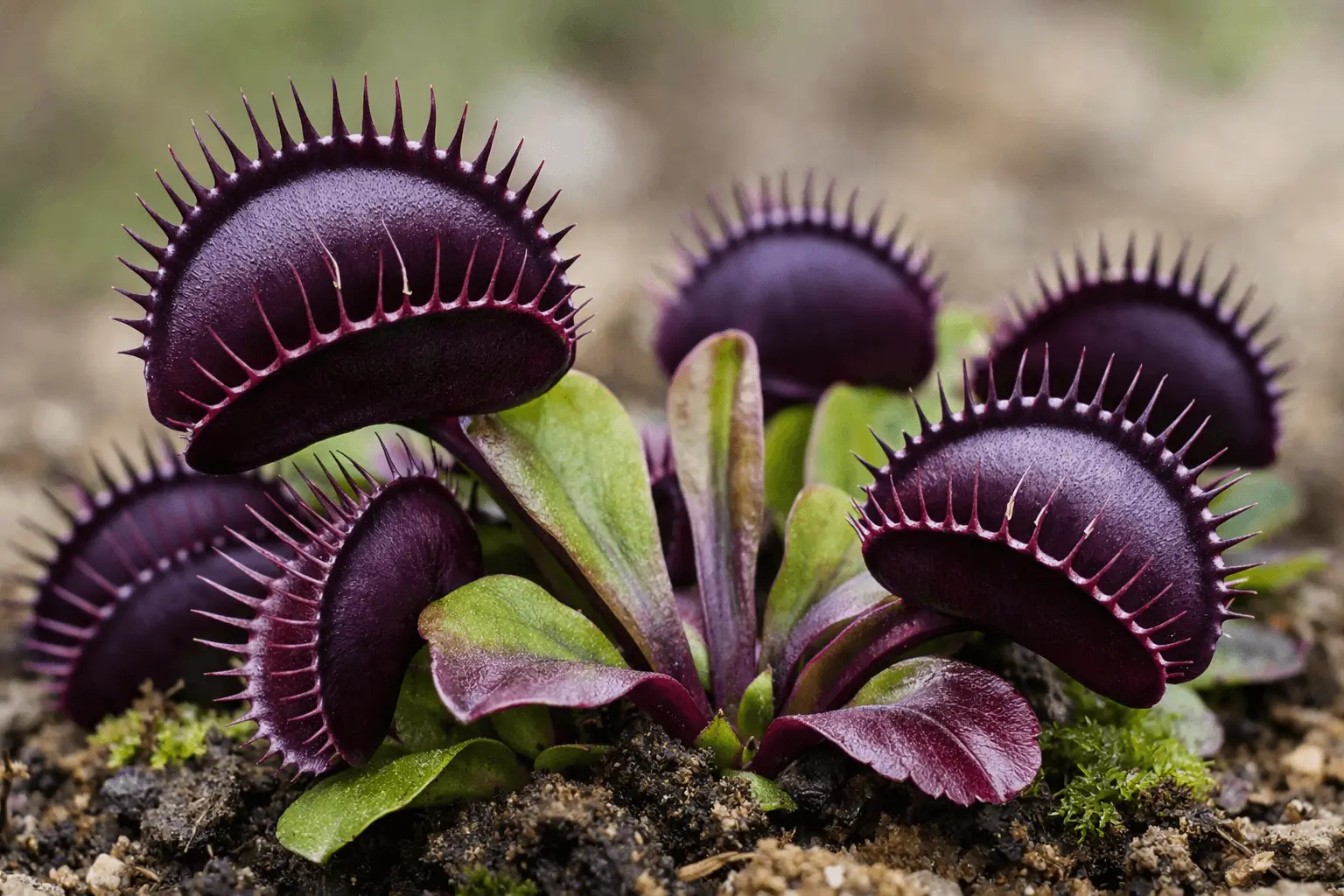
A purple Venus fly trap is a visually striking form of the iconic carnivorous plant known for its snap-shut insect traps. Unlike the typical green forms, this plant develops deep red to purple pigmentation across its traps and sometimes the leaf interiors, giving it a dramatic appearance that stands out immediately. The purple coloration makes this Venus flytrap unique because it reflects higher anthocyanin levels, often intensified by strong light and specific genetics. While not impossible to grow, purple Venus fly traps are considered more demanding than standard types due to their light and water sensitivity. Their unusual coloration, limited availability, and visual appeal make them especially attractive to collectors and carnivorous plant enthusiasts.
What Is a Purple Venus Fly Trap?
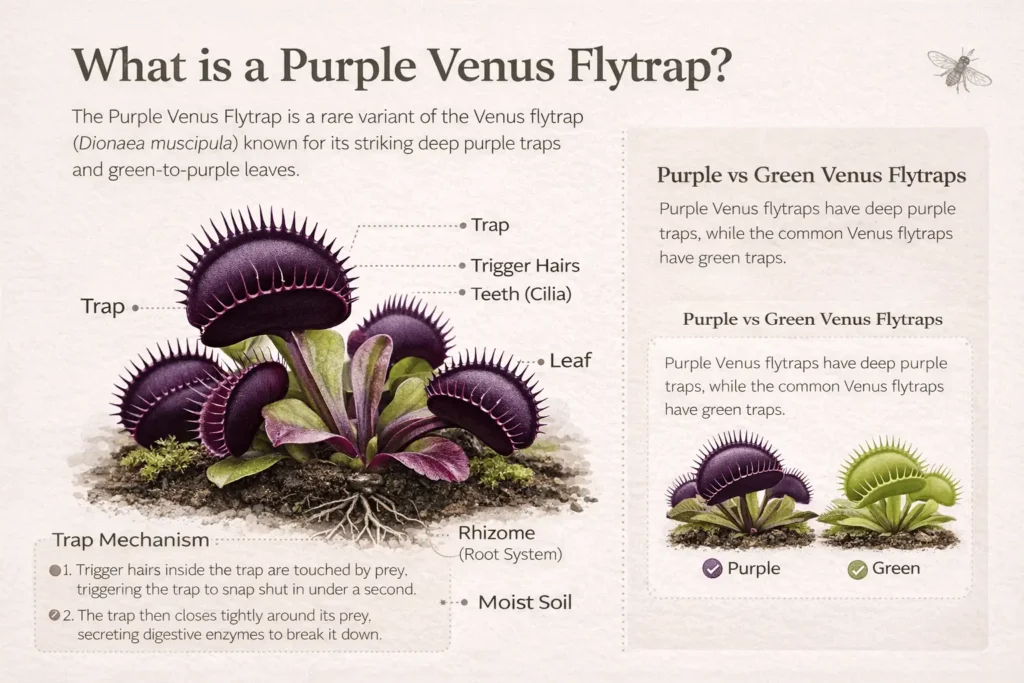
A purple Venus fly trap is a color-enhanced form of Venus fly traps that develops dark red to purple pigmentation in its traps or foliage. It belongs to the same species as common Venus flytraps but differs in appearance rather than basic structure or behavior.
Compared to standard green Venus fly traps, purple forms show stronger coloration, especially inside the traps. Green varieties rely more on chlorophyll, while purple ones produce higher anthocyanin pigments, resulting in darker tones.
Some purple Venus fly traps occur naturally under intense sunlight, while others are cultivated selections bred specifically for deep coloration. Most examples available today are cultivated varieties rather than wild forms, which contributes to their reputation as a rare Venus fly trap.
Why Do Some Venus Fly Traps Turn Purple?
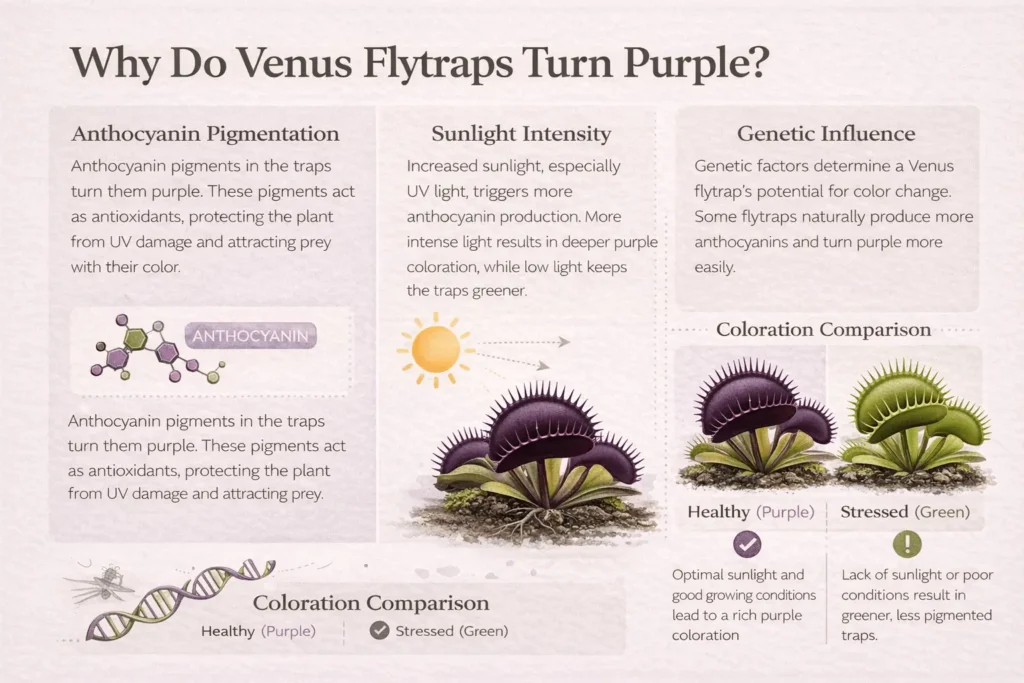
- Purple coloration in Venus fly traps is caused by anthocyanin pigmentation. Anthocyanins are natural plant compounds responsible for red, purple, and dark tones in many species.
These pigment behaviors are also explained in detail by the Missouri Botanical Garden.
- Sunlight plays a major role in pigment development. Strong, direct light increases anthocyanin production, while genetics determine how intensely a plant can express purple coloration. Some plants are genetically predisposed to remain green even in high light.
- Not all purple coloration indicates stress. Healthy plants often deepen in color under optimal conditions. However, extreme stress such as poor water quality or nutrient exposure can also cause discoloration, which is usually accompanied by weak growth or trap damage.
Is the Purple Venus Fly Trap a Rare Plant?
Purple Venus fly traps are not extinct or impossible to find, but they are less common than standard green forms. Availability depends on nurseries that specialize in carnivorous plants and propagate colored cultivars responsibly.
Collector demand is high because purple varieties are visually distinctive and slower to propagate. This demand elevates their perceived rarity, especially for deeply pigmented forms.
When compared with other rare cultivars, purple Venus fly traps fall into a moderate rarity category. They are rarer than typical garden varieties but more accessible than limited-release or tissue-cultured specialty clones, placing them firmly in the rare Venus fly trap category.
Purple Venus Fly Trap Care Guide
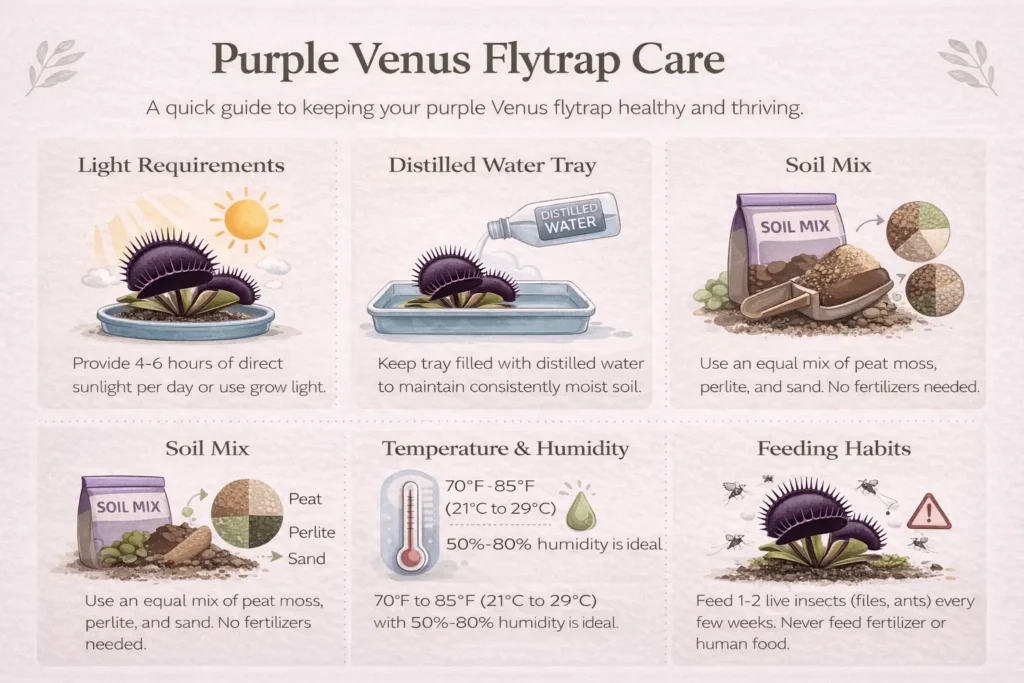
Proper care is essential for maintaining color intensity and long-term health. Purple Venus fly trap care follows the same biological rules as general Venus fly trap care, with added emphasis on light quality and water purity.
-
Light Requirements
Purple Venus fly traps require full sun for optimal coloration. Outdoors, they perform best with 6–8 hours of direct sunlight daily.
Indoors, high-output grow lights are necessary. Insufficient light causes traps to turn green and lose their purple tones. Similar light sensitivity can also be observed in our guide on sansevieria laurentii care, where indoor plant lighting plays a key role in growth and appearance. Strong light not only enhances color but also supports robust trap development.
To better understand how light, watering, and soil conditions affect plant growth, you can explore our complete gardening and plant care guide.
-
Watering Needs
Only distilled water, rainwater, or reverse-osmosis water should be used. Minerals in tap water damage the roots and traps. Water quality also affects other houseplants, as explained in our article on spider plant indoor benefits, where proper watering practices are essential.
The tray method is ideal. Place the pot in a shallow tray with water to keep the soil consistently moist without flooding the plant.
-
Soil and Potting Mix
The ideal soil is a carnivorous plant mix, typically peat moss combined with perlite or silica sand.
Avoid regular potting soil, compost, fertilizers, and nutrient-rich mixes. These materials burn the roots and can kill the plant quickly.
-
Temperature and Humidity
Purple Venus fly traps thrive in temperatures between 70–90°F during the growing season. Humidity should remain moderate, though they tolerate average indoor levels if watering is correct.
Outdoor plants adapt well to natural fluctuations, while indoor plants need stable conditions and good airflow.
-
Feeding and Growth Habits
Purple Venus fly traps do not require manual feeding if grown outdoors, as they catch insects naturally.
Indoor plants may benefit from occasional feeding with small live insects. Manual feeding should be minimal, as overfeeding weakens the traps and slows growth.
Indoor vs Outdoor Growing for Purple Venus Fly Traps
Outdoor growing produces the strongest coloration and healthiest plants due to natural sunlight. Placement in full sun with protection from extreme heat is ideal.
Indoors, grow lights must be positioned close enough to provide intensity without overheating. Seasonal changes affect growth speed and color depth.
Common beginner mistakes include using tap water, low-light windowsills, and fertilizing the soil, all of which reduce color and vitality.
Dormancy in Purple Venus Fly Traps
Dormancy appears as slowed growth, smaller traps, and partial dieback during winter months. This is a natural phase.
Winter care involves reducing watering slightly, maintaining cool temperatures, and continuing exposure to light. Outdoor plants enter dormancy naturally, while indoor plants may need temperature adjustments.
Dormancy is essential for long-term health. Skipping dormancy weakens the plant, reduces coloration, and shortens lifespan.
Buying a Purple Venus Fly Trap
Before purchasing, confirm the plant is not artificially dyed. True purple coloration develops naturally under light.
Healthy plants have firm traps, white roots, and active growth points. Avoid plants with blackened centers or mushy rhizomes.
Purchase only from trusted, ethical sellers who specialize in carnivorous plants. This ensures authenticity and proper propagation when buying a purple Venus fly trap for sale.
Are Purple Venus Fly Traps Expensive?
Price depends on rarity, size, and color intensity. Deep purple specimens cost more than lightly colored ones.
Mature plants with established coloration are more expensive than young divisions. Strong pigmentation significantly increases collector value.
Purple Venus Fly Trap vs Other Colored Varieties
Purple Venus fly traps differ from red-toned varieties mainly in color depth and consistency. Red types often show coloration only inside the traps, while purple forms may display darker tones throughout.
Care requirements are similar across colored varieties, though purple types demand higher light levels.
Collector value is typically higher for stable purple coloration compared to common red cultivars.
Common Problems With Purple Venus Fly Traps
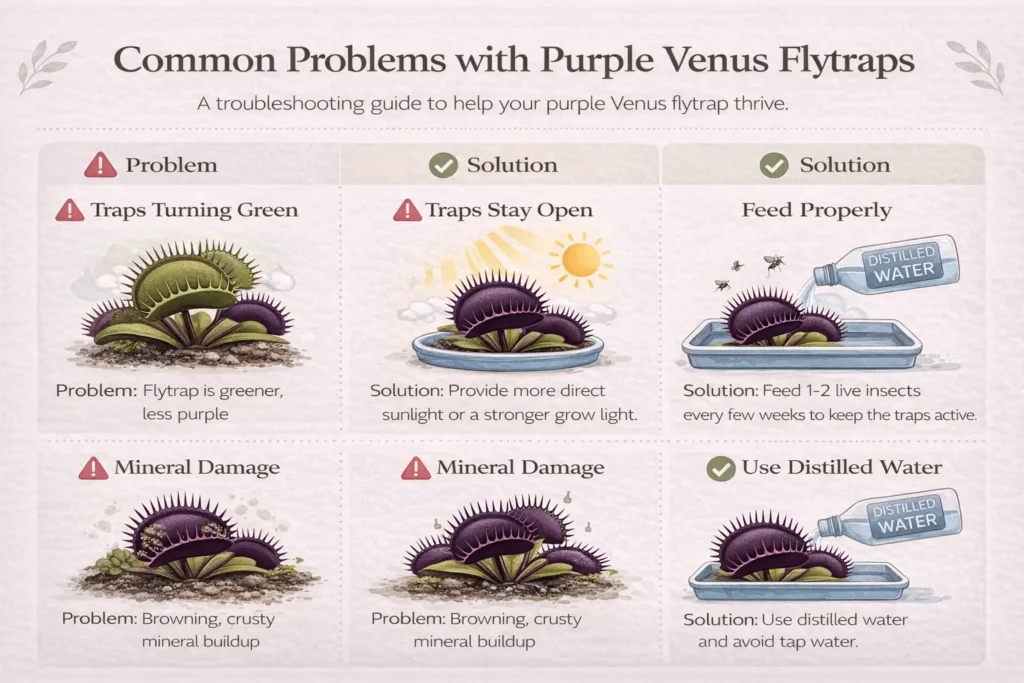
- Traps turning green usually indicate insufficient light. Increasing light intensity restores coloration over time.
- Traps dying or remaining open can result from overfeeding, poor water quality, or physical damage.
- Overwatering with mineral-rich water causes mineral buildup, leading to root damage and trap failure. Proper water choice is critical for plant survival.
Conclusion / Call to Action
Purple Venus fly traps stand out because of their deep coloration, striking appearance, and strong connection to light-driven plant physiology. Their purple tones are a result of natural pigmentation combined with proper growing conditions, not artificial enhancement. While they share the same basic needs as standard Venus fly traps, maintaining rich color requires more precision, especially with light and water quality. For beginners, they can be grown successfully with careful attention to care guidelines, but they are especially rewarding for collectors who appreciate rare visual traits. Always prioritize proper care and purchase from ethical, reputable sellers to support responsible cultivation and long-term plant health.
FAQs — Purple Venus Fly Trap
Is the purple Venus fly trap naturally purple or artificially colored?
Purple Venus fly traps are naturally colored. Their purple tones come from anthocyanin pigments produced in response to genetics and strong light. Reputable sellers do not dye these plants.
How long does it take for a Venus fly trap to turn purple?
Color development varies by plant and growing conditions. Under strong light, a Venus fly trap may begin showing purple tones within a few weeks, but full coloration can take several months.
Can purple Venus fly traps survive indoors year-round?
Yes, they can survive indoors if provided with high-intensity grow lights, pure water, and a proper dormancy period. Without dormancy, long-term health will decline.
Does purple coloration affect how the trap functions?
No. Purple coloration does not change how the traps close or digest insects. The trapping mechanism functions the same as in green Venus fly traps.
Is the purple Venus fly trap harder to care for than green ones?
Slightly. Basic care is the same, but purple Venus fly traps require stronger light to maintain color, making them less forgiving of low-light conditions than green varieties.

Written by the LeafyHeaven Editorial Team
LeafyHeaven shares practical gardening tips and simple plant care guides to help you grow, nurture, and enjoy your plants with ease. Our goal is to make gardening feel natural, approachable, and rewarding for everyone.