
Introduction
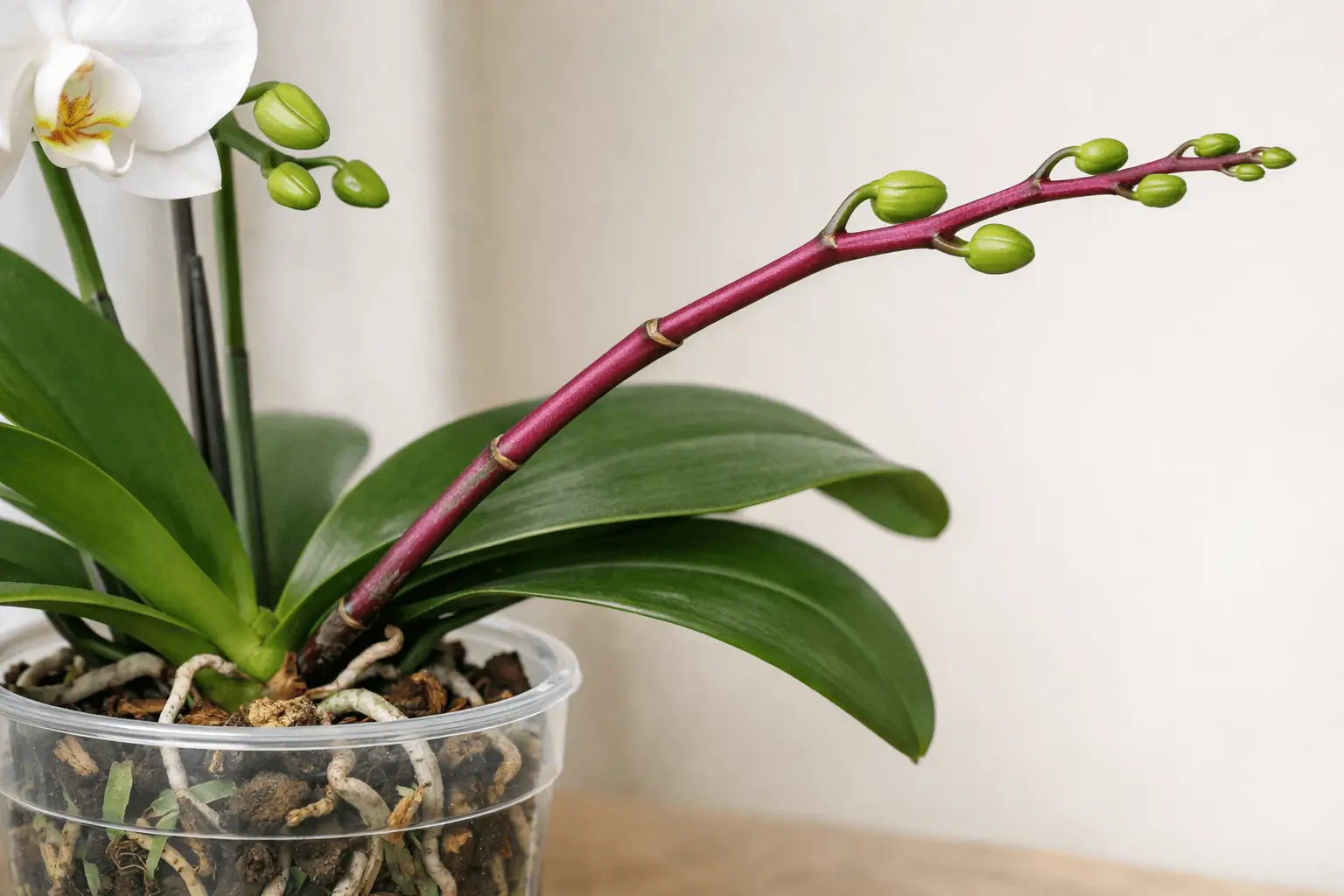
Orchid stem turning red often raises concern for plant owners, especially when the color change happens suddenly. Many assume that a red, yellow, or brown orchid stem automatically means something is wrong. In reality, stem color changes can be both normal and problematic, depending on the cause and overall plant health. A healthy orchid stem may change color due to light exposure, natural pigmentation, or growth activity, particularly in certain red orchid plant varieties. On the other hand, discoloration can also signal stress, nutrient issues, or declining health. Understanding the difference between a healthy and unhealthy orchid stem is essential for proper care. This guide explains what stem color changes really mean and how to respond correctly.
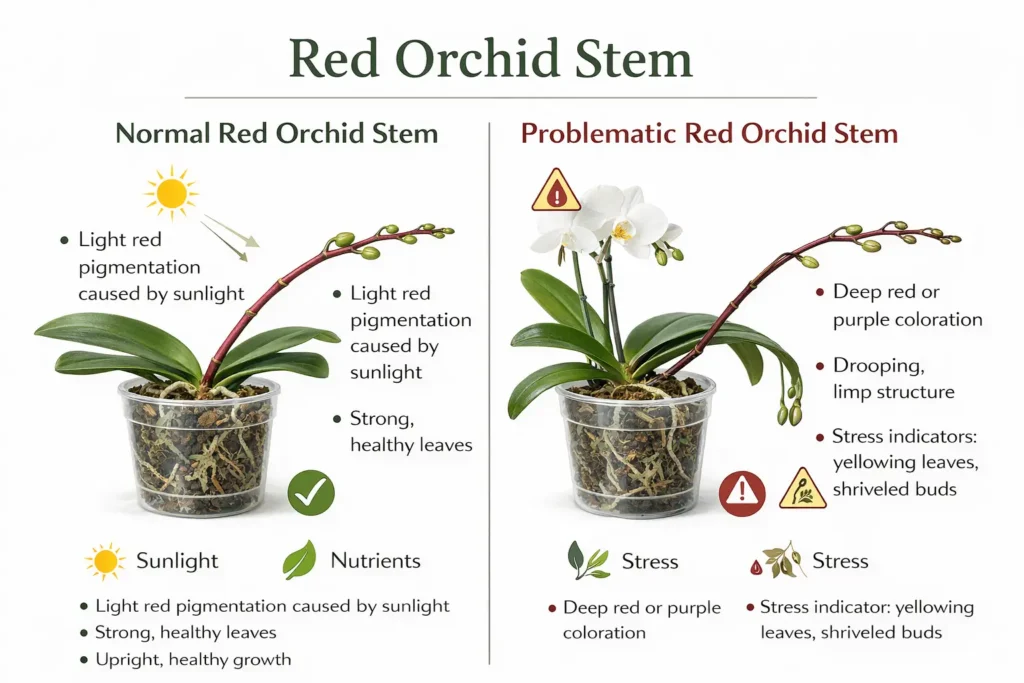
Orchid stem turning red is often a natural reaction to bright light or plant genetics. However, if redness spreads with softness, yellowing, or rot, it may signal stress that requires immediate attention.
Orchid Stem Turning Red — Is It Normal or a Warning Sign?
| Stem Color | Usually Normal | When to Worry |
|---|---|---|
| Red | Light exposure / genetics | If soft or spreading |
| Yellow | Post-flowering aging | If base turns mushy |
| Brown | Natural spike death | If rot smell present |
| Black | Rarely normal | Likely infection |
Natural Reasons for Red Orchid Stems
An orchid stem turning red is often a natural response rather than a problem.
- Sunlight exposure and anthocyanin pigments: Bright light triggers anthocyanin production, which causes red or purple tones in orchid stems and leaves.
- Red orchid plants and red orchid flower varieties: Some orchids are genetically predisposed to red pigmentation, especially those producing an orchid red flower.
- New growth and stress response: Early growth stages or mild environmental stress can cause orchid leaves turning red along with the stem.
These changes usually indicate adaptation, not damage.
When Red Orchid Stem Signals a Problem
In some cases, red coloration points to stress or decline.
- Overexposure to sun: Intense direct sunlight can scorch tissues and lead to orchid stem dying.
- Nutrient imbalance: Deficiencies or excess salts disrupt stem health.
- Environmental stress: Sudden temperature changes or poor airflow may result in an unhealthy orchid stem.
According to the American Orchid Society, color changes in orchid stems may result from light exposure, genetics, or underlying stress factors. Persistent redness combined with wilting or softness requires intervention.
Orchid Stem Turning Yellow — Causes & Solutions
Why Is My Orchid Stem Turning Yellow?
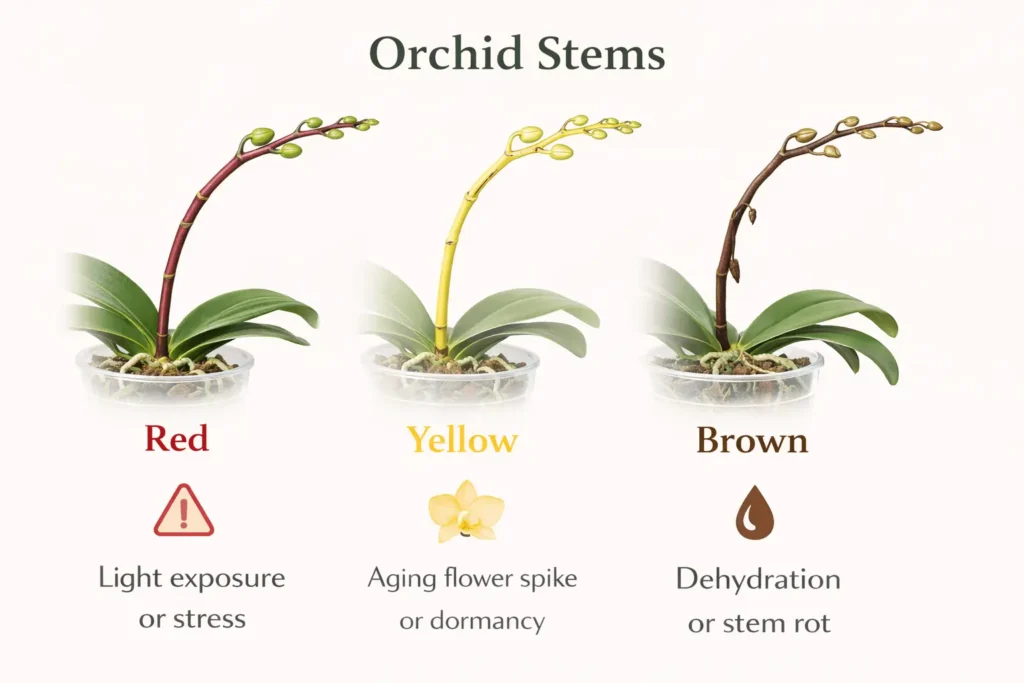
Yellowing stems are common and often part of the orchid life cycle.
- Aging flower spike: After blooming, the spike naturally yellows and dies back.
- Post-flowering dormancy: The orchid conserves energy once flowers fade.
- Watering issues: Overwatering or underwatering can cause orchid yellowing stem problems.
An orchid stem turning yellow is not always a sign of failure. If discoloration starts with yellowing, our guide on orchid stem turning yellow explains early warning signs in detail.
Yellow Stem vs New Orchid Stem Growth
Knowing the difference prevents accidental damage.
- What does a new orchid stem look like? New growth appears firm, green, and pointed.
- Orchid new stem vs dying stem: New orchid stem growth grows upward, while a dying stem yellows evenly and dries out.
Recognizing orchid new shoot development helps guide pruning decisions.
Orchid Stem Turning Brown — What Does It Mean?
Common Reasons for Brown Orchid Stems
A brown orchid stem usually indicates damage.
- Dehydration: Insufficient watering causes tissues to dry and harden.
- Fungal or bacterial infection: Pathogens darken the stem and weaken structure.
- Stem rot orchid: Excess moisture leads to orchid stem rot, often starting at the base.
Early action is critical to prevent spread.
Orchid Stem Turning Brown but Leaves Green
This situation can be misleading.
- Normal life cycle: Old spikes may brown while the plant remains healthy.
- When to worry: If the base softens or smells, rot may be present.
An orchid stem turning brown but leaves green is not always an emergency.
Orchid Spike vs Stem — Understanding the Difference
What Is the Spike on an Orchid?
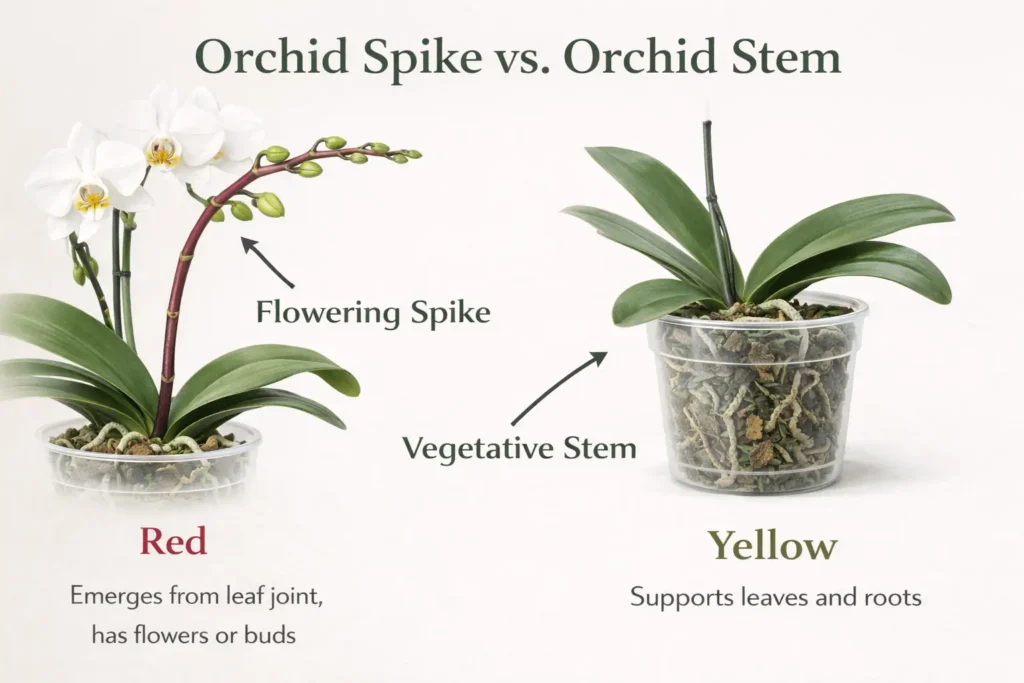
The spike is the flowering structure, not the main stem.
- Flowering spike explained: It supports blooms and emerges from leaf joints.
- Orchid flowering stem vs vegetative stem: Vegetative stems support leaves and roots, while spikes are temporary.
Understanding what is the spike on an orchid prevents incorrect pruning.
Orchid Spike Turning Yellow or Brown
Color change after flowering is normal.
- End of flowering phase: The spike finishes its role.
- Dormant orchid stem signs: Energy shifts back to roots and leaves.
An orchid spike turning yellow or brown usually signals rest, not death.
How to Fix an Unhealthy Orchid Stem
Proper Orchid Stem Care
Consistent care prevents most problems.
- Watering balance: Water only when roots dry slightly.
- Light requirements: Bright, indirect light is ideal.
- Air circulation: Prevents orchid stems drying out unevenly.
For a broader understanding of indoor plant care routines, you can also explore our article on anthurium vittarifolium care, which covers humidity, light, and watering balance. Correct orchid stem care restores strength. For a broader indoor plant care framework, see our Gardening & Plant Care Guide for Healthy Thriving Plants.
Orchid Stem Rot — Causes & Treatment
Stem rot spreads quickly if untreated.
- Early signs: Soft, dark areas near the base.
- How to stop stem rot: Remove infected tissue, reduce moisture, and improve airflow.
Prompt action can save the plant from severe orchid stem rot. Similar moisture-related plant issues are also explained in our guide on brown spots on anthurium leaves, where overwatering and airflow problems affect plant health.
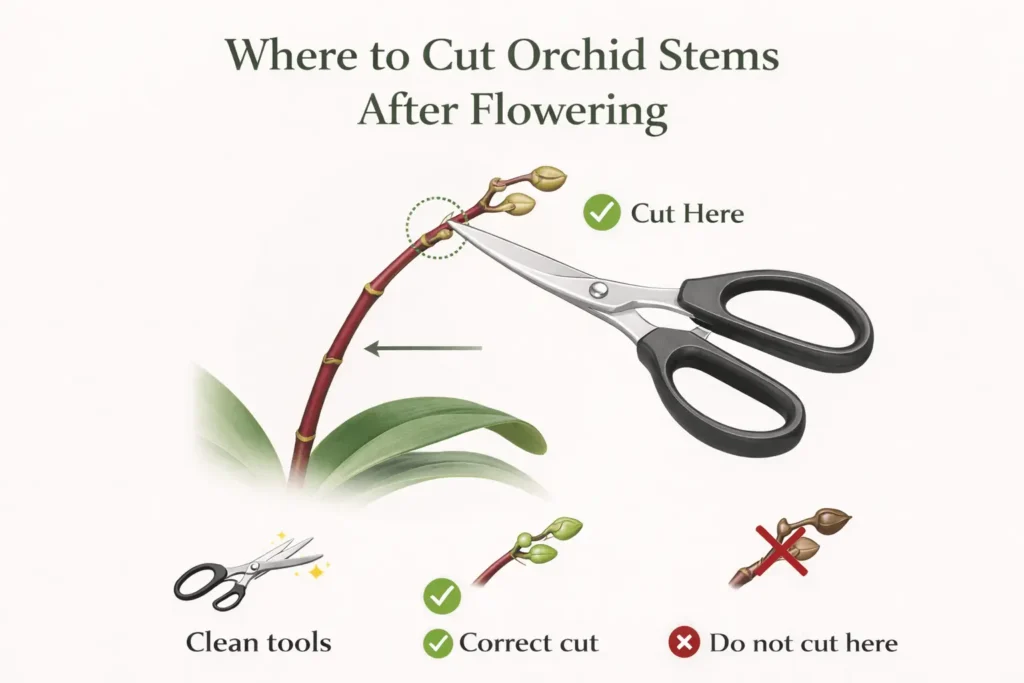
Where & How to Cut Orchid Stems Safely
When to Cut Back Orchid Stems After Flowering
Timing matters for recovery.
- Dead spike vs active spike: Cut only when fully yellow or brown.
- Best time to prune: After flowers fall and spike dries.
Knowing what to do with orchid stems after flowering prevents stress.
Where Do You Cut Orchid Stems?
Precision avoids damage.
- Node identification: Cut above a healthy node when applicable.
- Sterilized cutting tips: Prevent infection when you cut orchid spike tissue.
Understanding where do you cut orchid stems ensures clean healing.
Is My Orchid Dead or Just Resting?
Signs of a Dying Orchid Stem
Not all decline is fatal.
- Dead orchid stem indicators: Complete dryness and collapse.
- Crown spikes and root health check: Healthy roots signal survival even if a stem died.
An orchid stem died does not always mean the plant is lost.
How Long Does an Orchid Take to Recover?
Recovery takes patience.
- Orchid growth cycle: Rest, root growth, spike formation, bloom.
- Flowering timelines: How long does an orchid flower varies, and how tall does an orchid grow depends on variety.
Proper care shortens recovery time.
Conclusion
Red, yellow, or brown orchid stems each tell a different story. Some changes are natural, while others require correction. Use color, texture, and growth patterns as a quick diagnosis checklist. With proper light, watering, and patience, most orchids recover well. Observe carefully and respond early to keep your orchid healthy and blooming.
FAQs
Is red orchid stem a sign of too much light?
Red coloration can occur when orchids receive bright indirect light. If the plant remains firm and leaves stay healthy, redness alone is not harmful.
Why is my orchid stem turning red but leaves look healthy?
This usually indicates light exposure or natural pigmentation rather than a problem.
Is my orchid dead if the stem is brown?
Not necessarily. Check roots and leaves before deciding.
Should I cut an orchid stem that has turned yellow?
Yes, once it is fully dry and no longer producing growth.
What does a healthy new orchid stem look like?
It appears firm, green, and grows upward steadily.
Can orchid stem rot be reversed?
Yes, if caught early by removing affected tissue and correcting moisture issues.

Written by the LeafyHeaven Editorial Team
LeafyHeaven shares practical gardening tips and simple plant care guides to help you grow, nurture, and enjoy your plants with ease. Our goal is to make gardening feel natural, approachable, and rewarding for everyone.


[…] Read Also: Orchid Stem Turning Red: 7+ Shocking Causes You Must Know […]