
Introduction
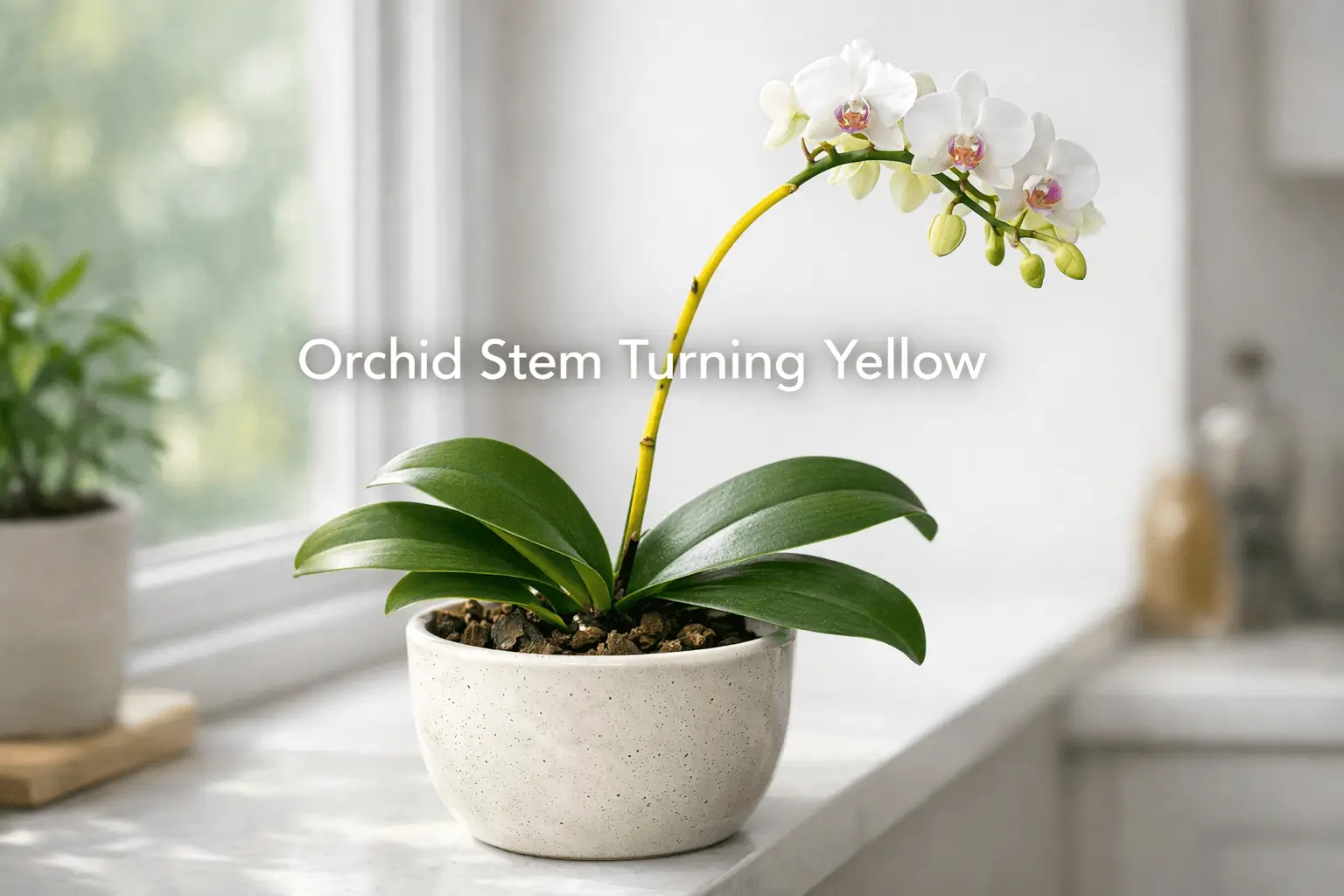
Orchid stem turning yellow is a common concern for orchid owners and often raises questions about plant health and care mistakes. Stem color changes matter because they can indicate natural growth cycles, environmental stress, or early signs of disease. In some cases, yellowing is completely normal, especially after flowering, while in others it serves as a warning signal that should not be ignored. Understanding the difference between natural aging and problem-related discoloration helps prevent unnecessary cutting or panic. To better understand how plant health, watering, and environmental conditions affect indoor plants, you can explore our complete gardening and plant care guide. Leaf condition also plays a key role in diagnosis, as healthy green leaves often point to normal processes, while leaf decline suggests deeper issues. Careful observation ensures the right action at the right time.
What Does It Mean When an Orchid Stem Turns Yellow?
Natural Aging vs Serious Problems
Yellowing is normal when an orchid finishes blooming. After flowers drop, older stems or spikes may turn yellow as the plant conserves energy. However, yellowing that occurs during active growth or alongside other symptoms can signal stress, infection, or environmental imbalance. Timing and overall plant condition determine whether yellowing is harmless or problematic. For comparison with other stem color changes, you can also explore our guide on orchid stem turning red, where light exposure and plant stress are explained in detail.
How to Check If the Orchid Is Still Healthy
Check the leaves, roots, and crown carefully. Firm green leaves and silvery-green roots indicate good health. If the orchid stem is yellow but leaves are green, the plant is usually stable and not in immediate danger. Stem color should always be assessed together with leaf texture and root condition.
Common Reasons for Orchid Stem Turning Yellow
Overwatering and Root Stress
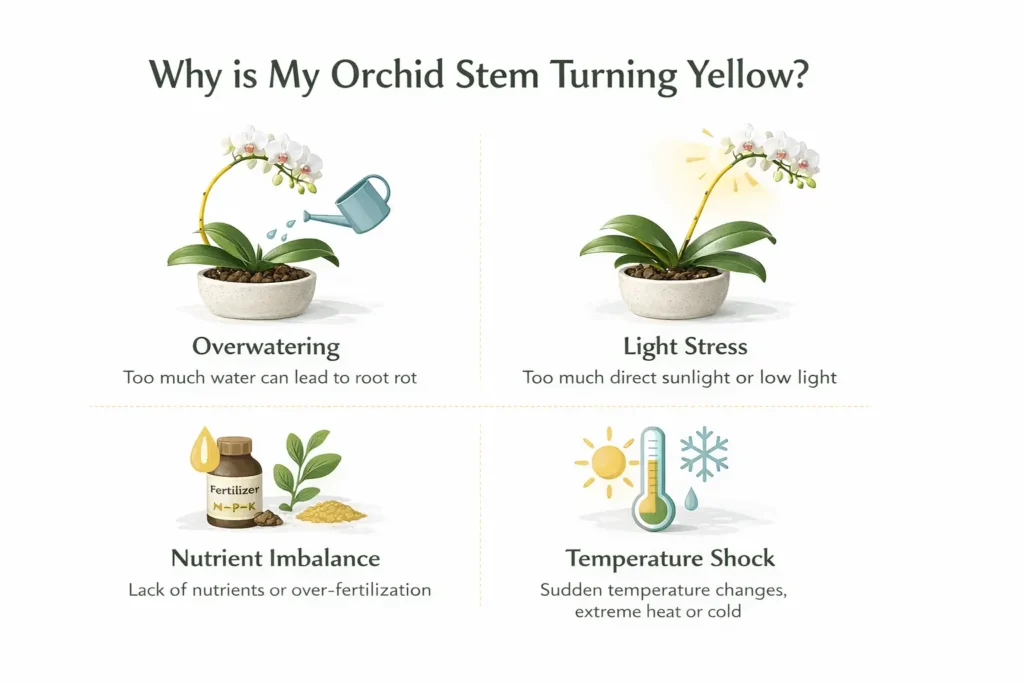
Excess moisture suffocates roots and disrupts nutrient flow, leading to stem yellowing.
Early warning signs include:
- Persistently wet potting mix
- Mushy or darkened roots
- Softening at the stem base
Light Stress (Too Much or Too Little Light)
Direct sunlight can cause sunburn, while low light weakens photosynthesis. Both extremes lead to yellowing. Orchids thrive in bright, indirect light that supports healthy growth without overheating tissues. Detailed orchid light and care guidelines are also provided by the American Orchid Society, a leading authority on orchid cultivation.
Nutrient Deficiency or Fertilizer Burn
Insufficient nutrients cause slow, pale growth, while excess fertilizer leads to salt buildup and tissue damage. Feeding errors directly affect stem color by disrupting nutrient uptake.
Temperature Shock or Environmental Stress
Sudden shifts in temperature stress orchids. Cold drafts, heaters, and air conditioners can trigger yellowing by interrupting normal metabolic processes.
Orchid Stem Turning Yellow but Leaves Are Green — What It Tells You
Post-Bloom Stem Dieback
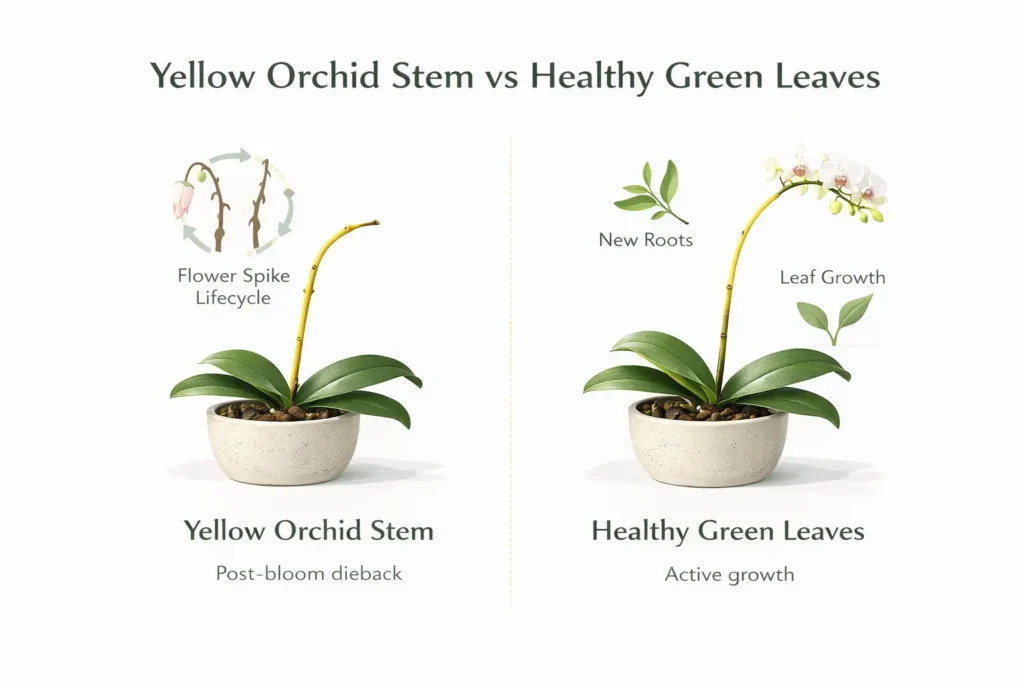
After flowering, orchids often allow spent stems to decline naturally. This process can take weeks. It is best to wait until the stem is fully yellow or dry before intervening.
When the Plant Is Still Actively Growing
New roots or fresh leaves indicate energy redirection rather than decline. In this case, yellowing reflects resource management, not disease.
Phalaenopsis Orchid Stem Turning Yellow — Is It Normal?
Phalaenopsis Flower Spike Life Cycle
Phalaenopsis orchids commonly produce yellow flower spikes after blooming. A spike is different from the main stem and crown, and its yellowing usually marks the end of a flowering cycle.
When Yellowing Is a Warning Sign
If stem yellowing occurs alongside leaf loss, such as orchid stem turning yellow and losing leaves, underlying stress or disease may be present and should be addressed promptly.
Orchid Stem Turning Yellow, White, or Brown — Color Differences Explained
Orchid Stem Turning White
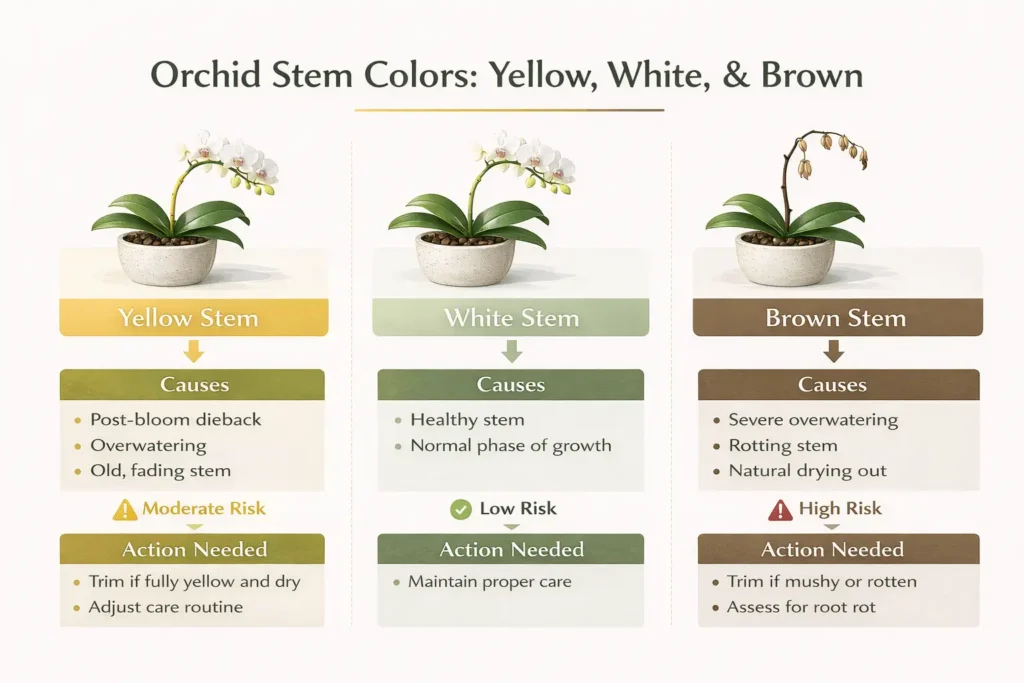
White discoloration often results from sun exposure, dehydration, or minor tissue damage. It becomes risky when the tissue turns brittle or spreads rapidly.
Orchid Stem Turning Brown but Leaves Green
Brown stems can indicate an old spike, localized damage, or rot. If the orchid stem turning brown but leaves green remains firm and contained, it is usually not dangerous. Spreading brown areas signal infection.
Should I Cut Off a Yellow Orchid Stem?
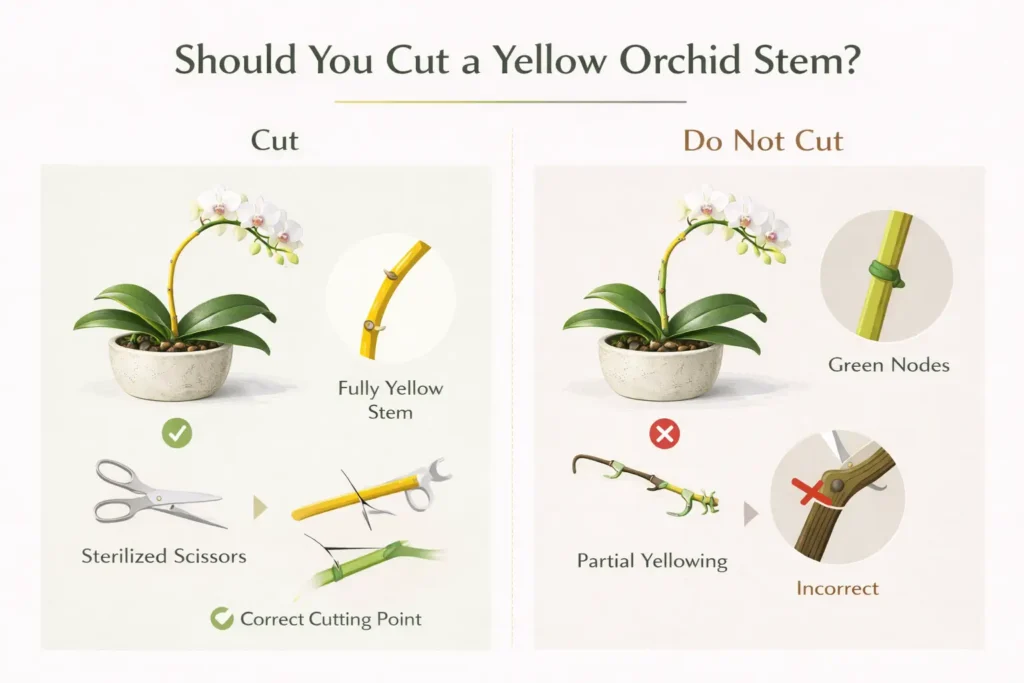
When Cutting Is Recommended
Cutting is advised when the stem is completely yellow or dry to prevent infection spread. Many growers ask, should I cut off yellow orchid stem, and the answer depends on whether the stem is fully spent.
When You Should NOT Cut the Stem
Avoid cutting if yellowing is partial or if green sections still support growth. Premature cutting can slow recovery.
How to Cut an Orchid Stem Safely
- Sterilize tools with alcohol
- Cut above a healthy node or at the base if fully dry
- Avoid damaging the crown
What to Do When an Orchid Stem Turns Brown or Yellow
Step-by-Step Care Actions
- Adjust watering frequency
- Improve airflow and indirect lighting
- Pause fertilizing temporarily
These steps align with what to do when orchid stem turns brown and help reduce stress.
Monitoring Recovery Over Time
Improvement includes firmer leaves and new root growth. Repot if roots degrade or if recovery stalls. Similar moisture and stress-related plant issues are also discussed in our article on brown spots on anthurium leaves, which explains how environmental imbalance affects plant health.
Orchid Base Turning Yellow — Is It Different from Stem Yellowing?
Crown and Base Issues Explained
Base yellowing is more serious and often linked to crown rot. Early signs include soft tissue and foul odor, making orchid base turning yellow a high-risk symptom.
Immediate Actions to Save the Plant
Dry the crown thoroughly and prevent water from pooling in the base to stop disease progression.
Prevention Tips to Stop Orchid Stems from Turning Yellow
Ideal Watering and Drainage
- Use well-draining orchid mix
- Ensure pots have proper drainage holes
Long-Term Orchid Care Best Practices
Balanced light, controlled feeding, proper humidity, and seasonal care adjustments maintain stem health and prevent recurring yellowing.
Conclusion / Call to Action
Orchid stem turning yellow can signal anything from natural aging to care-related stress. Observing leaf condition, growth activity, and timing is essential before cutting or treating. Early diagnosis and gentle adjustments often prevent serious damage. Stay proactive, monitor changes closely, and respond thoughtfully to support long-term orchid health.
FAQs — Orchid Stem Turning Yellow
Is an orchid stem turning yellow always a bad sign?
No, it is often a natural post-bloom process, especially when leaves remain healthy.
Can an orchid recover after the stem turns yellow?
Yes, recovery is common if roots and leaves remain strong.
Should I cut a yellow orchid stem immediately?
Only if it is completely yellow or dry; partial yellowing should be monitored.
Why is my orchid stem yellow but the leaves look healthy?
This usually indicates normal aging or energy redirection rather than disease.
How long does it take for an orchid to grow a new stem after yellowing?
New stems may appear within weeks to months, depending on care and growing conditions.

Written by the LeafyHeaven Editorial Team
LeafyHeaven shares practical gardening tips and simple plant care guides to help you grow, nurture, and enjoy your plants with ease. Our goal is to make gardening feel natural, approachable, and rewarding for everyone.




[…] Read Also: 8+ Shocking Reasons Your Orchid Stem Turning Yellow […]
[…] yellow is not always a sign of failure. If discoloration starts with yellowing, our guide on orchid stem turning yellow explains early warning signs in […]