
Introduction
Small trees Australia homeowners choose today are designed for modern living, where garden space is often limited but greenery is still essential. With shrinking block sizes, narrow front yards, townhouse developments, and boundary planting becoming more common, compact trees offer a practical solution without sacrificing visual appeal. Their controlled height, manageable roots, and flexible placement make them ideal for contemporary homes across urban and suburban areas. This guide explains what qualifies as a small tree in Australia, why they are increasingly popular, and how to select the right option for your space. You’ll learn about height limits, sunlight requirements, root safety, and the best placements for front yards, fence lines, and full-sun gardens.
What Are Considered Small Trees in Australia?
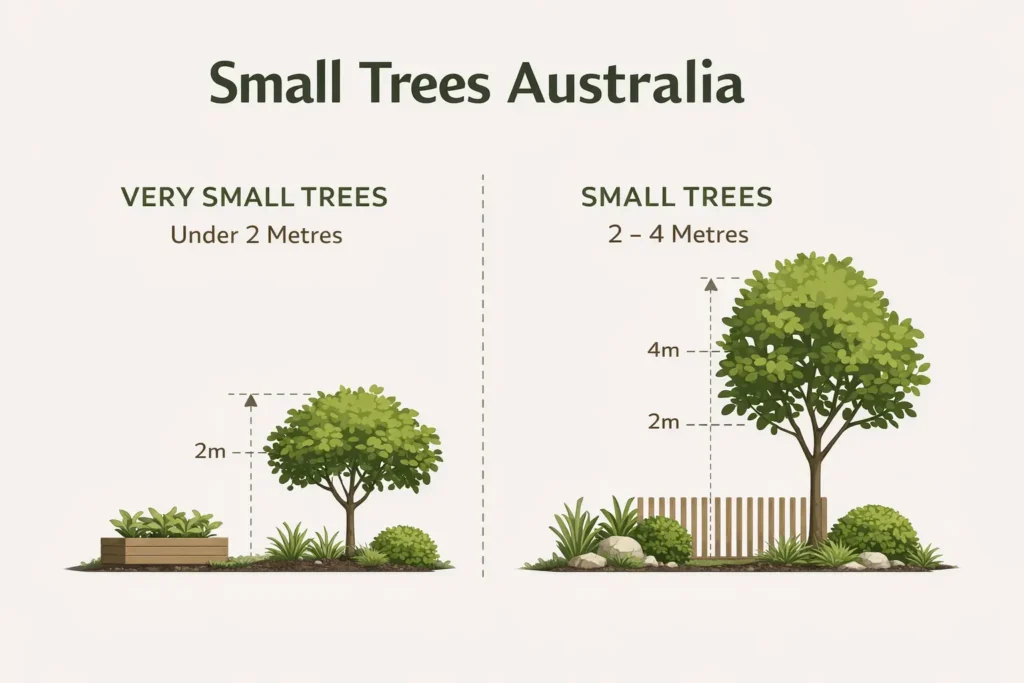
Height Categories Explained
In Australian landscaping, small trees are defined primarily by their mature height rather than their appearance at purchase.
- Very small trees (under 2 metres): Compact species or naturally dwarf varieties that remain low and contained.
- Small trees (2–4 metres): Trees that provide structure and shade without overwhelming nearby buildings or gardens.
Height matters in urban and suburban gardens because it affects sunlight access, council compliance, long-term maintenance, and safety near homes, fences, and driveways.
Urban tree planning and placement guidelines are also outlined by the Australian Government to ensure safety and compliance.
Why Small Trees Are Popular in Australia
Small trees are increasingly recognised as some of the best small trees Australia has to offer for modern properties because they deliver multiple benefits:
- Space-efficient landscaping for compact blocks and narrow areas
- Council-friendly sizes that reduce approval issues
- Low maintenance and controlled growth, limiting pruning and root damage
Very Small Trees for Small Gardens in Australia
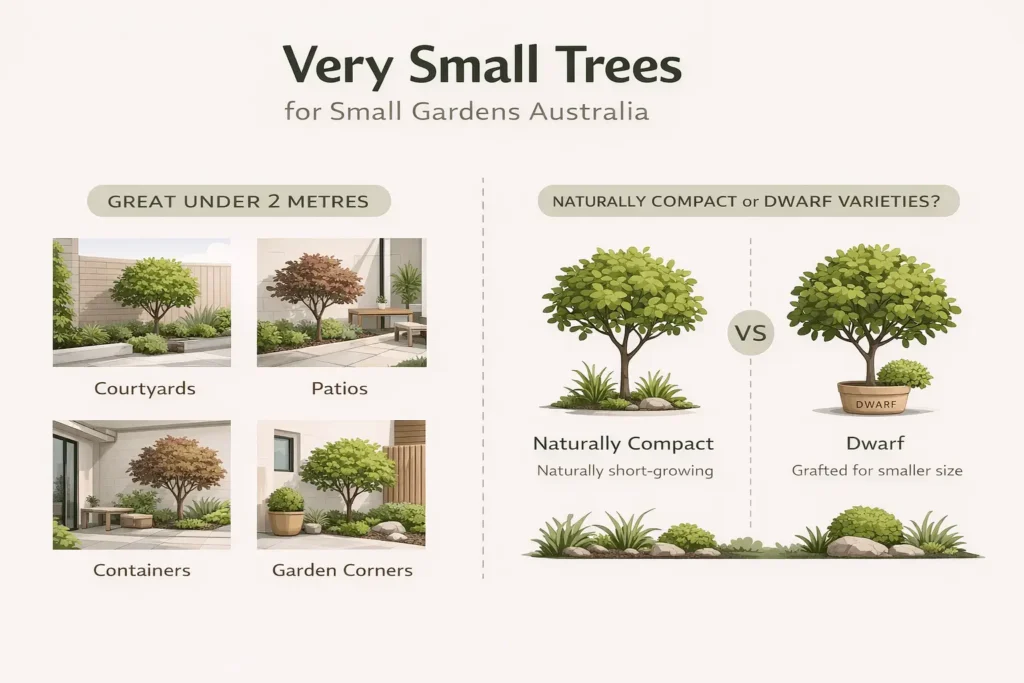
Trees Under 2 Metres Tall
Very small trees for small gardens Australia residents prefer are ideal for courtyards, patios, balconies, and narrow spaces where height and spread must be carefully managed. These trees work especially well in high-density housing and townhouse gardens. Some varieties are naturally compact, while others are bred as dwarf forms of larger species. Understanding the difference helps avoid unexpected growth issues later.
Best Uses for Very Small Trees
Small 2 metre high trees Australia gardeners use are extremely versatile and work best in:
- Container planting, where root growth is controlled
- Entryways and decorative garden corners, adding greenery without crowding
You can also explore australian natives for small gardens for more compact and climate-adapted planting ideas.
Best Small Trees for Front Yard Landscaping
Visual Appeal & Street Presence
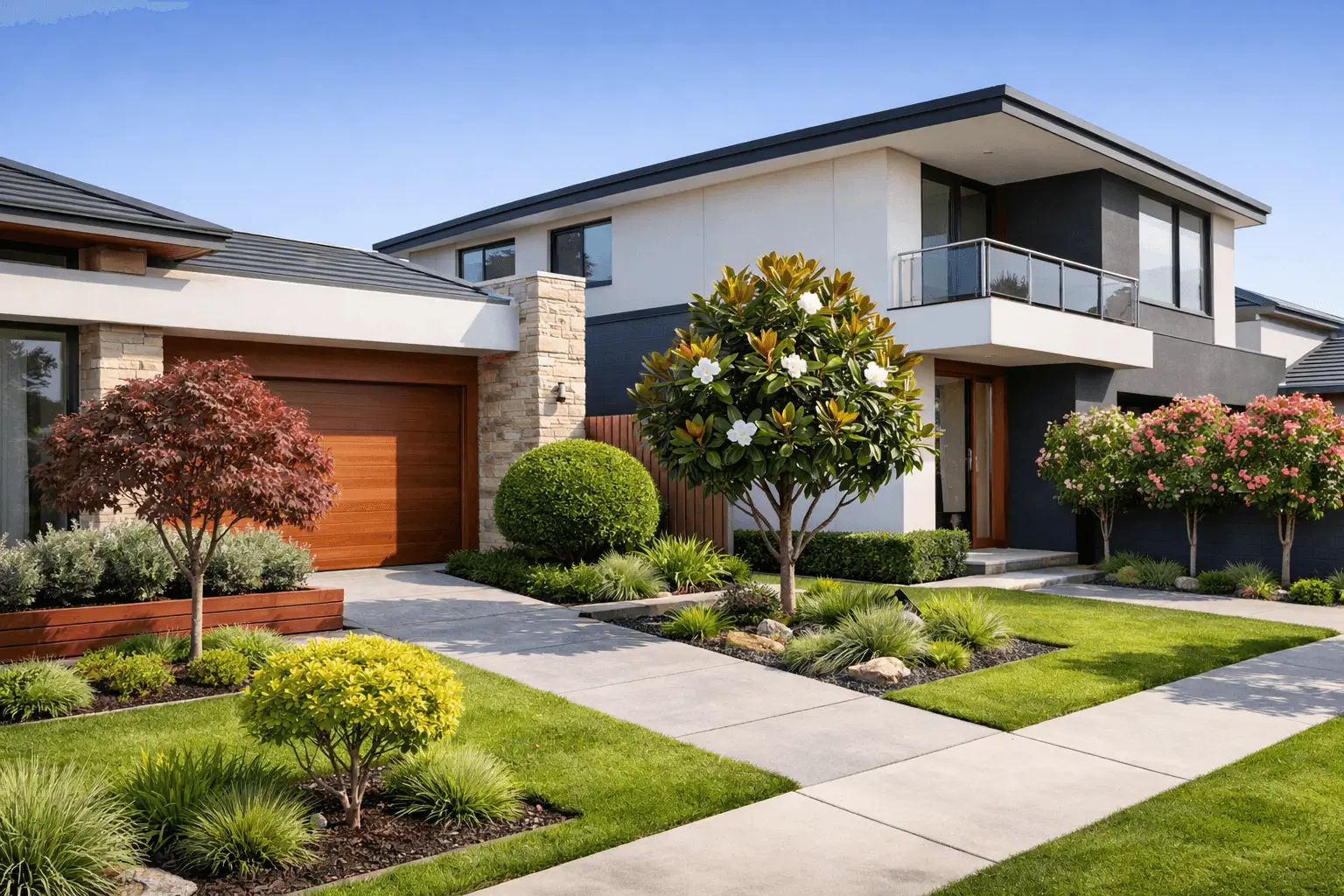
Small trees for front yard Australia designs focus on enhancing curb appeal without blocking sightlines or overshadowing the home. The goal is balance—adding structure, seasonal interest, or greenery while maintaining openness and visibility from the street.
Council & Footpath Considerations
When planting in front yards, practical constraints matter:
- Root spread awareness to protect footpaths and underground services
- Height control near driveways and sidewalks to maintain safe access and compliance
Small Trees Australia for Full Sun Conditions
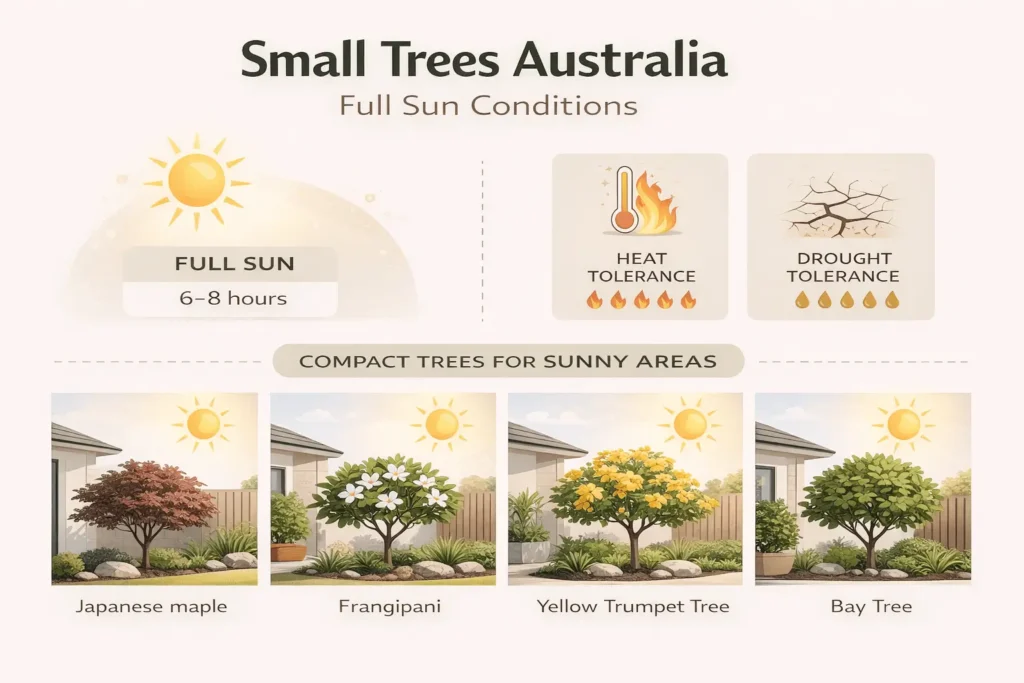
What “Full Sun” Means in Australian Climate
In Australia, full sun generally means 6–8 hours of direct sunlight daily. It’s important to distinguish between heat tolerance and drought tolerance, as some trees manage intense sun well but still require regular watering.
Benefits of Full-Sun Small Trees
Small trees Australia full sun varieties often deliver strong performance:
- Stronger, more compact growth
- Improved flowering or foliage colour under optimal light
Small Trees with Non-Invasive Roots
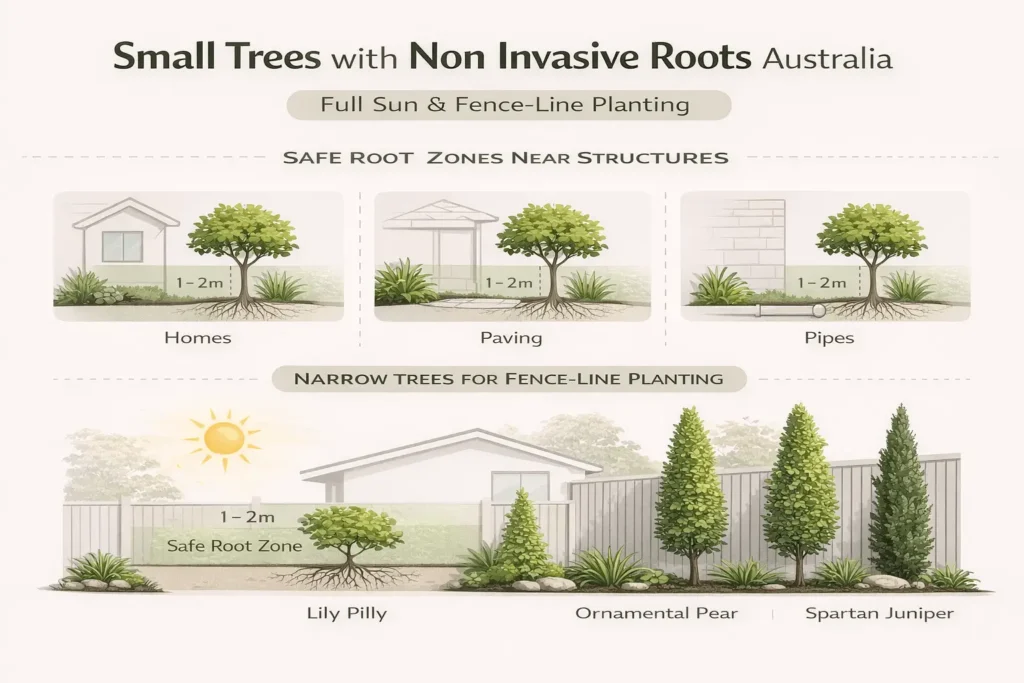
Why Root Behavior Matters
Root systems play a major role in tree selection. Non-invasive roots help protect foundations, paving, drainage systems, and underground pipes. These trees are ideal for planting near homes, paths, and built structures.
Best Locations for Non-Invasive Root Trees
Small trees with non invasive roots Australia full sun options perform best in:
- Fence lines, where space is limited
- Close-to-house planting, reducing long-term structural risks
Best Small Trees for Fence Lines in Australia
Narrow Growth & Upright Forms
Small trees for fence line Australia gardens should grow vertically rather than spreading wide. Upright forms provide privacy and greenery without encroaching on neighbouring properties or causing overhang issues.
Maintenance Tips for Fence-Line Trees
Proper planning simplifies care:
- Ensure pruning access for long-term management
- Consider leaf drop to minimise cleanup and gutter blockages
Where to Buy Small Trees in Australia
Buying from Local Nurseries vs Big Stores
Local nurseries often provide better plant knowledge and healthier stock, while big retailers like Bunnings offer convenience and standardised pricing. The right choice depends on availability, expertise, and your specific tree requirements.
What to Look for When Buying
Before purchasing, always check:
- Root condition, avoiding pot-bound plants
- Mature height label, not just current size
- Pot size and plant age, indicating healthy development
How to Choose the Best Small Tree for Your Space
Matching Tree Size to Garden Type
Selecting the best small trees Australia gardens need starts with matching size to location:
- Front yard: Controlled height and tidy form
- Backyard: Shade, structure, or feature planting
- Fence line: Narrow growth and non-invasive roots
Checklist Before You Buy
Use this checklist to avoid mistakes:
- Final height
- Sun requirements
- Root system
- Maintenance level
To make better planting decisions, it’s useful to follow a complete guide to plant care and gardening basics for long-term success.
Conclusion & Call to Action
Small trees Australia gardeners choose today offer the perfect balance between beauty and practicality for modern landscapes. Their manageable size, adaptable placement, and reduced maintenance make them ideal for compact gardens, front yards, and fence lines. Before buying, assess your available space, sunlight exposure, and root safety requirements carefully. Explore nurseries, compare options, and plan your planting location to ensure long-term success and a well-balanced garden. For faster-growing options, you might also consider fast growing evergreen trees australia to quickly add structure to your landscape.
FAQs
What is the best small tree for Australian front yards?
The best option depends on space, sunlight, and council guidelines, but compact trees with controlled roots are ideal.
Are there trees that stay under 2 metres in Australia?
Yes, many naturally compact and dwarf varieties remain under 2 metres when mature.
Which small trees are safe to plant near fences?
Upright-growing trees with non-invasive roots are best suited for fence lines.
Do small trees grow well in full sun in Australia?
Many small trees thrive in full sun when matched with proper watering and soil conditions.
Where can I buy quality small trees in Australia?
Quality small trees are available from local nurseries and major retailers such as Bunnings.

Written by the LeafyHeaven Editorial Team
LeafyHeaven shares practical gardening tips and simple plant care guides to help you grow, nurture, and enjoy your plants with ease. Our goal is to make gardening feel natural, approachable, and rewarding for everyone.