
Introduction
The Japanese seedless mandarin is widely valued for its sweet flavor, easy-peel skin, and reliable productivity, making it a favorite among citrus growers and home gardeners. Demand for seedless mandarin trees continues to rise as more households seek low-maintenance fruit trees that produce juicy, family-friendly harvests. In Australia, growers often compare this variety with Imperial, Emperor, and other common mandarins to determine the best option for taste, seed count, and seasonal yield. This complete guide explains tree care requirements, key mandarin varieties, where to buy healthy plants, and how to choose the best mandarin variety for successful home citrus growing.
What Is a Japanese Seedless Mandarin?
Origin and characteristics
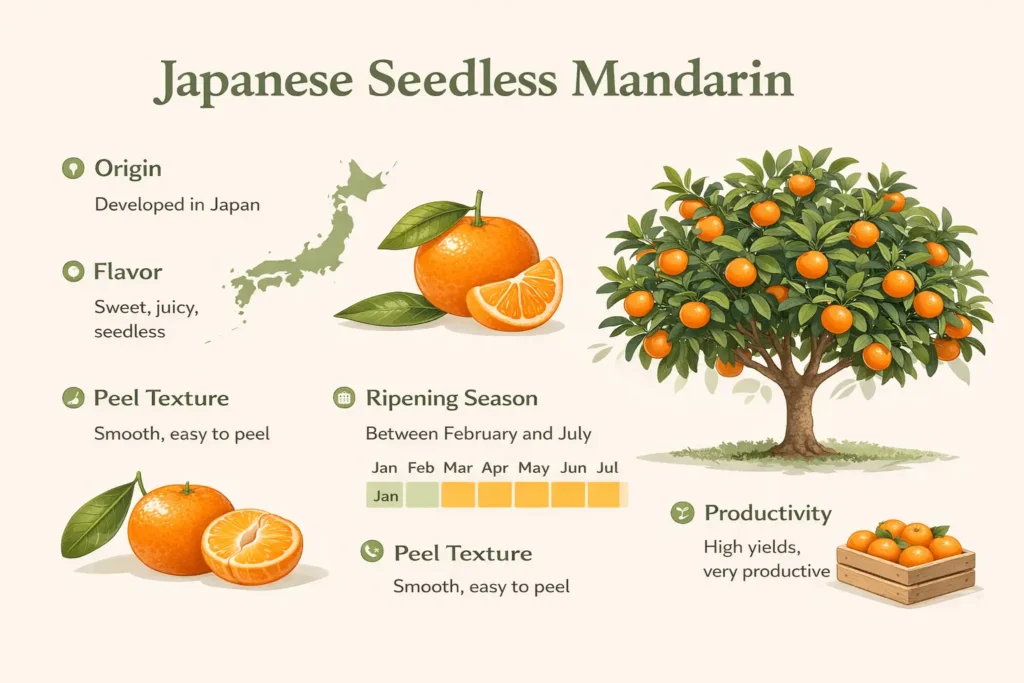
The mandarin japanese seedless type belongs to a group of japanese mandarins known for smooth skin, balanced sweetness, and dependable fruiting. A typical japanese mandarin tree produces medium-sized fruit with thin, loose peel that separates easily from the flesh. Ripening usually occurs in the cool citrus season, and trees are valued for consistent productivity under suitable conditions. Citrus classification and variety information are well documented in agricultural resources provided by the USDA. The flavor profile is mild, sweet, and low in acidity, making it appealing for fresh eating.
Why seedless mandarins are preferred
Growers and families favor seedless mandarin and mandarin seedless varieties because they are:
- Easy to eat without removing seeds
- Naturally sweet and child-friendly
- Convenient for lunchboxes and fresh snacks
- Well suited to backyard orchards and small gardens
Their practicality and pleasant taste explain the strong popularity of seedless citrus in home landscapes.
Japanese Seedless Mandarin Tree Growth and Care
Climate, soil, and sunlight needs
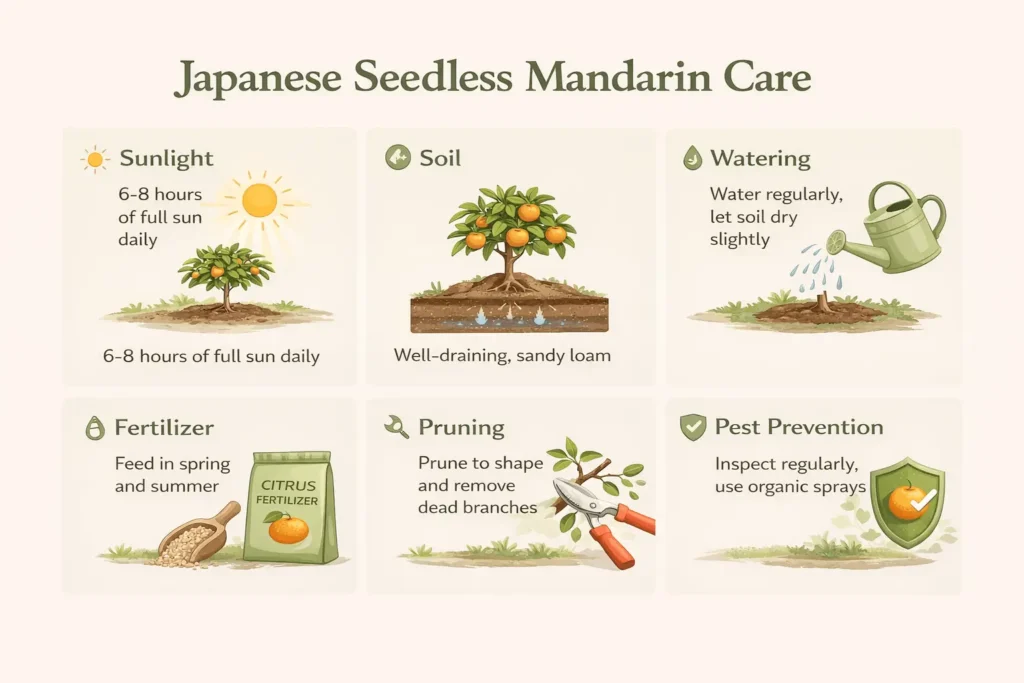
Among mandarin varieties Australia gardeners grow, Japanese seedless performs best in warm, frost-protected climates with full sun exposure. Healthy development depends on:
- Well-drained, slightly acidic soil
- Regular but moderate watering
- Balanced citrus fertilizer during active growth
- Protection from prolonged cold or waterlogging
Proper site selection strongly influences flowering, fruit set, and sweetness.
To grow healthy fruit trees successfully, it’s important to follow a complete gardening and plant care guide for proper soil, watering, and sunlight balance.
Planting and maintenance tips
Successful care of a seedless mandarin tree or japanese seedless mandarin tree involves:
- Light annual pruning to shape the canopy
- Monitoring for common citrus pests
- Consistent feeding to support fruit production
- Choosing dwarf nursery forms for compact spaces
Dwarf selections are especially useful for patios, courtyards, and smaller suburban gardens.
Buying from garden centers
Many growers search for japanese seedless mandarin bunnings, seedless mandarin tree bunnings, or general bunnings citrus trees when purchasing. Related searches such as bunnings mandarin tree and bunnings dwarf fruit trees reflect interest in container-friendly citrus suitable for balconies or limited garden areas.
Japanese Seedless Mandarin vs Other Popular Mandarin Varieties
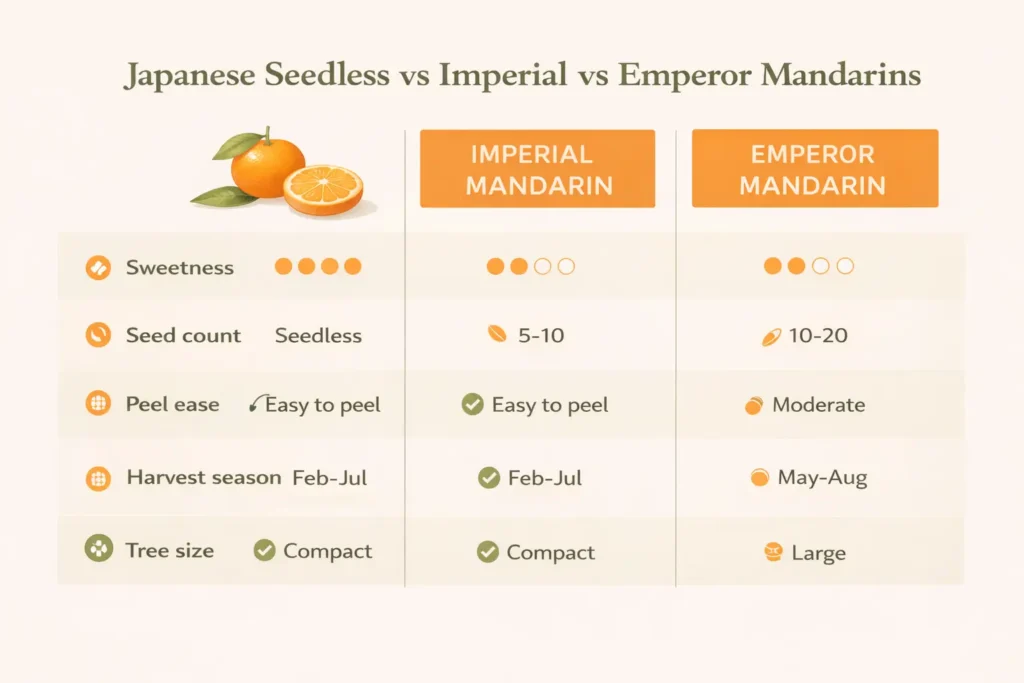
Japanese seedless mandarin vs Imperial mandarin
Comparisons like japanese seedless mandarin vs imperial mandarin usually focus on:
- Sweetness: both are sweet, but Japanese seedless is often milder
- Seed count: many ask if imperial mandarins seedless or imperial mandarin seedless, and do imperial mandarins have seeds—Imperials may contain some seeds
- Peel ease: Japanese seedless typically peels faster
- Harvest timing: seasons can overlap but vary slightly by climate
You can also compare this with imperial mandarin to better understand differences in fruiting time and sweetness.
Emperor vs Imperial mandarin comparison
In the emperor vs imperial mandarin discussion—also searched as imperial vs emperor mandarin, mandarin emperor vs imperial, and emperor mandarin vs imperial—key differences include:
- Emperor trees often grow larger
- Flavor may be richer and later-season
- Imperial fruit is earlier and widely planted
Emperor mandarin tree features
The emperor mandarin, including emperor mandarins grown on an emperor mandarin tree or mandarin emperor tree, is known for:
- Vigorous growth habit
- Deep orange fruit with strong flavor
- Suitability for backyard citrus collections
Other comparisons growers search for
Searches such as mandarin amorette vs imperial, mandarin afourer vs imperial, and honey murcott mandarin bunnings highlight interest in sweetness, seed levels, and harvest timing. Within these options, Japanese seedless is consistently positioned among the best mandarin varieties for convenience and taste.
Best Mandarin Varieties for Home Gardens
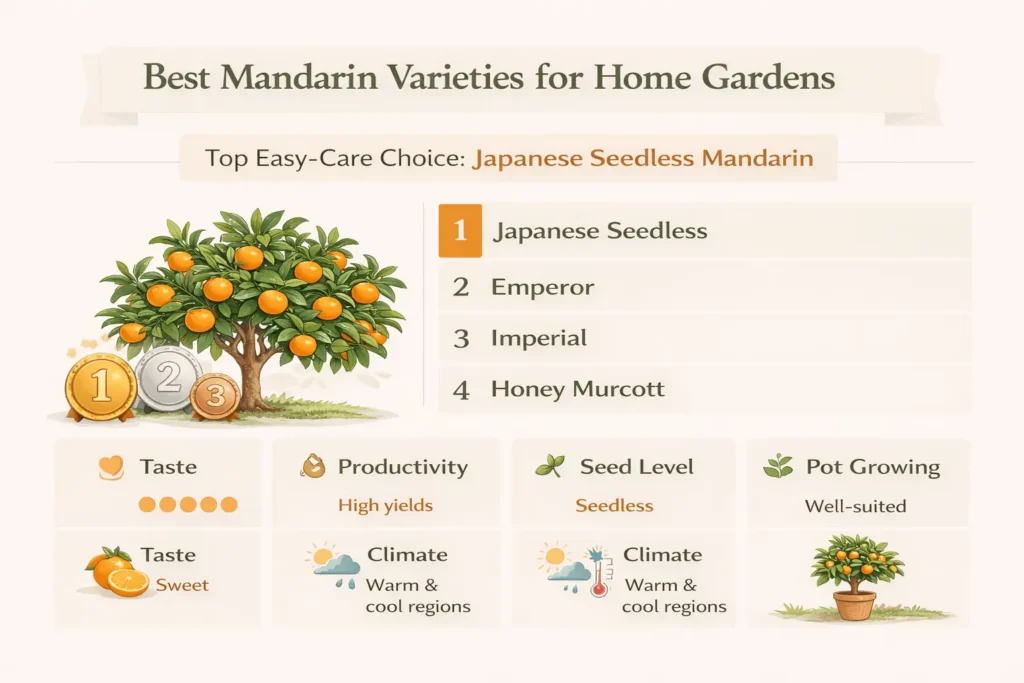
How Japanese seedless ranks among the best
When evaluating the best mandarins, the Japanese seedless type stands out for:
- Reliable sweetness
- High productivity
- Minimal or absent seeds
These qualities support its reputation as a best mandarin variety and one of the most practical best mandarin varieties for families.
For a broader understanding of citrus tree options, you can also explore seedless lemon tree varieties and how they compare in home gardens.
Choosing the right mandarin tree for Australia
Selecting suitable trees depends on:
- Regional climate conditions
- Preference for dwarf or full-size growth
- Desired harvest period
Understanding mandarin varieties in australia and broader varieties of mandarin helps gardeners match the right tree to their environment and fruiting goals.
Where to Buy Japanese Seedless Mandarin Trees
Garden centers and retail options
Shoppers commonly find trees through bunnings citrus trees, local nurseries offering seedless mandarin tree stock, or listings for mandarin tree bunnings suitable for home planting.
What to check before buying
Before purchase, inspect:
- Overall tree health and leaf color
- Strong graft union and correct labeling such as mandarin japanese or mandarin japanese seedless
- Pot size and rootstock type
- Estimated time to first fruiting
Healthy young trees establish faster and produce earlier harvests.
Conclusion
The Japanese seedless mandarin remains a top easy-care citrus choice thanks to its sweetness, simple peeling, and dependable yields. Compared with Imperial and Emperor types, it offers a strong advantage in convenience and family-friendly eating quality. By selecting healthy nursery trees, matching climate conditions, and following proper care practices, gardeners can confidently choose the best mandarin variety and enjoy fresh citrus harvests at home.
FAQs
Are Japanese seedless mandarins completely seedless?
They are typically seed-free, though rare seeds may appear if cross-pollination occurs nearby.
How long does a Japanese seedless mandarin tree take to fruit?
Most grafted trees begin producing within two to four years under good growing conditions.
What is the difference between Imperial and Emperor mandarins?
Imperial is usually earlier and may contain some seeds, while Emperor fruit is later, richer in flavor, and grown on larger trees.
Can Japanese seedless mandarin trees grow in pots?
Yes, dwarf grafted forms grow well in containers with proper sunlight, watering, and citrus fertilizer.
Where can I buy a seedless mandarin tree in Australia?
They are commonly available at garden nurseries and major retailers stocking citrus trees, including Bunnings locations.
Which mandarin variety tastes the sweetest?
Sweetness varies by climate, but Japanese seedless, Imperial, and Honey Murcott are frequently considered among the sweetest options.

Written by the LeafyHeaven Editorial Team
LeafyHeaven shares practical gardening tips and simple plant care guides to help you grow, nurture, and enjoy your plants with ease. Our goal is to make gardening feel natural, approachable, and rewarding for everyone.