
Introduction
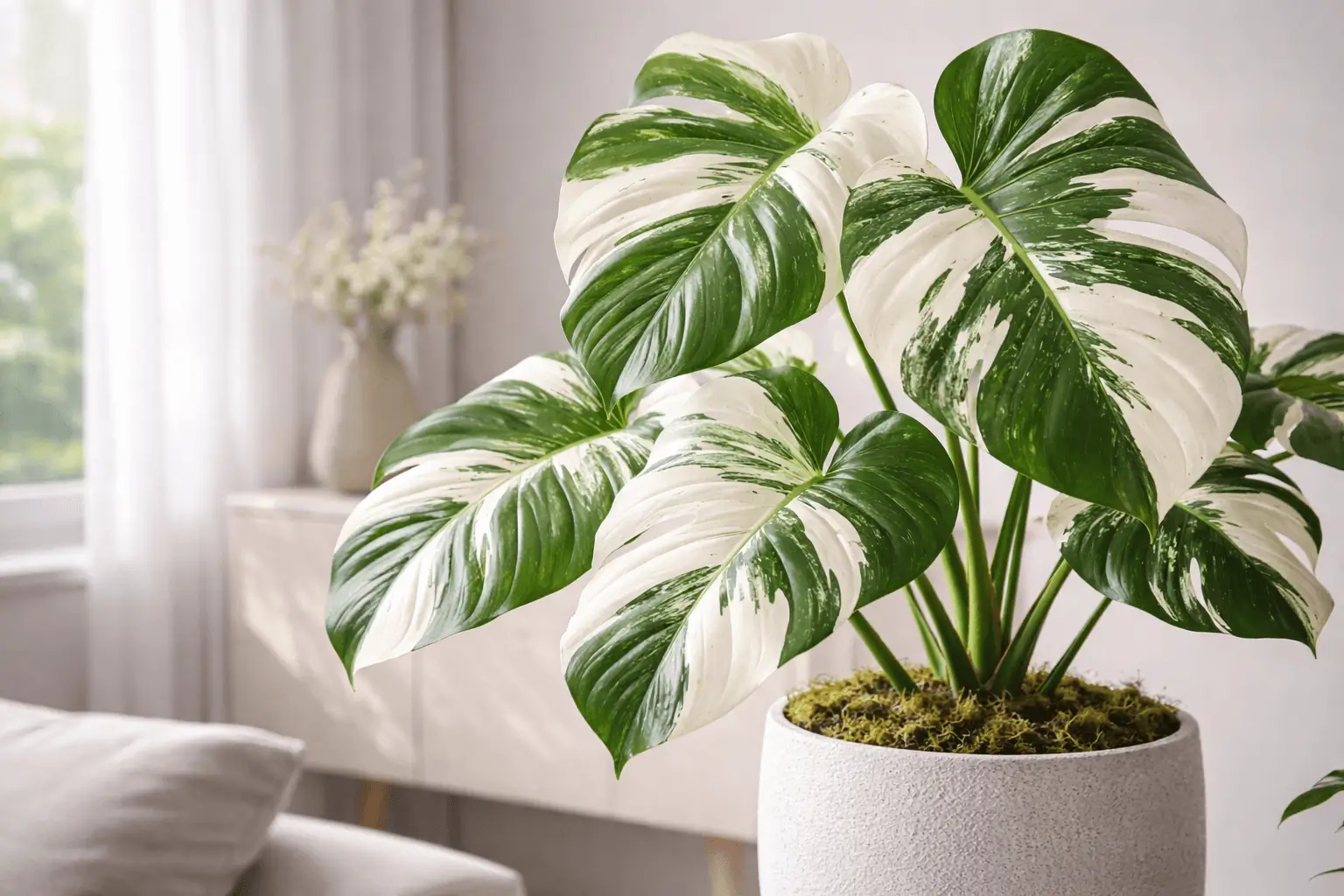
Albo variegata refers to plants that display striking white variegation alongside green tissue, creating a dramatic, high-contrast appearance that stands out among houseplants. These plants are considered rare because the white coloration is caused by a genetic mutation that limits chlorophyll production, making stable growth difficult. As a result, healthy specimens are uncommon and slow to multiply. Variegation patterns are unpredictable, which further increases scarcity. Collector demand has surged in recent years, driven by visual uniqueness and limited availability. Plant enthusiasts value albo variegata not only for aesthetics but also for its status as a premium, collectible houseplant with long-term appeal.
What Is Albo Variegata?
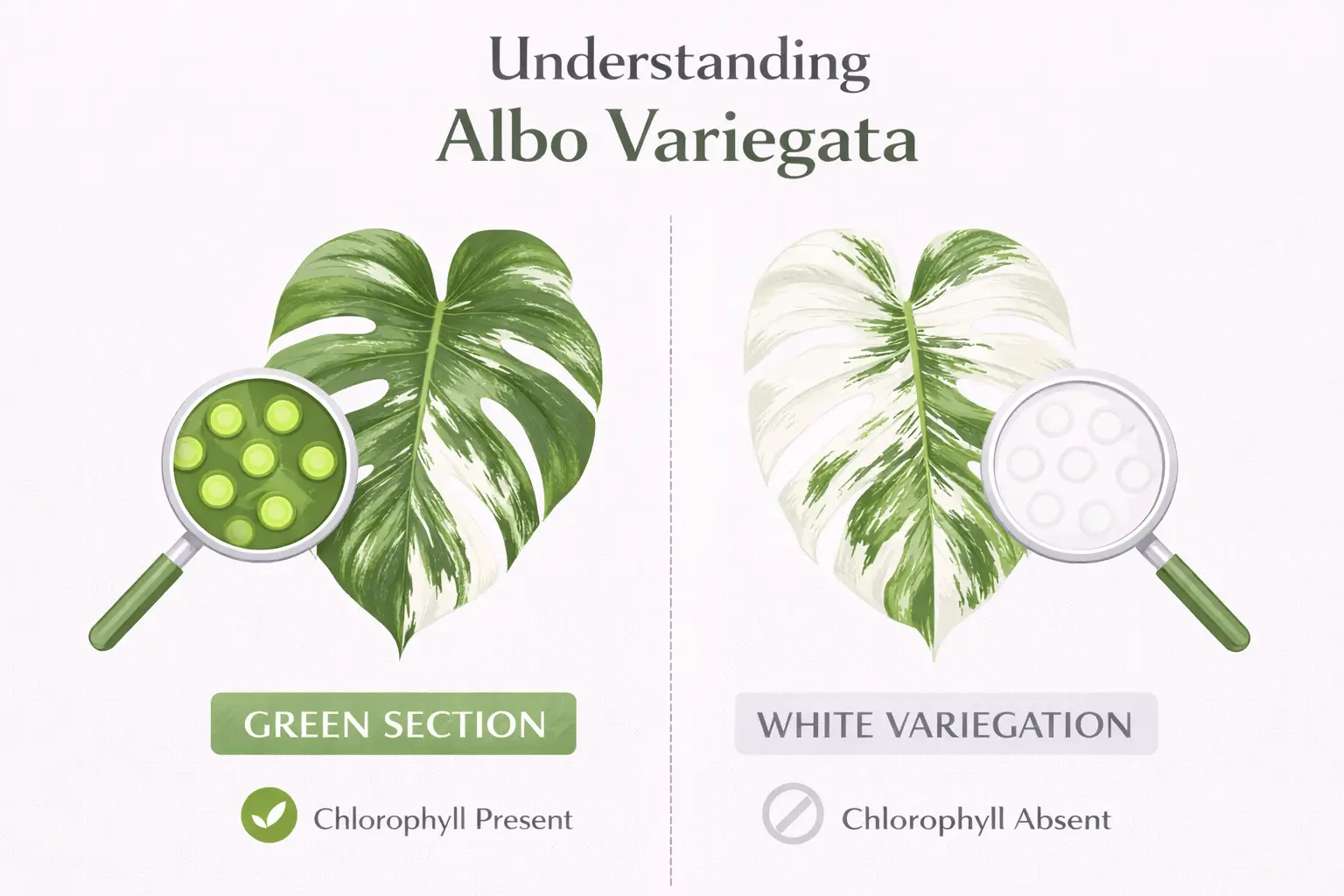
Albo variegata is a term used to describe plants with white or near-white variegation caused by a lack of chlorophyll in certain leaf tissues. The word “albo” comes from Latin, meaning white, and directly refers to this pale patterning.
White variegation in plants occurs when parts of the leaf cannot photosynthesize. This creates visually striking patterns but also makes the plant more sensitive to care conditions.
In most cases, albo variegata results from a natural genetic mutation rather than selective breeding. Unlike cultivated variegated varieties stabilized through tissue culture, albo variegata plants are often propagated from cuttings to preserve the mutation.
Why Albo Variegata Is So Popular
- Strong visual contrast between green and white foliage
- Each plant displays unique, unpredictable variegation
- High visibility on social media and in houseplant communities
- Strong collector demand due to rarity
- Viewed as both a decorative plant and a long-term investment
Types of Albo Variegata Plants
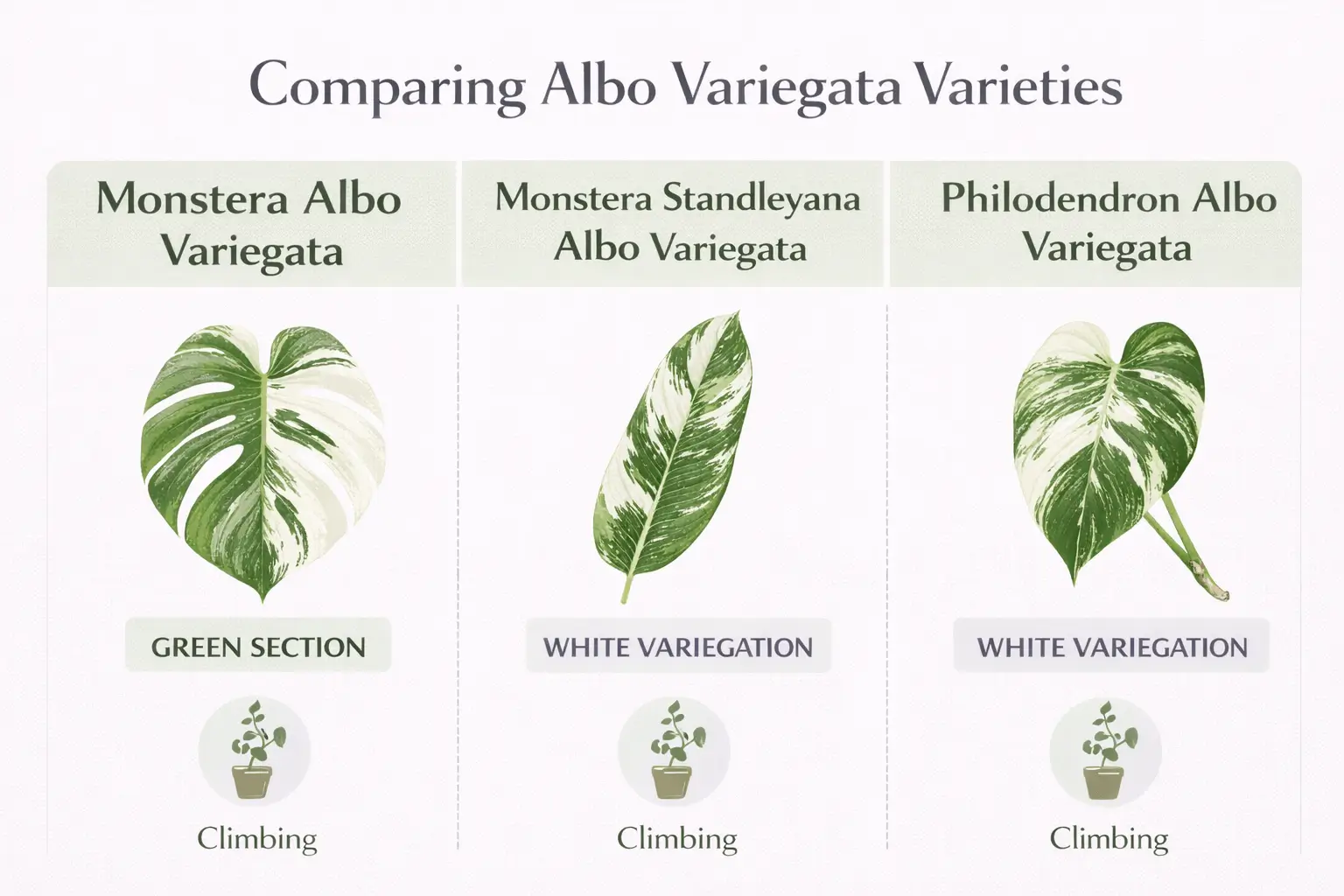
Several popular houseplants are known for their albo variegation. These varieties differ in leaf shape, growth habits, and care needs, but all share the same white-pattern mutation that defines albo variegata.
Monstera Albo Variegata
Monstera albo variegata is the most recognized and sought-after variety.
- Large, fenestrated leaves with bold white sectors
- Variegation ranges from marbling to half-moon patterns
- Slower growth compared to green Monstera due to reduced chlorophyll
- Climbing growth habit that benefits from support
- Young plants, often called a monstera albo variegata baby, require careful light and watering management during early growth stages
Monstera Standleyana Albo Variegata
Monstera standleyana albo variegata differs significantly from Monstera deliciosa.
- Narrow, elongated leaves without fenestrations
- White variegation appears as speckles or streaks
- More compact and vine-like growth style
- Generally easier to manage indoors
- Tolerates slightly lower light while maintaining variegation
Philodendron Albo Variegata
Philodendron albo variegata is another highly prized option.
- Broad, heart-shaped leaves with crisp white patterns
- Variegation often appears more fragmented than in Monstera
- Growth is typically bushier rather than climbing
- Compared to Monstera varieties, philodendrons are often more forgiving with humidity and watering
Albo Variegata Care Guide
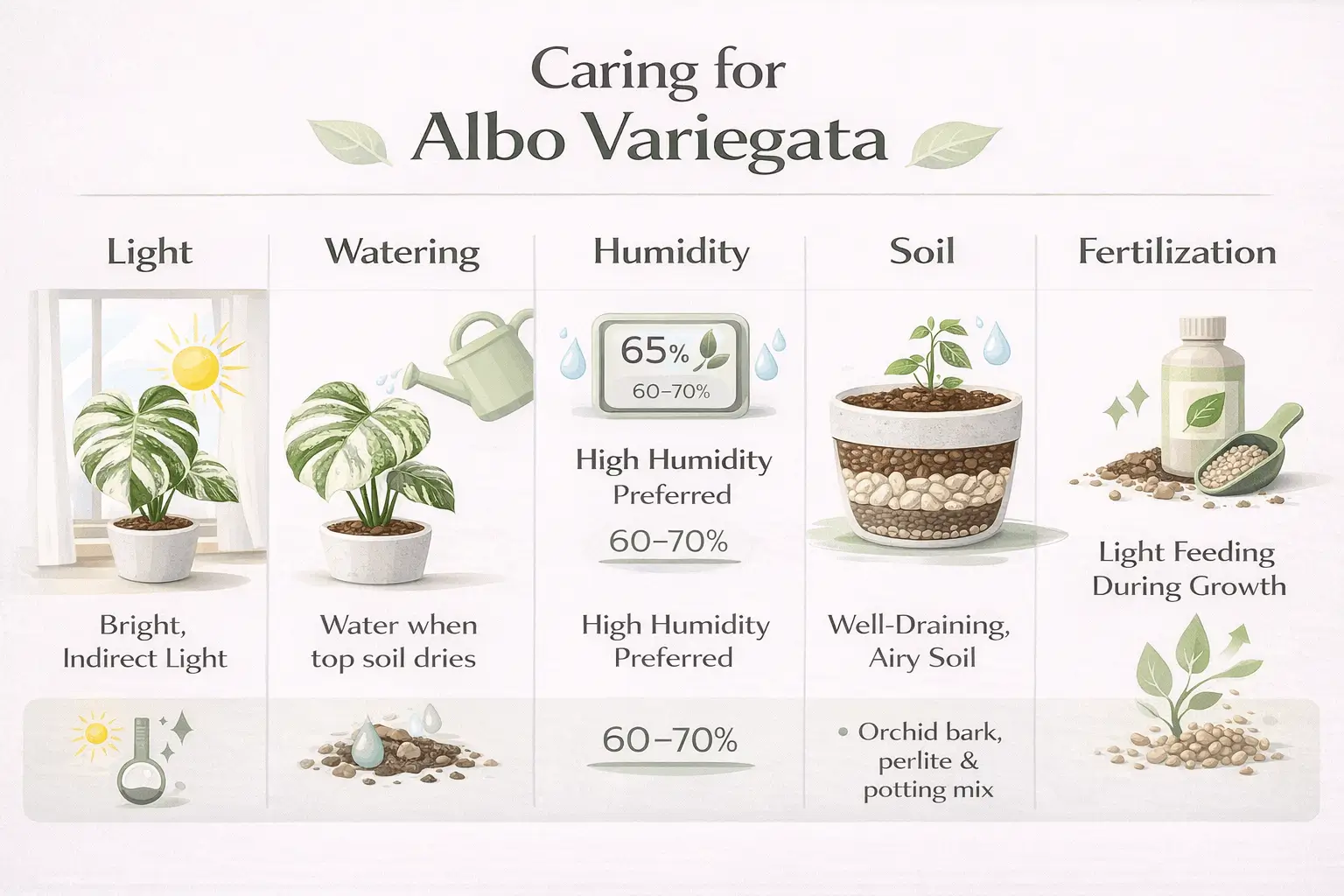
Proper care is essential for maintaining healthy growth and stable variegation. Because white areas cannot photosynthesize, balance is critical.
Light Requirements
Bright, indirect light is essential for albo variegata plants.
- Insufficient light can cause variegation to fade
- Direct sunlight may scorch white leaf sections
- Consistent light supports balanced growth and variegation stability
Watering & Humidity
- Water when the top layer of soil dries slightly
- Avoid overwatering, which can lead to root rot
- Maintain moderate to high humidity for optimal leaf development
- Stable moisture levels reduce stress on white leaf tissue
Soil & Fertilization
- Use a well-draining soil mix with good aeration
- Combine potting soil with perlite or orchid bark
- Apply a balanced fertilizer at low strength during active growth
- Over-fertilizing can damage roots and affect variegation quality
Albo Variegata Size & Growth Rate
Indoors, albo variegata plants typically remain smaller than their fully green counterparts.
- Average indoor height ranges from moderate to tall depending on variety
- Growth rate is slow due to limited chlorophyll
- Leaf size and plant height are influenced by light, nutrition, and support
- Consistent care encourages gradual but steady development
Propagation of Albo Variegata
Propagation is challenging because variegation must be preserved, but successful results are highly rewarding.
Monstera Albo Variegata Cutting
- Select a cutting with a visible node and variegation
- Ensure the node contains white and green tissue
- Water propagation allows easy root monitoring
- Soil propagation reduces transplant shock
- Stable light conditions help maintain variegation during rooting
Growing a Monstera Albo Variegata Baby
- Provide bright, indirect light without intensity spikes
- Water lightly to prevent root stress
- Avoid frequent repotting during early growth
- Common mistakes include overwatering and insufficient light
Albo Variegata Price & Market Value
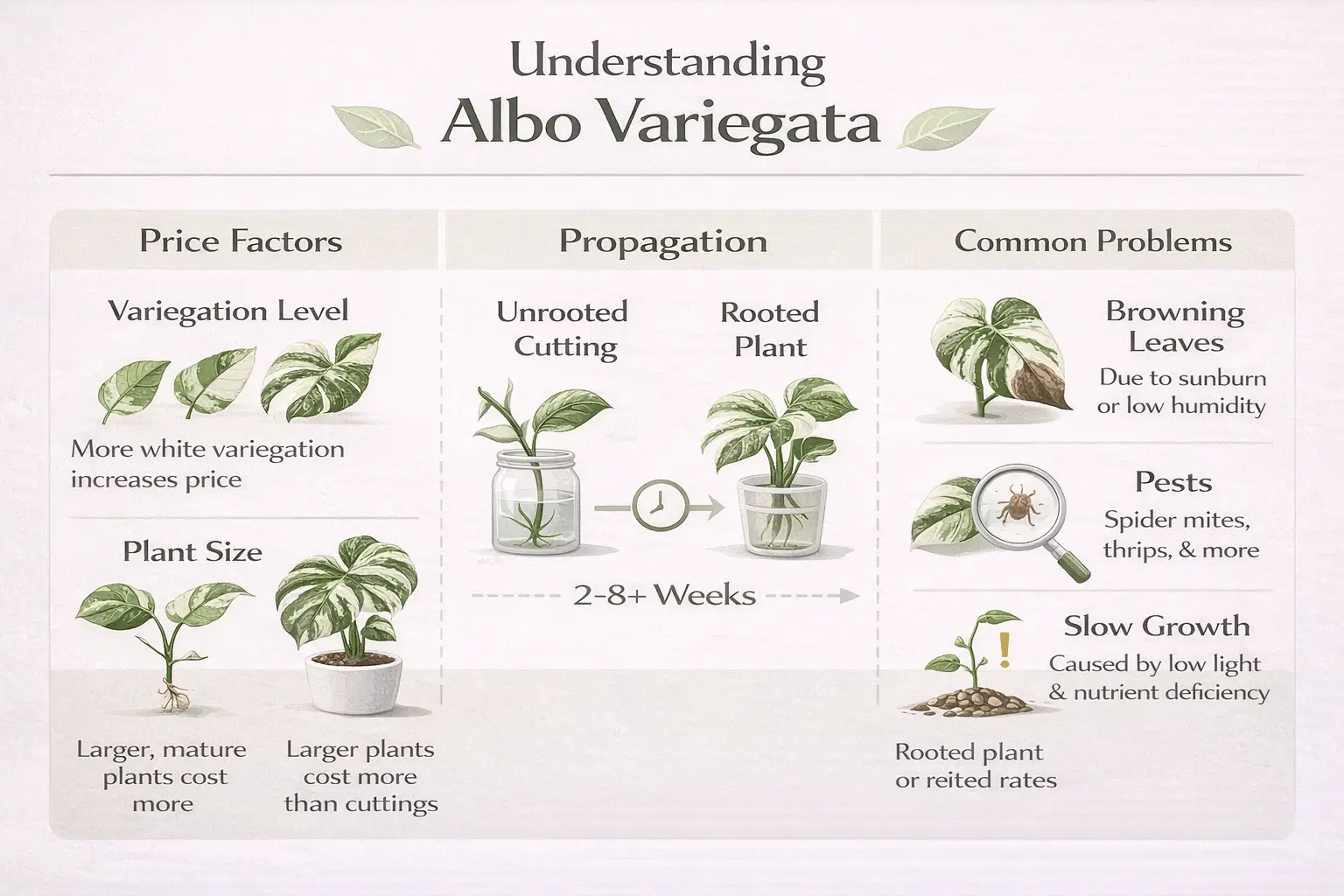
Albo variegata commands high prices due to rarity and slow propagation.
Factors influencing price include:
- Level and distribution of variegation
- Overall size and maturity of the plant
- Whether the plant is fully rooted or sold as a cutting
Albo Variegata for Sale – What to Look For
- Healthy roots and a firm, visible node
- No signs of rot or excessive browning
- Clear photos showing stable variegation
- Verified sellers with positive reviews
- Caution against deals priced far below market value
Common Problems With Albo Variegata
- Browning white leaves caused by low humidity or excess light
- Slow growth due to limited photosynthesis
- Reverting variegation from insufficient light
- Pest issues such as spider mites or thrips affecting stressed plants
Conclusion & Call to Action
Is albo variegata worth the investment? For many plant enthusiasts and collectors, the answer is yes—but only with the right expectations. Albo variegata plants offer unmatched visual appeal, rarity, and long-term value, but they also demand careful attention. Their higher cost reflects slow growth, unstable variegation, and limited propagation success. Proper light, consistent care, and patience are essential to maintain healthy growth and preserve white variegation. Before purchasing or propagating an albo variegata, it’s important to understand the commitment involved. Research thoroughly, evaluate your growing environment, and buy only from trusted sources to ensure a rewarding and sustainable plant experience.
Read Also: Blue Bougainvillea: 5+ Stunning Truths Every Gardener Must Know
FAQs About Albo Variegata
What makes albo variegata so rare?
Albo variegata is rare because the white coloration is caused by a genetic mutation that reduces chlorophyll. This limits growth, makes propagation difficult, and results in unpredictable variegation patterns.
How much does an albo variegata usually cost?
Prices vary widely depending on size, variegation quality, and whether the plant is rooted or a cutting. Small cuttings may cost hundreds, while mature plants can reach significantly higher price ranges.
Can albo variegata lose its variegation?
Yes. If the plant receives insufficient light or the mutation becomes unstable, new growth may revert to solid green. Proper lighting is key to maintaining variegation.
Is monstera albo variegata hard to care for?
Monstera albo variegata is more demanding than standard houseplants. It requires precise light, watering, and humidity management due to its reduced chlorophyll.
How long does a monstera albo variegata cutting take to root?
Rooting typically takes several weeks. Environmental conditions such as warmth, light, and moisture play a major role in rooting speed and success.
Is albo variegata suitable for beginners?
Albo variegata is generally not recommended for beginners. The plant’s sensitivity, high cost, and slow growth make it better suited for experienced or well-prepared plant owners.

Written by the LeafyHeaven Editorial Team
LeafyHeaven shares practical gardening tips and simple plant care guides to help you grow, nurture, and enjoy your plants with ease. Our goal is to make gardening feel natural, approachable, and rewarding for everyone.

[…] Read Also: Albo Variegata: 7 Secrets Behind Its Rare Beauty & Value […]