
Introduction
Purple sunflowers often spark curiosity among gardeners, florists, and flower lovers who wonder whether such a dramatic color truly exists in nature. At first glance, images and listings of purple sunflowers can seem convincing, leading many to believe they are a rare botanical discovery. In reality, the topic requires clear expectations. True purple sunflowers do not naturally occur in the wild, and what people see online or in floral shops usually falls into two categories: specially bred dark-toned hybrids or artificially dyed flowers. This article explains the science, marketing, and practical truth behind purple sunflowers, helping readers understand what is natural, what is enhanced, and what to realistically expect before buying seeds, bouquets, or plants.
Are There Purple Sunflowers Naturally?
Understanding Natural Sunflower Colors
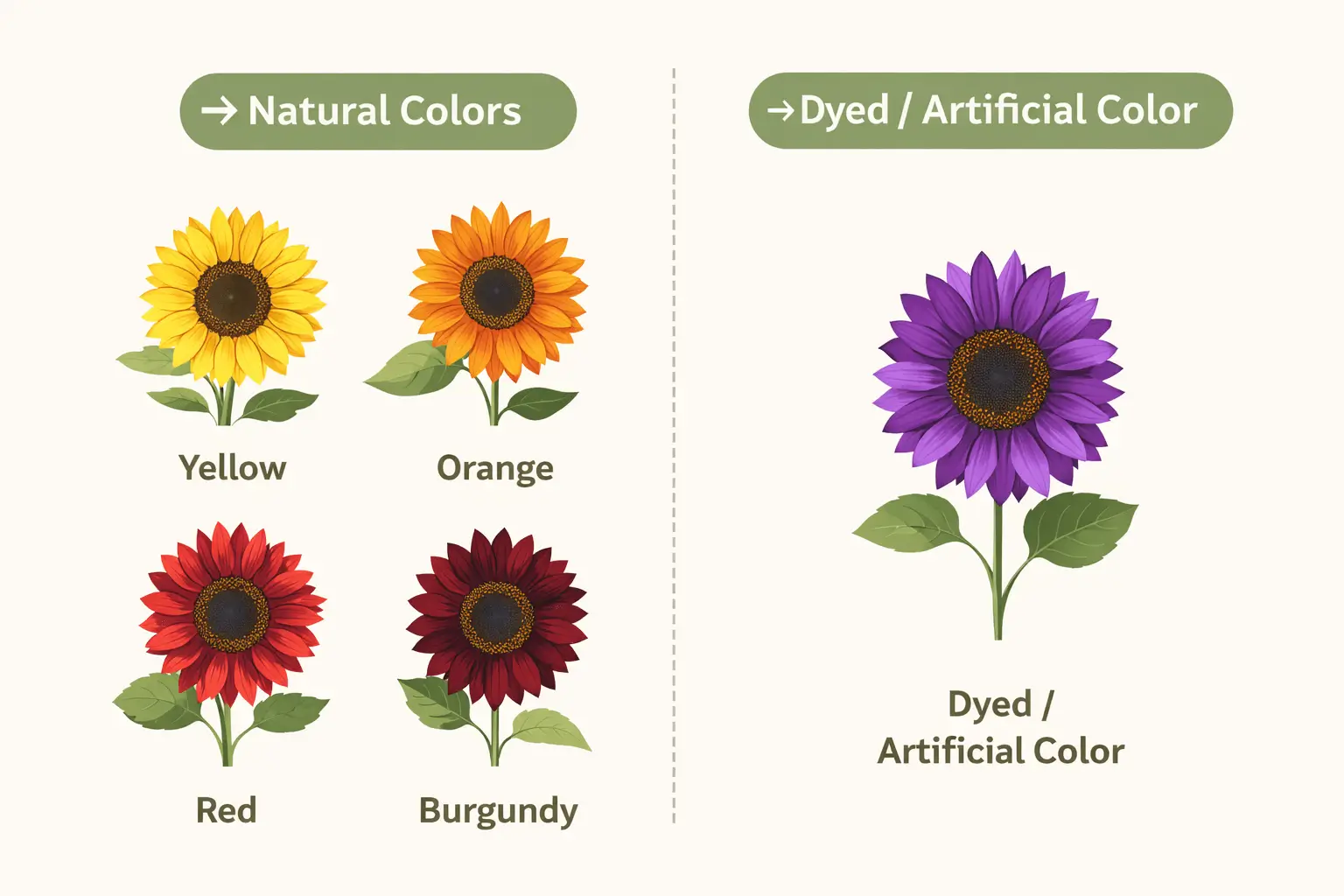
Sunflowers are genetically predisposed to a limited color range. In nature, most sunflowers display:
- Bright yellow petals
- Golden or orange tones
- Deep red or burgundy shades in some varieties
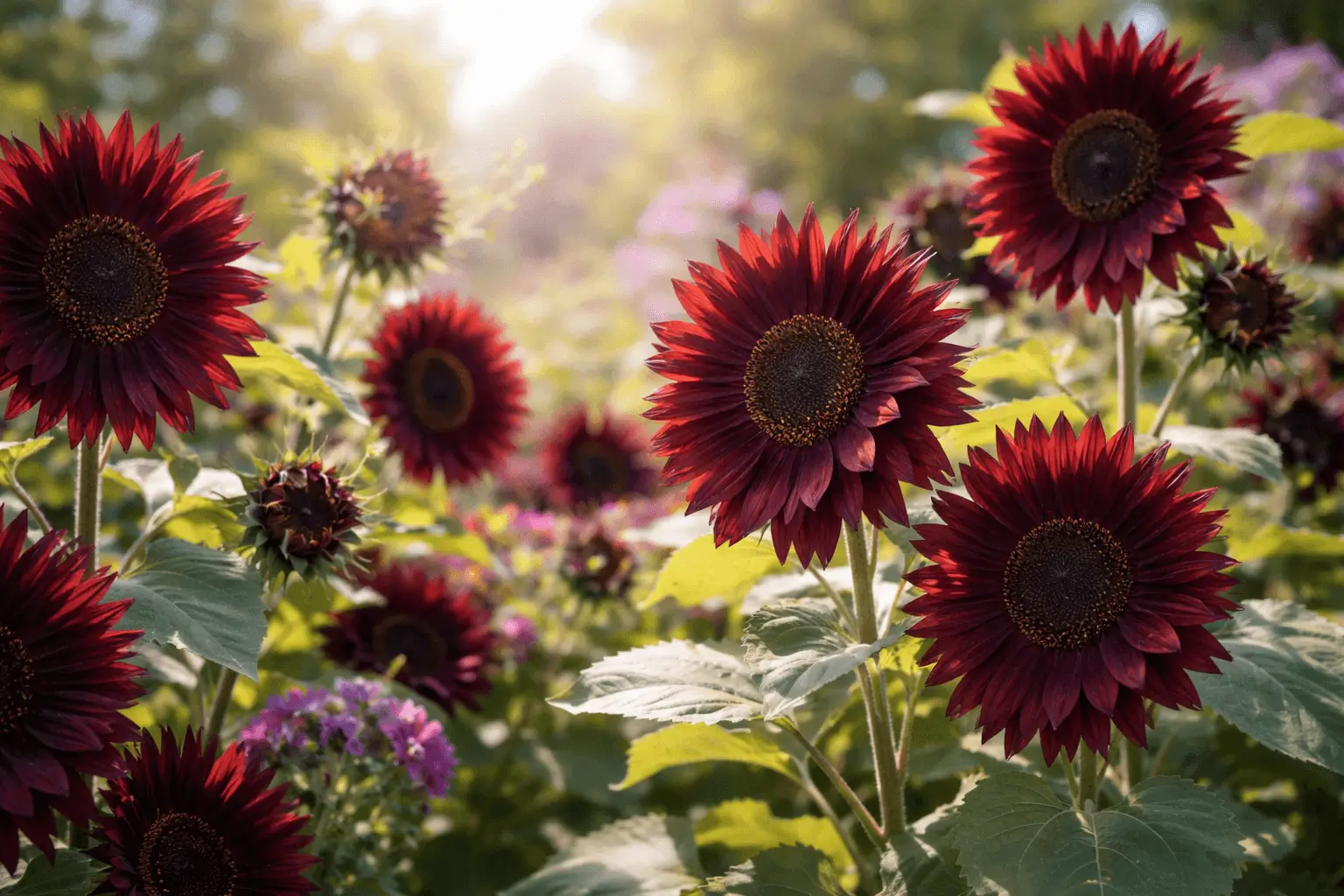
These colors are the result of naturally occurring pigments that sunflowers can express. True purple sunflowers, however, are extremely rare to the point of being considered non-existent in natural conditions. While some varieties appear very dark red or maroon, they do not cross into a genuine purple hue when grown naturally.
Science Behind Sunflower Pigmentation
Flower color is controlled by plant pigments, mainly carotenoids and anthocyanins. Anthocyanins are responsible for purple, blue, and red colors in many plants. Sunflowers produce anthocyanins only in limited amounts, which is why they can achieve red or burgundy tones but not deep purple. The genetic pathways required for stable purple pigmentation are not active in sunflowers, preventing them from expressing true purple petals under normal growing conditions.
What Are “Purple Sunflowers” People Talk About?
Sunfill Purple Sunflower Explained
The term “sunfill purple sunflower” commonly refers to dyed sunflowers used in the floral industry. These flowers start as standard sunflowers and are treated after harvest to achieve a purple appearance. They are popular in floral arrangements, centerpieces, and event décor but are not intended for garden planting. Their appeal is visual rather than botanical.
Are Purple Sunflowers Fake or Dyed?
Purple sunflowers seen in shops are typically dyed rather than naturally grown. Florists use dye-injection or absorption techniques, allowing cut sunflowers to take up colored solutions through their stems. While this creates a striking look, dyed sunflowers:
- Do not retain color indefinitely
- May fade unevenly over time
- Lack the natural texture of true-colored petals
Compared to natural flowers, their lifespan and color stability are limited.
Purple Sunflowers for Sale — What Are You Really Buying?
Purple Sunflower Bouquet Options
Most purple sunflower bouquets feature dyed blooms arranged for decorative purposes. These bouquets are commonly used for:
- Weddings and themed events
- Photo styling
- Bold interior décor
They are meant for short-term visual impact rather than long-lasting freshness or planting.
Purple Sunflowers for Sale Online
Online listings often use terms like “rare purple sunflower” or “exclusive purple variety.” In most cases, this language is marketing-driven. Buyers should check:
- Whether the flowers are dyed
- If seeds are described as color-altered rather than genetically purple
- Product descriptions and customer photos
Understanding these details helps avoid disappointment.
Purple Sunflower Seeds — Myth vs Reality
Purple Sunflowers Seeds Availability
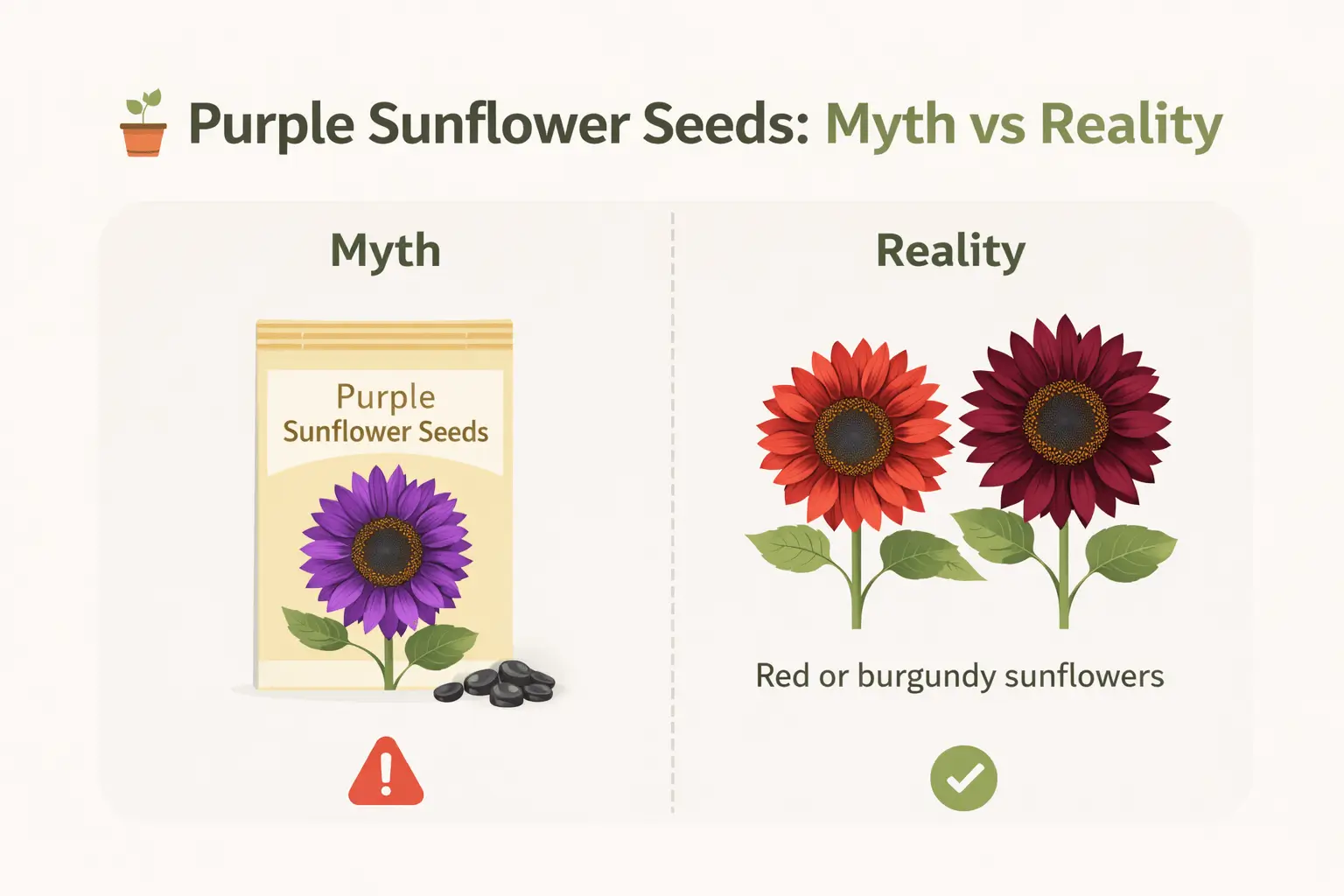
Seeds advertised as purple sunflower seeds are often mislabeled or misunderstood. There are currently no verified sunflower seeds that consistently produce true purple flowers. Many listings rely on edited images or vague descriptions, creating confusion among buyers.
Purple Sunflower Seeds for Planting
When planted, these seeds typically grow standard sunflowers or dark red varieties rather than purple ones. Gardeners should manage expectations and understand that seed genetics, not soil or fertilizer, determine flower color.
How to Grow “Purple” Sunflowers at Home
How to Grow Purple Sunflowers (Practical Truth)
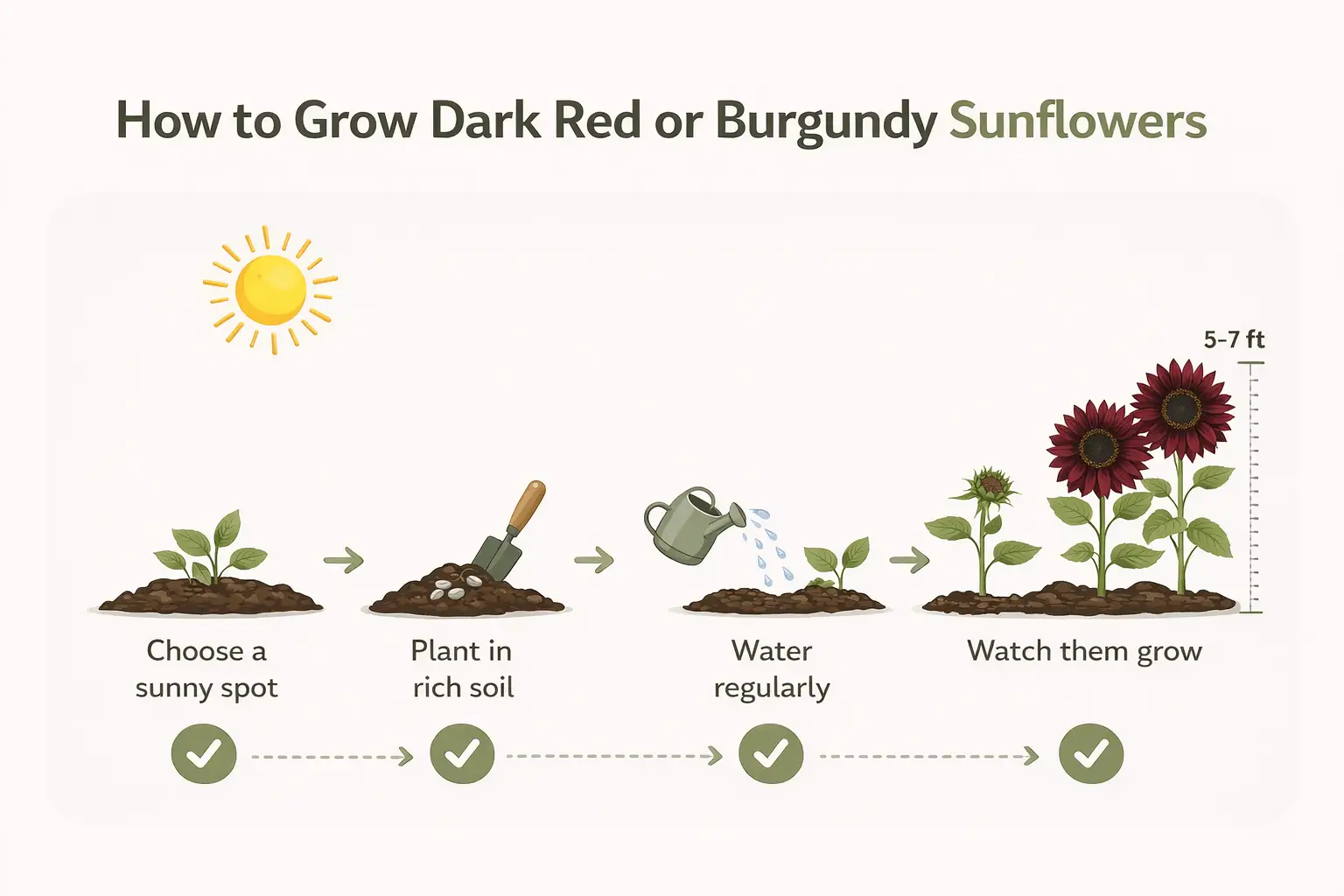
The most realistic option is to grow dark-colored sunflower varieties that resemble purple tones. Deep red, burgundy, or maroon sunflowers can provide a similar visual effect. Basic care includes:
- Full sunlight for at least 6–8 hours
- Well-draining soil
- Moderate, consistent watering
These conditions support healthy growth and rich coloration.
Purple Sunflower Height and Growth Habits
Dark-colored sunflower varieties typically grow between 4 and 7 feet tall, depending on the cultivar. They follow the standard sunflower growth timeline, maturing within a few months. Regular watering and spacing help ensure strong stems and vibrant blooms.
Best Alternatives to Purple Sunflowers
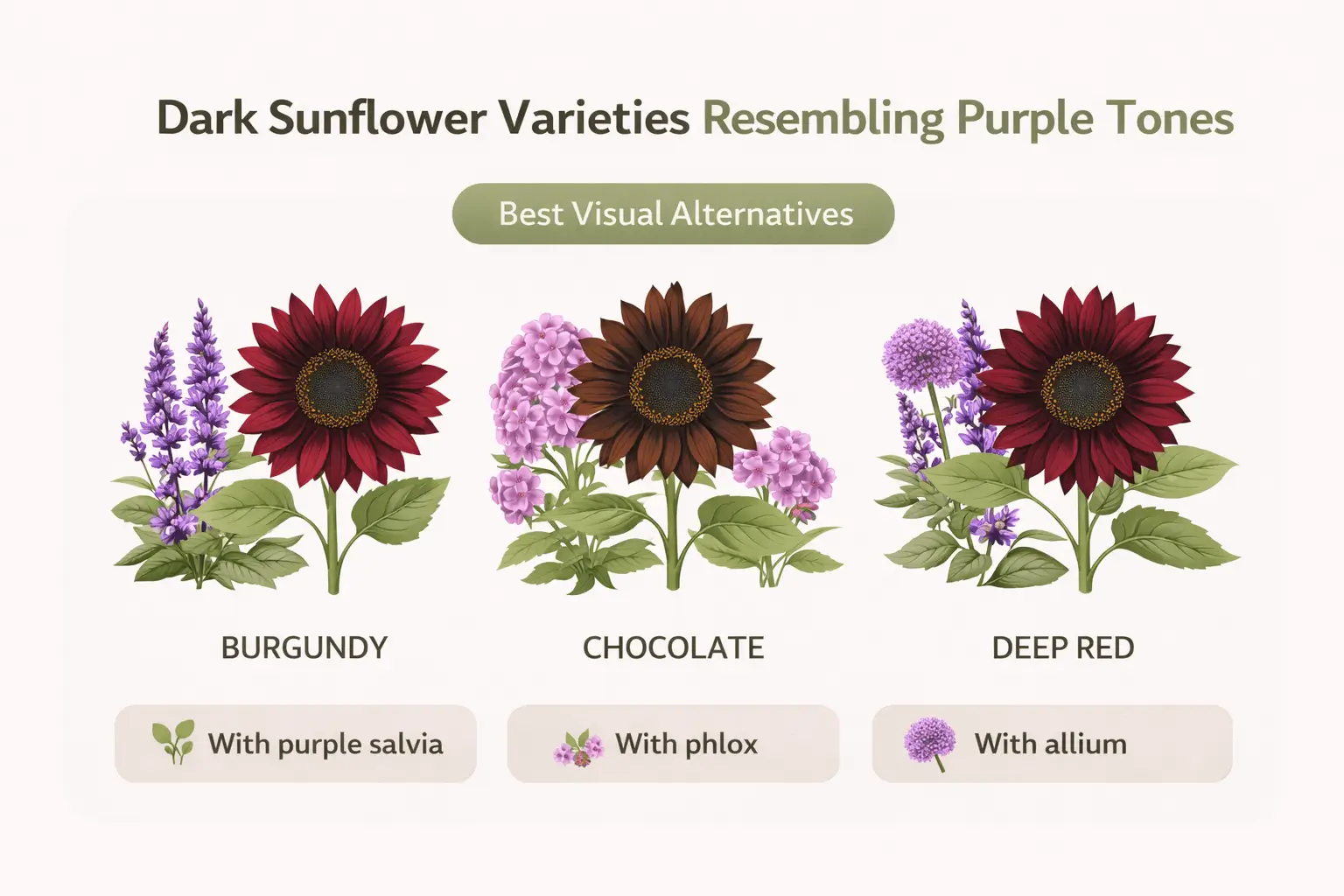
Dark-Colored Sunflower Varieties
Several sunflower varieties offer deep, dramatic tones that visually mimic purple:
- Burgundy sunflowers
- Chocolate-colored sunflowers
- Deep red hybrids
While not truly purple, they provide a similar aesthetic in gardens and bouquets.
Decorative Uses and Garden Styling
Pairing sunflowers with naturally purple flowers enhances visual contrast. Popular styling ideas include:
- Mixing sunflowers with lavender or salvia
- Using dark sunflowers as focal points in mixed beds
- Combining them with purple-toned foliage in bouquets
These combinations create a cohesive, bold look.
Final Verdict — Are There Purple Sunflowers?
True purple sunflowers do not exist naturally. What people encounter are either dark-toned hybrids or artificially dyed flowers. Dyed sunflowers are suitable for decorative purposes, while gardeners should focus on naturally dark varieties for planting. Understanding the distinction helps buyers make informed, realistic choices.
Conclusion & Call-to-Action
Purple sunflowers capture attention, but the truth is clear: purple sunflowers do not naturally exist. What people commonly call purple sunflowers are either artificially dyed blooms or very dark red and burgundy sunflower varieties that visually lean toward purple tones. Understanding this distinction helps avoid confusion, unrealistic expectations, and misleading purchases. If your goal is gardening success, focusing on naturally dark sunflower varieties is the most reliable and rewarding option. If your goal is decoration, dyed sunflowers can still deliver a bold, creative impact for short-term use.
Call-to-Action: Explore dark sunflower varieties for gardens or experiment with creative floral designs that combine sunflowers with naturally purple flowers for a striking, realistic look.
Read Also: Orchid Stem Turning Brown? 7+ Causes & Easy Fixes That Work
FAQs
Are there purple sunflowers naturally found in the wild?
No, purple sunflowers are not naturally found in the wild. Sunflowers naturally produce yellow, orange, red, and burgundy tones, but not true purple.
Are purple sunflowers fake or dyed?
Most purple sunflowers are dyed after harvest using florist techniques. They are not naturally purple-growing plants.
Can purple sunflower seeds grow purple flowers?
No. Seeds marketed as purple sunflower seeds do not grow true purple flowers. They usually produce standard or dark red sunflower varieties.
What is a sunfill purple sunflower used for?
A sunfill purple sunflower is mainly used in floral arrangements, events, and decorative displays rather than for garden planting.
How tall do dark or “purple-style” sunflowers grow?
Dark-colored sunflower varieties typically grow between 4 and 7 feet tall, depending on the specific cultivar and growing conditions.
Where can I buy purple sunflower bouquets safely?
Purple sunflower bouquets are best purchased from reputable florists or décor suppliers that clearly state the flowers are dyed and intended for decorative use.

Written by the LeafyHeaven Editorial Team
LeafyHeaven shares practical gardening tips and simple plant care guides to help you grow, nurture, and enjoy your plants with ease. Our goal is to make gardening feel natural, approachable, and rewarding for everyone.

[…] Read Also: 7+ Stunning Truths: Are There Purple Sunflowers or Not? […]