Introduction
An australian native tree with purple flowers refers to a tree species that naturally occurs in Australia and produces purple or violet-toned blooms during its flowering season. Many people searching for a native tree with purple flowers often confuse true natives with ornamental imports. Across cities and suburbs, australian trees with purple flowers create striking spring landscapes, which explains the popularity of purple flowering trees australia wide. However, when asking what are the purple trees in australia, it is essential to distinguish between native species and widely planted non-native ornamentals.
What Is an Australian Native Tree With Purple Flowers?
Understanding True Australian Native Species
An australian native tree with purple flowers meaning refers to a species that evolved naturally within Australia before European settlement. Native species are adapted to local climates, soils, and ecosystems.
The key difference between native and introduced trees lies in origin. Native trees developed within Australia’s environment, while introduced trees were brought from overseas for ornamental or commercial purposes.
A common example of confusion involves the Jacaranda tree. Although widely planted and strongly associated with Australian streetscapes, it is not native. It originates from South America, yet many mistakenly assume it is a native Australian species due to its widespread presence.
What Are Australian Native Flowers?
Australian native flowers include species naturally occurring across diverse ecosystems—from coastal heathlands to arid inland zones. When referencing an australian native flowers list, flowering trees such as certain Melaleuca and Hardenbergia species are often included.
Australian native flowers are highly diverse in form, color, and structure. Some native trees produce purple, mauve, or violet blooms, though true deep-purple flowering native trees are less common than pink, yellow, or white-flowering varieties.
Most Popular Purple Flowering Trees in Australia
Jacaranda Tree (Most Recognized Purple Tree in Australia)
The Jacaranda tree is the most recognized purple-flowering tree in Australia. Known for its spectacular canopy, the jacaranda tree australia landscape becomes iconic during blooming season. For compact spaces, you can also consider options highlighted in Australian Natives for Small Gardens, especially if you’re looking for smaller native varieties suited to urban landscapes.
Although often referred to as the “australian jacaranda tree,” it is not native. It originates from South America and was introduced as an ornamental tree.
Key facts:
- Scientific origin: South America
- Common names: blue jacaranda tree, purple jacaranda tree
- Popular in: Queensland, New South Wales
During jacaranda flowering season, streets transform into vibrant purple corridors. A jacaranda tree in bloom produces trumpet-shaped lavender to violet flowers. Across cities, jacaranda trees australia are celebrated when jacarandas bloom in late spring to early summer.
Native Australian Trees With Purple Flowers
True native purple-flowering species are fewer but still notable.
Examples include:
- Hardenbergia – A native climber or shrub that can be trained into small tree form, producing purple pea-shaped flowers.
- Certain Melaleuca species – Some varieties display mauve or purple-toned blooms.
- Tibouchina – Commonly mistaken as native but technically not native to Australia.
When searching for a purple flowering australian tree, gardeners may also consider a small australian native tree with purple flowers suitable for suburban spaces. Some shrub forms qualify as small tree with purple flowers australia options, particularly within native landscaping systems that combine australian native tree with purple flowers and shrubs.
Australian Native Tree With Purple Flowers Identification Guide
Flower Structure & Bloom Shape
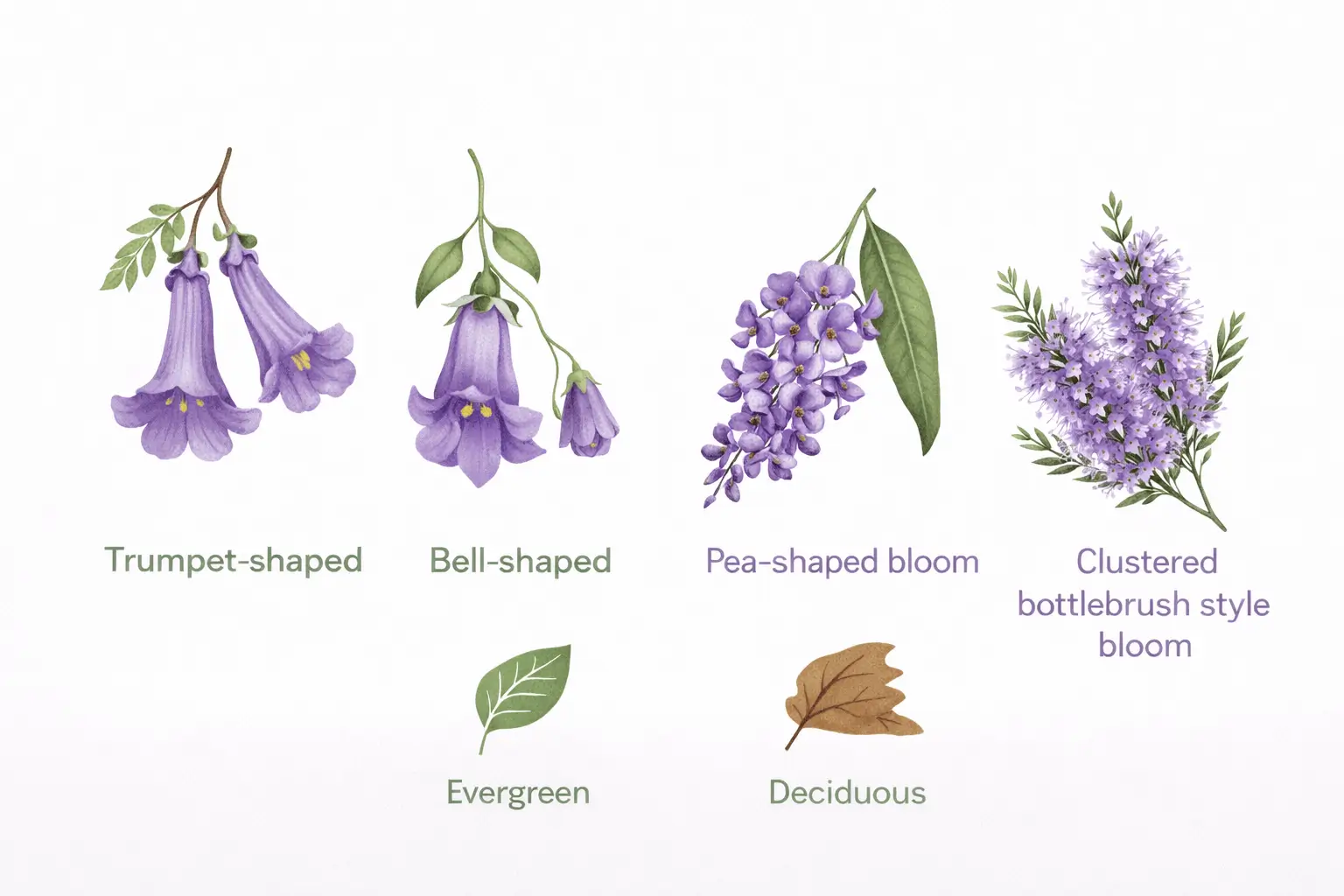
Correct identification depends heavily on bloom structure.
- Trumpet-shaped flowers → Often associated with jacarandas
- Bell-shaped or pea-shaped flowers → More common in native shrubs like Hardenbergia
- Cluster blooms → Frequently seen in Melaleuca
- Single large blooms → Typical of Tibouchina
Using a reliable purple flower tree identification method requires observing shape, cluster arrangement, and petal structure. Accurate purple flowering tree identification prevents mislabeling introduced ornamentals as natives.
Leaf Type & Growth Habit
Leaf structure offers strong identification clues.
- Evergreen foliage → Common in many native species
- Deciduous habit → Characteristic of jacaranda
An australian tree purple flowers specimen may vary in height from small ornamental forms to large canopy trees. Observing growth habit helps identify whether the tree with purple blooms is native or introduced.
Blooming Season in Australia
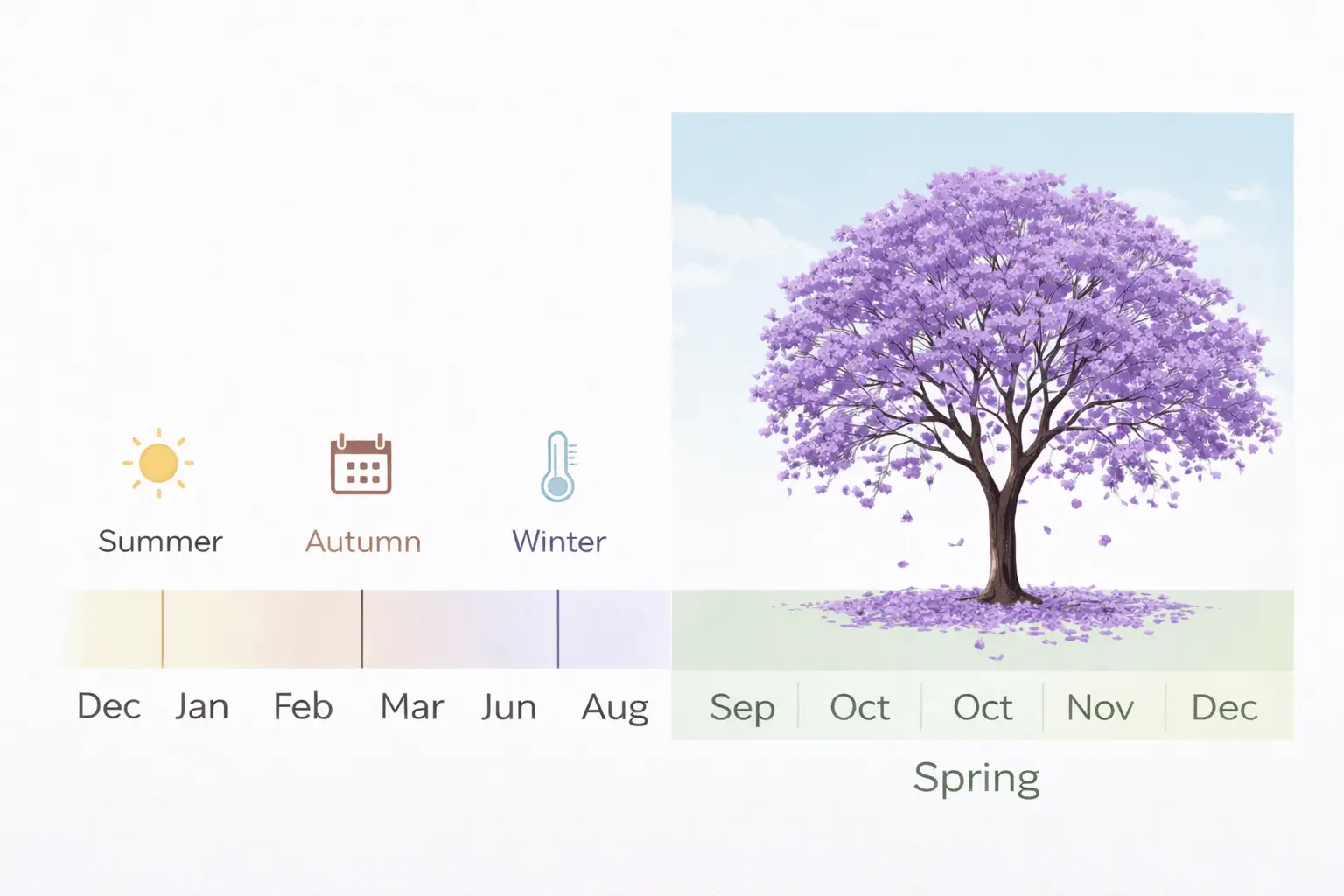
Bloom timing differs by species.
- Jacaranda: Late spring to early summer
- Some natives: Spring
The jacaranda tree flowering season typically peaks in November in many regions. When jacaranda trees bloom, purple carpets form beneath the canopy.
Are Jacarandas Native to Australia? (Important Clarification Section)
No. The jacaranda is not native to Australia.
The jacaranda tree in australia was introduced in the 19th century. Over time, jacaranda trees in australia became deeply embedded in urban design. Due to their prevalence, many assume jacarandas are native.
However, botanically and historically, they originate from South America, as documented in the botanical overview of the Jacaranda genus on Wikipedia.
Trees With Purple Flowers Australia – Native vs Non-Native Comparison
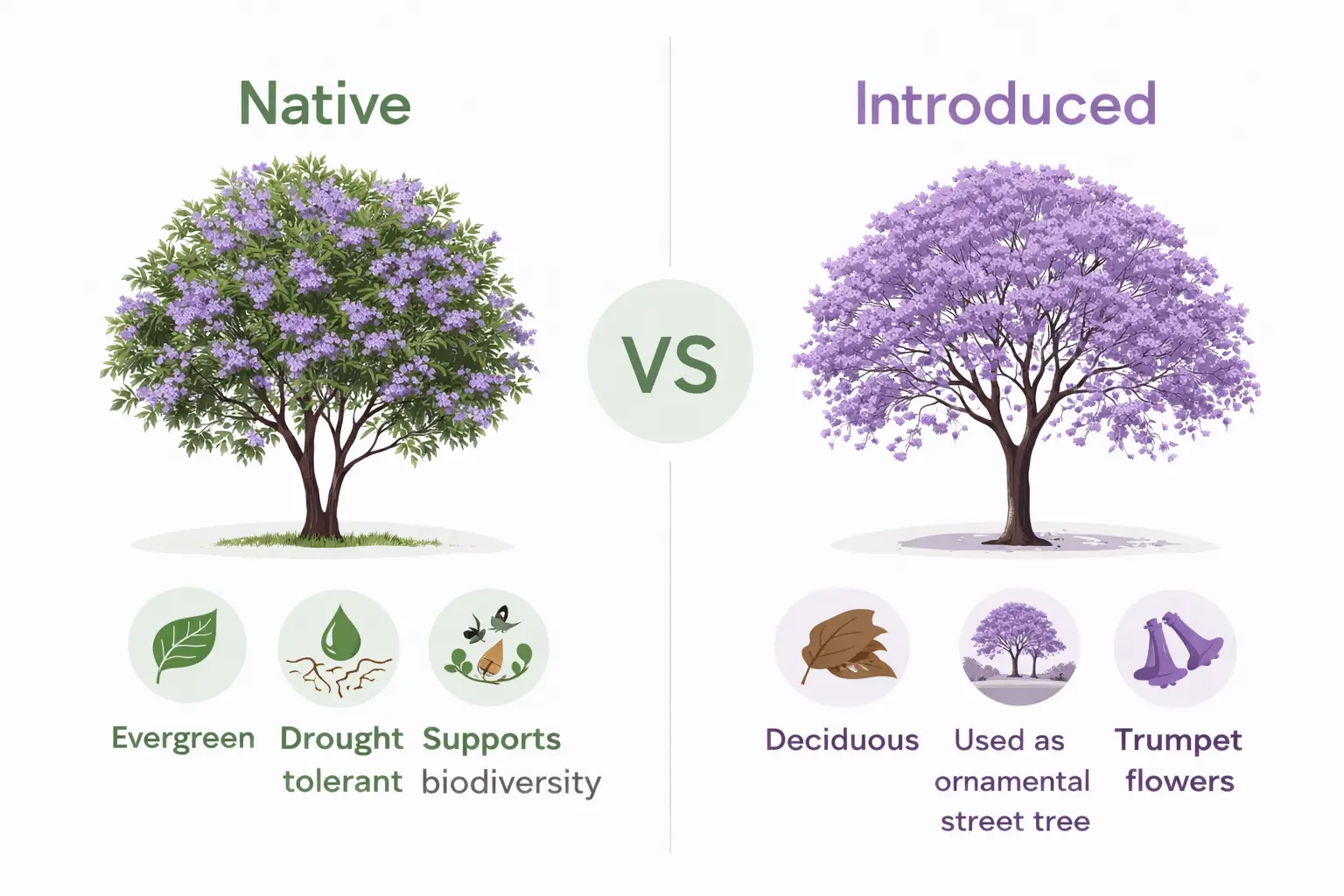
Native Purple Flowering Trees
- Adapted to Australian climate
- Greater drought tolerance
- Support local biodiversity
- Typically evergreen
Native trees with purple flowers australia wide may be less dramatic than jacarandas but offer ecological benefits.
Introduced Purple Flowering Trees
Common introduced species include:
- Jacaranda
- Tibouchina
These flowering trees with purple flowers are ornamental favorites. However, when choosing a tree with purple flowers australia, it is important to verify origin. Many trees with purple flowers in australia are introduced rather than native. If you are planning a sustainable landscape, you may also explore fast-growing native options such as those covered in our guide onFast Growing Evergreen Trees Australia to diversify your planting choices.
Do Any Australian Native Trees Produce Purple Fruit?
When searching for an australian native tree with purple fruit, it is important to distinguish between flower color and fruit color.
Some Australian natives produce purple berries or fruits, but they may not have purple flowers. Purple fruit does not necessarily mean purple blooms. Native fruiting trees often display white or cream flowers followed by dark berries.
How to Grow a Purple Flowering Tree in Australia

Climate & Growing Zones
Growing conditions depend on species. The jacaranda tree growing zone australia typically includes frost-free or mild climates.
Soil & Sun Requirements
Most purple flowering trees require:
- Full sun exposure
- Well-drained soil
- Moderate watering during establishment
Maintenance & Care
For jacaranda varieties:
- Use healthy jacaranda plant stock
- Young jacaranda plants require protection from frost
- Prune lightly to shape canopy
- The purple jacaranda thrives in warm climates
A mature purple jacaranda tree requires minimal maintenance once established. For a deeper understanding of soil preparation, watering techniques, and long-term tree health, refer to our complete Gardening & Plant Care Guide for Thriving Plants for practical foundational strategies.
Conclusion – Choosing the Right Purple Flowering Tree
Selecting an australian native tree with purple flowers requires careful identification. While jacarandas dominate the landscape visually, they are not native. For sustainable landscaping, choosing true natives supports biodiversity and climate resilience.
Before planting, confirm whether the species is native or introduced. Proper identification ensures ecological suitability and long-term garden success. Explore additional native tree guides to make informed planting decisions.
FAQs
What is the most common Australian native tree with purple flowers?
True native trees with deep purple flowers are not very common in Australia. Some plants like certain Melaleuca varieties and Hardenbergia can produce purple blooms.
Is the jacaranda tree native to Australia?
No, the jacaranda tree is originally from South America and was introduced to Australia.
What are the purple trees in Australia that bloom in spring?
Jacaranda trees are the most well-known purple trees that bloom in spring, although some native plants also flower during this season.
How do I identify a purple flowering tree in Australia?
You can identify it by looking at the flower shape, leaves, blooming season, and the plant’s origin. Jacaranda trees usually have trumpet-shaped flowers.
Are there small Australian native trees with purple flowers suitable for gardens?
Yes, some native plants like Hardenbergia can grow as small garden plants or be trained to grow like a small tree.
Do any Australian native trees produce purple fruit as well as flowers?
Some native plants produce purple fruit, but most do not have purple flowers and purple fruit at the same time.

Written by the LeafyHeaven Editorial Team
LeafyHeaven shares practical gardening tips and simple plant care guides to help you grow, nurture, and enjoy your plants with ease. Our goal is to make gardening feel natural, approachable, and rewarding for everyone.