
Introduction
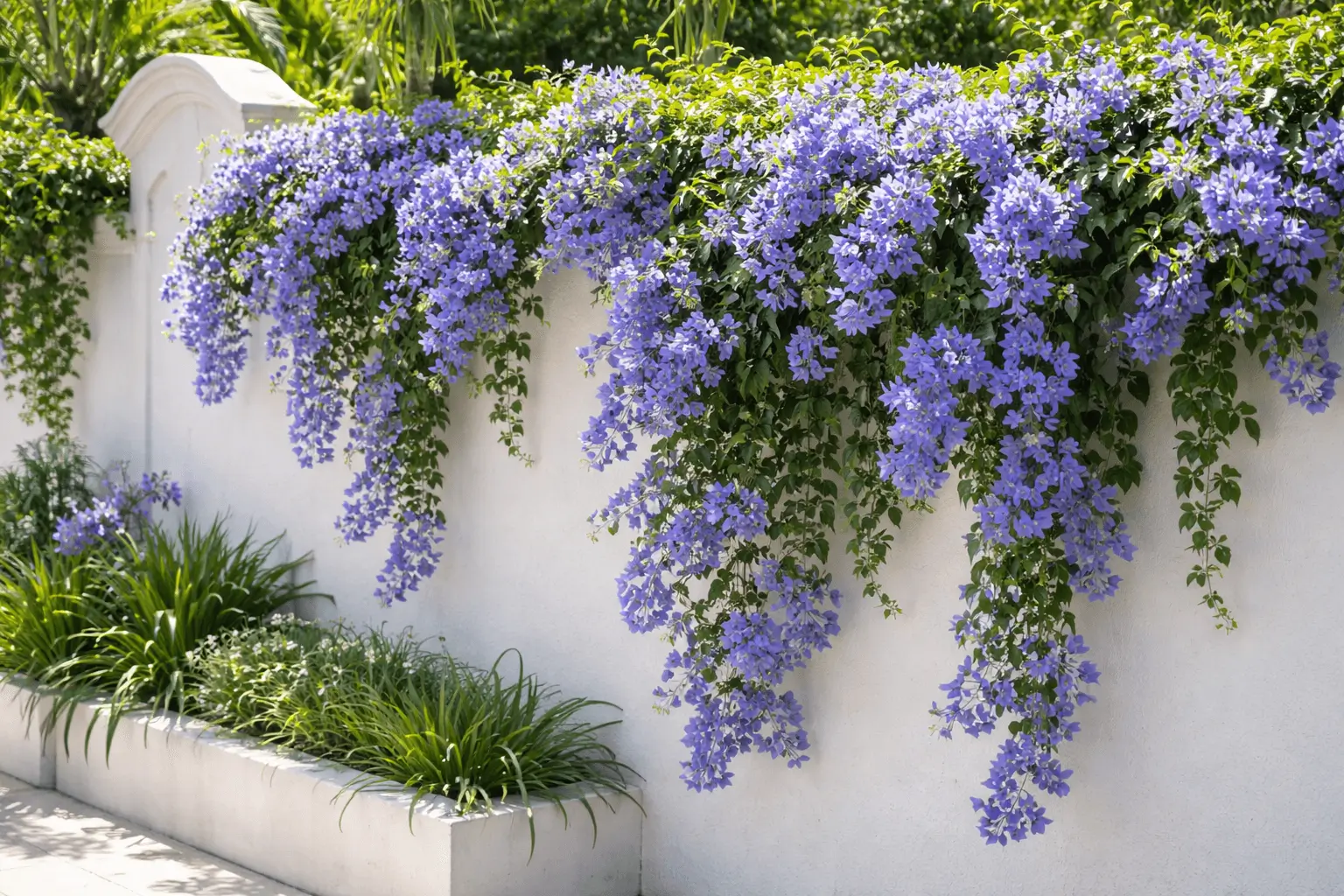
Blue bougainvillea refers to bougainvillea plants that appear blue or blue-toned, not truly blue in pigment. Botanically, bougainvillea does not produce a natural blue flower. What gardeners call blue is usually a visual effect created by purple or violet bracts under certain light conditions. Despite this technical detail, blue bougainvillea remains highly popular in ornamental gardening because of its striking appearance, vigorous growth, and ability to transform walls, fences, and pergolas. Among the wide range of bougainvillea colors available—pink, red, orange, white, yellow, and purple—blue-toned varieties attract special attention due to their rarity and unique visual appeal.
Is Blue Bougainvillea Real or a Color Variation?
Understanding Bougainvillea Color Spectrum
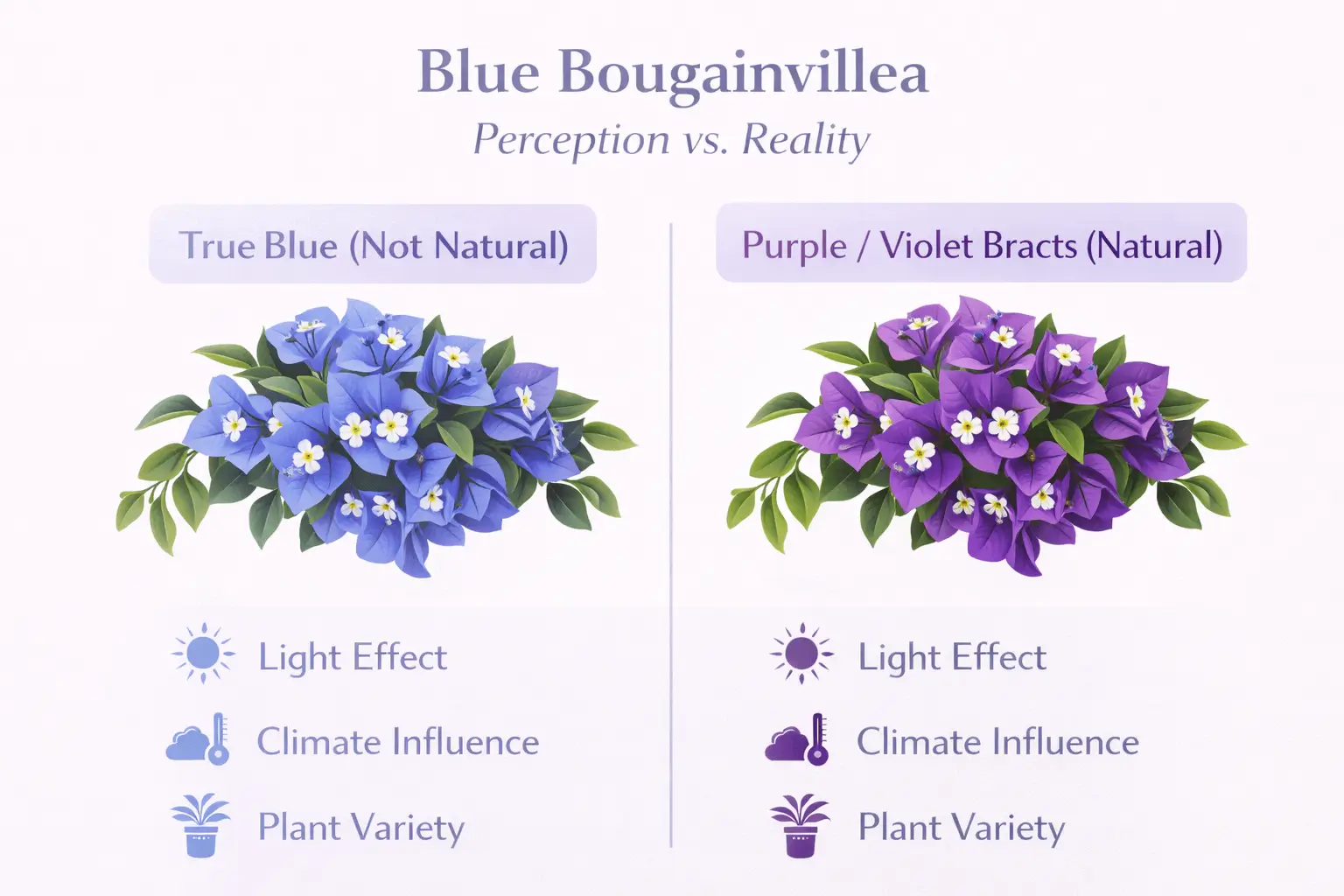
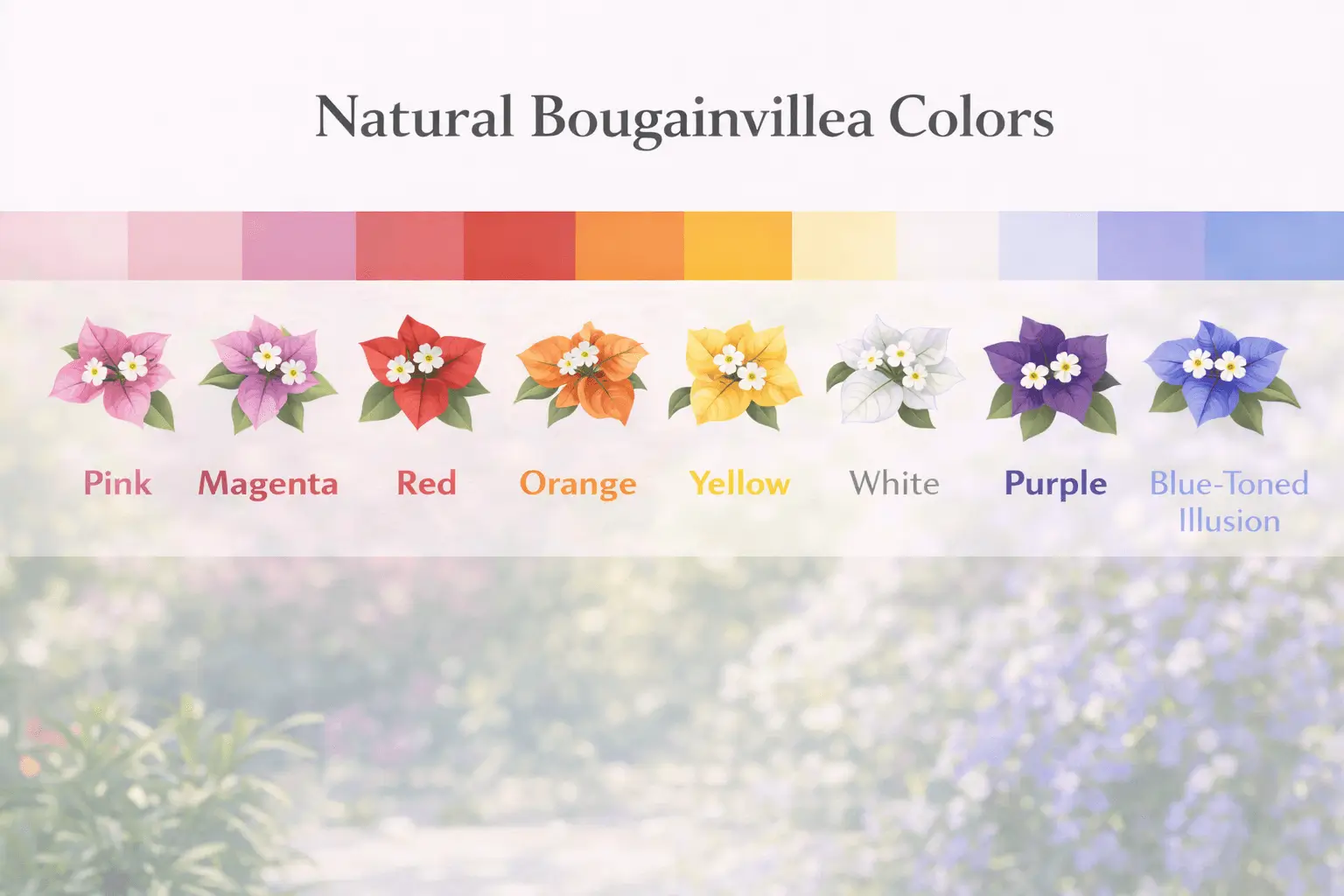
Bougainvillea’s natural color range includes shades of pink, magenta, red, white, orange, yellow, and multiple tones of purple. True blue pigments are absent in the plant’s genetic makeup. The blue shade illusion forms due to a combination of factors such as intense sunlight, cooler temperatures, soil composition, and the specific variety being grown. In certain conditions, deep purple bougainvillea can reflect cooler hues, giving a bluish appearance. Yellow bougainvillea, on the other hand, remains clearly warm-toned and does not create this visual effect, which further highlights how lighting and environment influence perceived bougainvillea colors.
Blue vs Purple Bougainvillea Confusion
The confusion between blue bougainvillea and purple bougainvillea is common among gardeners. Purple varieties with cooler undertones often look blue from a distance or under shade. Blue bougainvillea appears softer and cooler, while purple bougainvillea usually has richer, warmer depth when viewed up close. Gardeners often rely on photos or nursery labels, which can exaggerate the blue tone due to camera filters and lighting. This visual overlap is the main reason the two colors are frequently mistaken for each other.
Blueberry Ice Bougainvillea – The Closest Blue Shade
What Is Blueberry Ice Bougainvillea?
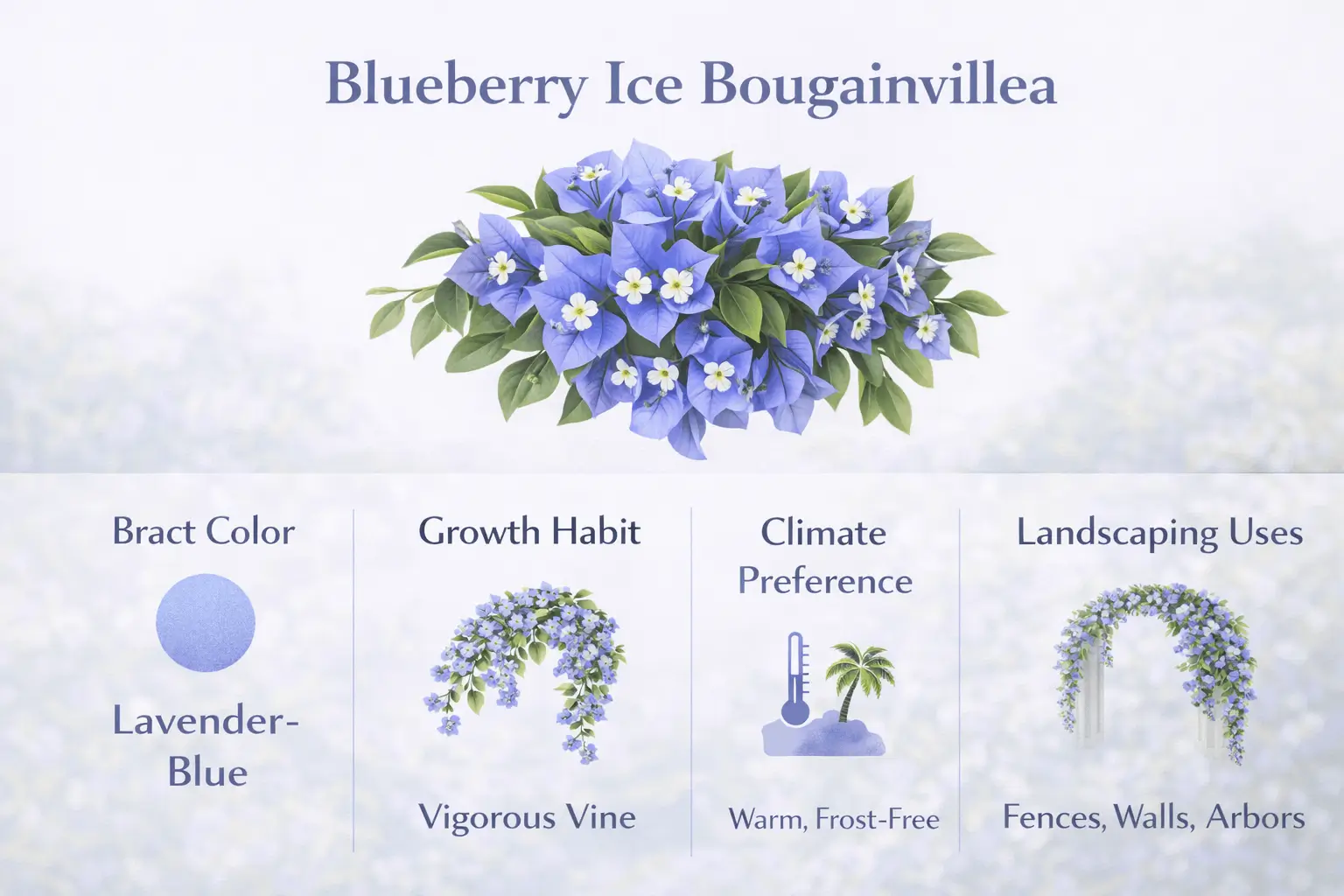
Blueberry Ice bougainvillea is one of the closest varieties to achieving a blue-toned appearance. It is known for its cool lavender to bluish-purple bracts, which closely match what many gardeners expect from blue bougainvillea. While it is not genetically blue, its coloration under bright sunlight creates a distinct icy, bluish impression, making it one of the most sought-after options for blue-toned gardens.
Color, Growth & Climate Characteristics
Blueberry Ice bougainvillea produces soft purple-blue bracts with subtle white highlights. It thrives best in warm, sunny climates with well-draining soil. Full sun exposure enhances its color intensity and flowering performance. This variety is widely used in landscaping for walls, trellises, containers, and accent planting, especially in modern or minimal garden designs where cooler tones are preferred.
Can You Grow Blue Bougainvillea from Seeds?
Blue Bougainvillea Seeds – Reality Check
Blue bougainvillea seeds are often marketed online, but their availability does not guarantee a blue-colored plant. Bougainvillea grown from seeds does not retain exact parent color traits. Color variation is common, which means seeds labeled as blue bougainvillea seeds may produce purple, pink, or mixed shades instead. This lack of color certainty is the main limitation of seed propagation.
Bougainvillea Seeds for Sale – What to Look For
When buying bougainvillea seeds for sale, it is important to verify the seller’s credibility and read detailed descriptions. Many sellers use creative variety names or edited images to attract buyers. Look for clear disclaimers about color variation and avoid listings that promise guaranteed blue blooms from seeds, as this is not botanically reliable.
How to Grow Bougainvillea from Seeds Successfully
Seed Germination Process
Bougainvillea seeds how to grow starts with proper preparation:
- Use well-draining, sandy soil
- Sow seeds shallowly and cover lightly
- Place in a warm, bright location with indirect sunlight
- Keep soil slightly moist but never waterlogged
Germination can take several weeks, and patience is essential during this stage.
Care Tips After Germination
After sprouting, young plants require careful maintenance:
- Gradual exposure to full sunlight
- Light pruning to encourage branching
- Avoid overwatering, which can stunt growth
Common beginner mistakes include poor drainage, excessive shade, and early fertilization.
Alternative Ways to Get Blue-Toned Bougainvillea
Cuttings vs Seeds
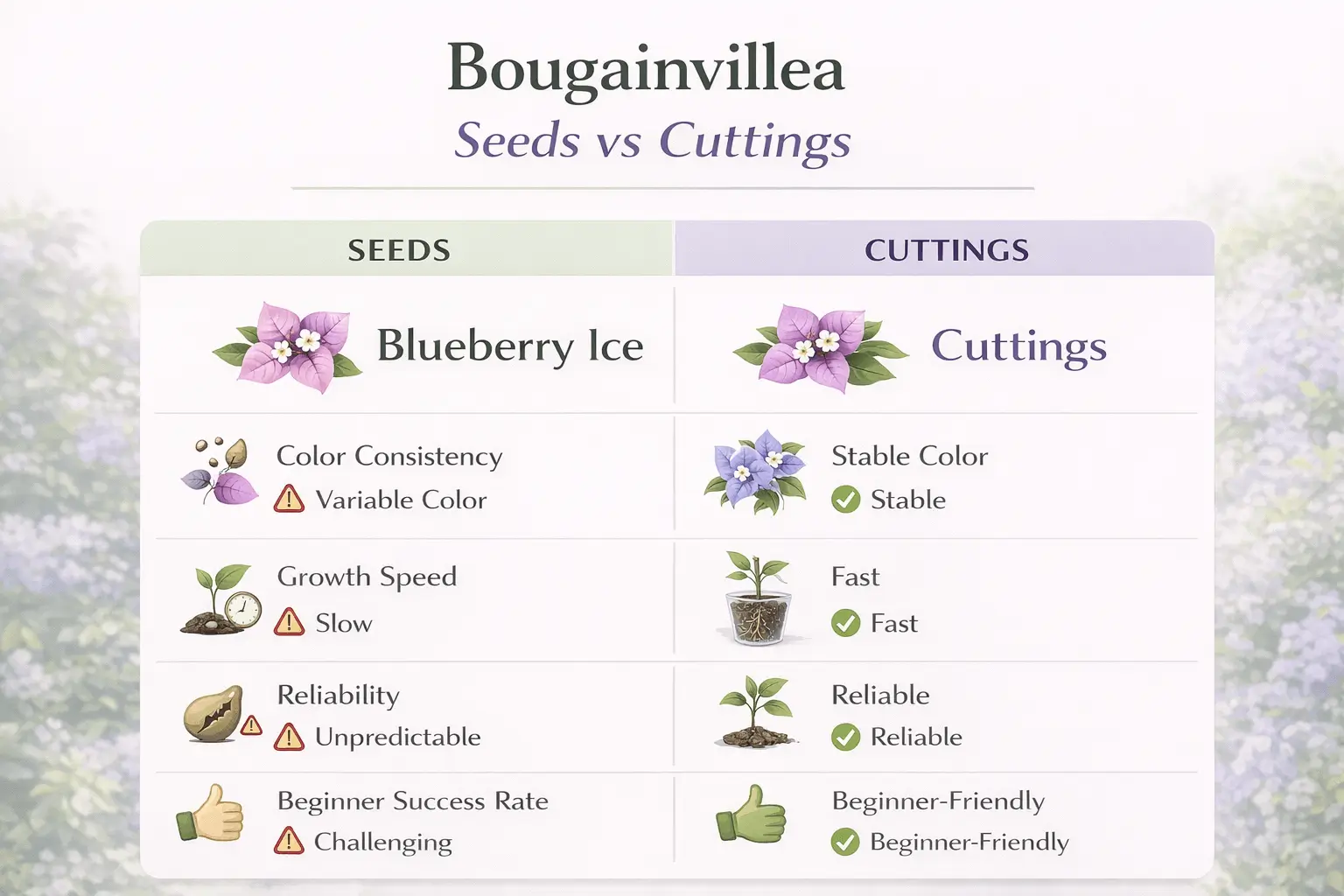
Cuttings are far more reliable than seeds for achieving consistent color. Plants grown from cuttings maintain the parent plant’s shade, while seed-grown plants vary widely. Nursery plants propagated through cuttings offer faster establishment, predictable color, and better flowering performance.
Best Bougainvillea Color Choices for Gardens
For a blue-toned garden look, the best alternatives include cool purple and lavender varieties. Mixing purple bougainvillea with white or pale pink creates visual contrast and depth. Multi-color landscaping designs using complementary bougainvillea colors can achieve a balanced, vibrant garden without relying on true blue blooms.
Conclusion – Is Blue Bougainvillea Worth Growing?
Blue bougainvillea is worth growing if expectations are realistic. While a true blue bloom does not exist, blue-toned and cool purple varieties can still deliver a striking visual impact. The reality is that color depends heavily on variety, sunlight, and climate rather than labels alone. For beginners, starting with nursery-grown plants or proven varieties like cool purple types is the most reliable option. From a garden aesthetics perspective, blue-toned bougainvillea works best when paired with neutral walls, white planters, or contrasting greenery. The key takeaway is simple: choose the right variety for your climate and design goals instead of chasing an unrealistic color promise.
Read Also: Orchid Stem Turning Red: 7+ Shocking Causes You Must Know
FAQs – Blue Bougainvillea
Is blue bougainvillea naturally blue?
No, blue bougainvillea is not naturally blue. The blue appearance is usually a visual effect created by purple or violet bracts under specific lighting and climate conditions.
What color does Blueberry Ice bougainvillea have?
Blueberry Ice bougainvillea typically displays cool lavender to bluish-purple tones. It is considered one of the closest options to a blue-looking bougainvillea.
Can you get an exact blue plant from blue bougainvillea seeds?
No, blue bougainvillea seeds cannot guarantee an exact blue plant. Seed-grown bougainvillea often shows color variation and may produce purple, pink, or mixed shades.
Is growing bougainvillea from seeds easy or difficult?
Growing bougainvillea from seeds is moderately difficult. Germination can be slow, and young plants require careful light, drainage, and watering management.
Which bougainvillea color is best for home gardens?
Purple, pink, and white bougainvillea are considered the best choices for home gardens due to their strong flowering, color stability, and adaptability.
Do yellow and purple bougainvillea require the same care?
Yes, yellow and purple bougainvillea generally require the same care, including full sunlight, well-draining soil, minimal watering, and occasional pruning.

Written by the LeafyHeaven Editorial Team
LeafyHeaven shares practical gardening tips and simple plant care guides to help you grow, nurture, and enjoy your plants with ease. Our goal is to make gardening feel natural, approachable, and rewarding for everyone.

[…] Read Also: Blue Bougainvillea: 5+ Stunning Truths Every Gardener Must Know […]