
Introduction
The boronia native plant australia is widely admired for its delicate structure, highly fragrant blooms, and ornamental value in gardens. Known simply as the boronia plant, this group of flowering shrubs—often called boronias—is especially popular in Australian landscapes. Its standout feature is the aromatic boronia flower, which adds both visual beauty and scent to outdoor spaces. Despite its elegance, native boronia is considered a slightly sensitive plant, requiring proper conditions to thrive. Gardeners value it for its unique fragrance, compact growth, and ability to enhance native-themed landscaping when grown with the right care and environment.
What Is a Boronia Native Plant? (Origin & Classification)
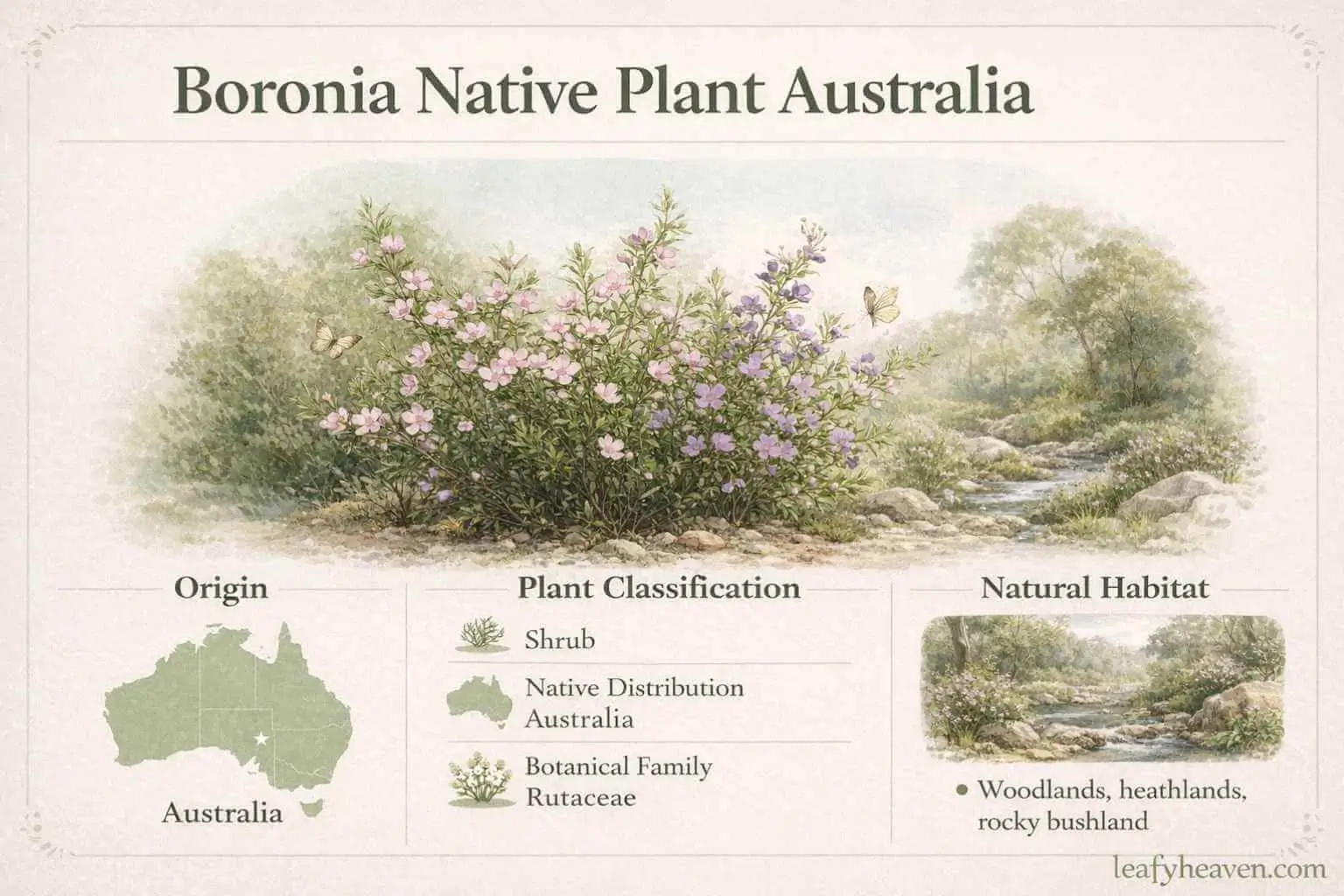
Is Boronia Native to Australia?
Yes, boronia native to Australia. These plants naturally occur across various regions of Australia, particularly in forests, woodlands, and coastal heathlands. Their distribution spans multiple climates, but they thrive best in mild, well-drained environments typical of Australian ecosystems. Boronia belongs to the Rutaceae family, which also includes citrus plants, as explained in detail on Wikipedia’s page about the Rutaceae plant family.
Botanical Overview of Boronia Plants
Boronia belongs to the Rutaceae family, which includes citrus plants. Scientifically recognized for its aromatic foliage and flowers, boronia australia species are typically small shrubs. Depending on growth habit, they may be described as a boronia shrub, boronia bush, or occasionally a small boronia tree. As a boronia native, it is well-adapted to Australian soils and conditions but remains sensitive to disturbance.
Key Features of Boronia Plants
Appearance and Growth Habit
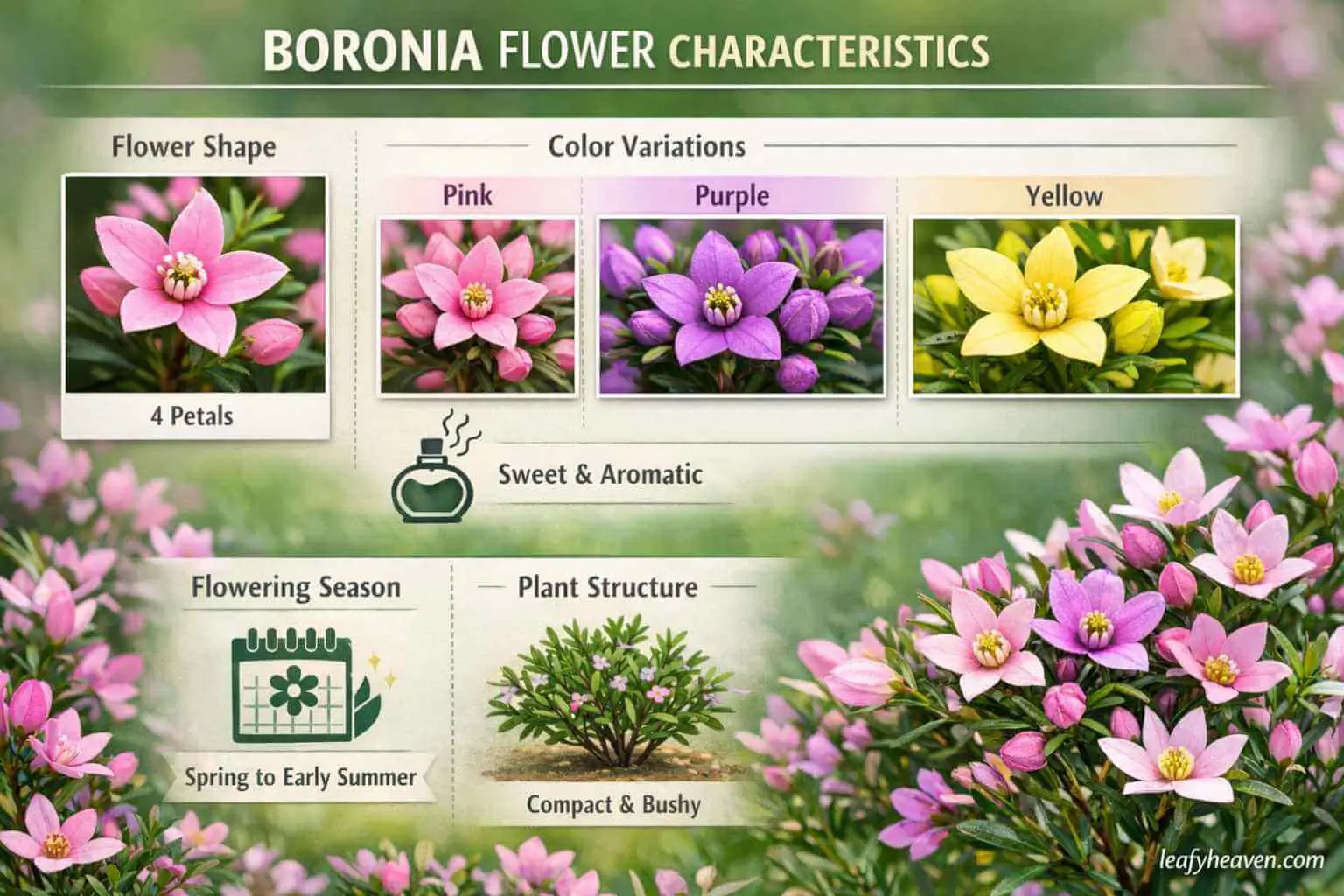
The boronia bush is compact, finely structured, and often grows with a soft, rounded shape. Most varieties remain small to medium in size, making them suitable for garden borders and pots. While sometimes referred to as a boronia tree, it is more accurately classified as a shrub due to its size and growth pattern.
Boronia Flower Characteristics
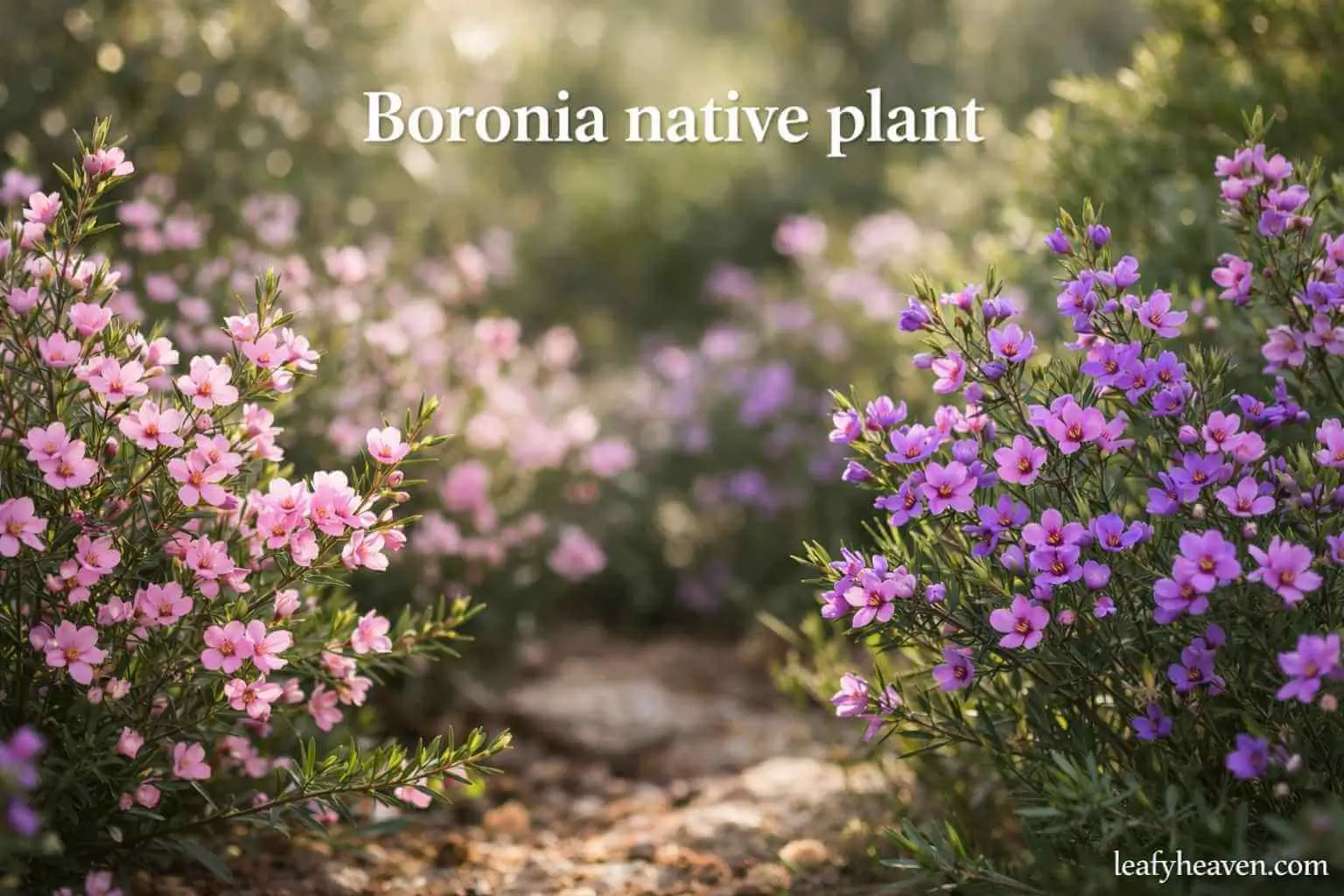
The boronia flower is small but highly fragrant, often featuring four petals. Colors range from deep pink and purple to yellow and white. The term flower boronia is often associated with its strong perfume, making it a prized choice for sensory gardens. The strong fragrance of boronia flowers places them among the best houseplants that smell good for a fresh home, especially for gardeners who value scent-based plant selection.
Boronia Flowering Season
The boronia flowering season typically occurs from late winter to spring. Bloom duration varies depending on climate, but flowers generally last several weeks. Cooler, stable conditions tend to extend flowering time.
Popular Boronia Native Plant Varieties
-
Boronia Megastigma (Brown Boronia)
Boronia megastigma, commonly known as brown boronia, is one of the most famous species. It is valued for its deep brownish-purple flowers and intense fragrance, widely used in perfumery.
-
Boronia Pinnata Plant
The boronia pinnata plant features delicate pink flowers and a soft, airy structure. It is well-suited for decorative garden use but requires careful maintenance.
-
Boronia Denticulata
Boronia denticulata is recognized for its bright pink flowers and upright growth habit. It performs well in well-drained soils and mild climates.
-
Boronia Plum Bells & Heaven Scent
Boronia plum bells and boronia heaven scent are cultivated varieties known for enhanced fragrance and ornamental appeal. These hybrids are popular in home gardens for their reliability.
-
Other Native Boronia Varieties
There are many boronia native plant varieties, each offering unique colors, sizes, and growth habits. Selection depends on climate compatibility and intended garden use.
How to Grow Boronia Native Plant
Ideal Climate and Location
The boronia native plant australia prefers:
- Mild temperatures
- Partial sunlight to filtered light
- Protection from harsh winds
Excess heat or frost can negatively impact growth.
Soil Requirements
- Well-draining soil is essential
- Slightly acidic soil is preferred
- Enrich with organic matter such as compost or leaf mulch
Poor drainage can quickly damage roots.
Can You Grow Boronia in a Pot?
Yes, boronia can be grown in pots if conditions are controlled:
- Use a well-draining potting mix
- Choose medium-sized containers
- Ensure proper drainage holes
- Place in bright but indirect sunlight
Boronia Plant Care Guide (Complete Maintenance)
Watering Needs
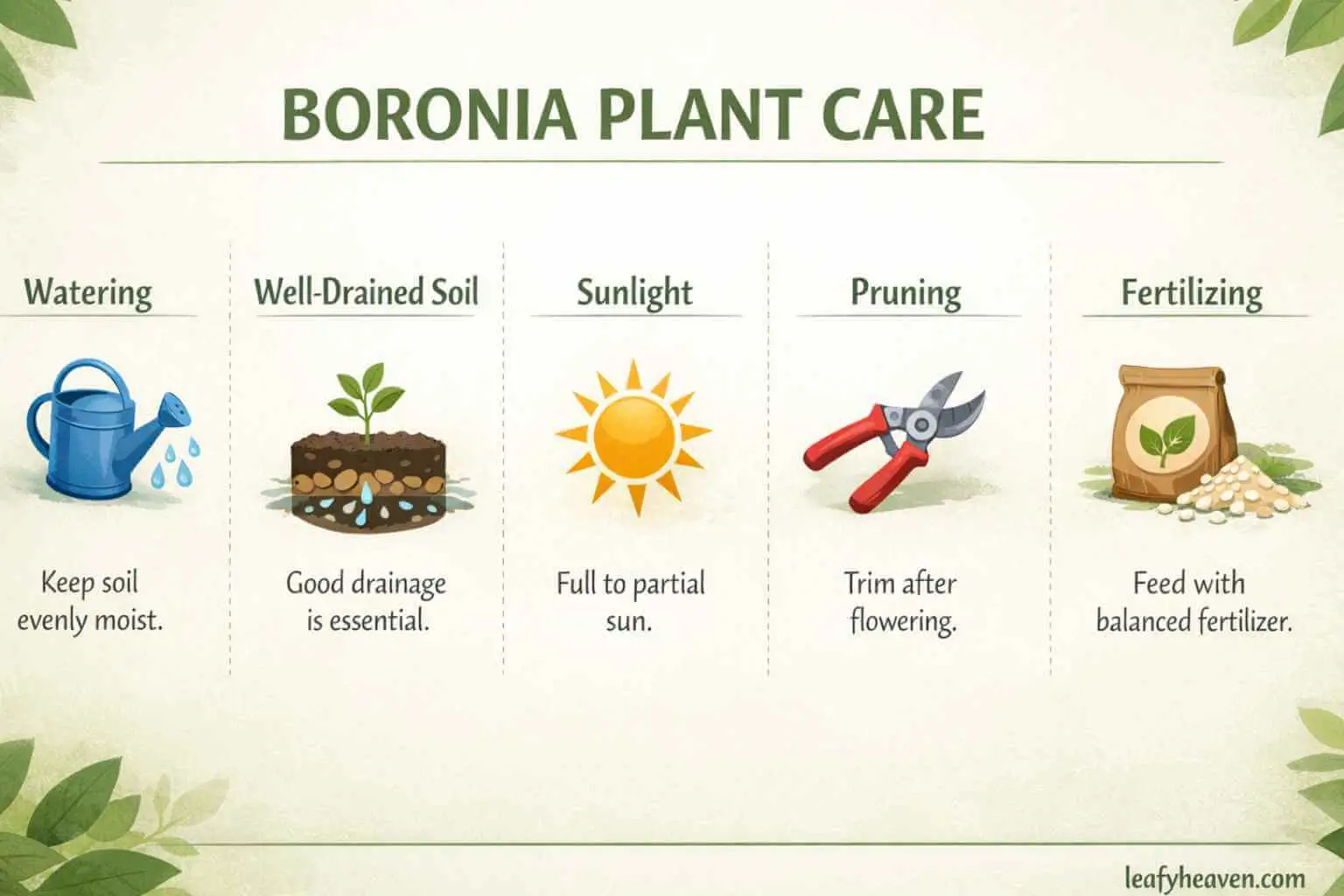
- Keep soil consistently moist
- Avoid waterlogging
- Reduce watering during cooler months
Pruning and Shaping
- Light pruning after flowering
- Maintain compact boronia bush shape
- Remove dead or weak growth
Fertilizing Tips
- Use low-phosphorus fertilizers
- Apply sparingly
- Native plant-specific fertilizers are ideal
Common Problems & Sensitivity
- Short lifespan in poor conditions
- Sensitive root system
- Susceptible to root rot if overwatered
Proper boronia plant care and boronia native plant care are essential for long-term success.
Growth Rate, Size & Lifespan
How Big Does Boronia Grow?
A typical boronia shrub grows:
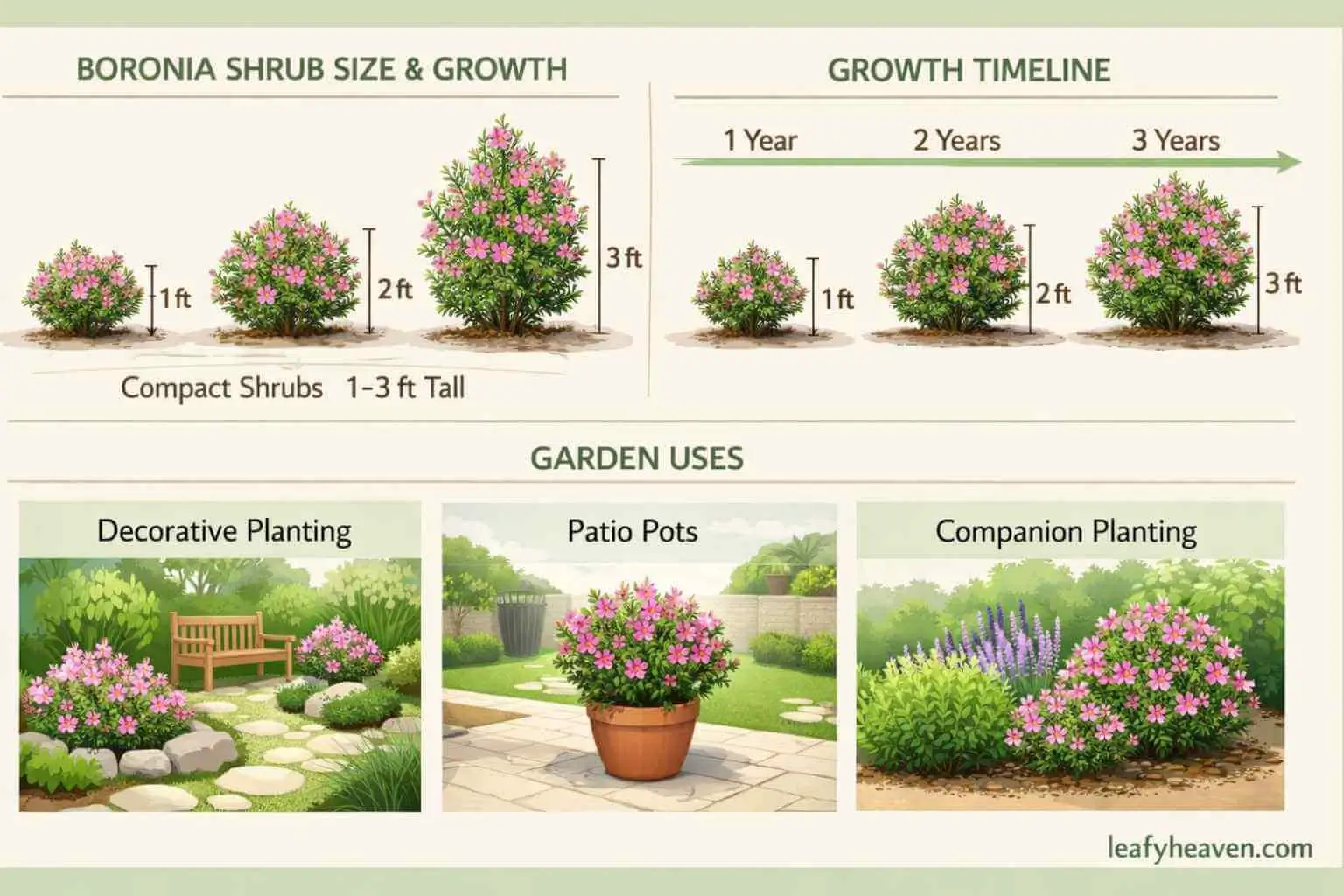
- Height: 1–2 meters
- Width: 0.5–1.5 meters
Growth Timeline
- Establishes within the first growing season
- Moderate growth rate under ideal conditions
Lifespan and Longevity
Boronia is generally short-lived:
- Average lifespan: 3–5 years
- Requires optimal care for longevity
Uses of Boronia in Gardens & Landscaping
Decorative & Fragrant Garden Use
The strong fragrance of the boronia flower makes it ideal for:
- Sensory gardens
- Entryway planting
- Feature shrubs
Companion Planting Ideas
Pair boronia with:
- Other Australian natives
- Low-maintenance shrubs
- Plants with similar soil needs
For a cohesive native garden design, consider combining boronia with other Australian natives for small gardens that thrive in similar soil and climate conditions.
Indoor & Patio Use
- Suitable for pots
- Ideal for patios and balconies
- Requires bright, indirect light
Where to Buy Boronia Plants (Availability Guide)
Garden Centers & Retail Options
Boronia is available at:
- boronia plant bunnings
- boronia plants bunnings
- boronia bunnings garden sections
Online Purchase Options
You can find:
- boronia plants for sale
- boronia seeds for sale
- Options when searching where to buy boronia plants
What to Check Before Buying
- Healthy green foliage
- No signs of root rot
- Strong stems and compact growth
Special Notes & Precautions
Sensitivity to Root Disturbance
- Avoid frequent repotting
- Minimize transplanting
- Handle roots gently
Climate Limitations
Boronia struggles outside its native range:
- boronia california often faces challenges
- Requires climate similar to Australia
- Sensitive to extreme conditions
Conclusion
The boronia native plant is a visually appealing and highly fragrant addition to gardens, especially within Australian environments. While slightly delicate, it rewards proper care with vibrant blooms and strong scent. Best suited for gardeners who can maintain stable conditions, boronia remains a standout choice for native landscaping and ornamental planting.
FAQs
Is boronia native to Australia?
Yes, boronia is native to Australia and grows naturally in various regions across the country.
Can you grow boronia in a pot successfully?
Yes, boronia can be grown in pots with well-draining soil, proper light, and controlled watering.
When is the boronia flowering season?
The boronia flowering season typically occurs from late winter to spring.
How do you care for a boronia plant?
Maintain moist soil, use low-phosphorus fertilizer, provide partial sunlight, and avoid root disturbance.
Where can I buy boronia plants?
Boronia plants are available at garden centers like Bunnings and through online plant retailers.
Is boronia a shrub or tree?
Boronia is primarily a shrub, though it may sometimes be described as a small tree depending on its growth.

Written by the LeafyHeaven Editorial Team
LeafyHeaven shares practical gardening tips and simple plant care guides to help you grow, nurture, and enjoy your plants with ease. Our goal is to make gardening feel natural, approachable, and rewarding for everyone.