
Introduction
Brown spots on anthurium leaves are a common concern for indoor plant owners and often signal that something in the plant’s environment is off balance. These spots may start small but can spread quickly, affecting the plant’s appearance and overall health. Indoor anthurium plants are especially prone to this issue because they are sensitive to changes in watering habits, humidity levels, light exposure, and airflow inside homes. Unlike outdoor conditions, indoor environments can fluctuate unexpectedly, creating stress for the plant. Early identification of brown spots on anthurium leaves is important because timely correction of care issues can stop further damage and help prevent permanent leaf decline, allowing the plant to recover and continue producing healthy, vibrant foliage.
Brown spots on anthurium leaves are usually caused by watering imbalance, low humidity, light stress, fertilizer buildup, or fungal infection. In most indoor cases, correcting environmental conditions can stop the spread and restore healthy leaf growth without permanent damage.
What Are Brown Spots on Anthurium Leaves?
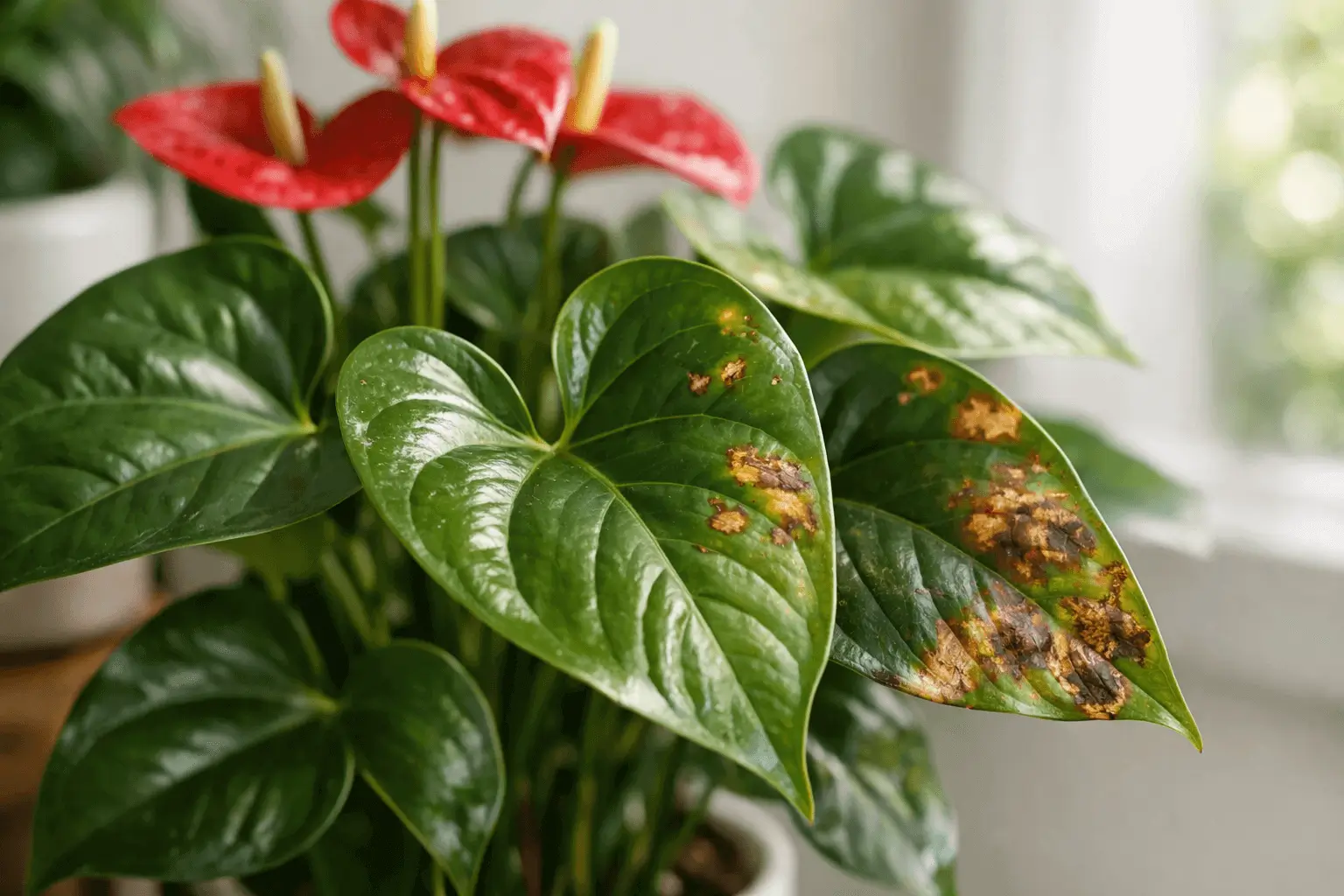
Brown spots on anthurium leaves usually appear as small, dry, or water-soaked marks that interrupt the smooth green surface of otherwise healthy foliage. These spots often begin at the leaf edges or tips and may develop in the center of the leaf as well, depending on the cause. In early stages, the surrounding leaf tissue may still look firm and green, making the spots stand out clearly.
There is an important difference between spots, patches, and full leaf browning. Spots are typically small, defined areas that may be round or irregular in shape. Patches are larger, uneven brown sections that spread across part of the leaf and often indicate ongoing stress. Full leaf browning occurs when the entire leaf turns brown, which usually points to advanced damage, aging, or prolonged care issues rather than a minor problem.
Brown spots become a serious issue when they increase in number, grow rapidly, or start affecting multiple leaves at once. At this stage, the plant is no longer dealing with mild stress but responding to unfavorable conditions that can weaken growth, reduce flowering, and lead to permanent leaf loss if not addressed promptly.
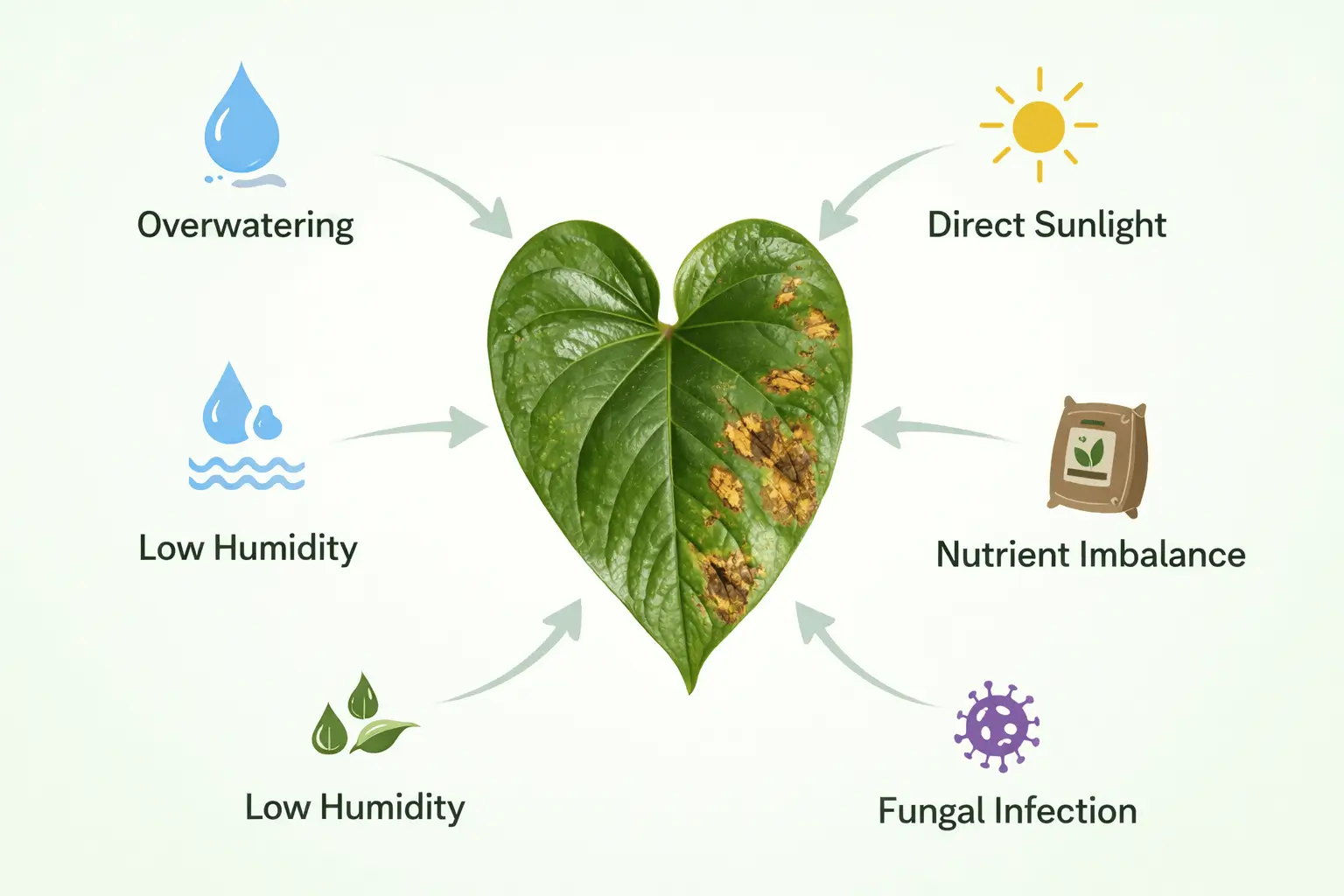
Common Causes of Brown Spots on Anthurium Leaves
-
Improper Watering Issues
Improper watering is one of the leading reasons behind brown spots on anthurium leaves. Overwatering vs underwatering symptoms can look similar at first but affect the plant differently. Overwatered anthuriums often develop soft, dark brown spots caused by excess moisture, while underwatered plants show dry, brittle brown areas, especially along leaf edges.
When soil remains wet for too long, soggy soil causes anthurium leaves turning brown by suffocating the roots. Roots need oxygen to function properly, and waterlogged conditions reduce oxygen availability, leading to poor nutrient uptake. Over time, this stress shows up on the leaves as brown spotting or discoloration.
Clear signs of root stress affecting leaves include yellowing before browning, limp foliage, slow growth, and a general loss of leaf shine. If watering habits are not corrected, root damage can progress and cause widespread leaf deterioration.
-
Low Humidity & Dry Air
Anthuriums are tropical plants that thrive in moist air, which is why dry indoor air causes anthurium leaves turning brown and crispy. When humidity levels drop, moisture escapes from the leaves faster than the roots can replace it, resulting in dry brown patches, particularly on leaf tips and margins.
The humidity needs of flamingo plants are higher than most common houseplants, typically requiring moderate to high humidity to maintain healthy foliage. Indoor heating, air conditioning, and poor air circulation can quickly dry out the surrounding environment.
Seasonal humidity problems are especially noticeable in winter, when indoor heating systems lower moisture levels, and in summer if air conditioners run continuously. These seasonal shifts often trigger brown spots if humidity is not adjusted accordingly.
-
Light Stress (Too Much or Too Little)
Light exposure plays a crucial role in leaf health. Sunburn causing brown leaf spots occurs when anthuriums are exposed to direct sunlight, especially through windows. This intense light damages leaf tissue, leaving behind dry, scorched brown areas that do not recover.
On the other hand, low light weakens leaf structure, making leaves thinner and more vulnerable to stress. In insufficient light, the plant struggles to photosynthesize efficiently, which can lead to dull foliage and increased susceptibility to browning.
The ideal lighting for healthy leaves is bright, indirect light that supports growth without overheating or damaging the foliage. Consistent light conditions help prevent stress-related spotting. Similar leaf surface damage patterns are also discussed in our guide on plants with waxy leaves, where environmental stress affects foliage texture.
-
Nutrient Imbalance
Feeding mistakes are another common cause of leaf damage. Fertilizer burn causing anthurium brown spots on leaves happens when salts from excess fertilizer build up in the soil and burn root tips. This damage disrupts water and nutrient flow, resulting in brown spotting on leaves.
A lack of essential nutrients, such as potassium or magnesium, can also lead to discoloration and weakened leaf tissue. Nutrient deficiencies tend to cause gradual browning rather than sudden spots.
Many indoor growers make overfeeding mistakes in indoor plants by fertilizing too frequently or using strong concentrations. Anthuriums require balanced, diluted feeding to avoid stress-related leaf issues.
-
Diseases & Fungal Infections
In some cases, brown spots are linked to disease rather than environmental stress. An overview of anthurium diseases photos indicators often shows irregular brown or black spots surrounded by yellow halos, which can help distinguish infections from care-related problems.
Understanding fungal vs bacterial brown spots is important. Fungal spots usually spread slowly and appear dry or powdery, while bacterial spots tend to look water-soaked and can spread rapidly under warm, humid conditions.
Knowing when to suspect infection is key—if brown spots continue to spread despite proper care adjustments, appear mushy, or affect multiple leaves quickly, disease is a likely cause and requires immediate attention.
| Cause | Spot Appearance | Spread Pattern | Severity Level |
|---|---|---|---|
| Overwatering | Soft dark brown patches | Gradual | Moderate |
| Low Humidity | Dry crispy edges | Slow | Mild |
| Sunburn | Dry bleached brown spots | Stable | Mild |
| Fungal Infection | Irregular spots with yellow halo | Progressive | High |
| Bacterial Infection | Water-soaked mushy spots | Rapid | High |
Why Are My Anthurium Leaves Turning Brown Completely?
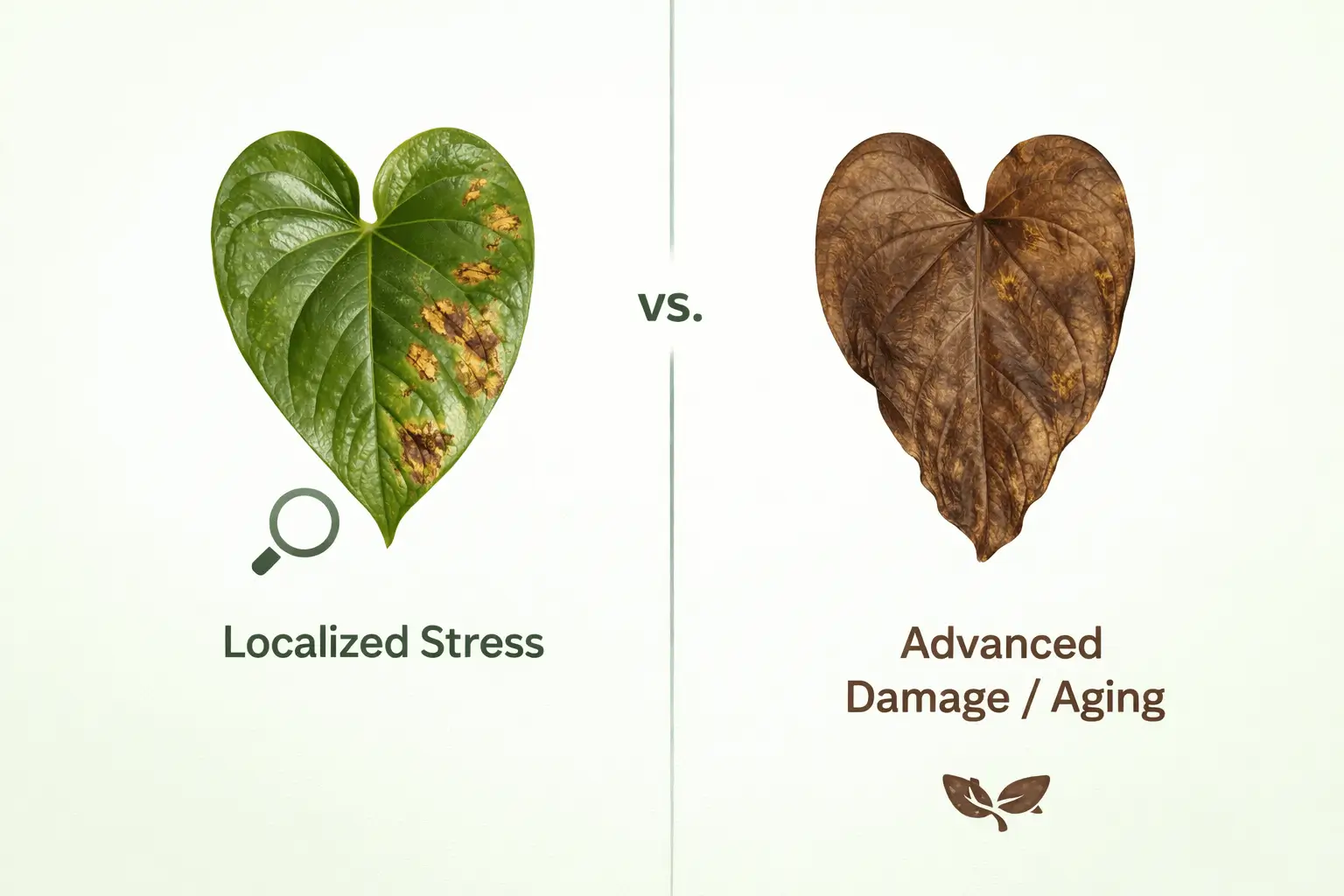
There is an important difference between spots and full leaf browning in anthurium plants. Brown spots usually indicate localized stress, such as watering issues, humidity imbalance, or light damage. When an entire leaf turns brown, the problem is typically more advanced or long-term, affecting the leaf’s ability to function as a whole. Full leaf browning suggests that the plant has redirected resources away from that leaf due to sustained stress or natural decline.
Understanding aging leaves vs unhealthy leaves helps determine whether action is needed. Aging leaves naturally turn yellow and then brown as the plant sheds older foliage to support new growth. These leaves usually brown evenly and appear on the lower part of the plant. In contrast, unhealthy leaves often brown irregularly, may show spotting first, and can appear on multiple levels of the plant, signaling environmental or care-related problems.
The role of plant maturity (old anthurium plant) also plays a part. Older anthurium plants naturally cycle through leaves more frequently, and complete browning of older leaves is part of normal growth. However, if a mature plant shows widespread full-leaf browning across many leaves at once, it usually indicates stress rather than age alone and should not be ignored. Browning symptoms can vary across indoor plants depending on the affected part. For example, stem discoloration in orchids follows a different pattern, which is explained in our guide on orchid stem turning brown.
Anthurium Flowers Turning Brown — Is It Related?
Why anthurium flowers turning brown happens is often linked to the same environmental stresses that affect leaf health. Anthurium flowers are sensitive structures, and changes in watering, humidity, or light can cause the spathes to lose color and develop brown areas. In many cases, browning flowers appear alongside leaf issues, indicating that the plant is responding to overall stress rather than a single isolated problem.
Environmental stress affecting blooms includes dry air, inconsistent watering, temperature fluctuations, and exposure to direct sunlight. These factors reduce moisture within the flower tissue, leading to discoloration, curling, or premature browning. Poor airflow and sudden changes in indoor conditions can further shorten the lifespan of blooms.
It is important to distinguish normal flower aging vs care issues. Naturally aging anthurium flowers gradually fade, turn dull, and eventually brown as part of their life cycle. This process is slow and usually affects older blooms first. Care-related problems, however, cause flowers to brown quickly, unevenly, or shortly after blooming, often alongside other signs of plant stress.
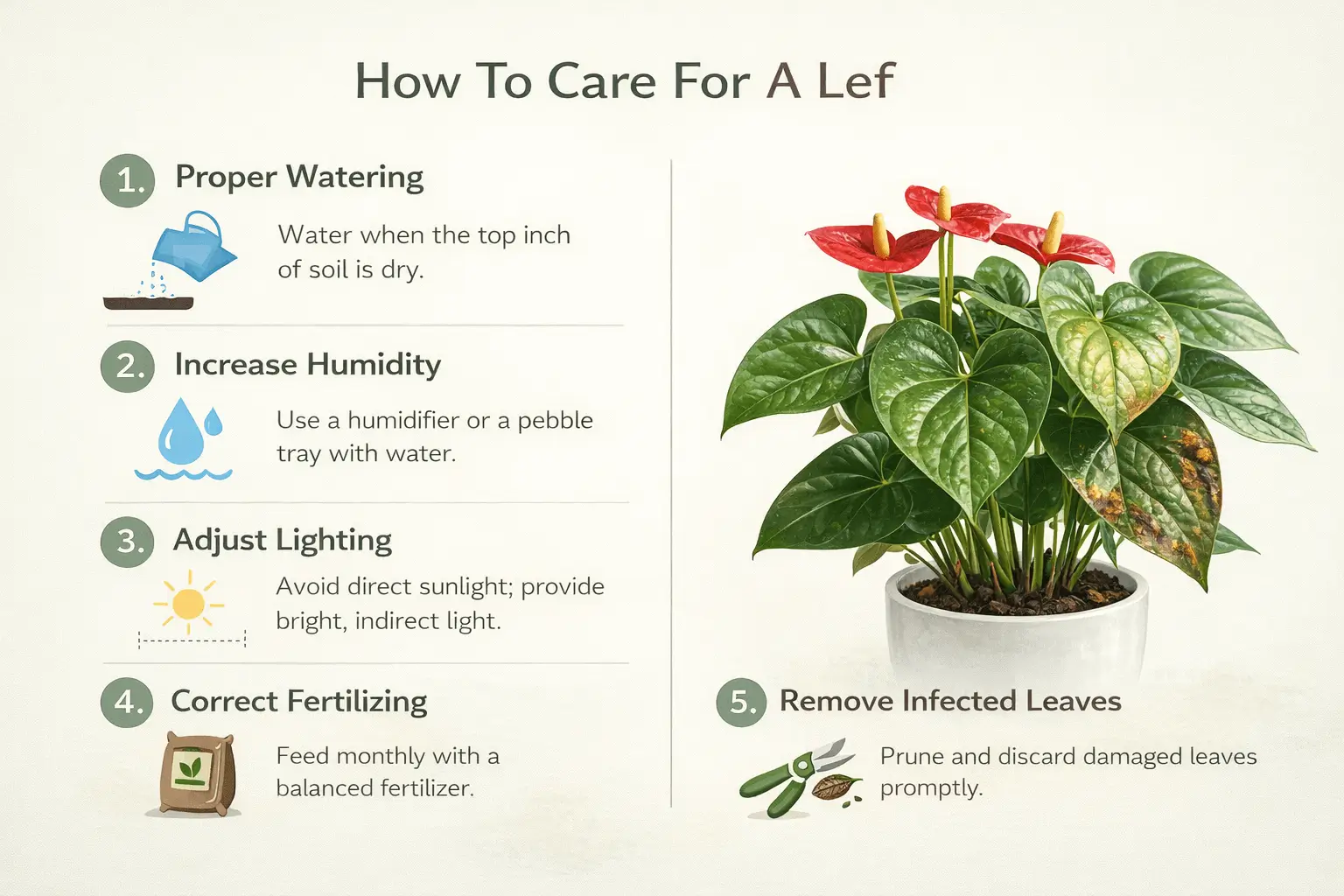
How to Fix Brown Spots on Anthurium Leaves
-
Correct Watering Technique
Using the right watering approach is essential to stop brown spots from spreading. How often to water anthurium plants depends on indoor conditions, but the soil should be allowed to dry slightly at the top before watering again. Consistently wet soil stresses the roots, while overly dry soil leads to dehydration and leaf damage.
The drainage importance cannot be overstated. Anthuriums need well-draining pots and soil that allow excess water to escape quickly. Poor drainage traps moisture around the roots, creating ideal conditions for root damage and leaf browning.
Preventing root rot starts with balanced watering and proper drainage. Empty saucers after watering, avoid heavy compacted soil, and ensure roots have access to oxygen to support healthy leaf growth.
-
Improving Humidity Levels
Low humidity is a frequent trigger for leaf browning, so easy humidity-boosting methods indoors can make a noticeable difference. Using a humidifier, placing the plant near other houseplants, or setting the pot on a pebble tray with water helps raise moisture around the leaves.
Proper placement tips for flamingo plants include keeping them away from heating vents, air conditioners, and drafty windows. A stable, slightly humid location allows leaves to retain moisture and recover from stress-related spotting.
-
Adjusting Light Conditions
Correct light exposure supports healing and prevents further damage. The best window placement for anthuriums is near bright windows with filtered or indirect light, such as east- or north-facing windows.
Avoiding direct sunlight damage is crucial, as strong sun rays can burn leaf tissue and worsen brown spots. Using sheer curtains or moving the plant slightly back from the window helps protect the leaves while still providing adequate light.
-
Fertilizing the Right Way
Feeding correctly supports healthy foliage recovery. A safe feeding schedule involves using a diluted, balanced fertilizer during active growth periods and avoiding frequent applications. Overfeeding quickly leads to salt buildup in the soil.
Preventing fertilizer burn requires flushing the soil occasionally with plain water to remove excess salts and always following recommended dilution rates. Gentle, consistent feeding is more effective than heavy applications.
-
Disease Management & Prevention
When disease is suspected, removing infected leaves safely helps stop the spread. Use clean, sharp tools and dispose of affected leaves away from healthy plants to reduce contamination.
Improving airflow and cleanliness is equally important. Good air circulation keeps leaves dry, while regular cleaning of tools and plant surfaces lowers the risk of fungal and bacterial problems that contribute to brown spots. According to the University of Florida IFAS Extension, leaf spot diseases in tropical plants commonly develop under warm, humid conditions with poor air circulation.
Should I Cut Off Brown Anthurium Leaves?
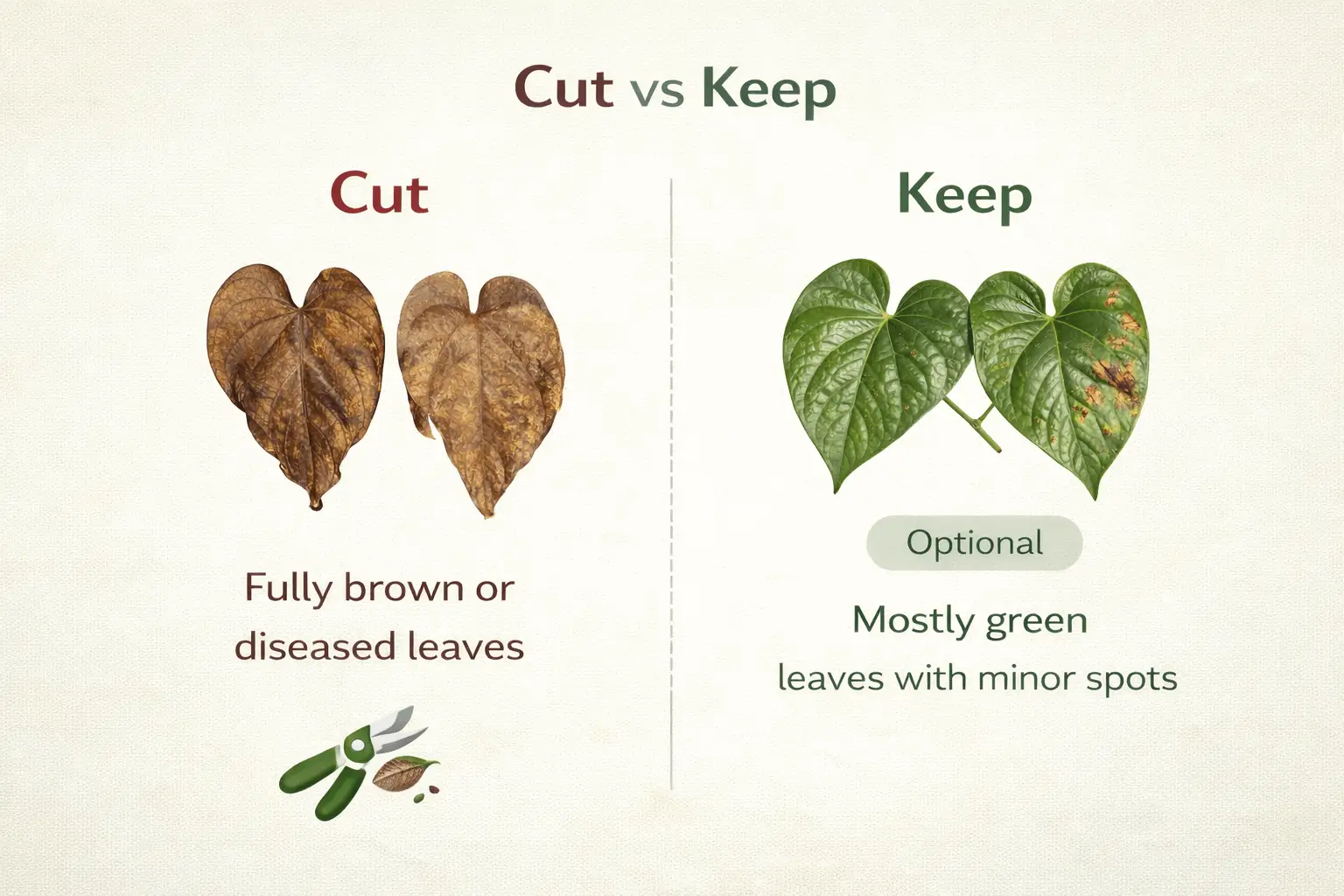
Knowing when pruning is necessary helps maintain overall plant health. Brown anthurium leaves that are fully damaged, dry, or no longer contributing to growth should be removed, especially if the browning is spreading or linked to disease. Leaves with minor spots can sometimes be left temporarily, but completely brown or declining leaves drain energy from the plant and should not be kept.
Understanding how to properly prune (anthurium pruning) is important to avoid further stress. Use clean, sharp scissors or pruning shears and cut the leaf stem close to the base without damaging nearby healthy growth. Always disinfect tools before and after pruning to prevent the spread of bacteria or fungi.
There are clear benefits of removing damaged leaves. Pruning improves airflow around the plant, reduces the risk of disease spread, and allows the anthurium to redirect energy toward producing healthy leaves and flowers. Removing unsightly brown leaves also improves the plant’s appearance and supports long-term recovery.
Anthurium Plant Care Tips to Prevent Brown Leaves
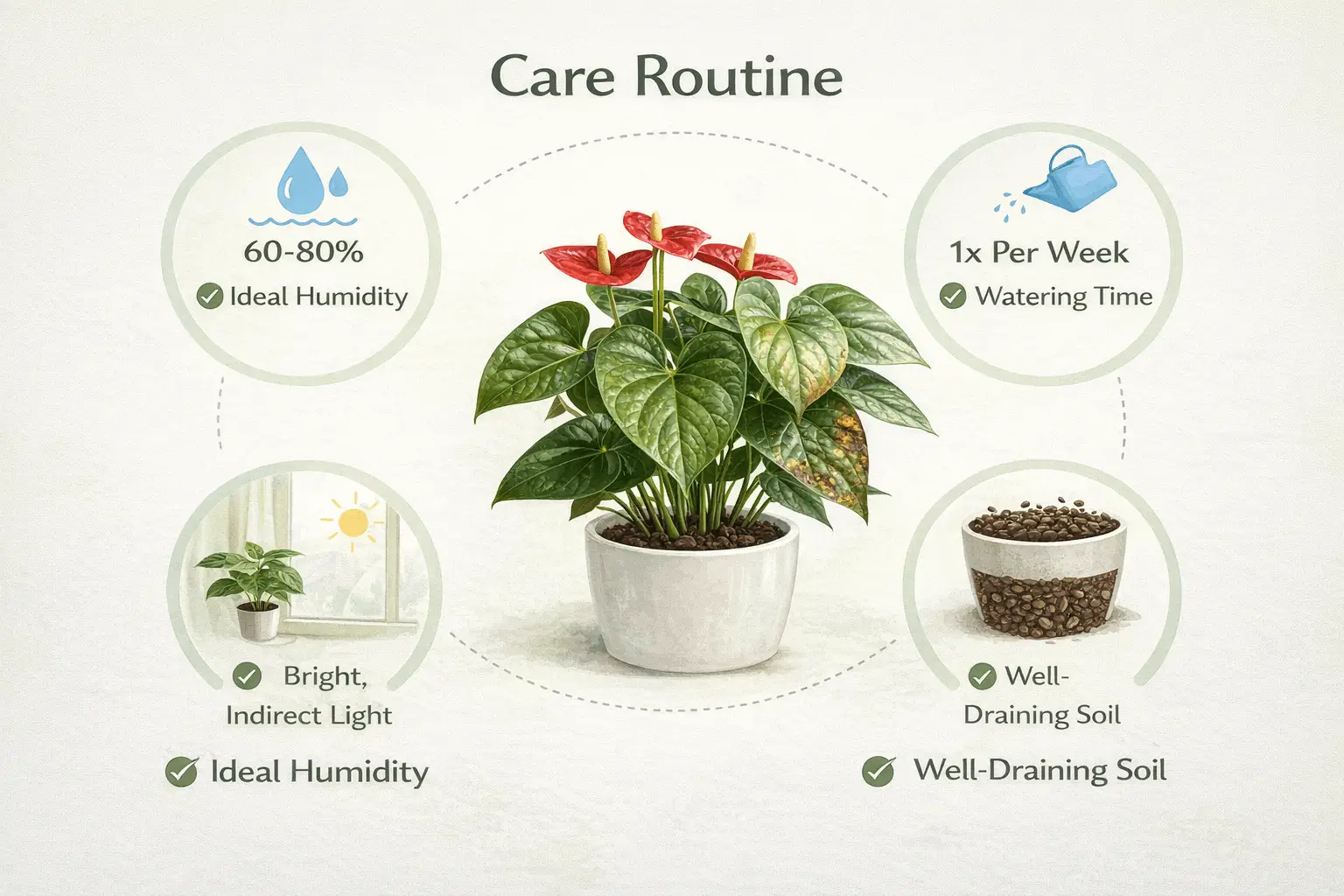
Consistent routines play a major role in prevention, and simple daily care habits make a noticeable difference. Regularly checking soil moisture, observing leaf condition, and maintaining stable indoor temperatures help identify stress early. Avoid sudden changes in watering or placement, as anthuriums respond best to steady conditions.
A reliable long-term anthurium care guide focuses on balance rather than frequent adjustments. Maintaining proper humidity, providing indirect light, and using a consistent feeding schedule support strong foliage over time. Periodic inspection for pests or early discoloration helps prevent minor issues from developing into widespread browning.
Following an ideal soil, watering, and placement routine is key to healthy leaves. Anthuriums thrive in loose, well-draining soil that retains slight moisture without becoming soggy. Water only when the top layer of soil feels dry, and place the plant in a bright area with filtered light and good airflow. This routine reduces stress and keeps leaves green, firm, and free from brown damage. For a complete indoor plant care framework, refer to our Gardening & Plant Care Guide for Healthy Thriving Plants.
Conclusion
A clear summary of why brown spots on anthurium leaves occur shows that the issue is usually linked to environmental stress, including improper watering, low humidity, light imbalance, nutrient problems, or disease. These factors disrupt normal leaf function and gradually lead to spotting, browning, or complete leaf decline if left uncorrected.
The importance of consistent care cannot be overstated. Anthuriums respond best to stable routines that support healthy roots, balanced moisture, adequate humidity, and indirect light. Inconsistent care creates repeated stress cycles that increase the risk of ongoing leaf damage.
Early action is essential, and encouragement to adjust environment early for recovery is key to saving affected plants. Identifying problems quickly and correcting care conditions allows anthuriums to recover, produce healthier foliage, and prevent permanent damage before it becomes widespread.
FAQs
Brown spots on anthurium leaves usually appear due to environmental stress such as improper watering, low humidity, light imbalance, nutrient issues, or poor airflow. In some cases, fungal or bacterial infections can also cause spotting, especially when leaves stay wet for long periods.
Once a leaf area turns brown, it cannot turn green again because the tissue is already damaged. However, correcting care issues can stop further browning and encourage the plant to produce new, healthy leaves.
Anthurium plants should be watered when the top layer of soil feels slightly dry. Overwatering can cause root stress and brown spots, while underwatering can lead to dry, crispy leaf edges.
Not always. Many brown spots are caused by care-related problems like watering or humidity imbalance. However, if spots spread quickly, appear water-soaked, or affect many leaves, a fungal or bacterial disease may be involved.
Leaves with minor spots can remain if the plant is otherwise healthy. Fully brown, damaged, or infected leaves should be removed to improve airflow and allow the plant to focus energy on healthy growth.
Yes, anthurium plants prefer moderate to high humidity. Dry indoor air often leads to brown leaf tips and spots, so maintaining adequate humidity is important for keeping the foliage healthy.
Yes, overwatering can cause soft dark brown spots because excess moisture suffocates roots and reduces oxygen availability, leading to leaf stress and discoloration.
Anthuriums prefer moderate to high humidity, ideally between 60% and 80%, to maintain healthy green foliage and prevent dry brown leaf edges. Why are brown spots appearing on my anthurium leaves?
Can brown anthurium leaves turn green again?
How often should I water an anthurium plant?
Are brown spots on anthurium leaves a disease?
Should I remove leaves with brown spots?
Do anthurium plants need high humidity to stay healthy?
Can overwatering cause brown spots on anthurium leaves?
What humidity level is best for anthuriums?

Written by the LeafyHeaven Editorial Team
LeafyHeaven shares practical gardening tips and simple plant care guides to help you grow, nurture, and enjoy your plants with ease. Our goal is to make gardening feel natural, approachable, and rewarding for everyone.