
Introduction
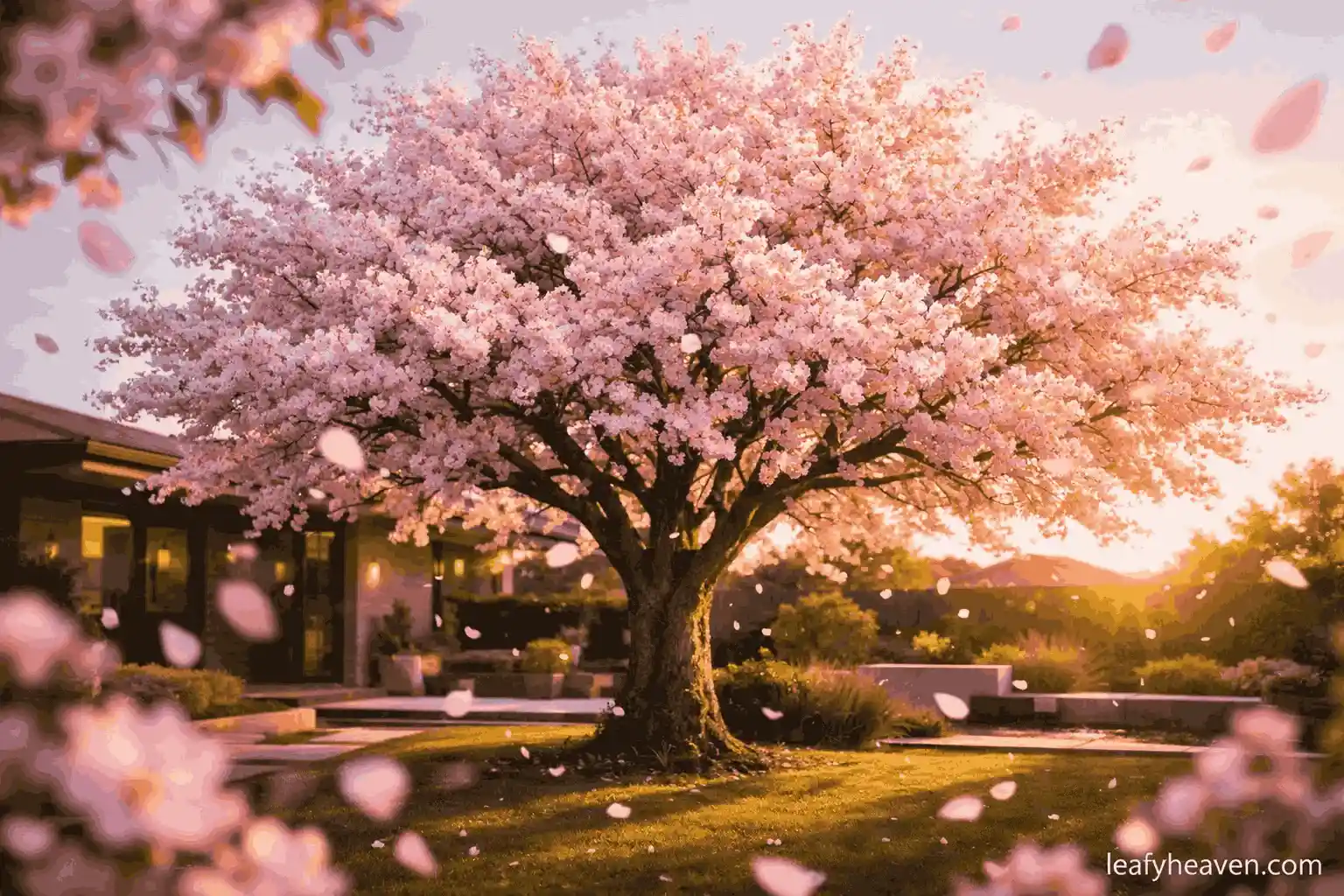
A cherry blossom tree australia is an ornamental tree admired for its delicate pink and white blooms that appear seasonally and transform landscapes with striking visual beauty. These trees, commonly known as japanese cherry blossom or sakura, are grown primarily for decoration rather than fruit. In recent years, interest in cherry blossom australia and sakura tree australia has increased as more gardeners look to recreate the iconic spring display in local conditions. Many people ask, can cherry blossoms grow in australia?—the answer is yes, provided the climate and care requirements are suitable. Today, cherry blossom trees australia and the flowering cherry tree australia varieties are becoming popular choices for gardens, parks, and urban landscapes.
Can Cherry Blossom Trees Grow in Australia?
Climate Suitability Across Australia
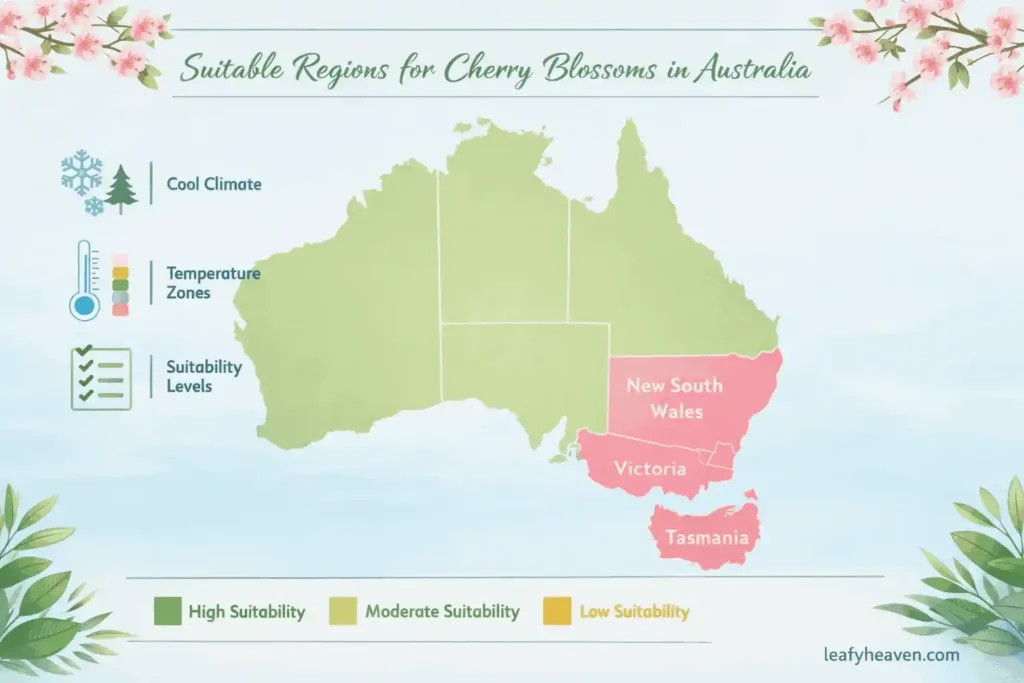
Cherry blossom trees can grow successfully in Australia, but climate plays a critical role in their performance. These trees prefer cool to temperate regions, where winter provides enough chill for proper blooming.
- Victoria: One of the best regions for growing cherry blossom victoria varieties due to cooler winters and mild springs.
- New South Wales (NSW): Suitable in cooler inland and elevated areas, making cherry blossom nsw increasingly popular.
- Tasmania: Ideal conditions with consistent cold periods, supporting healthy flowering cycles.
- Sydney: While warmer overall, some varieties of cherry blossom tree sydney can still grow in carefully selected microclimates with cooler winter exposure.
Regions with very warm winters or tropical climates are less suitable because they lack the cold period required for flowering.
Ideal Growing Conditions
To ensure success, understanding do cherry blossoms grow in australia depends on meeting specific growing requirements:
- Sunlight: Full sun is essential for strong growth and abundant flowering.
- Soil Type: Well-draining, slightly acidic to neutral soil works best.
- Drainage: Poor drainage can lead to root issues, so soil must not retain excess water.
- Chilling Hours: Cherry blossoms require a certain number of cold hours in winter to trigger blooming in spring.
With the right balance of sunlight, soil quality, and winter chill, cherry blossom in australia can thrive and produce beautiful seasonal blooms.
Types of Cherry Blossom Trees in Australia
Japanese Cherry Blossom (Sakura Trees)
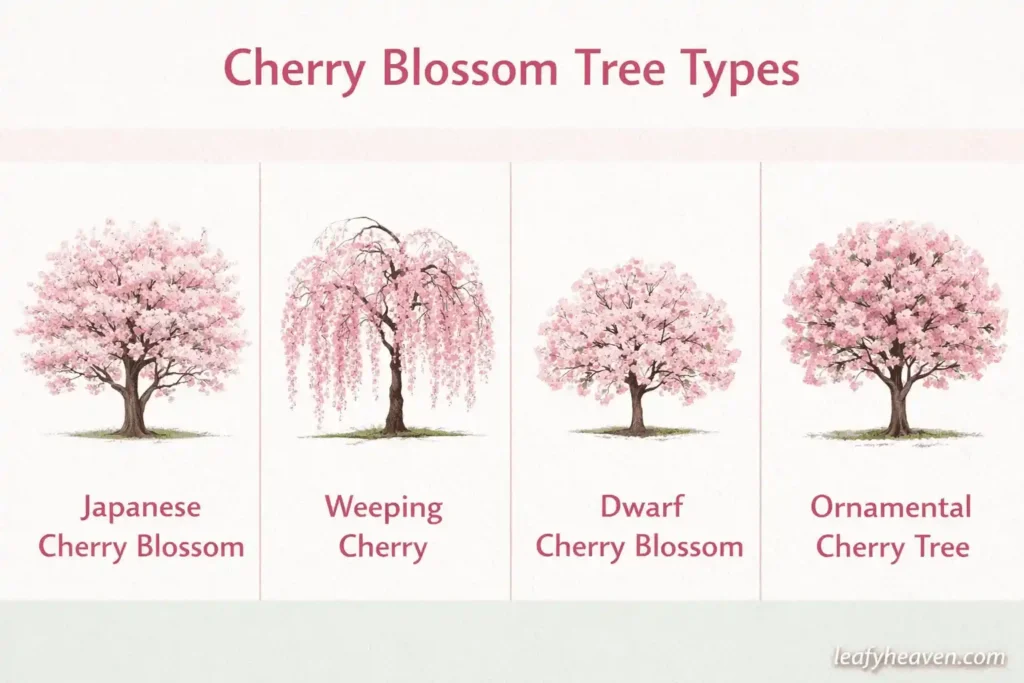
The japanese cherry blossom tree is the most recognized and widely planted variety, known for its iconic spring blooms and cultural significance. Most of these trees belong to the species Prunus serrulata, valued for their dense clusters of pink or white flowers.
The japanese cherry blossom tree is widely recognized for its cultural and ornamental importance, and you can explore more about its background, varieties, and symbolism through this detailed cherry blossom tree overview.
- Commonly grown as a japanese cherry blossom tree australia in cooler regions
- Produces vibrant, seasonal blooms with strong ornamental appeal
- Often referred to as a sakura plant, especially in garden and cultural contexts
- Popular varieties include Kanzan and Yoshino, known for their reliable flowering
These trees are ideal for feature planting and creating a traditional blossom display.
Weeping Cherry Blossom Trees
The weeping cherry blossom tree is highly valued for its graceful, cascading branches that create a soft, flowing landscape effect.
- Distinct drooping growth habit adds elegance to gardens
- Often used as a focal point in landscaping designs
- A mature weeping cherry tree creates a dramatic visual impact during bloom season
- Suitable for open garden spaces where its shape can fully develop
This type is preferred for decorative landscapes and ornamental garden layouts.
Dwarf Cherry Blossom Trees
A dwarf cherry blossom tree is ideal for smaller gardens, patios, and container growing, offering the same beauty in a compact size.
- Perfect for limited spaces and urban gardens
- Can be grown in pots with proper care
- Available in both pink cherry blossom tree and white cherry blossom tree varieties
- Easier to manage and maintain compared to full-sized trees
These trees provide flexibility without sacrificing the classic cherry blossom appearance.
Ornamental Cherry Trees
An ornamental cherry tree is specifically cultivated for visual appeal rather than fruit production, making it a popular choice in residential and public landscapes.
- Focuses on flower display, shape, and seasonal interest
- Widely available as an ornamental cherry tree australia option
- Includes a variety of forms, from upright to spreading growth habits
- Suitable for streetscapes, parks, and home gardens
These trees are chosen for their decorative value and ability to enhance outdoor aesthetics.
Cherry Blossom Tree Characteristics & Features
Cherry blossom trees belong to the scientific genus Prunus, which includes a wide range of ornamental flowering trees known for their seasonal beauty. These trees are primarily valued for their flowers rather than fruit, making them a popular choice as a blossom tree in gardens and landscapes.
Key characteristics include:
- Flower Colors:
- Soft pink (most common)
- Pure white
- Some varieties show layered or double blooms for a fuller appearance
- Growth Size & Height:
- Typically range from 4 to 10 meters in height depending on the variety
- Dwarf types remain compact, suitable for small spaces
- Can develop a rounded, spreading, or weeping canopy
- Lifespan:
- Average lifespan is 20–40 years under proper care
- Longevity depends on climate, soil, and maintenance practices
- Bloom Cycle:
- Flowering occurs once per year during early spring
- Cherry tree blossoms appear before or alongside new leaves
- Bloom period is short, usually lasting 1–3 weeks
- Peak bloom creates a dense, visually striking floral display
Overall, a cherry blossom tree stands out as a seasonal highlight, offering a brief but impactful transformation in any landscape.
Cherry Blossom Season Australia
When Do Cherry Blossoms Bloom?
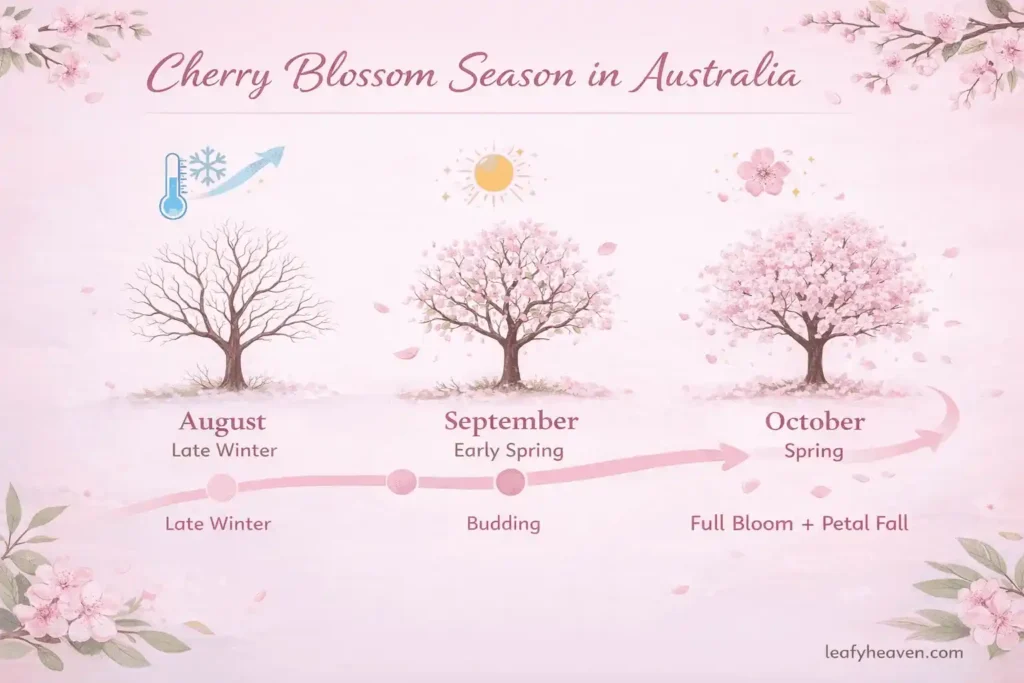
The cherry blossom season australia typically occurs from late winter to early spring, depending on the region and climate conditions.
- Main bloom period: August to October
- Cooler regions (Victoria, Tasmania): Earlier and more consistent blooms
- Slightly warmer areas: Bloom may occur a bit later within the season
- Peak flowering lasts only a short time, usually 1–3 weeks
The blooming period is influenced by winter chilling hours, making timing slightly variable each year. However, most trees follow a predictable seasonal pattern.
Do Cherry Blossoms Bloom in Summer?
No, cherry blossoms in summer do not occur. These trees are strictly seasonal bloomers.
- Flowering happens only after winter dormancy
- Summer is a growth phase with green foliage, not flowers
- Lack of cold exposure prevents blooming outside the natural season
Cherry blossoms are known for their short, seasonal display, which is why their spring appearance is highly valued.
Where to See Cherry Blossom in Australia
Cherry Blossom Melbourne & Victoria
Melbourne and broader Victoria offer some of the best locations to experience cherry blossom melbourne displays during peak season. The cooler climate supports consistent flowering, making this region a top destination.
- Public parks and botanical gardens showcase vibrant melbourne cherry blossom views
- Seasonal events like the cherry blossom festival melbourne attract visitors each year
- Well-maintained landscapes provide ideal viewing spots for photography and relaxation
- If you’re searching where to see cherry blossom in melbourne, popular options include inner-city gardens, curated parklands, and suburban green spaces
These locations provide a reliable and visually rich cherry blossom experience during spring.
Other Locations in Australia
Cherry blossoms can also be seen beyond Victoria, particularly in suitable temperate regions across the country.
- Sydney: Selected gardens and cooler microclimates feature cherry blossom trees sydney, though blooms may be less consistent than in cooler states
- Regional Areas: Elevated or inland regions with colder winters support better flowering conditions
- Melbourne (wider region): Beyond the city center, cherry blossom tree melbourne plantings can be found in suburban parks and landscaped estates
While availability varies by climate, multiple locations across Australia offer opportunities to enjoy seasonal cherry blossoms.
How to Grow Cherry Blossom Tree in Australia
Planting Guide
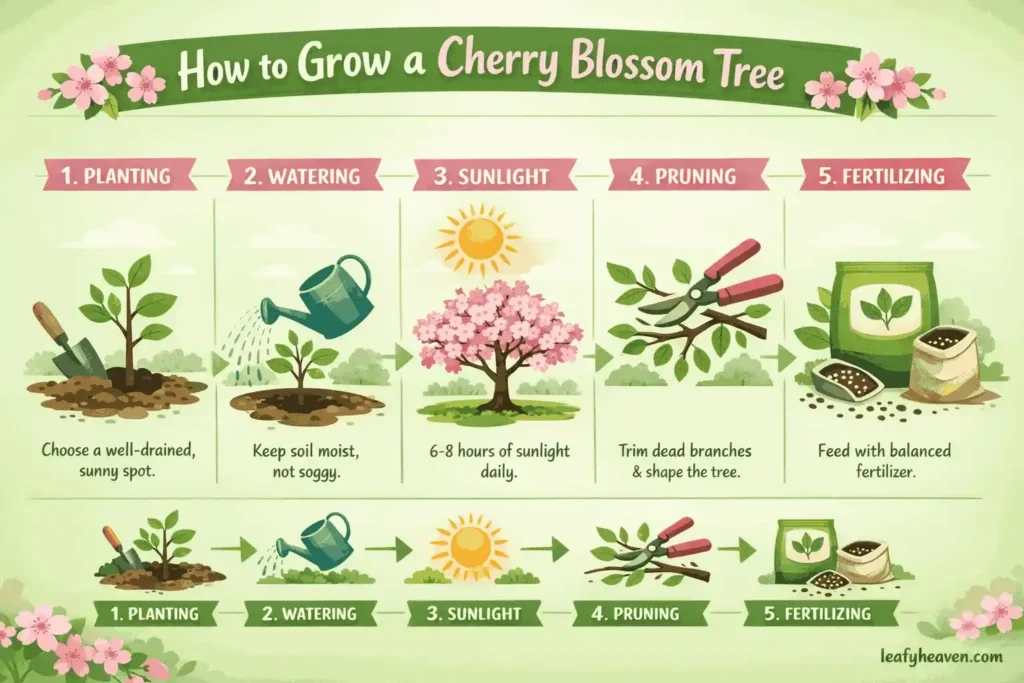
Successful planting cherry tree in Australia depends on correct timing and proper soil preparation.
- Best time to plant:
- Late autumn to early winter
- Allows roots to establish before spring growth
- Soil preparation:
- Use well-draining soil enriched with organic matter
- Slightly acidic to neutral pH is ideal
- Avoid heavy clay soils unless improved with compost
- Spacing:
- Standard trees: 4–6 meters apart
- Dwarf varieties: 2–3 meters apart
- Ensure enough space for canopy spread and airflow
Proper planting ensures strong root development and healthy long-term growth.
Watering & Sunlight Needs
Cherry blossom trees require balanced moisture and adequate light for optimal performance.
- Watering:
- Moderate watering is essential, especially during establishment
- Keep soil moist but not waterlogged
- Reduce frequency once the tree is established
- Sunlight:
- Full sun is required (at least 6–8 hours daily)
- Insufficient sunlight can reduce flowering and weaken growth
Consistent light and controlled watering directly impact bloom quality.
Fertilizer & Pruning Tips
Regular maintenance supports healthy growth and improves flowering cycles.
- Fertilizer:
- Apply balanced fertilizer in early spring
- Avoid excessive nitrogen, which promotes leaf growth over flowers
- Pruning:
- Prune lightly after flowering season
- Remove dead, damaged, or crossing branches
- Maintain open structure for airflow and light penetration
Seasonal care practices help maintain tree shape, encourage blooms, and extend the tree’s lifespan.
Cherry Blossom Tree Care & Maintenance
Proper care ensures a healthy and long-lasting cherry blossom plant, with consistent flowering each season. Maintenance focuses on protecting the tree from pests, preventing diseases, and supporting overall vitality.
Pest Control
Cherry blossom trees can occasionally attract pests that affect leaves and overall growth.
- Common pests include aphids, caterpillars, and scale insects
- Regularly inspect leaves and branches for early signs of infestation
- Use neem oil or mild insecticidal sprays for control
- Encourage natural predators like ladybugs to reduce pest populations
Early detection and treatment help prevent serious damage.
Disease Prevention
Fungal and bacterial issues can impact tree health if not managed properly.
- Ensure proper spacing for airflow to reduce moisture buildup
- Avoid overwatering, as excess moisture can lead to root rot
- Remove infected leaves or branches immediately
- Apply preventive fungicides if necessary during high-risk seasons
Maintaining clean growing conditions significantly reduces disease risks.
Longevity Tips
With the right approach, a cherry blossom tree can thrive for decades.
- Plant in a suitable climate with adequate chilling hours
- Maintain consistent watering without waterlogging
- Provide seasonal feeding with balanced nutrients
- Prune annually to remove weak or overcrowded growth
- Protect roots and trunk from physical damage
Consistent care practices improve lifespan, structure, and overall blooming performance.
Cherry Blossom Tree Root System (Important Guide)
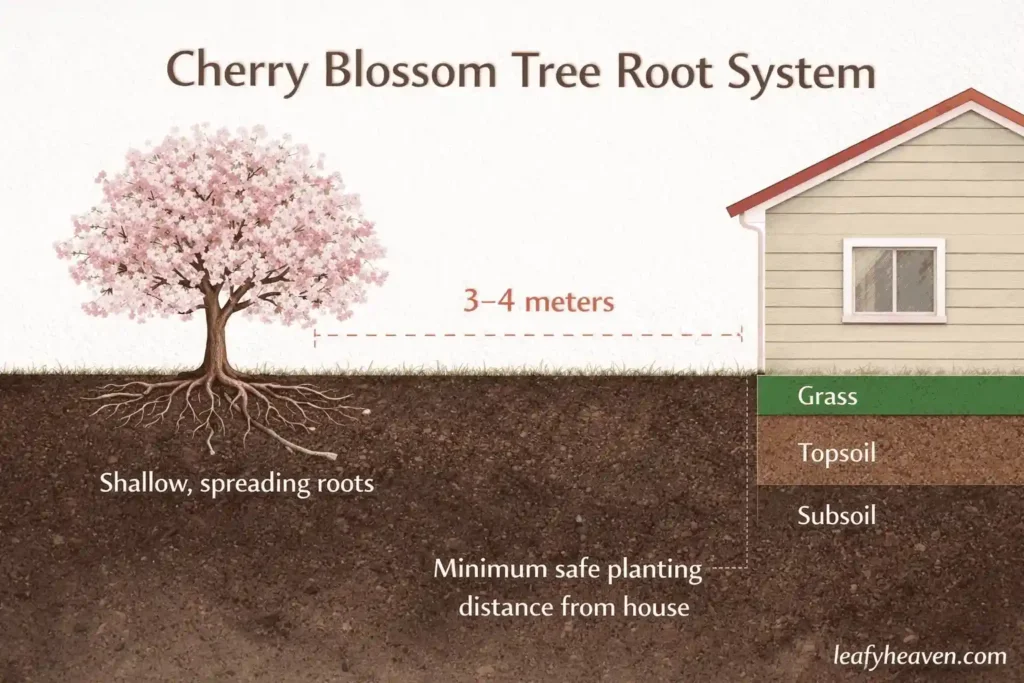
The root system of a cherry blossom tree is generally non-invasive, making it suitable for residential gardens when planted correctly. Understanding root behavior helps prevent structural issues and supports healthy growth.
Root Spread (Non-Invasive Nature)
- Cherry blossom trees develop a shallow, spreading root system
- Roots typically extend outward rather than deep into the soil
- They are not aggressive or destructive compared to invasive tree species
- Root spread usually matches or slightly exceeds the tree’s canopy width
This makes them manageable for most garden landscapes.
Safe Planting Distance from House
Maintaining proper distance is essential to avoid potential issues with foundations or pathways.
- Recommended distance: at least 4–6 meters from buildings
- Smaller or dwarf varieties can be planted closer, around 2–3 meters
- Avoid planting directly near underground pipes or paved areas
Proper spacing ensures root expansion without causing structural interference.
Landscaping Considerations
Planning placement improves both safety and visual impact.
- Choose open areas where roots can spread naturally
- Ensure well-draining soil to prevent root stress
- Avoid compacted ground that restricts root growth
- Combine with other non-invasive plants for balanced landscaping
With correct placement and soil conditions, cherry blossom trees remain safe, stable, and highly suitable for decorative garden use.
Cherry blossom trees generally have a non-invasive root system, making them suitable for residential landscapes, but understanding how roots behave across different plant types is important—especially when compared to systems like the firestick plant root system, where root spread and structure play a key role in overall plant stability and safety.
Where to Buy Cherry Blossom Tree Australia
Garden Centers & Nurseries
Local garden centers and plant nurseries are the most reliable sources of information when exploring where to buy cherry blossom tree options in Australia. These places typically provide region-appropriate varieties and guidance on suitability.
- Many nurseries list cherry blossom trees for sale during planting seasons
- Searching buy cherry blossom tree australia helps identify local suppliers and availability
- Staff can advise on climate compatibility, soil needs, and variety selection
- Availability often depends on season, with higher stock in late autumn and winter
This approach helps gardeners understand what varieties are accessible in their specific region.
Bunnings Cherry Blossom Trees
Retail chains like Bunnings sometimes offer limited selections of cherry blossom plants depending on seasonal demand.
- Listings such as cherry blossom tree bunnings or cherry blossom trees bunnings may appear during planting periods
- Stock availability varies by store location and time of year
- Searches like cherry blossom plant bunnings are commonly used to check product listings
- Options are usually limited to popular or easy-to-grow varieties
These stores can provide general access, but selection may not be extensive.
Online Buying Options
Online platforms provide broader visibility into different varieties and regional availability across Australia.
- Searches like cherry blossom tree for sale, flowering cherry tree for sale, and cherry blossom plant for sale help identify available options
- More specific queries such as japanese cherry blossom trees for sale australia can highlight specialized varieties
- Location-based searches like cherry blossom trees for sale sydney, cherry blossom for sale sydney, and cherry blossom tree for sale brisbane reflect regional interest and supply differences
- General search phrases like cherry blossom tree buy are often used to explore current listings and compare options
Online research helps users understand availability, variety types, and seasonal supply trends across different regions without relying on a single source.
Can You Grow Cherry Blossom from Seeds in Australia?
Growing cherry blossom trees from seeds is possible, but it is considered a slow and challenging method, especially for beginners. When exploring cherry blossom seeds australia, it is important to understand the time and effort involved.
Difficulty Level
- Requires cold stratification (simulating winter conditions) to trigger germination
- Germination rates can be low and inconsistent
- Seed-grown trees may not produce identical flowers to the parent plant
- Higher risk compared to using grafted or nursery-grown trees
Because of these factors, growing from seeds is generally less reliable than starting with established plants.
Time to Grow
- Seeds may take several weeks to months to germinate after proper preparation
- It can take 5–10 years for a tree to mature and produce blooms
- Growth rate depends on climate, care, and variety
While using cherry blossom seeds australia is possible, it is best suited for long-term gardening projects rather than quick ornamental results.
Landscaping Uses of Cherry Blossom Trees
Cherry blossom trees are widely used in landscape design due to their seasonal beauty and strong visual impact. As blossom trees australia, they enhance outdoor spaces with structure, color, and elegance.
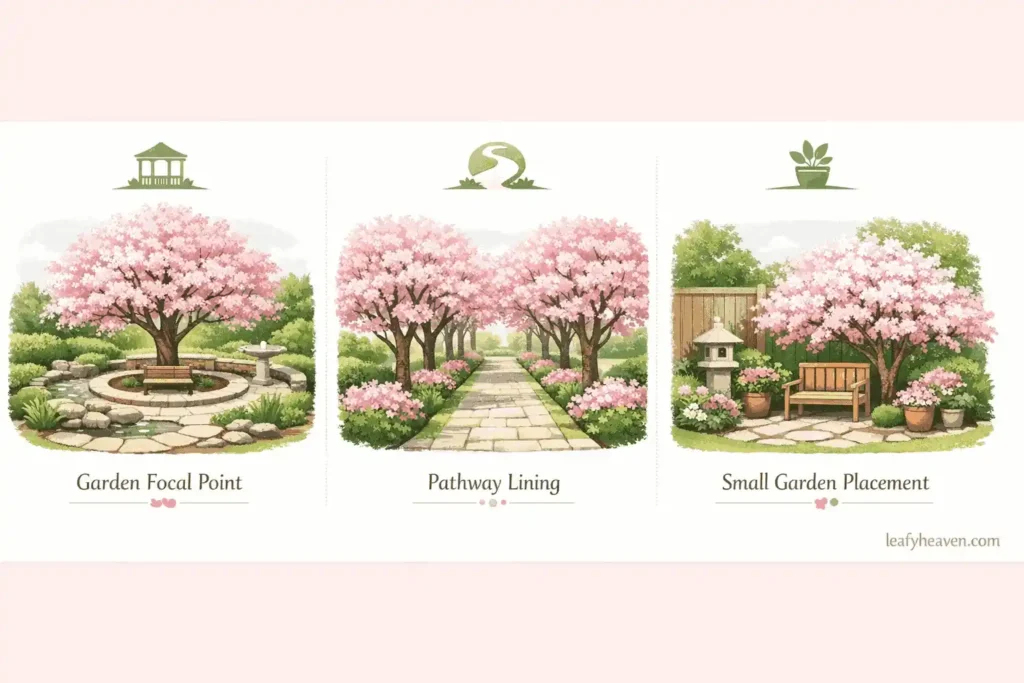
Garden Focal Point
- A single pink blossom tree australia can act as a central feature in any garden
- Positioned in open space to highlight its full canopy and bloom display
- Creates a strong visual anchor during flowering season
Pathway Lining
- Planting cherry blossom trees along walkways creates a structured, symmetrical look
- Enhances garden flow and adds seasonal interest
- Blooming branches can form a soft, decorative corridor effect
Small Garden Use (Dwarf Types)
- Dwarf varieties are ideal for compact spaces and urban gardens
- Suitable for patios, courtyards, and container planting
- Provide the same aesthetic value as larger blossom trees australia without requiring extensive space
These uses make cherry blossom trees versatile for both large landscapes and smaller, controlled garden designs.
While cherry blossom trees enhance outdoor landscapes with seasonal beauty, structured indoor plants such as those highlighted in yucca plant benefits indoor also contribute to modern home design by offering clean aesthetics and low-maintenance greenery.
Benefits & Limitations of Cherry Blossom Trees
Benefits
Cherry blossom trees offer multiple advantages that make them a preferred choice for ornamental landscaping.
- Aesthetic Beauty:
Produces visually striking pink or white blooms that enhance any outdoor space - Seasonal Interest:
Creates a unique seasonal highlight during spring, adding variation to garden appearance - Cultural Value:
Associated with Japanese traditions and symbolism, adding meaning and appeal to landscapesBeyond visual appeal, many plants also offer lifestyle and wellness value, as seen in benefits of lavender plant at home, where natural beauty combines with everyday relaxation and comfort.
Limitations
Despite their beauty, cherry blossom trees have certain limitations that should be considered.
- Short Bloom Period:
Flowers last only 1–3 weeks, making the display temporary - Climate Sensitivity:
Requires specific chilling conditions, limiting growth in warmer regions
Conclusion
Growing a cherry blossom tree australia is entirely possible when the right climate conditions, location, and care practices are followed. With proper planning, these trees can thrive and deliver stunning seasonal blooms that enhance any outdoor space.
Cherry blossom trees are valued for their ornamental beauty, making them an excellent choice for gardens, landscapes, and feature planting. By selecting suitable varieties and ensuring proper placement, you can achieve consistent flowering and long-term growth.
Before making a decision, focus on choosing the right variety and the right location based on your region’s climate and space availability. This approach ensures better results and a more rewarding growing experience.
FAQs
Do cherry blossom trees grow well in Australia?
Yes, cherry blossom trees can grow well in Australia, especially in cooler regions like Victoria, NSW, and Tasmania. Success depends on meeting key requirements such as sufficient winter chilling hours, well-draining soil, and full sunlight.
When is cherry blossom season in Australia?
The cherry blossom season in Australia typically occurs from late winter to early spring (August to October). The exact timing can vary slightly depending on the region and yearly climate conditions.
Where can I see cherry blossom in Melbourne?
You can see cherry blossoms in Melbourne in public parks, botanical gardens, and during seasonal events like the cherry blossom festival melbourne. Many landscaped gardens across Victoria also feature reliable blooming displays.
What is the best cherry blossom tree for Australian gardens?
The best choice depends on space and climate, but popular options include Prunus serrulata (Japanese cherry blossom) for full-sized gardens and dwarf varieties for smaller spaces or container growing.
Where can I buy cherry blossom trees in Australia?
Cherry blossom trees are typically available through local nurseries, garden centers, and online plant directories. Availability depends on the season and region, with the best selection usually found during planting periods.
Can cherry blossom trees grow in pots in Australia?
Yes, dwarf cherry blossom varieties can grow successfully in pots. They require well-draining soil, regular watering, adequate sunlight, and occasional pruning to maintain healthy growth in a container environment.

Written by the LeafyHeaven Editorial Team
LeafyHeaven shares practical gardening tips and simple plant care guides to help you grow, nurture, and enjoy your plants with ease. Our goal is to make gardening feel natural, approachable, and rewarding for everyone.