
Introduction to Curry Leaves Plant
The curry leaves plant is a highly valued herb known for its aromatic leaves, culinary importance, and health-supporting properties. Also referred to as the curry leaf plant, curry plant, or indian curry plant, it is widely grown in home gardens and tropical regions for both practical and traditional uses. Its fresh leaves are a key ingredient in many dishes, especially in South Asian cooking, where they add a distinct flavor and fragrance.
Native to the Indian subcontinent, the curry leaves plant has been used for centuries in both cooking and natural wellness practices. It plays an essential role in traditional recipes and is also recognized for its potential health benefits, including digestive support and nutrient richness. Beyond its culinary use, the plant is appreciated for its easy maintenance, making it a popular choice for home gardeners.
The versatility of the curry leaf plant lies in its multiple uses—ranging from cooking to herbal remedies—making it a valuable addition to any kitchen garden or indoor plant collection.
What Is Curry Leaves Plant? (Botanical & Scientific Details)
The curry leaves plant is botanically known as murraya koenigii, a tropical to subtropical plant widely recognized for its aromatic foliage and culinary value. The curry leaf scientific name is used globally in horticulture and plant science to identify this species accurately. It is also commonly referred to using its curry leaves botanical name and curry plant scientific name, especially in academic and gardening contexts. Understanding the curry plant botanical name helps distinguish it from other plants that may have similar names but different uses or properties.
Scientific Name & Classification
The plant murraya koenigii belongs to the Rutaceae family, which also includes citrus plants such as oranges and lemons. This classification highlights its aromatic nature and essential oil content.
Key classification details:
- Scientific Name: Murraya koenigii
- Family: Rutaceae
- Plant Type: Tropical evergreen shrub or small tree
- Category: Culinary herb and medicinal plant
The murraya koenigii plant typically grows as a small tree with multiple stems and compound leaves. Its botanical classification confirms its close relation to other aromatic and medicinal plants, which explains its widespread use in traditional systems.
Common Names Around the World
The curry leaves plant is known by various names across different regions and languages, reflecting its global popularity and cultural importance.
Common names include:
- Curry patta plant (widely used in South Asia)
- Curry leaves in English (standard common name)
- Curry patta in English (translated form of its Hindi name)
These names are often used interchangeably, but they all refer to the same plant, murraya koenigii. The diversity in naming highlights its widespread use in cooking, traditional medicine, and home gardening across different parts of the world.
Key Features & Characteristics of Curry Leaves Plant
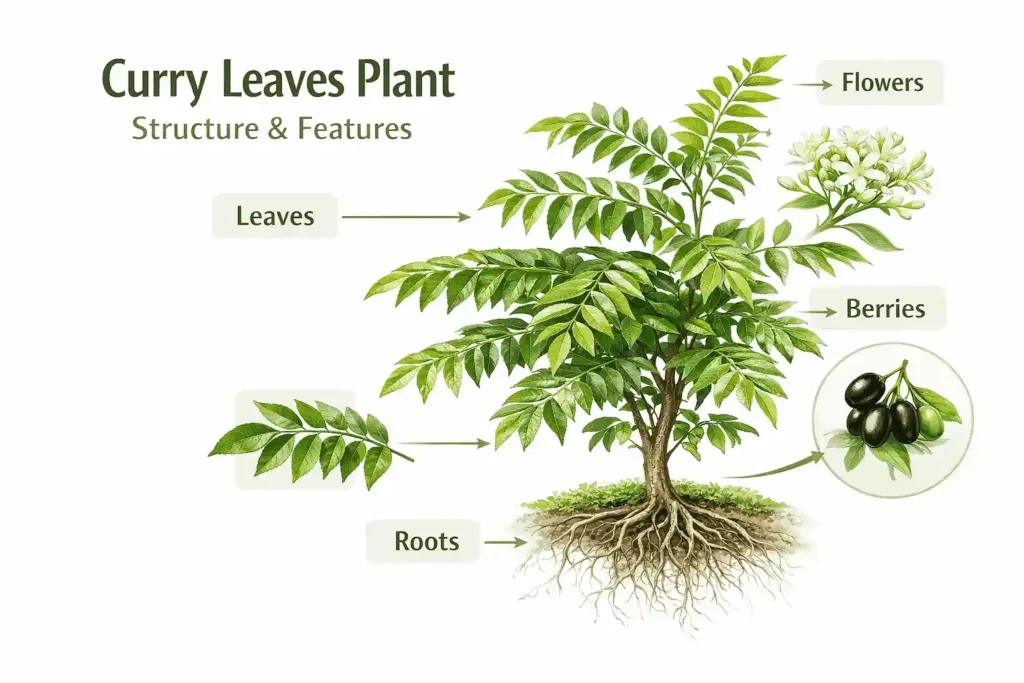
The curry leaf tree is a distinctive tropical plant known for its aromatic foliage, compact structure, and steady growth pattern. Often referred to as the curry leaves tree, it develops as a small tree or shrub with multiple stems and a well-branched canopy. The plant is especially valued for its curry plant leaves, which are glossy, dark green, and highly fragrant. In addition to its leaves, the plant also produces small seasonal blooms known as the curry leaf flower, followed by fruiting stages that complete its natural lifecycle. The structure of the curry tree leaves plays a key role in both culinary and botanical significance.
Plant Size, Height & Growth Rate
The size and growth rate of the curry leaves plant depend on climate, soil quality, and care conditions. Under optimal environments, it develops into a medium-sized tree with steady vertical and lateral growth.
Key growth characteristics:
- A full grown curry leaf tree can reach heights of 10 to 20 feet in open ground
- In controlled conditions, a full grown curry tree may remain smaller, especially when grown in pots
- Growth rate is moderate, with faster development in warm, humid climates
- Young plants establish slowly but accelerate as roots become stronger
Regular pruning and proper care can influence height and branching, making the plant adaptable for both indoor and outdoor cultivation.
Leaves, Flowers & Fruits
The curry leaves plant produces a combination of foliage, flowers, and fruit that defines its complete botanical profile.
Main plant features:
- Curry plant leaves are compound, consisting of multiple small leaflets with a strong aroma
- The curry leaf flower appears as small, white, star-shaped clusters during the blooming season
- These flowers develop into small, dark fruits known as curry leaf berries
- The curry leaf fruit or curry leaves fruit is typically black when mature and contains seeds
- The curry tree fruit is not commonly used in cooking but plays a role in plant propagation
Each part of the plant contributes to its lifecycle, with leaves being the most utilized component due to their flavor, fragrance, and functional benefits.
Types & Variations of Curry Leaves Plant
The curry leaves plant exists in different forms based on growth habits, size, and regional adaptation. These variations are commonly grouped under curry leaf trees and smaller shrub-like forms such as the curry bush tree. In some regions, especially in warmer climates, similar terms like curry bush australia are used to describe locally adapted or related varieties. Understanding these differences helps in selecting the right type for home gardening or cultivation.
Dwarf vs Regular Varieties
Curry leaves plants are generally classified into two main types based on size and growth pattern:
- Dwarf varieties
- Compact growth with shorter height
- Ideal for containers and indoor gardening
- Slower growth rate compared to larger types
- Leaves are slightly smaller but still aromatic
- Regular varieties
- Grow into full-sized curry leaf trees
- Suitable for outdoor planting in gardens
- Faster growth under proper conditions
- Larger canopy with more leaf production
Dwarf plants are preferred for limited spaces, while regular varieties are chosen for higher yield and traditional cultivation.
Regional Differences
The characteristics of curry leaves plants can vary depending on the region where they are grown:
- In tropical and subtropical regions, plants tend to grow faster and taller
- Warmer climates support stronger leaf aroma and higher productivity
- Some regions use terms like curry bush tree or curry bush australia to describe locally adapted plants or similar-looking species
- Soil quality, temperature, and humidity influence leaf size, growth rate, and overall plant structure
These regional variations affect how the plant develops, but the core features and uses remain consistent across different environments.
How to Grow Curry Leaves Plant (Complete Growing Guide)
Learning how to grow curry leaf plant successfully requires understanding the right methods, conditions, and care practices. Whether you are growing curry leaf plant from seeds or using propagation techniques, the process is straightforward when proper steps are followed. Many gardeners choose this plant because curry leaves growing is manageable in both home gardens and containers. If you want to know how to grow curry leaves effectively, focus on starting method, environmental conditions, and consistent care.
Growing from Seeds
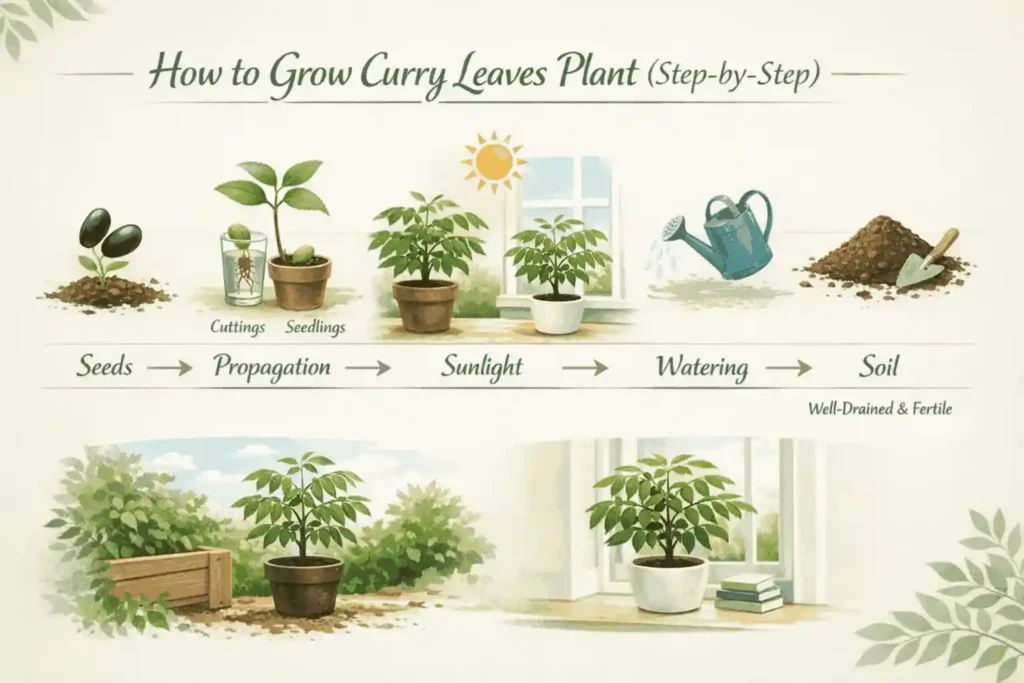
Growing from seeds is one of the most common ways to start a curry leaves plant, though it requires patience and proper handling of fresh seeds.
Steps for growing using curry leaf seeds:
- Use fresh curry leaves seeds or curry plant seeds for better germination
- Remove pulp from the seed before planting
- Sow curry leaf plant seeds in well-draining soil about 1–2 cm deep
- Keep soil consistently moist but not waterlogged
- Place in a warm environment for faster sprouting
Additional notes:
- Curry leaf tree seeds and curry tree seeds typically germinate within 2–4 weeks
- For best results, follow methods on how to grow curry leaf plant from seed carefully
- Understanding how to grow curry leaves from seeds helps ensure strong root development in early stages
Seed-grown plants take longer to mature but develop stronger root systems over time.
Growing Without Seeds
Another effective method is how to grow curry leaves at home without seeds, which involves vegetative propagation. This method is faster and produces plants identical to the parent.
Common curry leaf propagation methods:
- Use healthy stem cuttings from a mature plant
- Plant cuttings in moist, well-draining soil
- Keep in a shaded, humid environment until roots develop
- Maintain consistent moisture without overwatering
This approach reduces growing time and is ideal for beginners who want quicker results.
Similar propagation and planting methods are also explained in how to plant lemongrass, where step-by-step growing techniques help beginners establish healthy plants quickly.
Soil, Sunlight & Water Requirements
Proper environmental conditions are essential for healthy growth and long-term success.
Basic growing requirements:
- Soil: Well-draining, slightly acidic to neutral soil with good organic content
- Sunlight: Full sunlight for at least 6–8 hours daily
- Watering: Moderate watering; allow topsoil to dry slightly between watering cycles
Additional tips:
- Avoid waterlogged soil to prevent root rot
- Ensure proper drainage, especially when growing in containers
- Warm temperatures support faster growth and leaf production
Maintaining these conditions ensures strong plant development and supports consistent leaf yield throughout the growing cycle.
Understanding how tropical plants respond to climate, soil, and sunlight becomes easier when you follow the fundamentals in a complete tropical fruit trees grow guide, especially for warm-region plants.
Curry Leaves Plant Care Guide (Maintenance Tips)
Proper curry leaf plant care is essential for maintaining healthy growth, strong foliage, and consistent leaf production. Whether grown indoors or outdoors, curry leaves plant care involves balanced watering, timely pruning, and suitable growing conditions. Understanding how to provide the right care for curry leaves plant ensures long-term productivity and plant health. With the right approach, curry plant care becomes simple and effective for both beginners and experienced gardeners.
Watering & Fertilizing
Maintaining the correct watering and nutrient balance is key to healthy plant development.
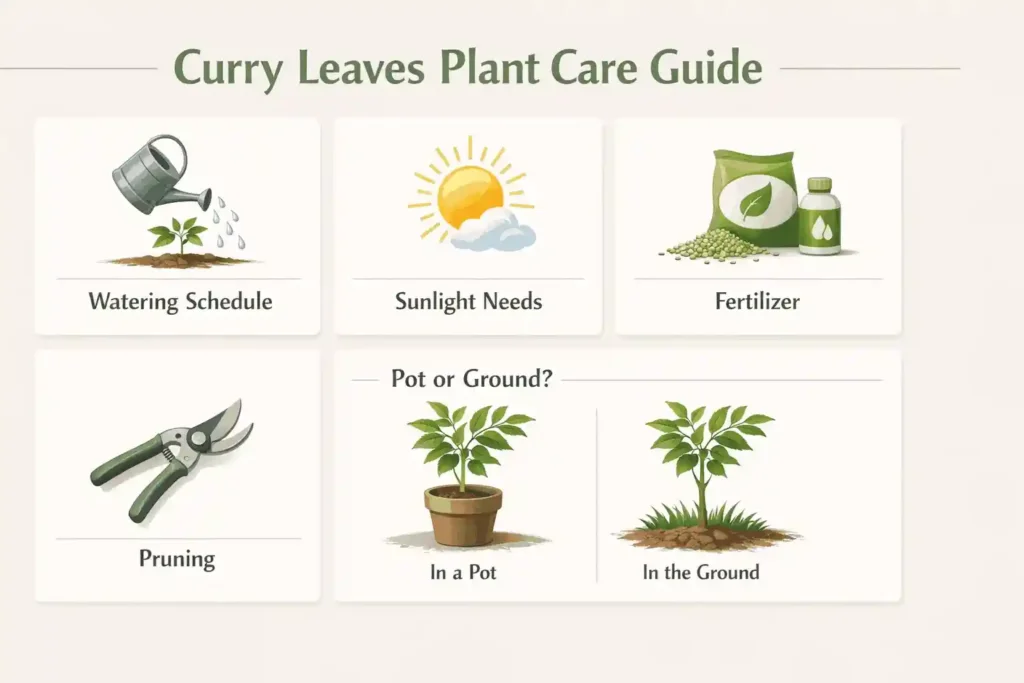
Watering guidelines:
- Water moderately, allowing the topsoil to dry slightly between watering
- Avoid overwatering, as excess moisture can lead to root rot
- Increase watering frequency during hot weather and reduce during cooler periods
Fertilizing tips:
- Use organic fertilizers such as compost or well-rotted manure
- Apply balanced liquid fertilizer during the growing season
- Feed the plant every 3–4 weeks for optimal leaf production
Proper watering and fertilization help maintain strong roots and support continuous leaf growth.
Pruning & Growth Control
Regular pruning helps control plant size, improve structure, and encourage bushier growth.
Key pruning practices:
- Learn how to prune curry leaf plant to remove weak or excess branches
- Trim the top growth to promote lateral branching
- Remove dead, damaged, or yellow leaves regularly
- Prune lightly during active growth periods for best results
Pruning not only improves plant shape but also enhances leaf production and overall health.
Growing in Pots vs Ground
Choosing between container and ground planting affects growth rate and maintenance.
Comparison of growing methods:
- Curry leaf tree in pot
- Ideal for small spaces and indoor settings
- Easier to control size through pruning
- Requires more frequent watering and feeding
- Ground planting
- Allows the plant to grow into a full-sized tree
- Stronger root development and faster growth
- Less frequent maintenance once established
Both methods are effective, but container growing offers flexibility, while ground planting supports maximum growth potential.
Root System of Curry Leaves Plant (Important Insight)
The root system of the curry leaves plant plays a critical role in its overall growth, stability, and nutrient uptake. It consists of a strong primary root supported by a network of lateral roots that spread outward beneath the soil surface. This structure allows the plant to anchor firmly while efficiently absorbing water and essential nutrients.
Root Depth & Spread
The roots of the curry leaves plant typically grow moderately deep, depending on soil conditions and growing environment. In loose, well-draining soil, the primary root penetrates deeper, while secondary roots spread horizontally.
Key characteristics:
- Moderate to deep root system in open ground
- Lateral roots expand to support nutrient absorption
- Root spread increases as the plant matures
- Healthy roots depend on aerated, well-draining soil
Understanding how roots react to soil conditions, as explained in the firestick plant root system, can help prevent drainage-related issues and improve plant stability.
Impact on Pot vs Ground Growth
The growing environment significantly influences root development and overall plant size.
- In pots:
- Root growth is restricted by container size
- Limited space results in slower overall growth
- Requires periodic repotting to prevent root binding
- In ground:
- Roots can expand freely in all directions
- Supports faster growth and larger plant size
- Improves long-term plant strength and resilience
The difference in root space directly affects how large and productive the plant can become.
Stability & Nutrient Absorption
A well-developed root system ensures both physical stability and efficient nutrient uptake.
Important functions:
- Anchors the plant firmly in the soil
- Absorbs water and essential minerals required for growth
- Supports healthy leaf production and overall vitality
- Enhances resistance to environmental stress
Maintaining healthy soil conditions and proper watering practices is essential to support root development and ensure the plant remains stable and productive.
Common Problems & Solutions
Like many tropical plants, the curry leaves plant can face a few common issues during its growth cycle. Problems such as curry plant leaves turning yellow or questions like why are my murraya leaves turning yellow are often linked to environmental stress, improper care, or nutrient imbalance. Identifying the root cause early helps maintain plant health and ensures consistent leaf production.
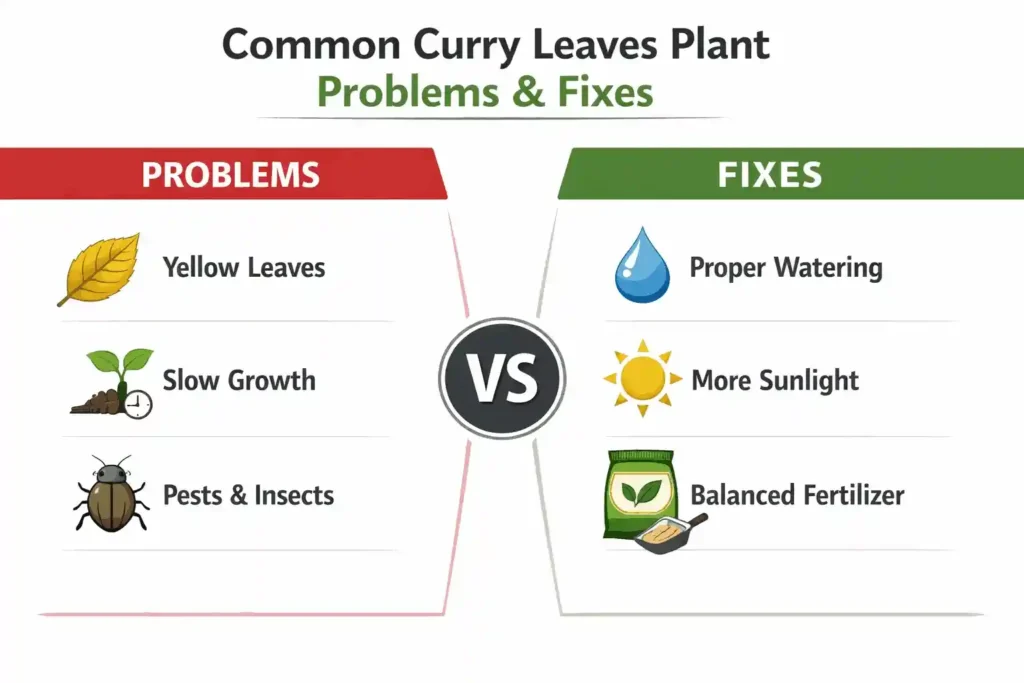
Yellow Leaves Issues
Yellowing leaves are one of the most frequent concerns and usually indicate stress or imbalance.
Common causes:
- Overwatering leading to poor root oxygenation
- Nutrient deficiencies, especially nitrogen or iron
- Poor drainage causing root rot
- Sudden changes in temperature or light conditions
Solutions:
- Adjust watering schedule and allow soil to dry slightly between watering
- Use balanced fertilizer to restore nutrient levels
- Improve soil drainage to prevent waterlogging
- Place the plant in stable, warm conditions with adequate sunlight
Correcting these factors helps restore leaf color and overall plant health.
Slow Growth Problems
Slow or stunted growth can affect leaf production and plant development. Understanding how to grow curry leaves faster involves optimizing environmental and care conditions.
Common reasons for slow growth:
- Insufficient sunlight exposure
- Poor soil quality or lack of nutrients
- Root restriction in small containers
- Inconsistent watering practices
Solutions to improve growth:
- Provide 6–8 hours of direct sunlight daily
- Use nutrient-rich, well-draining soil
- Repot the plant if roots become crowded
- Maintain a consistent watering routine
Improving these conditions promotes faster growth and healthier foliage.
Pests & Diseases
Pests and diseases can impact plant health if not managed properly.
Common issues:
- Aphids and spider mites feeding on leaves
- Scale insects attaching to stems and foliage
- Fungal infections due to excess moisture
Prevention and treatment:
- Inspect leaves regularly for early signs of pests
- Use natural insect control methods such as neem-based solutions
- Maintain proper air circulation around the plant
- Avoid overwatering to reduce risk of fungal growth
Consistent monitoring and proper care help prevent major damage and keep the plant healthy.
Uses of Curry Leaves Plant (Culinary & Medicinal)
The curry leaves plant is valued for its versatility, offering both culinary and traditional applications. Various curry plant uses, curry leaf uses, and curry leaf plant uses make it an essential herb in many households. In addition to its role in food preparation, several curry tree uses are linked to traditional practices and natural wellness routines.
Cooking Uses
The primary use of the curry leaves plant is in food preparation, where its leaves add a distinct aroma and flavor.

Common culinary applications:
- Fresh leaves used as a seasoning in hot oil for enhanced flavor
- Essential ingredient in many dishes involving curry plant for cooking
- Widely used in soups, lentils, rice dishes, and vegetable preparations
- Added to chutneys and spice blends for depth of taste
Practical usage:
- Cooking with curry plant involves using fresh or dried leaves depending on availability
- Included in various curry herb plant recipes to enhance aroma and taste
- Leaves are typically used whole or slightly crushed to release essential oils
Its strong, citrus-like fragrance makes it a key component in many traditional and modern recipes.
Traditional & Herbal Uses
Beyond cooking, the curry leaves plant is also associated with traditional and herbal applications.
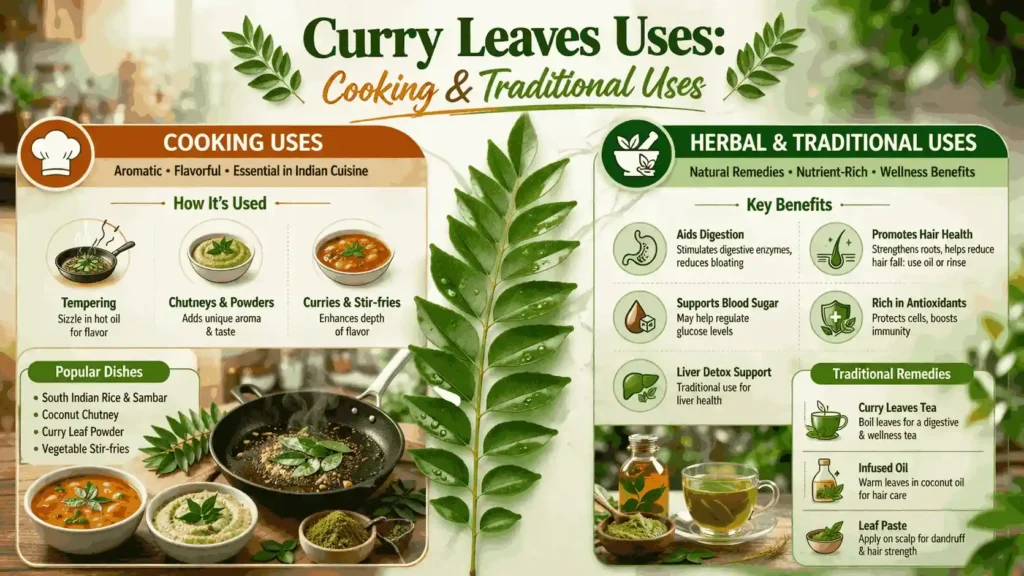
Common traditional uses:
- Used in natural remedies for digestive support
- Included in herbal preparations for general wellness
- Applied in traditional practices for hair and skin care
- Utilized in household remedies due to its natural properties
These uses highlight the plant’s importance beyond the kitchen, making it a multifunctional herb in both daily life and traditional systems.
Health Benefits of Curry Leaves
The health benefits of curry leaves make this plant highly valuable beyond its culinary use. Rich in antioxidants, vitamins, and essential nutrients, the leaves offer multiple wellness advantages. Many curry leaves benefits, curry leaf benefits, and curry patta benefits are linked to traditional health practices and modern nutritional understanding. These curry leaves advantages support overall well-being when included as part of a balanced lifestyle.

Digestive Health
Curry leaves are commonly used to support digestion and gut health.
Key benefits:
- Stimulate digestive enzymes for better food breakdown
- Help reduce bloating and discomfort after meals
- Support gut function and nutrient absorption
- Traditionally used to manage mild digestive issues
These digestive-related benefits of curry leaves make them a useful addition to daily meals.
Hair & Skin Benefits
Curry leaves are widely used in natural care routines for both hair and skin.
Hair benefits:
- Support stronger hair roots and reduce hair fall
- Help maintain natural hair color and shine
- Promote healthier scalp conditions
Skin benefits:
- Contain antioxidants that support skin health
- Help maintain a clear and balanced complexion
- Contribute to overall skin nourishment
These curry leaves benefits make them a popular ingredient in natural beauty practices.
Detox & Immunity
Curry leaves also play a role in supporting the body’s natural detox and immune systems.
Important advantages:
- Help remove toxins from the body
- Support liver function and internal cleansing
- Provide antioxidant compounds that strengthen immunity
- Contribute to overall metabolic balance
Including curry leaves in regular use can enhance wellness by supporting detox processes and immune health.
Scientific information about plant compounds and their effects can be explored through the National Center for Biotechnology Information (NCBI). Scientific evidence is limited and these uses should not replace medical treatment.
Precautions & Side Effects
While the curry leaves plant offers many benefits, it is important to use it in moderation and with proper awareness. Like any natural ingredient, excessive use or sensitivity can lead to mild issues in some individuals.
Overuse Considerations
Consuming curry leaves in large quantities may not always be beneficial.
Points to consider:
- Excess intake may cause digestive discomfort in some cases
- Overconsumption can lead to imbalance rather than added benefits
- Using moderate amounts in daily meals is generally sufficient
Maintaining a balanced intake ensures safe and effective use.
Allergies / Sensitivity
Although uncommon, some individuals may experience sensitivity.
Possible reactions:
- Mild allergic responses such as irritation or discomfort
- Sensitivity when consumed in large amounts or used topically
- Individual reactions may vary based on body type
If any unusual symptoms appear, it is advisable to reduce or stop usage.
Safe Consumption Tips
Following simple guidelines helps ensure safe use of curry leaves.
Recommended practices:
- Consume in moderate quantities as part of a balanced diet
- Use fresh, clean leaves for best results
- Avoid excessive intake in concentrated forms without guidance
- Introduce gradually if using for the first time
Proper usage helps maximize benefits while minimizing potential risks.
Where & How to Use Curry Leaves Plant (Home & Garden)
The curry leaves plant can be used effectively in both indoor and outdoor environments, depending on available space and climate conditions. Its adaptability makes it suitable for home gardening, decorative use, and practical kitchen purposes. This section focuses purely on informational use, helping you understand placement and functional value without any buying or selling intent.
Indoor vs Outdoor Placement
Choosing the right location is important for healthy growth and usability.
Indoor placement:
- Suitable for small spaces, balconies, or windowsills
- Requires bright, direct sunlight for several hours daily
- Best placed near south-facing windows or well-lit areas
- Needs proper ventilation to avoid moisture-related issues
Outdoor placement:
- Ideal for gardens, patios, and open spaces
- Thrives in warm climates with full sunlight exposure
- Allows natural growth into a larger, healthier plant
- Requires less frequent maintenance once established
The choice depends on space availability and environmental conditions, but both options can support healthy plant development.
Landscaping Uses
The curry leaves plant can be incorporated into garden layouts for both functional and visual purposes.
Common landscaping uses:
- Used as a small ornamental tree or shrub in garden design
- Planted along borders or pathways for greenery and structure
- Combined with other herbs and plants in mixed garden beds
- Adds texture and natural appeal to outdoor spaces
Its compact form and green foliage make it a practical addition to simple garden arrangements.
Kitchen Garden Importance
The curry leaves plant holds significant value in kitchen gardens due to its direct usability and ease of maintenance.
Key importance:
- Provides fresh leaves readily available for daily cooking
- Reduces dependency on stored or processed herbs
- Supports a self-sustained gardening approach
- Easy to manage alongside other kitchen herbs
Growing this plant at home ensures consistent access to fresh, natural leaves while supporting a practical and efficient kitchen garden setup.
Conclusion
The curry leaves plant is a versatile and practical addition to any home garden, valued for its culinary, nutritional, and functional benefits. From its aromatic leaves to its role in traditional uses, the plant offers consistent value when grown and maintained properly. With the right approach to curry leaf plant care, including proper watering, sunlight, and pruning, it can thrive in both indoor and outdoor environments.
In addition to its ease of maintenance, the plant provides continuous access to fresh leaves, making it highly useful for everyday use. Its adaptability, combined with its wide range of uses and curry plant care simplicity, makes it suitable for both beginners and experienced gardeners.
Growing a curry leaves plant at home supports a more natural and self-sufficient lifestyle while ensuring access to fresh, high-quality leaves whenever needed.
FAQs
What is the scientific name of curry leaves plant?
The scientific name of the curry leaves plant is Murraya koenigii. It belongs to the Rutaceae family, which also includes citrus plants. This botanical identification helps distinguish it from other similarly named plants.
How long does a curry leaves plant take to grow?
A curry leaves plant typically takes: 2–4 weeks for seeds to germinate 6–12 months to establish as a young plant 2–3 years to reach a well-developed, productive stage Growth speed depends on sunlight, temperature, soil quality, and care conditions.
Can curry leaves plant grow indoors?
Yes, a curry leaves plant can grow indoors if provided with proper conditions: At least 6–8 hours of bright sunlight daily Placement near a well-lit window or balcony Proper drainage and moderate watering Indoor growth may be slower compared to outdoor conditions, but it is still effective with consistent care.
Why are my curry leaf plant leaves turning yellow?
Yellow leaves are usually caused by: Overwatering or poor drainage Nutrient deficiencies (especially nitrogen or iron) Sudden environmental changes Lack of sufficient sunlight Adjusting watering, improving soil conditions, and ensuring proper light exposure can help resolve this issue.
How do you grow curry leaves plant from seeds?
To grow curry leaves plant from seeds: Use fresh seeds and remove the outer pulp Plant seeds in well-draining soil about 1–2 cm deep Keep the soil moist but not waterlogged Place in a warm, bright environment Seeds usually germinate within a few weeks, and consistent care helps establish healthy growth.
How often should I water a curry leaves plant?
Watering depends on climate and soil conditions: Water when the top layer of soil feels dry Avoid overwatering to prevent root rot Reduce watering during cooler seasons Balanced watering supports healthy roots and leaf growth.
Does curry leaves plant need full sunlight?
Yes, the plant grows best in full sunlight: Requires 6–8 hours of direct sunlight daily Insufficient light can lead to weak growth and fewer leaves Outdoor placement usually provides better light conditions Proper sunlight is essential for strong and healthy development.
Can curry leaves plant grow in pots?
Yes, it grows well in containers: Choose a pot with good drainage Use nutrient-rich, well-draining soil Repot as the plant grows to avoid root restriction Container growing is ideal for small spaces and indoor setups.
How can I make curry leaves plant grow faster?
To improve growth speed: Provide adequate sunlight and warm temperatures Use organic fertilizers regularly Prune the plant to encourage branching Ensure proper watering and soil quality Optimizing these conditions supports faster and healthier growth.
Are curry leaves safe to use daily?
Yes, curry leaves are generally safe for daily use in moderate amounts: Commonly used in regular cooking Provide nutritional and functional benefits Avoid excessive consumption for balanced intake Regular, moderate use supports overall wellness without risks.

Written by the LeafyHeaven Editorial Team
LeafyHeaven shares practical gardening tips and simple plant care guides to help you grow, nurture, and enjoy your plants with ease. Our goal is to make gardening feel natural, approachable, and rewarding for everyone.