
Introduction
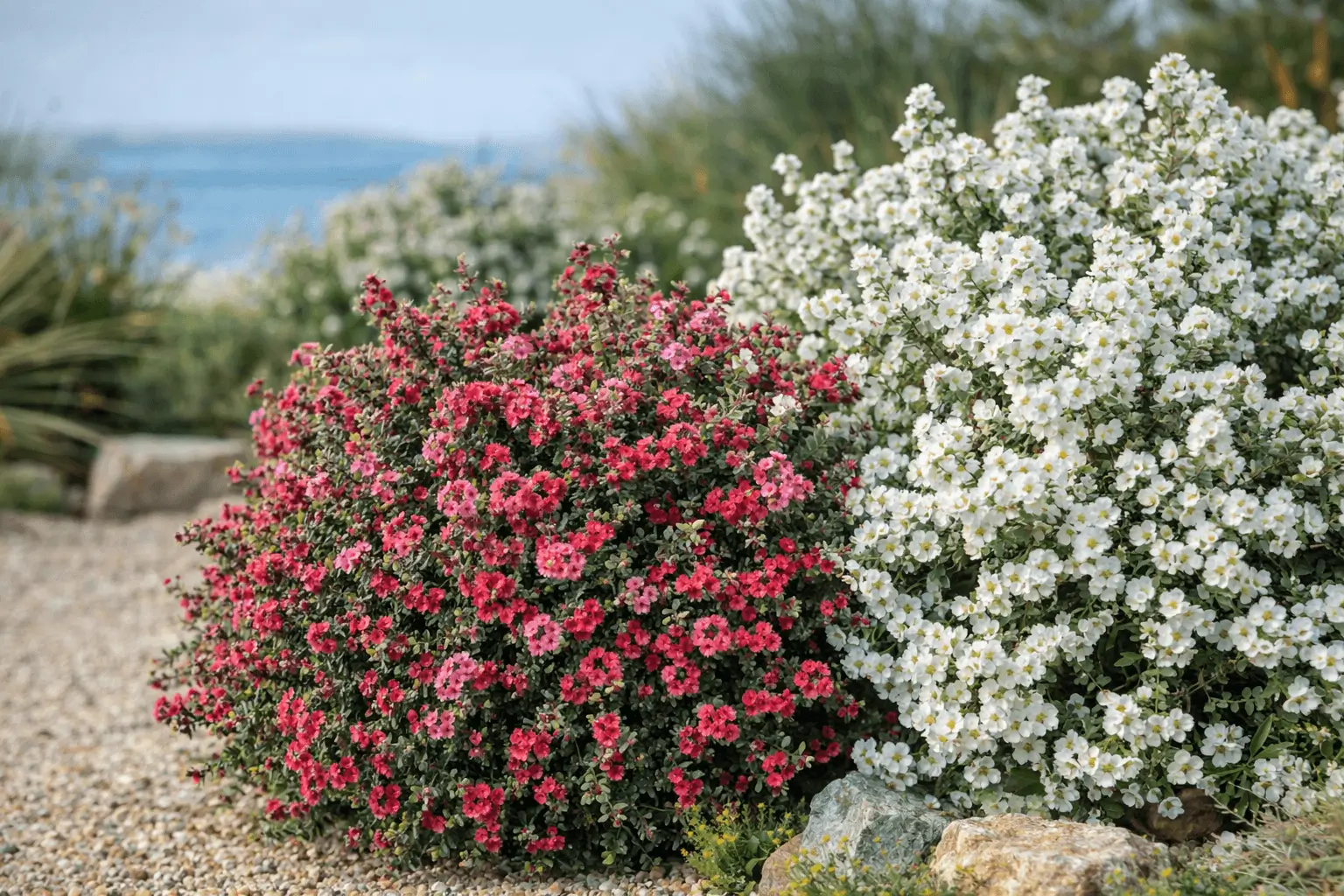
Dwarf leptospermum is a compact, evergreen native Australian shrub prized for its fine foliage and abundant seasonal flowers. Closely related to leptospermum scoparium, commonly known as the manuka plant, it belongs to the wider tea tree family admired for resilience and ornamental value. Gardeners often choose dwarf forms over standard leptospermum scoparium plant varieties because of their manageable size and suitability for small gardens or containers. Popular cultivars such as leptospermum nanum rubrum, leptospermum little bun, and leptospermum white wave offer striking red, pink, and white blooms. This complete growing and care guide explains everything from varieties to maintenance, helping you select the right dwarf tea tree for your landscape.
What Is Dwarf Leptospermum?
Botanical Background
Dwarf leptospermum is derived from leptospermum scoparium, also known as manuka leptospermum scoparium or leptospermum scoparium manuka. It is commonly referred to as the manuka shrub, jellybush, jelly bush tree, jellybush tree, wild may plant, or tantoon. Native to leptospermum scoparium Australia regions, this hardy shrub thrives in coastal and temperate climates.
The plant is valued for its small aromatic leaves and long flowering period. In its standard form, it can grow into a large shrub or small tree, but dwarf selections maintain a compact structure suitable for modern gardens.
Difference Between Standard & Dwarf Tea Tree
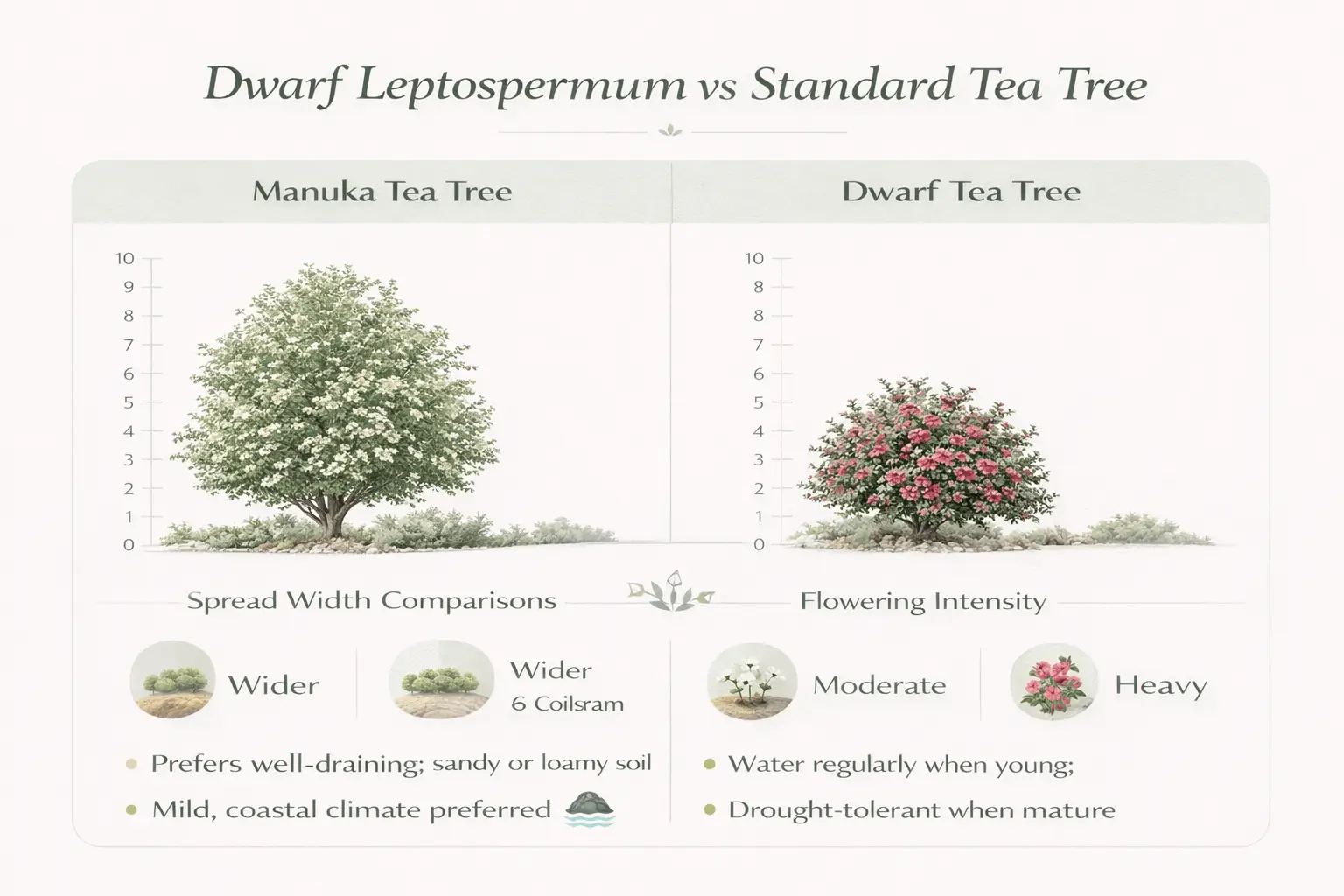
A regular manuka tea tree plant can reach several meters in height, forming a spreading shrub. In contrast, dwarf tea tree varieties are bred for reduced height and tighter growth habits.
Related species include:
- leptospermum petersonii (lemon scented tea tree)
- leptospermum polygalifolium
- leptospermum flavescens
Dwarf tea tree and dwarf red tea tree types typically stay under 1–1.5 meters, with a controlled spread. Standard forms may exceed 3 meters, making them less practical for compact landscapes.
Popular Dwarf Leptospermum Varieties
Red & Pink Flowering Types
Several cultivars are known for vibrant blooms:
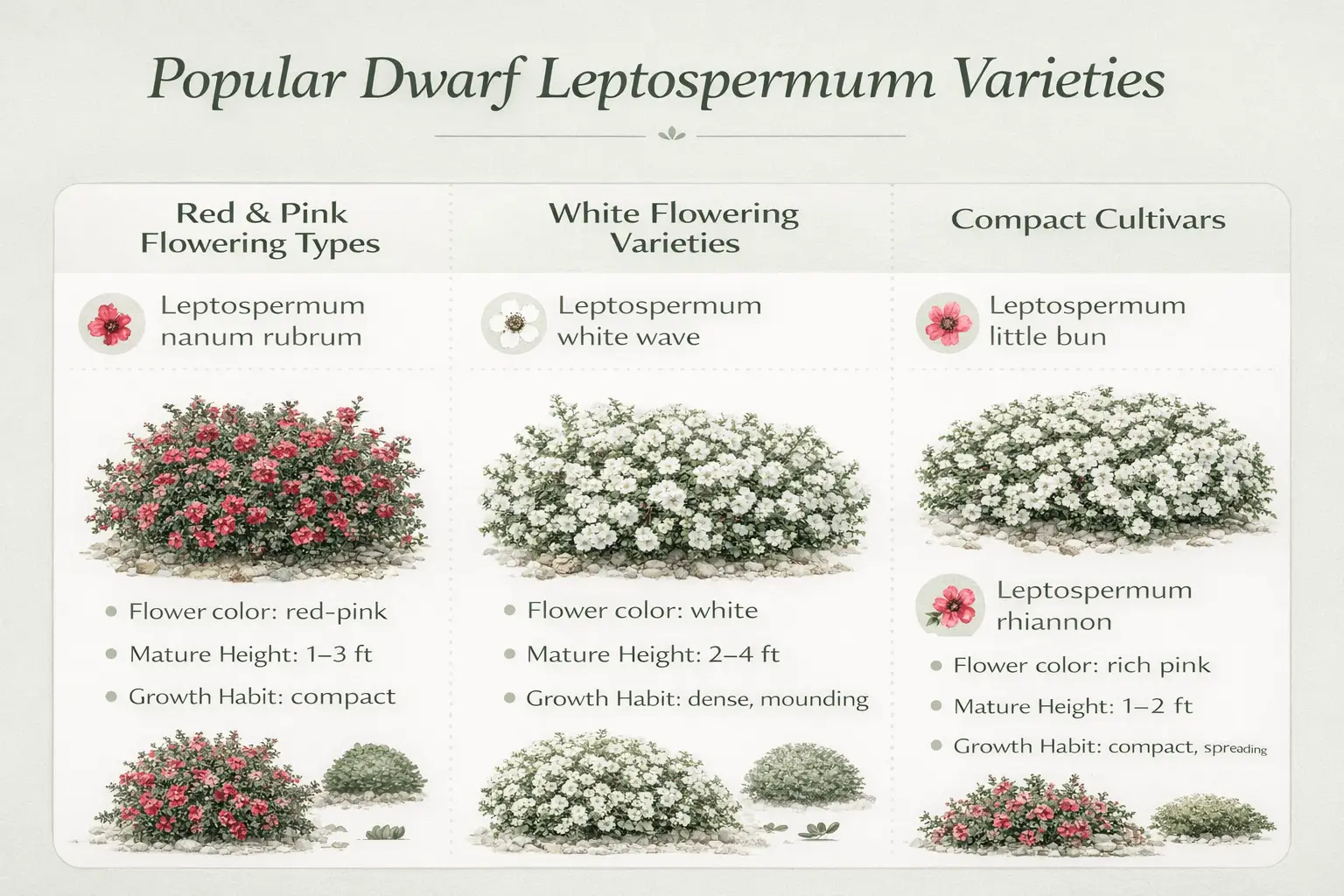
- leptospermum nanum rubrum
- leptospermum scoparium nanum rubrum
- leptospermum rubrum nana
- pink leptospermum / leptospermum pink
- leptospermum dwarf red tea tree
These produce striking tea tree red flower displays, ranging from deep crimson to soft rose pink. Their dense branching enhances the floral impact during peak bloom.
White Flowering Varieties
White-flowered selections offer a clean, classic look:
- leptospermum white wave / white wave
- white leptospermum / leptospermum white
- white tea tree
These varieties complement native gardens and coastal settings, delivering masses of bright white blossoms against dark green foliage.
Compact & Unique Cultivars
Compact cultivars include:
- leptospermum little bun
- leptospermum rhiannon
- leptospermum scoparium nanum
- leptospermum dwarf
These forms are ideal for borders, small hedges, and decorative containers due to their neat, rounded growth.
Lemon-Scented & Related Tea Trees (Are They Dwarf?)
Lemon Scented Tea Tree Explained
The lemon scented tea tree leptospermum petersonii, also known as leptospermum petersonii lemon scented tea tree or leptospermum petersonii lemon-scented tea tree, is prized for its citrus-fragrant foliage. Common names include lemon tea tree plant, lemon scented tree, and lemon scented trees.
Typical lemon scented tea tree height ranges from 3 to 6 meters, significantly taller than dwarf leptospermum varieties.
How It Differs from Dwarf Leptospermum
Key differences:
- Growth size: Lemon-scented types grow taller and broader.
- Fragrance vs floral focus: Lemon varieties emphasize foliage scent; dwarf leptospermum focuses on flower display.
- Landscape use: Lemon trees suit screening; dwarf types suit borders and pots.
Growing Conditions for Dwarf Leptospermum
Sunlight & Climate
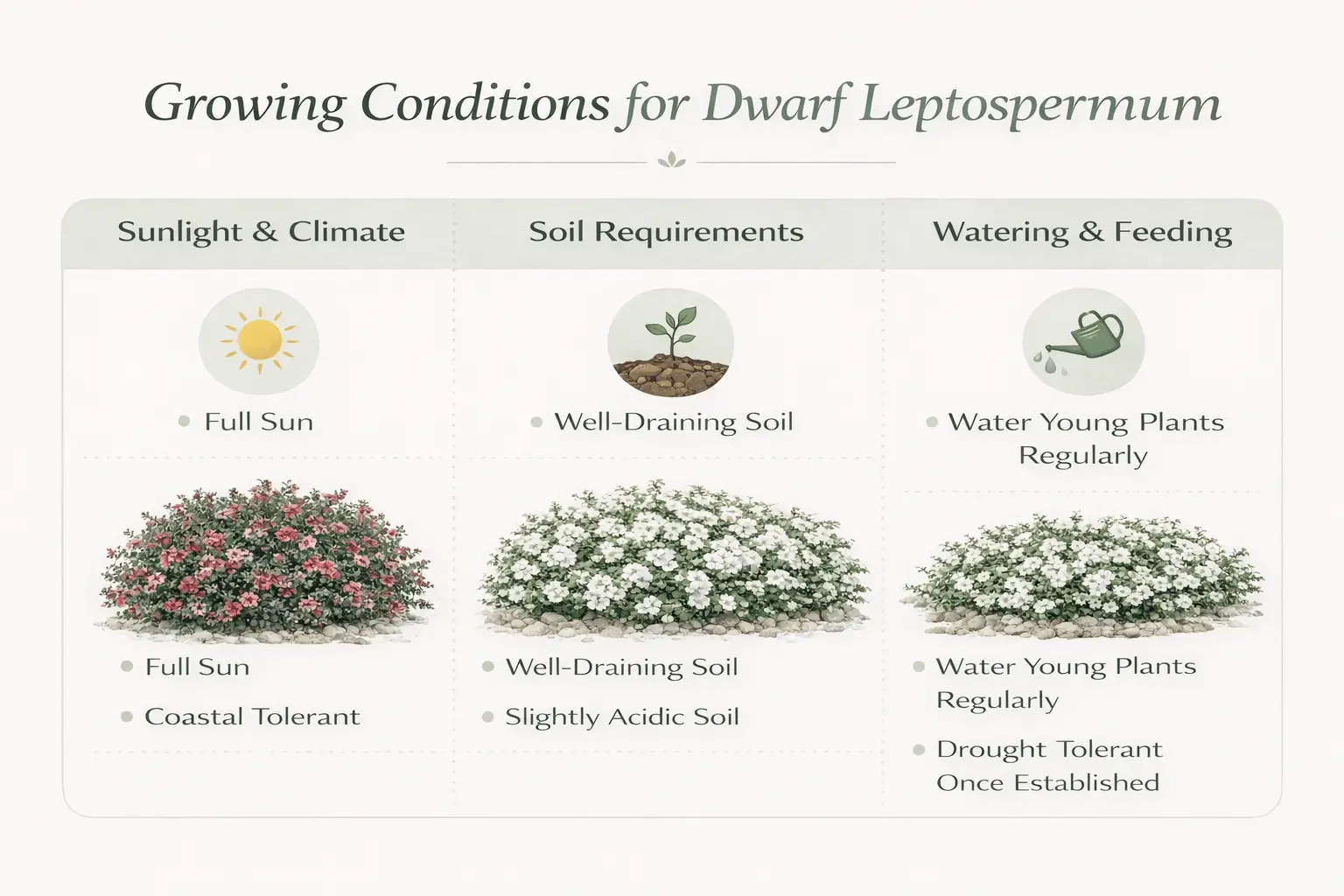
Best performance occurs in warm climates with full sun exposure. Dwarf leptospermum tolerates coastal conditions and wind, similar to its natural leptospermum scoparium Australia habitat.
Soil Requirements
- Well-draining soil is essential
- Slightly acidic soil preferred
- Avoid waterlogging to prevent root rot
Watering & Feeding
- Drought tolerant once established
- Minimal fertiliser required
- Light feeding in spring encourages flowering
Planting & Landscape Uses
Garden Borders & Rockeries
Dwarf leptospermum is ideal for small gardens and rockeries. It pairs well with red tea tree, yellow tea tree, and other native shrubs for a cohesive landscape.
Container Gardening
Its compact growth habit makes it a perfect pot specimen. Ensure good drainage and full sun for best results.
Wildlife & Pollinators
Flowers attract bees, connecting to jellybush honey origins. The plant supports biodiversity and native pollinators.
Care & Maintenance Guide
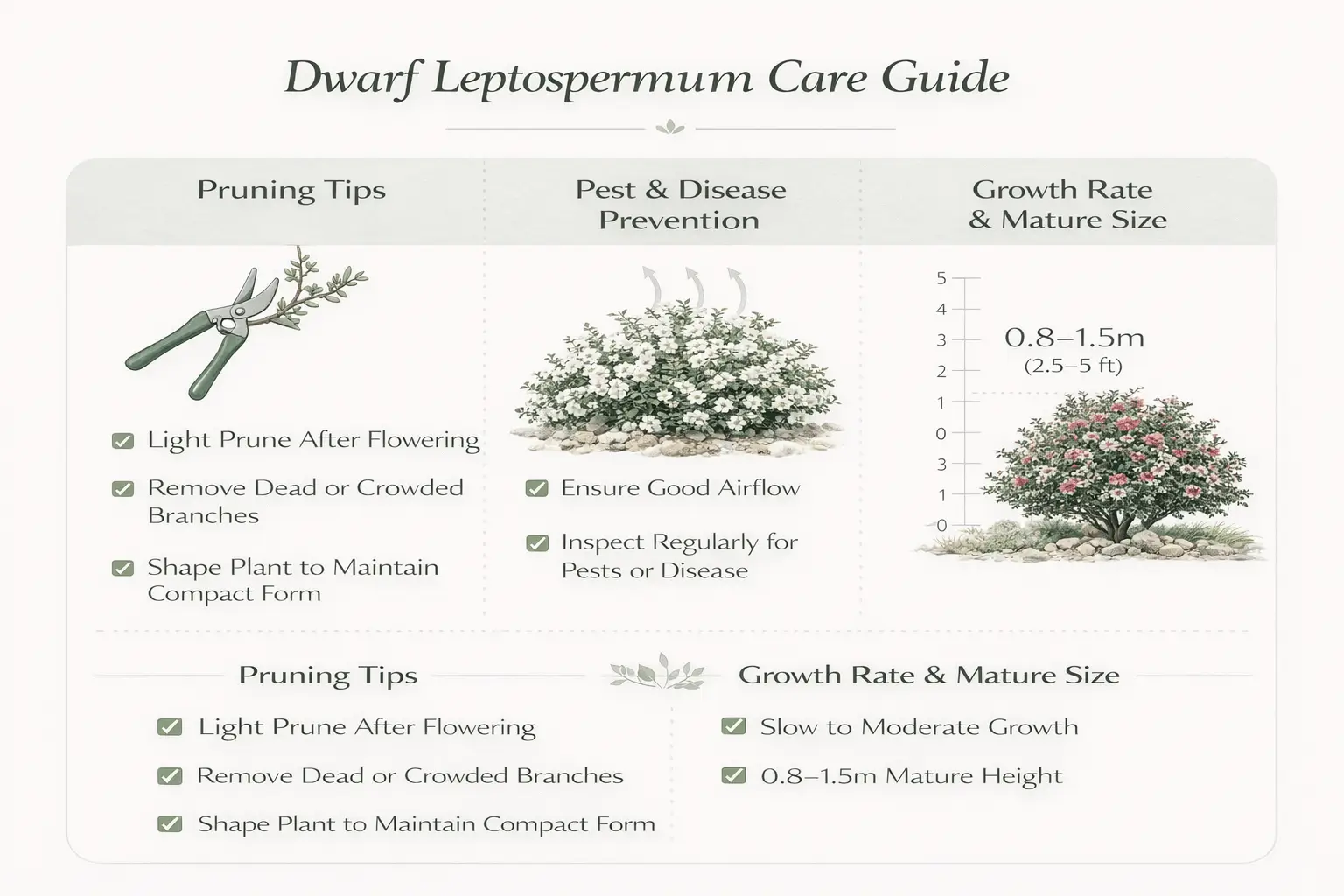
Pruning Tips
- Light pruning after flowering
- Maintain dense, compact shape
- Remove dead or crossing branches
Pest & Disease Issues
Generally low maintenance. Ensure good airflow to prevent fungal issues.
Growth Rate & Mature Size
Most dwarf forms reach 0.8–1.5 meters in height. Spread can be controlled with periodic trimming.
Dwarf Leptospermum vs Other Tea Trees
Compared to Cardwell Varieties
leptospermum flavescens cardwell, leptospermum polygalifolium cardwell, and cardwell plant types such as leptospermum cardwell pink grow larger and suit screening applications rather than compact borders.
Compared to Lemon-Scented Types
- Growth difference: Dwarf varieties are smaller.
- Fragrance comparison: Lemon types offer strong citrus scent.
- Ornamental value: Dwarf forms emphasize colorful blooms.
Conclusion
Dwarf leptospermum offers compact growth, long flowering seasons, and low maintenance appeal. Ideal for compact spaces, containers, and decorative borders, it delivers vibrant color without overwhelming the garden. By selecting the right cultivar, whether red, pink, or white, you can enhance your landscape with an adaptable native shrub.
Read Also: 5+ Stunning Silver Eucalyptus Secrets Revealed
FAQs
- What is the mature height of dwarf leptospermum?
Most varieties grow between 0.8 and 1.5 meters tall. - Is dwarf leptospermum the same as manuka plant?
It is a compact form of leptospermum scoparium, commonly called the manuka plant. - Does dwarf leptospermum attract bees like jellybush?
Yes, its flowers attract bees and support honey production similar to jellybush. - Can dwarf tea tree grow in pots?
Yes, it thrives in containers with well-draining soil and full sun. - What is the difference between leptospermum scoparium and lemon scented tea tree?
Leptospermum scoparium is grown for flowers, while lemon scented tea tree is valued for fragrant foliage. - How often should I prune a dwarf red tea tree?
Prune lightly after flowering each year to maintain shape and encourage dense growth.

Written by the LeafyHeaven Editorial Team
LeafyHeaven shares practical gardening tips and simple plant care guides to help you grow, nurture, and enjoy your plants with ease. Our goal is to make gardening feel natural, approachable, and rewarding for everyone.


[…] Learn more: 5+ Stunning Dwarf Leptospermum Varieties to Love […]