
Introduction
Echeveria agavoides types are among the most eye-catching succulents, known for their sharp leaf tips, bold colors, and compact rosette form. This species has become especially popular among succulent lovers because it offers dramatic visual appeal without demanding complex care. From green rosettes edged in red to deep burgundy varieties, echeveria agavoides delivers strong color contrast that stands out in any collection.
Compared to other types of echeveria, agavoides is easier to recognize due to its thicker leaves, pointed tips, and more structured growth. While many echeveria species have softer, spoon-shaped foliage, agavoides resembles an agave at first glance, which is where its name comes from. Its growth habit is typically compact and symmetrical, making it ideal for pots, windowsills, and curated succulent displays.
Understanding the different echeveria agavoides types helps with proper identification, care, and placement. Each variety shows unique color variations, reacts differently to sunlight, and develops its own growth pattern over time. Learning how this plant fits within the wider group of echeveria species makes it easier to distinguish true agavoides forms from similar-looking echeveria succulents.
What Is Echeveria Agavoides?
Echeveria agavoides is a distinct succulent species within the broader group of echeveria species, valued for its bold structure and strong visual definition. Botanically, it belongs to the Crassulaceae family and is classified as a true rosette-forming succulent with thick, fleshy leaves adapted for water storage. This species is often considered one of the most recognizable echeveria types due to its sharp leaf tips and compact, symmetrical form.
In its native habitat, Echeveria agavoides grows in rocky, well-drained areas of Mexico, where it is exposed to bright light, warm temperatures, and limited rainfall. These conditions shape its low-growing habit and dense leaf arrangement. Instead of spreading widely or producing tall stems, it stays close to the ground, forming a tight rosette that conserves moisture and resists heat stress.
Within the overall echeveria species list, agavoides stands out for its firmness and structure. Many echeveria succulent varieties have rounded or spoon-shaped leaves with a softer appearance, while agavoides shows thicker, triangular leaves that taper to a point. This difference often leads to confusion with agave plants, although agavoides remains smaller, softer, and non-woody compared to true agaves.
Key Characteristics of Echeveria Agavoides
Echeveria agavoides is defined by its bold leaf shape, clean rosette structure, and striking color potential.
- Leaves are thick, stiff, and triangular with pointed tips
- Rosettes are compact, symmetrical, and tightly layered
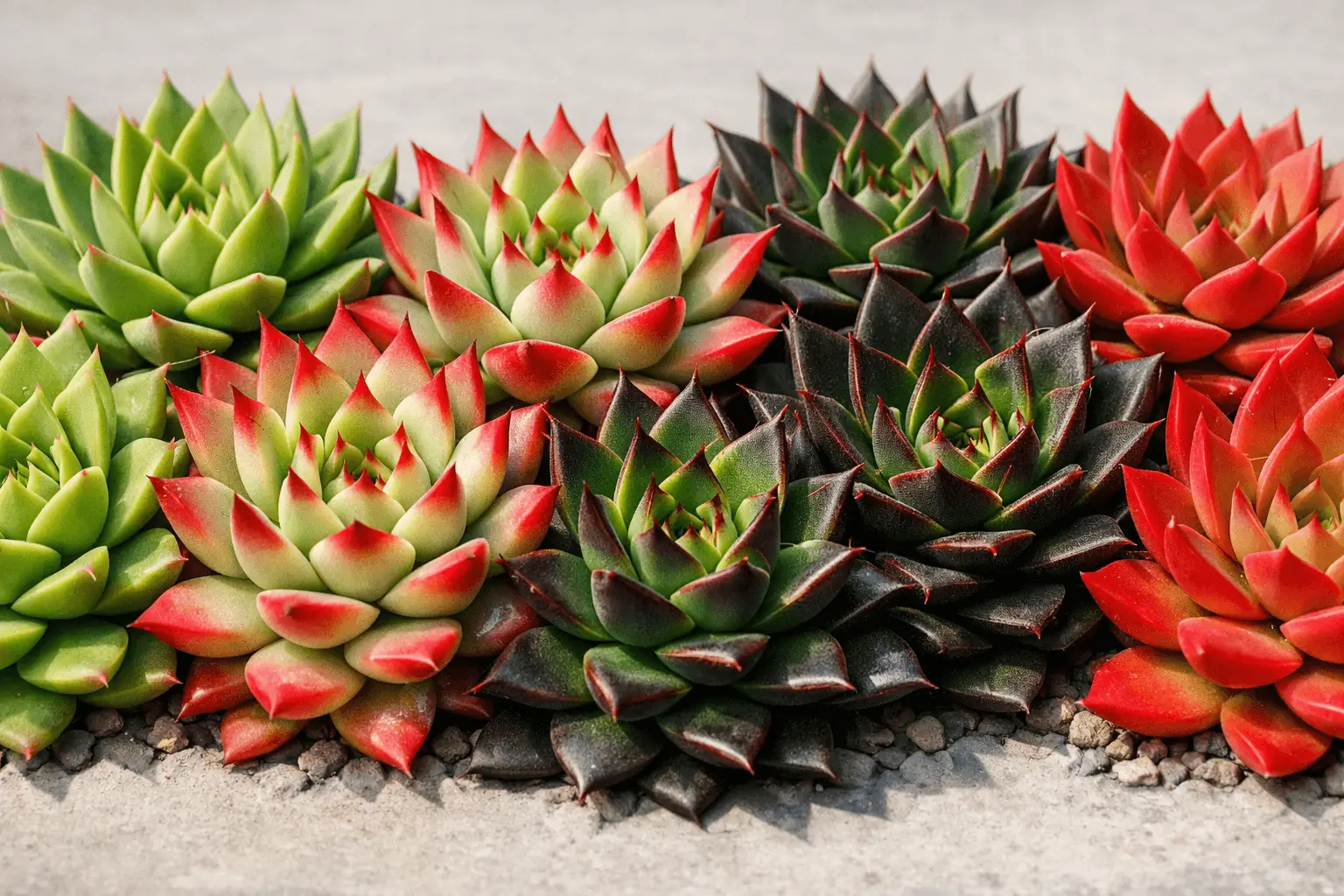
- Leaf coloration ranges from green to red-edged, burgundy, or deep crimson depending on light exposure
- Surface texture is smooth and slightly glossy rather than powdery
In terms of size, agavoides remains moderate compared to large echeveria or tall echeveria forms. Most mature plants stay compact rather than elongating, typically forming a single rosette instead of branching extensively. This controlled growth pattern makes it a favorite among collectors who prefer structured echeveria succulent varieties that maintain their shape over time without frequent pruning or spacing issues.
Popular Echeveria Agavoides Types
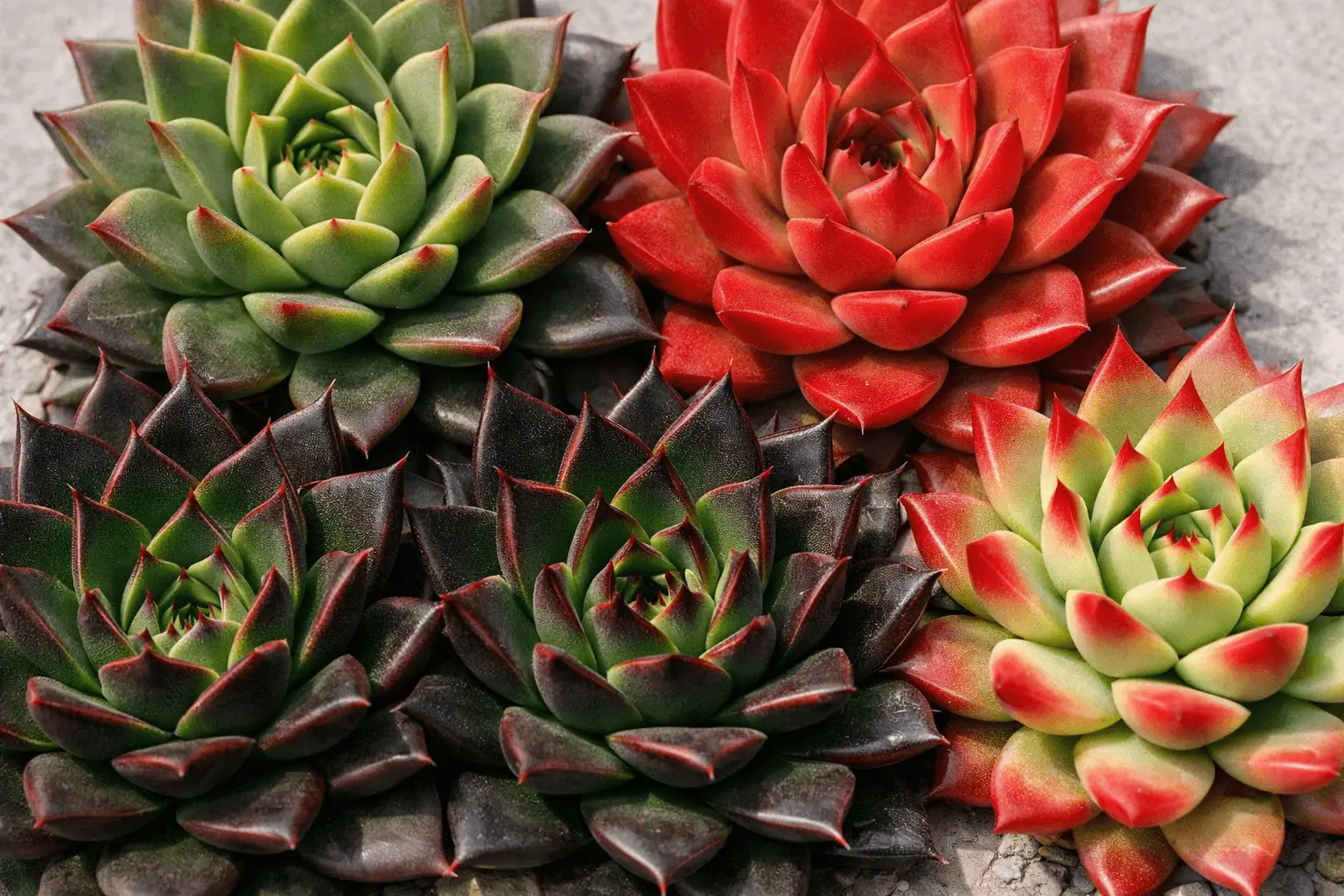
Among all echeveria agavoides types, certain varieties stand out for their color intensity, leaf contrast, and growth stability. These selections are especially valued by collectors because they maintain strong form while offering noticeable visual differences. Below are the most well-known and widely grown types, along with how they fit within the broader range of succulent echeveria varieties.
Echeveria Agavoides ‘Lipstick’
Echeveria agavoides ‘Lipstick’ is one of the most recognizable varieties due to its sharp red leaf margins and clean, compact rosette.
- Leaves are bright green with vivid red edging
- Rosette remains tight and symmetrical with minimal stretching
- Color contrast intensifies under bright light
For best results, ‘Lipstick’ performs well in strong indirect light or gentle morning sun. Insufficient light reduces red pigmentation, while balanced sun exposure keeps the plant compact and colorful.
Echeveria Agavoides ‘Ebony’
‘Ebony’ is known for its dramatic appearance, featuring dark, almost black leaf margins that contrast sharply with the green or gray-green leaf surface.
- Thick leaves with pronounced dark edges
- Slower, controlled growth compared to softer varieties
- Maintains a bold look even at smaller sizes
This variety prefers brighter light than most agavoides types to maintain its dark edging. As part of the more striking different kinds of echeveria, ‘Ebony’ is often chosen for statement arrangements and collector displays.
Echeveria Agavoides ‘Romeo’
‘Romeo’ is prized for its deep red coloration, which becomes more intense when the plant experiences sun stress.
- Entire rosette can shift from green to deep red
- Color deepens seasonally, especially in cooler months
- Growth remains compact and low
In moderate light, ‘Romeo’ may appear greener, but increased sun exposure encourages its signature red tones. Size stays relatively small, making it suitable for containers without frequent repotting.
Echeveria Agavoides ‘Miranda’
‘Miranda’ offers a softer look compared to other agavoides types, with smoother color transitions and less aggressive contrast.
- Pale green to pastel-toned leaves
- Less intense red edging
- Balanced rosette shape
This variety adapts well to indoor environments, especially bright windowsills. Among succulent echeveria varieties, ‘Miranda’ is often recommended for growers who want the agavoides form without extremely bold coloring.
Rare & Hybrid Echeveria Agavoides Varieties
Rare and hybrid forms of echeveria agavoides are developed through selective breeding, often combining agavoides traits with other echeveria species.
- Hybrids may show unusual color blends or leaf shapes
- Growth habits can vary depending on parent plants
- Often categorized broadly under succulent echeveria types rather than strict species
These hybrids expand the range of different kinds of echeveria available to collectors, offering unique forms while still retaining the sharp, structured appearance typical of agavoides.
How to Identify Echeveria Agavoides Types
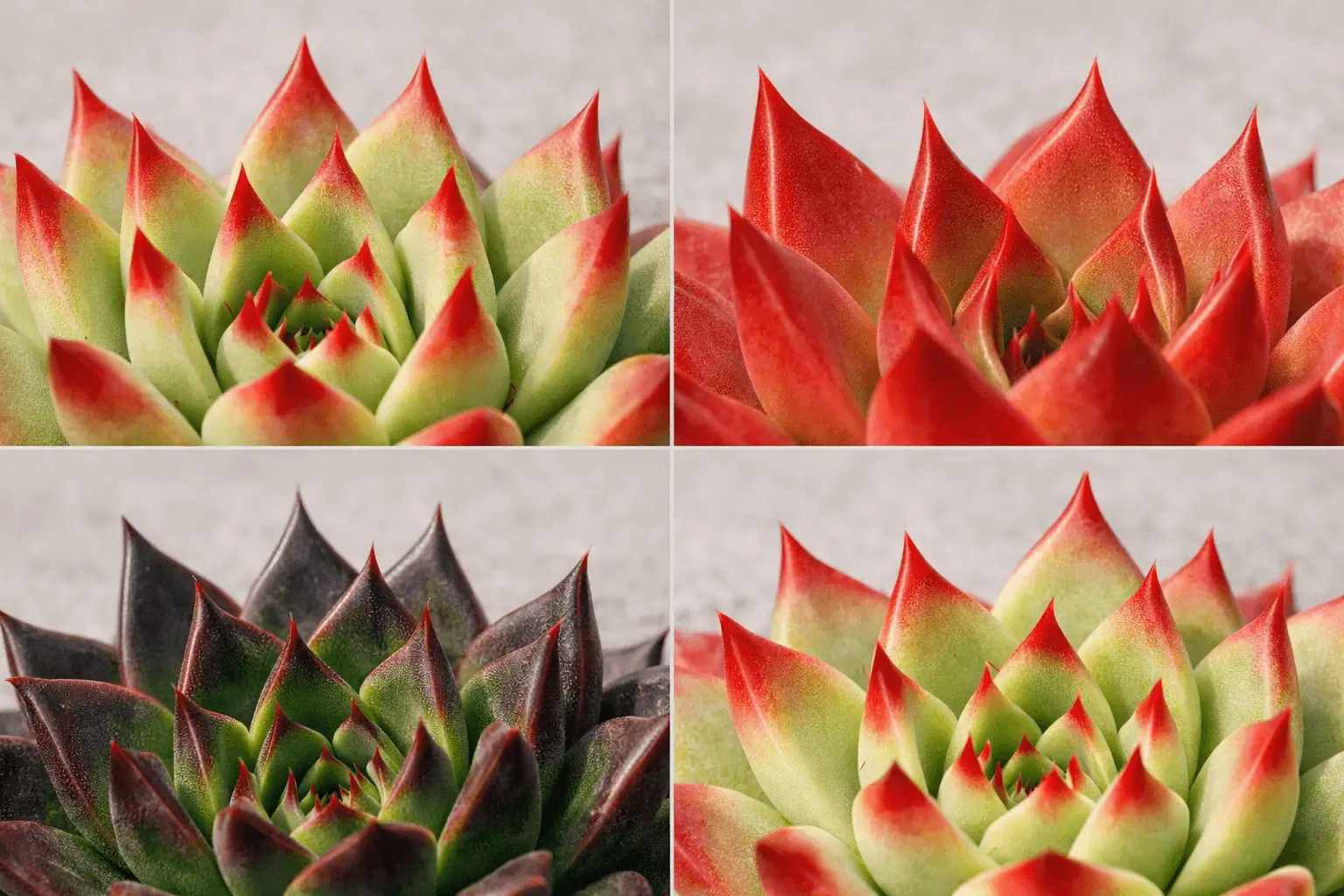
Identifying echeveria agavoides types relies mainly on visual details rather than overall plant size or growth speed. This species has a more rigid and defined appearance compared to many other succulents, making close observation of the leaves essential. Leaf thickness is one of the first clues—agavoides leaves are noticeably thick, firm, and fleshy, designed to store water efficiently.
Tip sharpness is another key marker. Unlike rounded or spoon-shaped leaves seen in softer varieties, agavoides leaves taper into a distinct point, often with a slightly hardened tip. Color edging also plays a major role in identification. Many agavoides types show red, burgundy, or dark margins that intensify with sun exposure, while the leaf center remains green or muted in tone. These combined traits help separate agavoides from more common or mixed different types of echeveria.
Using an Echeveria Identification Chart
An echeveria identification chart is a practical tool for distinguishing between closely related echeveria succulent types. These charts typically compare leaf shape, edge color, rosette density, and growth form side by side, making subtle differences easier to spot. When identifying agavoides, charts help confirm whether sharp tips, thick leaves, and defined margins are consistent across the entire rosette.
Charts are especially helpful when dealing with similar-looking varieties that share overlapping colors or sizes. By matching physical traits rather than relying on plant labels alone, growers can more accurately classify agavoides and avoid misidentifying hybrids or non-agavoides echeveria forms.
Echeveria Agavoides vs Other Echeveria Varieties
Echeveria agavoides is often confused with general varieties of echeveria, particularly those with compact rosettes. However, most other echeveria varieties have softer leaves, rounded tips, and a looser rosette structure. Agavoides maintains a firmer, more architectural shape with clearly defined leaf points.
Another difference lies in visual consistency. While many different types of echeveria can stretch, flatten, or lose definition in lower light, agavoides tends to retain its structured form longer. Focusing on leaf rigidity, tip sharpness, and color edging helps prevent confusion and allows for more accurate identification within a diverse echeveria collection.
Echeveria Agavoides vs Sempervivum

The comparison between echeveria vs sempervivum is common because both plants form attractive rosettes and are often mistaken for one another. Despite their similar appearance at first glance, their growth behavior is quite different. Echeveria agavoides grows as a single, compact rosette and focuses on maintaining structure rather than spreading. Sempervivum, on the other hand, is a spreading plant that produces offsets freely, forming dense mats over time.
Another key difference in sempervivum vs echeveria lies in their seasonal behavior. Echeveria agavoides grows actively in warm conditions and slows down in cooler weather, while sempervivum continues growing in cooler temperatures and follows a more temperate growth cycle.
Leaf Shape and Growth Pattern
Both plants form rosettes, but the leaf shape clearly separates them. Echeveria agavoides has thick, fleshy, triangular leaves with pointed tips that create a structured, almost sculpted look. The rosette remains tight and symmetrical, rarely flattening or opening excessively.
Sempervivum rosettes are usually flatter and more open, with thinner leaves that feel less rigid. The leaves often overlap more loosely, and the plant spreads by producing many offsets around the main rosette. This growth pattern makes sempervivum better suited for ground cover, while echeveria agavoides remains more container-friendly.
Climate & Cold Tolerance Differences
Cold tolerance is one of the most important distinctions in the echeveria vs sempervivum comparison. Echeveria agavoides is not frost-hardy and can suffer damage when exposed to freezing temperatures. It thrives in warm, dry conditions and must be protected indoors or in sheltered environments during cold seasons.
Sempervivum is highly cold tolerant and can survive freezing temperatures, snow, and frost without damage. This difference explains why agavoides is grown as a houseplant or warm-climate outdoor succulent, while sempervivum is commonly planted outdoors in colder regions.
Size & Growth Expectations
Echeveria agavoides is valued for its controlled size and predictable growth habit. At maturity, most plants form a compact rosette that typically ranges between 6 to 10 inches wide, depending on the variety and growing conditions. The plant grows outward rather than upward, maintaining a low profile that works well in containers, shallow bowls, and structured succulent arrangements.
When compared to large echeveria plants, agavoides remains noticeably smaller and more contained. Large echeveria varieties often develop wider rosettes, longer leaves, or taller stems over time, especially in outdoor settings. Agavoides, by contrast, focuses on density and structure, keeping its rosette tight and visually balanced rather than expanding aggressively.
Does Echeveria Agavoides Become a Large Echeveria?
Echeveria agavoides does not typically become a large echeveria, even when grown in ideal conditions. Its genetic growth limits keep it compact, preventing excessive leaf elongation or wide rosette expansion. While good light and proper care encourage healthy growth, they do not dramatically increase its overall size.
Growth behavior can differ slightly between container and ground planting. In containers, agavoides stays smaller and more controlled due to limited root space. When planted in the ground in warm climates, it may reach the upper end of its size range but still remains compact compared to larger echeveria species. This predictable growth makes agavoides a reliable choice for growers who prefer structured plants that do not outgrow their space.
Flowering in Echeveria Agavoides

Flowering in echeveria agavoides adds an extra layer of interest beyond its striking rosette form. Blooming typically occurs in late winter to spring, depending on light exposure and overall plant health. During this period, the plant produces a tall, slender flower stalk that rises from the center or side of the rosette. The stalk is usually arching or slightly curved and can grow significantly taller than the rosette itself, creating a strong visual contrast.
Unlike the compact growth of the leaves, the flowering stalk is elongated and clearly defined. Once flowering is complete, the stalk gradually dries and can be removed without affecting the main plant. While flowering does not happen continuously, a healthy plant may bloom annually under proper care, making flower echeveria an anticipated seasonal feature.
What Do Echeveria Agavoides Flowers Look Like?
Echeveria agavoides flowers are small but vibrant, forming in clusters along the upper portion of the stalk.
- Flowers are typically bell-shaped or tubular
- Common colors include red, coral, pink, and yellow tones
- Petals often show a two-tone effect with brighter tips
These flowers are not only decorative but also functional. Their shape and coloration are designed to attract pollinators such as bees and hummingbirds in outdoor settings. Even though echeveria agavoides is often grown indoors or in containers, its blooms reflect classic flower echeveria characteristics that support pollination and natural reproduction when conditions allow.
Care Tips Specific to Echeveria Agavoides Types
Proper care is essential for maintaining the shape, color, and overall health of echeveria agavoides. While these plants are considered low maintenance, their appearance is strongly influenced by light, soil, and watering habits. Compared to softer echeveria succulent types, agavoides requires slightly more attention to lighting to preserve its compact form and bold coloration.
Light requirements are one of the most important factors. Echeveria agavoides performs best in bright light, ideally receiving several hours of indirect sunlight or gentle morning sun daily. Adequate light keeps the rosette tight and encourages strong leaf coloration. Insufficient light often leads to stretching and dull green leaves.
Soil and drainage play a critical role in root health. A fast-draining succulent or cactus mix is ideal, as it prevents moisture retention around the roots. Adding coarse sand, perlite, or pumice improves airflow and drainage, which is especially important for agavoides compared to other types of succulents echeveria that may tolerate slightly heavier soil.
Watering frequency should be controlled and consistent. Echeveria agavoides prefers deep but infrequent watering, allowing the soil to dry out completely between waterings. Overwatering increases the risk of root rot and leaf damage, while underwatering may slow growth but rarely causes serious harm. Seasonal adjustments are important, with reduced watering during cooler months.
Preventing Stretching and Color Loss
Stretching and faded color are common issues when echeveria agavoides does not receive enough light.
- Place the plant in the brightest available location without harsh afternoon sun
- Rotate containers regularly to ensure even light exposure
- Gradually increase sunlight to avoid leaf burn
Strong sun exposure helps preserve red edges and deep tones, while low light results in elongated growth and loss of contrast. Among echeveria succulent types, agavoides responds especially well to proper lighting, rewarding growers with compact rosettes and intense coloration when its needs are met.
Conclusion
Echeveria agavoides types stand out as ideal plants for collectors because they combine bold structure, striking color variation, and manageable growth habits. Their sharp leaf tips, compact rosettes, and ability to develop intense red and dark margins make them visually distinct from many other echeveria varieties. Each type offers its own character, whether through dramatic contrast, softer tones, or seasonal color shifts, while still sharing the same reliable growth pattern.
Learning to identify and grow multiple echeveria agavoides types adds depth to any succulent collection. Paying attention to leaf shape, color edges, and growth behavior makes identification easier and more rewarding over time. Expanding a collection with different agavoides varieties allows growers to practice plant identification skills while enjoying a range of colors and forms that remain compact, structured, and visually appealing throughout the year.
Read Also: 5+ Expert Secrets for Tree Peony in Winter Care
FAQs
How many echeveria agavoides types are there?
There is no fixed number of echeveria agavoides types. Several named cultivars such as ‘Lipstick,’ ‘Ebony,’ ‘Romeo,’ and ‘Miranda’ are widely recognized, and additional rare forms and hybrids continue to appear through selective breeding. This makes the total count variable rather than exact.
Which echeveria agavoides variety has the reddest leaves?
Echeveria agavoides ‘Romeo’ is generally considered the reddest variety. Under strong light and mild sun stress, its leaves can turn deep red across most of the rosette rather than showing color only on the edges.
Is echeveria agavoides suitable for indoor growing?
Yes, echeveria agavoides is suitable for indoor growing when placed in a bright location. A sunny windowsill with several hours of indirect or gentle direct light helps maintain compact growth and strong coloration, especially for less intensely colored types.
How can I tell echeveria agavoides apart from other echeveria species?
Echeveria agavoides can be identified by its thick, triangular leaves with sharp tips, firm texture, and defined color edges. Most other echeveria species have softer, rounder leaves and looser rosette structures, making agavoides appear more rigid and architectural.
Does echeveria agavoides flower every year?
Echeveria agavoides can flower yearly if it is healthy and grown under proper conditions. Adequate light, correct watering, and seasonal growth cycles increase the likelihood of annual blooming, though flowering is not guaranteed every year.
Is echeveria agavoides cold hardy like sempervivum?
No, echeveria agavoides is not cold hardy like sempervivum. It cannot tolerate frost or freezing temperatures and must be protected indoors or in warm climates, while sempervivum is adapted to survive cold and snowy conditions.

Written by the LeafyHeaven Editorial Team
LeafyHeaven shares practical gardening tips and simple plant care guides to help you grow, nurture, and enjoy your plants with ease. Our goal is to make gardening feel natural, approachable, and rewarding for everyone.