
Introduction
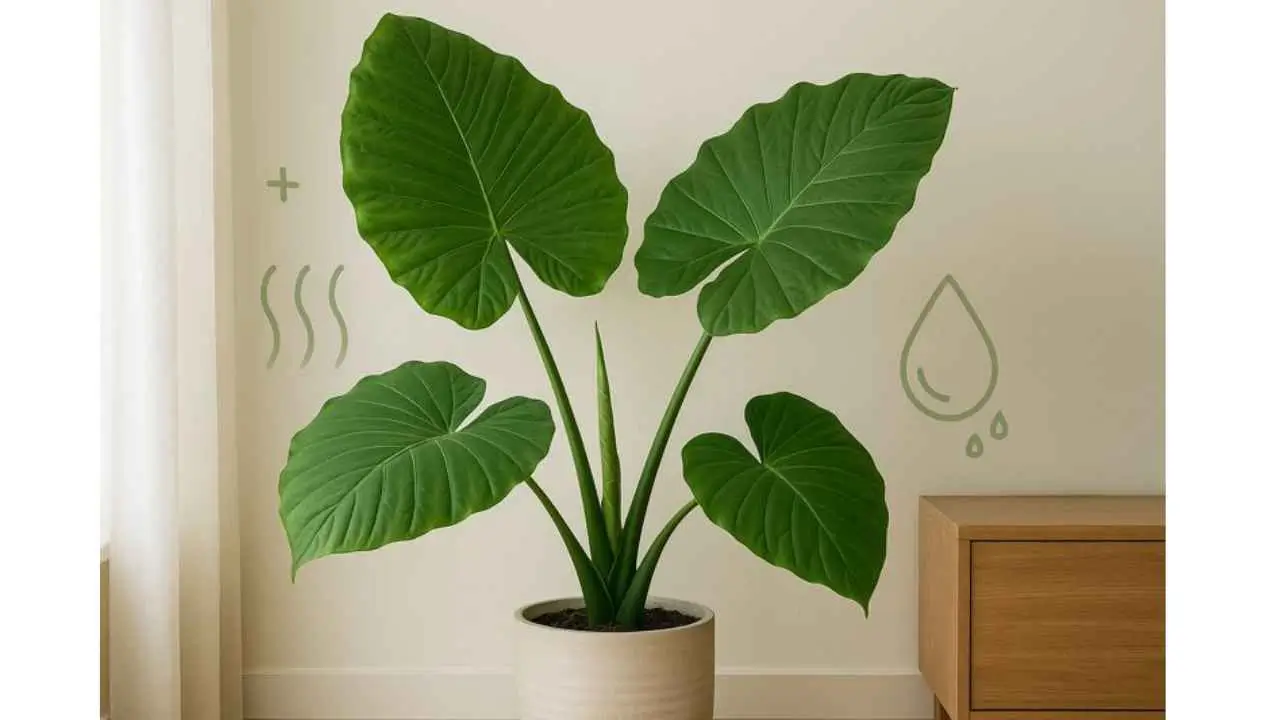
Elephant ear plant indoor benefits attract many homeowners who want a bold, tropical plant that also supports wellness and home comfort. Elephant ear plants are known for their large, dramatic leaves that instantly elevate any indoor space, making them popular in modern décor and natural home styling. When grown indoors, they offer more than just beauty — they help improve air quality, support humidity balance, and contribute to a more soothing living environment. Many people also keep them for their feng shui value, calming energy, and low-maintenance care needs, making elephant ear plants a versatile addition to homes, apartments, and indoor plant collections.
To better understand how plants support wellness and indoor living, explore this natural healing and herbal wellness guide for deeper insights into plant-based benefits.
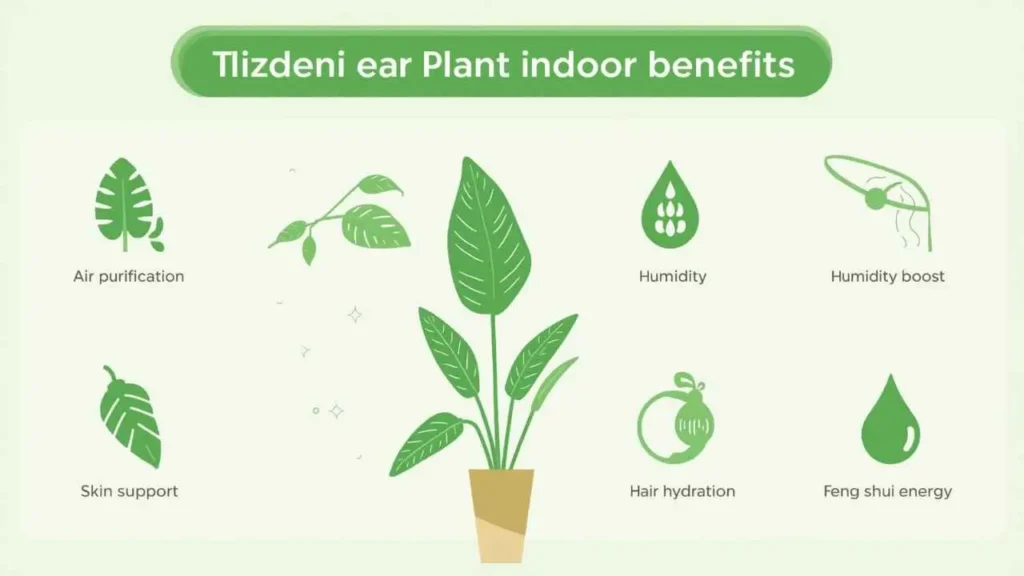
Elephant Ear Plant Indoor Benefits at a Glance
-
Improves indoor air freshness with large breathable leaves
-
Naturally increases humidity for a more balanced environment
-
Helps reduce dry skin and hair caused by indoor heating or AC
-
Supports calming, grounding energy in living spaces
-
Enhances home décor with bold tropical foliage
What Are Elephant Ear Plants?
Elephant ear plants are tropical, broad-leafed ornamentals known for their oversized, heart-shaped or arrow-shaped leaves that resemble an elephant’s ears. These plants belong to genera such as Alocasia, Colocasia, and Xanthosoma, all admired for their bold foliage and dramatic architectural form. In their natural habitat, they grow in warm, humid regions with rich soil and filtered light, where their large leaves help capture moisture and sunlight efficiently.
Their rising popularity as indoor plants comes from their ability to transform a room instantly, giving homes a lush, tropical feel with minimal effort. Indoor growers appreciate their aesthetic appeal, air-enhancing qualities, and the wellness benefits associated with keeping vibrant, moisture-supporting foliage in indoor environments.
Can Elephant Ear Plants Grow Indoors?
Is Elephant Ear Plant Good for Indoors?
Elephant ear plants can thrive indoors when given the right conditions. They grow best in bright, indirect light, consistent moisture, and warm temperatures that mimic their tropical origins. Their adaptability makes them suitable for both apartments and larger homes, especially where a bold, decorative plant is desired. With proper care, they can remain healthy and vibrant throughout the year, adding visual impact and wellness benefits to indoor spaces.
Is Elephant Ear Plant Indoor or Outdoor?
Elephant ear plants naturally grow outdoors in warm, humid climates, where they reach impressive sizes and develop lush foliage. Indoors, they grow more compactly but still maintain their striking leaf structure. Outdoor plants experience faster growth and larger leaves due to natural sunlight, while indoor plants require controlled conditions to achieve steady, healthy development. Both environments work well, but the indoor setting offers greater control over temperature and humidity.
Can Elephant Ear Grow Indoors?
Yes, elephant ear plants grow very well indoors when their essential needs are met. They require bright, filtered light, high humidity levels, and a well-draining container to prevent waterlogged soil. Using a spacious pot allows their roots to expand comfortably, while maintaining warm temperatures supports active growth. With these conditions in place, elephant ear plants can flourish inside homes, providing both beauty and functional indoor benefits.
Key Elephant Ear Plant Indoor Benefits
Air-Purifying Support and Cleaner Indoor Environment
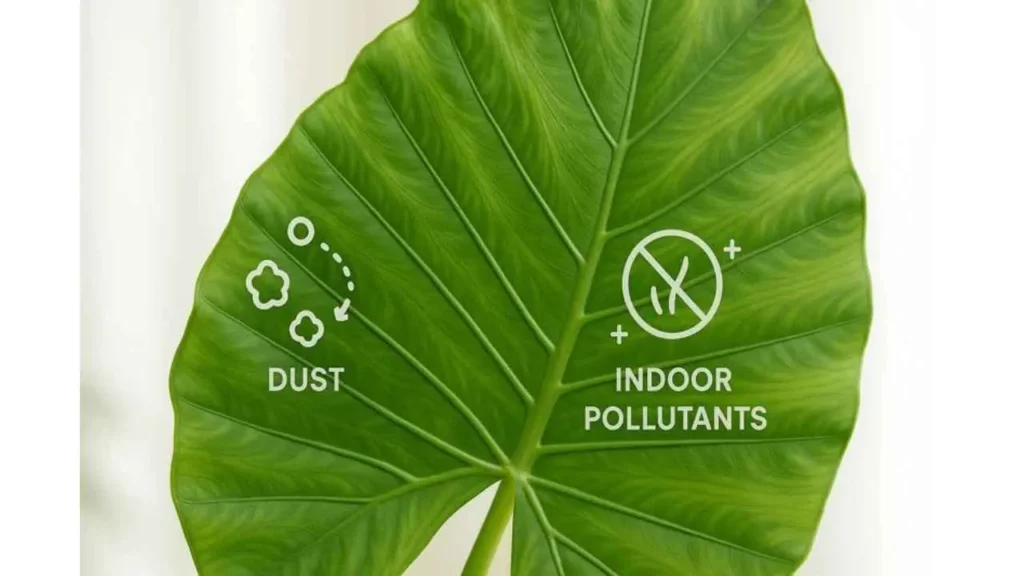
Elephant ear plants provide gentle air-purifying support by helping reduce indoor pollutants through natural leaf respiration. Their exceptionally large leaves offer a broader surface area, allowing more efficient filtration of airborne particles compared to smaller-leafed plants. This contributes to a cleaner indoor environment and supports overall air freshness in living spaces.
If you are looking for another low-maintenance indoor plant that supports fresher air, explore our detailed guide on spider plant indoor benefits.
Natural Humidity Boost for Indoor Spaces
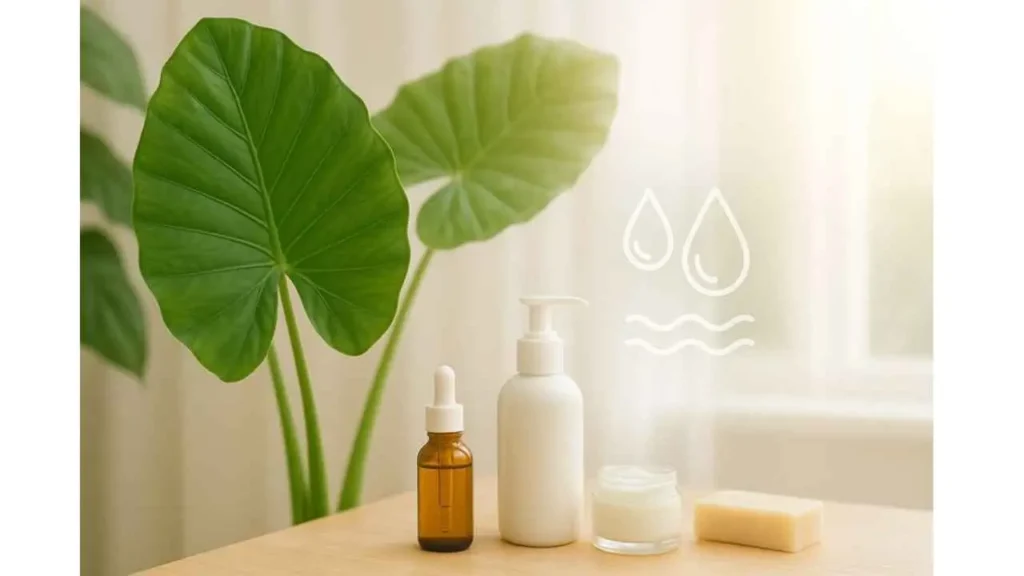
One of the strongest advantages of keeping elephant ear plants indoors is their ability to raise humidity levels naturally. Their constant moisture release helps reduce dryness commonly caused by air conditioning or winter heating. This subtle humidity boost indirectly benefits skin and hair by keeping the indoor air more balanced and comfortable.
Indoor Humidity Benefits for Skin and Hair
Elephant ear plants naturally increase indoor humidity through continuous moisture release from their large leaves. This balanced moisture level helps reduce dryness caused by indoor heating or air conditioning, creating a more comfortable environment for both skin and hair.
-
Helps reduce dry indoor air that may trigger skin irritation and tightness
-
Supports softer, less brittle hair during dry seasons
Elephant Ear Plant Spiritual Meaning & Energy Benefits
Spiritual Meaning and Energy Benefits
In many cultures, elephant ear plants symbolize protection, strength, and growth. Their bold, expansive leaves are often associated with abundance and the ability to create a supportive, nurturing environment. Indoors, they are believed to promote calm and grounding energy, helping reduce emotional stress and enhancing the sense of stability within a living space. This makes them a popular choice for people who value plants not only for aesthetics but also for their symbolic meaning.
Feng Shui Placement and Positive Flow
In feng shui, elephant ear plants are considered powerful enhancers of prosperity and positive energy flow. Their large, upward-growing leaves are seen as symbols of expansion and good fortune. When placed in areas associated with wealth or family harmony, they help restore balance and encourage healthier energy circulation. Ideal locations include the living room, entryway, or southeast wealth corner, where their vibrant presence supports abundance, harmony, and emotional well-being.
Elephant Ear Plant Medicinal Uses (Traditional)
Elephant ear plants have been referenced in various traditional practices, particularly in tropical regions where they grow naturally. Historically, different cultures used parts of the plant in folk remedies for external applications such as soothing minor skin discomforts or supporting wound care. These practices were based on generational knowledge rather than modern clinical evidence.
In many traditions, the leaves were prepared in specific ways—often cooked, fermented, or applied externally—to reduce irritation or provide cooling relief. However, despite these historical uses, it is important to note that elephant ear plants contain calcium oxalate crystals, which can cause irritation if used improperly. For this reason, safety is essential. They should never be consumed raw, and any traditional remedy should be approached with caution and proper guidance to avoid adverse reactions.
There is limited modern scientific evidence supporting the medicinal use of elephant ear plants. Because the plant contains calcium oxalate crystals, avoid ingestion and follow professional guidance for any traditional use.
If you’re exploring other powerful healing plants, the ruda plant medicinal uses are equally fascinating.
Elephant Ear Plant Indoor Care Guide
For a broader understanding of watering, soil balance, and plant maintenance techniques, see our complete plant care guide.
How to Look After Elephant Ear Plant Indoor
Proper indoor care is essential for keeping elephant ear plants healthy and vibrant.
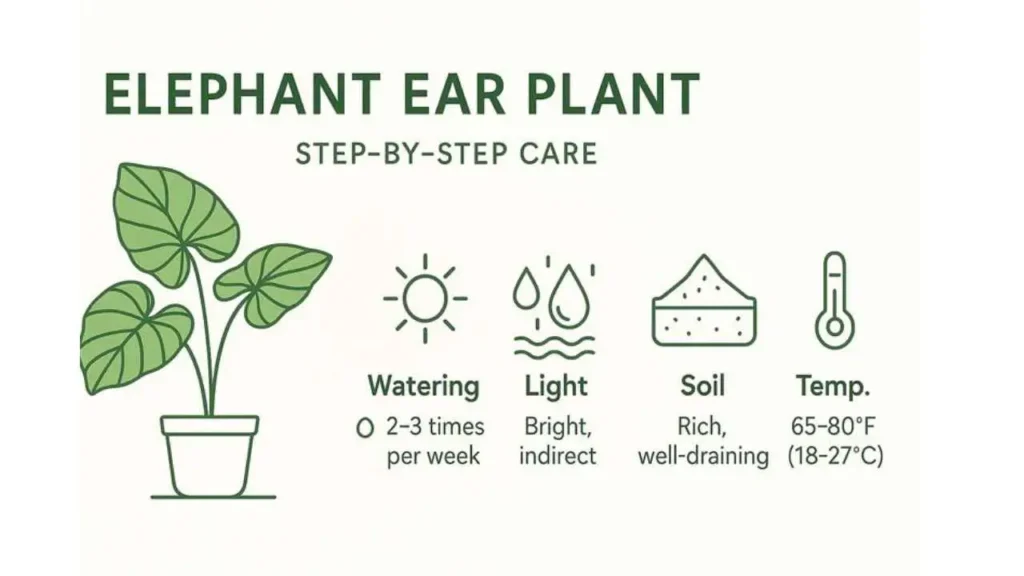
- Watering: Keep the soil consistently moist but never soggy. Water when the top inch of soil begins to dry out, and always allow excess water to drain.
- Light: Provide bright, indirect sunlight. Direct sun can scorch the leaves, while low light slows growth and reduces leaf size.
- Temperature: Maintain warm indoor temperatures between 65–80°F (18–27°C). Avoid cold drafts, air conditioners, and sudden temperature changes.
- Soil Requirements: Use rich, well-draining soil to prevent root rot. A mix containing peat, perlite, and organic compost works well.
Elephant Ear Indoor Plant Care Tips
- Repotting: Repot every 1–2 years or when the roots begin to outgrow the container. Choose a pot one size larger to support steady growth.
- Fertilizer: Feed monthly during the growing season with a balanced, water-soluble fertilizer to support strong leaf development.
- Humidity Control: Elephant ear plants prefer high humidity. Use a humidifier, pebble tray, or regular misting to maintain moisture around the plant.
Common Indoor Elephant Ear Plant Problems
- Leaf Browning: Often caused by low humidity, inconsistent watering, or direct sun exposure. Increasing moisture levels usually helps.
- Drooping: Results from underwatering, overwatering, or sudden temperature changes. Check soil moisture and adjust care accordingly.
- Pests: Indoors, spider mites, aphids, and mealybugs may appear. Inspect leaves regularly and treat with neem oil or insecticidal soap when necessary.
- Overwatering Issues: Waterlogged soil can cause yellowing and root rot. Ensure proper drainage and allow the top layer of soil to dry slightly between waterings.
Conclusion
Elephant ear plants offer a range of meaningful indoor benefits, from improving air freshness and humidity balance to supporting skin and hair wellness. Their large, tropical leaves enhance indoor spaces visually while adding calming, grounding energy that aligns with both aesthetic and spiritual preferences. As a wellness-oriented indoor plant, it contributes to a healthier atmosphere and enriches home décor with its bold, lush presence.
For anyone looking to combine beauty, function, and positive energy in their living space, elephant ear plants are a highly rewarding choice. With proper care and the right indoor conditions, they thrive easily and become a standout feature that elevates both comfort and visual appeal.
As with any tropical plant, keep elephant ear plants out of reach of pets and children and avoid ingestion due to their natural calcium oxalate content.
For a simplified overview of indoor benefits, humidity support, and care insights, you can explore this structured elephant ear plant indoor benefits resource hub.
FAQs
Does elephant ear plant purify indoor air?
Elephant ear plants can support fresher indoor air through natural leaf respiration, but results vary by room size, airflow, and plant health.
What are the top elephant ear plant indoor benefits?
Top benefits include improved air freshness, natural humidity enhancement, support for skin and hair moisture, feng shui energy balancing, and strong decorative impact due to the plant’s large, tropical leaves.
Can elephant ear plants improve skin and hair health indoors?
Yes. By increasing indoor humidity, elephant ear plants help reduce dryness in the air, which indirectly supports better skin hydration and improves hair softness, especially in dry environments.
Is elephant ear plant safe to grow inside homes?
Elephant ear plants are safe as long as they are not ingested. The leaves contain calcium oxalate crystals, which can irritate the mouth if eaten. Keep the plant out of reach of pets and children, and handle it carefully if pruning.
How do I maintain elephant ear plants indoors?
Provide bright, indirect light, maintain moist but well-drained soil, keep humidity levels high, and ensure warm temperatures. Regular feeding, repotting, and checking for pests will help keep the plant healthy year-round.
What is the spiritual meaning of keeping elephant ear plant indoors?
Spiritually, elephant ear plants symbolize protection, strength, and growth. Many people keep them indoors for their grounding energy, calming presence, and feng shui associations with prosperity and balance.

Written by the LeafyHeaven Editorial Team
LeafyHeaven shares practical gardening tips and simple plant care guides to help you grow, nurture, and enjoy your plants with ease. Our goal is to make gardening feel natural, approachable, and rewarding for everyone.



[…] Read Also: 5 Powerful Elephant Ear Plant Indoor Benefits You’ll Love […]