
Introduction to Feijoa Tree (What It Is & Why It’s Popular)
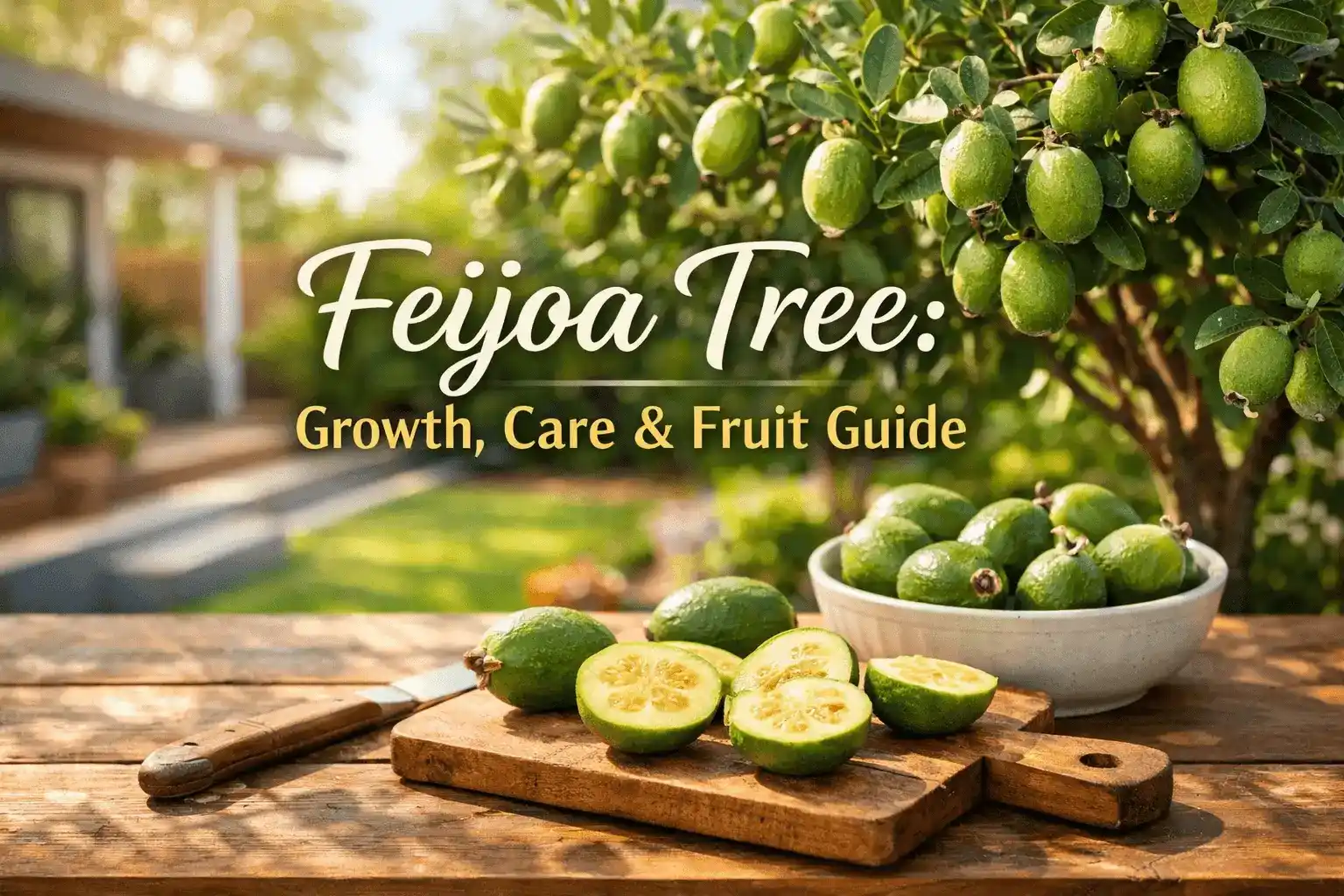
The feijoa tree, botanically known as Acca sellowiana, is an evergreen fruiting plant valued for both its ornamental appeal and edible fruit. Commonly referred to as feijoa, fejoa, or pineapple guava, this plant has gained strong popularity in regions like Australia and New Zealand due to its adaptability and low maintenance needs. The feijoa fruit is especially valued for its unique aroma and tropical flavor, often described as a mix of pineapple and guava. Whether grown as a backyard shrub or a decorative hedge, the feijoa pineapple guava tree offers both visual appeal and a consistent fruit harvest.
What Does a Feijoa Tree Look Like? (Identification Guide)
Tree Appearance & Structure
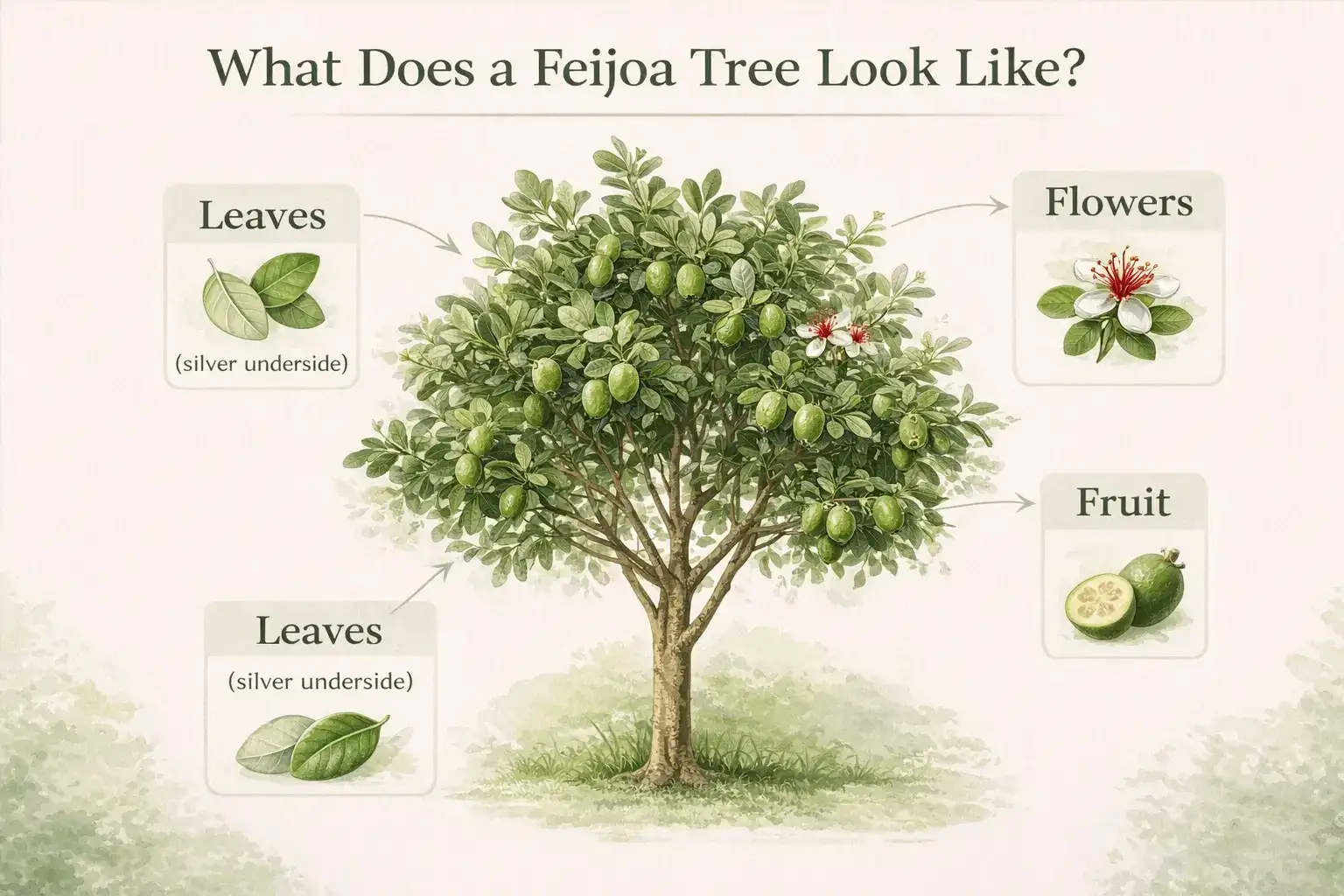
If you’re wondering what does a feijoa tree look like, it typically appears as a dense evergreen shrub or small tree.
- Thick, oval leaves with silvery undersides
- Attractive white flowers with pink-red stamens
- Compact branching structure forming a bushy canopy
The feijoa bush is often used for landscaping due to its ornamental value, making it a unique feijoa tree for both fruit and decoration.
Feijoa Tree Size & Height
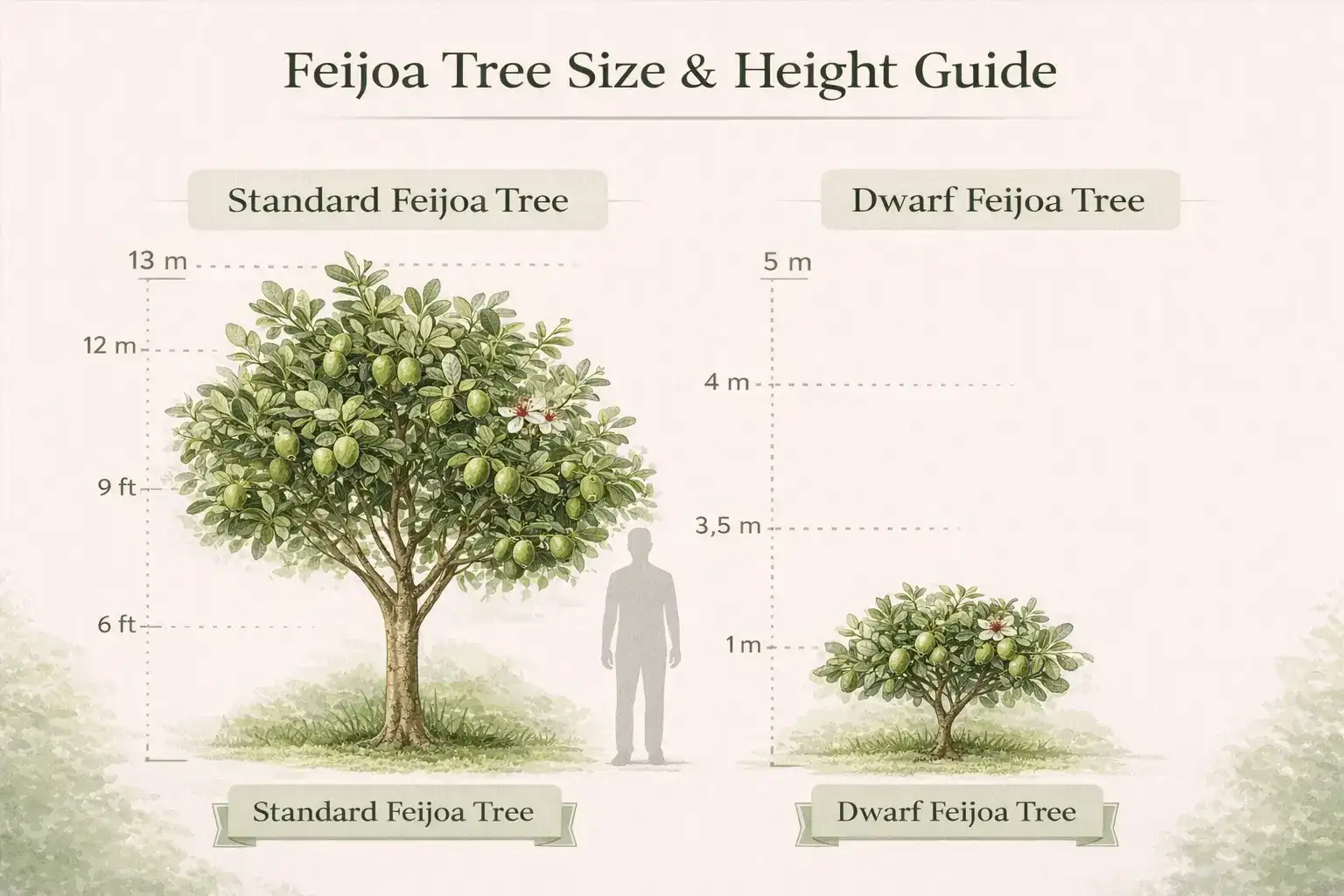
The feijoa tree size can vary depending on variety and growing conditions.
| Type | Height | Spread |
| Standard Tree | 3–5 meters | 2–4 meters |
| Dwarf Feijoa Tree | 1.5–2.5 meters | 1.5–2 meters |
The feijoa tree height makes it suitable for both large gardens and compact spaces. A dwarf feijoa tree NZ option is ideal for smaller yards or container growing.
Feijoa Fruit Explained (Taste, Uses & Benefits)
What Does Feijoa Taste Like?
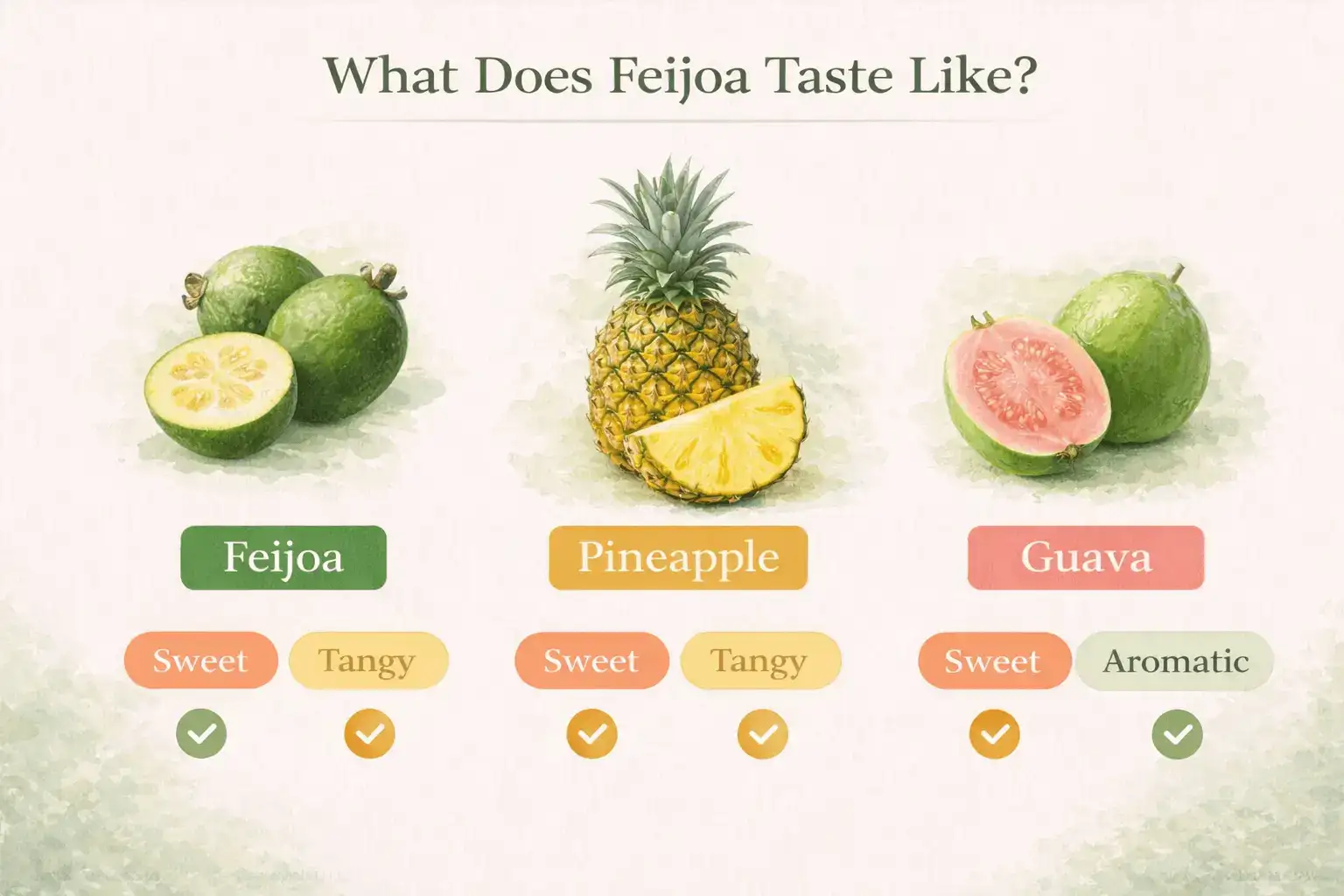
The feijoa taste is distinctive and highly aromatic.
- Sweet and slightly tangy
- Blend of pineapple, guava, and minty notes
- Soft, juicy pulp with a fragrant skin
Many people describe what do feijoas taste like as a tropical fusion, making the feijoa flavour unique among fruits.
Uses of Feijoa Fruit
The versatility of feijoas fruit makes it highly valuable.
- Fresh eating (scooped directly from the skin)
- Smoothies and juices
- Desserts like cakes and sorbets
- Homemade jams and chutneys
- Fermented into feijoa tree alcohol such as wine
The feijoa fruit tree is therefore both practical and rewarding for home growers.
Feijoa Season & Fruiting Timeline
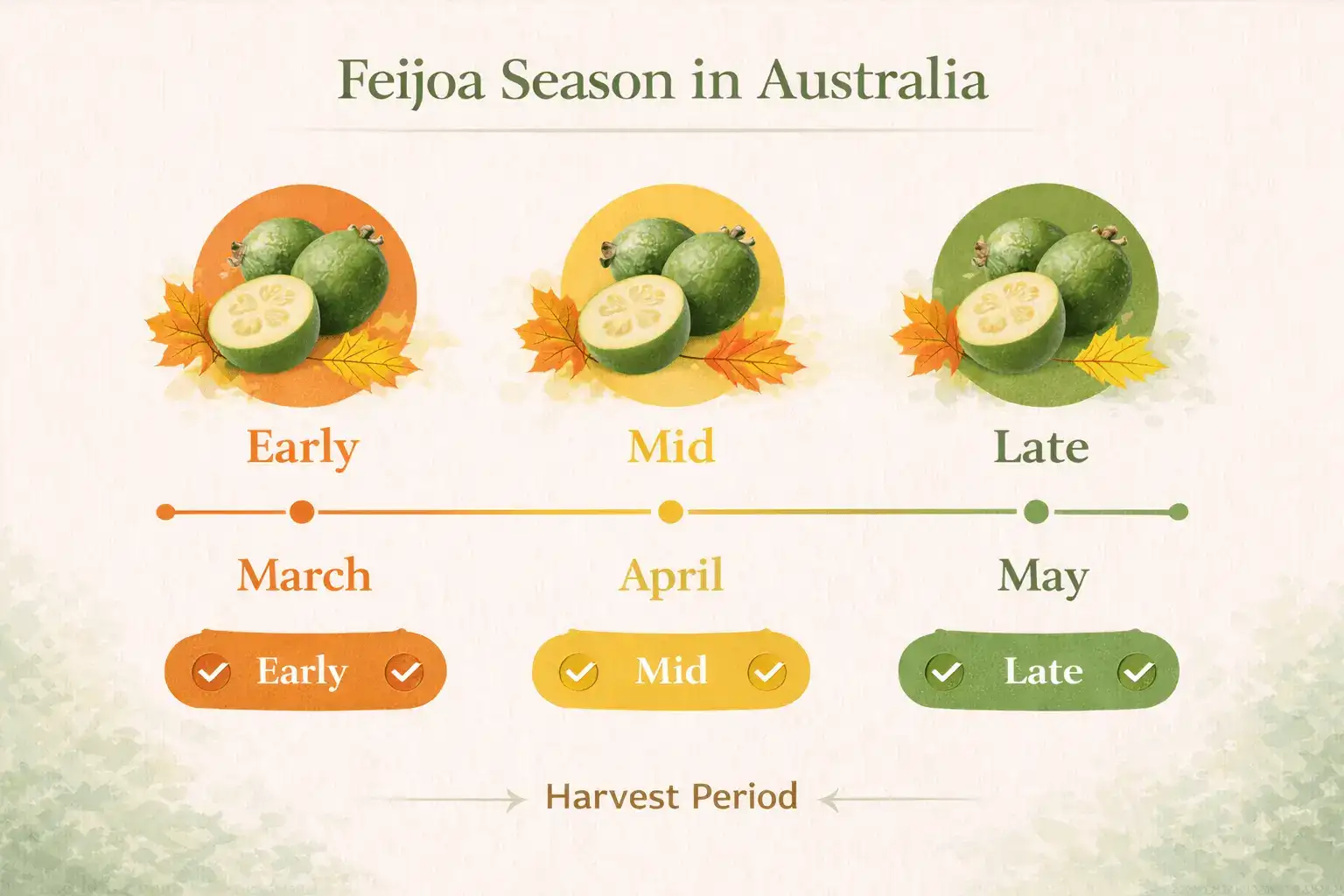
Feijoa Season in Australia
The feijoa season typically occurs in autumn.
- March to May in most regions
- Slight variation depending on climate
- Peak harvest during mid-autumn
The feijoa season Australia differs slightly between coastal and inland areas.
When Do Feijoas Fruit in Australia?
If you’re asking when do feijoas fruit, the answer depends on location and variety.
- Early varieties: Late March
- Mid-season: April
- Late varieties: May
Understanding when do feijoas fruit in Australia helps optimize harvesting.
How Long Does a Feijoa Tree Take to Fruit?
The timeline varies based on propagation method:
- Seed-grown trees: 4–6 years
- Grafted plants: 2–3 years
So, how long does a feijoa tree take to fruit largely depends on plant type. A grafted tree significantly reduces waiting time.
Growing Feijoa Tree (Complete Planting Guide)
Ideal Climate & Location
The feijoa australia climate suits this plant perfectly.
- Mild temperate to subtropical climates
- Performs well in feijoa Perth and feijoa Melbourne regions
- Tolerates light frost and coastal conditions
If you’re planning a diverse garden, exploring other options like 15 Fastest Growing Fruit Trees You’ll Love to Plant can help you choose complementary fruit trees alongside feijoa.
Soil, Sunlight & Water Requirements
For optimal growth:
- Well-drained, slightly acidic soil
- Full sun to partial shade
- Moderate watering (avoid waterlogging)
How to Plant Feijoa Tree
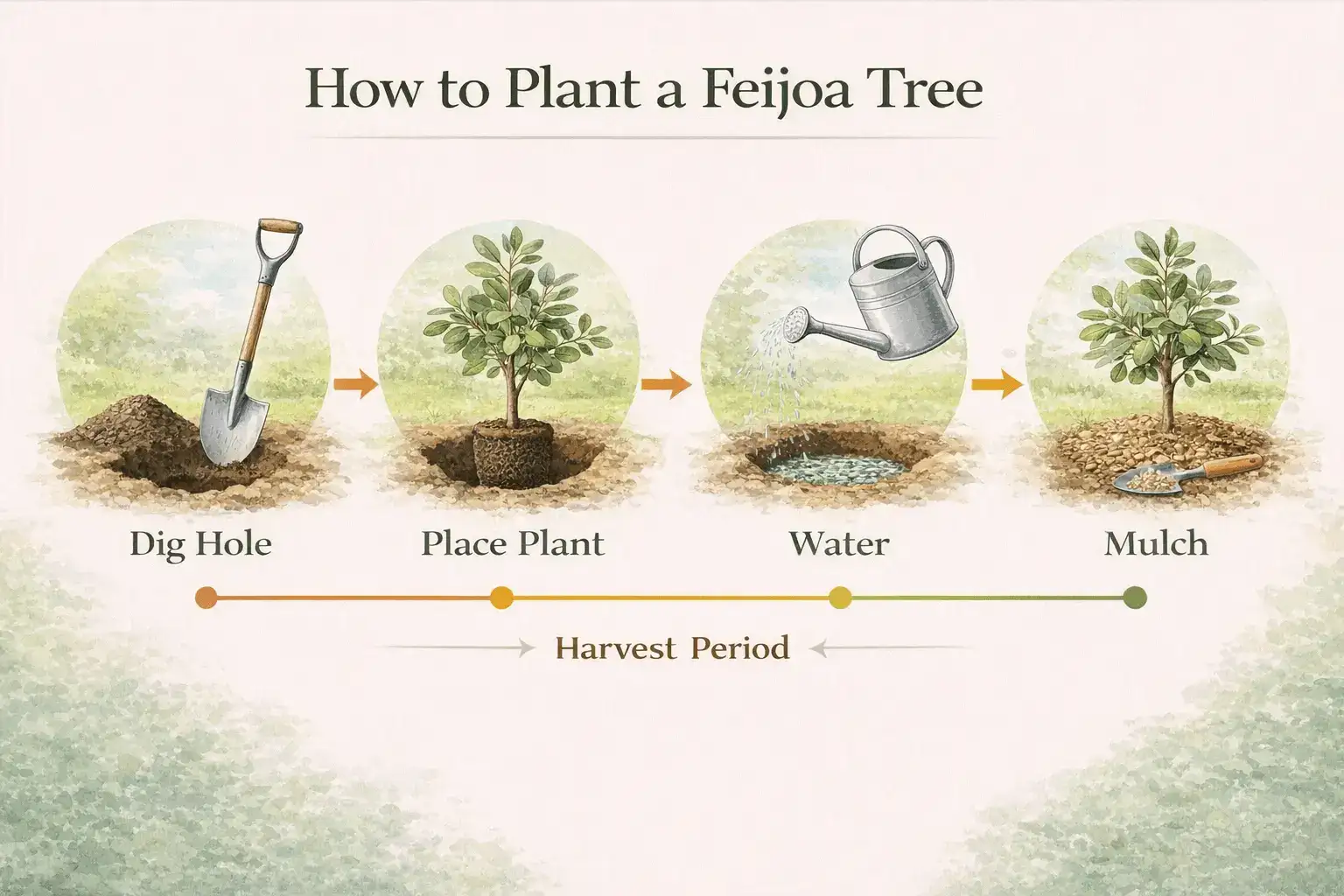
Follow these steps for successful planting:
- Choose a sunny location
- Dig a hole twice the root size
- Place the feijoa plant carefully
- Backfill with soil and compost
- Water thoroughly after planting
Proper planting feijoas ensures strong root development and healthy growth.
Feijoa Tree Care & Maintenance
Watering, Fertilizing & Growth
Healthy feijoa growth requires consistent care.
- Water deeply but infrequently
- Apply balanced fertilizer in spring
- Mulch to retain moisture
Caring for an feijoa tree is relatively simple compared to other fruit plants. For a broader understanding of plant maintenance, you can also explore How to Take Care of Areca Palm: 6+ Proven Tips for Lush Growth, which shares similar watering and fertilizing principles useful for many plants.
How to Prune a Feijoa Tree
Knowing how to prune a feijoa tree improves yield.
- Remove dead or crossing branches
- Shape the canopy for airflow
- Prune lightly after fruiting season
Why Is My Feijoa Tree Not Fruiting?
If you’re asking why is my feijoa tree not fruiting, common reasons include:
- Lack of pollination
- Poor sunlight exposure
- Excessive pruning
- Young or immature plant
Correcting these issues can restore fruit production.
Feijoa Tree Varieties & Types
Common Varieties in Australia & NZ
Popular feijoa varieties australia include:
- Apollo
- Unique
- Mammoth
- Triumph
These are also widely grown in feijoa new zealand regions.
Dwarf vs Standard Trees
Dwarf feijoa tree benefits:
- Ideal for small gardens
- Suitable for pots
- Easier maintenance
Standard trees offer higher yields but require more space.
Feijoa Tree Pros and Cons
Benefits
Key advantages of growing a feijoa:
- Low maintenance
- Edible and nutritious fruit
- Attractive ornamental plant
- Suitable for hedging
Drawbacks
According to feijoa tree pros and cons:
- Slow fruiting in early years
- Some varieties require cross-pollination
- Fruit drop can create mess
Where to Buy Feijoa Tree (Australia Guide)
Buying Options
You can find a feijoa tree for sale through:
- Local nurseries
- Online plant stores
- Retail chains like feijoa tree Bunnings
What to Look for When Buying
When you buy feijoa tree, consider:
- Grafted vs seedling plants
- Healthy root system
- Disease-free leaves
Always choose quality feijoa plants for sale from trusted sources when deciding where to buy feijoa trees.
Conclusion (Is Feijoa Tree Worth Growing?)
The feijoa tree is a highly rewarding addition to any suitable garden, offering both ornamental appeal and delicious fruit. With proper care, climate compatibility, and the right variety, it can produce abundant harvests with minimal maintenance. Its adaptability across Australian regions makes it an excellent choice for home growers. If you’re looking for a versatile and productive fruit plant, now is the perfect time to start growing your own feijoa fruit tree. To expand your garden further, refer to Tropical Fruit Trees: Grow Exotic Paradise at Home (Guide) for a complete overview of fruit trees that thrive in similar conditions.
FAQs About Feijoa Tree
How do you pronounce feijoa?
The correct feijoa pronunciation is fay-jo-uh. Many people ask how to pronounce feijoa, and this is the most widely accepted version.
How big does a feijoa tree grow?
A feijoa tree can grow between 3–5 meters tall and 2–4 meters wide, depending on the variety and growing conditions.
Can feijoa trees grow in pots?
Yes, especially dwarf feijoa tree varieties. They are ideal for container gardening and small spaces.
Do feijoa trees need pollination?
Some varieties are self-fertile, but cross-pollination improves fruit yield and quality significantly.
Are feijoas easy to grow in Australia?
Yes, feijoas are well-suited to Australian climates and are considered low-maintenance, making them ideal for beginners.

Written by the LeafyHeaven Editorial Team
LeafyHeaven shares practical gardening tips and simple plant care guides to help you grow, nurture, and enjoy your plants with ease. Our goal is to make gardening feel natural, approachable, and rewarding for everyone.