
Introduction
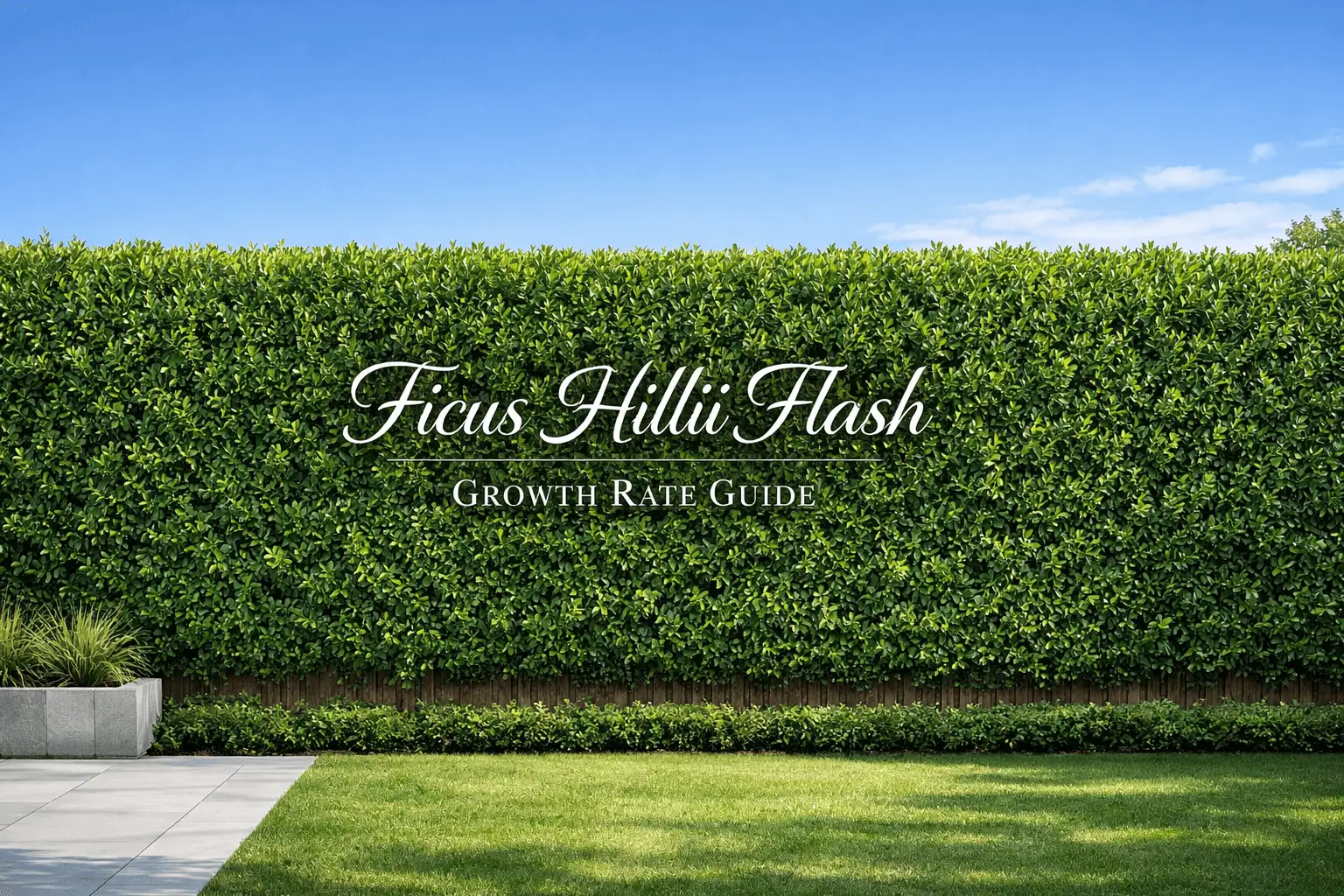
The ficus hillii flash growth rate makes this plant one of the most popular choices for modern hedging and privacy screens. Homeowners prefer ficus hillii flash for its dense foliage, upright growth habit, and manageable height. Under suitable conditions, it delivers consistent annual growth and strong seasonal performance. This guide explains expected yearly growth, how winter affects development, full-grown height potential, and how it performs as a hedge compared to a tree. Understanding these growth factors helps you plan spacing, trimming schedules, and realistic hedge timelines.
What Is Ficus Hillii Flash?
Ficus hillii, commonly sold as ficus flash or ficus microcarpa hillii flash, is a cultivated variety of the Australian native fig. It is widely used as a structured screening plant due to its compact leaves and upright form.
Botanical Background of Ficus Hillii Flash
Ficus hillii flash belongs to the species ficus microcarpa hillii. It is a selected cultivar bred for improved hedge performance and controlled root behavior.
- Botanical name: Ficus microcarpa var. hillii ‘Flash’
- Family: Moraceae
- Common names: Ficus hillii, ficus flash, hill’s weeping fig
It is classified as an evergreen ornamental tree suitable for hedging and screening.
Ficus Flash vs Other Ficus Varieties
The difference between ficus hillii and ficus microcarpa flash lies mainly in leaf density and growth habit. Ficus hillii flash tends to have tighter foliage and a more uniform hedge structure.
Compared to other ficus hedge plant types:
- More compact canopy
- Improved root control
- Better suitability for suburban gardens
Ficus Hillii Flash Growth Rate Per Year
Average Ficus Hillii Flash Growth Rate
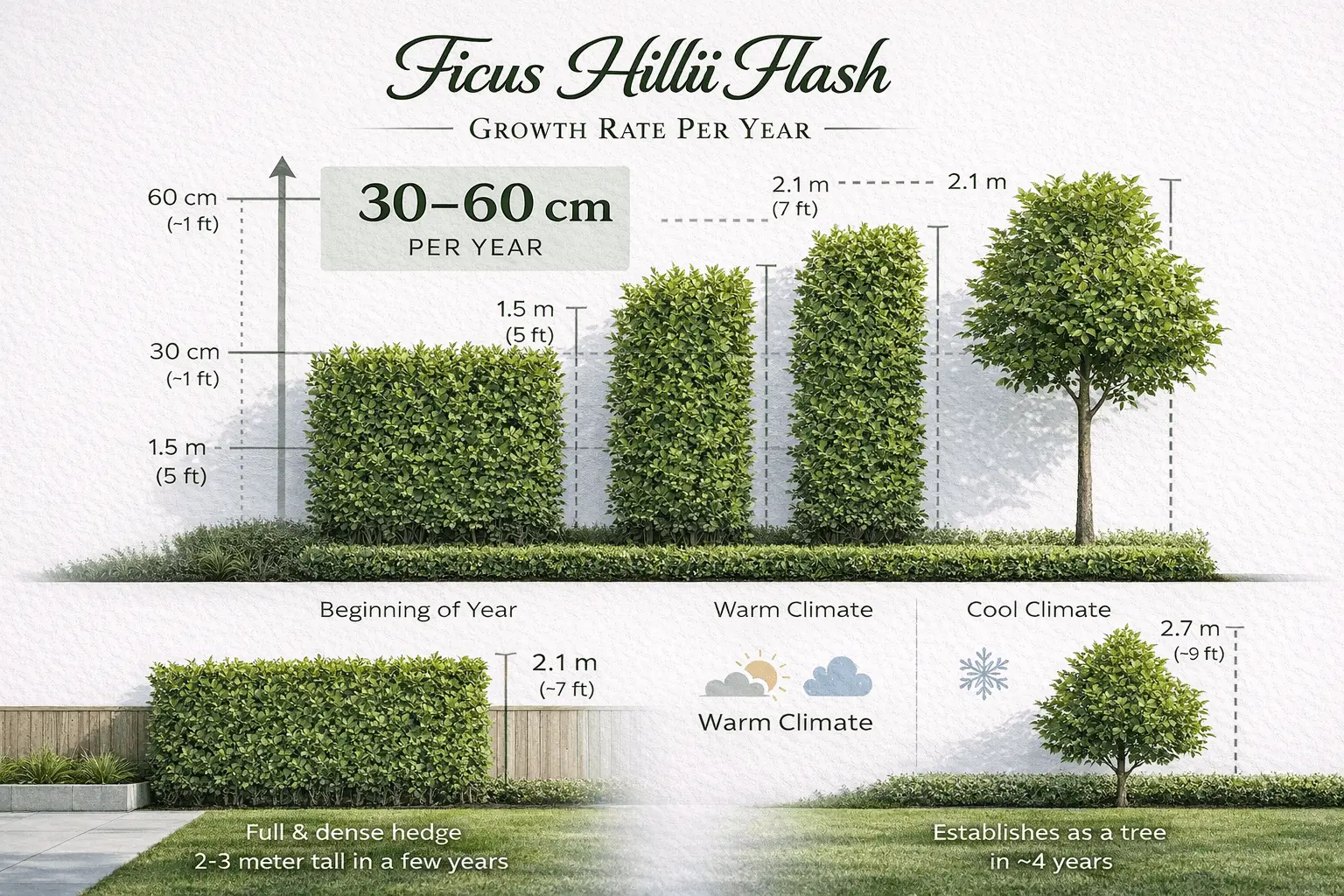
The ficus hillii flash growth rate per year typically ranges from 30–60 cm annually, depending on climate and care.
Key factors:
- Faster growth in warm climates
- Moderate growth in cooler regions
- Hedge form grows denser but slightly slower vertically
- Tree form may grow taller more quickly if unpruned
Growth Rate in Ideal Conditions
Optimal conditions significantly improve performance:
- Full sun exposure supports strong vertical growth
- Well-draining soil prevents root stress
- Regular watering and fertilization encourage consistent development
In ideal environments, annual growth may reach the upper 60 cm range.
Ficus Hillii Flash Growth Rate in Winter
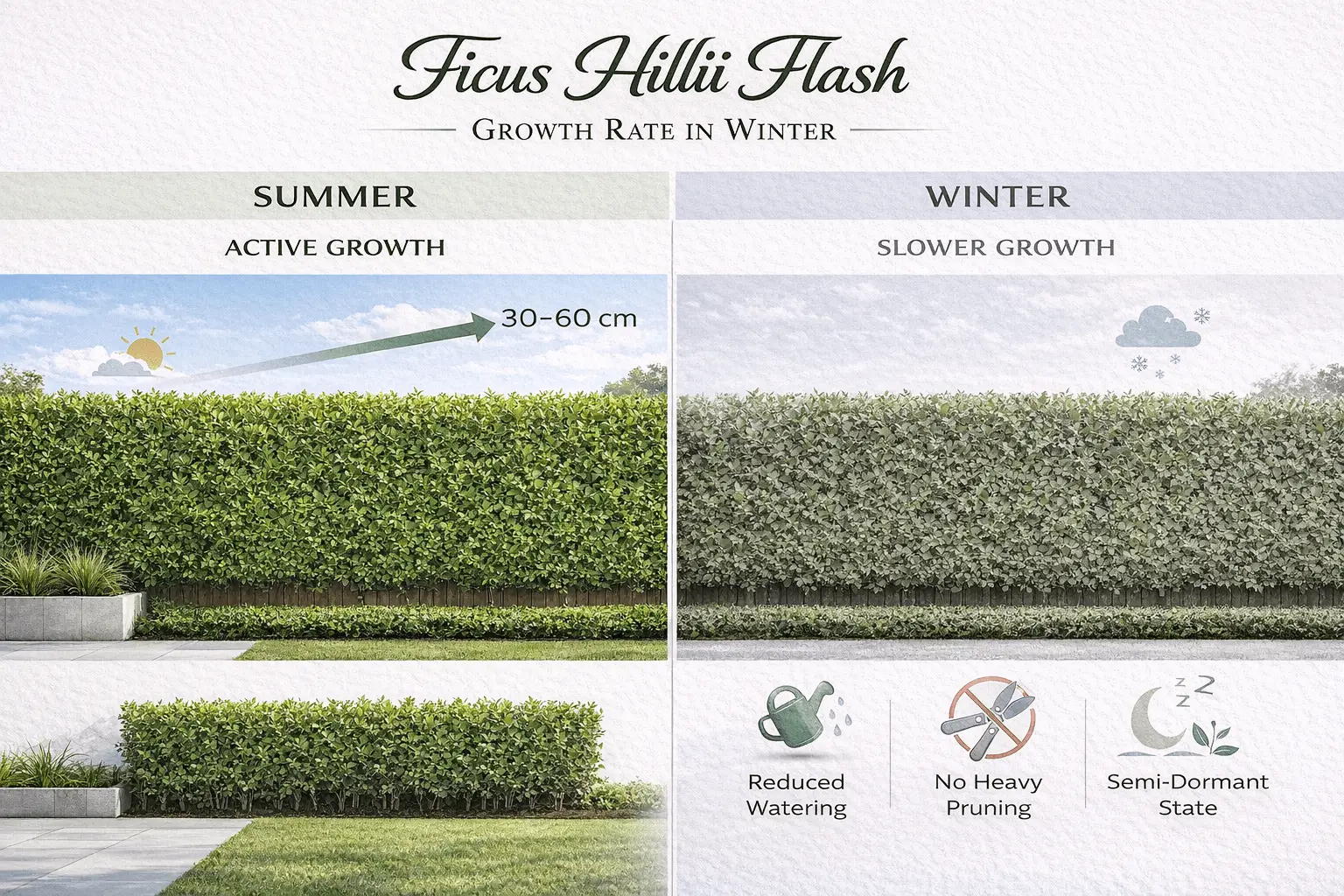
The ficus hillii flash growth rate in winter slows noticeably. In cooler climates, growth may pause entirely.
Winter behavior:
- Semi-dormant state
- Minimal new foliage
- Slower root activity
Winter care tips:
- Reduce watering
- Avoid heavy pruning
- Apply slow-release fertilizer in early spring
How Tall Does Ficus Hillii Flash Grow?
Ficus Hillii Flash Height at Maturity
The ficus hillii flash height when left untrimmed can reach 6–10 meters. A ficus hillii flash full grown specimen behaves like a medium-sized tree.
For hedges:
- Typical maintained height: 2–4 meters
- Easily controlled with trimming
Ficus Flash Hedge Growth vs Tree Growth
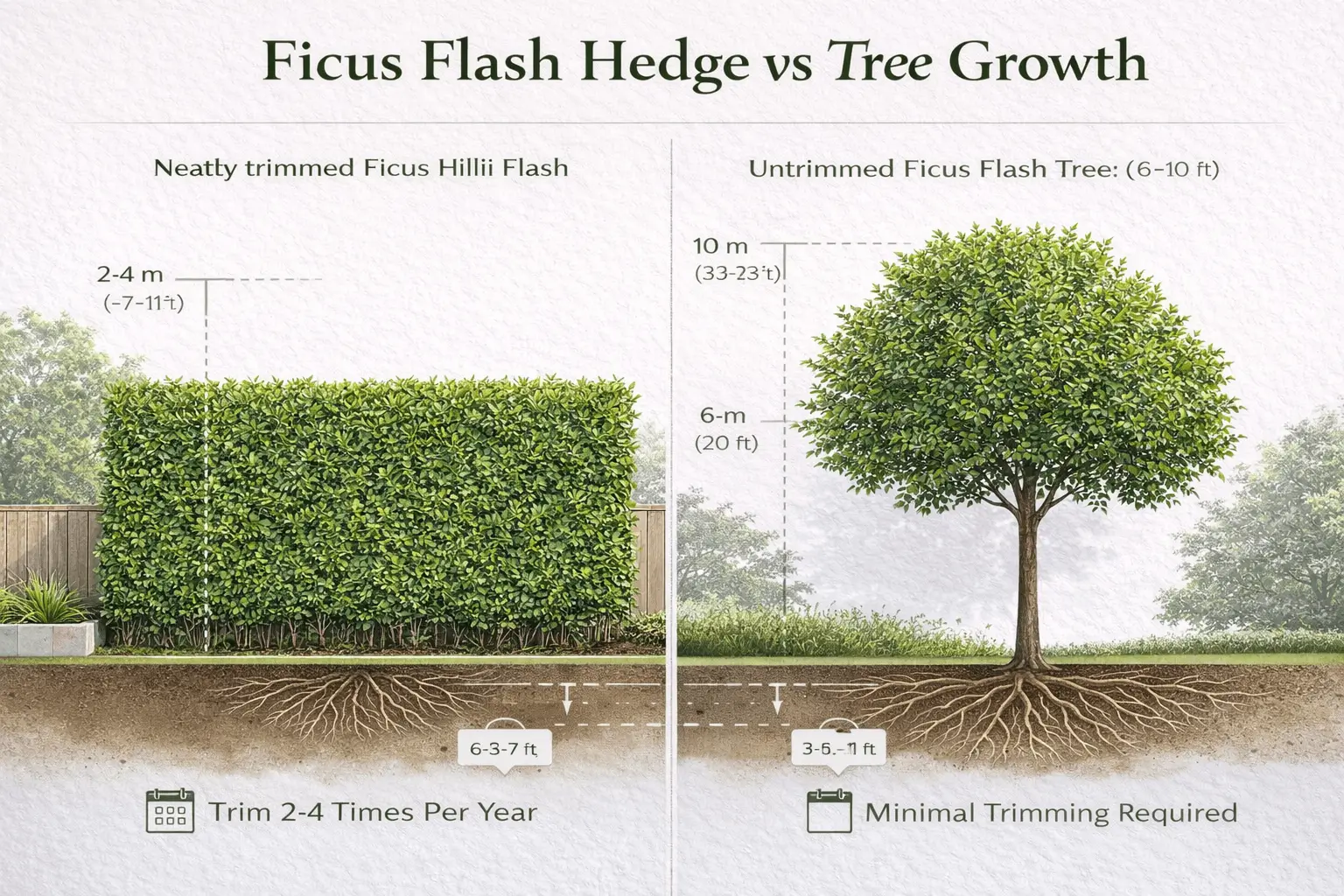
A ficus flash hedge grows densely and spreads both vertically and laterally. In contrast, a ficus flash tree grows taller with a broader canopy.
Characteristics of ficus hillii flash hedge:
- Strong screening ability
- Compact foliage
- Suitable as a ficus hedging plant
Ideal trimming schedule:
- Light trim every 6–8 weeks during growing season
- Shape correction in early spring
Root System & Growth Behavior
Ficus Hillii Flash Roots Explained
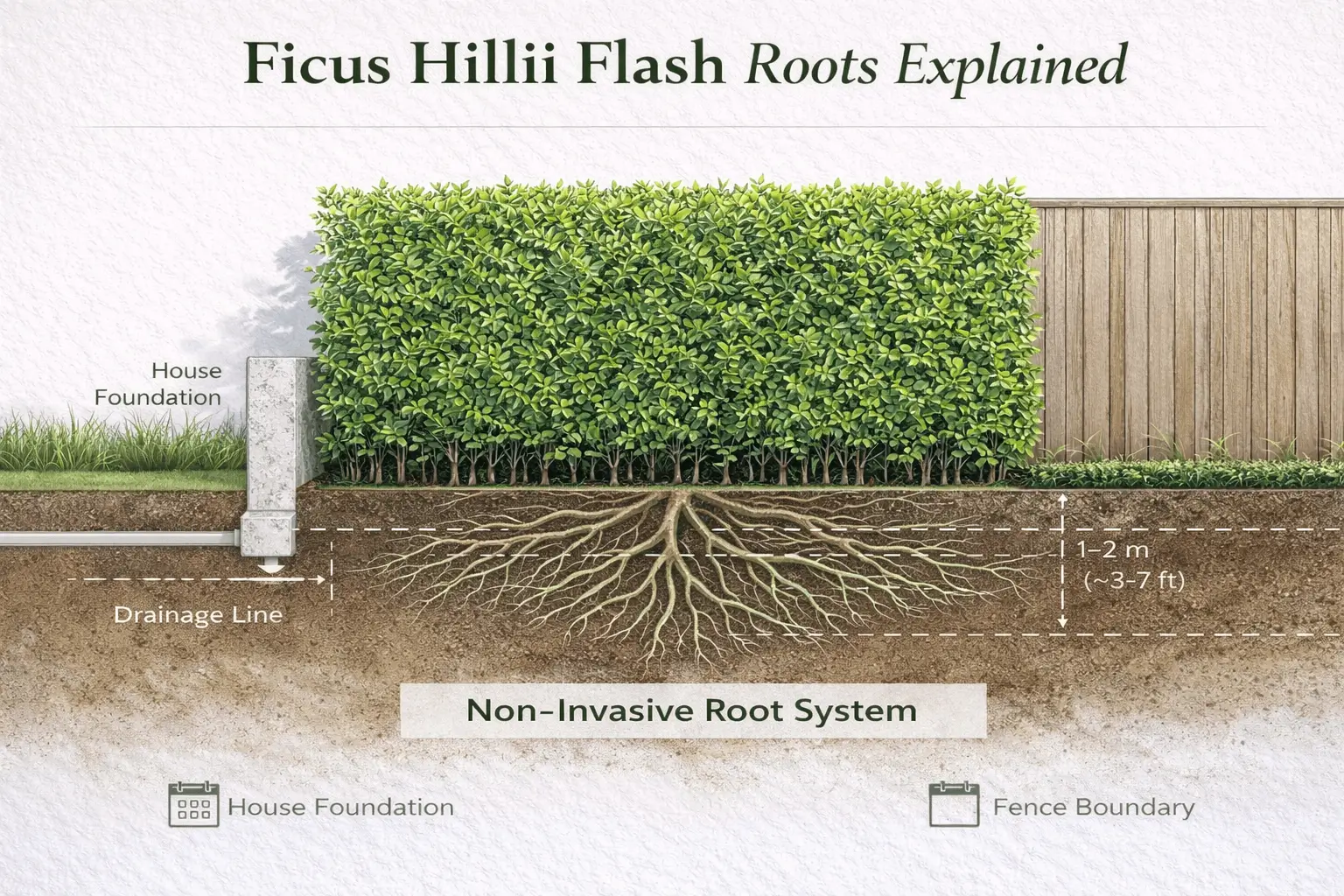
Ficus hillii flash roots are less invasive than older ficus varieties. They are designed for residential landscaping.
Key points:
- Non-aggressive compared to traditional figs
- Suitable near fences
- Recommended planting distance: 1–2 meters from walls or foundations
Proper spacing reduces structural risk.
Common Ficus Hillii Flash Problems That Affect Growth
Yellowing Leaves
Causes include:
- Overwatering
- Poor drainage
- Nutrient imbalance
Slow Growth Issues
Slow development may result from:
- Lack of sunlight
- Compacted soil
- Root restriction
Pest & Environmental Stress
Common ficus hillii flash problems include:
- Overwatering
- Poor drainage
- Nutrient deficiencies
- Occasional scale or aphid infestations
Addressing these quickly restores growth momentum.
Growth Rate in Containers vs Ground Planting
Starting With 40cm Plants
When purchasing ficus hillii flash 40cm plants:
- Initial phase focuses on root establishment
- First 3–6 months show moderate top growth
- Hedge height (2 meters) typically reached in 3–5 years
Ground vs Pot Growth Differences
Ground planting advantages:
- Faster root spread
- Quicker vertical growth
Container growth:
- Restricted root system
- Slower height increase
- Requires more frequent feeding
Where to Buy & Plant Size Considerations
Plants are commonly available through large garden centers such as ficus hillii flash bunnings or ficus plants bunnings.
Plant Sizes Available
Typical options include:
- Standard ficus
- Small nursery plants
- Mature hedge plants
Choosing Healthy Plants for Faster Growth
Select plants with:
- Deep green leaves
- Strong central stem
- No root-bound signs
- Even branching structure
How to Encourage Faster Ficus Hillii Flash Growth
Fertilizer Schedule
- Apply slow-release fertilizer in early spring
- Supplement with balanced liquid feed during active growth
Pruning for Density
- Trim lightly and regularly
- Avoid heavy cuts in winter
Watering Strategy
- Deep watering during hot months
- Reduce watering in cooler seasons
Sunlight Requirements
- Full sun preferred
- Minimum 6 hours daily
Conclusion — Is Ficus Hillii Flash a Fast Grower?
The ficus hillii flash growth rate of 30–60 cm per year makes it a reliable medium-to-fast growing hedge plant. It delivers dense screening, manageable height with pruning, and controlled root behavior. Ideal for privacy screens, it performs best in warm climates with full sun and proper care.
If you’re planning a hedge, understanding the ficus hillii flash growth rate helps you set realistic expectations and create a long-lasting privacy screen.
Read Also: 7+ Powerful Facts About Crepe Myrtle Tree Roots
FAQs
1. What is the ficus hillii flash growth rate per year?
It typically grows 30–60 cm per year under normal conditions, with faster growth in warm climates.
2. Does ficus hillii flash grow slower in winter?
Yes. Growth slows significantly in winter and may become semi-dormant in cooler regions.
3. How tall does a full grown ficus hillii flash get?
Untrimmed, it can reach 6–10 meters. As a hedge, it is usually maintained between 2–4 meters.
4. Are ficus hillii flash roots invasive?
They are less invasive than older ficus varieties and suitable for residential hedging when planted correctly.
5. How long does it take for ficus flash hedge to establish?
A 40 cm starter plant may take 3–5 years to reach typical hedge height, depending on conditions.
6. What problems can slow down ficus hillii flash growth?
Overwatering, poor drainage, nutrient deficiencies, and lack of sunlight are the most common causes.