
Introduction
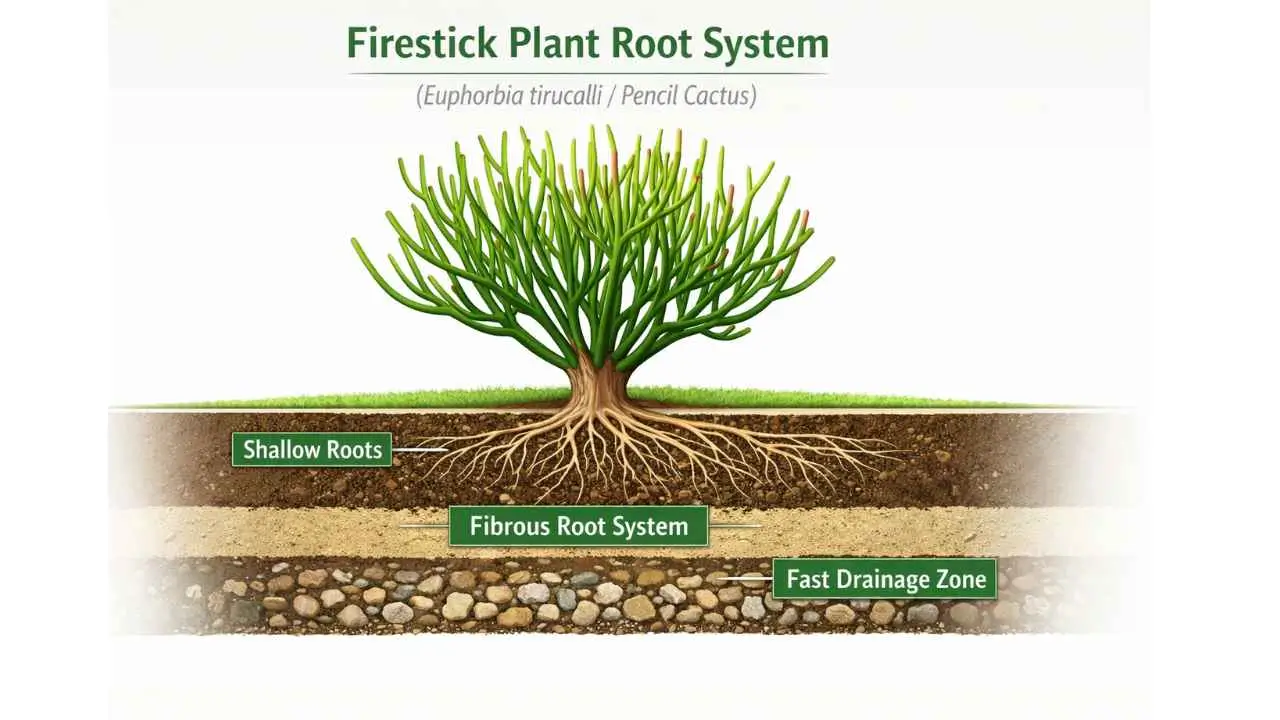
Understanding the firestick plant root system is essential for anyone growing this striking succulent indoors or outdoors. The firestick plant roots, also known as the euphorbia tirucalli root system, play a direct role in how well the plant anchors itself, absorbs water, and stays healthy over time. Like many succulents, pencil cactus roots are adapted to dry conditions, making the succulent root system efficient but sensitive to excess moisture and poor soil. Knowing how these roots grow helps gardeners choose the right pot size, soil mix, and watering routine. Proper root awareness also reduces common problems such as instability, slow growth, and root rot, ensuring long-term plant strength and balanced development. Firestick plant roots are shallow, fibrous, and designed for fast surface-level water absorption rather than deep anchoring. Their health depends heavily on drainage, soil texture, and controlled watering.
Firestick Plant Basics
The firestick plant (euphorbia tirucalli), commonly known as the pencil cactus, is a distinctive firestick succulent valued for its minimal care needs and bold appearance. This plant belongs to the Euphorbia genus and is widely grown as an ornamental succulent in both containers and landscapes. Its growth habit and survival strategy are closely linked to its root behavior, making basic plant knowledge essential before focusing on root development, planting methods, or long-term care.
What Is the Firestick Plant?
Euphorbia tirucalli is a well-known succulent plant type characterized by smooth, pencil-thin stems and a leafless appearance for most of the year. This firestick plant overview highlights a drought-tolerant species adapted to warm, dry environments. The pencil cactus plant stores moisture within its stems rather than relying on deep roots, which explains its preference for light watering and fast-draining soil. Its succulent nature allows it to survive in challenging conditions where many other plants struggle.
Physical Characteristics Related to Roots
The firestick plant structure is designed to work efficiently with a compact root system. Its upright stems depend on a strong but shallow stem support system, where stability comes from balanced growth rather than deep anchoring. Proper root-to-stem balance is crucial, as excessive top growth without healthy roots can lead to leaning or poor establishment. This succulent adaptation allows the plant to conserve energy, manage water efficiently, and maintain structural support even in limited soil conditions.
Understanding the Firestick Plant Root System
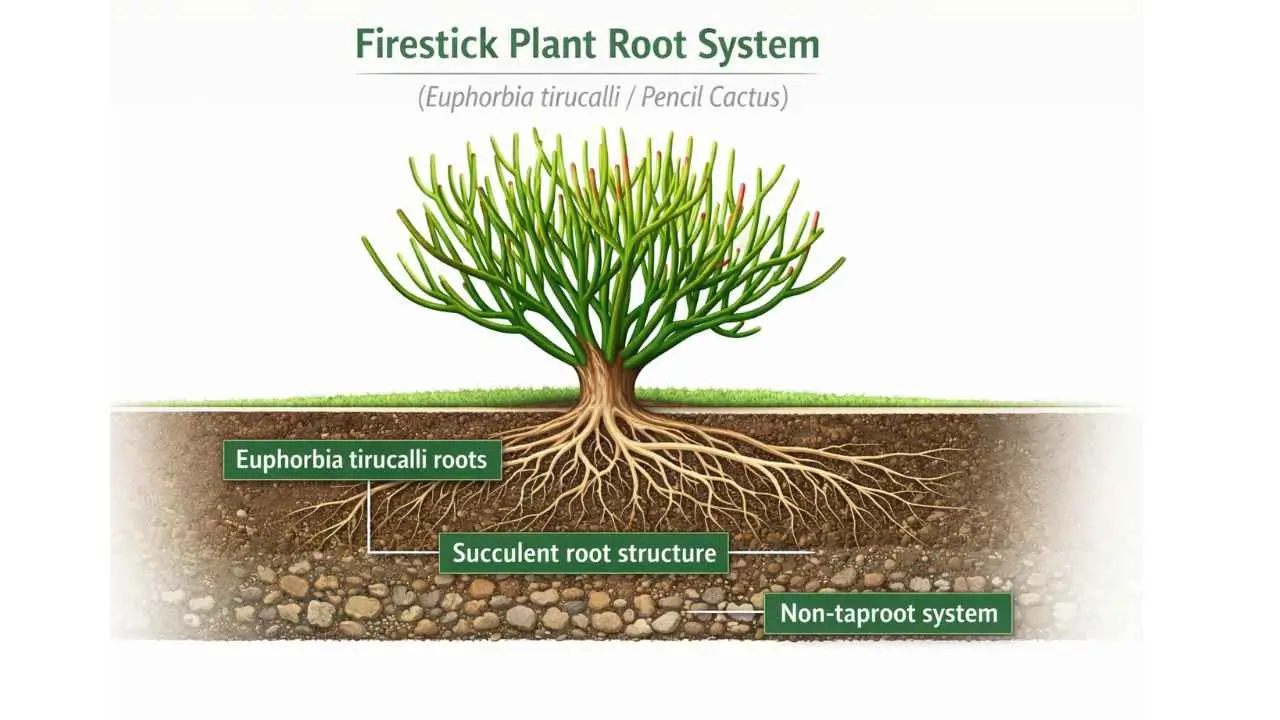
The firestick plant root system is specially adapted to support the plant’s succulent nature and drought tolerance. Unlike plants that rely on deep anchoring, euphorbia tirucalli roots are designed for efficiency near the soil surface. This succulent root structure allows the plant to absorb moisture quickly after watering or rainfall while avoiding prolonged exposure to wet soil, which can damage root health. Understanding how this root system functions helps ensure proper planting depth, soil choice, and watering practices.
| Feature | Detail |
|---|---|
| Root Type | Fibrous (Non-taproot) |
| Root Depth | Shallow |
| Spread | Horizontal / Surface-level |
| Invasive? | No |
| Main Risk | Root rot from overwatering |
| Best Soil | Fast-draining cactus mix |
Type of Root System
The firestick plant develops a fibrous root system rather than a single dominant root. This shallow root system consists of fine, branching spreading roots that extend outward instead of downward. As a non-taproot system, it does not seek deep water reserves, making it well suited to arid environments and container growing. This root type supports quick water uptake and adapts easily to limited soil volumes when properly drained.
Root behavior can vary significantly between plants, and understanding structures like the crepe myrtle root system helps compare how different species manage stability and growth.
Root Growth Pattern
Firestick plants exhibit horizontal root growth, with most roots remaining close to the soil surface. These surface-level roots expand gradually to stabilize the plant and access moisture efficiently. The natural root expansion pattern favors width over depth, which explains why wide containers and proper spacing in the ground are more beneficial than deep planting. This growth habit reinforces the importance of well-draining soil and controlled watering to maintain healthy roots.
Firestick Plant Root Depth and Spread
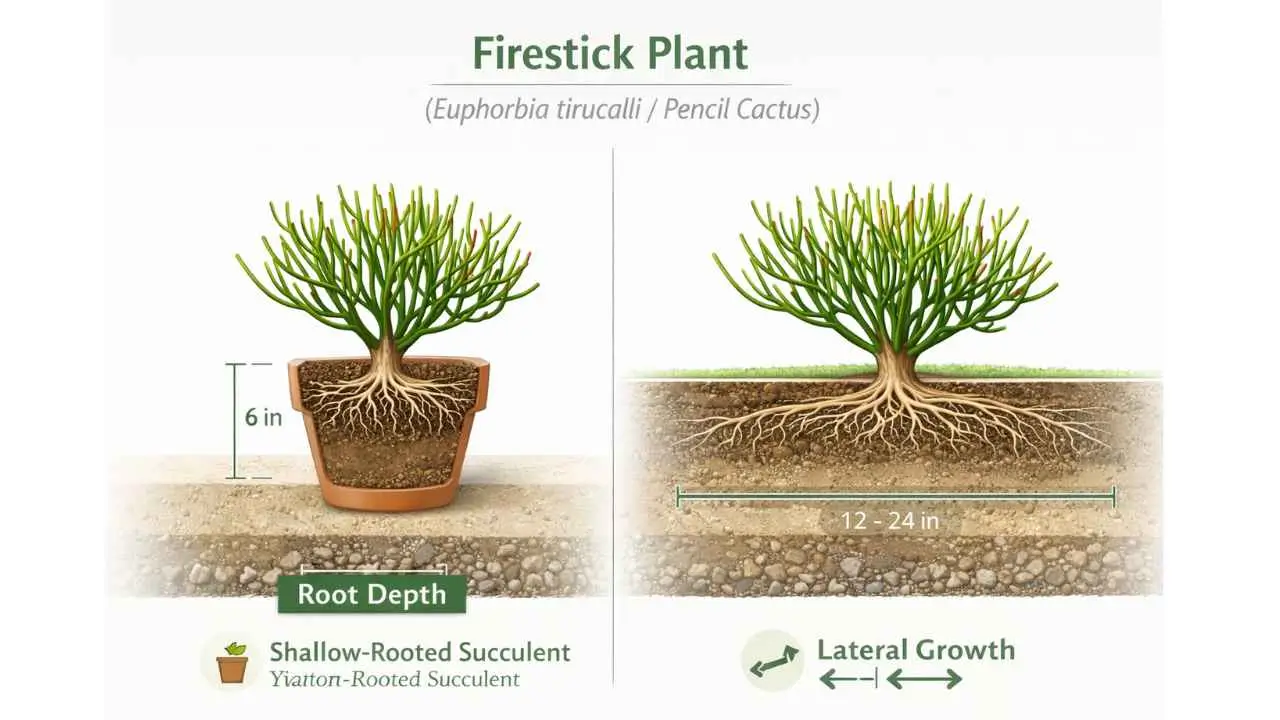
Understanding firestick plant root depth and firestick plant root spread is important for proper planting, spacing, and long-term stability. This plant relies more on lateral root development than deep penetration into the soil. Its root behavior influences container choice, in-ground placement, and how well the plant stays upright as it grows taller.
How Deep Do Firestick Plant Roots Grow?
The root depth of firestick plant remains relatively shallow compared to many shrubs and trees. As a shallow-rooted succulent, it concentrates most of its roots near the soil surface where moisture is more accessible. When grown in containers, container vs ground roots show limited downward growth, adapting to the pot’s depth. In the ground, roots may extend slightly deeper but still remain close to the surface, prioritizing spread over depth for efficient water uptake.
Root Spread and Stability
Although shallow, the roots play a key role in plant stability through wide lateral growth. This outward spread improves root anchoring, helping the plant maintain balance as stems elongate. A well-developed root system enhances wind resistance, especially when the plant is properly spaced and planted in firm, well-draining soil. In landscapes, adequate root spread contributes to overall landscape stability, reducing the risk of leaning or uprooting in exposed areas.
Best Soil for a Healthy Firestick Plant Root System
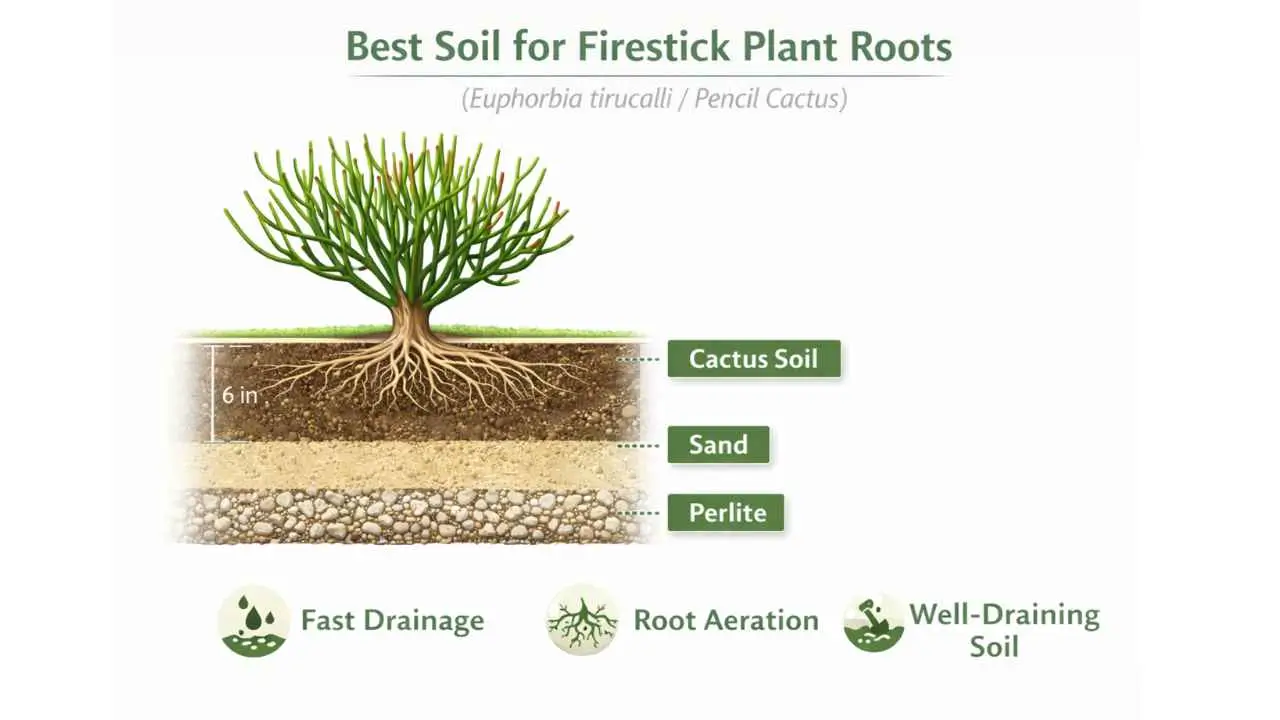
Choosing the best soil for firestick plant growth is essential for protecting roots and preventing moisture-related problems. A proper firestick plant soil mix supports the plant’s shallow root structure and allows excess water to drain quickly. Because this succulent is sensitive to standing moisture, well-draining soil is the foundation of a healthy root system and long-term plant success. These soil principles also align with broader succulent care strategies explained in our complete Gardening & Plant Care Guide.
Soil Texture and Drainage
The ideal soil combines cactus soil with a sandy soil mix to create fast-draining soil that prevents water from pooling around the roots. Coarse particles improve root aeration, allowing air to circulate freely and reducing the risk of rot. This loose texture supports healthy root expansion while ensuring moisture passes through the soil without lingering.
Soil pH and Aeration
Maintaining the correct soil pH for succulents helps roots absorb nutrients efficiently. Slightly acidic to neutral soil promotes balanced growth and strong root development. Good oxygen flow to roots is equally important, as compacted soil restricts airflow and limits root function. Avoiding soil compaction keeps the root zone active, healthy, and resilient over time.
Water Requirements and Root Health
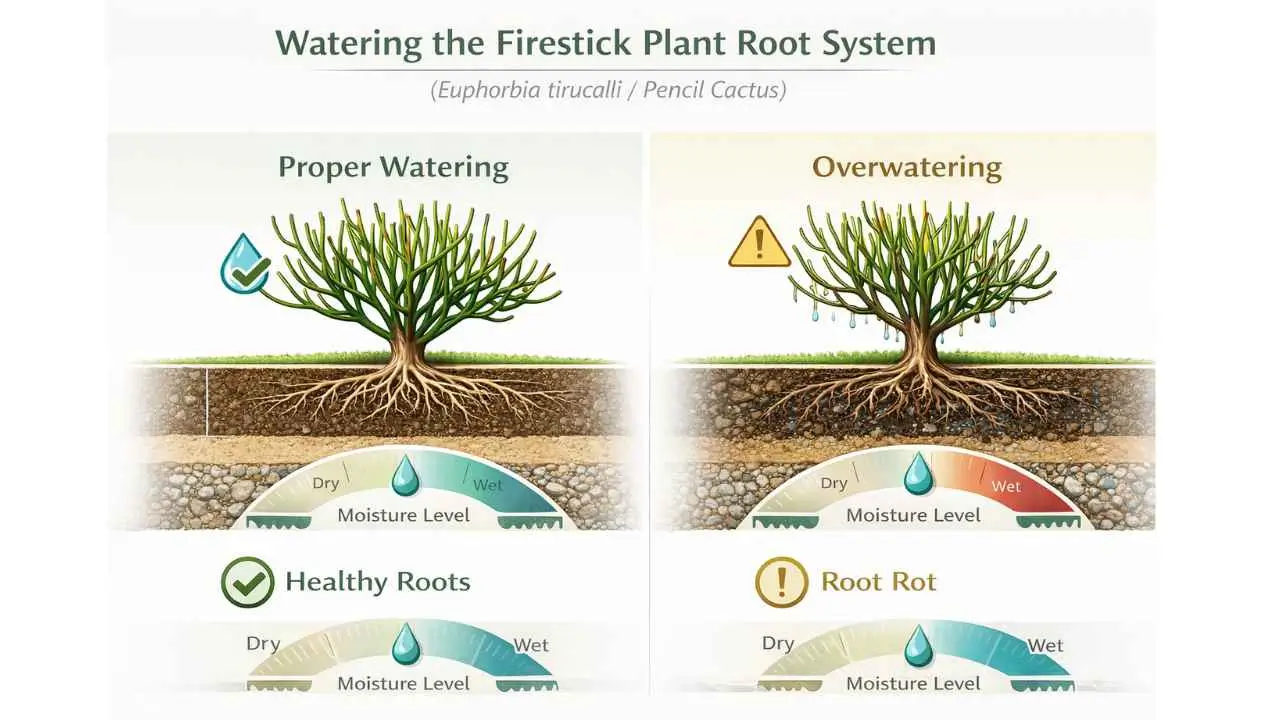
Proper firestick plant watering is directly linked to long-term root health. Understanding the plant’s water requirements helps prevent common issues that weaken the root system and affect overall growth. Because this succulent stores moisture in its stems, roots perform best when watering is controlled and soil is allowed to dry between watering cycles.
How Watering Affects the Root System
Excess moisture is the leading cause of overwatering root rot, as constantly wet soil deprives roots of oxygen. On the other hand, underwatering stress can limit root function and slow nutrient uptake. Effective moisture control involves watering deeply but infrequently, allowing the soil to drain completely and dry out before the next watering. This balance supports strong, functional roots and steady plant growth.
Signs of Root Stress
Early root rot symptoms often include soft or discolored stems near the base and a declining plant appearance. Weak roots may fail to support the plant, leading to slow plant growth and poor stability. In advanced cases, a leaning firestick plant can indicate compromised roots that are no longer anchoring the plant effectively. Recognizing these signs early allows for corrective action before permanent damage occurs.
irestick Plant Root System in Pots vs Ground
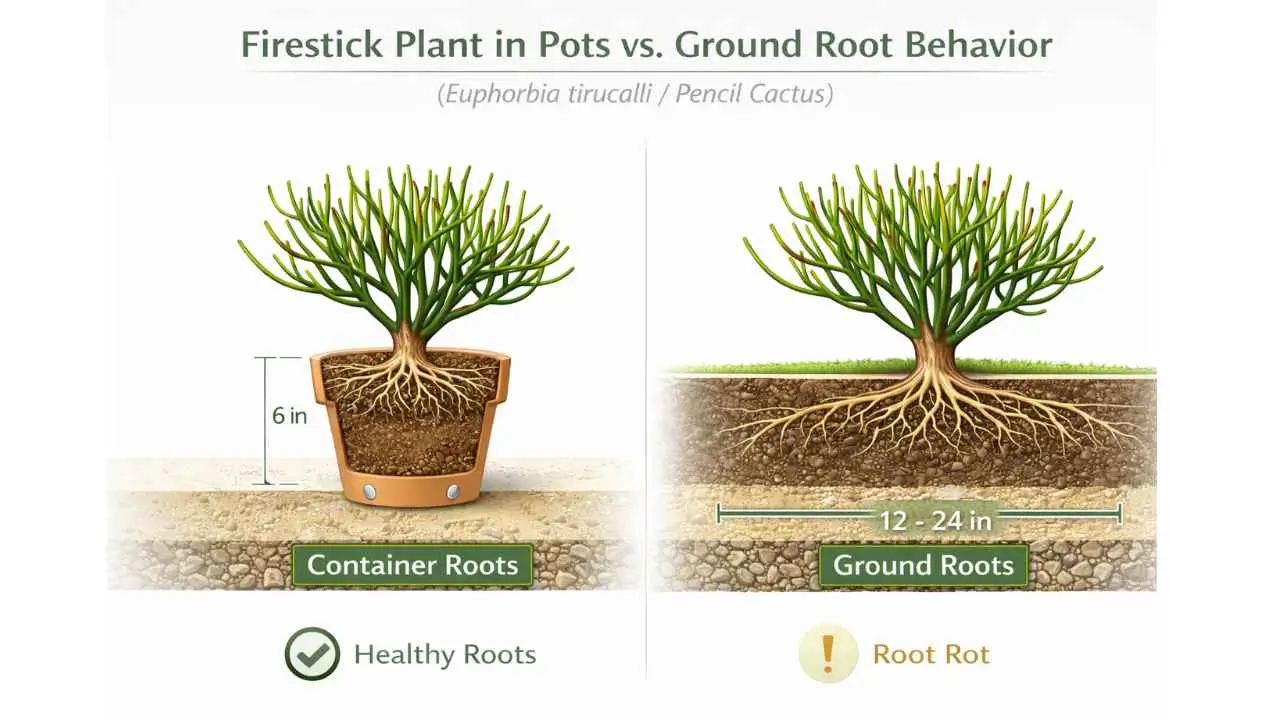
The behavior of roots differs noticeably between a firestick plant in pots and a firestick plant in ground. Growing conditions, available space, and soil volume all influence how the root system develops. Understanding these differences helps gardeners choose the right planting method based on space, climate, and long-term maintenance goals.
Container Root Behavior
When grown in containers, careful pot size selection is essential to support healthy root growth. Pots must include adequate drainage holes to prevent water buildup around the roots. Limited space can lead to container root restriction, which may slow growth if the plant becomes root-bound. Using a wide, well-draining container allows roots to spread laterally while maintaining proper moisture control.
In-Ground Root Expansion
In open soil, root expansion outdoors allows the firestick plant to establish a broader support system. Proper plant spacing ensures roots can spread without competition, improving stability and nutrient access. These landscaping roots adapt well to outdoor environments when planted in well-draining soil, contributing to a stronger and more balanced plant structure over time.
Root Care and Maintenance
Proper firestick plant care focuses heavily on consistent root maintenance, as roots determine overall plant strength and longevity. Maintaining a healthy root system requires attention to soil conditions, watering habits, and nutrient management. When roots are protected and supported, the plant shows stronger growth and improved stability.
Preventing Root Rot
Effective root rot prevention starts with drainage improvement through the use of well-draining soil and containers with adequate holes. Equally important is watering control, allowing the soil to dry out between watering sessions. Avoiding constant moisture around the roots reduces fungal growth and protects the root structure from decay.
Fertilizer and Root Support
Minimal feeding is best for firestick plants, making light fertilizer use the safest approach. Overfeeding can damage roots, so root burn prevention depends on diluted fertilizers applied sparingly. Occasional succulent feeding during the active growing season provides enough nutrients to support roots without overstimulation or stress.
Propagation and Root Development
Successful firestick plant propagation depends largely on how well roots develop during the early stages. Growing firestick plant roots from cuttings is the most common and effective method, but it requires proper handling and environmental control to ensure healthy root formation and long-term plant establishment.
Firestick Plant Root Formation From Cuttings
Propagation begins with rooting cuttings taken from healthy stems. After cutting, the stem must be left undisturbed to allow proper callus formation, which protects the plant from infection and moisture damage. Once callused, root initiation occurs when the cutting is placed in well-draining soil, allowing new roots to emerge gradually without excess moisture stress.
Best Conditions for Strong Root Growth
Maintaining the ideal temperature supports faster and more reliable root development, as extreme cold or heat can delay growth. Consistent soil moisture balance is essential—soil should remain lightly moist but never wet. Bright, indirect light conditions encourage root development while preventing stress on newly forming roots, helping young plants establish successfully.
Landscaping Uses Based on Root System
The root characteristics of the firestick plant make it highly adaptable for firestick plant landscaping in a variety of settings. As one of many shallow-rooted plants, it fits well in areas where deep-rooted species may struggle. Its controlled root spread and low water needs support practical and visually appealing landscape designs.
Firestick Plant for Landscaping
Firestick plants are commonly used as border plants due to their upright growth and manageable root system. They also function well as accent plants, adding structure and contrast without aggressive root expansion. Their natural tolerance to dry conditions makes them ideal for drought-tolerant landscaping, especially in regions with limited rainfall or water restrictions.
Garden Themes Compatibility
The firestick plant integrates easily into xeriscape gardens, where water conservation is a priority. Its low care requirements suit low-maintenance gardens that focus on durability and simplicity. Within succulent garden design, the firestick plant complements other succulents, sharing similar soil, light, and watering needs while maintaining balanced root behavior.
Wildlife & Ecological Considerations
The firestick plant offers several ecological benefits that make it suitable for environmentally conscious gardens. Its shallow but spreading roots contribute to soil erosion control by stabilizing the topsoil, especially on slopes or dry landscapes. Because the plant requires low water usage, it supports water conservation efforts and reduces strain on irrigation systems. These qualities make the firestick plant a practical choice for sustainable landscaping, where reduced resource use and long-term environmental balance are key priorities.
Common Root-Related Problems
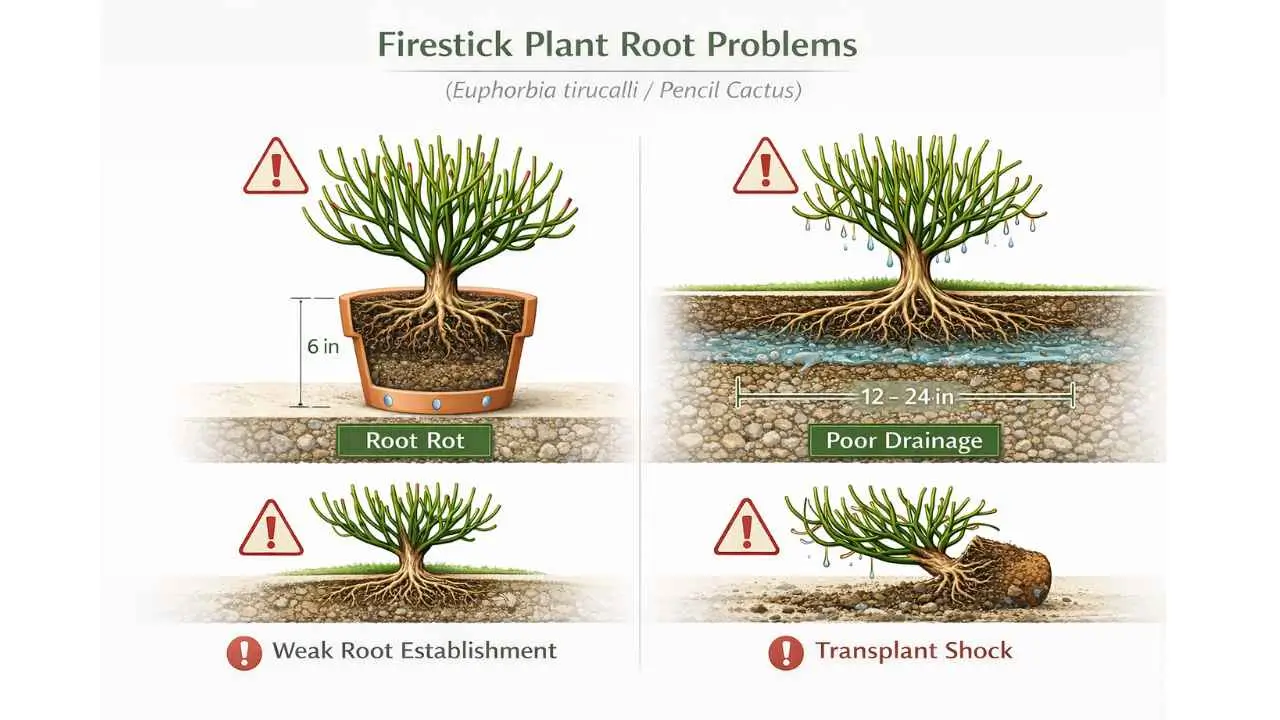
Understanding common firestick plant problems related to roots helps prevent long-term damage and plant failure. Most root system issues develop due to improper soil conditions, watering mistakes, or stress during planting. Early identification allows corrective action before root damage becomes severe.
Root Rot
One of the most serious root rot causes is prolonged exposure to wet soil. This encourages fungal root disease, which attacks weakened roots and spreads quickly. According to the University of Wisconsin Horticulture Extension, root rot occurs when roots remain wet and starved of oxygen, causing them to turn soft and brown and slowing growth. Poor drainage is the primary contributing factor, allowing moisture to remain around the root zone and limiting oxygen availability, ultimately leading to root decay.
Poor Root Establishment
Transplant shock often occurs when a firestick plant is moved without proper acclimation or soil preparation. This stress can result in weak root growth, slowing overall plant development. A soil mismatch, such as dense or moisture-retaining soil, further restricts root establishment and prevents the plant from adapting successfully to its new environment.
Conclusion
This firestick plant root system summary highlights how closely root health is tied to overall plant performance. The firestick plant relies on a shallow, spreading root structure that functions best in well-draining soil and controlled moisture conditions. Maintaining healthy roots healthy plant growth requires attention to planting methods, soil choice, and consistent care. By providing proper soil and watering, gardeners can prevent common root problems, support strong establishment, and ensure long-term stability and vitality of the firestick plant. For another drought-tolerant plant with strong structural growth habits, see our guide on Dragon Plant Benefits for indoor and outdoor care.
FAQs
What type of root system does a firestick plant have?
The firestick plant develops a fibrous, non-taproot system. The euphorbia tirucalli root system consists of fine, spreading roots that grow close to the soil surface, allowing quick water absorption without deep penetration.
Can you root a firestick plant in water?
(Not recommended due to rot risk.)
How deep do firestick plant roots grow?
Firestick plant roots remain relatively shallow. Most roots stay near the topsoil, making the plant well suited for containers and shallow planting areas rather than deep ground beds.
Are firestick plant roots shallow or invasive?
Firestick plants have shallow roots, but they are not invasive. The roots spread outward gently for stability and moisture access without aggressively competing with nearby plants.
How does overwatering affect the firestick plant root system?
Overwatering saturates the soil and reduces oxygen around the roots, leading to rot and decay. Excess moisture is one of the most common causes of damage to the euphorbia tirucalli root system.
Can firestick plants grow well in containers with limited root space?
Yes, firestick plants adapt well to containers when drainage is adequate. In pot vs ground planting, containers work effectively as long as soil drains quickly and roots are not left sitting in moisture.

Written by the LeafyHeaven Editorial Team
LeafyHeaven shares practical gardening tips and simple plant care guides to help you grow, nurture, and enjoy your plants with ease. Our goal is to make gardening feel natural, approachable, and rewarding for everyone.


[…] Read Also: 7+ Shocking Facts About Firestick Plant Root System […]
[…] how roots behave in different conditions, such as in the firestick plant root system, can help prevent common indoor plant […]