
Introduction
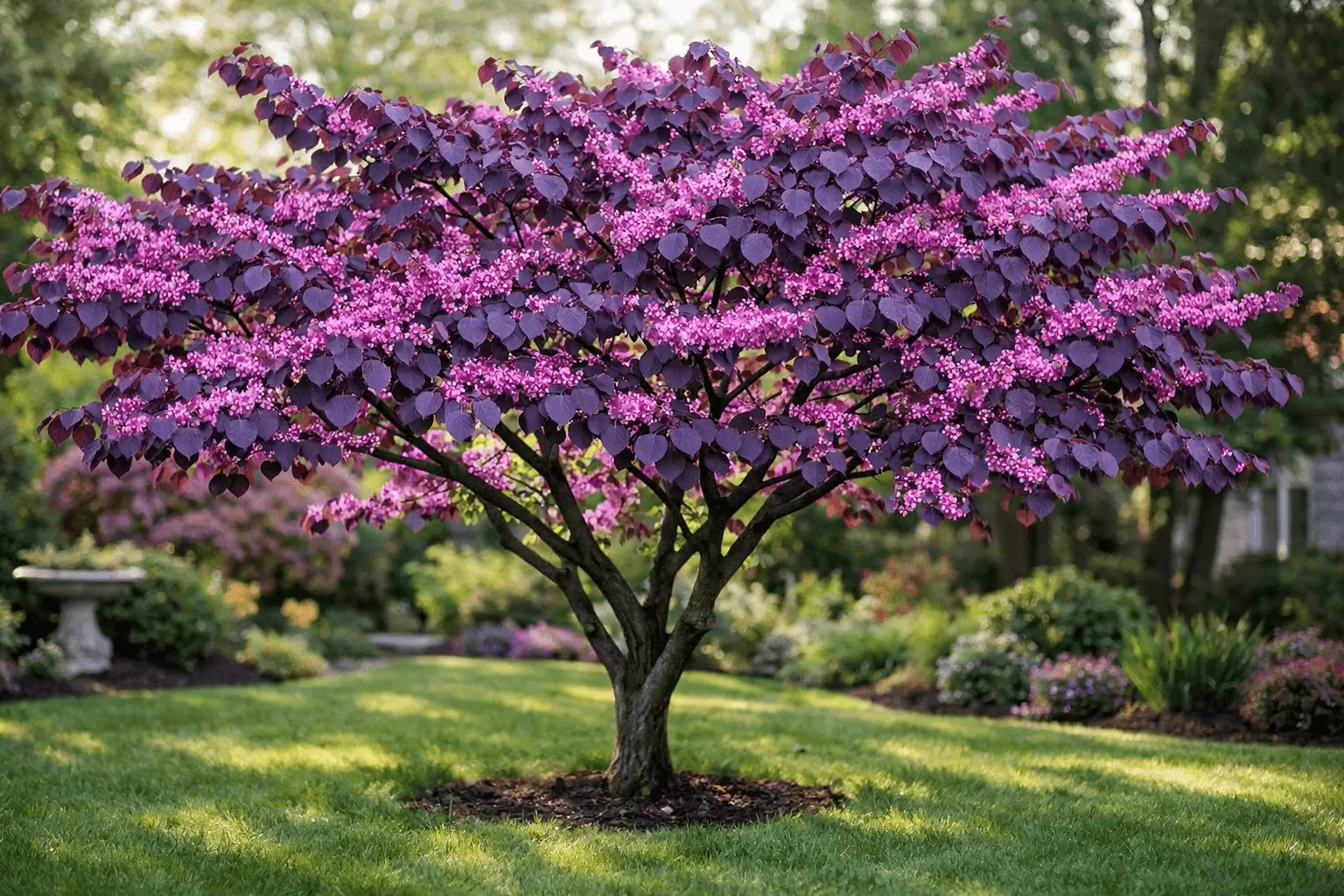
The forest pansy tree is a striking ornamental tree valued for its deep purple foliage and vibrant spring blossoms. Botanically known as Cercis canadensis ‘Forest Pansy’, this cultivar of the eastern redbud offers dramatic seasonal color and compact structure. The cercis forest pansy tree, often referred to as the redbud forest pansy tree or red forest pansy tree, is widely planted in residential landscapes for its aesthetic appeal. This guide covers essential topics including forest pansy tree care, forest pansy tree growth rate, forest pansy tree size, forest pansy tree problems, and its suitability for UK, Australia, and NZ climates.
What Is the Forest Pansy Tree? (Botanical Overview)
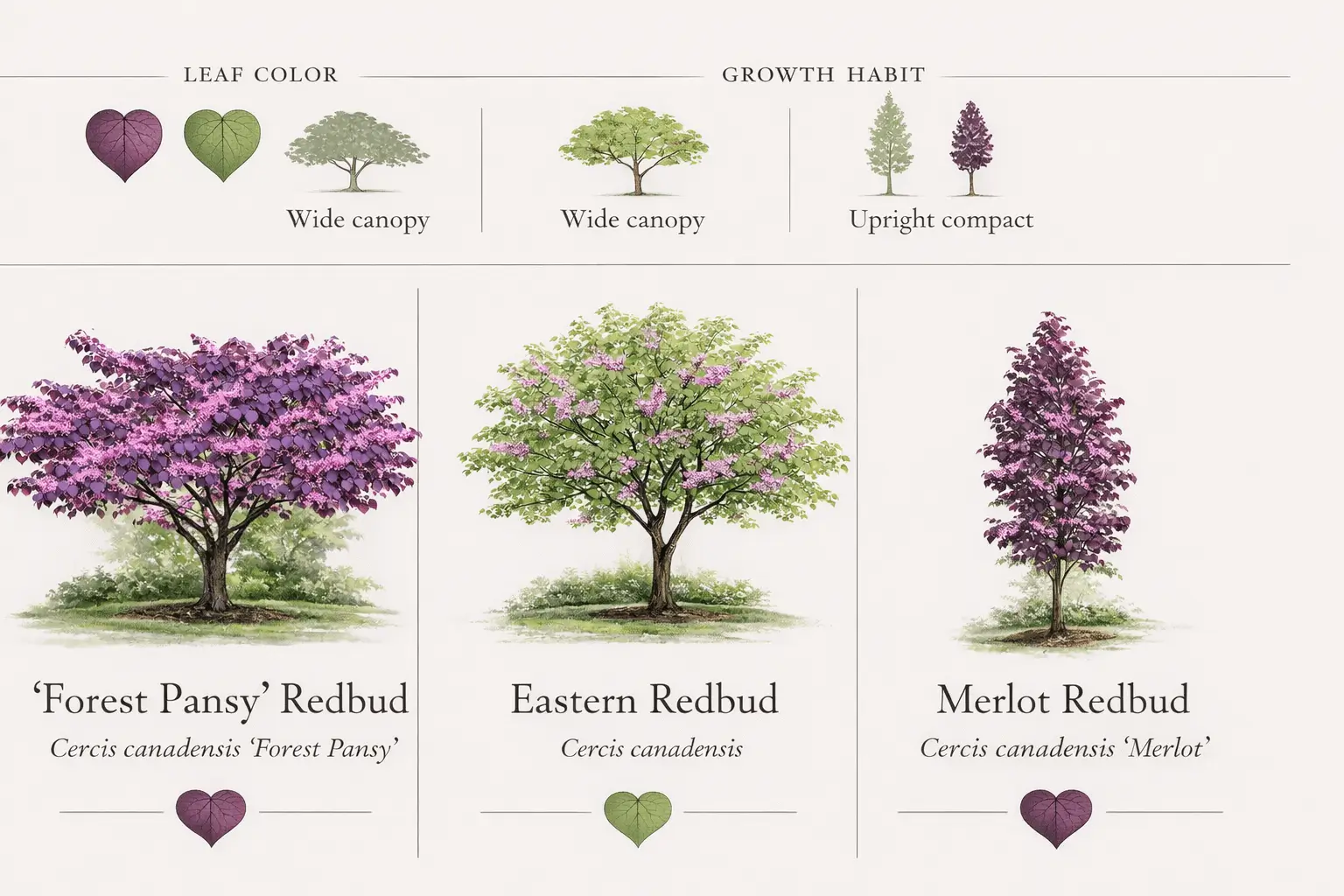
Scientific Name & Classification
The Cercis canadensis forest pansy tree belongs to the Fabaceae family and is a cultivated variety of the eastern redbud. It is a selected cultivar of the eastern redbud species, Cercis canadensis, a North American native ornamental tree. It is also commonly known as:
- forest pansy redbud tree
- redbud forest pansy tree
- cercis tree forest pansy
This deciduous ornamental tree is recognized for its heart-shaped leaves that emerge burgundy-purple before maturing to deep plum shades.
How It Differs from Other Redbuds
The cercis forest pansy differs from other redbud cultivars in foliage color and growth habit.
Comparison with:
- Cercis canadensis – Standard green leaves instead of purple.
- Cercis canadensis ‘Merlot’ – Darker foliage with improved heat tolerance.
- Cercis ‘Merlot’ – More compact and upright form.
- Cercis canadensis (Merlot eastern redbud reference) – Smaller leaves and denser branching.
Key Differences:
- Forest Pansy: Wide-spreading canopy, rich purple foliage.
- Merlot Redbud: More heat-resistant, tighter growth habit.
- Standard Eastern Redbud: Green leaves, faster adaptability.
Forest Pansy Tree Size and Mature Height
Mature Forest Pansy Tree Size
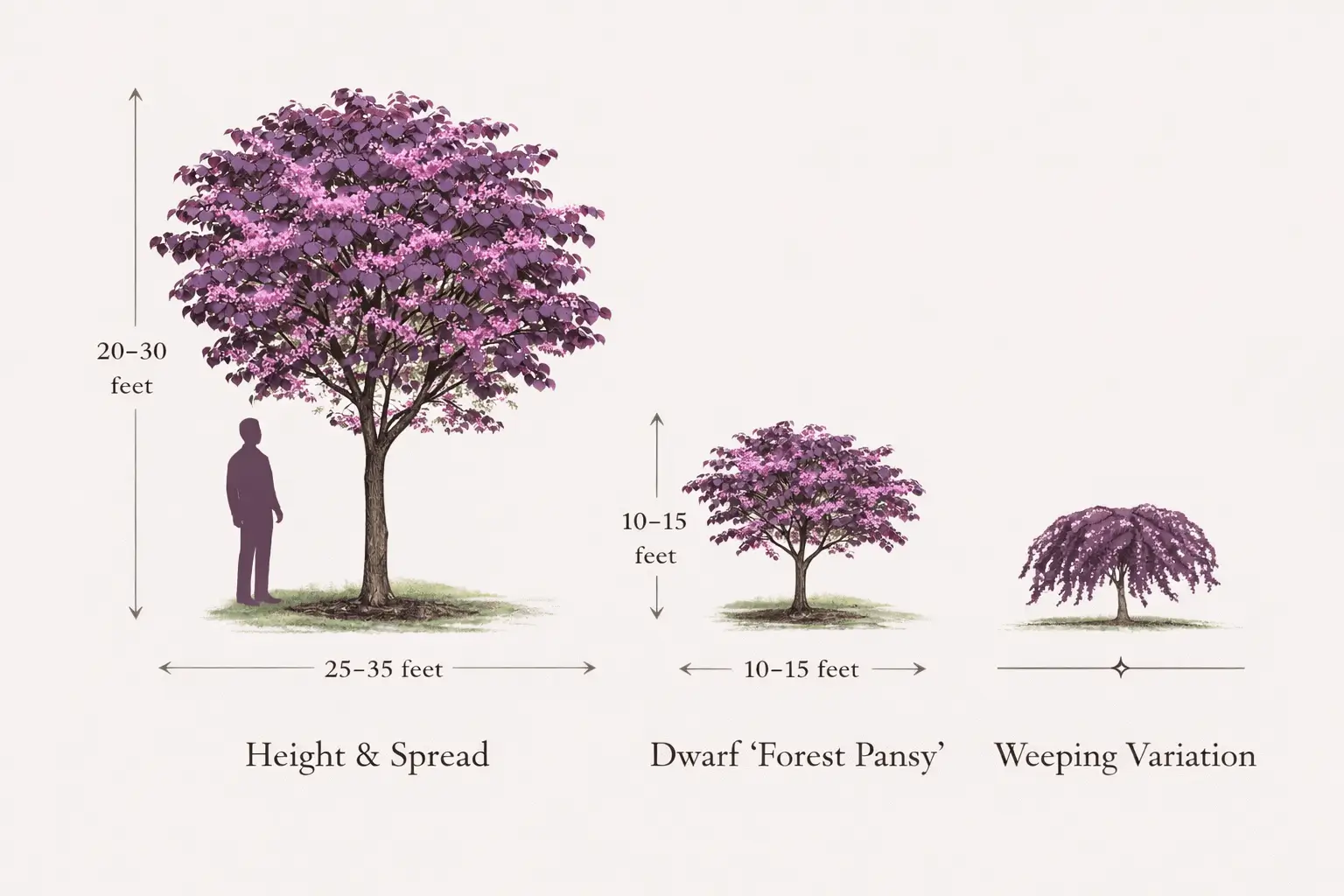
The forest pansy tree size at maturity typically reaches:
- Height: 20–30 feet
- Spread: 25–35 feet
Forest pansy redbud height varies depending on climate and soil conditions. Mature forest pansy tree dimensions create a broad, rounded canopy ideal for feature planting. The forest pansy redbud size makes it suitable for medium landscapes and urban gardens. If you’re comparing ornamental tree sizes for landscape planning, you may also find our guide on Full Grown Lilly Pilly Tree helpful for understanding mature height and canopy spread differences.
Dwarf Forest Pansy Tree Options
Dwarf forest pansy tree characteristics include:
- Reduced height (10–15 feet)
- Compact branching
- Ideal for small gardens
A dwarf variety is suitable where space is limited or where overhead clearance is restricted.
Weeping Forest Pansy Tree Variation
The weeping forest pansy tree form features arching, pendulous branches. This variation works well as a focal landscape specimen, particularly in contemporary garden designs.
Forest Pansy Tree Growth Rate
Average Annual Growth Rate
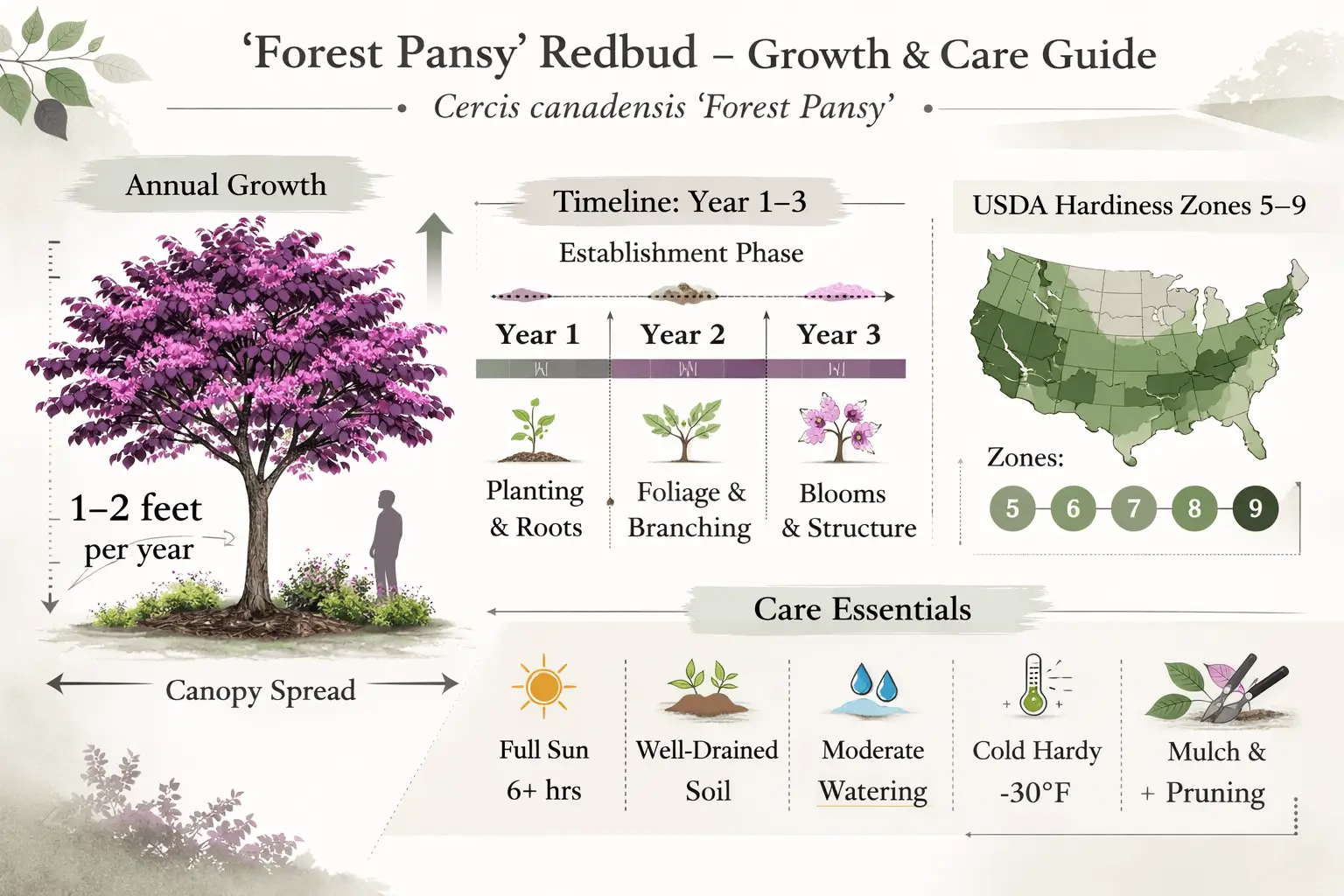
The forest pansy tree growth rate is moderate.
- Average growth: 1–2 feet per year
- Establishment period: 2–3 years
It establishes steadily when planted in suitable soil and climate conditions.
Factors Affecting Growth
The forest pansy tree zone generally aligns with USDA zones 5–9. Growth performance depends on:
- Soil quality – Well-drained, fertile soil promotes faster development.
- Sunlight exposure – Full sun enhances leaf color intensity.
- Climate conditions – Excessive heat may reduce vigor.
- Watering consistency – Regular moisture supports root establishment.
Forest Pansy Tree Care Guide
Soil Requirements
- Prefers well-drained soil
- Slightly acidic to neutral pH
- Avoid waterlogged conditions
Sunlight Needs
- Full sun improves purple foliage
- Partial shade tolerated in hotter regions
Watering Requirements
Establishment phase:
- Water regularly during first 1–2 years
Mature tree needs:
- Moderate watering during dry periods
Pruning Forest Pansy Tree
Pruning forest pansy tree is best done in late winter or immediately after flowering.
- Remove crossing branches
- Maintain structural balance
- Avoid heavy pruning
Growing Forest Pansy Tree in Pot
Forest pansy tree in pot cultivation is possible when:
- Using a container at least 24–30 inches wide
- Ensuring adequate drainage
- Allowing sufficient root space
Long-term growth in pots may restrict size and vigor. For a broader understanding of soil health, watering balance, and pruning fundamentals, refer to our comprehensive Gardening & Plant Care Guide for Thriving Plants.
Climate Suitability (UK, Australia, NZ & Beyond)
Forest Pansy Tree UK Conditions
The forest pansy tree UK climate suitability is strong in milder regions. It tolerates frost but prefers sheltered planting.
The Royal Horticultural Society often lists Cercis cultivars as suitable for temperate UK gardens.
Forest Pansy Tree Australia Conditions
Forest pansy tree Australia performance varies:
- Suitable for temperate zones
- Sensitive to extreme heat
Forest pansy tree problems Australia growers report include leaf scorch in hot summers. It performs better in:
- Forest pansy tree Perth (cooler microclimates)
- Forest pansy tree Adelaide (with partial shade protection)
Forest Pansy Tree NZ & Ireland
- Forest pansy tree NZ: Thrives in temperate coastal climates.
- Forest pansy tree Ireland: Performs well in moist, mild conditions.
For more compact ornamental options suited to local climates, explore our guide on Small Trees Australia Homes Love for Modern Gardens.
Forest Pansy Tree Problems
Common Pest & Disease Issues
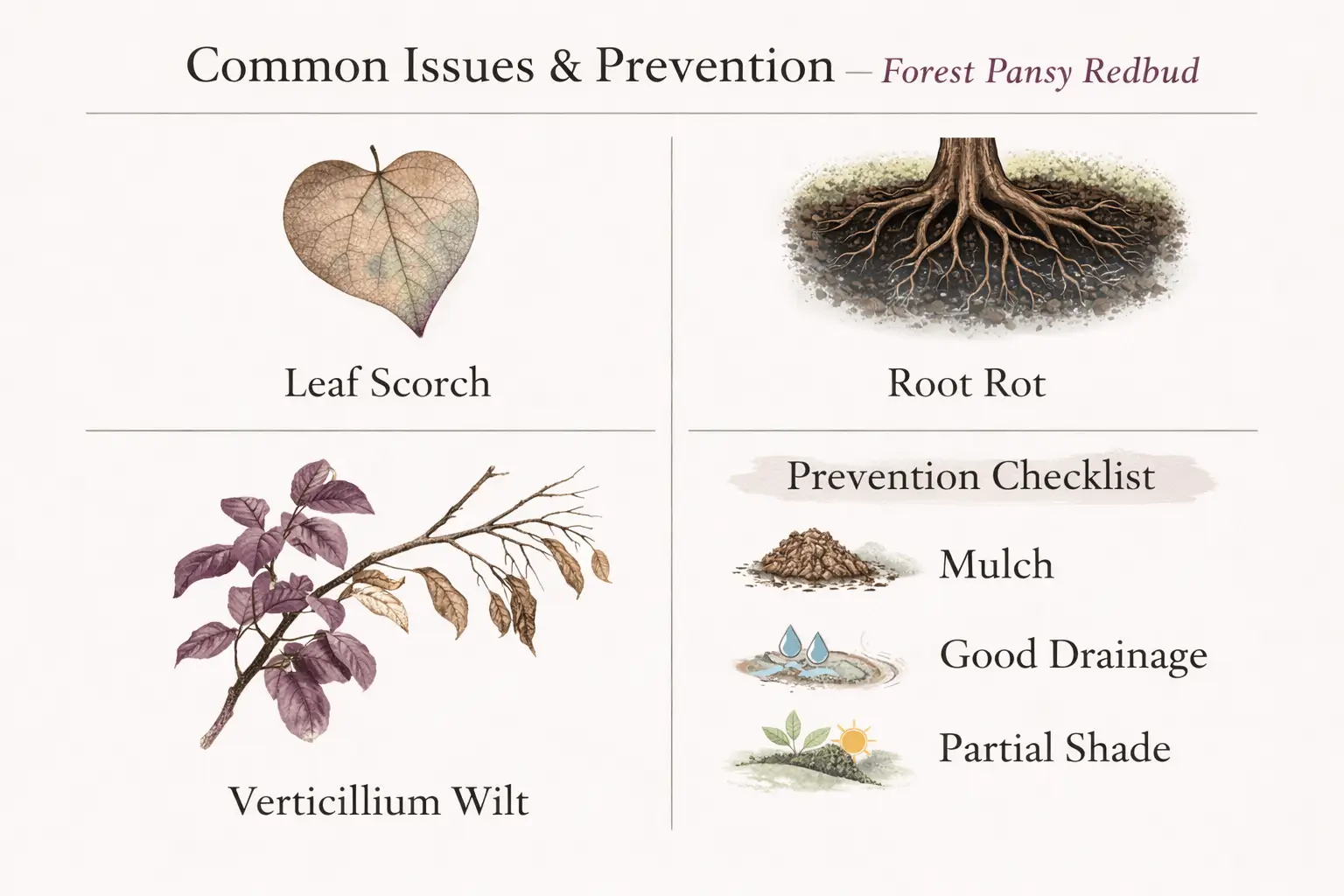
Common forest pansy tree problems include:
- Verticillium wilt
- Canker
- Aphids
Forest pansy redbud tree problems often stem from poor drainage or environmental stress.
Leaf Scorch & Fading Color
Causes:
- Excessive heat
- Drought stress
- High wind exposure
Prevention:
- Mulching
- Consistent watering
- Partial afternoon shade in hot climates
Root & Drainage Problems
Overwatering risks include:
- Root rot
- Fungal infection
- Reduced lifespan
Good drainage is essential for long-term health.
Forest Pansy Redbud Pros and Cons
Advantages
- Ornamental purple foliage
- Early spring pink blossoms
- Compact landscape size
Disadvantages
- Sensitive to extreme heat
- Moderate lifespan (20–30 years)
Understanding forest pansy redbud pros and cons helps determine suitability for specific climates.
Is the Forest Pansy Tree Right for Your Garden?
Best suited for:
- Medium-sized gardens
- Feature planting
- Urban landscapes
It works well as a specimen tree rather than a screening plant. In small yards, dwarf varieties are preferable. In larger landscapes, it serves as a color-accent focal tree.
Conclusion
The forest pansy tree offers ornamental value through vibrant foliage and spring flowering. Understanding forest pansy tree care, growth rate, size expectations, and common problems ensures successful cultivation. It performs best in temperate climates such as the UK, parts of Australia, NZ, and Ireland. Proper placement, well-drained soil, and moderate watering are essential for long-term health.
Consider your climate, soil type, and space before planting a forest pansy tree.
Frequently Asked Questions (FAQs)
How fast does a forest pansy tree grow?
The forest pansy tree growth rate averages 1–2 feet per year. Growth is moderate and improves with proper soil and sunlight conditions.
What is the mature size of a forest pansy tree?
Forest pansy tree size typically reaches 20–30 feet tall with a 25–35 foot spread. Forest pansy redbud height may vary by climate.
Can you grow a forest pansy tree in a pot?
Yes, forest pansy tree in pot cultivation is possible using large containers with excellent drainage, though long-term growth may be limited.
What are common forest pansy tree problems?
Forest pansy redbud tree problems include leaf scorch, root rot, verticillium wilt, and stress-related decline.
Is the forest pansy tree suitable for UK and Australia?
Forest pansy tree UK conditions are generally favorable in temperate areas. Forest pansy tree Australia suitability depends on avoiding extreme heat and ensuring partial shade in hotter regions.

Written by the LeafyHeaven Editorial Team
LeafyHeaven shares practical gardening tips and simple plant care guides to help you grow, nurture, and enjoy your plants with ease. Our goal is to make gardening feel natural, approachable, and rewarding for everyone.