
Introduction
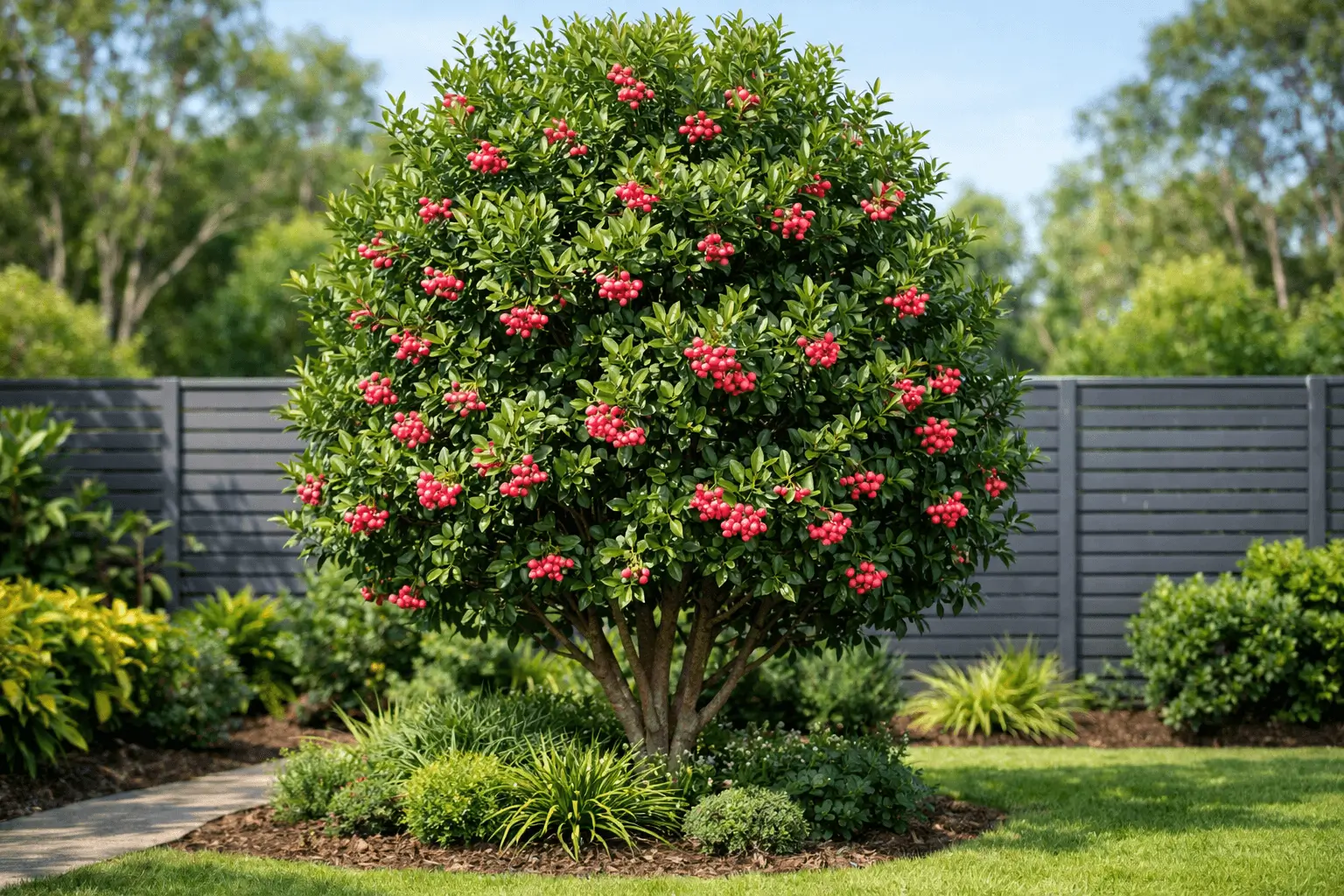
The full grown lilly pilly tree is a popular Australian evergreen valued for its lush foliage, vibrant berries, and versatility in landscaping. Known for its impressive lilly pilly height and adaptable lilly pilly size, it can grow into a large lilly pilly tree or be shaped into a compact hedge. A tall lilly pilly provides dense foliage ideal for screening, making it a top choice for privacy and boundary planting. In addition to its ornamental appeal, the plant produces edible lilly pilly fruit, often called lilly pilly berries. Homeowners choose this hardy native tree for hedging, privacy, wind protection, and year-round greenery.
How Big Does a Full Grown Lilly Pilly Tree Get?
Average Height and Spread at Maturity
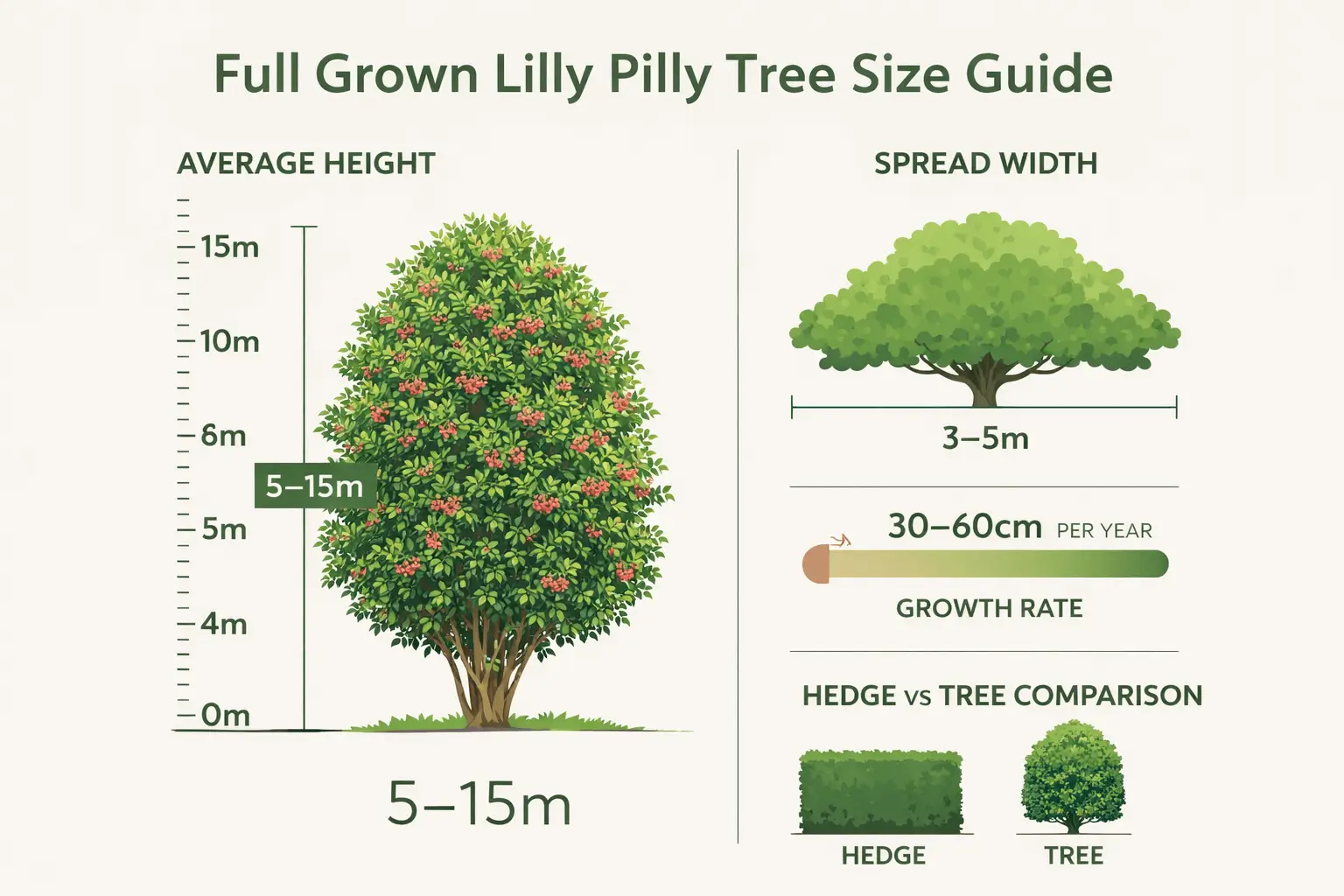
The mature lilly pilly tree height varies depending on variety and growing conditions. On average:
- Standard varieties reach 5–10 metres tall.
- Some large lilly pilly trees can exceed 15 metres.
- Spread ranges from 3–5 metres when grown naturally.
If you’re wondering how high do lilly pillies grow or how high do lilly pillys grow, the answer depends on the cultivar. The tallest lilly pilly species can become substantial shade trees, while compact types remain manageable. Proper pruning also influences overall height and shape.
Growth Rate and Maturity Timeline
A fast growing lilly pilly typically grows 30–60 cm per year under ideal conditions. The fastest growing lilly pilly varieties can establish quickly, especially when well-watered and planted in fertile soil.
If asking how fast do lilly pilly grow, most reach hedge height within 2–3 years. However:
- Hedge form = Regular pruning keeps plants compact.
- Tree form = Allowed to grow naturally to full height.
Final size depends heavily on variety and pruning style. A hedge-maintained plant remains controlled, while a tree-form specimen reaches its natural mature dimensions.
Popular Lilly Pilly Types and Varieties
Common and Tall Varieties
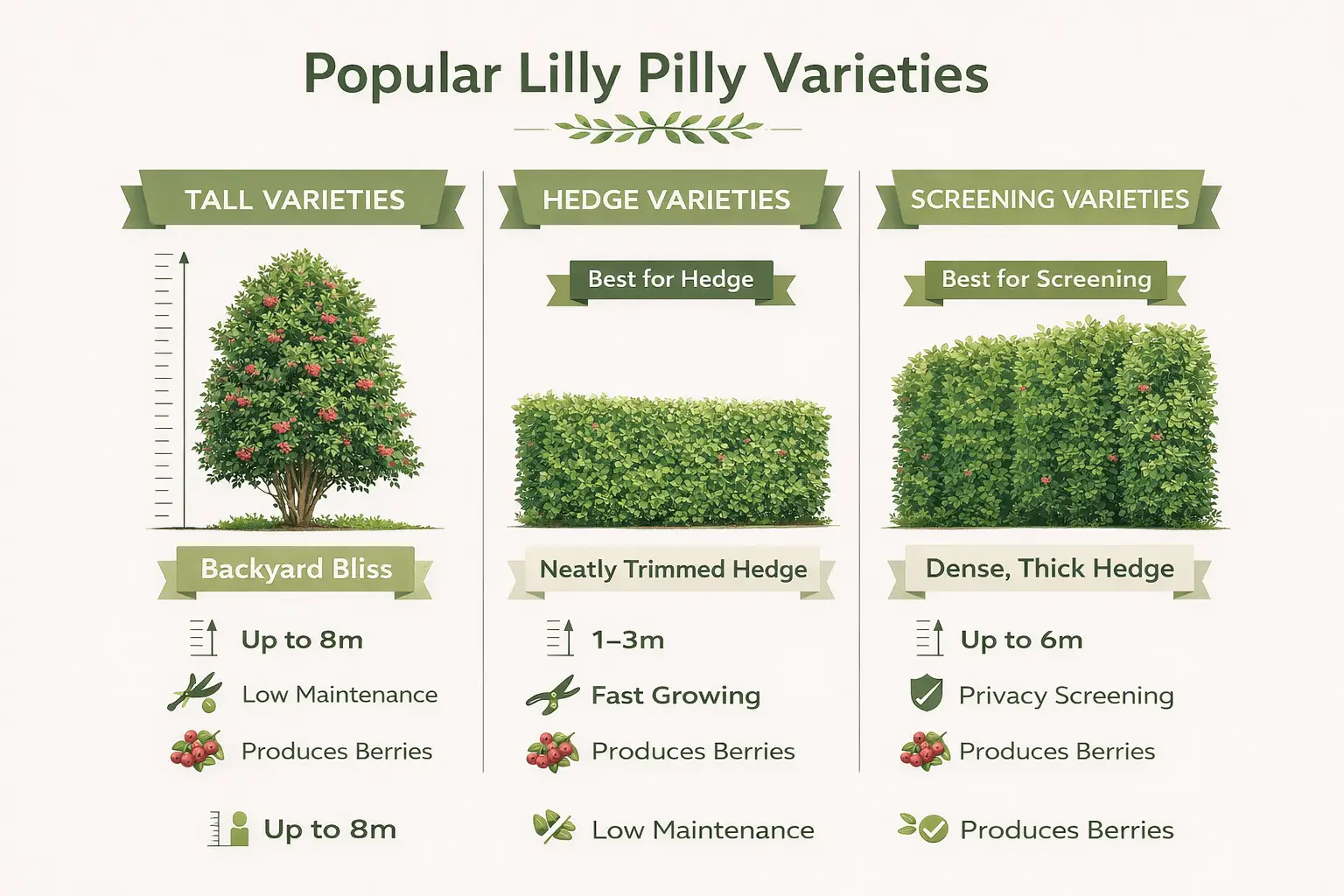
There are many types of lilly pilly available, each with different growth habits. The common lilly pilly varieties are known for upright growth and dense foliage.
Popular characteristics include:
- Tall lilly pilly types reaching 8–15 metres
- Strong screening ability
- Attractive pink to red new growth
When exploring lilly pilly types, consider both mature height and maintenance requirements. Some lilly pillies varieties are specifically bred for faster growth or pest resistance.
Small and Hedge-Friendly Varieties
Small lilly pilly varieties are ideal for suburban gardens. The best lilly pilly for hedge planting is compact, dense, and responsive to pruning.
Key features of lilly pilly hedge varieties:
- Controlled growth habit
- High leaf density
- Suitable for shaping
The best lilly pilly hedge options are selected for consistent structure, making them ideal lilly pilly varieties for hedging in tight spaces.
Popular Australian Options
Among lilly pilly varieties Australia offers many locally adapted cultivars. One well-known option is Backyard Bliss, valued for compact growth and screening performance.
For lilly pilly screening, choose varieties bred specifically as the best lilly pilly for screening. Different cultivars influence final height, foliage density, and fruit production, so selection directly impacts mature size and berry yield.
Full Grown Lilly Pilly Tree for Hedging & Screening
Ideal Hedge Height
The lilly pilly hedge height typically ranges from 1.5–3 metres, depending on trimming frequency. Hedge lilly pilly plants are widely used for:
- Boundary fencing
- Noise reduction
- Wind protection
- Visual privacy
Hedging lilly pilly offers flexibility. Lilly pilly hedge plants can be shaped to uniform heights, while lilly pilly screening plants may be allowed to grow slightly taller for enhanced privacy.
How to Plant a Lilly Pilly Hedge
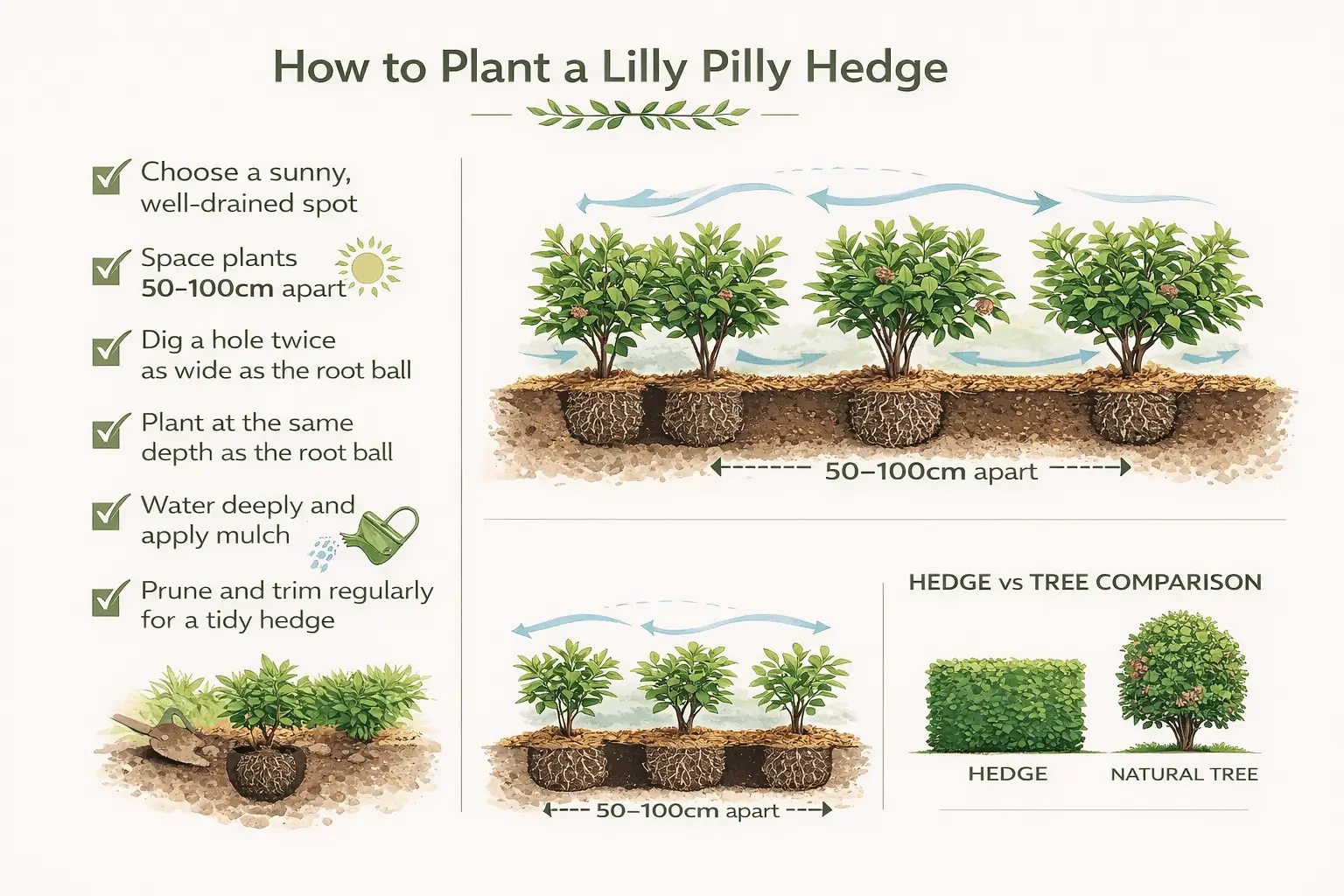
If wondering how to plant lilly pilly hedge correctly, follow these principles:
Spacing Tips:
- Plant 50–100 cm apart depending on variety size.
- Closer spacing creates faster screening.
Pruning Strategies:
- Light prune during active growth.
- Maintain top width slightly narrower than the base.
Compared to a naturally grown full tree, a hedge-maintained plant remains shorter and denser, while tree-form specimens grow taller with broader canopies.
Lilly Pilly Tree Fruit – Are the Berries Edible?
What Does Lilly Pilly Fruit Look Like?
Lilly pilly tree fruit is small, glossy, and berry-like. The lillypilly fruit ranges from white to pink, red, or deep purple depending on species. Sometimes spelled lili pili fruit, the berries grow in clusters and appear after flowering.
Lilly pillies fruit typically has a crisp texture with a mildly tart or sweet flavour.
Are Lilly Pilly Berries Edible?
Yes, are lilly pilly berries edible? Absolutely. Many people ask, can you eat lilly pilly berries or can you eat lilly pilly fruit—the answer is yes.
The lilly pilly berry edible uses include:
- Jams
- Sauces
- Jellies
- Chutneys
The lilly pilly berry is rich in antioxidants and traditionally used in Australian bush food recipes.
Common Problems With Full Grown Lilly Pilly Trees
Common Pests and Diseases
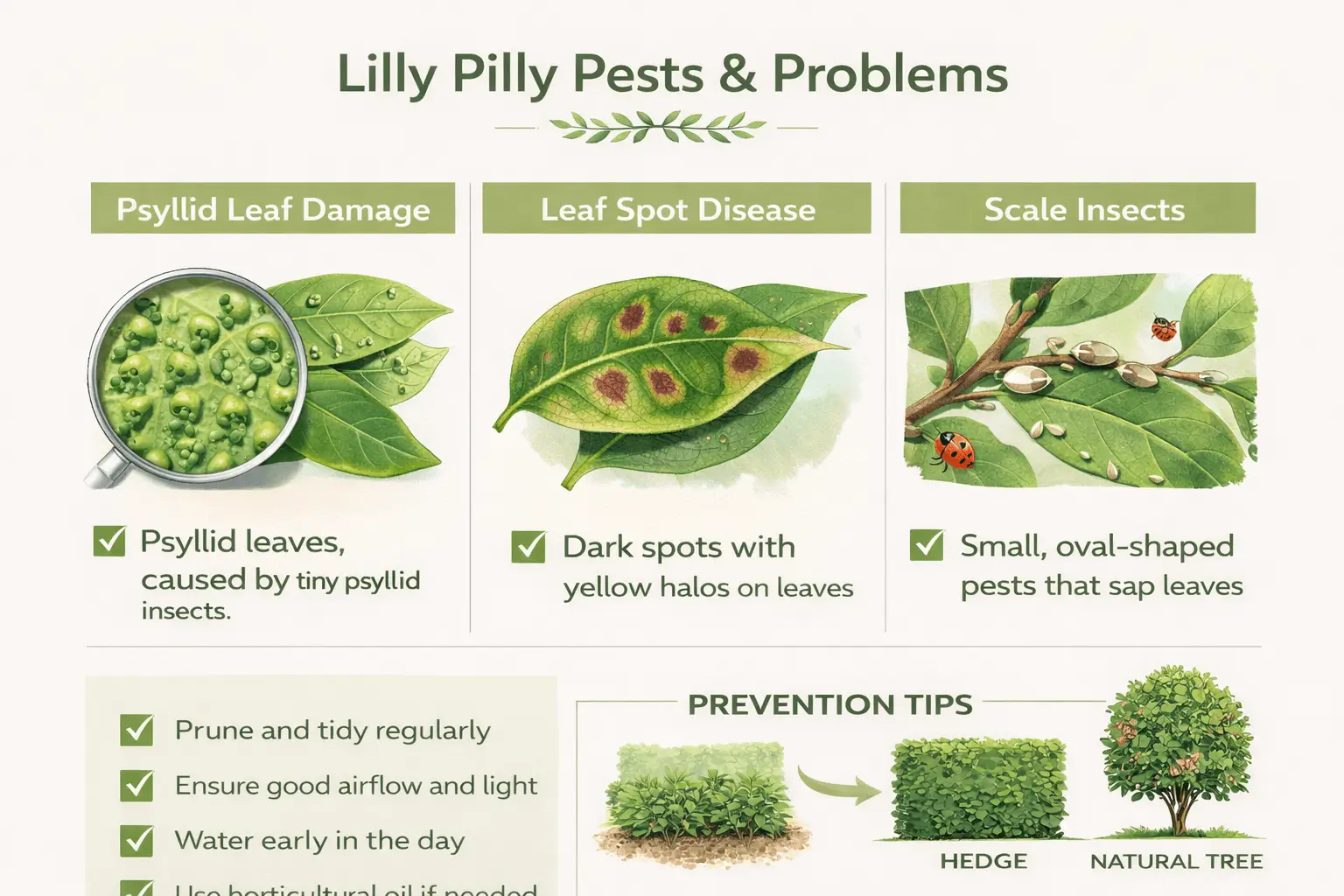
Lilly pilly pests and diseases are generally manageable. Common lilly pilly pests include psyllids, which cause leaf pimpling. Other lilly pilly bugs may include scale insects.
Typical lilly pilly disease concerns:
- Leaf spot
- Fungal infections
- Hedge-related airflow issues
Proper spacing reduces lilly pilly hedge disease risk. Monitoring for early signs helps prevent serious lilly pilly plant diseases.
General Problems & Resilience
Common problems with lilly pilly include leaf curling and pest damage. Despite some lilly pilly problems, the species is highly resilient.
Many lilly pilly resilience problems are minimized by:
- Good drainage
- Regular pruning
- Choosing resistant varieties like Backyard Bliss
Psyllids are the most frequent issue but are usually cosmetic rather than fatal.
Where to Buy Mature Lilly Pilly Trees
Buying Full Grown Trees
Mature lilly pilly trees for sale are available at specialist nurseries. In major cities, mature lilly pilly trees for sale Sydney suppliers often stock advanced specimens.
Large lilly pilly trees cost more due to transport and establishment time, but they provide instant screening.
Nursery & Retail Options
You can find lilly pilly trees for sale in local garden centres. Whether looking for a lilly pilly tree for sale or planning to buy lilly pilly plants in bulk, options include:
- Lilly pillies for sale in tube stock
- Lilly pilly plants for sale in pots
- Lilly pilly seedlings for budget planting
Availability varies by region, and plant size at purchase affects price and establishment speed.
Conclusion – Is a Full Grown Lilly Pilly Tree Right for Your Garden?
A full grown lilly pilly tree offers impressive mature height and size, strong screening benefits, edible fruit, and fast growth. Whether used for hedging or as a standalone feature tree, it adapts well to Australian conditions.
Choose the right variety based on available space and purpose. Decide between hedge or tree form, check local nurseries for suitable stock, and plan carefully for mature lilly pilly size before planting.
Read Also: 5+ Stunning Dwarf Leptospermum Varieties to Love
FAQs
1. How tall does a full grown lilly pilly tree get?
Most varieties grow between 5–10 metres, while taller species can exceed 15 metres depending on conditions and pruning.
2. How fast does a lilly pilly grow to full size?
A fast growing lilly pilly can grow 30–60 cm annually, reaching hedge height within 2–3 years.
3. Can you eat the fruit from a full grown lilly pilly tree?
Yes, the berries are edible and commonly used in jams, sauces, and bush food recipes.
4. What is the best lilly pilly for hedging?
Compact, dense varieties specifically bred for hedging are considered the best lilly pilly hedge options.
5. What problems affect mature lilly pilly trees?
Common issues include psyllids, leaf pimpling, and minor fungal diseases, though most are manageable.
6. Can I buy mature lilly pilly trees instead of seedlings?
Yes, mature trees are available at specialist nurseries, though they cost more than seedlings due to size and transport requirements.

Written by the LeafyHeaven Editorial Team
LeafyHeaven shares practical gardening tips and simple plant care guides to help you grow, nurture, and enjoy your plants with ease. Our goal is to make gardening feel natural, approachable, and rewarding for everyone.




[…] Read Also: 5+ Powerful Facts About Full Grown Lilly Pilly Tree […]