
Introduction
Healthy orchid leaves are one of the clearest indicators of a plant’s overall condition, which is why leaf health matters so much when caring for orchids. Orchid leaves respond quickly to changes in water, light, roots, and environment, making them an early warning system for problems and a confirmation when care is on track. By observing orchid leaves closely, growers can judge whether an orchid is thriving or slowly declining long before flowers or roots show obvious damage.
Orchid leaves play a vital role in photosynthesis, allowing the plant to produce energy, but they also act as visual signals of internal balance. Leaf color, texture, and posture directly reflect orchid leaf health—from hydration levels to light exposure and root function. When these traits look right, they point to a healthy orchid; when they shift, they reveal stress, damage, or developing care issues that need attention.
What Do Healthy Orchid Leaves Look Like?
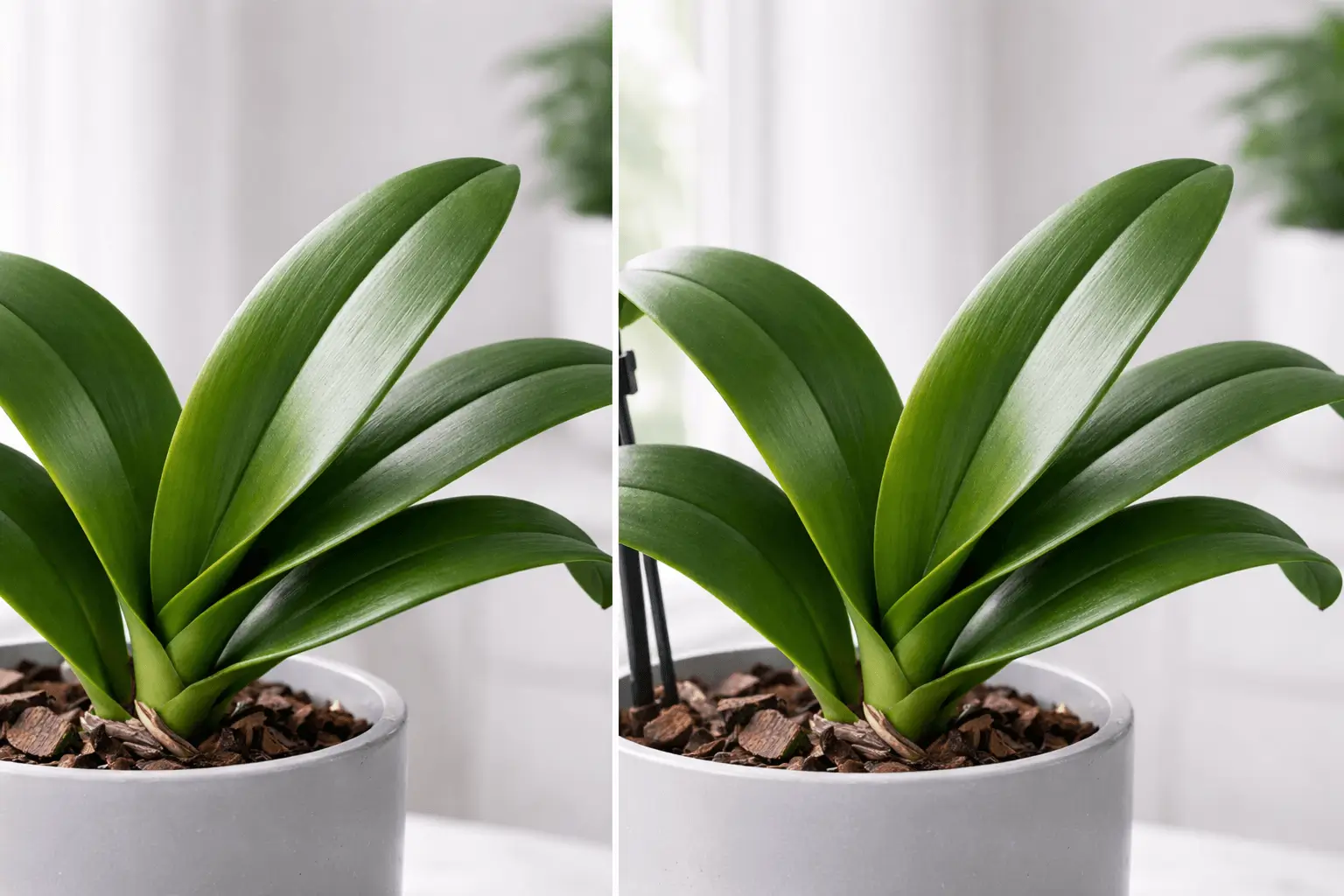
Ideal Orchid Leaf Color
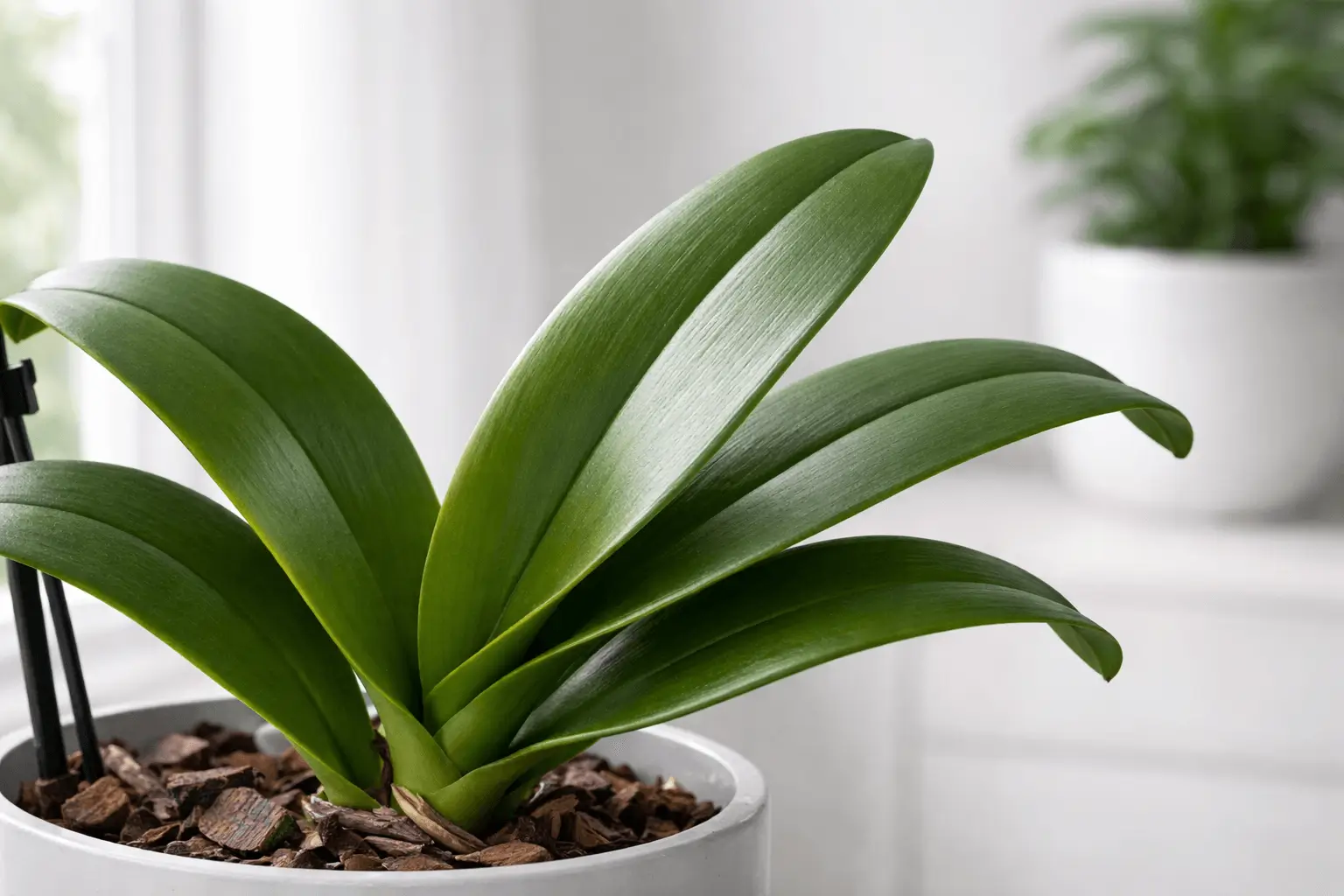
The most reliable indicator of leaf condition is orchid leaf color. Healthy orchid leaves are typically a balanced medium green, showing that the plant is receiving enough light to support photosynthesis without stress. Orchid leaves light green can still be normal, especially in orchids grown in brighter conditions, but they should look even in tone and not washed out or yellowing. Light green leaves become problematic when they appear pale, weak, or paired with slow growth, which often signals insufficient nutrients or root issues.
In contrast, orchid dark leaves usually point to low light exposure. While dark green leaves may look lush, they often indicate that the orchid is not getting enough light to support strong flowering. The healthiest orchids fall between these extremes, with consistent green color across all mature leaves.
Leaf Texture & Firmness
Healthy orchids have leaves that feel firm, smooth, and slightly thick to the touch. Leathery orchid leaves are a sign that the plant is well hydrated and its root system is functioning properly. This texture helps the plant retain moisture and maintain structure.
By comparison, orchid leaves soft or limp usually signal a problem. Soft leaves may indicate dehydration, root damage, or rot preventing water uptake. Texture changes often appear before visible color changes, making firmness one of the earliest indicators of declining leaf health.
Leaf Shape & Growth Pattern
Leaf posture also reveals a great deal about orchid condition. Healthy orchids produce upright or gently arching leaves that hold their shape without folding or drooping. Orchid long leaves should grow evenly from the crown, maintaining symmetry and balance as the plant matures.
Another strong sign of health is active orchid new leaf development. New leaves should emerge from the center of the plant, grow steadily, and match the texture and color of older healthy leaves. Slow, distorted, or stalled new leaf growth often indicates stress related to light, water, or root health.
Healthy Orchid Leaves vs Unhealthy Orchid Leaves
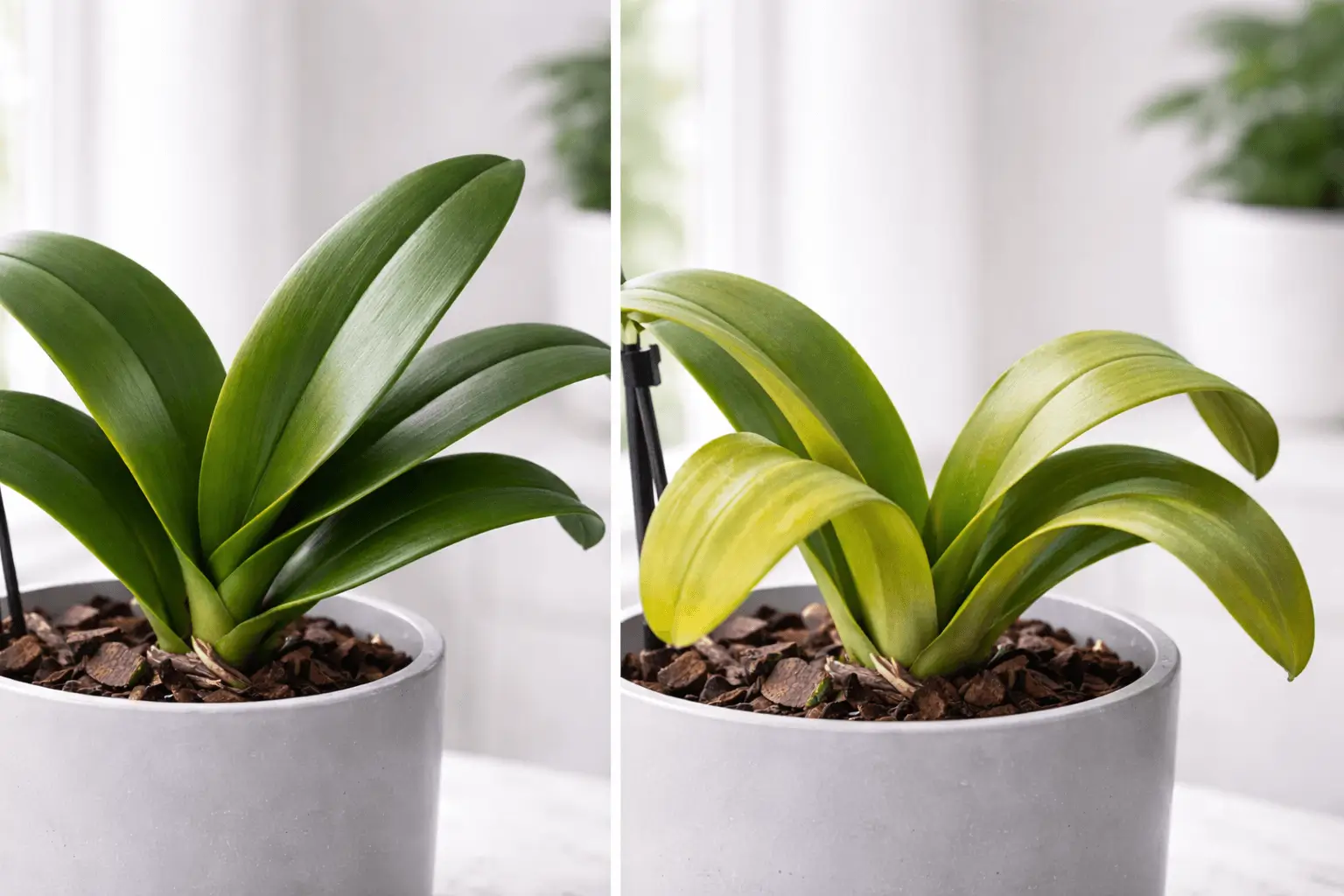
Visual Comparison
The difference between healthy and unhealthy orchid leaves is usually visible when you compare color, texture, and posture together rather than focusing on a single trait. Healthy leaves show an even green tone, firm texture, and upright or gently arching posture. They feel resilient to the touch and hold their shape without sagging.
In contrast, sick orchid leaves often appear dull, uneven in color, or blotchy. Texture may shift from firm to soft or limp, and posture commonly changes as leaves begin to droop, fold, or collapse downward. Early warning signs many growers miss include subtle loss of firmness, slightly faded color, or leaves that no longer hold their natural angle. These small changes usually appear before severe yellowing, spotting, or leaf drop and signal that the orchid is under stress.
Healthy vs Unhealthy Orchid Roots (Leaf Connection)
Leaf condition is closely tied to root function because roots control water and nutrient uptake. When comparing healthy vs unhealthy orchid roots, the impact on leaves becomes clear. Strong root systems support firm, well-colored leaves, while damaged roots quickly lead to limp, wrinkled, or discolored foliage.
Good orchid root health is indicated by roots that are plump, firm, and either green when moist or silvery when dry. These healthy roots of an orchid efficiently deliver moisture and nutrients to the leaves. Unhealthy roots, however, may appear brown, mushy, hollow, or dry, limiting water absorption. When roots fail, leaves are often the first visible part of the plant to show stress, even before root damage is noticed in the pot.
Common Orchid Leaf Color Problems & Causes
Yellow Orchid Leaves
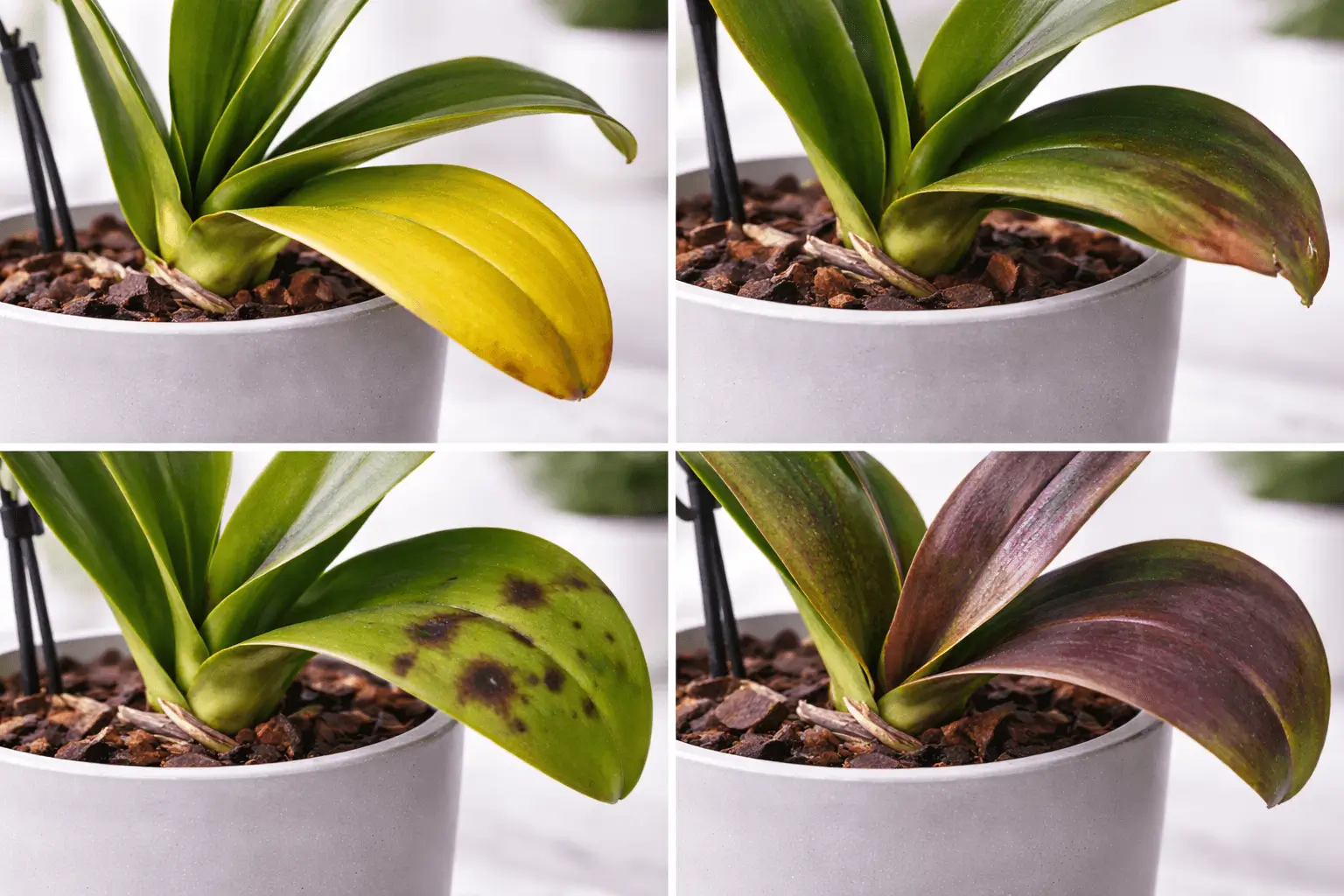
One of the most common concerns growers report is yellow leaves on my orchid, and the cause depends on where and how the yellowing appears. Orchid leaves yellowing from the bottom of the plant is often part of the natural aging process, especially when older leaves are shed as new growth develops. In this case, orchid bottom leaves turning yellow usually does not indicate a serious problem.
Yellowing becomes concerning when multiple leaves change color at once or when upper leaves are affected. Whole-plant yellowing can point to overwatering, root damage, poor drainage, or prolonged low light. Nutrient imbalances and sudden temperature changes may also cause widespread yellowing, signaling stress rather than normal leaf replacement.
Brown or Browning Orchid Leaves
Browning orchid leaves can appear in different patterns, and each pattern suggests a different cause. Orchid leaves brown edges are commonly linked to dehydration, low humidity, or inconsistent watering. These edges often feel dry or crisp while the rest of the leaf remains green.
When orchid leaves turning brown show irregular patches or large scorched areas, sun stress is often the culprit. Direct sunlight can burn orchid leaves, especially when plants are moved suddenly into brighter light. Dehydration, on the other hand, tends to cause gradual browning starting at tips or margins rather than sudden blotches.
Black or Dark Orchid Leaves
Black orchid leaves or sections that darken rapidly usually signal a more serious issue. Orchid leaves turning black can result from fungal infections, bacterial disease, or advanced root rot spreading upward into the leaves. These dark areas often feel soft or water-soaked rather than dry.
Fungal problems typically cause spreading dark spots, while rot-related causes are often linked to excess moisture and poor airflow. Prompt action is important, as blackened tissue can spread quickly and compromise the entire plant if left untreated.
Purple or Red Orchid Leaves
Seeing orchid leaves purple can be confusing, but this color change is not always a sign of illness. Some orchids naturally produce reddish or purple pigments, and orchids with purple leaves may simply be expressing a genetic trait, especially in certain varieties.
However, purple or red tones can also indicate light stress. When orchids receive stronger light than they are accustomed to, leaves may develop a reddish or purplish hue as a protective response. If the color deepens or is accompanied by slowed growth or texture changes, adjusting light levels can help restore balanced leaf color.
Texture & Structure Problems in Orchid Leaves
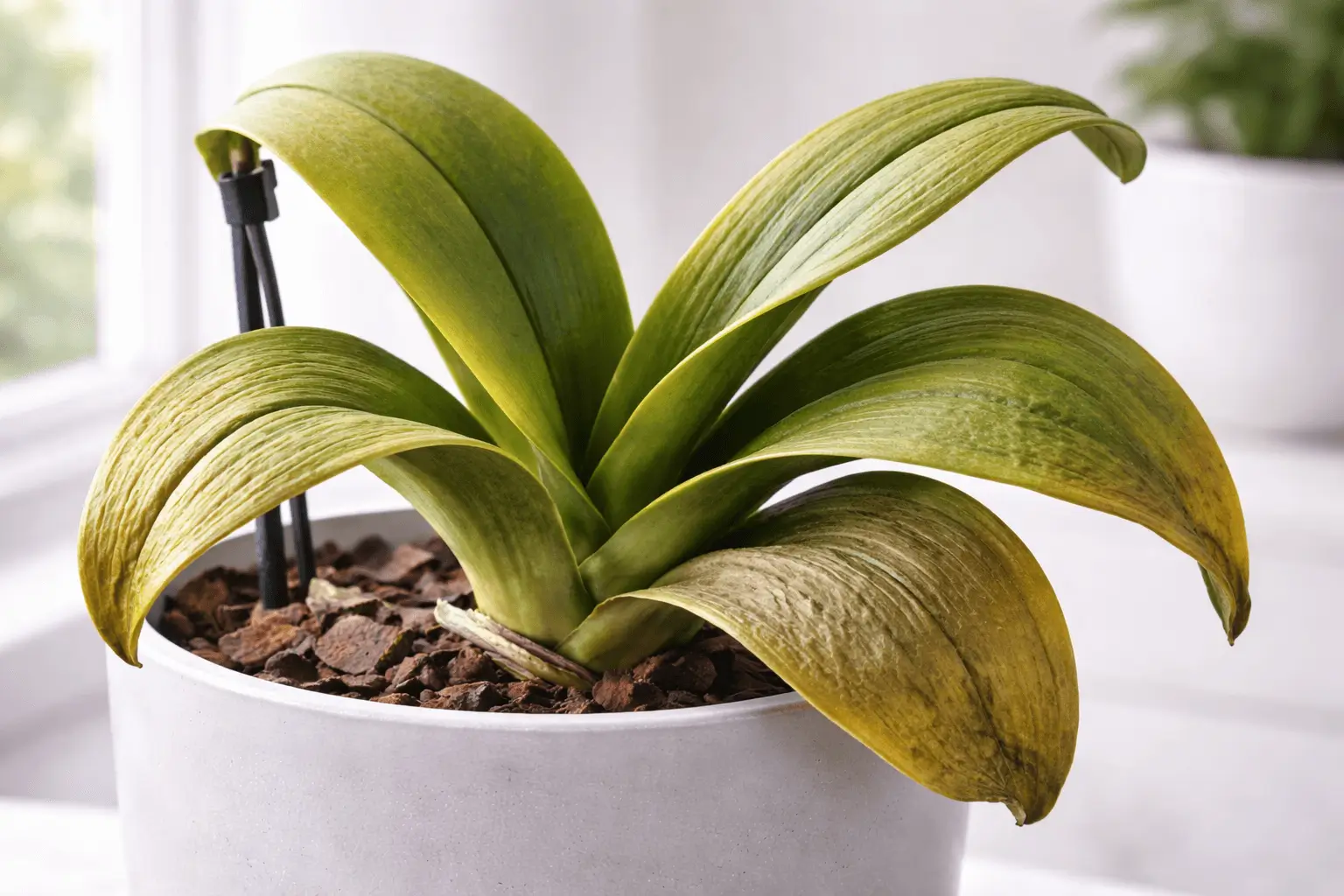
Limp, Droopy, or Wilting Leaves
When orchid leaves limp or lose their natural firmness, it usually indicates a disruption in water balance. Droopy leaves on orchid plants are often caused by improper watering, either from underwatering or from root damage that prevents moisture uptake. Even when the potting medium is wet, damaged roots may fail to deliver water to the leaves.
Wilting orchid leaves can also result from temperature stress. Sudden exposure to cold drafts, heat, or rapid temperature swings can interfere with normal leaf function, causing temporary or prolonged drooping. Evaluating watering habits, root condition, and environmental stability is essential when leaves appear limp or wilted.
Wrinkled, Shriveled, or Floppy Leaves
Orchid leaves wrinkled or appearing folded are classic signs of water stress, but the underlying cause can differ. In cases of orchid dehydration, leaves lose internal pressure and develop visible ridges or wrinkles along their length. This often occurs when watering is too infrequent or humidity levels are consistently low.
Shriveled orchid leaves may also point to root failure rather than lack of water. If roots are rotted or damaged, the plant cannot absorb moisture even when watered regularly. To tell the difference, examine the roots: firm, plump roots suggest dehydration, while mushy or hollow roots indicate a deeper root-related issue causing floppy leaves.
Curling or Splitting Leaves
Orchid leaves curling inward or outward often signal environmental stress. Excessive light or sun exposure can cause curling as leaves attempt to reduce surface area and limit damage. Low humidity can also lead to curling by increasing moisture loss from leaf tissue.
Another concern growers raise is why are my orchid leaves splitting. Leaf splitting may result from sudden changes in moisture levels, rapid growth after dehydration, or nutrient imbalances that weaken leaf structure. Consistent care and stable conditions help prevent both curling and splitting from recurring.
Orchid Leaf Spots, Marks & Surface Issues
White, Yellow, or Dark Spots
Spots and discoloration on orchid leaves often point to disease or pest activity. White patches on orchid leaves may be caused by fungal growth, mineral residue from hard water, or sap-sucking pests such as mealybugs that leave behind waxy deposits. These patches are usually localized and may spread if humidity and airflow are poor.
Dark spots on orchid leaves are more commonly linked to fungal or bacterial infections. Fungal spotting tends to appear as slowly expanding dark lesions, while bacterial issues may cause water-soaked or rapidly spreading marks. Early isolation of affected plants and improved air circulation help prevent spotting from spreading to healthy leaves.
Holes & Chewed Leaves
When growers ask what is eating my orchid leaves, the answer is often a chewing pest rather than disease. Holes in orchid leaves are commonly caused by slugs, snails, caterpillars, or beetles feeding at night. The damage may appear as clean-edged holes or irregular chew marks along leaf margins.
Basic pest identification starts with inspecting leaves, undersides, and the growing area for insects, slime trails, or eggs. Identifying the pest early allows for targeted control and prevents repeated leaf damage that can weaken the plant over time.
Watering & Light Impact on Orchid Leaf Health
How Much Water Do Orchids Need?
Understanding how much water do orchids need is essential for maintaining healthy leaves. Orchids prefer a balance where roots are thoroughly watered but allowed to dry slightly between waterings. When watering is excessive, overwatered orchid leaves often become soft, limp, or yellow due to root suffocation and reduced oxygen uptake. Leaves may look hydrated at first but gradually lose firmness as root health declines.
Underwatering creates a different set of symptoms. Leaves may appear wrinkled, leathery, or dull as the plant struggles to maintain internal moisture. Consistent watering based on the orchid type, potting medium, and environment helps prevent both extremes and supports steady leaf hydration.
Sunburn & Light Stress
Light exposure plays a direct role in leaf appearance and durability. Orchid leaf sunburn typically shows up as pale, bleached, yellow, or brown patches on leaves exposed to direct sunlight. These damaged areas may feel dry or papery and do not recover once burned.
Light stress also occurs when orchids get too much sun, even without visible burns. Leaves may turn reddish, curl slightly, or develop uneven coloration as a protective response. Correct light placement—bright, indirect light rather than direct sun—helps prevent sun damage while still supporting strong photosynthesis and balanced leaf growth.
Orchid Leaf Care & Maintenance
How to Clean Orchid Leaves Safely
Knowing how to clean orchid leaves correctly helps maintain leaf function and reduces disease risk. Dust buildup blocks light absorption and can trap moisture, creating conditions for fungal growth. To clean leaves, use a soft, damp cloth or cotton pad and gently wipe each leaf from base to tip, supporting the leaf to avoid bending or cracking it.
If you’re wondering how do you clean orchid leaves without spreading disease, always use clean materials and avoid reusing cloths between plants. Do not use leaf-shine products, oils, or harsh cleaners, as these can clog leaf pores and interfere with normal gas exchange. Regular, gentle cleaning keeps leaves clear and allows early detection of spots, pests, or texture changes.
Preventing Future Leaf Problems
Preventing recurring orchid leaf problems depends on consistent care and a clean growing environment. Good airflow around plants reduces excess moisture on leaf surfaces, limiting fungal and bacterial growth. Spacing orchids properly and avoiding stagnant air are simple but effective preventive steps.
Basic hygiene also plays a key role in minimizing orchid issues. Remove dead leaves promptly, sterilize cutting tools, and inspect plants regularly for early signs of pests or discoloration. Routine observation allows growers to correct small problems early, helping orchid leaves remain firm, clean, and healthy over the long term.
How to Tell If an Orchid Is Healthy, Dying, or Dead
Signs of a Healthy Orchid
Knowing how to tell if an orchid is healthy requires looking at leaves and roots together rather than judging one feature alone. Healthy orchids have firm, evenly colored leaves that hold their natural shape and show steady new growth. Leaves should feel resilient, not soft or wrinkled, and remain attached without yellowing or dropping prematurely.
Roots provide confirmation of good health. Plump, firm roots that appear green when wet or silvery when dry indicate proper hydration and oxygen flow. When both leaves and roots show these positive traits, the orchid is actively growing and maintaining internal balance.
Signs Your Orchid Is Dying or Dead
Understanding how to tell if an orchid is dying involves recognizing progressive decline rather than isolated symptoms. Common warning signs include widespread leaf yellowing, rapid leaf loss, limp or collapsing leaves, and a lack of new growth over time. Leaf drop that moves upward from the base often signals severe stress.
To determine how do you know if an orchid is dead, inspect the root system closely. Complete root collapse—where roots are brown, mushy, hollow, or dried out—means the plant can no longer absorb water or nutrients. When all roots are nonfunctional and leaves have fully collapsed or detached, recovery is no longer possible.
Orchid Types & Leaves (Quick Insight)
Phalaenopsis Orchid Leaves
Phalaenopsis leaves, commonly known as moth orchid leaves, are broad, thick, and slightly arching, designed to store moisture and support steady indoor growth. Their surface is smooth and leathery, and healthy leaves maintain a medium green color with a firm feel. Because Phalaenopsis orchids lack pseudobulbs, their leaves play a larger role in water storage compared to many other orchid types.
Common problems affecting moth orchid leaves include yellowing from overwatering, limp texture due to root issues, and sunburn from direct light exposure. Wrinkling may appear when roots are damaged or dehydrated, while dark spots can signal fungal or bacterial problems if airflow is poor. Monitoring leaf condition closely is especially important with Phalaenopsis orchids because leaf decline often reflects root stress early.
Identifying Orchids by Leaves
Identifying orchids by their leaves can provide useful clues when flowers are absent. Leaf size, shape, and thickness vary widely among orchid types and often reflect their natural growing environment. Thick, leathery leaves usually belong to orchids adapted to drier conditions, while thinner leaves are common in species that prefer more constant moisture.
Leaf arrangement also matters. Some orchids produce long, strap-like leaves, while others have shorter, broader foliage. Observing whether leaves grow upright, arch outward, or form tight clusters helps narrow identification. While flowers provide the most precise identification, leaf characteristics offer valuable insight into orchid type and care needs when blooms are not present.
Conclusion — Keeping Orchid Leaves Healthy Long-Term
Keeping orchid leaves healthy over the long term comes down to understanding what those leaves are communicating every day. Color, texture, firmness, and posture consistently reveal whether water, light, roots, and environment are in balance. Medium green color, firm structure, steady new growth, and stable leaf positioning all point to strong, functional leaf health.
Proactive care makes the biggest difference. Regular observation, proper watering, correct light placement, clean leaves, and healthy roots prevent small issues from becoming serious problems. Addressing subtle changes early protects the plant before visible damage spreads.
For growers, the key takeaway is confidence through awareness. When you learn to read orchid leaves accurately, care decisions become clearer and less stressful. Healthy leaves are not just a result of good care—they are the most reliable guide for maintaining a thriving orchid long-term.
Read Also: 5+ Truths About the Black Lotus Plant That Will Surprise You
FAQs
What color should healthy orchid leaves be?
Healthy orchid leaves are usually a balanced medium green. This color shows the plant is getting enough light for photosynthesis without stress. Very dark green may indicate low light, while pale or yellowish tones can signal watering, nutrient, or root issues.
Why are my orchid leaves turning yellow but roots look healthy?
Yellowing can be normal if older, bottom leaves are aging and dropping naturally. If roots look firm and healthy, the issue may be natural leaf replacement, mild light stress, or a temporary environmental change rather than a serious problem.
Can limp orchid leaves recover?
Yes, limp orchid leaves can recover if the cause is addressed early. Dehydration, improper watering, or mild root stress are common causes. Once watering habits, root health, and environmental conditions are corrected, leaves may regain firmness, though severely damaged leaves may not fully recover.
How often should I water orchids to keep leaves healthy?
Watering frequency depends on the orchid type, potting medium, and environment. Orchids should be watered thoroughly, then allowed to dry slightly before the next watering. Consistent moisture without waterlogging supports firm, healthy leaves.
Do purple orchid leaves mean the plant is unhealthy?
Not always. Some orchids naturally develop purple or reddish tones due to genetics. Purple leaves can also appear when light levels are higher than usual. If texture and growth remain normal, the color change is often harmless.
How do I know if my orchid is dead or just dormant?
A dormant orchid still has firm roots and at least some healthy leaf tissue, even if growth has paused. An orchid is likely dead when all roots have collapsed and leaves have fully yellowed, dried, or fallen off with no signs of new growth.

Written by the LeafyHeaven Editorial Team
LeafyHeaven shares practical gardening tips and simple plant care guides to help you grow, nurture, and enjoy your plants with ease. Our goal is to make gardening feel natural, approachable, and rewarding for everyone.