
Introduction
Lemongrass is a versatile, aromatic herb widely used in cooking, herbal remedies, and home gardening. Many people search how to plant lemongrass because it is easy to grow, fast-growing, and highly productive when given the right conditions. Whether you are starting a garden or adding useful herbs to your space, understanding the fundamentals of planting lemongrass ensures strong, healthy plants. A common question beginners ask is how do you plant lemongrass properly to achieve consistent growth and easy maintenance. With the right approach, lemongrass planting becomes straightforward, allowing you to grow, care for, and harvest this valuable herb efficiently at home.
What Is Lemongrass? (Plant Basics & Identification)
Understanding what is lemongrass is essential before planting or growing it. Lemongrass is a tropical herb known scientifically as the cymbopogon citratus plant, commonly referred to as lemongrass citratus. It belongs to the grass family and is widely grown for its citrus-scented stalks used in cooking, herbal teas, and natural remedies. The lemongrass plant is valued for its fast growth, strong aroma, and ability to thrive in warm climates with minimal care.
Lemongrass Overview
There are several types of lemongrass, but the most commonly grown varieties fall into two main categories:
- East Indian lemongrass
- Also known as Cymbopogon flexuosus
- Commonly used for essential oils
- Strong fragrance, less commonly used in cooking
- West Indian lemongrass
- Known as Cymbopogon citratus
- Most popular for culinary use
- Preferred for home gardening due to its flavor and ease of growth
These lemongrass varieties are similar in appearance but differ slightly in use, aroma, and cultivation purpose.
What Does Lemongrass Look Like?
If you’re wondering what does lemongrass look like, it closely resembles tall, dense grass with long, narrow green leaves. The plant grows in clumps and develops thick, pale-green to white bases known as lemongrass stalks, which are the most commonly used part.
When identifying what does a lemongrass plant look like, look for:
- Tall, blade-like leaves that can grow several feet high
- Thick, bulb-like stalk bases at the bottom
- A dense, clumping growth pattern
- A strong lemon-like scent when crushed
These visible traits make the lemongrass plant easy to recognize and distinguish from other grasses in the garden.
Best Growing Conditions for Lemongrass
Understanding the right lemongrass growing conditions is essential for healthy growth and high yields. Choosing the best place to plant lemongrass ensures the plant receives proper sunlight, space, and nutrients. If you are wondering where to plant lemongrass or where to grow lemongrass, the goal is to provide a warm, sunny environment with well-draining soil and enough room for clump formation.
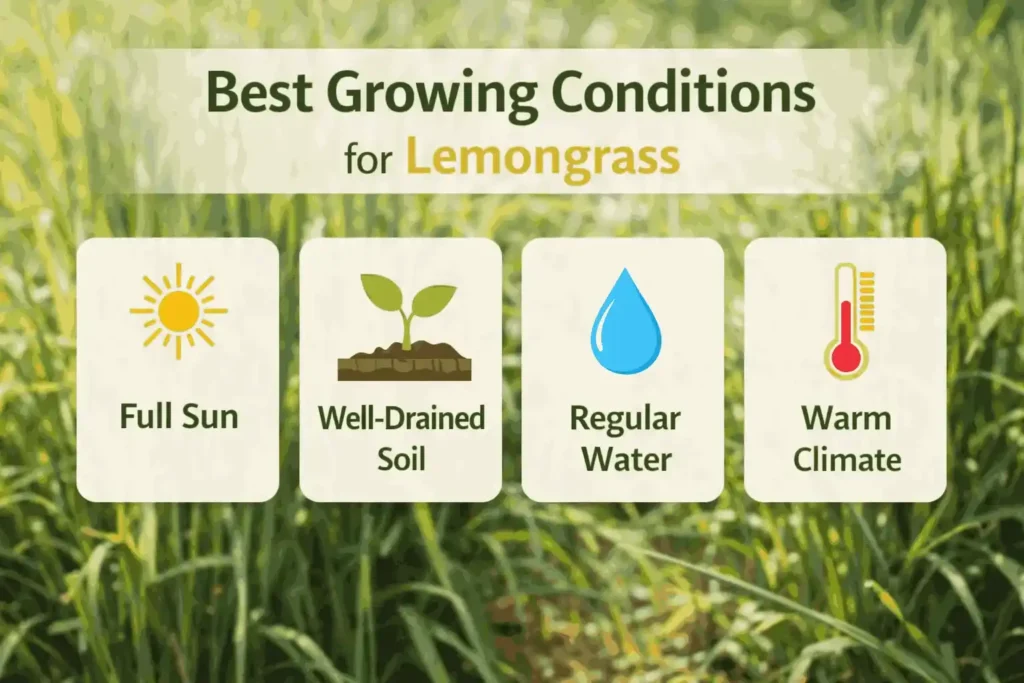
These growing requirements align with general plant care fundamentals explained in a complete gardening and plant care guide, helping ensure long-term success.
Sunlight Requirements
A common question is does lemongrass need full sun—the answer is yes. Lemongrass thrives best in lemongrass full sun conditions and requires consistent light for strong growth.
- How much sunlight does lemongrass need?
- At least 6–8 hours of direct sunlight daily
- Lemongrass sun or shade
- Prefers full sun
- Partial shade may slow growth
- Does lemongrass grow in shade?
- It can survive in light shade
- However, growth becomes weaker and less productive
For best results, always plant lemongrass in a location with maximum sunlight exposure.
Soil & Location
Proper soil and placement are key when deciding where to grow lemongrass.
- Ideal for a lemongrass garden setup with open space
- Works well when planted directly in the ground or in a lemongrass in yard area
- Prefers:
- Well-draining soil
- Slightly rich, organic matter–based soil
- Loose texture to support root expansion
Avoid waterlogged areas, as excess moisture can lead to root issues and poor plant performance.
Understanding how roots react to moisture, such as in the firestick plant root system, can help prevent drainage-related problems.
Climate & Hardiness
Climate plays a major role in lemongrass success. Knowing the correct lemongrass growing zone and lemongrass hardiness zone helps determine whether the plant will survive year-round.
- Lemongrass growing zone: Typically USDA zones 9–11
These zones are defined by the USDA Plant Hardiness Zone Map, which helps gardeners identify suitable growing regions.
- Is lemongrass perennial?
- Yes, in warm climates
- Is lemongrass perennial or annual?
- Perennial in tropical regions
- Grown as an annual in colder climates
- Does lemongrass come back every year?
- Yes, in warm zones with no frost
- Will lemongrass come back after winter?
- Only if temperatures remain mild
- Frost can damage or kill the plant
In colder regions, lemongrass is often grown in containers so it can be moved indoors during winter.
Different plant types respond uniquely to climate, as explained in the deciduous vs evergreen trees comparison, which helps clarify environmental adaptation.
How to Plant Lemongrass (Step-by-Step Guide)
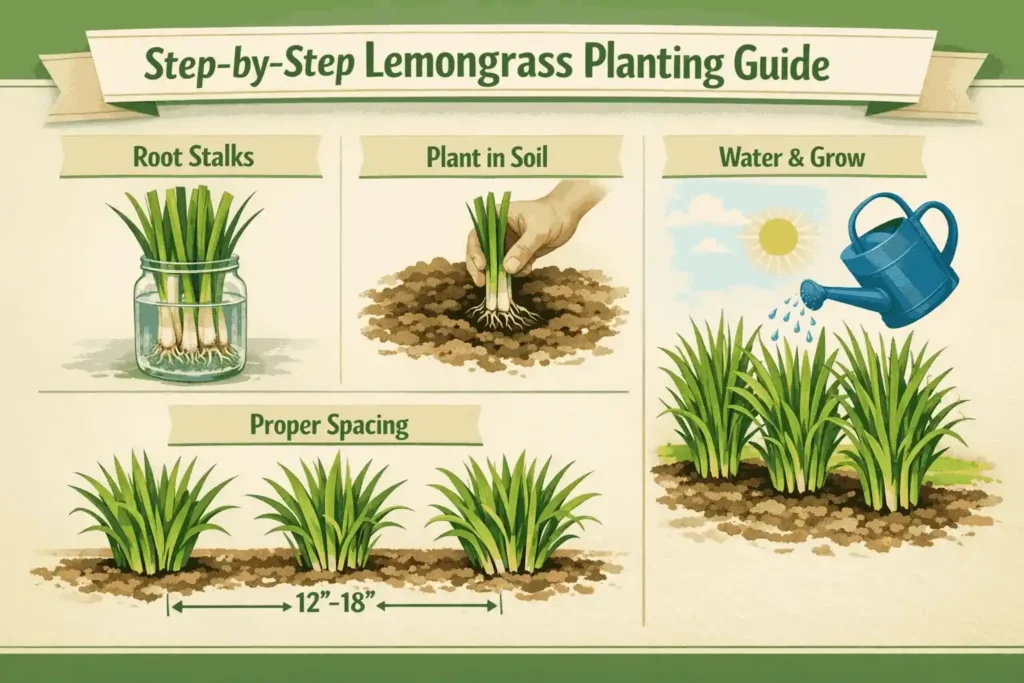
Learning how to plant lemongrass correctly ensures strong root development, fast growth, and long-term productivity. Whether you are starting from stalks or seeds, the process is simple when done properly. If you’re wondering how do I plant lemongrass at home or in a garden, follow these proven methods for successful results. This guide also covers how to plant lemon grass using the most reliable techniques.
Planting from Stalks
The most effective method is using fresh stalks. If you want to know how to plant lemongrass from stalk, this approach delivers faster and more consistent growth.
Steps to follow:
- Select healthy, fresh stalks with a firm base
- Place stalks in a glass of water
- Keep them in a bright location for 5–10 days
- Wait until roots begin to develop
- Once roots are visible, plant them in soil
Planting process:
- Insert the rooted stalk into soil
- Keep the base slightly above soil level
- Water immediately after planting
This method is widely used to propagate lemongrass because it is simple and highly successful. Propagating lemongrass from stalks is ideal for beginners and produces quicker harvest-ready plants.
Planting Lemongrass Seeds
Growing from lemongrass seeds takes more time but is still a reliable option. For those interested in planting lemongrass seeds, patience and proper conditions are important.
Steps to follow:
- Use quality seeds in a seed tray or small pots
- Lightly press seeds into moist soil (do not bury deeply)
- Keep soil consistently moist
- Place in a warm, bright location
Seedling development:
- Germination usually takes 1–3 weeks
- Once lemongrass seedlings appear, allow them to grow stronger
- Transplant when seedlings reach a few inches tall
Growing lemongrass from seed requires more care initially, but healthy lemon grass seedlings can establish well with proper attention.
Spacing & Planting Depth
Correct spacing is essential when planting lemongrass to ensure proper airflow and healthy clump growth.
Key guidelines:
- Space plants about 2–3 feet apart
- Plant at a depth where roots are fully covered
- Keep the base of the stalk just above soil level
- Avoid overcrowding to prevent weak growth
Proper spacing allows each plant to expand naturally and improves overall productivity. Following these guidelines makes planting lemongrass more effective and supports long-term growth success.
How to Grow Lemongrass Successfully
Understanding how to grow lemongrass properly ensures strong plants, steady growth, and consistent harvests. Once planted, growing lemongrass becomes simple if the plant receives the right balance of sunlight, water, and nutrients. Whether you want to grow lemongrass in a garden or container, following proper care methods will help you achieve healthy results. If you’re wondering how to grow lemongrass plant effectively or how to cultivate lemongrass, the key is maintaining warm conditions, regular watering, and proper spacing. This explains clearly how is lemongrass grown successfully in both home gardens and controlled environments.
Growth Rate & Size
Lemongrass is known for its fast and vigorous growth under the right conditions.
- How fast does lemongrass grow?
- It can establish quickly within a few weeks after planting
- Does lemongrass grow fast?
- Yes, especially in warm climates with full sun and regular watering
- How tall does lemongrass grow?
- Typically reaches 3 to 5 feet in height
- How big does lemongrass get?
- Forms wide clumps that can spread 2 to 4 feet
- Lemongrass height & size:
- Height: up to 5 feet
- Width: dense, bushy clumps
Its rapid growth makes it ideal for gardeners looking for quick results and continuous harvesting.
Growth Timeline
Knowing how long does lemongrass take to grow helps set realistic expectations.
- Root development begins within 1–2 weeks (from stalks)
- Visible growth starts within 2–4 weeks
- Full plant development occurs in 2–3 months
- Harvest-ready stalks are usually available within 3–4 months
With proper care, lemongrass continues growing throughout the warm season, providing multiple harvests over time.
Growing Lemongrass in Pots & Indoors
Growing lemongrass in pots is an excellent option for gardeners with limited space or those living in colder climates. You can easily grow lemongrass in pots on balconies, patios, or indoors while maintaining full control over soil, watering, and sunlight. If you’re wondering how to plant lemongrass in a pot, the process is simple and highly effective for year-round growth. Proper care ensures healthy lemongrass in pots with strong roots and steady development.
Container Growing
Using a proper lemongrass container is key to successful growth. Potted lemongrass thrives when given enough space and well-draining soil.
How to grow lemongrass in a container:
- Choose a large pot (at least 12 inches deep and wide)
- Ensure good drainage holes at the bottom
- Use nutrient-rich, well-draining soil
- Plant stalks or seedlings at proper depth
- Place the container in full sunlight
A healthy lemongrass pot plant requires:
- Regular watering to keep soil moist (not soggy)
- Enough space for roots to expand
- Occasional fertilization for better growth
Container growing allows flexibility and makes it easier to move plants when needed.
Indoor Growing
If you’re asking can lemongrass grow indoors, the answer is yes—with the right conditions. Growing lemongrass indoors works well when the plant receives enough light and warmth.
Indoor growing tips:
- Place near a sunny window with 6–8 hours of light
- Use well-draining soil and a suitable pot
- Maintain warm indoor temperatures
- Water regularly but avoid overwatering
Indoor lemongrass may grow slightly slower than outdoor plants, but it can still remain healthy and productive with proper care.
Lemongrass Plant Care (Complete Guide)
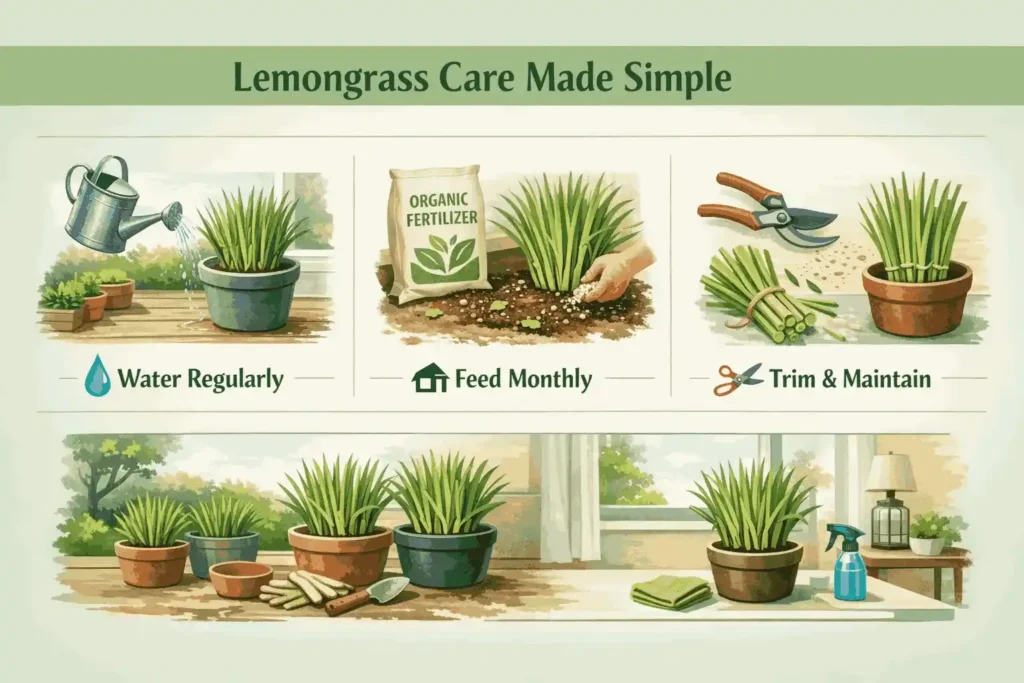
Proper lemongrass plant care is essential for maintaining healthy growth, strong stalks, and continuous harvesting. Once established, lemongrass care is simple and low-maintenance when basic needs are met. Understanding how to care for lemongrass ensures the plant remains productive throughout the growing season. Whether grown in the ground or containers, knowing how to care for lemongrass plant correctly helps prevent common issues and supports vigorous growth.
Watering Needs
Water plays a key role in healthy development, so it’s important to understand how much water does lemongrass need and maintain consistency.
- How often to water lemongrass:
- Water regularly to keep soil evenly moist
- Typically 2–3 times per week, depending on climate
- How much water does lemongrass need:
- Enough to keep soil moist but not waterlogged
- Increase watering in hot, dry conditions
Key tips:
- Avoid letting the soil dry out completely
- Ensure proper drainage to prevent root rot
- Reduce watering slightly during cooler periods
Fertilizer
Using the right fertilizer for lemongrass promotes faster growth and stronger stalk production. Regular feeding improves overall plant health.
- Apply balanced lemongrass fertilizer every 3–4 weeks during the growing season
- Use organic compost or liquid fertilizer for better results
- Focus on nitrogen-rich fertilizers to support leafy growth
Best practices:
- Avoid over-fertilizing, which can damage roots
- Always water after applying fertilizer
- Maintain a consistent feeding schedule
Pruning & Maintenance
Regular trimming is essential to keep the plant healthy and productive. Knowing how to prune lemongrass helps maintain shape and encourages new growth.
- How to prune lemongrass:
- Remove dry or damaged leaves regularly
- Cut outer stalks to promote fresh growth
- Cutting back lemongrass:
- Trim older growth to maintain plant size
- Prevent overcrowding in dense clumps
- How to trim lemongrass:
- Use clean, sharp tools
- Cut close to the base without damaging new shoots
Proper pruning improves airflow, supports healthy growth, and keeps the plant manageable throughout the season.
How to Harvest Lemongrass
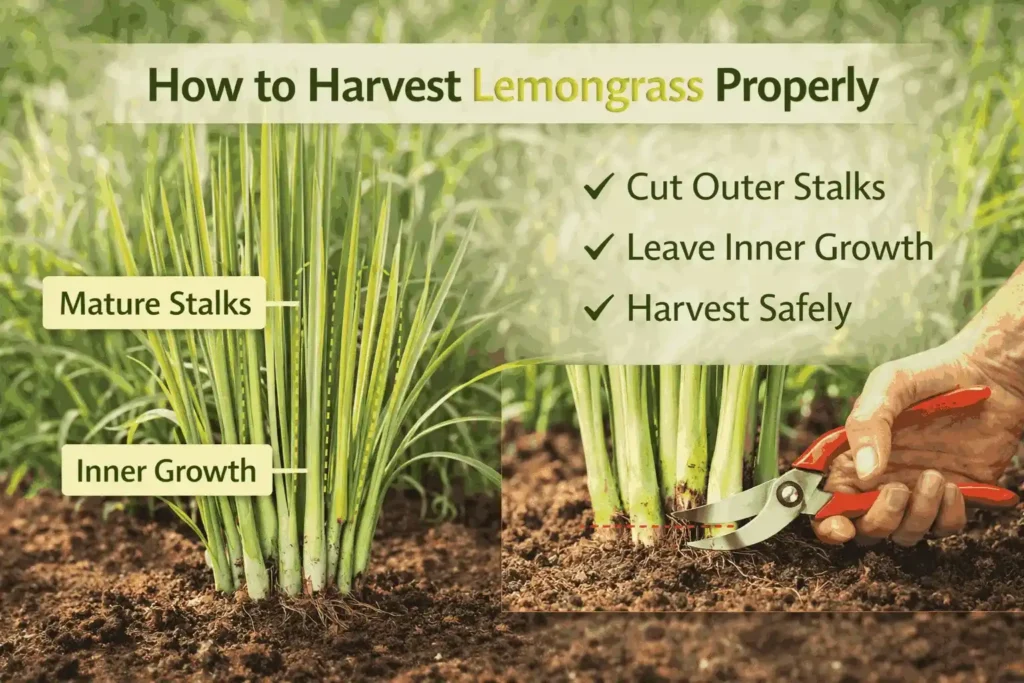
Knowing how to harvest lemongrass correctly ensures continuous growth and a steady supply of fresh stalks. Many gardeners ask how do you harvest lemongrass without damaging the plant, and the key is using proper techniques that allow regrowth. Harvesting at the right time and in the right way keeps the plant productive throughout the season.
Harvesting Technique
The most common method involves picking lemongrass stalks once they are mature and thick enough for use.
How to harvest properly:
- Choose firm, well-developed lemongrass stalks near the outer edge of the plant
- Grasp the stalk close to the base
- Gently twist and pull, or use a sharp knife to cut at soil level
Best time to harvest:
- When stalks are about ½ inch thick
- After the plant is well-established (usually 3–4 months after planting)
Harvesting outer stalks first allows the inner shoots to continue growing.
Safe Harvesting
Understanding how to harvest lemongrass without killing the plant is essential for long-term productivity.
Safe harvesting tips:
- Never remove all stalks at once
- Always leave the inner stalks intact for regrowth
- Avoid damaging the base of the plant
- Harvest gradually instead of all at once
By following these steps, you can maintain a healthy plant while continuously harvesting fresh lemongrass.
Uses of Lemongrass (Cooking & Benefits)
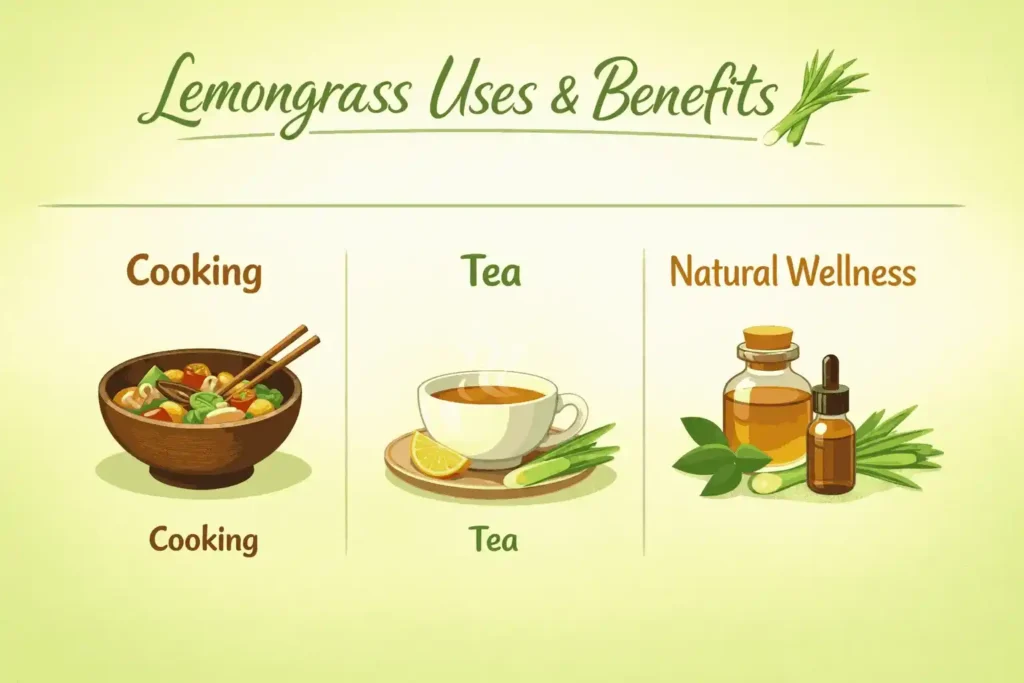
Understanding how to use lemongrass helps you get the most value from this versatile herb. Many people ask what is lemongrass used for, and the answer includes a wide range of culinary, health, and household applications. From enhancing flavor in dishes to supporting wellness, there are many practical lemongrass uses that make it a popular choice in kitchens and gardens.
Cooking Uses
Lemongrass is widely used in cooking for its fresh, citrus-like flavor. Knowing how to cook with lemongrass allows you to enhance a variety of dishes.
How to prepare and use:
- Remove tough outer layers before use
- Use the tender inner stalk for cooking
- Crush or slice to release flavor
How to prep lemongrass properly:
- Trim the base and top leaves
- Slice thinly or bruise the stalk
- Use in fresh or cooked recipes
How to cook lemongrass:
- Add to soups, curries, and broths
- Infuse into sauces and marinades
- Use whole stalks for flavor, then remove before serving
How to use lemongrass in food:
- Works well in Asian-style dishes
- Pairs with chicken, seafood, and vegetables
- Adds aroma to teas and beverages
These methods show how to use lemon grass in food effectively while maximizing its flavor.
Health & General Uses
Beyond cooking, lemongrass also offers several general and wellness-related benefits. Many people ask what is lemon grass good for, and it is commonly valued for its natural properties.
Common uses:
- Used in herbal teas for a refreshing drink
- Supports digestion and relaxation
- Used in essential oils and aromatherapy
- Acts as a natural ingredient in home remedies
Can you eat lemongrass?
- Yes, the tender inner stalk is edible
- Often used fresh, dried, or powdered in recipes
These benefits make lemongrass a practical and multi-purpose herb for everyday use.
Landscaping & Companion Planting
Lemongrass is not only useful for cooking but also highly effective in outdoor design. Lemongrass landscaping adds height, texture, and a natural tropical look to gardens. Many gardeners use it for landscaping with lemongrass because it forms dense clumps that enhance visual appeal while remaining low-maintenance. Incorporating lemongrass in landscape designs can also help create structured borders and natural accents.
Garden Design
Using lemongrass in design layouts can improve both function and appearance. It works well in modern and natural garden styles.
Front yard landscaping with lemongrass ideas:
- Plant along pathways for a clean, structured border
- Use as a backdrop behind smaller plants
- Create clusters for a bold, tropical effect
- Combine with decorative stones or mulch for contrast
Lemongrass adds vertical height and movement, making it ideal for enhancing front yard spaces.
Companion Plants
Choosing the right plants is important when deciding to companion plant lemongrass. Proper pairing improves growth and overall garden balance.
What to plant with lemongrass:
- Vegetables like peppers and tomatoes
- Herbs such as basil and mint
- Ornamental grasses for layered design
Benefits of companion planting:
- Improves garden diversity
- Enhances space utilization
- Supports healthier plant growth
Selecting the right combinations helps create a balanced and productive garden environment.
Where to Buy Lemongrass Plants
Finding reliable sources for where to buy lemongrass plants is important to ensure healthy growth and successful planting. If you are looking for where to buy lemongrass to plant, there are several trusted options that provide quality plants suitable for home gardening.
Common places to buy lemongrass plants:
- Local plant nurseries offering fresh and healthy lemongrass plants
- Online gardening stores with delivery options
- Garden centers that specialize in herbs and edible plants
When planning to buy lemon grass plant, consider the following:
- Choose plants with firm, green stalks and no signs of damage
- Look for strong root systems, especially in potted plants
- Avoid plants with yellowing leaves or weak growth
If you are wondering where can I purchase lemon grass, both physical stores and online platforms offer a wide range of options. You may also find lemon grass plant for sale in different forms, including:
- Live plants ready for transplanting
- Rooted stalks for quick propagation
- Seed packs for growing from scratch
Selecting high-quality lemongrass plants ensures better growth, faster establishment, and long-term productivity in your garden.
Conclusion
Learning how to plant lemongrass is simple when you follow the right steps and provide proper growing conditions. From selecting healthy stalks or seeds to ensuring adequate sunlight, soil, and watering, each stage plays a key role in successful growing lemongrass. With consistent care, including proper feeding, pruning, and harvesting techniques, the plant continues to produce fresh, usable stalks over time.
Whether planted in the ground or containers, lemongrass is a low-maintenance herb that offers both practical and aesthetic value. By applying the methods covered in this guide, you can confidently start growing lemongrass and maintain a healthy, productive plant. Take the next step and begin planting to enjoy fresh lemongrass directly from your own space.
If you want a simplified breakdown and additional resources that support the planting process, you can explore this structured lemongrass growing resource hub. It provides a clear overview of planting methods, growth conditions, and practical tips in a more organized format for quick understanding.
FAQs
How do you plant lemongrass at home?
If you’re wondering how do you plant lemongrass at home, the easiest method is using fresh stalks. Place the stalks in water until roots develop, then plant them in well-draining soil with full sunlight. You can also grow lemongrass from seeds, but stalk propagation is faster and more reliable for beginners.
Can lemongrass grow indoors?
Yes, can lemongrass grow indoors is a common question, and the answer is yes. Lemongrass can grow indoors if placed near a sunny window with at least 6–8 hours of light. It also requires warm temperatures, proper watering, and a well-draining pot to stay healthy.
Does lemongrass come back every year?
Does lemongrass come back every year depends on the climate. In warm regions, lemongrass acts as a perennial and regrows annually. In colder climates, it may not survive winter unless protected or moved indoors.
How fast does lemongrass grow?
Many gardeners ask how fast does lemongrass grow, and it is known for its rapid growth. Under proper conditions, it can establish within weeks and become harvest-ready in about 3–4 months, especially in warm, sunny environments.
What is the best place to plant lemongrass?
The best place to plant lemongrass is a location with full sunlight, well-draining soil, and enough space for the plant to expand. It grows best in warm outdoor areas, but it can also thrive in containers placed in bright, sunny spots.

Written by the LeafyHeaven Editorial Team
LeafyHeaven shares practical gardening tips and simple plant care guides to help you grow, nurture, and enjoy your plants with ease. Our goal is to make gardening feel natural, approachable, and rewarding for everyone.