
Introduction
Kalanchoe grandiflora is a visually striking flowering plant known for its thick foliage and bright seasonal blooms. Valued for both resilience and ornamental appeal, it fits well into indoor collections and warm outdoor gardens alike. This guide focuses on kalanchoe grandiflora care, explaining how proper light, watering, and maintenance support healthy development and consistent flowering. When conditions are right, kalanchoe growing habits remain compact and manageable, making it suitable for containers or garden borders. Understanding kalanchoe growth patterns also helps prevent common care mistakes, especially those related to moisture and light. With balanced care, this plant rewards growers with strong structure, glossy leaves, and vibrant flowers that enhance any growing space.
What Is Kalanchoe Grandiflora?
-
Plant Overview and Botanical Characteristics
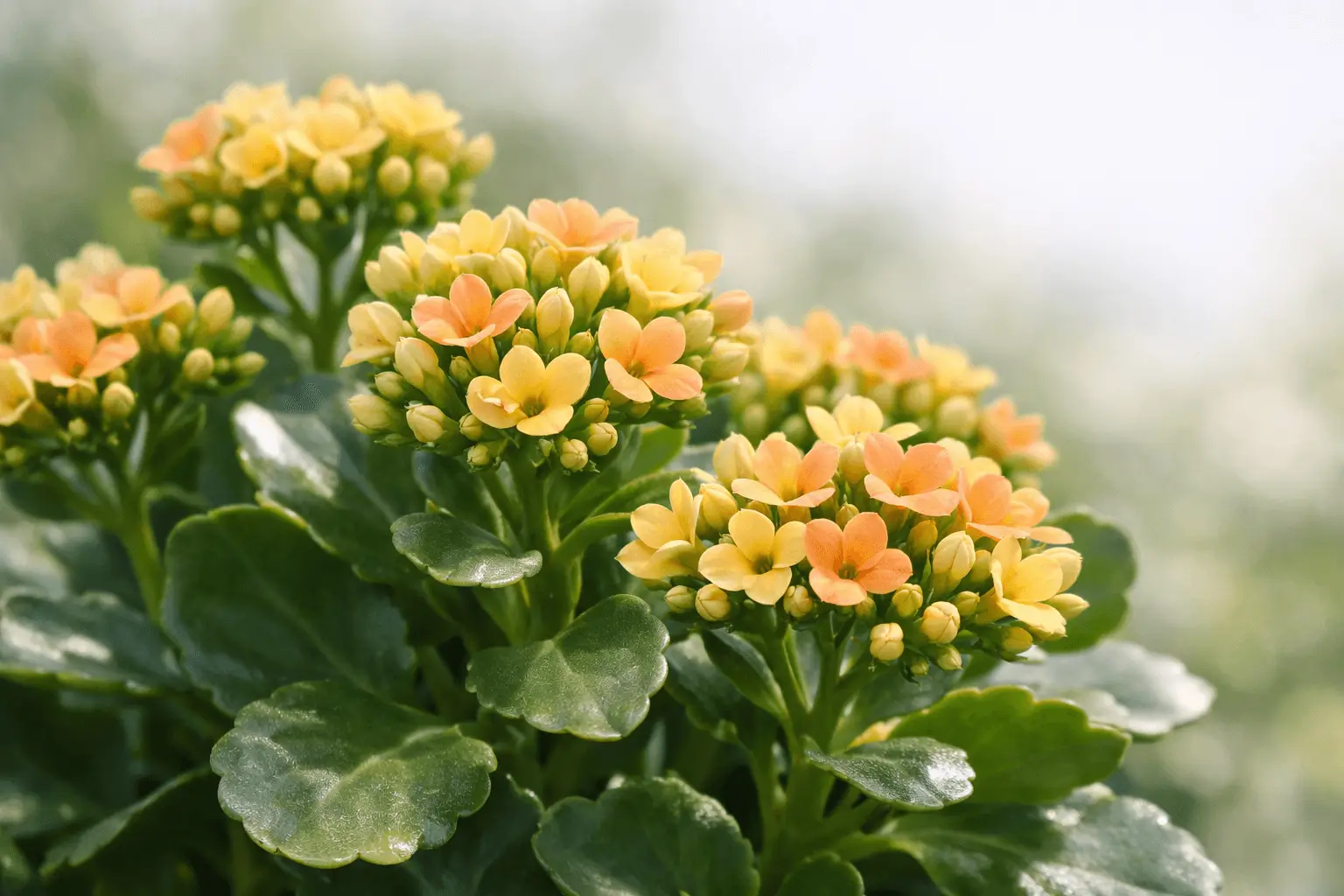
Kalanchoe grandiflora is a succulent-type flowering plant recognized for its fleshy, oval-shaped leaves and clusters of warm-toned flowers, often appearing in shades of yellow to orange. The leaves are thick and slightly rounded, designed to retain moisture, while the plant maintains a compact, upright form. Compared to other kalanchoe varieties, it has broader foliage and a softer overall appearance. When viewed alongside kalanchoe gracilipes, kalanchoe grandiflora appears fuller and less trailing, with flowers that feel more bold and substantial in structure.
-
Is Kalanchoe Grandiflora a Succulent?
Yes, kalanchoe grandiflora is considered a succulent. Like other succulents, it stores water in its leaves, allowing it to tolerate short periods of drought. This adaptation reduces its dependence on frequent watering and makes it suitable for growers who prefer low-maintenance plants. Similar to discussions around whether kalanchoe blossfeldiana is a succulent, the defining trait is the plant’s thick, water-retentive foliage combined with drought tolerance and slow moisture usage.
Is Kalanchoe Grandiflora a Perennial or Annual?
Understanding Its Lifecycle
Kalanchoe grandiflora is a perennial plant in warm climates where temperatures remain consistently mild. Under proper care, it can live and bloom for several years, producing flowers season after season. For those wondering, the answer to “is kalanchoe a perennial” is yes, provided it is protected from frost and extreme cold. Indoors or in suitable outdoor zones, its lifespan extends well beyond a single growing season.
Annual vs Perennial Confusion Explained
Confusion around whether kalanchoe is an annual or perennial usually comes from climate limitations. In colder regions, the plant may behave like an annual if exposed to frost, as low temperatures damage its tissues. In warm or indoor environments, it continues growing year after year. Climate directly influences longevity, not the plant’s natural lifecycle.
Kalanchoe Grandiflora Care Guide
-
Light Requirements
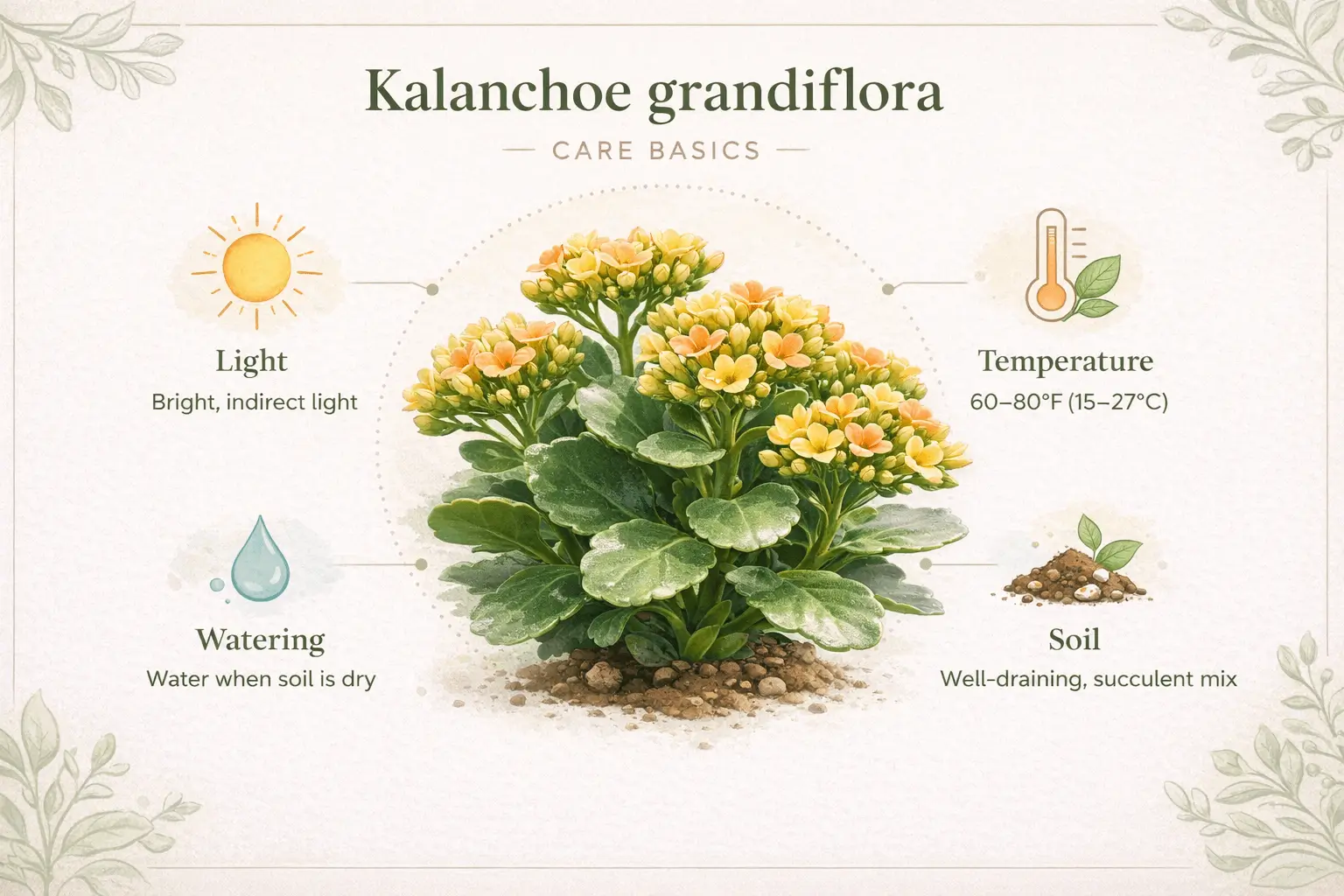
Kalanchoe grandiflora thrives in bright, indirect sunlight. A few hours of gentle morning sun encourage flowering, while harsh afternoon sun can stress the leaves. Indoors, placing it near a bright window works well. Outdoors, partial sun locations provide the best balance between growth and bloom production.
-
Soil Requirements
Well-draining soil is essential for healthy roots. A cactus or succulent potting mix allows excess water to escape quickly, reducing the risk of rot. Adding coarse sand or perlite improves drainage and supports strong root development.
-
Watering Needs
Watering should be moderate and spaced out. Allow the soil to dry between watering sessions, then water thoroughly. Overwatering is the most common mistake and leads to root problems. Understanding how to take care of kalanchoe flowers includes recognizing that consistent moisture is less important than proper drainage and drying cycles.
-
Temperature and Humidity Preferences
Ideal temperatures range between 60°F and 80°F (15°C–27°C). Kalanchoe grandiflora is sensitive to frost and should be protected when temperatures drop. Average household humidity is sufficient, and high humidity is unnecessary.
Kalanchoe Grandiflora Growth and Development
-
Growth Rate and Mature Size
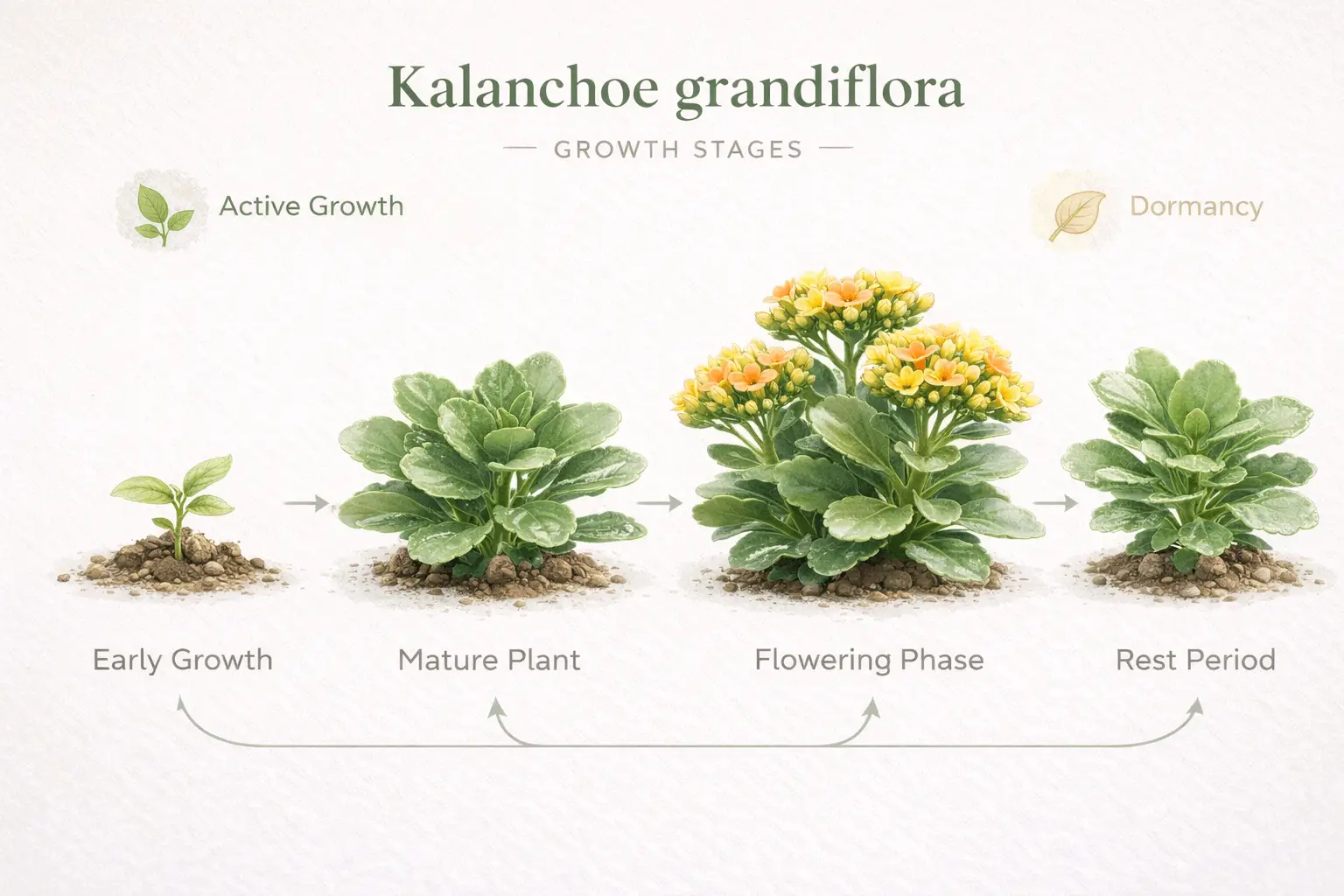
Kalanchoe growth is moderate, with the plant reaching a compact mature size suitable for containers. Seasonal changes influence growth speed, with faster development during warm months. Compared to kalanchoe blossfeldiana growth, kalanchoe grandiflora often appears slightly broader but remains similarly manageable.
-
Seasonal Growth Patterns
Active growth typically occurs in spring and summer, while growth slows during cooler months. This resting phase is normal and helps prepare the plant for future flowering cycles.
Pruning and Maintenance
When and Why to Prune
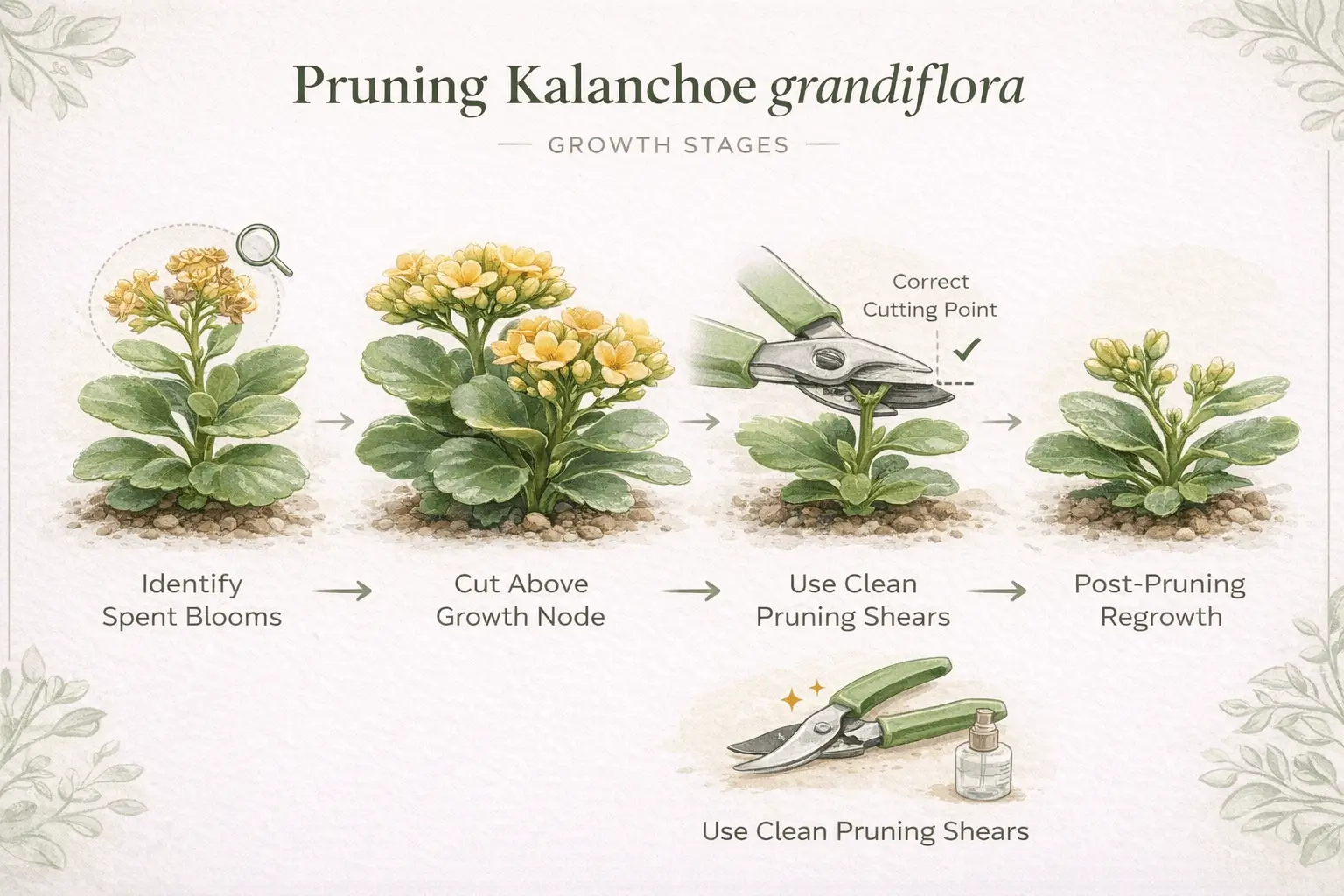
Pruning improves plant shape and encourages new blooms. Removing spent flowers prevents energy loss and supports healthier growth. Light pruning also keeps the plant compact and visually balanced.
How Do I Prune a Kalanchoe?
- Use clean, sharp pruning shears
- Cut off faded flower stems just above healthy leaves
- Remove leggy or damaged growth
- Prune after flowering for best results
Proper timing and clean tools reduce stress and promote quicker recovery.
Flowering and Bloom Cycle
-
Does Kalanchoe Grandiflora Bloom All Year?
No, kalanchoe does not bloom all year. Flowering usually occurs seasonally, triggered by light changes and rest periods. Shorter daylight hours often stimulate bud formation.
-
Encouraging More Blooms
Providing consistent light cycles supports repeat blooming. Deadheading spent flowers and avoiding excessive fertilizer helps redirect energy into new flower production.
Common Problems and Care Mistakes
-
Overwatering and Root Issues
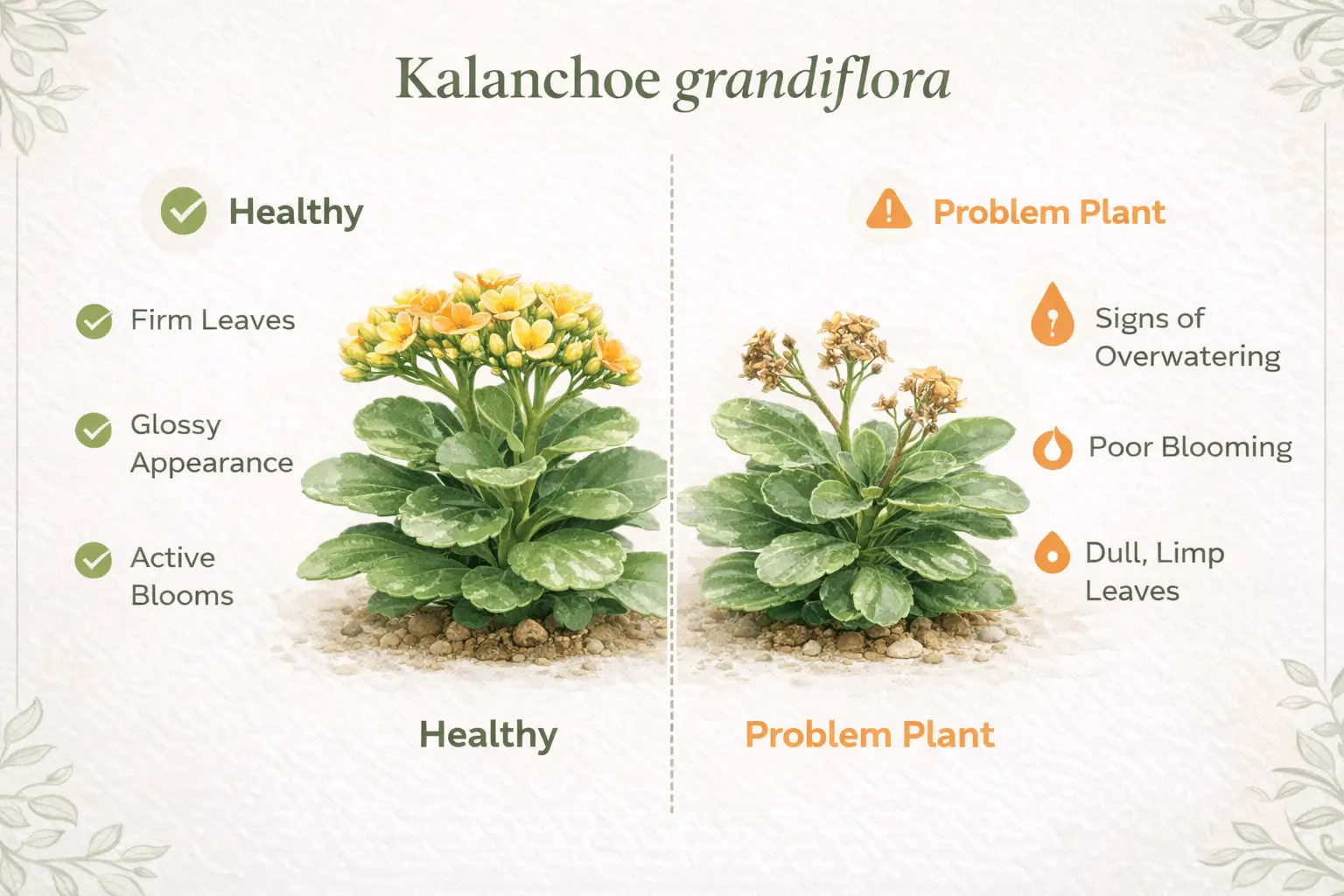
Signs of overwatering include soft stems, yellowing leaves, and root rot. Prevention depends on proper drainage, controlled watering, and avoiding waterlogged soil.
-
Poor Blooming Causes
Lack of light, improper pruning, and nutrient imbalance commonly reduce flowering. Dull leaves with reduced kalanchoe gloss often signal stress, indicating the need for better light or adjusted care routines.
Conclusion
Proper kalanchoe grandiflora care centers on balance—bright light, well-draining soil, controlled watering, and timely pruning. When these conditions are met, the plant maintains strong structure, healthy foliage, and reliable flowering cycles. Kalanchoe grandiflora is a true perennial in warm climates or indoor settings, capable of thriving for years without demanding care routines. Understanding its growth rhythm, seasonal rest periods, and sensitivity to excess moisture helps prevent the most common issues growers face. With consistent, attentive care, this plant rewards you with steady growth and vibrant blooms. Stay observant, adjust care as seasons change, and enjoy long-term success with a resilient, attractive flowering plant.
Read Also: 5+ Smart Rules on When to Fertilize Orchids for Stunning Blooms
FAQs
Is kalanchoe grandiflora a perennial plant?
Yes, kalanchoe grandiflora is a perennial when grown in warm climates or indoors. With protection from frost and proper care, it can live and bloom for several years.
How often should I water kalanchoe grandiflora?
Water only when the soil has dried out completely. Overwatering is more harmful than underwatering, so spacing out watering is essential.
Does kalanchoe grandiflora bloom more than once a year?
Yes, it can bloom multiple times a year under the right conditions. Proper light exposure and rest periods between bloom cycles encourage repeat flowering.
Can kalanchoe grandiflora grow indoors?
Yes, it grows well indoors when placed in bright, indirect light. Good airflow and proper watering support healthy indoor growth.
When is the best time to prune kalanchoe grandiflora?
The best time to prune is after the flowering cycle ends. This encourages new growth and prepares the plant for future blooms.
Why are my kalanchoe flowers not blooming?
Common reasons include insufficient light, improper pruning, excess fertilizer, or lack of a rest period. Adjusting light exposure and care routines usually restores blooming.

Written by the LeafyHeaven Editorial Team
LeafyHeaven shares practical gardening tips and simple plant care guides to help you grow, nurture, and enjoy your plants with ease. Our goal is to make gardening feel natural, approachable, and rewarding for everyone.