
Introduction to Laurus Bay Tree
The laurus bay tree is a well-known evergreen Mediterranean plant widely appreciated for its ornamental beauty and culinary value. Botanically known as laurus nobilis, this plant is also commonly referred to as the laurus nobilis bay tree or sweet bay tree. It has been cultivated for centuries in gardens, patios, and landscapes due to its elegant appearance and fragrant foliage. As a versatile bay tree plant, it can be grown as a small tree, hedge, or container specimen. The bay tree laurus nobilis is especially valued for its aromatic leaves, which are widely used as bay leaves in cooking. Because of its evergreen structure and classic Mediterranean heritage, the laurus bay tree remains a popular choice for both decorative and practical garden uses.
What Is a Laurus Bay Tree?
Scientific Name and Botanical Background
The scientific name of the laurus bay tree is Laurus nobilis, a species belonging to the laurel family. The scientific name of the laurus bay tree is Laurus nobilis, a species belonging to the laurel family and widely recognized as the true bay laurel tree. It is commonly known as the bay laurel tree laurus nobilis, recognized for its evergreen foliage and aromatic leaves used in culinary applications.
Key botanical facts include:
- Botanical name: Laurus nobilis
- Common name: bay laurel tree laurus nobilis
- Plant family: Laurel family (Lauraceae)
- Evergreen tree or large shrub
The terms laurus nobilis bay laurel and bay laurel laurus nobilis are frequently used interchangeably to describe this classic Mediterranean plant species.
Natural Habitat and Origin
The laurus bay tree is native to the Mediterranean region, where it naturally grows in warm, sunny climates with well-drained soil conditions. In its natural habitat, this evergreen species thrives along coastal areas and hillside environments.
Important habitat characteristics include:
- Native to Mediterranean countries
- Prefers warm climates
- Requires well-drained soil
- Often grown as baytree plants in ornamental gardens
Because of its adaptability and attractive foliage, the bay tree plant has been widely cultivated around the world.
Laurus Bay Tree Identification
How to Identify a Bay Leaf Tree
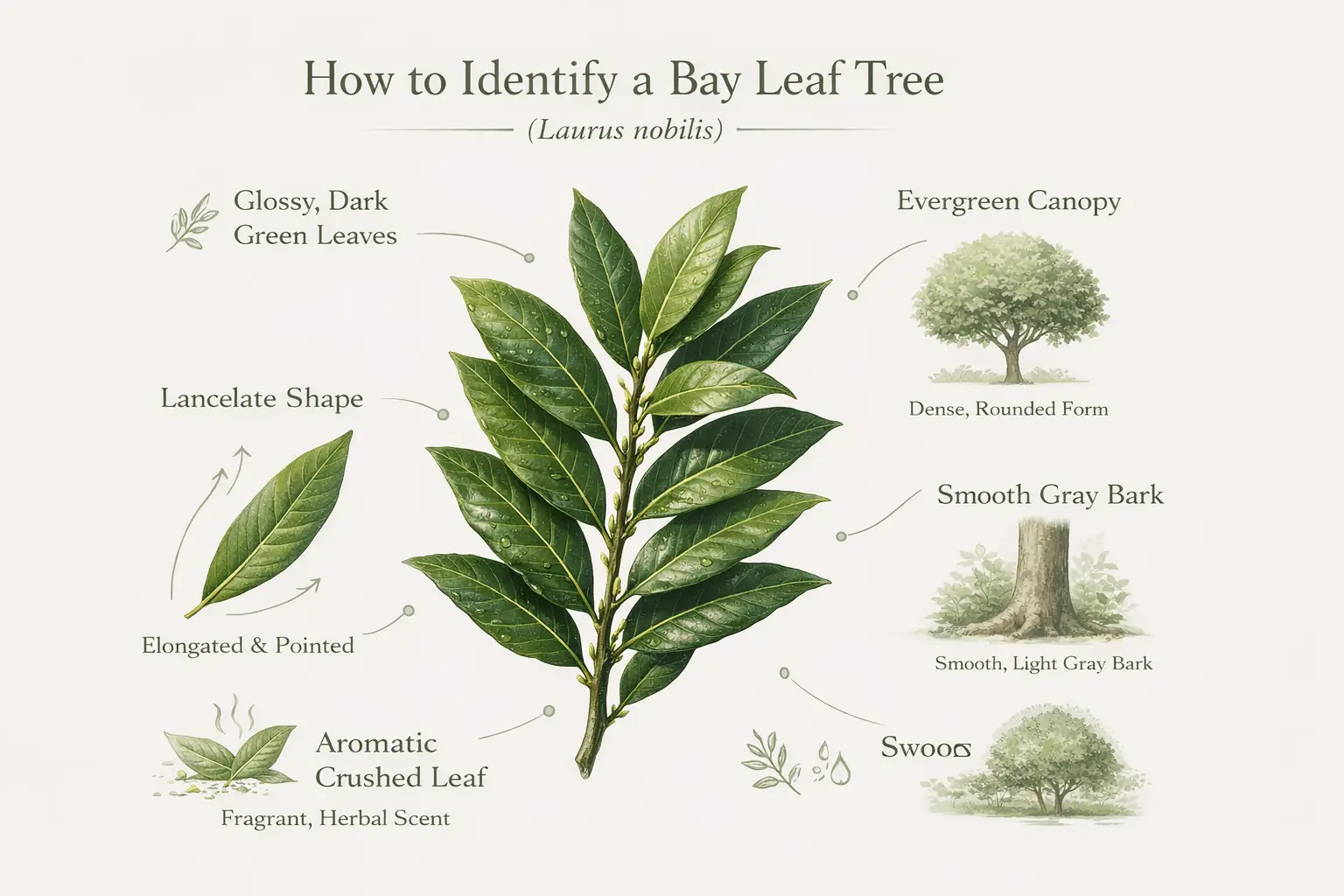
Learning how to identify a bay leaf tree is useful for gardeners and culinary enthusiasts. Accurate bay leaf tree identification focuses mainly on the tree’s evergreen structure and distinctive foliage.
Typical identification features include:
- Evergreen tree with dense branching
- Smooth gray bark
- Oval-shaped glossy leaves
- Strong aromatic fragrance when leaves are crushed
A mature bay leaf tree often appears as a small ornamental tree or shaped topiary in formal gardens. Multiple bay leaf trees may also be planted together to create hedges or decorative landscaping elements.
Recognizing Bay Tree Leaves
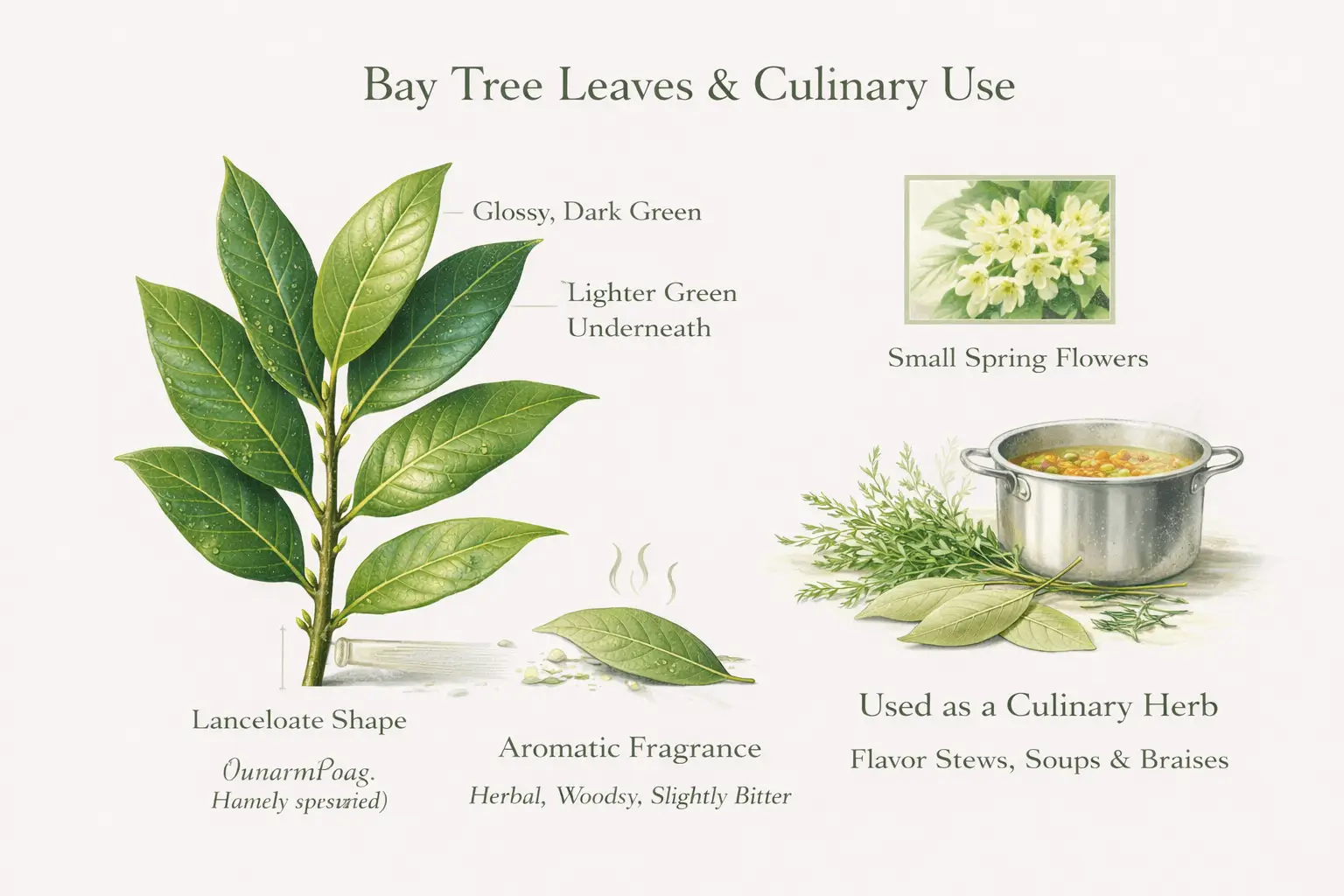
The most recognizable feature of the laurus bay tree is its glossy foliage. The bay tree leaves are dark green, leathery, and slightly pointed at the ends. The bay tree leaves are dark green, leathery, and slightly pointed at the ends, similar to other plants with waxy leaves that thrive in different climates.
Important leaf characteristics include:
- Dark green, glossy appearance
- Thick, leathery texture
- Strong aromatic scent when crushed
- Oval or lance-shaped structure
These laurel tree leaves contain essential oils that produce the distinctive fragrance associated with culinary bay leaves.
Laurus Bay Tree Height, Size, and Growth Rate
Average Laurus Bay Tree Height
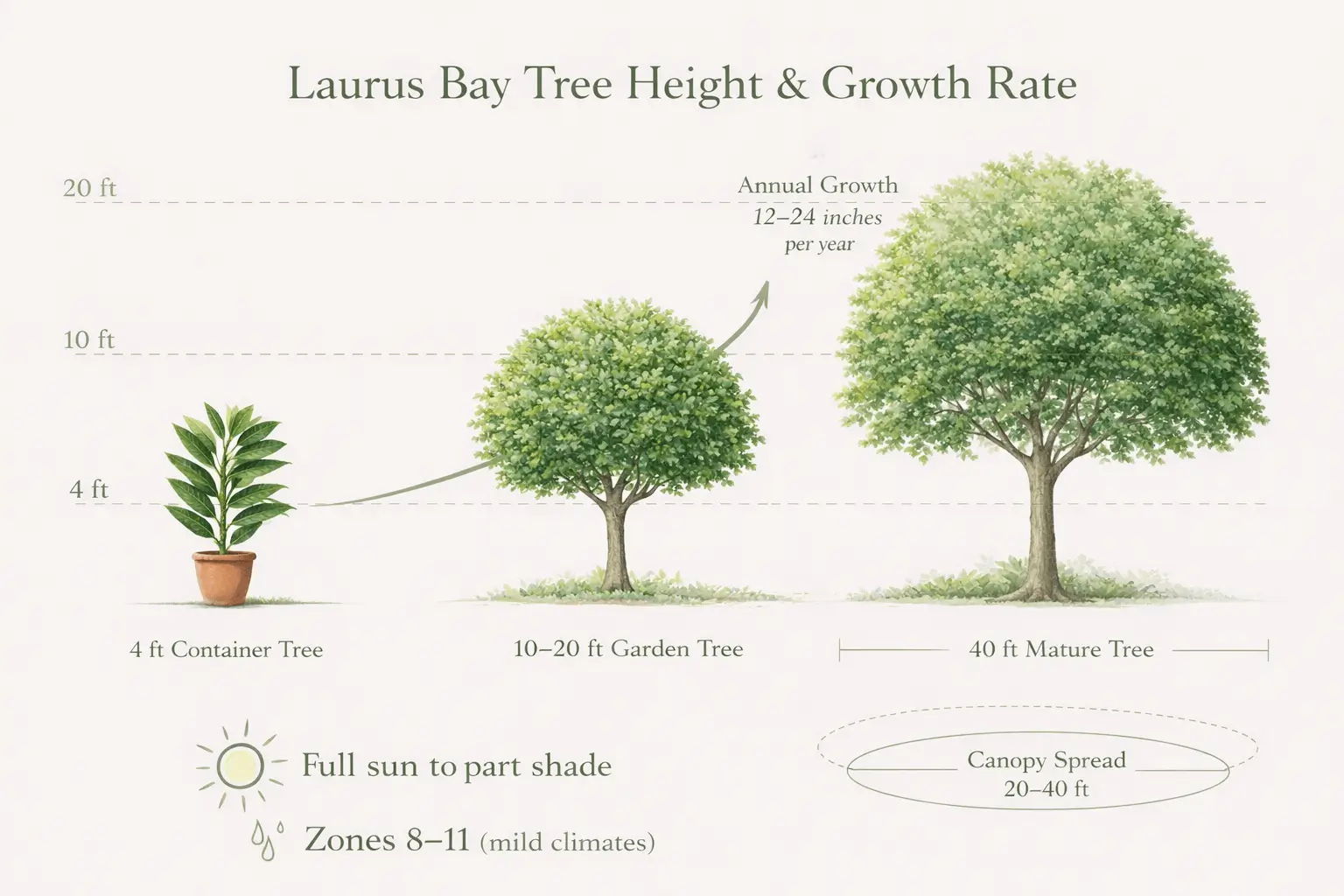
The laurus bay tree height varies depending on growing conditions and pruning practices. In most gardens, the tree remains compact and manageable.
Typical height ranges include:
- Container-grown trees: 4–8 feet
- Garden-grown trees: 10–20 feet
The average bay tree height is influenced by climate, soil quality, and regular pruning.
Mature Laurus Bay Tree Size
A fully mature laurus bay tree size can be impressive when grown outdoors without heavy pruning.
Common mature size characteristics:
- Height: 20–40 feet in ideal climates
- Spread: 10–20 feet wide
- Dense evergreen canopy
However, many gardeners maintain smaller sizes through shaping and pruning.
Laurus Bay Tree Growth Rate
The laurus bay tree growth rate is considered moderate compared to many landscape trees.
Typical growth expectations:
- Annual growth: 12–24 inches
- Slower growth in cooler climates
- Faster growth in warm Mediterranean conditions
Because it grows steadily rather than aggressively, the tree is ideal for controlled garden designs.
Laurus Bay Tree Flowers and Leaves
Bay Tree Flower Characteristics
Although primarily grown for foliage, the tree also produces small bay tree flowers during the blooming season.
Flower characteristics include:
- Small yellowish-green clusters
- Spring blooming period
- Often subtle and decorative
While the bay tree flower is not highly ornamental, it contributes to the tree’s natural seasonal cycle.
Leaf Structure and Culinary Use
The evergreen leaves are the most valuable feature of the plant. Bay tree leaves are widely used in cooking for their aromatic flavor.
Key culinary features include:
- Strong herbal fragrance
- Used in soups, stews, and sauces
- Leaves typically dried before culinary use
These aromatic leaves are harvested from the laurus nobilis bay tree and used as traditional bay leaves in many cuisines.
Laurus Bay Tree Varieties and Decorative Forms
Standard Laurus Bay Tree
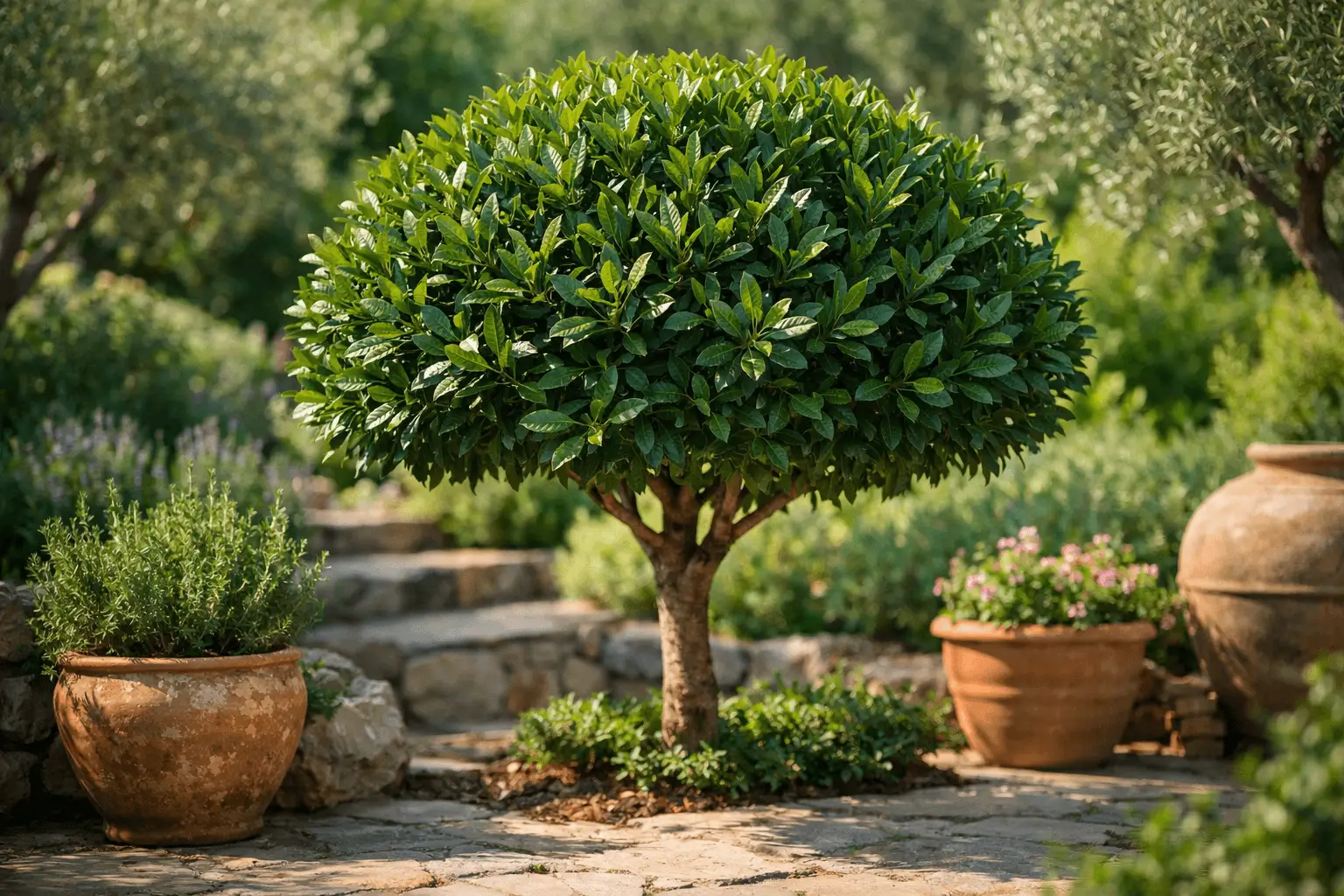
A laurus bay tree standard refers to a trained tree form with a straight trunk and rounded canopy. This formal shape is popular in structured landscapes.
The laurus nobilis standard bay tree is often used in patios, entryways, and symmetrical garden designs. This structured shaping style is similar to the artistic techniques used in bonsai tree cultivation, where plants are carefully trained for decorative garden displays.
Decorative Garden Forms
Garden designers often shape the plant into ornamental forms for visual interest.
Common decorative styles include:
- Laurus nobilis spiral bay tree
- Laurus nobilis pleached bay tree
- Laurus nobilis angustifolia bay tree cone pyramid
These forms are frequently used in formal landscaping and European-style gardens.
Popular Cultivars
Certain cultivars offer unique growth habits and foliage characteristics.
Popular varieties include:
- Laurus nobilis miles choice bay tree
- Laurus miles choice bay tree
- Laurus bay tree miles choice
These cultivars are often selected for their improved leaf density and ornamental quality.
Laurus Bay Tree Hedge and Landscaping Uses
Using Laurus Bay Tree as a Hedge
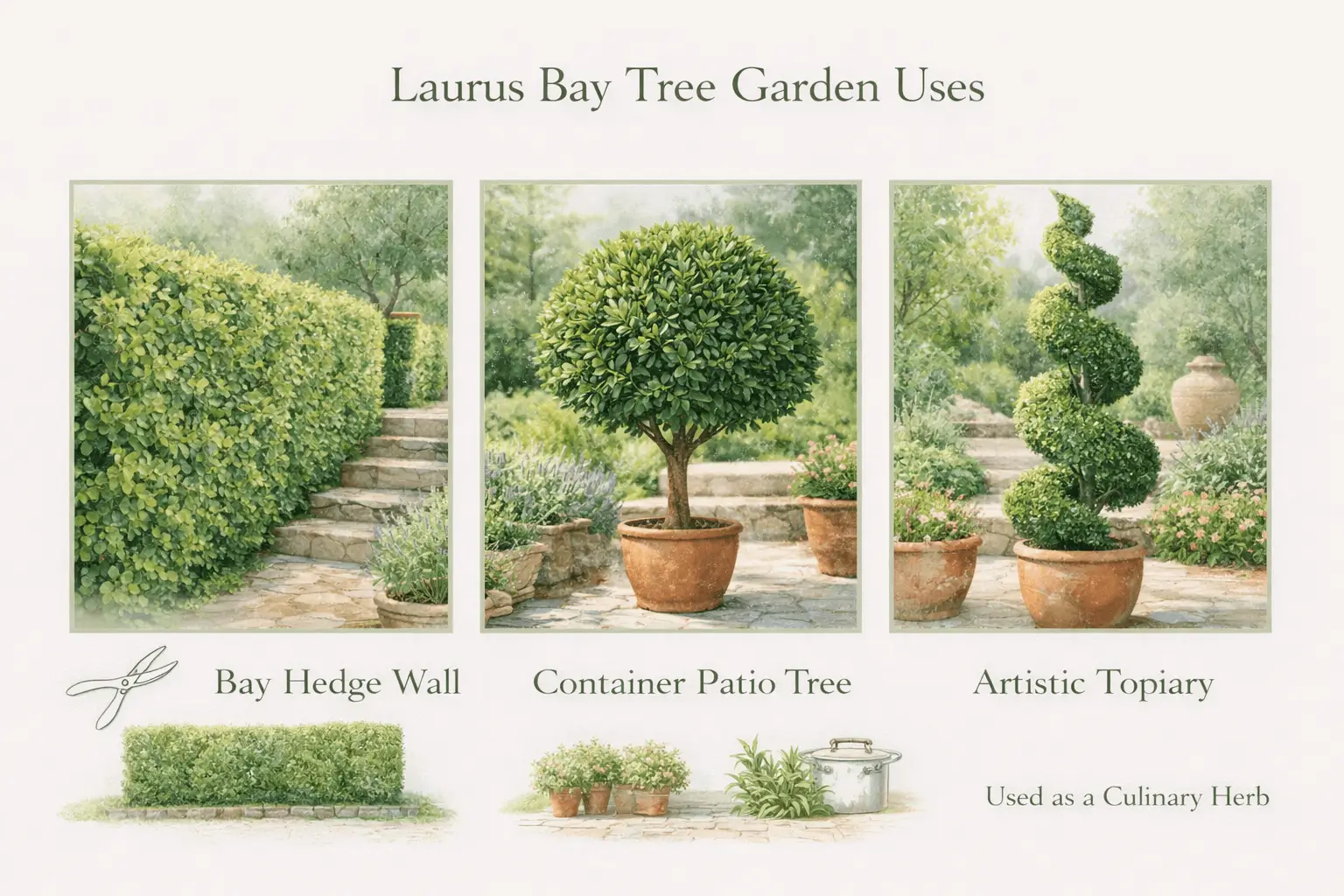
The laurus nobilis bay tree hedge is commonly used to create structured evergreen hedges in gardens.
Benefits of a bay hedge include:
- Dense foliage for privacy
- Year-round greenery
- Easy shaping through pruning
This makes the tree an excellent option for formal garden boundaries.
Ornamental Garden Uses
Beyond hedges, the baytree plant is widely used in decorative landscaping.
Common uses include:
- Container gardening
- Patio decoration
- Formal garden designs
Many gardeners grow baytree plants in pots for both culinary and ornamental purposes.
Laurus Bay Tree Pros and Cons
Benefits of Growing Laurus Bay Tree
The laurus bay tree pros and cons should be considered before planting.
Major benefits include:
- Evergreen decorative beauty
- Culinary leaves for cooking
- Excellent landscaping plant
- Suitable for containers and hedges
Possible Drawbacks
Despite its advantages, there are some limitations.
Possible drawbacks include:
- Slower growth in cold climates
- Requires occasional pruning
- Sensitive to severe frost
Understanding these factors helps gardeners maintain healthy plants.
Laurus Bay Tree Care and Growing Tips
Sunlight Requirements
The tree grows best in:
- Full sun
- Partial shade
Adequate sunlight supports healthy foliage and steady growth.
Soil and Water Needs
For optimal growth:
- Use well-drained soil
- Avoid waterlogged conditions
- Provide moderate watering
Proper soil conditions are essential for any bay tree plant.
Pruning and Maintenance
Regular pruning helps maintain structure and encourages dense foliage in the laurus nobilis bay tree.
Key maintenance practices include:
- Light annual pruning
- Removing damaged branches
- Shaping for decorative forms
Understanding proper care techniques is essential for keeping this evergreen tree healthy, and many gardeners follow proven practices found in comprehensive gardening and plant care guides.
Bay Laurel vs Bay Leaf
Bay Laurel vs Bay Leaf Differences
The terms bay laurel vs bay leaf often cause confusion.
Key differences:
- Bay laurel refers to the actual plant species Laurus nobilis.
- Bay leaf refers to the dried leaf used in cooking.
In simple terms, the bay leaf comes directly from the bay laurel tree.
Conclusion
The laurus bay tree is a versatile evergreen plant valued for both ornamental and culinary purposes. Known scientifically as laurus nobilis, this Mediterranean species offers glossy foliage, aromatic leaves, and flexible landscaping uses. Whether grown as a hedge, container tree, or decorative garden specimen, it adds timeless elegance to outdoor spaces. In addition to its aesthetic value, the leaves of the bay tree laurus nobilis are widely used in cooking, making it both a functional and attractive plant. With proper care, suitable sunlight, and well-drained soil, gardeners can successfully grow and maintain this classic evergreen tree for many years.
FAQs
What is a laurus bay tree?
A laurus bay tree is an evergreen Mediterranean plant scientifically known as Laurus nobilis. It is commonly called the bay laurel tree and is grown for ornamental landscaping and culinary bay leaves.
How tall does a laurus bay tree grow?
The laurus bay tree height typically ranges from 10 to 20 feet in gardens, although mature trees can reach up to 40 feet in ideal climates. The average bay tree height depends on growing conditions and pruning.
How can you identify a bay leaf tree?
Bay leaf tree identification involves looking for glossy evergreen leaves, aromatic foliage, and dense branching. Crushing a leaf releases the distinctive fragrance that helps confirm how to identify a bay leaf tree.
Does the laurus bay tree produce flowers?
Yes, the tree produces small bay tree flowers in spring. These bay tree flowers are typically yellowish-green clusters that appear subtly among the foliage.
What is the growth rate of a laurus bay tree?
The laurus bay tree growth rate is moderate, usually around 12–24 inches per year. Growth speed depends on climate, soil conditions, and sunlight availability.

Written by the LeafyHeaven Editorial Team
LeafyHeaven shares practical gardening tips and simple plant care guides to help you grow, nurture, and enjoy your plants with ease. Our goal is to make gardening feel natural, approachable, and rewarding for everyone.