
Introduction
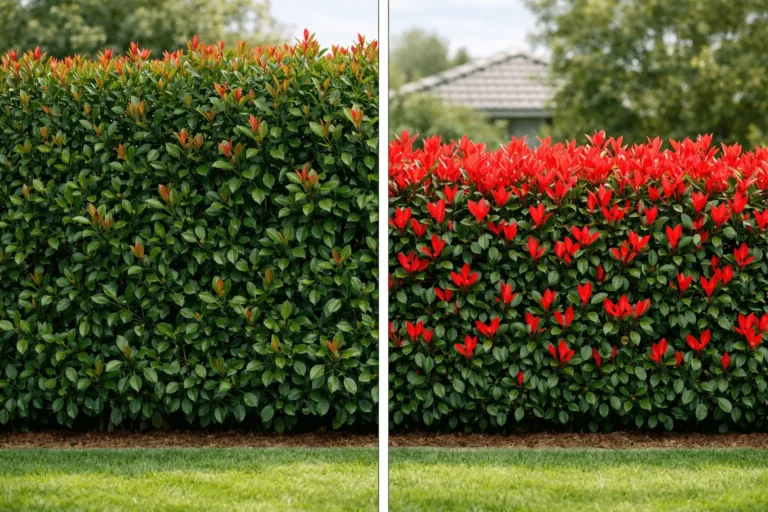
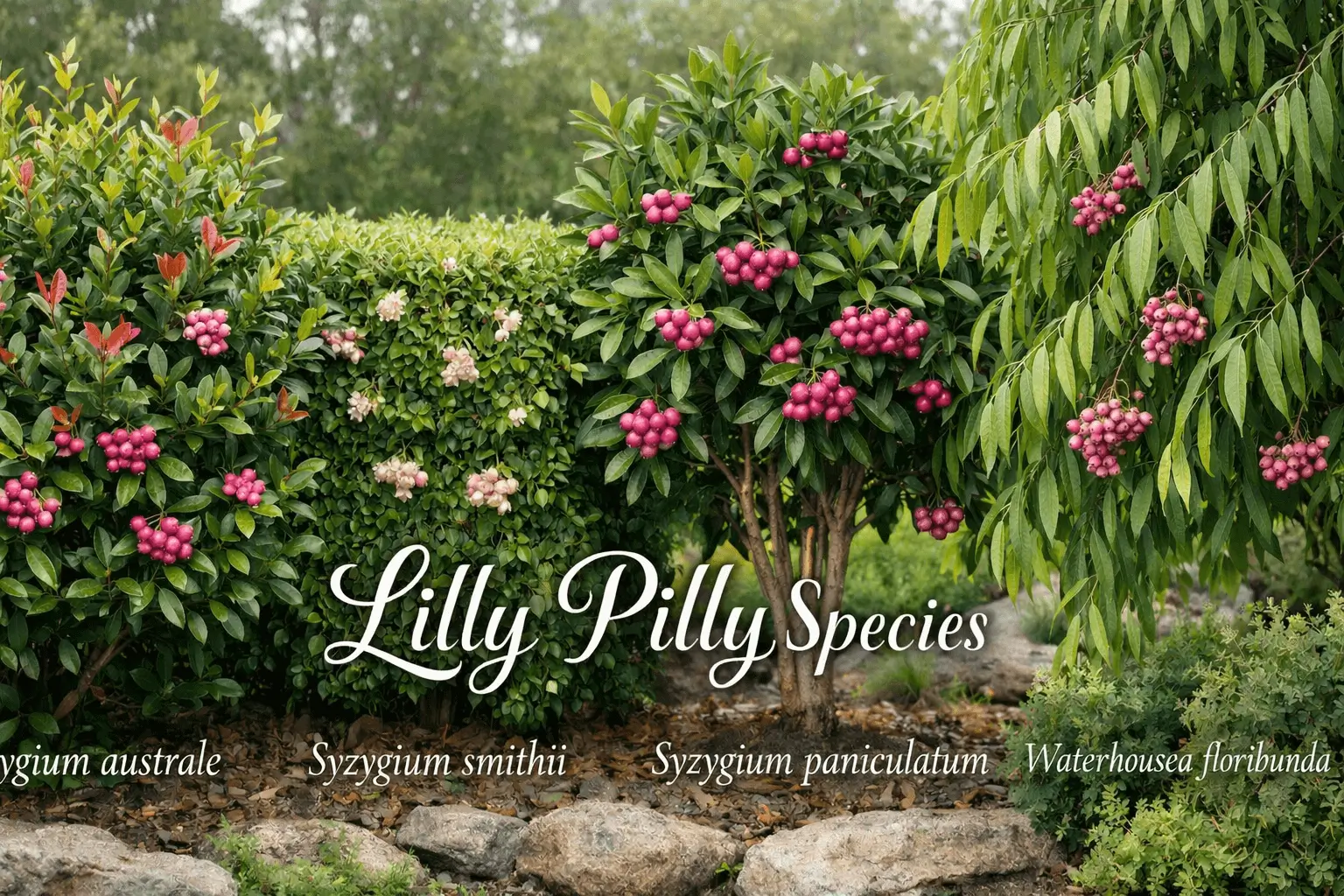
Lilly pilly species refer to a group of evergreen rainforest plants native to Australia and nearby regions. The term “lilly pilly” does not describe a single plant but includes several different species of lilly pilly within the genera Syzygium, Acmena, and related classifications. These types of lilly pilly vary in size, growth habit, leaf structure, and fruit characteristics. As an Australian lilly pilly group, they are widely distributed along coastal and subtropical regions. Confusion often arises between species, varieties, cultivars, and common names. Understanding the botanical differences between these categories is essential for accurate identification and informed plant selection.
What Are Lilly Pilly Species?
Lilly pilly species are evergreen plants belonging primarily to the Myrtaceae family. They include small shrubs and large rainforest trees commonly grouped under shared common names. While often treated as a single plant type, the group includes multiple botanical classifications.
Botanical Classification of Lilly Pilly
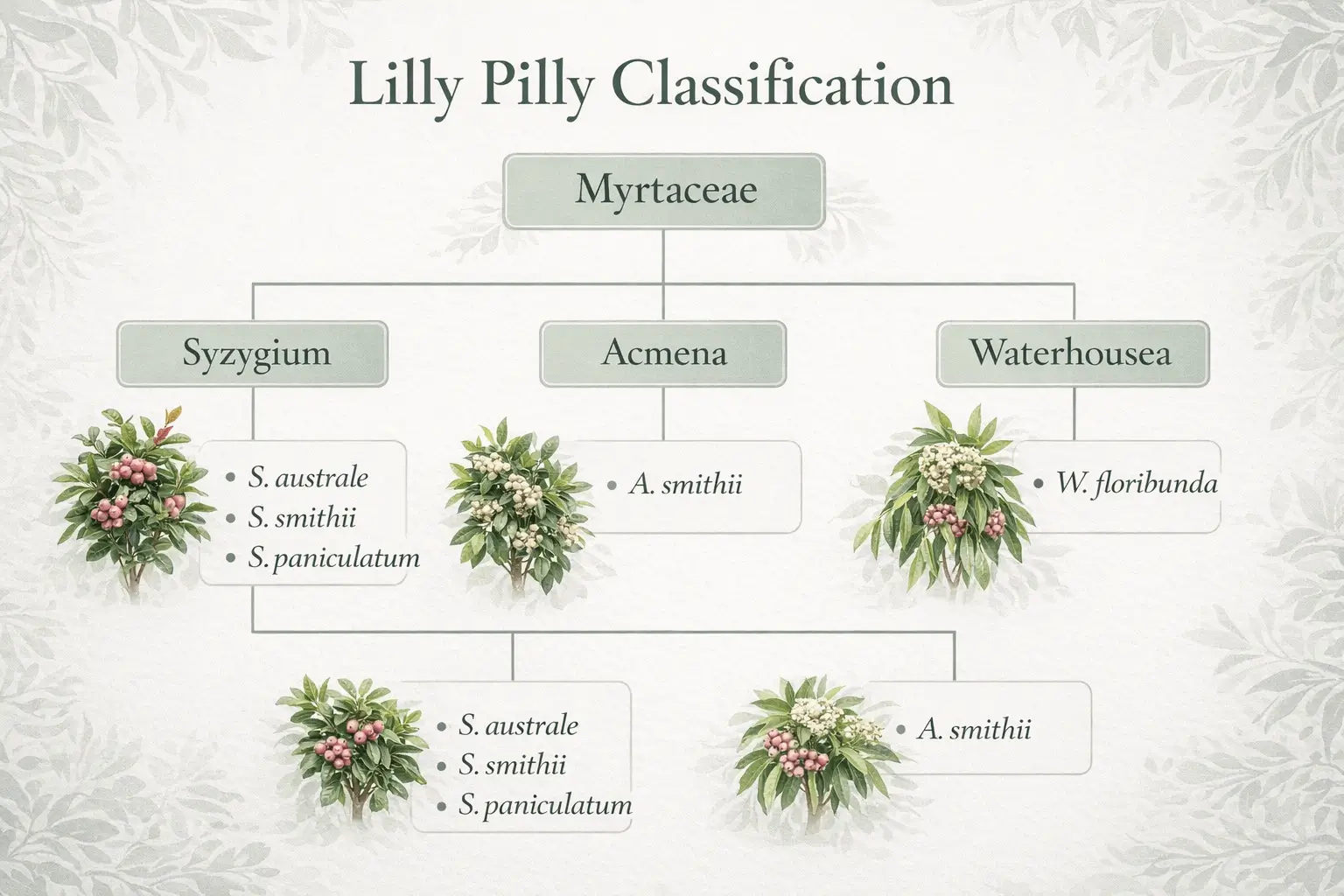
The botanical classification of lilly pilly includes the genera:
- Syzygium
- Acmena
- Waterhousea
The majority of commonly planted lilly pilly syzygium species belong to Syzygium. Historically, many lilly pilly syzygium and acmena species were classified separately, but taxonomic revisions have merged several Acmena species into Syzygium. The term syzygium lilly pilly is now widely accepted in botanical references. These classifications help distinguish true species from nursery hybrids and cultivars. The genus Syzygium includes hundreds of evergreen species across Australasia and Southeast Asia (see Syzygium genus overview on Wikipedia for botanical classification details).
Are Lilly Pillies Native to Australia?
A common question is: are lilly pillies native? Yes, most recognized species are native to Australia. If asking are lilly pillies native to Australia, the answer is that the majority of commonly grown species originate from eastern Australian rainforests and coastal environments.
Is lilly pilly native to Australia? Yes, particularly species such as Syzygium australe and Syzygium smithii. When discussing lillypilly Australia, the plants are associated with subtropical and temperate rainforest ecosystems, where they contribute to habitat diversity and wildlife food sources.
Complete Lilly Pilly Species List (Commonly Recognized Types)
Syzygium Australe
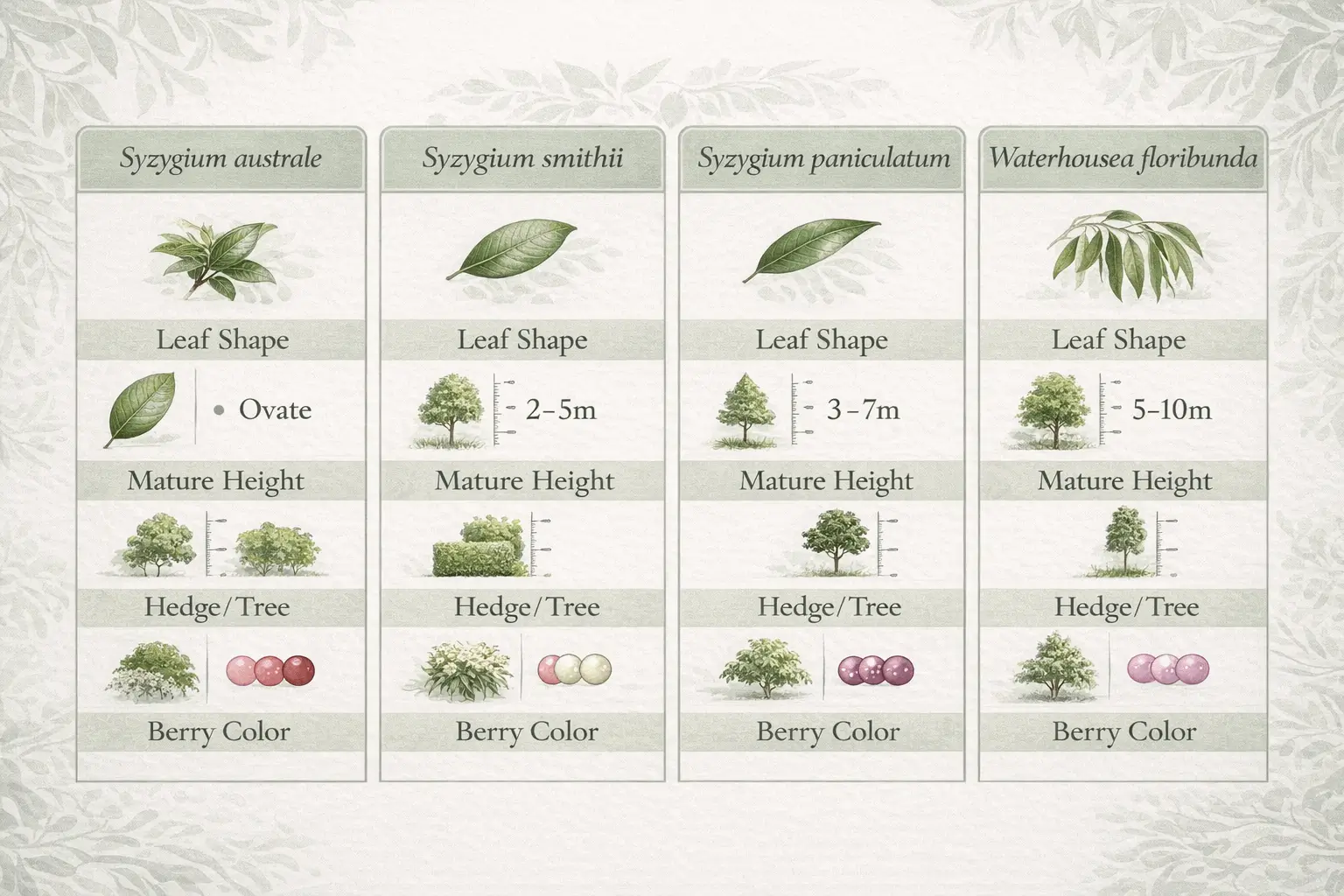
Syzygium australe is often referred to as the common lilly pilly. It is widely cultivated for hedging and screening. The cultivar syzygium australe resilience is a well-known example, valued for its adaptability. Lilly pilly australe resilience is frequently mentioned due to its tolerance to pruning and varied soil conditions.
Syzygium Smithii
Also historically classified as Acmena smithii, this species is a popular lilly pilly syzygium species hedge option. It is considered one of the most reliable lilly pilly hedge species due to dense foliage and moderate growth rate.
Syzygium Paniculatum
Syzygium paniculatum is commonly grown as an ornamental tree. It is considered a lilly pilly tree species that can reach significant height. Among lilly pilly large species, it stands out for its rounded canopy and prominent fruit clusters.
Waterhousea Floribunda
Previously grouped under lilly pilly classifications, Waterhousea floribunda differs in leaf shape and growth structure. Its leaves are typically longer and more pendulous compared to standard syzygium species.
Other Recognized Native Species
Additional entries within the lilly pilly species list include:
- Syzygium luehmannii
- Syzygium oleosum
- Syzygium moorei
Each lilly pilly species name reflects distinct ecological adaptations. The different species of lilly pilly and various types of lilly pillies demonstrate diversity in foliage color, fruit appearance, and mature size.
Differences Between Lilly Pilly Species and Varieties
Species vs Cultivars vs Hybrids
Understanding lilly pilly varieties is essential for accurate identification. A botanical species occurs naturally in the wild. Cultivars are selected forms developed for specific traits such as compact growth or pest resistance. Hybrids result from cross-breeding between species.
Lilly pilly varieties Australia nurseries often promote are cultivated selections rather than true species. The term lilly pillies varieties typically refers to named nursery cultivars. Lilly pilly types may describe either natural species or horticultural selections.
Growth Habits of Different Lilly Pilly Species
Tree vs Shrub Forms
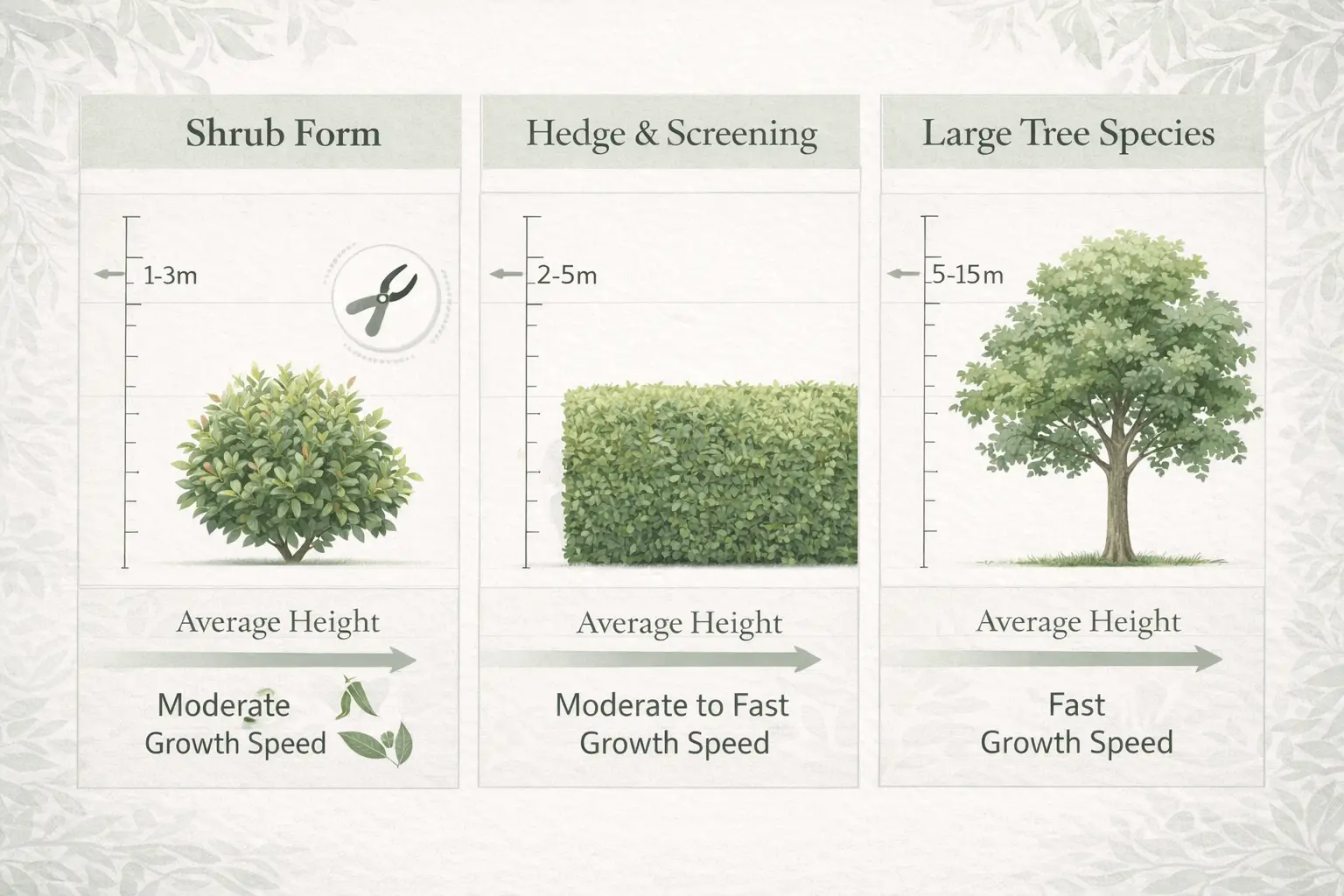
Lilly pilly shrub forms remain compact and dense, while lilly pilly tree varieties grow tall with structured canopies. Trees lilly pilly classifications may reach over 10 meters depending on species. The types of lilly pilly plants range from low hedging shrubs to rainforest canopy trees.
Hedge and Screening Species
Common lilly pilly hedge species include Syzygium australe and Syzygium smithii. Lilly pilly hedging plants are valued for dense foliage and pruning tolerance. Lilly pilly screening plants provide privacy due to upright growth. The best lilly pilly for screening typically depends on climate and available space. The best lilly pilly for hedge use combines moderate growth rate with compact branching.
Large Growing Species
Among lilly pilly large species, mature height varies significantly. How high do lilly pillies grow? Some species exceed 15 meters in optimal rainforest conditions. For a detailed breakdown of mature height, canopy spread, and structure, see our guide on Full Grown Lilly Pilly Tree. How fast do lilly pilly grow? Growth rates depend on soil, climate, and species selection. If you’re specifically researching growth speed across varieties, our article on How Quickly Do Lilly Pillys Grow? explains average yearly growth rates in detail.
Lilly Pilly Fruit Across Species
Are Lilly Pilly Berries Edible?
Are lilly pilly berries edible? Yes, most species produce edible fruit. Can you eat lilly pilly berries? In general, yes. Can you eat lilly pilly fruit safely? The lilly pilly fruit is commonly consumed fresh or used in preserves.
Lilly pilly berries vary in size, ranging from small pink fruit to larger purple varieties. Lilly pilly berry edible quality differs slightly between species. Lillypilly fruit taste may range from mildly sweet to tart. Lilly pillies fruit production also varies by climate and maturity.
Common Problems Across Lilly Pilly Species
Lilly Pilly Pests
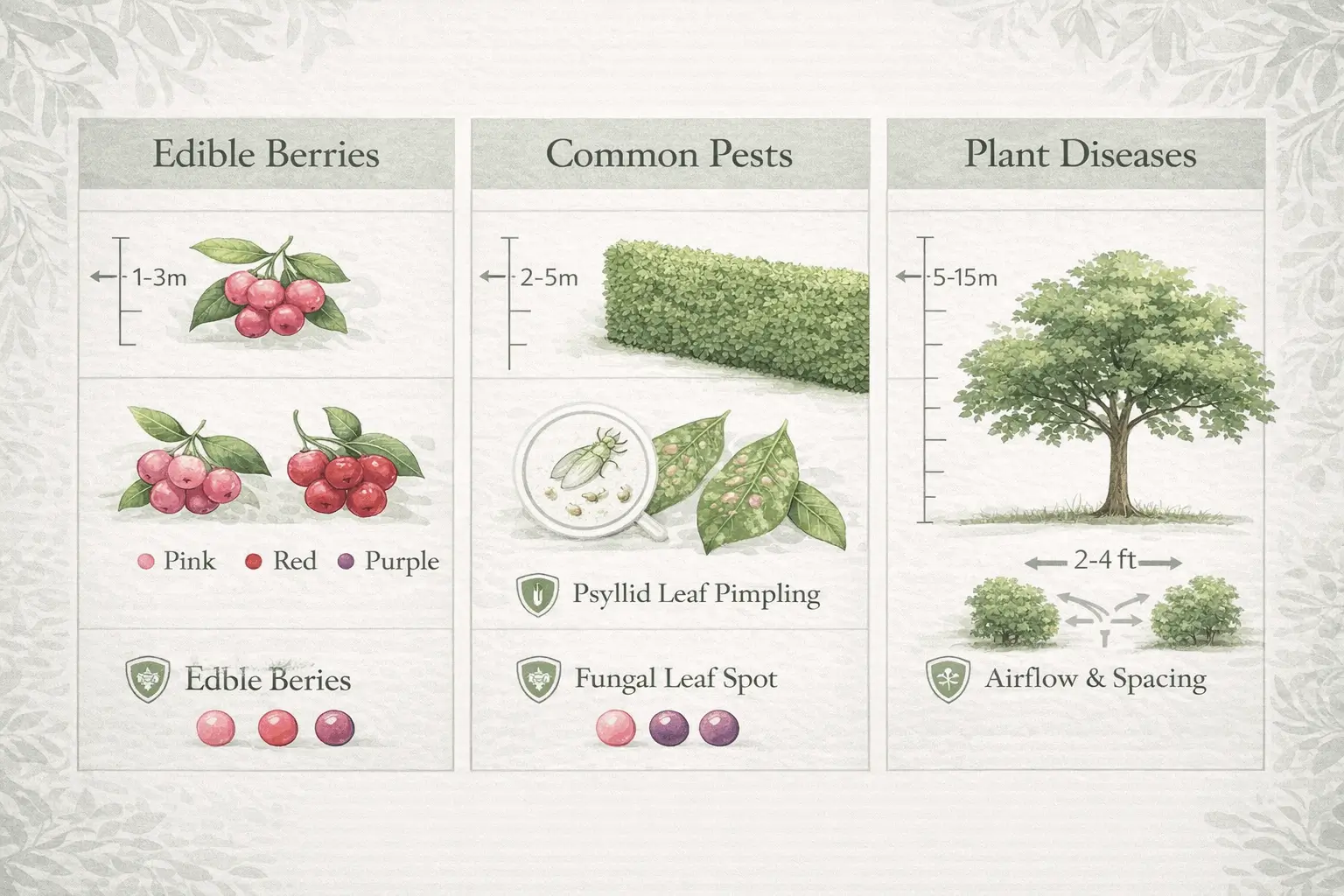
Common lilly pilly pests include psyllids and scale insects. Lilly pilly bugs can cause leaf pimpling and distortion.
Lilly Pilly Diseases
Lilly pilly diseases may involve fungal infections and leaf spotting. Lilly pilly plant diseases sometimes affect dense hedges. Lilly pilly hedge disease issues are often linked to poor airflow. Lilly pilly disease prevention depends on proper spacing.
General Growth Problems
Typical lilly pilly problems include nutrient deficiencies and overwatering. Problems with lilly pilly plants may also involve soil drainage. Lilly pilly resilience problems may occur if unsuitable cultivars are planted outside their ideal climate. Backyard bliss lilly pilly problems often relate to pruning stress or transplant shock.
How to Identify the Right Lilly Pilly Species for Your Garden
Climate & Native Range
Selecting species based on native distribution improves success. Fast growing lilly pilly varieties often perform best in coastal climates.
Hedge vs Tree Purpose
Choose hedge lilly pilly types for compact growth. Hedging lilly pilly species require regular pruning. Plant lilly pilly trees where vertical space is available. How to plant lilly pilly hedge structures depends on spacing and sunlight exposure.
Maintenance Level
Some species require frequent trimming, while others maintain natural shape with minimal pruning. Soil type and rainfall influence long-term performance. For broader planting principles, soil preparation tips, and general garden planning strategies, refer to our comprehensive Gardening & Plant Care Guide for Thriving Plants.
Conclusion: Understanding Lilly Pilly Species Before Planting
Understanding lilly pilly species ensures informed plant selection. Each species differs in size, growth habit, and ecological origin. Recognizing botanical distinctions between species and cultivars prevents confusion. Understanding different lilly pilly species helps you choose the right native plant for your climate, landscape size, and purpose.
FAQs About Lilly Pilly Species
How many lilly pilly species are there in Australia?
There are multiple native species across eastern Australia, primarily within the genus Syzygium, with additional classifications historically placed under Acmena.
What is the difference between Syzygium and Acmena lilly pilly species?
Taxonomic revisions have merged many Acmena species into Syzygium. Differences mainly involve botanical classification rather than practical garden traits.
Are all lilly pilly species native to Australia?
Most commonly grown species are native to Australia, though related species exist in Southeast Asia and the Pacific.
Which lilly pilly species grow the tallest?
Syzygium paniculatum and some rainforest species can grow over 15 meters under ideal conditions.
Are lilly pilly berries edible across all species?
Most species produce edible fruit, though flavor intensity varies between types.
What species of lilly pilly are best for hedging?
Syzygium australe and Syzygium smithii are commonly used due to dense foliage and strong pruning response.

Written by the LeafyHeaven Editorial Team
LeafyHeaven shares practical gardening tips and simple plant care guides to help you grow, nurture, and enjoy your plants with ease. Our goal is to make gardening feel natural, approachable, and rewarding for everyone.