
Introduction
The lily of the valley flower pink often sparks curiosity among gardeners and flower lovers who are familiar with the classic white blooms. Many people search for a true pink lily of the valley, only to encounter conflicting images, descriptions, and plant listings. This confusion comes from the plant’s natural color range, rare cultivars, and frequent online mislabeling. While traditional lily of the valley is known for its pure white, bell-shaped flowers, lighter blush and soft pink-toned forms have gained attention for their delicate ornamental appeal. The pink lily of the valley flower is considered uncommon, subtle, and highly sought after, making it important to understand what is genuinely available versus what is digitally enhanced or incorrectly marketed.
What Is a Pink Lily of the Valley Flower?
Understanding Lily of the Valley Basics
Lily of the valley is a perennial woodland plant botanically known as Convallaria majalis. It is native to temperate regions of Europe and Asia and is widely valued for its graceful appearance and strong, sweet fragrance. The plant produces slender arching stems lined with small, nodding, bell-shaped flowers that bloom in spring. These blooms sit above lush, lance-shaped green foliage that emerges from underground rhizomes. Lily of the valley is a low-growing plant, typically reaching 6–12 inches in height, and spreads slowly to form dense, elegant ground cover in shaded areas.
Does a True Pink Lily of the Valley Exist?
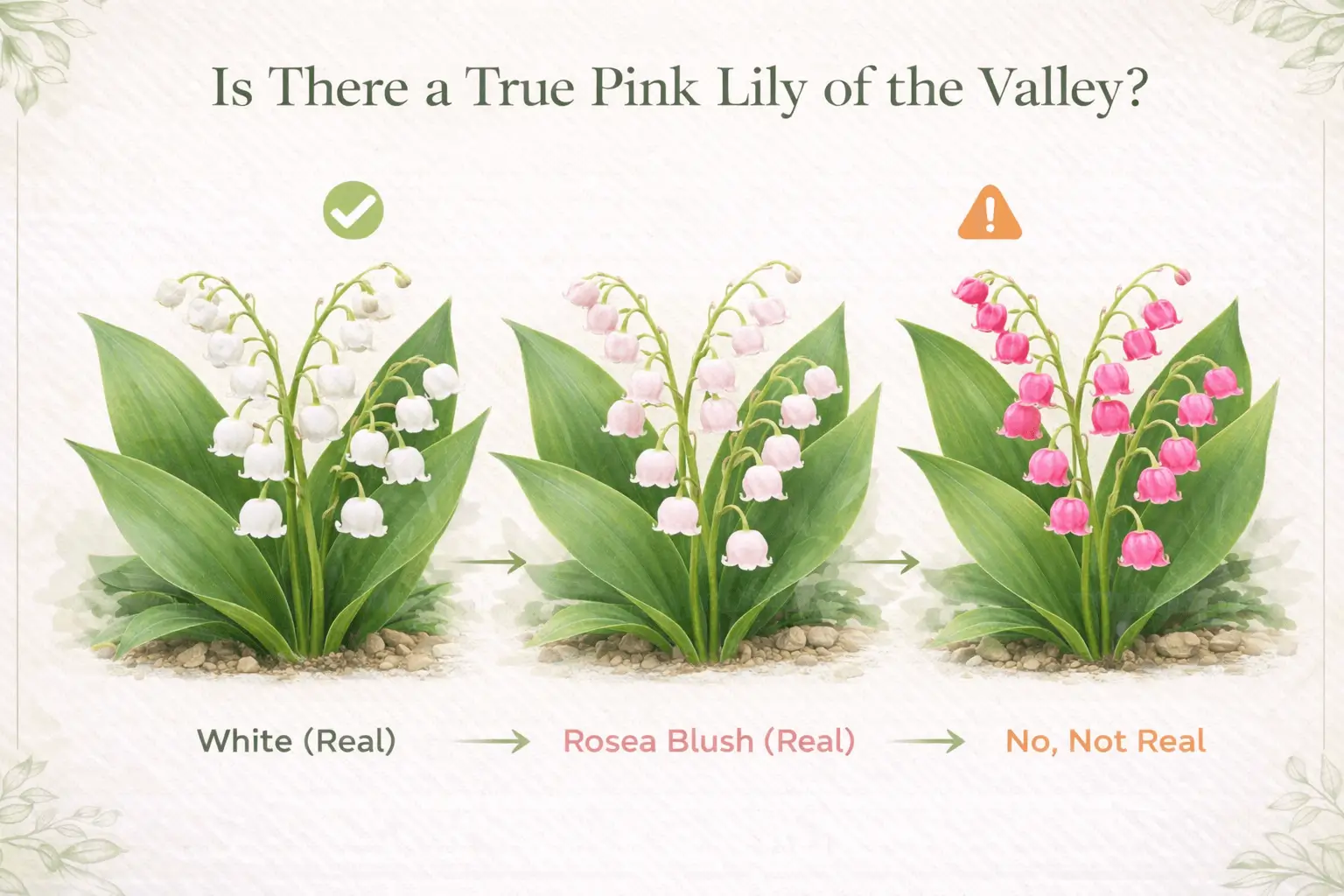
A true deep pink lily of the valley does not exist in nature. This is a common myth driven by edited photos and misleading plant listings. The closest natural variation is rosea lily of the valley, which displays very pale blush or soft pink-tinged flowers rather than a saturated pink color. Most plants described as pink appear that way due to lighting, soil conditions, or digital enhancement. Genetically, lily of the valley lacks the pigments required to produce strong pink tones, which is why authentic flowers remain white to faintly rosy rather than truly pink.
Rosea Lily of the Valley Explained
What Is Rosea Lily of the Valley?
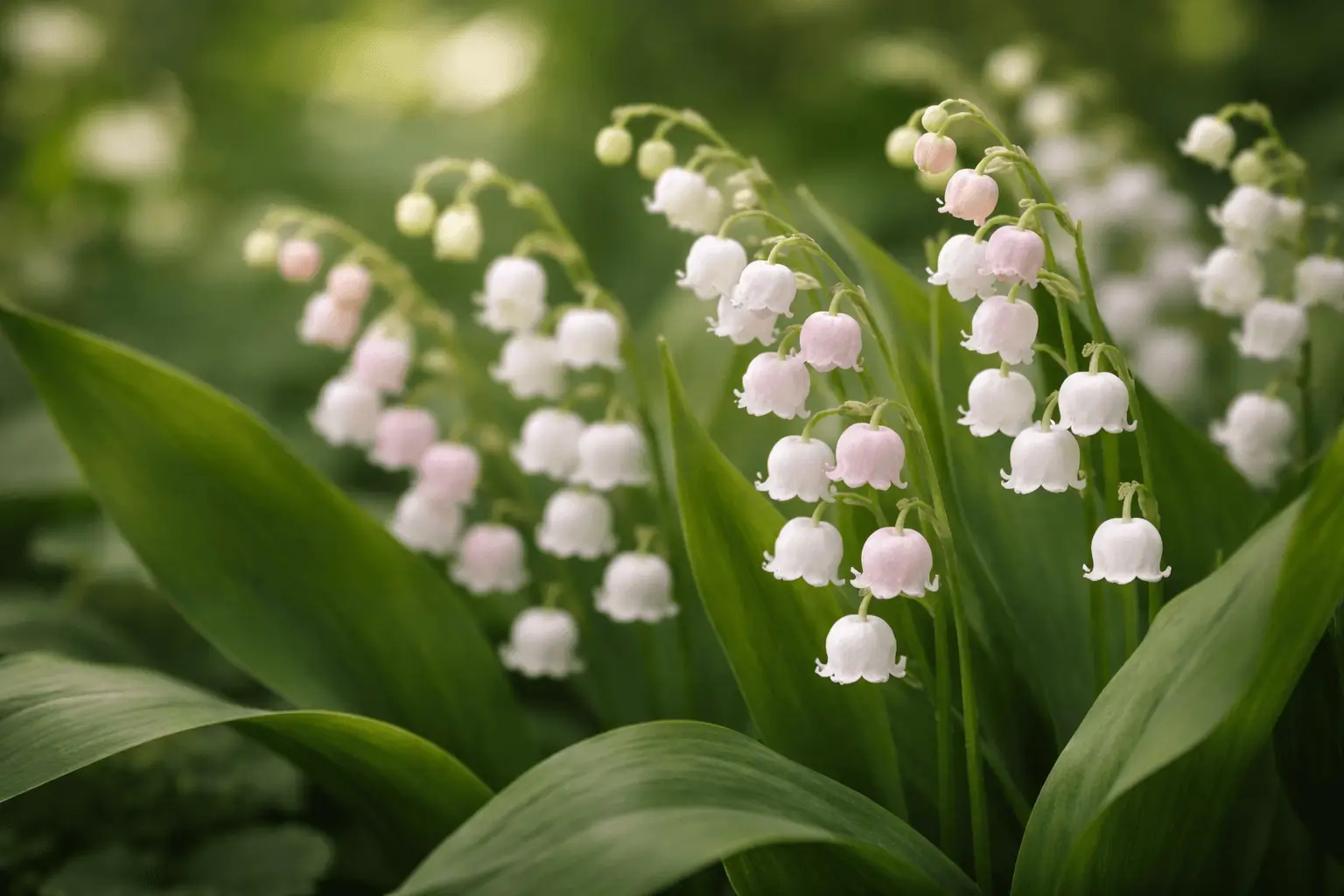
Rosea lily of the valley is a cultivated form of Convallaria majalis known for its subtle pinkish hue. It originated through selective cultivation rather than genetic modification and is prized for its rarity rather than bold color. This variety is often labeled as “pink” because its flowers show a noticeable blush when compared to traditional white forms. However, the coloration remains delicate and understated, not vivid or intense.
Flower Color, Shade, and Appearance
The flowers of rosea lily of the valley range from soft ivory with a pink flush to very light pastel pink. The color is most visible in bud stage and may fade as flowers mature. Searches such as lily of the valley pink and pink lilies of the valley often reflect this subtle appearance rather than a true pink bloom. In shaded gardens and cool climates, the blush tones may appear slightly stronger, but expectations should remain realistic and restrained.
What Color Is Lily of the Valley Naturally?
Traditional White Varieties
Naturally, lily of the valley flowers are white. This classic coloration is deeply tied to the plant’s cultural symbolism and garden popularity. White lily of the valley has long been associated with purity, renewal, and spring celebrations, making it a staple in formal gardens, weddings, and shaded landscapes. Its crisp white bells contrast beautifully against dark green leaves, which enhances its visual impact even without color variation.
Color Variations and Mislabeling
Some plants may display ivory, cream, or very pale blush tones, especially in certain growing conditions. These minor variations are often exaggerated in online listings, leading to confusion. Heavily saturated pink images are typically the result of photo editing or dyed flowers used for display. Understanding these natural limits helps buyers avoid disappointment and misinformation.
Pink Lily of the Valley vs Look-Alike Flowers
Common Pink Lily-Like Flowers
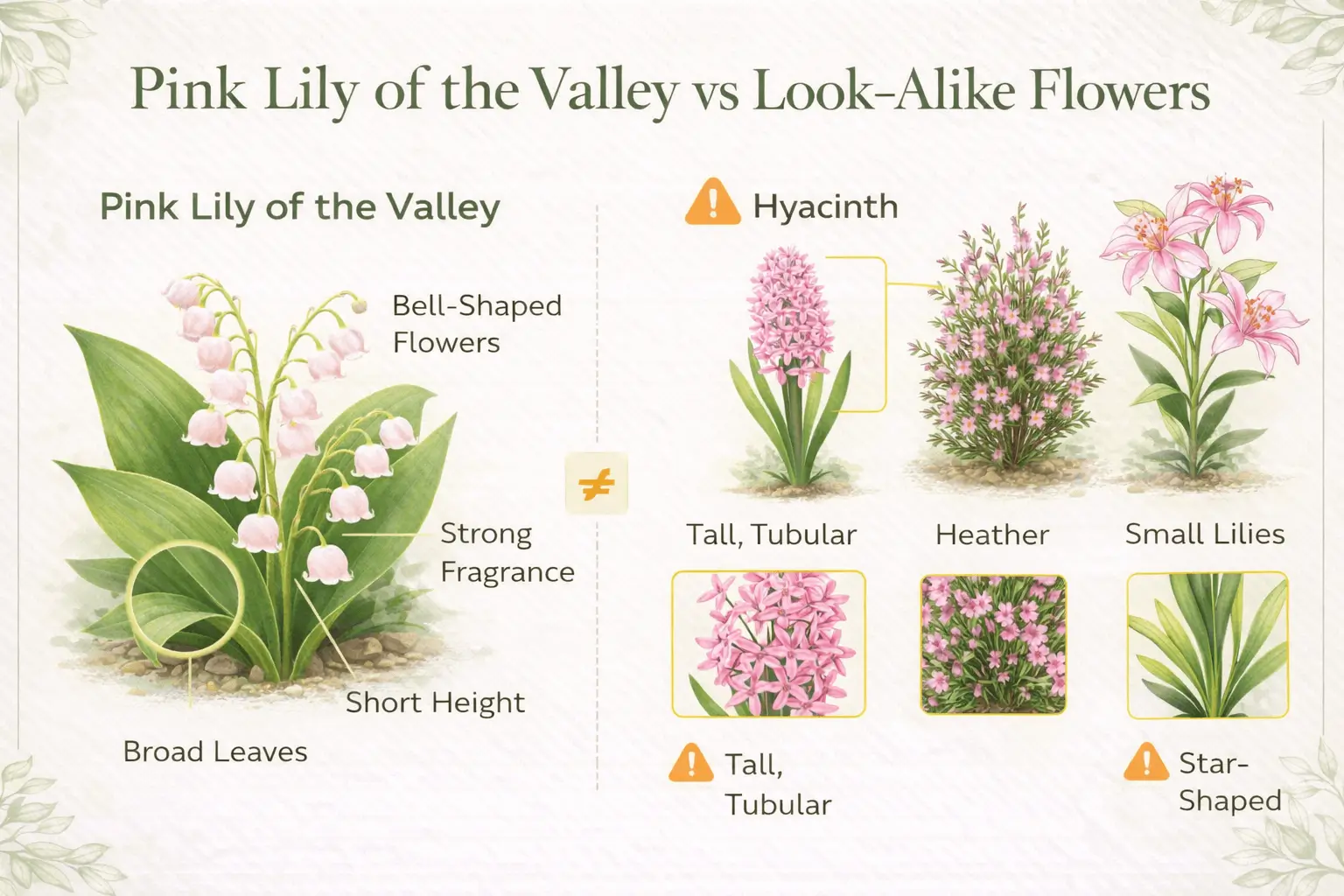
Several flowers are commonly mistaken for pink lily of the valley due to similar shape or growth habit. These include heather, hyacinths, certain dwarf lilies, and some bell-shaped spring bulbs. Searches like pink lily like flowers or pink lily like flower often refer to these alternatives, which naturally produce pink blooms but are botanically unrelated to lily of the valley.
How to Identify a Real Lily of the Valley
A real lily of the valley can be identified by its small, waxy, bell-shaped flowers that hang evenly along one side of a thin stem. The fragrance is strong and sweet, a key distinguishing feature. The plant remains short and compact, with two to three broad, smooth leaves emerging directly from the base. Look-alike plants often lack this fragrance, have different leaf arrangements, or grow significantly taller.
Rainbow Lily of the Valley — Fact or Fiction?
What Is Rainbow Lily of the Valley?
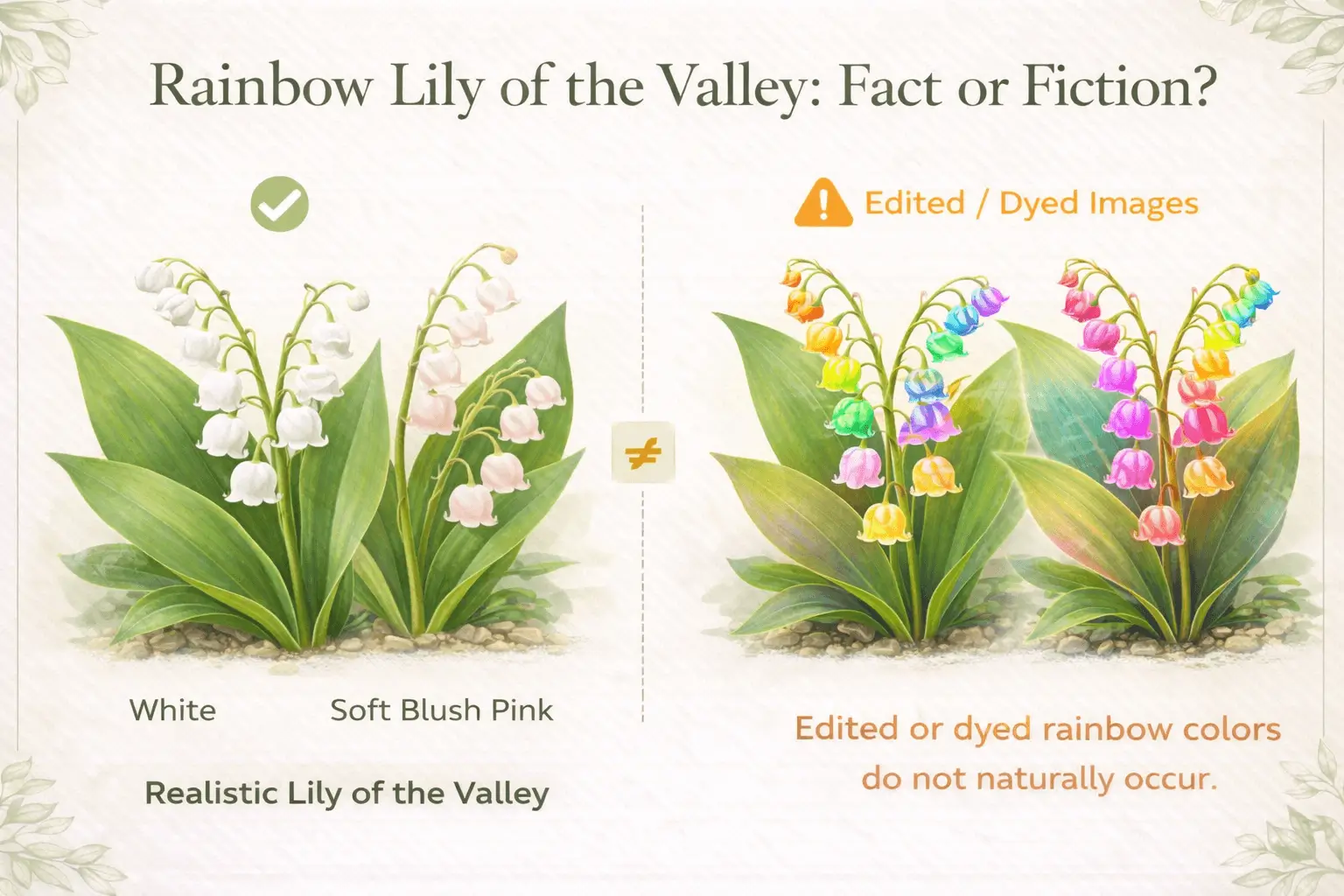
Rainbow lily of the valley is a marketing term, not a real plant variety. It typically refers to images showing multiple colors on the same flower cluster, which are created through digital editing or artificial dyeing. There is no naturally occurring lily of the valley that produces rainbow-colored blooms.
Why Color Variants Are Often Misrepresented
Online plant marketplaces frequently exaggerate colors to attract buyers. Lighting effects, filters, and altered saturation can dramatically change how flowers appear in photos. Buyers should rely on botanical descriptions rather than images alone, purchase from reputable nurseries, and be cautious of listings promising unrealistic colors.
Growing Pink Lily of the Valley Plants
Ideal Growing Conditions
Lily of the valley thrives in partial to full shade with cool temperatures and well-draining, humus-rich soil. It prefers consistent moisture but does not tolerate waterlogged conditions. The plant is cold-hardy and well-suited for temperate climates, where it can naturalize slowly and reliably over time.
Can You Grow Pink Lily of the Valley at Home?
Rosea varieties are available through specialty growers, though they are less common than white forms. When grown at home, gardeners should expect very subtle color differences rather than strong pink flowers. Even under ideal conditions, the blush tones remain soft and understated, which is part of their charm and authenticity.
Symbolism and Garden Value of Pink Lily of the Valley
Meaning and Symbolism
Lily of the valley traditionally symbolizes purity, humility, happiness, and renewal. When pink tones are present, they gently shift the symbolism toward affection, grace, and quiet romance without losing the plant’s classic meaning. The soft color enhances emotional nuance rather than replacing traditional symbolism.
Landscape and Ornamental Uses
Pink-toned lily of the valley works beautifully in shade gardens, woodland borders, and beneath deciduous trees. Its low height and spreading habit make it ideal as a refined ground cover. The gentle blush flowers add visual softness and elegance, blending seamlessly into naturalistic and classic garden designs without overwhelming surrounding plants.
Conclusion
The truth about the lily of the valley flower pink is more subtle than many online images suggest. There is no naturally occurring deep pink lily of the valley, and most claims of vivid pink varieties are based on misunderstanding or visual manipulation. The rare rosea lily of the valley remains the closest option, offering only soft blush or pale pink-tinged flowers rather than bold color. Because of its rarity and delicate appearance, realistic expectations are essential when searching for a pink lily of the valley flower. Informed buying, careful plant identification, and choosing reputable sellers help avoid disappointment. With proper knowledge and thoughtful selection, gardeners can still enjoy the elegance, fragrance, and ornamental value that lily of the valley is known for.
Read Also: 5+ Expert Secrets for Thriving Kalanchoe Grandiflora Care
FAQs
Is there a true pink lily of the valley flower?
No, there is no true deep pink lily of the valley. Natural varieties are white, with rosea forms showing only faint blush or light pink tones.
What is rosea lily of the valley?
Rosea lily of the valley is a cultivated form of Convallaria majalis known for its very soft pink-tinged or blush-colored flowers, considered the closest variation to pink.
Why do some pink lily of the valley images look so bright?
Many bright pink images are digitally edited, color-enhanced, or show dyed flowers. Natural lily of the valley does not produce saturated pink blooms.
Can I grow pink lily of the valley plants at home?
Yes, rosea varieties can be grown at home if sourced from specialty growers, but the color will remain pale and subtle rather than strongly pink.
What flowers look like pink lily of the valley?
Flowers such as heather, hyacinths, and some bell-shaped spring bulbs are often mistaken for pink lily of the valley due to similar form or color.
Is rainbow lily of the valley real?
No, rainbow lily of the valley is a marketing term. It refers to altered images or dyed plants and does not exist as a natural or cultivated variety.

Written by the LeafyHeaven Editorial Team
LeafyHeaven shares practical gardening tips and simple plant care guides to help you grow, nurture, and enjoy your plants with ease. Our goal is to make gardening feel natural, approachable, and rewarding for everyone.