
Introduction
My plant is drooping is one of the most common concerns plant owners face, especially when a healthy-looking plant suddenly starts to look weak or lifeless. Drooping often causes confusion because it can appear similar to wilting, limp growth, or shriveled leaves, but each condition signals a slightly different problem. Drooping usually means the plant is under stress, while wilting suggests severe water imbalance, limp leaves point to loss of firmness, and shriveled leaves often indicate dehydration. Understanding these differences is critical because early diagnosis can prevent permanent damage. Many plant owners search why is my plant drooping or why are my plants drooping because catching the issue early makes recovery faster and significantly improves the plant’s chances of returning to full health.
What Does It Mean When a Plant Is Drooping?
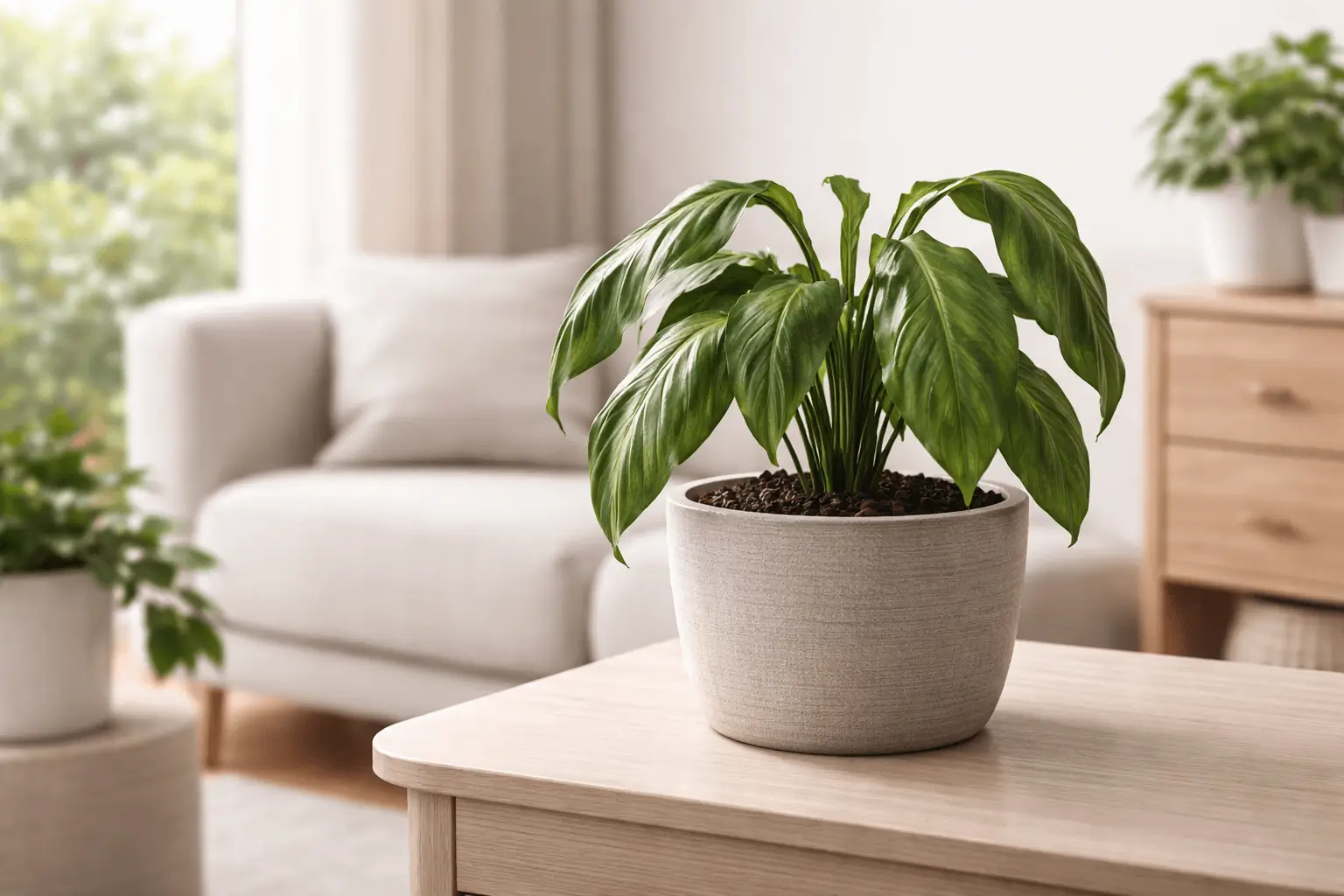
When a plant shows drooping leaves or droopy leaves, it is usually responding to stress rather than disease. Many plant owners ask what do drooping leaves mean, and in most cases, drooping is the plant’s way of signaling that something in its environment is not balanced. This stress can come from water issues, light problems, or environmental changes that affect how the plant maintains internal pressure in its tissues.
It is important to understand the difference between a temporary droop and serious wilting. Temporary droop often happens during the hottest part of the day or after mild stress and usually corrects itself once conditions improve. Serious wilting, however, indicates prolonged stress and can lead to permanent damage if ignored.
Common visual signs include limp leaves, stems that lose firmness, leaves that droop downward instead of holding their shape, and an overall plant limp appearance. These signs help indicate that the plant is struggling to maintain healthy structure and needs attention.
Common Reasons My Plant Is Drooping
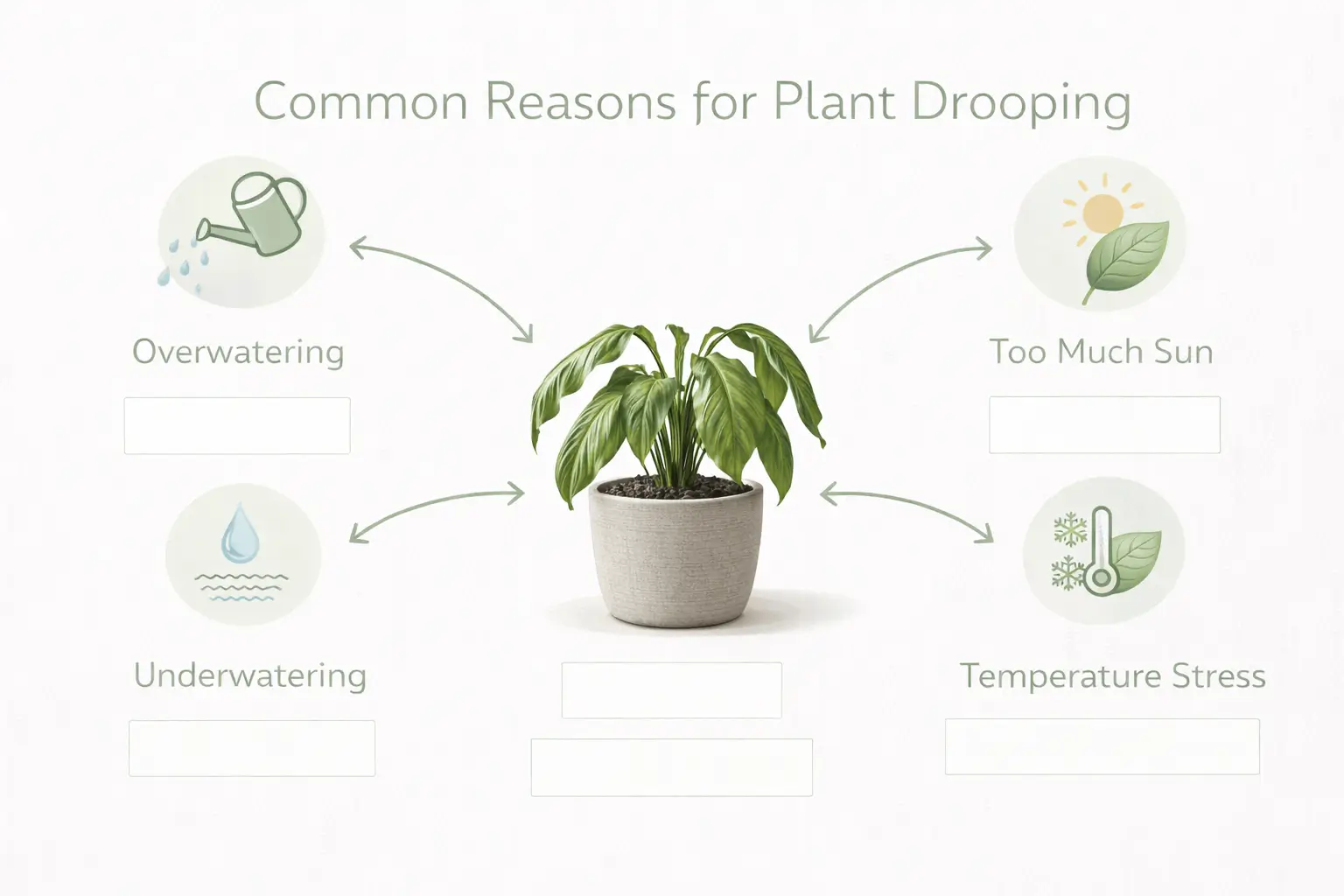
Understanding why my plant is drooping starts with identifying the most common stress factors. Drooping rarely happens without a cause, and diagnosing the issue correctly helps prevent further damage. Below are the core reasons plants lose firmness and begin to collapse.
-
Overwatering Issues
Overwatering is one of the leading reasons plant leaves drooping occurs, especially in potted plants. When soil stays constantly wet, roots become suffocated due to lack of oxygen. This prevents proper nutrient uptake and weakens the plant’s structure. As a result, leaves lose their ability to stay firm, and the plant may appear limp even though the soil is moist. In advanced cases, pot plant wilting can occur because damaged roots cannot support healthy growth, making it seem like the plant is wilting despite adequate watering.
-
Underwatering & Dehydration
Dry soil is another major cause of drooping, often leading to wilted leaves that feel thin and brittle. When plants lack sufficient water, they cannot maintain internal pressure, causing leaves to collapse. Visible signs include shriveled leaves, withered leaves, and stems that bend easily. Many plant owners ask why do plants wilt, and dehydration is often the simplest explanation. A single wilting leaf can be an early warning sign that watering habits need adjustment before the problem spreads.
-
Light Problems (Too Much or Too Little)
Improper light exposure frequently affects a drooping plant indoor. Low light conditions cause weak, stretched growth that cannot support leaf weight, resulting in a plant with droopy leaves. On the other hand, excessive sunlight can stress plants, causing moisture loss and heat damage that leads to drooping. Both extremes interfere with photosynthesis and energy balance, making light placement a critical factor in preventing droop.
-
Temperature & Environmental Stress
Sudden temperature changes are another common reason for plants drooping. Cold drafts from windows or air conditioners can shock indoor plants, while heat stress from radiators or outdoor heatwaves can rapidly dehydrate them. Outdoor drooping plants often react to intense sun, wind, or poor soil conditions, while indoor plants are more sensitive to airflow and temperature fluctuations. These environmental stresses disrupt normal plant function and result in visible drooping symptoms.
Indoor vs Outdoor Plant Drooping Problems
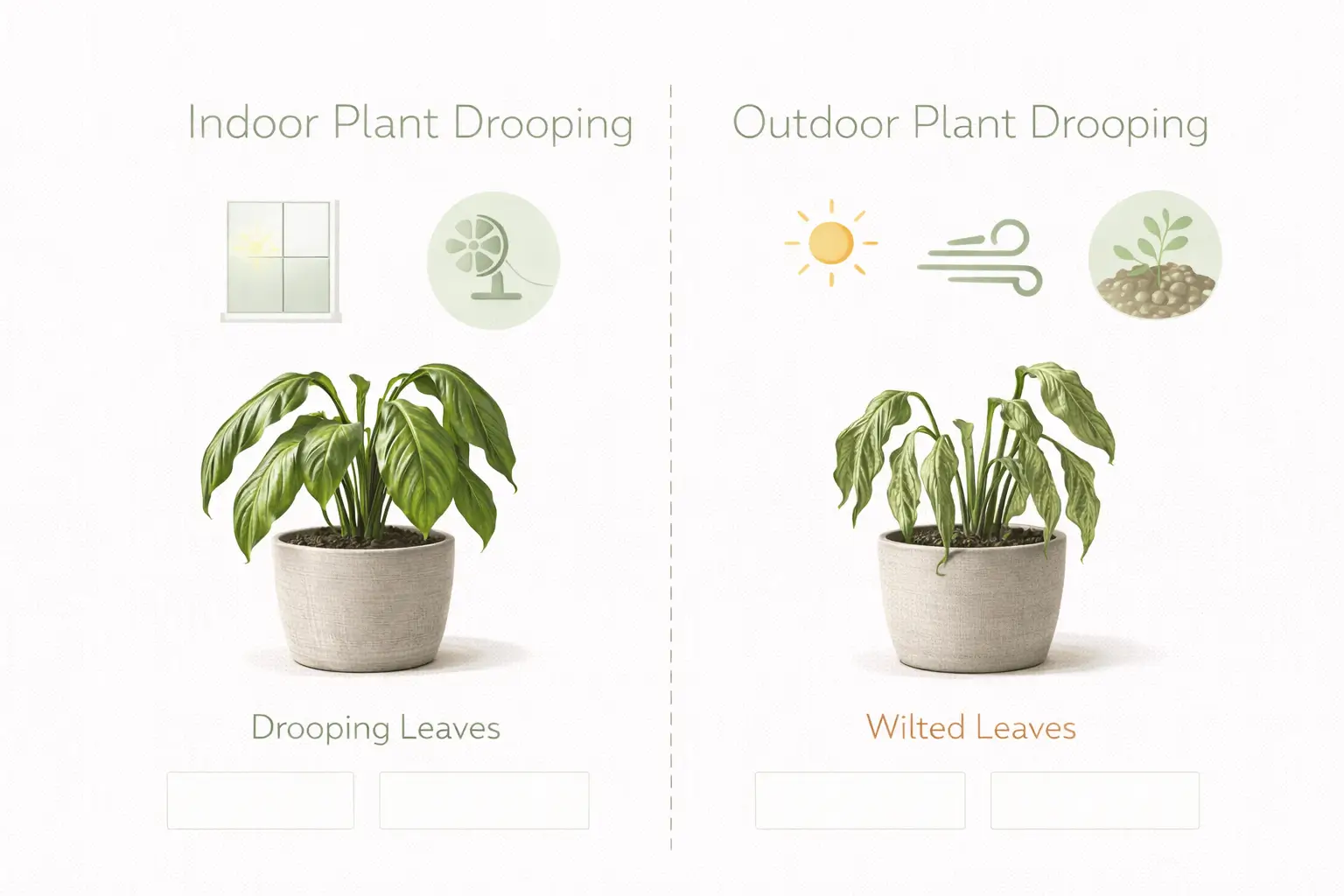
Plant drooping tends to occur more frequently indoors because indoor environments are more controlled but less natural. Limited airflow, inconsistent watering routines, artificial lighting, and restricted root space all contribute to indoor plant leaves drooping. Indoor plants often rely entirely on human care, so even small mistakes in watering, light placement, or temperature can quickly cause a drooping plant to appear weak or limp.
Outdoor plant drooping is usually linked to environmental factors such as weather extremes and soil conditions. Heavy rain can lead to poor drainage and root stress, while prolonged heat, wind, or drought can rapidly dehydrate plants. Soil quality also plays a major role outdoors, as compacted or nutrient-poor soil restricts root development and water absorption. While outdoor plants are generally more resilient, sudden changes in weather can still cause noticeable drooping plant symptoms that require prompt attention.
Plant-Specific Drooping Causes
Different plant types respond to stress in different ways, which is why identifying the plant category is essential when diagnosing drooping. Some plants are more sensitive to water balance, while others react quickly to environmental changes.
Succulent Plants Drooping
Succulents are designed to store water in their leaves, so when my succulent leaves are drooping, it usually signals a water storage imbalance. Overwatering causes swollen cells to weaken and lose structure, while underwatering forces the plant to use its stored moisture, leading to collapse. Because succulents rely on firm, hydrated tissues, even small watering mistakes can result in droopy succulent plants that appear soft or deflated.
Houseplants With Drooping Leaves
Many common houseplants show drooping as an early stress response. Gardeners often search why is my ivy drooping when ivy loses its trailing firmness due to inconsistent watering or low humidity. My mint plant is drooping is another frequent concern, as mint reacts quickly to dry soil and heat stress. Similarly, aluminum plant drooping leaves often indicate light imbalance or moisture issues. These houseplants respond well to quick adjustments, making early detection especially important for recovery.
How to Fix a Drooping Plant (Step-by-Step)
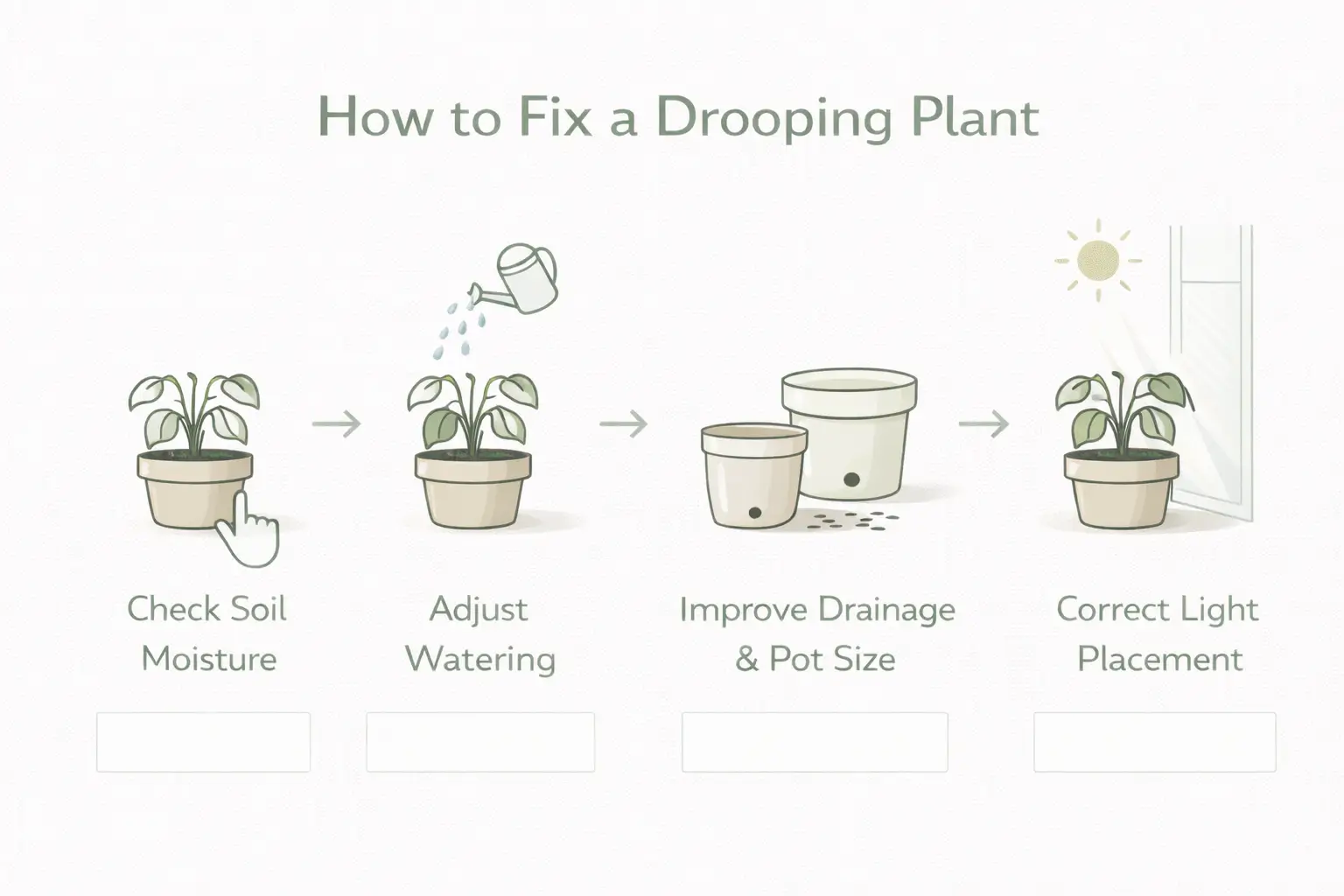
Fixing plant droop requires a systematic approach to identify and correct the underlying issue. Following these steps in order helps restore firmness and prevents further stress.
- Check soil moisture first
Always start by feeling the soil. If it is soggy, allow it to dry before watering again. If it is dry several inches down, the plant likely needs water. Correct moisture balance is essential for recovering droopy plant leaves. - Adjust watering schedule
Watering should match the plant type, season, and environment. Avoid rigid schedules and instead water based on soil condition. Consistent overwatering or underwatering is a primary cause of ongoing plant droop. - Improve drainage and pot size
Ensure the pot has drainage holes and is not too large or too small for the root system. Poor drainage traps excess water around roots, weakening the plant and contributing to droopy plant leaves. - Light and placement correction
Move the plant to a location with appropriate light levels. Too little light causes weak growth, while excessive light increases moisture loss. Correct placement helps stabilize plant structure and supports recovery from plant droop.
When Drooping Turns Into Wilting
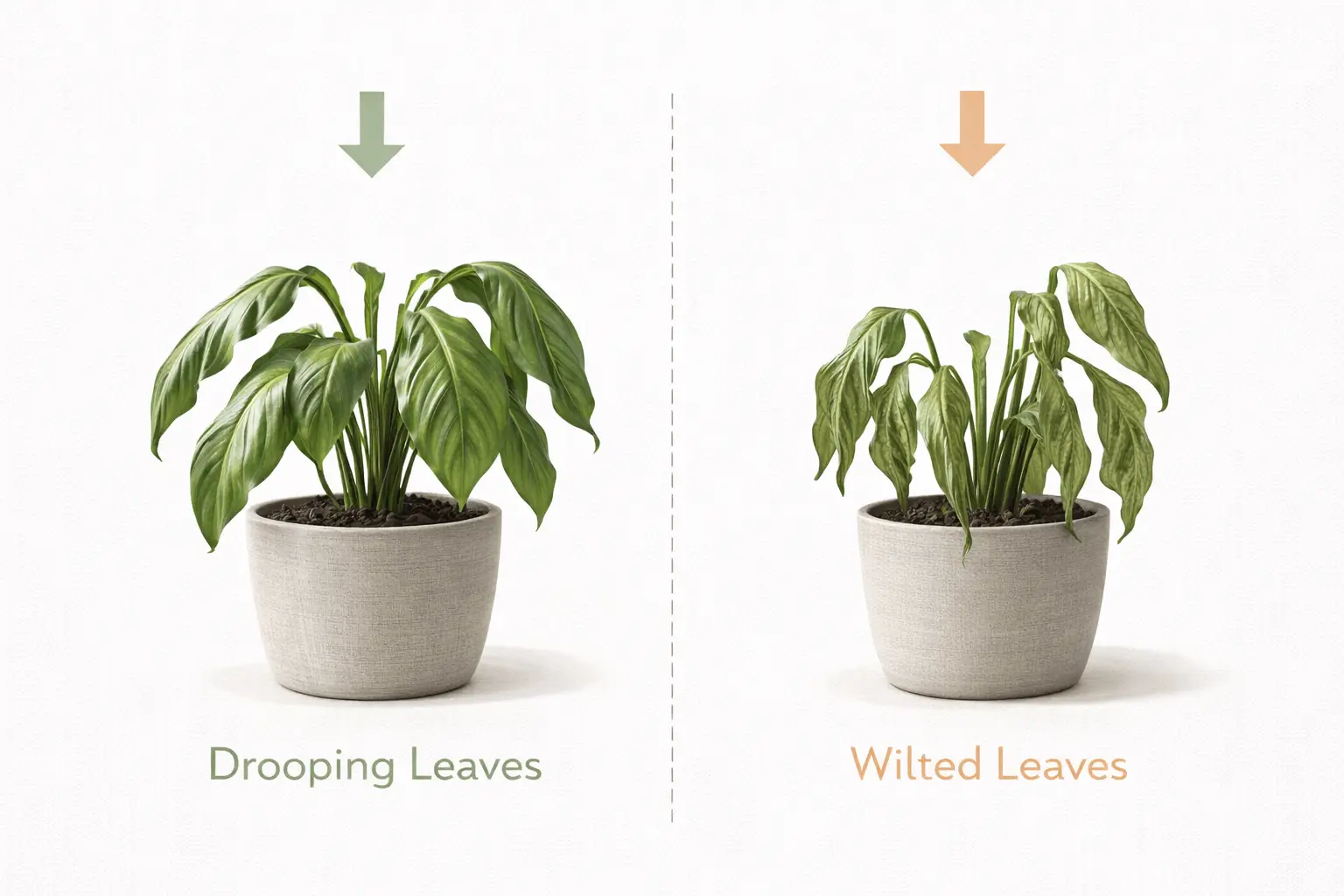
Understanding the difference between drooping and wilting is critical for plant recovery. Drooping is often a temporary response to stress, while leaves wilting indicate a more severe and prolonged problem. Drooping leaves may still feel flexible and recover once conditions improve, but wilting involves significant loss of internal water pressure that prevents the plant from holding its shape.
Warning signs appear when drooping progresses into wilted leaves that remain collapsed even after watering or environmental correction. Leaves may feel thin, dry, or brittle, and stems can lose firmness completely. At this stage, root damage or extreme dehydration may be present, making recovery more difficult. Recognizing these signs early helps prevent irreversible damage and increases the chances of saving the plant.
How to Prevent Plants From Drooping Again
Preventing future drooping starts with consistent care and awareness of plant needs. Many gardeners ask why are my plants leaves drooping, and prevention usually comes down to correcting daily habits.
- Proper watering habits
Water plants based on soil moisture rather than a fixed schedule. Allow excess water to drain fully and avoid letting roots sit in soggy soil, which reduces oxygen availability. - Right light placement
Place plants in light conditions suited to their species. Balanced light supports strong growth and prevents weak stems that lead to drooping. - Pot, soil, and airflow tips
Use well-draining soil, appropriately sized pots, and ensure good airflow around plants. Proper circulation helps regulate moisture and temperature, reducing stress that causes leaves to droop.
Conclusion / Call to Action
Seeing my plant is drooping can be stressful, but in most cases, the problem is fixable with the right approach. Drooping is usually a response to water imbalance, light issues, or environmental stress rather than a permanent condition. Identifying the cause early allows you to correct it before the plant progresses to serious wilting or long-term damage. Regularly checking soil moisture, monitoring light exposure, and observing changes in leaf structure can make a significant difference. With consistent care and timely adjustments, most drooping plants can regain strength, firmness, and healthy growth. Make it a habit to inspect your plants frequently and respond quickly to early warning signs.
Read Also: 7+ Stunning Plants With Waxy Leaves That Thrive Anywhere
FAQs
Why is my plant drooping even though the soil is wet?
When soil stays wet for too long, roots can become oxygen-deprived. This root stress prevents proper water and nutrient uptake, causing drooping even though moisture is present.
What do droopy leaves mean in indoor plants?
Droopy leaves in indoor plants usually indicate environmental stress such as improper watering, low light, temperature fluctuations, or poor airflow rather than disease.
Why are my plants drooping during the day but fine at night?
This often happens due to heat or light stress. During the day, plants lose more water through transpiration, causing temporary drooping that recovers when temperatures drop at night.
Can drooping leaves recover on their own?
Yes, if the drooping is caused by mild or temporary stress. Once proper watering, light, or temperature conditions are restored, leaves can regain firmness.
Why is my plant wilting after repotting?
Repotting can disturb roots and cause transplant shock. Temporary wilting occurs as the plant adjusts, especially if roots were damaged or watering needs changed after repotting.

Written by the LeafyHeaven Editorial Team
LeafyHeaven shares practical gardening tips and simple plant care guides to help you grow, nurture, and enjoy your plants with ease. Our goal is to make gardening feel natural, approachable, and rewarding for everyone.