
Introduction
Mystique orchid care requires a little more attention than standard orchids because these plants are specially treated to achieve their striking colors. Unlike common orchids, Mystique orchids are more sensitive to light, watering, and environmental changes, which means small care mistakes can quickly lead to visible problems. Beginners often notice early stress signs such as orchid leaves drooping, orchid flowers wilting, or yellow orchid leaves, and feel unsure about what went wrong. Understanding why these symptoms appear is the first step toward fixing them. This guide is designed with a beginner and problem-solving focus, helping you recognize stress signals early and adjust care routines before lasting damage occurs. With the right approach, Mystique orchids can remain healthy, vibrant, and visually stunning indoors.
Understanding Mystique Orchids
What Is a Mystique Orchid?
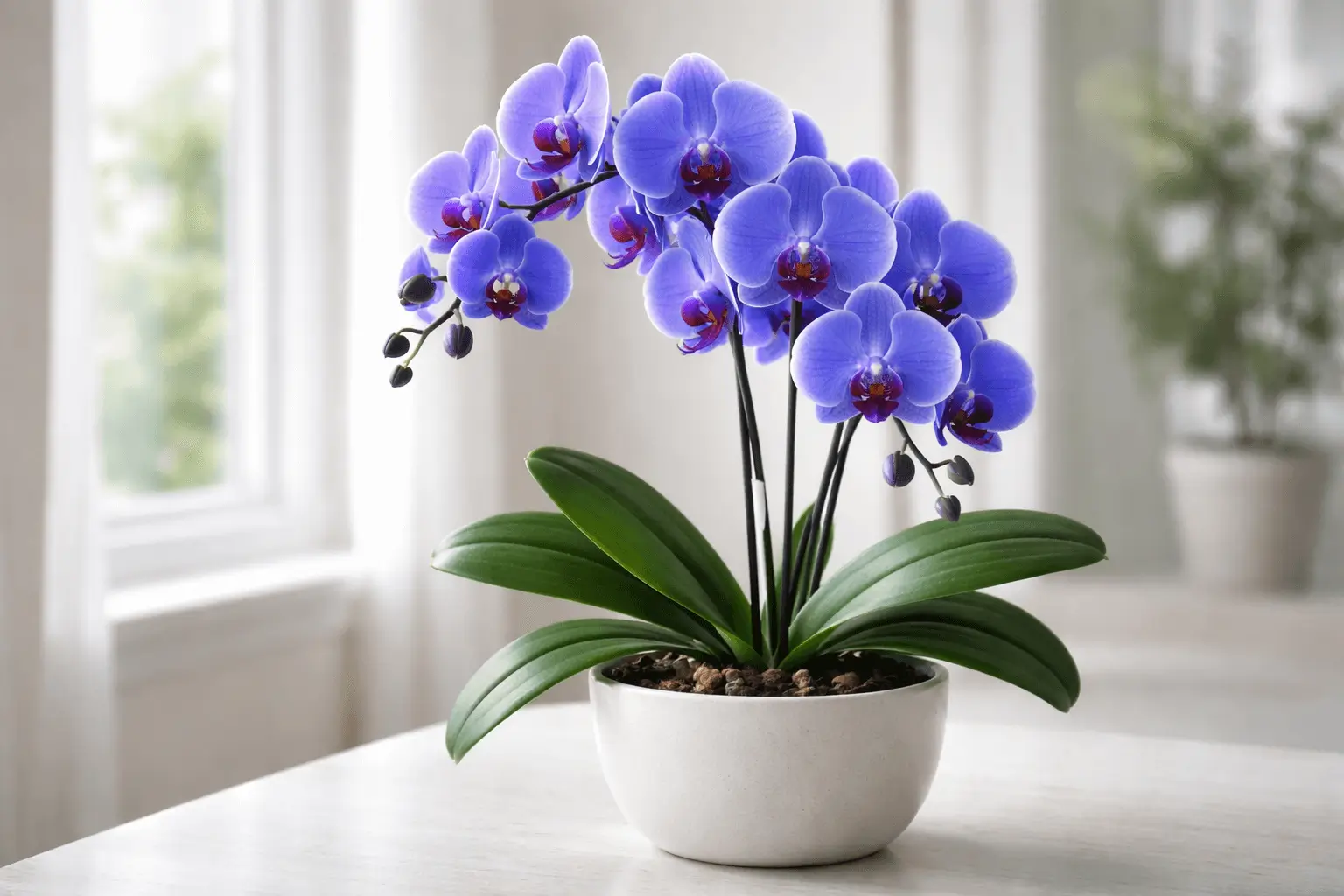
A Mystique orchid is unique because its vivid color does not occur naturally in most orchids. These plants are typically white or light-colored orchids that have been specially treated with safe dye, allowing blooms to appear in unusual shades. This is why you may see flowers described as a small yellow orchid, a red yellow orchid, or even a purple and yellow orchid in Mystique varieties. The coloring process affects only the flowers, not the plant’s genetics. Over time, new blooms usually return to their original natural color, which is most often white. Understanding this difference helps set realistic expectations for bloom color and long-term appearance.
Is a Mystique Orchid a Phalaenopsis?
Yes, most Mystique orchids are a type of Phalaenopsis, commonly known as moth orchids. This means their basic care needs match those of standard Phalaenopsis orchids. They typically have broad, thick phalaenopsis orchid leaves that store moisture and support steady growth. The flowers follow the classic moth orchid shape, producing elegant, arching spikes filled with long-lasting moth orchids flowers. Their growth habit is slow and steady, with new leaves forming from the crown and flower spikes emerging once or twice a year under proper care. Understanding this relationship makes Mystique orchid care much easier for beginners.
Ideal Growing Conditions for Mystique Orchid Care
Light Requirements
Mystique orchids grow best in bright indirect light, similar to the conditions preferred by most Phalaenopsis orchids. A spot near an east- or north-facing window works well, where the plant receives filtered light without direct sun exposure. Too much direct sunlight can quickly cause stress. Common signs of orchids too much sun include faded blooms, scorched leaf patches, and light green orchid leaves that lose their healthy deep color. If leaves appear bleached or feel unusually warm, the light is likely too strong and should be softened with sheer curtains or by moving the plant slightly farther from the window.
Temperature & Humidity Needs
Mystique orchids thrive in temperatures between 65–80°F (18–27°C), which closely matches typical indoor conditions. Sudden temperature drops or hot drafts can stress the plant and slow growth. Humidity is equally important, as dry air often leads to orchid dehydration, causing leaves to lose firmness. In very dry environments, symptoms may resemble those seen in a dehydrated vanda orchid, such as wrinkled or limp leaves. Maintaining moderate humidity through a humidity tray or occasional misting helps keep leaves healthy and supports consistent growth.
How Often Do You Water Mystique Orchids?
Orchid Watering Frequency Explained
Understanding orchid watering frequency is essential for healthy Mystique orchid care. In general, most indoor orchids need watering every 7–10 days, but this can vary depending on temperature, light, and humidity. A reliable way to decide how often do you water orchid plants is to check the growing medium rather than following a fixed schedule. When the potting mix feels dry a few inches below the surface, it is usually time to water. Learning how to tell if an orchid needs water by observing dry roots, lighter pot weight, or slightly softer leaves helps prevent common mistakes. During warmer months, orchids may need more frequent watering, while cooler seasons require reduced watering.
Overwatered Orchid vs Underwatered Orchid
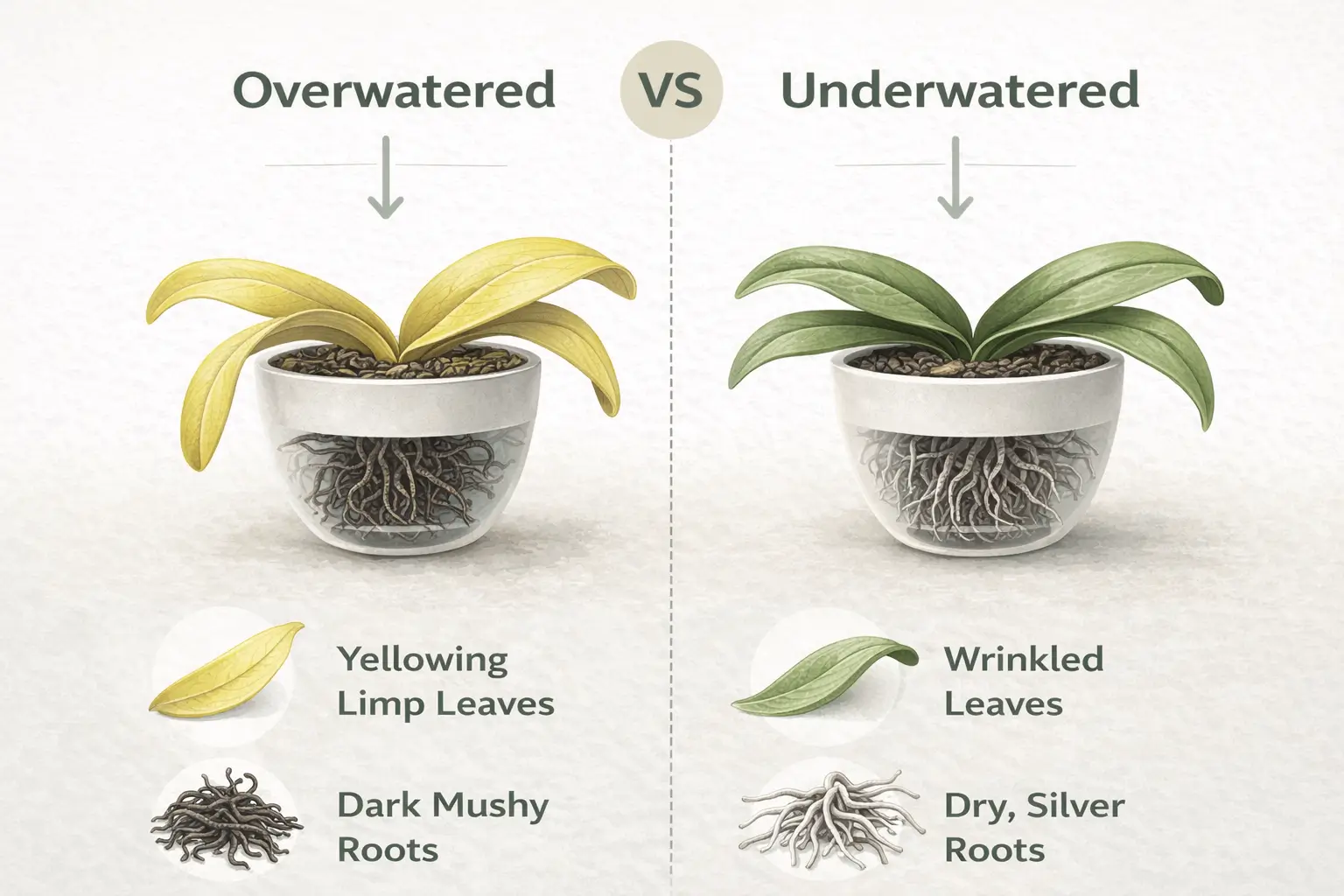
An overwatered orchid often shows yellowing leaves, soft or mushy roots, and a constantly wet potting mix. In severe cases, orchids overwatered for long periods may develop root rot, leading to leaf drop and stalled growth. In contrast, an underwatered orchid has wrinkled or limp leaves and dry, brittle roots. Many beginners unintentionally over water orchid plants, thinking more water equals better care. Comparing leaf texture and root condition is the easiest way to tell the difference and correct watering habits quickly.
Common Mystique Orchid Problems & Solutions
Orchid Leaves Drooping or Limp
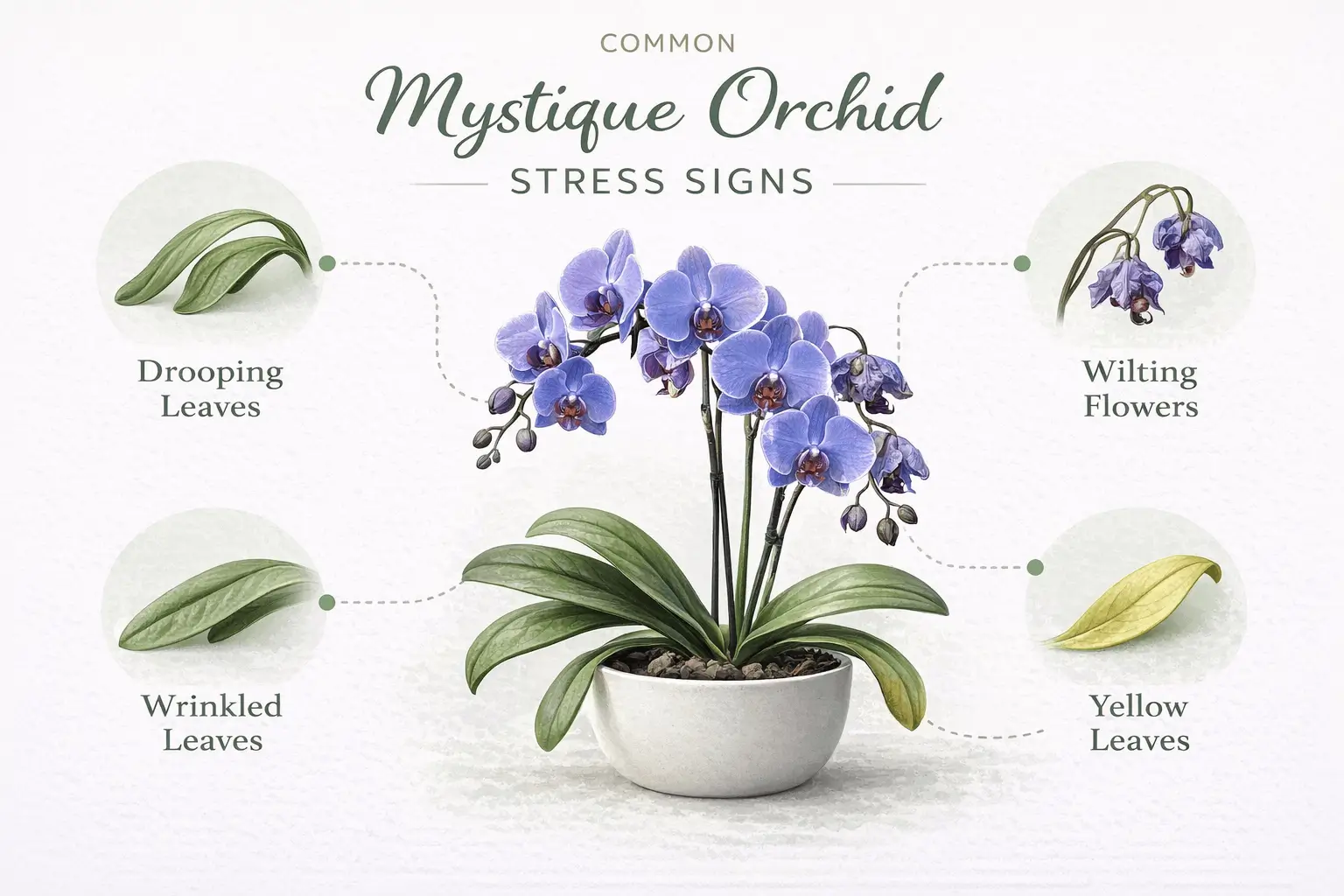
Limp orchid leaves are one of the most common warning signs in Mystique orchids. When an orchid looks orchid droopy, the issue is usually related to watering problems, poor root health, or sudden environmental changes. Overwatering can damage roots and reduce water uptake, while underwatering causes leaves to lose internal moisture. If you notice my orchid leaves are limp, first check the roots and potting mix. Trim any rotting roots, allow the medium to dry slightly if it stays wet, and adjust watering frequency. Improving airflow and maintaining stable temperatures also helps leaves regain firmness over time.
Wrinkled or Shriveled Orchid Leaves
When orchid leaves wrinkled or show deep creases, dehydration is often the main cause. This can result from underwatering or roots that are unable to absorb moisture due to damage. Shriveled orchid leaves may also appear when roots have rotted and can no longer supply water, even if the plant is watered regularly. If you see orchid leaves wrinkling, inspect the root system closely. Healthy roots are firm and green or silvery, while damaged roots are brown and soft. Correcting watering habits and removing unhealthy roots can slowly restore leaf appearance.
Yellow Leaves on Mystique Orchids
Seeing orchid plant leaves yellow does not always mean something is wrong. Lower leaves naturally yellow and fall off as part of the plant’s growth cycle. However, multiple yellowing leaves or rapid color change often signals stress. In Mystique orchids, yellow orchid leaves phalaenopsis types commonly result from overwatering, poor drainage, or insufficient light. Evaluating the overall plant condition and adjusting care routines helps distinguish normal aging from a developing problem.
Orchid Flower Problems Explained
Why Are My Orchid Flowers Wilting?
Orchid flower wilting is often part of the natural bloom cycle. Most orchid flowers last several weeks before slowly fading and dropping. However, when orchid flowers wilting prematurely occurs, it usually points to care or environmental issues. Sudden temperature changes, low humidity, improper watering, or exposure to drafts can shorten bloom life. Moving the orchid frequently or placing it near heating or cooling vents also increases stress. Identifying whether the flowers are aging naturally or reacting to stress helps determine if care adjustments are needed.
Orchid Petals Drooping or Falling Off
When orchid petals wilting or falling off happens quickly, environmental stress is usually the cause. Low humidity, inconsistent watering, or sharp temperature swings can lead to loose orchid blooms that drop before their normal lifespan ends. Bright direct sunlight and poor airflow can further weaken flowers. Keeping Mystique orchids in a stable environment with gentle light, balanced humidity, and minimal disturbance helps petals remain firm and blooms last longer.
Orchid Stem & Spike Issues
Orchid Stem Turning Yellow or Brown
When orchid stems turning yellow appear, it often indicates the end of a flowering cycle. After blooms fade, the flower stem may naturally yellow and dry as the plant conserves energy. However, if my orchid stem is turning brown while flowers are still present, stress is more likely involved. Common causes include dehydration, overwatering, temperature extremes, or poor airflow. To correct this, ensure consistent watering, avoid direct heat or cold drafts, and maintain stable humidity. If the stem is fully brown and dry, trimming it with clean tools can help redirect energy back to leaf and root growth.
What Is the Spike of an Orchid?
Many beginners ask what is the spike of an orchid and how it differs from other plant parts. The spike is the flowering structure that emerges from the base of the leaves and produces buds and blooms. It is different from the stem, which supports the plant’s leaves, and from orchid stalks, which is a general term often used interchangeably with spike. Understanding the difference between stem, spike, and stalk helps avoid accidental damage during pruning and routine care.
Orchid Leaf & Root Health Check
Healthy Orchid Leaves vs Unhealthy Leaves
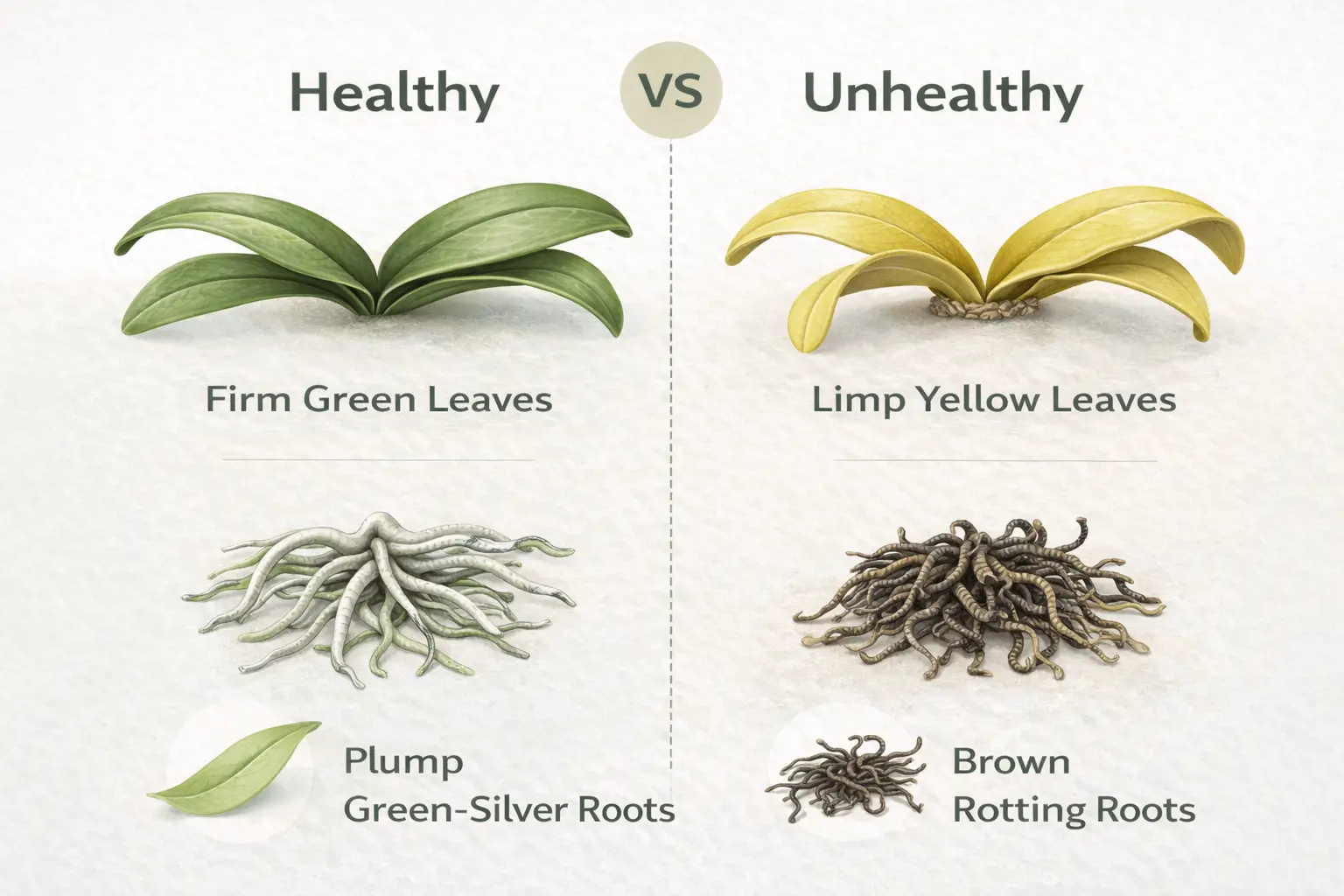
Checking leaf condition is one of the easiest ways to judge overall orchid health. Healthy orchid leaves are firm, smooth, and evenly colored, usually a medium green shade. They feel slightly thick and springy when gently touched. In contrast, unhealthy orchid leaves may appear limp, wrinkled, spotted, or unusually yellow. Soft or floppy leaves often indicate watering or root issues, while leathery or shriveled textures point to dehydration. Regularly observing leaf texture, color consistency, and firmness helps identify problems early before they affect blooms or roots.
Healthy Orchid Roots vs Unhealthy Roots
Root health directly affects water and nutrient absorption. Orchid roots healthy in Mystique orchids are firm and plump, appearing green when wet and silvery when dry. They should not feel mushy or hollow. When comparing healthy orchid roots vs unhealthy, damaged roots are brown or black, soft, and may emit a foul smell, which often signals rot. Clear pots make visual root inspection easier, allowing you to monitor root condition without disturbing the plant. Removing unhealthy roots and adjusting watering practices helps restore balance and supports long-term orchid health.
Orchid Dormancy & Recovery
What Does a Dormant Orchid Look Like?
Orchid dormancy is a natural resting phase that often follows flowering. During this time, growth slows, flower spikes may dry up, and the plant focuses on conserving energy. Many beginners ask what does a dormant orchid look like because dormancy can resemble decline. A dormant orchid still has firm leaves and viable roots, even if no new growth is visible. The plant remains stable rather than rapidly worsening. Understanding this difference helps prevent unnecessary interventions that may stress the orchid further.
How to Know If an Orchid Is Dead
Knowing how to know if an orchid is dead requires checking both leaves and roots. Orchids die when all roots are rotted or completely dried out and leaves become soft, blackened, or collapse entirely. A dead orchid shows no signs of firm tissue, green roots, or crown stability. While orchids are resilient, there is a point where recovery is no longer possible. Recognizing when orchids die allows growers to focus on prevention and apply better care practices to future plants.
Preventing Future Mystique Orchid Problems
Best Ongoing Care Practices
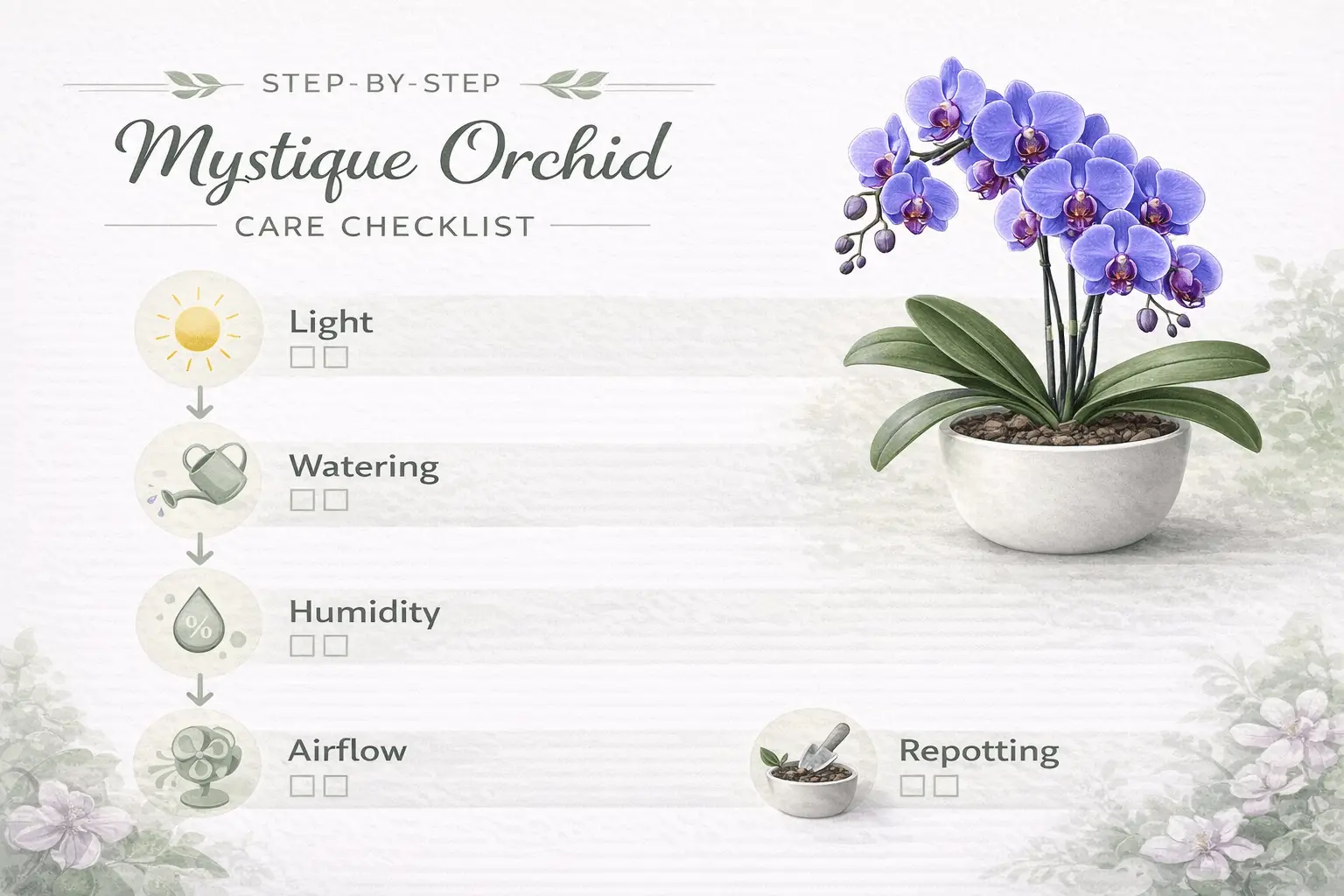
Consistent care is the best way to protect long-term orchid leaf health and reduce recurring orchid problems. Following a simple checklist helps maintain stability:
- Provide bright, indirect light and avoid direct sun exposure
- Water only when the potting medium is nearly dry, not on a fixed schedule
- Ensure good airflow around the plant to prevent fungal issues
- Maintain moderate humidity without keeping roots constantly wet
- Observe leaves and roots regularly for early warning signs
Small, regular adjustments are more effective than drastic changes and help Mystique orchids remain balanced.
When to Repot or Adjust Care
Repotting becomes necessary when roots outgrow the container or the potting medium begins to break down. Over time, compacted media restrict airflow and trap moisture, stressing roots and delicate orchid root hairs. Signs that repotting is needed include roots circling the pot, sour-smelling media, or orchid roots drying out too quickly between waterings. Repotting every one to two years with fresh orchid mix restores proper drainage and supports healthy root development.
Conclusion
Successful mystique orchid care comes down to observation, consistency, and understanding how these orchids respond to their environment. Because Mystique orchids are typically dyed Phalaenopsis orchids, they share the same basic needs but react more visibly to stress. Monitoring light exposure, watering habits, and humidity levels helps prevent issues such as drooping leaves, yellowing foliage, or early flower loss. Paying close attention to leaves, roots, stems, and blooms allows problems to be corrected early. With steady care and patience, Mystique orchids can recover well, rebloom naturally, and remain healthy over time. Regular observation is the key to long-term success.
Read Also: 7+ Shocking Reasons My Plant Is Drooping (And How to Fix It)
FAQs
Why are my Mystique orchid leaves drooping even after watering?
Drooping leaves after watering often indicate root damage or overwatering. Roots may be unable to absorb moisture properly, even if the potting mix is wet.
How often should I water a Mystique orchid indoors?
Most Mystique orchids need watering every 7–10 days indoors, but frequency depends on light, temperature, and humidity. Always check the potting mix before watering.
Is it normal for Mystique orchids to lose flowers quickly?
Yes, flowers naturally fade after their bloom cycle. However, sudden flower loss can occur due to low humidity, temperature stress, or frequent movement.
How can I tell if my Mystique orchid is dormant or dead?
A dormant orchid has firm leaves and viable roots but no active growth. A dead orchid has mushy or completely dried roots and collapsing leaves.
Do Mystique orchids need different care than regular Phalaenopsis orchids?
No, their care requirements are the same. The only difference is flower color, which is artificially applied and temporary.

Written by the LeafyHeaven Editorial Team
LeafyHeaven shares practical gardening tips and simple plant care guides to help you grow, nurture, and enjoy your plants with ease. Our goal is to make gardening feel natural, approachable, and rewarding for everyone.