
Introduction
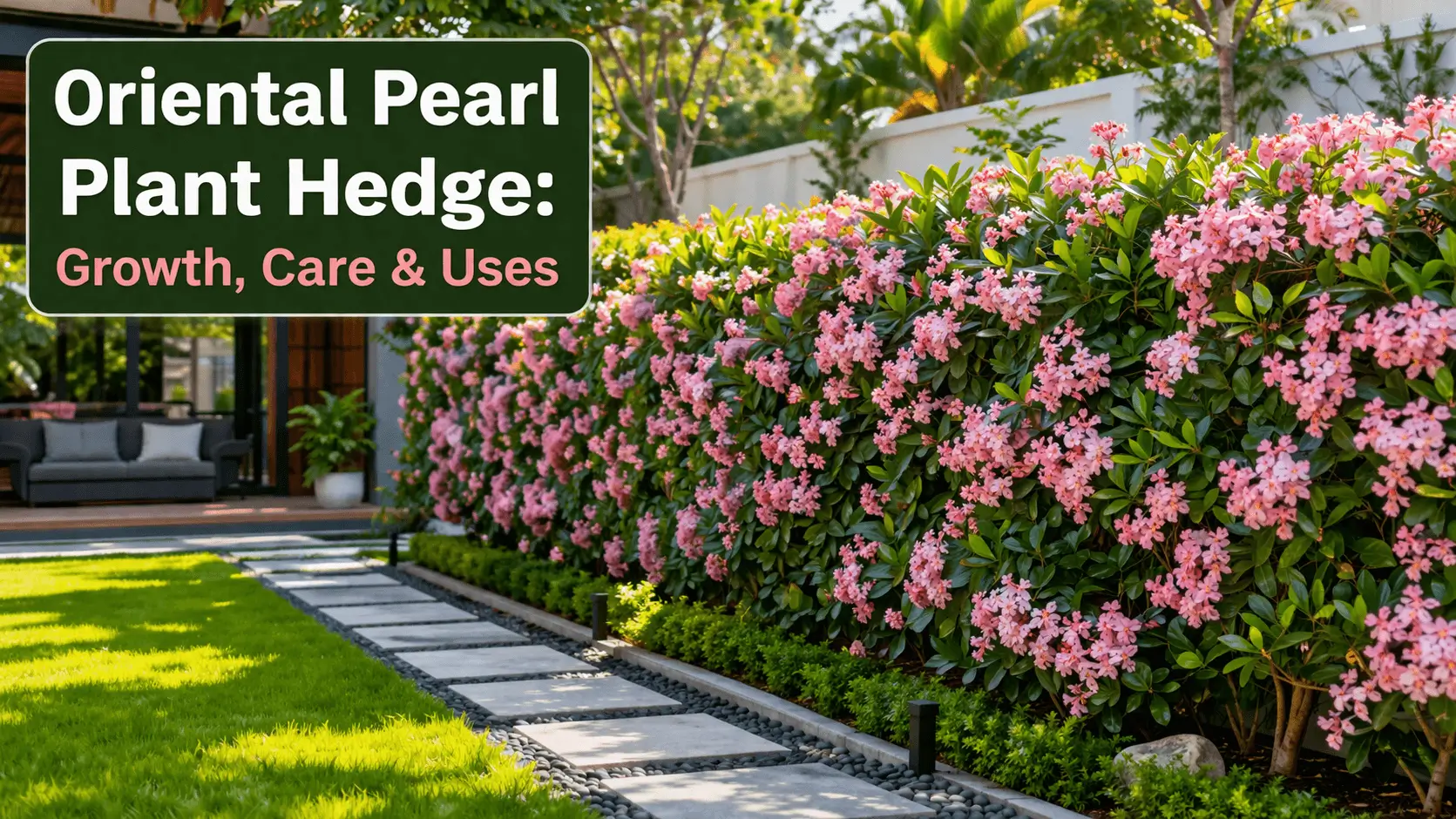
The oriental pearl plant hedge is a popular evergreen choice for both residential and commercial landscapes due to its compact growth, vibrant pink blooms, and low-maintenance care. Known botanically as rhaphiolepis ‘oriental pearl’, this shrub, also called oriental pearl indian hawthorn or rhaphiolepis oriental pearl, adds structure and color throughout the year. Homeowners and landscapers value the oriental pearl plant hedge for its dense foliage, which makes it ideal for formal hedges, borders, and privacy screens. Its adaptability, combined with aesthetic appeal, positions it as a top choice for gardeners looking to enhance their outdoor spaces with a reliable, visually appealing plant. Learn more specific tips and secrets for oriental pearl Indian hawthorn in our detailed guide 5+ Stunning Oriental Pearl Indian Hawthorn Secrets.
What is Oriental Pearl Plant Hedge?
Botanical Overview
The scientific name of the oriental pearl plant hedge is rhaphiolepis ‘oriental pearl’ or simply rhaphiolepis oriental pearl. Common names include oriental pearl, oriental pearl rhaphiolepis, and indian hawthorn oriental pearl. Belonging to the Rosaceae family, this evergreen shrub originates from Asia and has been cultivated widely in ornamental landscapes. Its adaptability and compact form make it a preferred choice for hedges in various garden designs. Oriental pearl is a cultivar of the genus Rhaphiolepis, which includes several popular evergreen shrubs used in landscaping.
Key Features & Characteristics
- Evergreen shrub with pink indian hawthorn blooms
- Dense, glossy foliage ideal for oriental pearl hedge formation
- Compact growth habit with a rounded structure, suitable for borders and privacy planting
- Low-maintenance care, thriving in well-drained soils and full sun
Growth, Size & Root System
Mature Height and Spread
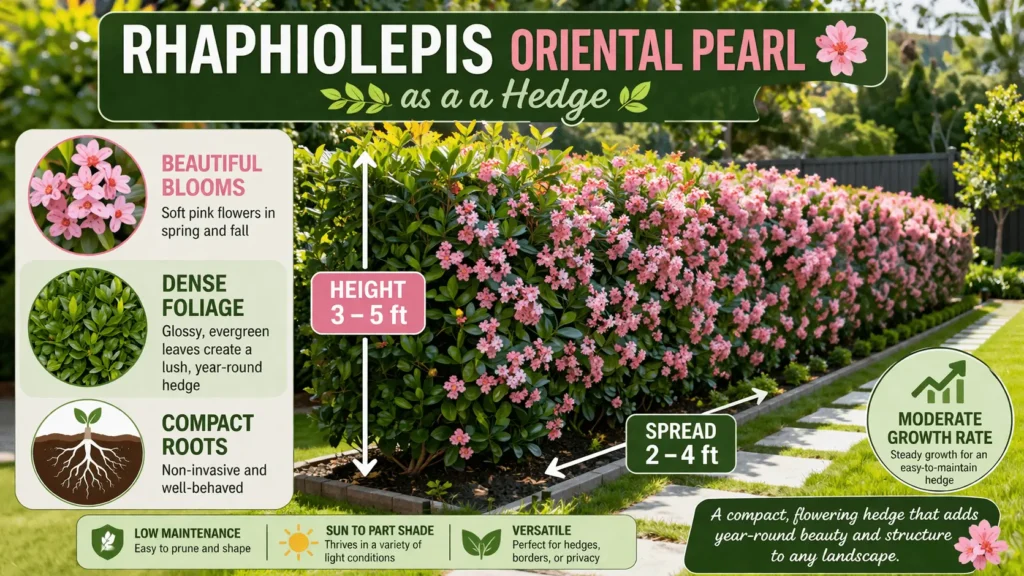
Rhaphiolepis oriental pearl height typically ranges from 3 to 5 feet, with a spread of 2 to 4 feet. When grown as a formal hedge, it can be maintained at a uniform height, while free-growing shrubs may reach their natural rounded shape. Its compact form allows it to fit well in both small and medium-sized garden spaces.
Growth Rate & Timeline
- Moderate growth rate — not too fast, not too slow
- Establishment of a full hedge may take 2–3 years, depending on planting density and care
Root System Behavior
- Non-invasive, compact roots
- Safe to plant near pathways, walls, or small garden beds
- Minimal interference with surrounding plants or structures
Flowers, Foliage & Seasonal Appeal
Flowering Details
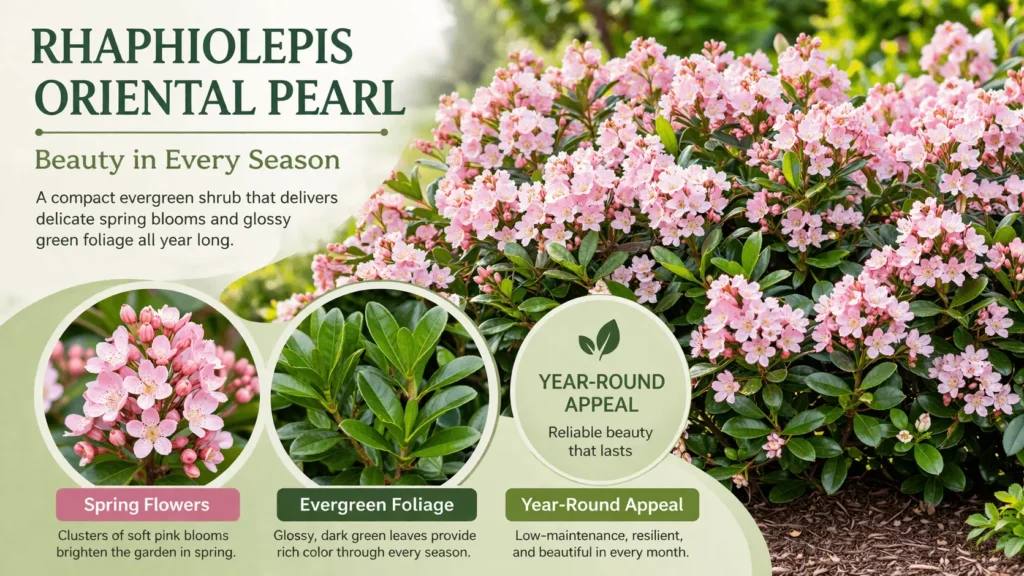
- Soft pink blooms known as rhaphiolepis oriental pearl pink or pink hawthorn plant
- Flowers appear primarily in spring, adding seasonal color
- Attracts pollinators such as bees and butterflies
Foliage Characteristics
- Glossy green leaves provide year-round structure
- Dense foliage adds privacy and aesthetic appeal
- Retains its evergreen character, enhancing garden design
How to Use Oriental Pearl as a Hedge
Ideal Hedge Applications
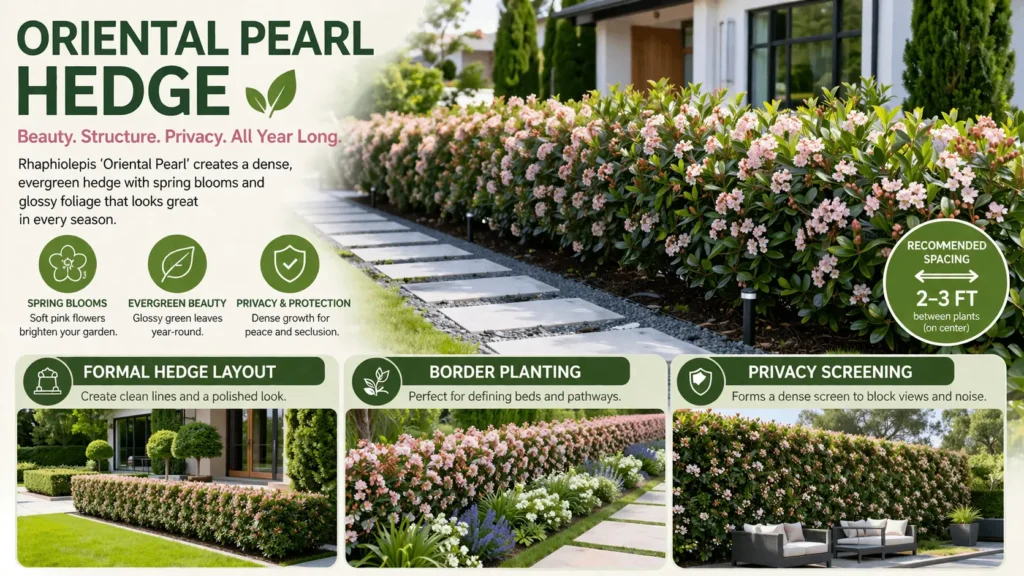
- Formal hedges for defined garden borders
- Border planting along pathways or driveways
- Privacy screening, creating dense rhaphiolepis oriental pearl hedges
Spacing & Planting Layout
- Recommended spacing: 2–3 feet apart for dense growth
- Proper layout ensures even foliage and uniform height
Landscaping Uses
- Pairs well with other rhaphiolepis varieties
- Complements both modern and tropical garden styles
Oriental Pearl vs Snow Maiden (Detailed Comparison)
Key Differences
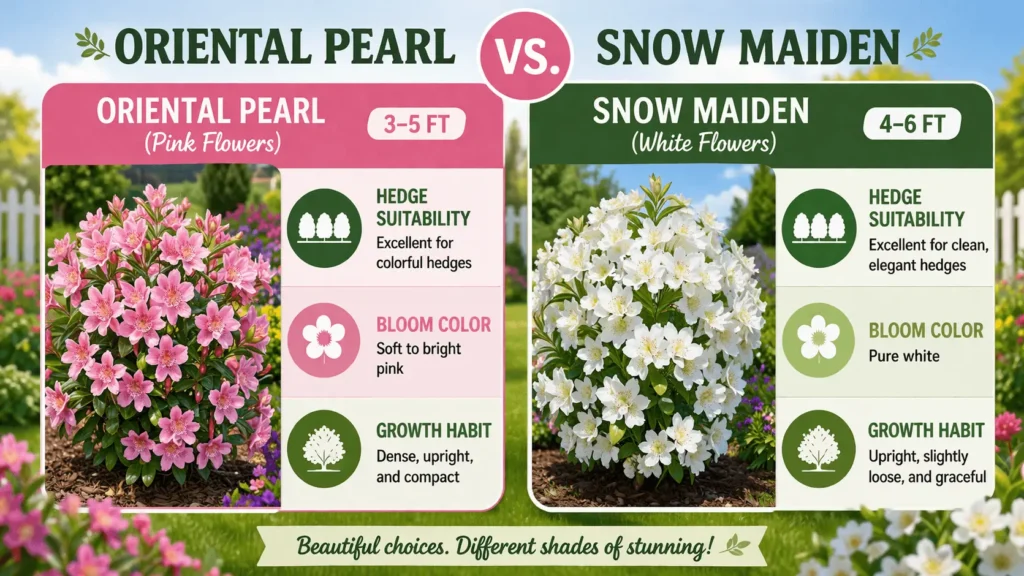
| Feature | Oriental Pearl | Snow Maiden |
| Flower Color | Pink | White |
| Growth Size | 3–5 ft | 4–6 ft |
| Hedge Suitability | Dense, compact | Slightly taller, open |
Oriental pearl vs snow maiden: Oriental pearl is more compact, making it better for lower hedges and formal layouts, whereas snow maiden grows slightly taller.
Which One is Better for Hedges?
- Use-case recommendations:
- For low formal hedges, choose oriental pearl
- For taller hedges or more open screens, snow maiden may be preferred
Popular Rhaphiolepis Varieties
Other Varieties to Know
- Rhaphiolepis snow maiden
- Rhaphiolepis cosmic pink
- Rhaphiolepis oriental pink
Choosing the Right Variety
- Choose oriental pearl for compact hedges with vibrant pink blooms
- Compare oriental pearl vs snow maiden to decide based on height and bloom color
How to Grow & Care for Oriental Pearl Hedge
Planting Guide
- Soil: Well-drained, slightly acidic to neutral
- Sunlight: Full sun to partial shade
- Planting: Dig a hole twice the root ball size, backfill with soil, water thoroughly
For a broader understanding of gardening practices and thriving plant care, see our Gardening & Plant Care Guide for Thriving Plants.
Watering & Fertilizing
- Low-maintenance requirements
- Water regularly during establishment; reduce once established
- Fertilize in spring with balanced slow-release fertilizer
Pruning & Maintenance
- Shape hedge after flowering
- Maintain dense foliage through light trimming
- Remove dead or damaged branches as needed
Problems, Pests & Precautions
Common Issues
- Leaf spot may occur in overly wet conditions
- Poor drainage can lead to root problems
- Contextual comparison: snow maiden plant problems may include more frequent fungal infections
Prevention Tips
- Maintain proper spacing for airflow
- Ensure healthy, well-draining soil
- Monitor for pests and diseases regularly
Availability & Where to Buy
Nursery & Store Availability
- Oriental pearl plant Bunnings
- Indian hawthorn Bunnings
- Local nurseries may also stock rhaphiolepis oriental pearl
Buying Tips
- Select healthy, vibrant plants with no leaf discoloration
- Check for compact root system and uniform growth
- Ideal to buy oriental pearl plant for sale from reputable nurseries
Benefits & Drawbacks of Oriental Pearl Hedge
Benefits
- Evergreen structure enhances year-round appeal
- Attractive pink blooms in spring
- Low-maintenance and adaptable to various soils
Drawbacks
- Moderate growth speed; takes time to establish full hedge
- Limited climate tolerance; may not thrive in extreme cold
Conclusion (Call-to-Action)
The oriental pearl plant hedge is a top choice for gardeners seeking a compact, low-maintenance, and visually appealing evergreen shrub. Its dense foliage and pink blooms enhance any landscape design. When selecting a hedge, consider your garden’s space and style, and compare oriental pearl vs snow maiden to make the best decision. Proper care ensures a thriving, long-lasting hedge that provides both structure and beauty.
FAQs
What is the ideal height of an oriental pearl plant hedge?
Typically, rhaphiolepis oriental pearl height ranges from 3–5 feet, suitable for formal hedges or free-growing shrubs.
Is oriental pearl better than snow maiden for hedges?
Oriental pearl vs snow maiden: Oriental pearl is compact, making it ideal for low formal hedges, whereas snow maiden grows taller and more open.
How fast does rhaphiolepis oriental pearl grow?
It has a moderate growth rate, taking about 2–3 years to establish a full hedge.
Can oriental pearl be grown in pots or only as a hedge?
While commonly used as a hedge, it can also be grown in large pots, provided there is sufficient sunlight and well-draining soil.

Written by the LeafyHeaven Editorial Team
LeafyHeaven shares practical gardening tips and simple plant care guides to help you grow, nurture, and enjoy your plants with ease. Our goal is to make gardening feel natural, approachable, and rewarding for everyone.