
Introduction to Oriental Pearl vs Snow Maiden
When comparing oriental pearl vs snow maiden, most gardeners are trying to decide which Indian hawthorn variety offers better performance for hedging, landscaping, and visual appeal. Both plants belong to the same species group, yet they differ in size, growth habit, flower tone, and maintenance requirements—making the comparison highly relevant for both beginners and experienced landscapers.
Search interest around variations like rhaphiolepis snow maiden vs oriental pearl, rhaphiolepis oriental pearl vs snow maiden, and indian hawthorn snow maiden vs oriental pearl highlights a common need: choosing the right shrub for specific garden goals. Whether the priority is compact growth, dense hedging, or aesthetic flowering, understanding the differences between these two cultivars helps ensure better long-term results in garden design and plant care.
What is Rhaphiolepis (Indian Hawthorn)? [Plant Identity]
Scientific Classification and Plant Overview
Rhaphiolepis is a well-known genus of evergreen shrubs widely used in ornamental landscaping. The most commonly cultivated species is rhaphiolepis indica, often referred to as rhaphiolepis indian hawthorn or simply Indian hawthorn. Botanically, this plant belongs to the Rosaceae family, which includes many flowering shrubs and fruit-bearing plants. Botanical references on plant classification explain that members of the Rosaceae family include a wide range of ornamental and fruiting plants with similar structural characteristics.
The term indian hawthorn rhaphiolepis is commonly used in gardening contexts to describe its origin and classification, although it is primarily native to East and Southeast Asia. In landscaping usage, it is sometimes referred to as a rhaphiolepis indica tree when grown in a more upright or trained form, though it naturally remains a compact shrub.
Key identification points:
- Botanical name: Rhaphiolepis indica
- Plant type: Evergreen ornamental shrub
- Family: Rosaceae
- Common name: Indian hawthorn
This foundational understanding is important because both Oriental Pearl and Snow Maiden are cultivars within this same species group.
Growth Habit, Features, and Landscaping Value
The rhaphiolepis plant is valued for its consistent structure, low maintenance, and adaptability in garden design. Whether referred to as plant rhaphiolepis in horticulture guides or nursery catalogs, it is recognized as a reliable evergreen shrub for both residential and commercial landscapes.
Core characteristics:
- Evergreen shrub nature: Maintains dense, glossy foliage throughout the year
- Compact growth habit: Naturally rounded form with controlled spread
- Flowering behavior: Produces clusters of small, star-shaped flowers, typically in white or pink shades during spring
- Fruit development: Forms small, dark berries after flowering
Landscaping value:
- Commonly used for low hedges and borders
- Suitable for foundation planting and walkway edges
- Works well in mass planting designs due to uniform growth
- Tolerates pruning, making it ideal for structured hedge use
Understanding how different plants grow, spread, and respond to pruning is essential when planning structured landscapes or mixed garden designs. Because of its durability, aesthetic appeal, and manageable size, rhaphiolepis remains a top choice for gardeners looking for a balance between beauty and functionality in outdoor spaces.
Oriental Pearl Plant Overview (Detailed Breakdown)
What is Oriental Pearl Indian Hawthorn?
The oriental pearl plant is a compact, ornamental cultivar of Indian hawthorn, botanically classified as rhaphiolepis indica oriental pearl. Known for its neat structure and soft floral display, it is widely used in modern landscape designs.
Often referred to as oriental pearl indian hawthorn, this variety belongs to the broader group of rhaphiolepis oriental pearl cultivars, valued for their refined growth habit and consistent performance. The term oriental pearl rhaphiolepis is commonly used in nurseries and plant catalogs to distinguish it from other Indian hawthorn varieties.
Key characteristics:
- Cultivar of Rhaphiolepis indica
- Compact, dense evergreen shrub
- Produces soft pink to white blossoms
- Suitable for structured and decorative planting
Size, Growth Rate, and Appearance
The rhaphiolepis oriental pearl size remains relatively compact, making it ideal for controlled garden layouts. This oriental pearl shrub typically grows in a rounded form with balanced height and width.
Growth details:
- Average height: 60–100 cm
- Spread: Similar to height, forming a uniform shape
- Growth rate: Slow to moderate
Visual features:
- Glossy, dark green foliage
- Soft pink buds opening into pale flowers
- Dense branching structure for a full appearance
Its predictable size and shape make it easy to manage without frequent heavy pruning.
Best Uses (Hedges, Landscaping & Borders)
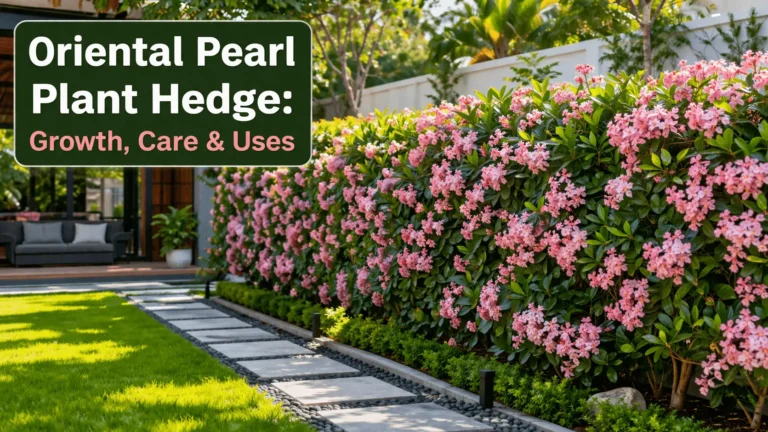
The oriental pearl hedge is a popular choice for gardeners seeking a clean, low-maintenance boundary. Due to its compact growth, the oriental pearl plant hedge works well in both small and large garden settings.
Common applications:
- Low formal hedges along pathways
- Border planting for garden beds
- Foundation planting near buildings
- Decorative edging in landscape designs
Benefits in landscaping:
- Maintains shape with minimal trimming
- Provides consistent foliage coverage
- Enhances visual softness with seasonal blooms
Availability & Buying Guide
The oriental pearl plant bunnings search trend reflects its availability in major garden centers and nurseries. Whether purchased locally or online, the oriental pearl plant for sale is generally easy to find due to its popularity.
Buying considerations:
- Look for healthy, pest-free foliage
- Choose plants with dense branching for better hedge formation
- Check pot size based on planting needs
Common availability sources:
- Retail chains like oriental pearl bunnings (regional availability)
- Local nurseries and garden centers
- Online plant retailers
Selecting a well-established plant ensures faster adaptation and better performance in landscape use.
Snow Maiden Plant Overview (Detailed Breakdown)
What is Snow Maiden Indian Hawthorn?
The snow maiden plant is a popular cultivar of Indian hawthorn, scientifically known as rhaphiolepis indica snow maiden. It is widely recognized for its clean white blooms and slightly larger growth habit compared to compact varieties.
Often referred to as snow maiden indian hawthorn or indian hawthorn snow maiden, this shrub belongs to the same species group as other rhaphiolepis cultivars but stands out due to its brighter floral display and broader landscape presence. The botanical name rhaphiolepis snow maiden is commonly used in nurseries and plant databases.
Key characteristics:
- Cultivar of Rhaphiolepis indica
- Evergreen shrub with upright-spreading growth
- Produces clusters of white flowers
- Suitable for hedges and open landscape planting
Size, Height, and Growth Characteristics
The snow maiden plant height is typically larger than more compact varieties, making it suitable for medium-sized hedges and open garden spaces. The rhaphiolepis snow maiden height can vary depending on conditions but generally maintains a balanced, slightly taller profile.
Growth details:
- Average height: 1–1.5 meters
- Spread: Moderate to wide, depending on pruning
- Growth rate: Moderate
Structural traits:
- Upright to slightly spreading growth habit
- Dense foliage but less compact than dwarf types
- Strong branching that supports hedge formation
This size advantage makes it more suitable for coverage and visual impact in landscaping.
Hedge & Garden Uses
The snow maiden hedge is commonly used where a slightly taller and fuller hedge is required. Due to its growth characteristics, the snow maiden plant hedge provides good screening and boundary definition.
Typical uses:
- Medium-height privacy hedges
- Boundary planting for residential gardens
- Mass planting for uniform landscape coverage
- Garden bed backdrops
Advantages in landscaping:
- Provides better vertical coverage than smaller cultivars
- Creates a structured, natural-looking hedge
- Adapts well to pruning for shape control
The rhaphiolepis snow maiden hedge is especially useful in designs where both height and flowering display are desired.
Common Problems and Limitations
Like many Indian hawthorn varieties, snow maiden plant problems can occur under certain environmental conditions, particularly related to moisture and airflow.
Common issues:
- Leaf spotting: Often caused by fungal conditions in humid environments
- Pest issues: May include scale insects or aphids (can be managed with proper care)
Limitations to consider:
- Requires good air circulation to reduce disease risk
- May need occasional monitoring for pests
- Slightly larger size may not suit very small garden spaces
Understanding these factors helps ensure better long-term performance and healthier plant growth.
Oriental Pearl vs Snow Maiden — Key Differences
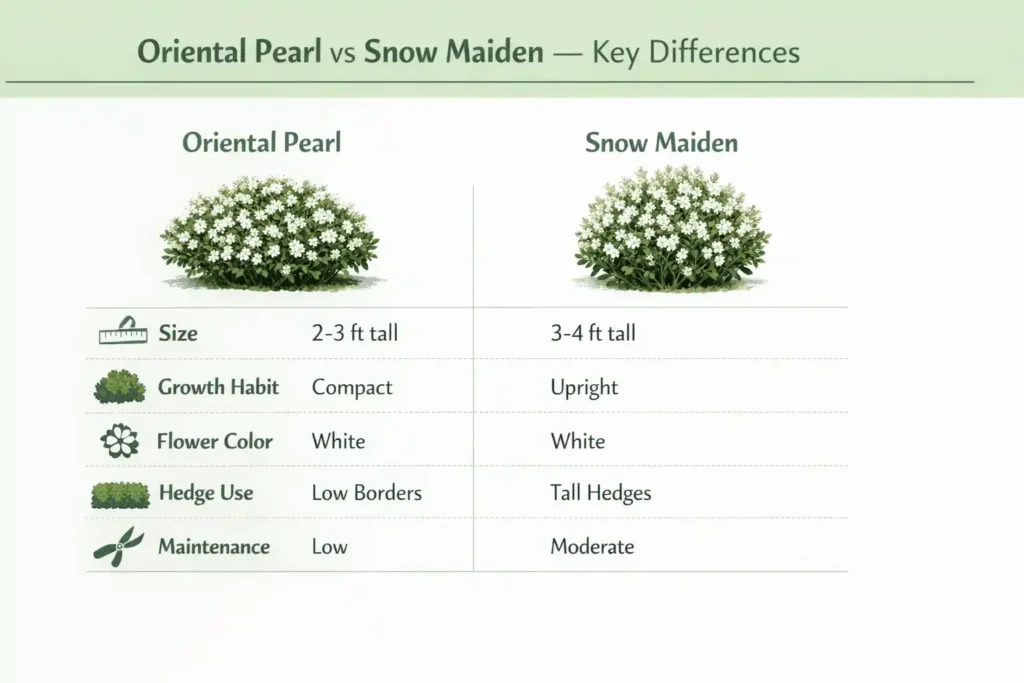
Size & Growth Comparison
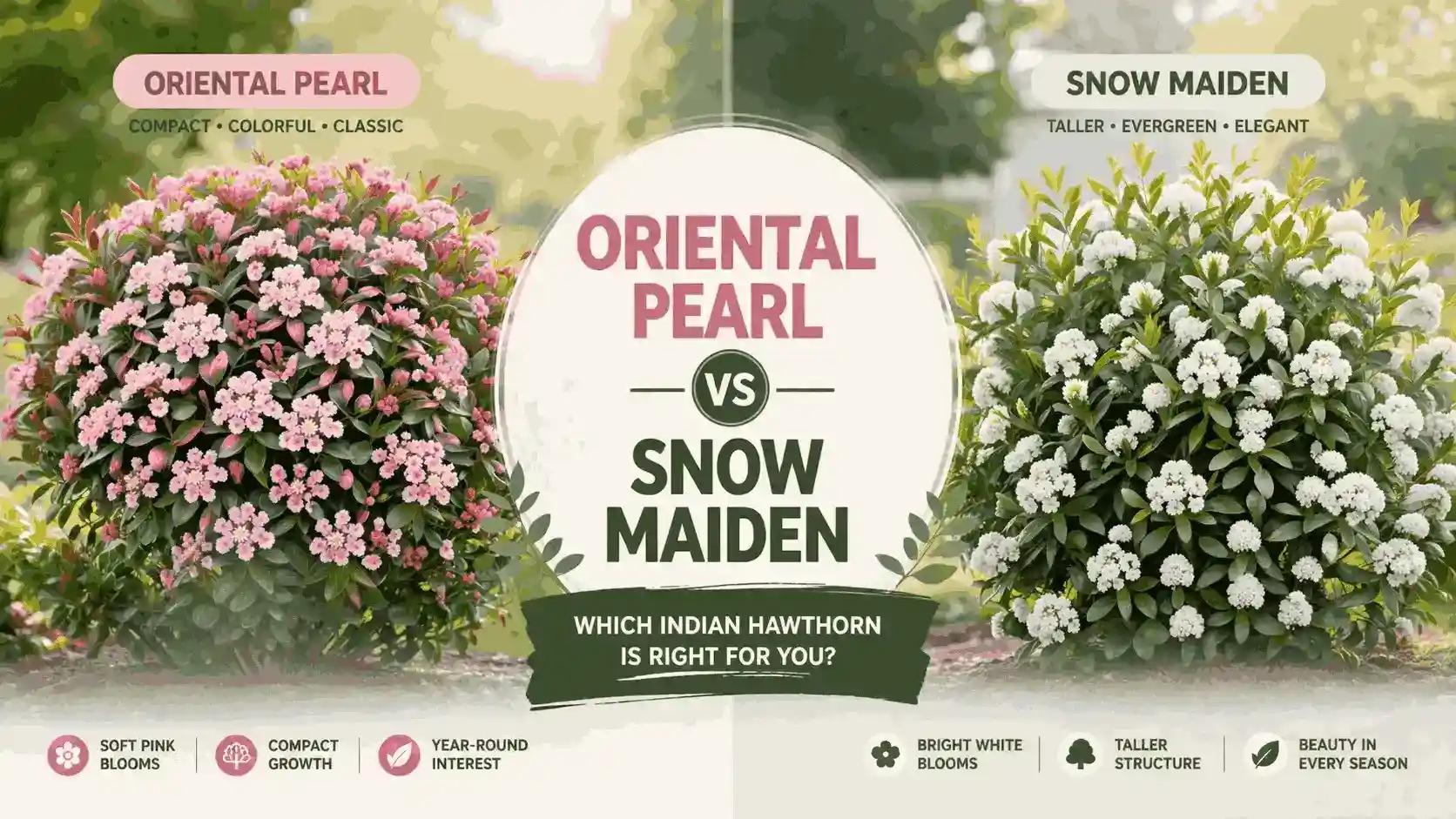
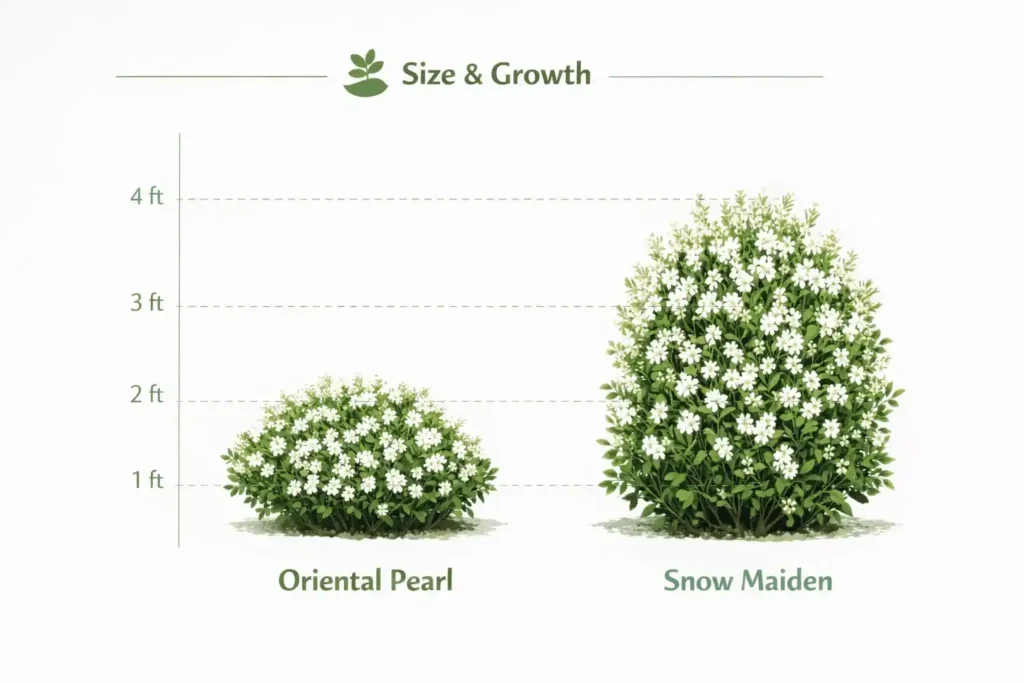
When comparing overall structure, the rhaphiolepis oriental pearl size is more compact, while the snow maiden plant height is noticeably taller and broader.
| Feature | Oriental Pearl | Snow Maiden |
|
Average Height |
60–100 cm | 1–1.5 meters |
|
Growth Habit |
Compact, rounded |
Upright, spreading |
| Space Requirement | Ideal for small areas |
Better for medium spaces |
| Growth Control | Easy to maintain shape |
Requires more pruning |
Key takeaway:
- Oriental Pearl suits tight, controlled landscapes
- Snow Maiden provides more coverage and height
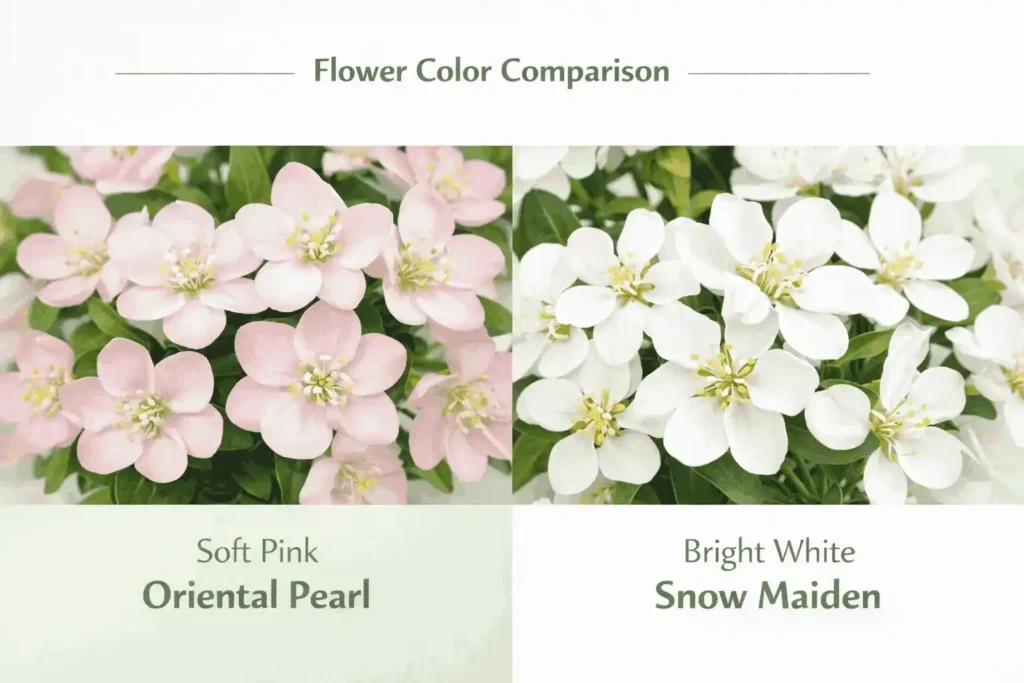
Flower Color & Visual Appeal
Both varieties are valued for their spring blooms, but their visual impact differs significantly.
- Oriental Pearl:
- Soft pink buds opening to pale pink/white flowers
- Creates a subtle, refined look
- Snow Maiden:
- Bright white flowers
- Produces a cleaner, more striking contrast against green foliage
Visual difference summary:
- Soft pink tones = more decorative and gentle
- Pure white blooms = sharper and more prominent
Hedge Performance & Density
The performance of a hedge depends on density, height, and maintenance needs. Both the oriental pearl hedge and snow maiden hedge serve different purposes.
- Oriental Pearl Hedge:
- Dense, compact foliage
- Ideal for low, formal hedges
- Maintains shape with minimal trimming
- Snow Maiden Hedge:
- Taller and slightly less compact
- Suitable for medium-height hedges
- Provides better screening and boundary definition
Comparison insight:
- Choose Oriental Pearl for neat, low borders
- Choose Snow Maiden for taller, functional hedges
Maintenance & Hardiness
Both plants are relatively low-maintenance, but there are key differences in care requirements.
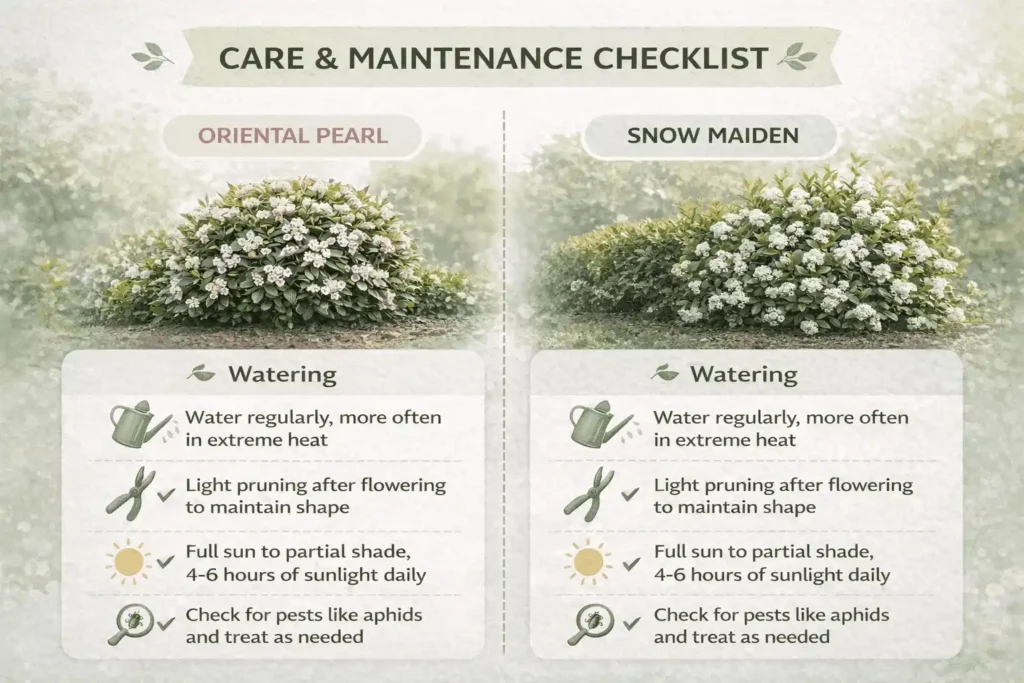
Watering:
- Both prefer well-drained soil
- Moderate drought tolerance once established
Pruning:
- Oriental Pearl: Requires light, occasional pruning
- Snow Maiden: Needs more frequent shaping due to larger growth
Pest & Disease Resistance:
- Oriental Pearl: Generally more resistant due to compact growth
- Snow Maiden: Slightly more prone to issues like leaf spotting and pests
Overall maintenance comparison:
- Oriental Pearl = lower effort, easier control
- Snow Maiden = moderate maintenance with higher monitoring needs
This distinction helps gardeners choose based on time, effort, and landscape goals.
Which One is Better for Hedges and Landscaping?
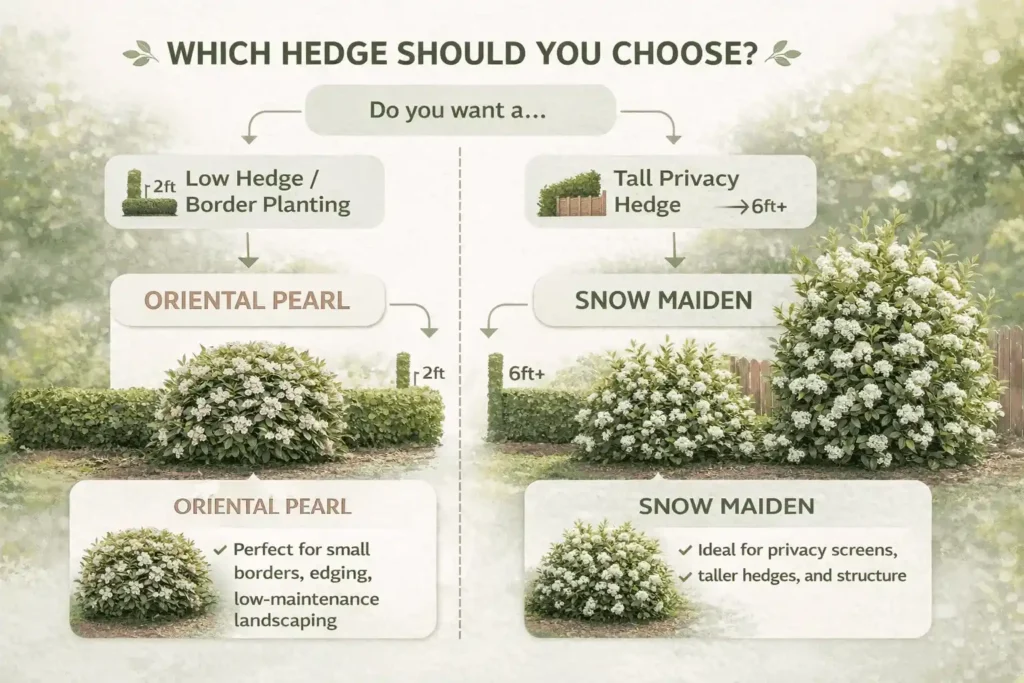
Best Choice for Privacy Hedges
When selecting between a rhaphiolepis snow maiden hedge and an oriental pearl plant hedge, the decision depends mainly on height and coverage needs.
- Snow Maiden Hedge:
- Grows taller and wider, making it better for privacy screening
- Provides stronger visual separation between spaces
- Suitable for boundary hedges and front-yard screening
- Oriental Pearl Plant Hedge:
- More compact and dense at a lower height
- Ideal for decorative, low-profile hedges
- Works well for pathways, edging, and formal garden lines
Key takeaway:
- Choose Snow Maiden for privacy and height
- Choose Oriental Pearl for structure and neat design
Best Choice for Small Gardens vs Large Spaces
Space availability plays a major role in choosing the right variety.
- Small Gardens:
- Oriental Pearl is the better option
- Its compact size prevents overcrowding
- Maintains a clean, controlled shape with minimal pruning
- Large Spaces:
- Snow Maiden performs better
- Fills space more effectively with broader growth
- Creates a fuller landscape presence
Decision clarity:
- Limited space → Oriental Pearl
- Open landscape → Snow Maiden
Similar to how hibiscus varieties are selected based on space, color impact, and landscape design, choosing the right ornamental plant depends on both visual goals and available garden area.
Ideal Climate and Growing Conditions
Both varieties belong to the same species (Rhaphiolepis indica), so their growing requirements are similar, but performance can vary slightly.
Sunlight:
- Best growth in full sun (6+ hours daily)
- Partial shade is tolerated but may reduce flowering
Soil:
- Well-drained soil is essential
- Poor drainage increases risk of root and leaf issues
Drought Tolerance:
- Once established, both varieties are drought-tolerant
- Suitable for warm and coastal climates
Climate Suitability:
- Thrive in warm, temperate to subtropical regions
- Evergreen nature ensures year-round structure and foliage
Practical insight:
- Both plants are adaptable and low-maintenance
- Proper sunlight and drainage are the key factors for long-term success
Rhaphiolepis Varieties
Popular Varieties to Know
There are multiple rhaphiolepis varieties available, each offering different sizes, flower colors, and growth habits. Understanding the main types of rhaphiolepis helps in selecting the right plant for specific landscaping needs.
Common categories include:
- Compact/dwarf varieties
- Ideal for small gardens and low hedges
- Example: Oriental Pearl
- Medium-growing varieties
- Suitable for general hedging and borders
- Example: Snow Maiden
- Larger spreading varieties
- Used for mass planting and wider coverage
- Provide stronger visual impact in landscapes
Quick summary:
- Small spaces → compact varieties
- Medium hedges → balanced growers
- Large landscapes → spreading types
This classification allows better planning based on garden size and design intent.
Notable Cultivars
Several well-known cultivars within Rhaphiolepis indica are widely used in landscaping due to their unique flower colors and growth forms.
- rhaphiolepis indica alba
- Produces clean white flowers
- Known for a classic, minimal look
- rhaphiolepis apple blossom
- Displays soft pink blooms
- Popular for decorative garden settings
- rhaphiolepis cosmic pink
- Features deeper pink flowers
- Adds stronger color contrast in landscapes
- rhaphiolepis oriental pink
- Similar to Oriental Pearl but with more pronounced pink tones
- Suitable for ornamental hedges
- raphiolepis snow white
- Bright white flowering cultivar
- Often compared with Snow Maiden for visual similarity
These cultivars expand design flexibility, allowing gardeners to choose based on color preference, size, and overall landscape style.
Final Verdict — Oriental Pearl vs Snow Maiden
When evaluating oriental pearl vs snow maiden, the right choice depends on your specific landscaping goals, space availability, and maintenance preference.
For hedge use:
- Snow Maiden is the better option for taller, more functional hedges
- Provides stronger screening and boundary definition
- Best suited for privacy-focused landscaping
- Oriental Pearl works best for low, structured hedges
- Ideal for decorative borders and formal garden layouts
For aesthetics:
- Oriental Pearl offers soft pink tones, creating a subtle and elegant look
- Snow Maiden delivers bright white blooms for a cleaner, more striking visual impact
For maintenance:
- Oriental Pearl is easier to manage due to its compact size
- Requires less frequent pruning and has slightly better resistance to common issues
- Snow Maiden needs more attention
- Larger growth means more pruning and monitoring for leaf spotting or pests
To better understand how plant care, pruning, and environmental conditions affect long-term plant performance, following a complete gardening and plant care guide can help you make more informed decisions.
Final Recommendation
- Choose Oriental Pearl if you want a compact, low-maintenance, and visually refined shrub
- Choose Snow Maiden if you need height, coverage, and stronger hedge performance
In the overall comparison of oriental pearl vs snow maiden, neither is universally better—the best choice depends on whether your priority is structure and simplicity or coverage and impact.
FAQs — Oriental Pearl vs Snow Maiden
Which grows faster: Oriental Pearl or Snow Maiden?
Both varieties have a slow to moderate growth rate, but Oriental Pearl typically shows more controlled and steady development. Snow Maiden grows slightly larger over time but may require more space to reach its full form. Quick answer: More controlled growth → Oriental Pearl Larger eventual growth → Snow Maiden
Is Snow Maiden better for hedges than Oriental Pearl?
Snow Maiden is better for privacy hedges due to its taller height and wider spread. It provides stronger screening and boundary coverage. Oriental Pearl is better for low, decorative hedges because of its compact and dense structure.
What is the mature size of Oriental Pearl?
Oriental Pearl typically reaches: Height: 1–1.5 meters Width: Similar spread Its compact size makes it suitable for small gardens and structured landscaping.
Does Snow Maiden have more plant problems?
Snow Maiden can be slightly more prone to: Leaf spotting (fungal issues) Occasional pest problems However, both plants are generally hardy if grown in well-drained soil with good airflow.
Are both plants suitable for beginners?
Yes, both are beginner-friendly. Oriental Pearl: Easier to maintain due to compact growth Snow Maiden: Simple to grow but may need more pruning
Which one is more drought-tolerant?
Both Oriental Pearl and Snow Maiden are drought-tolerant once established. However, Oriental Pearl may perform slightly better in dry conditions due to its smaller leaf mass and compact structure.
Which variety needs less pruning?
Oriental Pearl requires less frequent pruning because it naturally maintains a neat, rounded shape. Snow Maiden grows larger and may need more regular trimming to control size.
Can Oriental Pearl and Snow Maiden grow in pots?
Oriental Pearl: Suitable for container gardening due to compact size Snow Maiden: Less ideal for pots because of larger growth habit
Which one has better flowering display?
Oriental Pearl: Soft pink blooms with a subtle appearance Snow Maiden: Bright white flowers with stronger visual impact Choice depends on whether you prefer a soft aesthetic or a bold floral contrast.

Written by the LeafyHeaven Editorial Team
LeafyHeaven shares practical gardening tips and simple plant care guides to help you grow, nurture, and enjoy your plants with ease. Our goal is to make gardening feel natural, approachable, and rewarding for everyone.