
Introduction
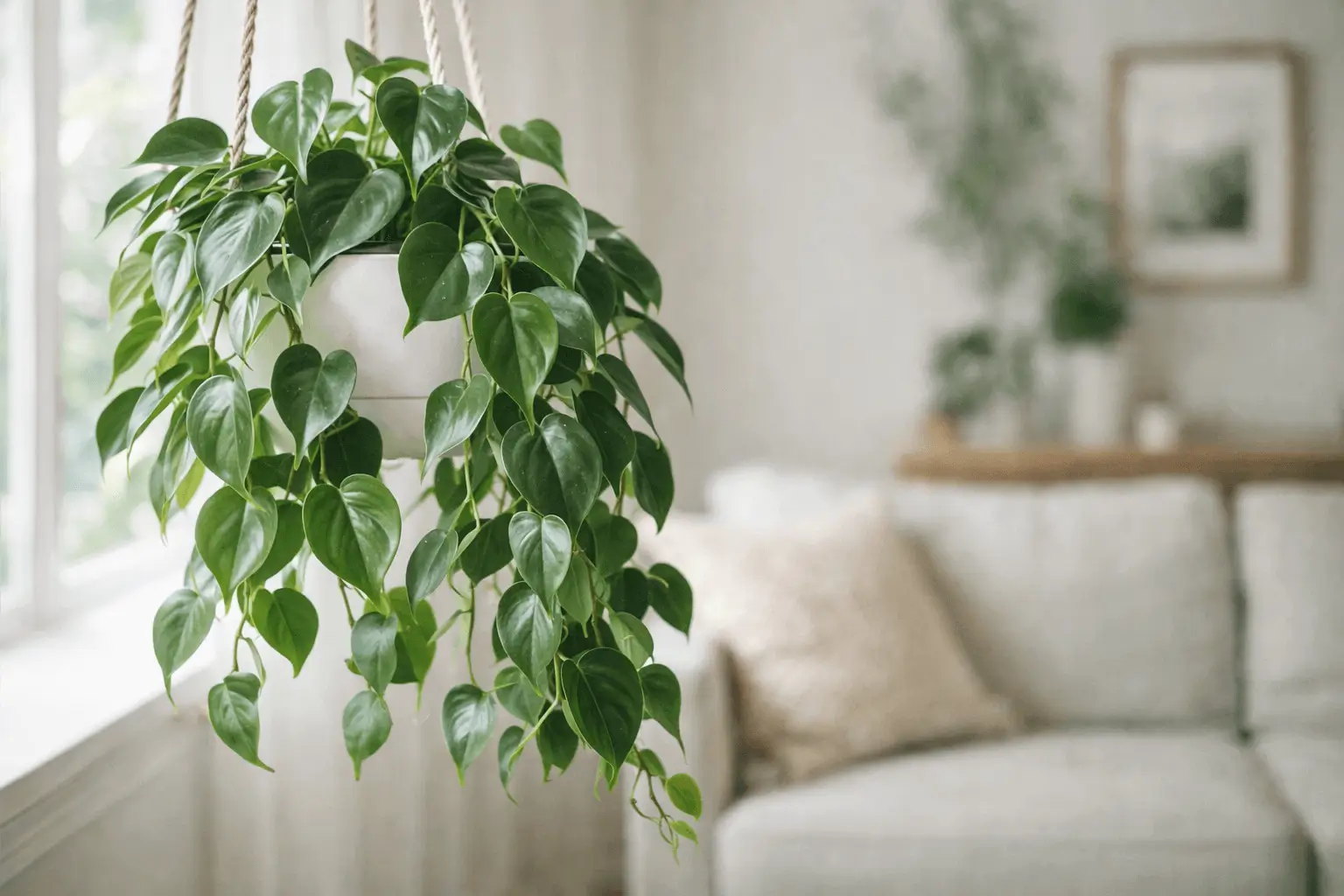
Philodendron scandens is a popular tropical houseplant known for its graceful trailing vines and soft, heart-shaped leaves that add instant greenery to indoor spaces. Commonly called the heart leaf philodendron, sweetheart philodendron, or scandens philodendron, this plant is loved for its simple care needs and adaptable nature. It thrives indoors as a decorative vine, whether grown in hanging baskets, placed on shelves, or trained to climb supports. The glossy green, heart-shaped foliage gives it a clean, timeless look that fits well in homes, apartments, and offices. Because philodendron scandens tolerates a range of light and indoor conditions, it is often recommended for beginners looking for a low-maintenance yet visually appealing indoor plant.
What Is Philodendron Scandens?
Philodendron Scandens Overview
The heartleaf philodendron scientific name is Philodendron hederaceum, commonly referred to as philodendron scandens in the houseplant trade. This plant has a trailing / climbing growth habit, allowing it to cascade from pots or climb upward when given support. Its foliage consists of small heart shaped leaves plant growth, with smooth, glossy surfaces and a rich green tone typical of a green heartleaf philodendron. The flexible vines and compact leaf size make it easy to shape, train, and maintain indoors, contributing to its long-standing popularity as a decorative vine.
Philodendron Scandens vs Similar Plants
A common comparison is between scandens pothos and philodendron, as both are trailing indoor plants with heart-like leaves. Philodendron scandens has thinner, softer leaves and more flexible stems, while pothos typically has thicker leaves and a firmer texture. When comparing it to philodendron heart leaf, the two are essentially the same plant, as “heart leaf philodendron” is a widely used common name for philodendron scandens. It is important not to confuse this plant with a lobed philodendron, which has deeply cut or split leaves and a very different growth form, making it a separate type within the philodendron family.
Philodendron Scandens Plant Care Guide
Light Requirements
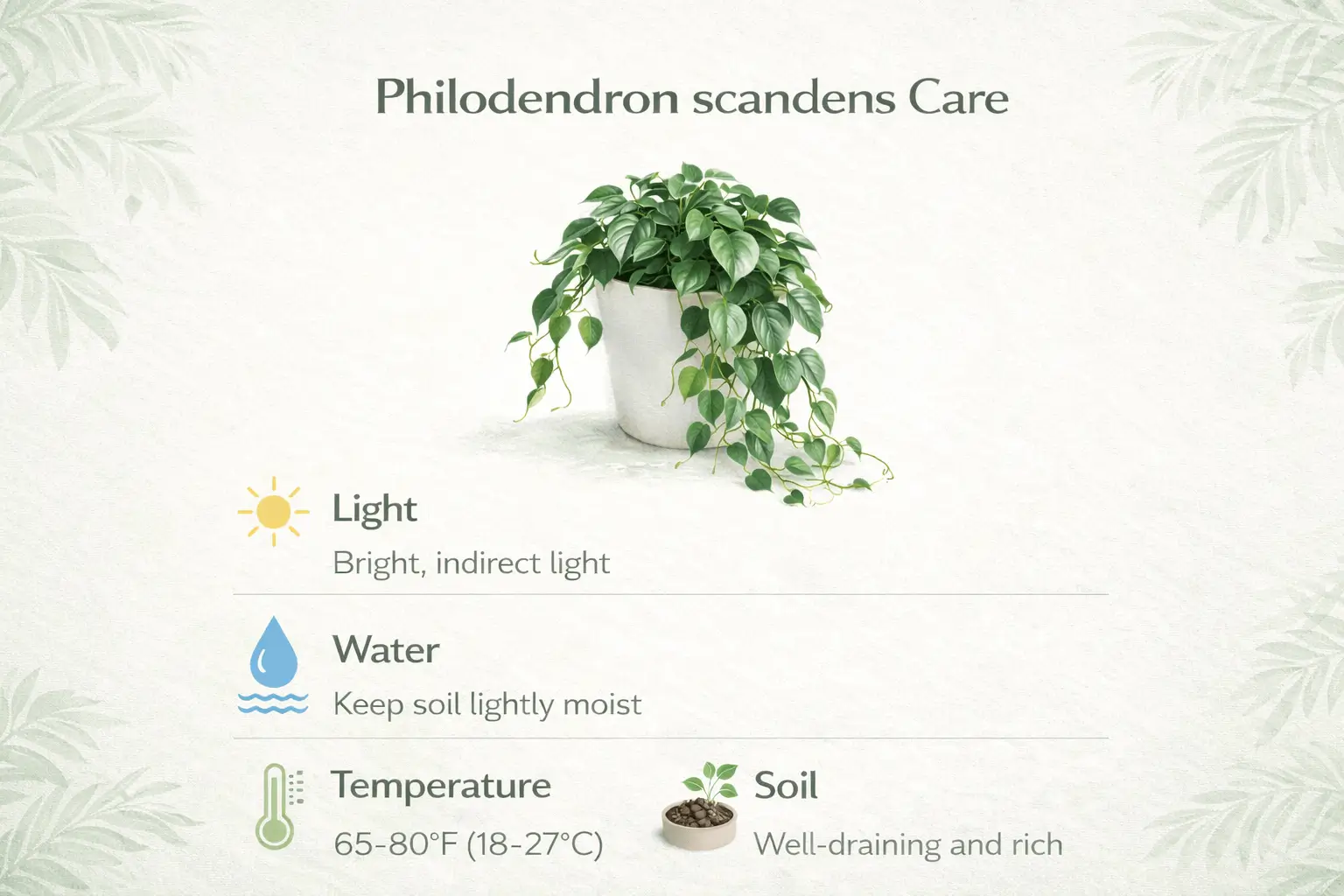
A common question is does philodendron like sun, and the simple answer is that it prefers light but not harsh exposure. Do philodendrons need sun to survive? They do need light, but indirect light works best. Understanding how much light does a philodendron need helps prevent weak growth and leaf issues. The ideal setup is bright, filtered light near a window with sheer curtains. Heartleaf philodendron light requirements are flexible, allowing the plant to tolerate low light, but growth will be slower and vines may become leggy. Direct sunlight should be avoided, as it can scorch the soft leaves and cause discoloration.
Watering Requirements
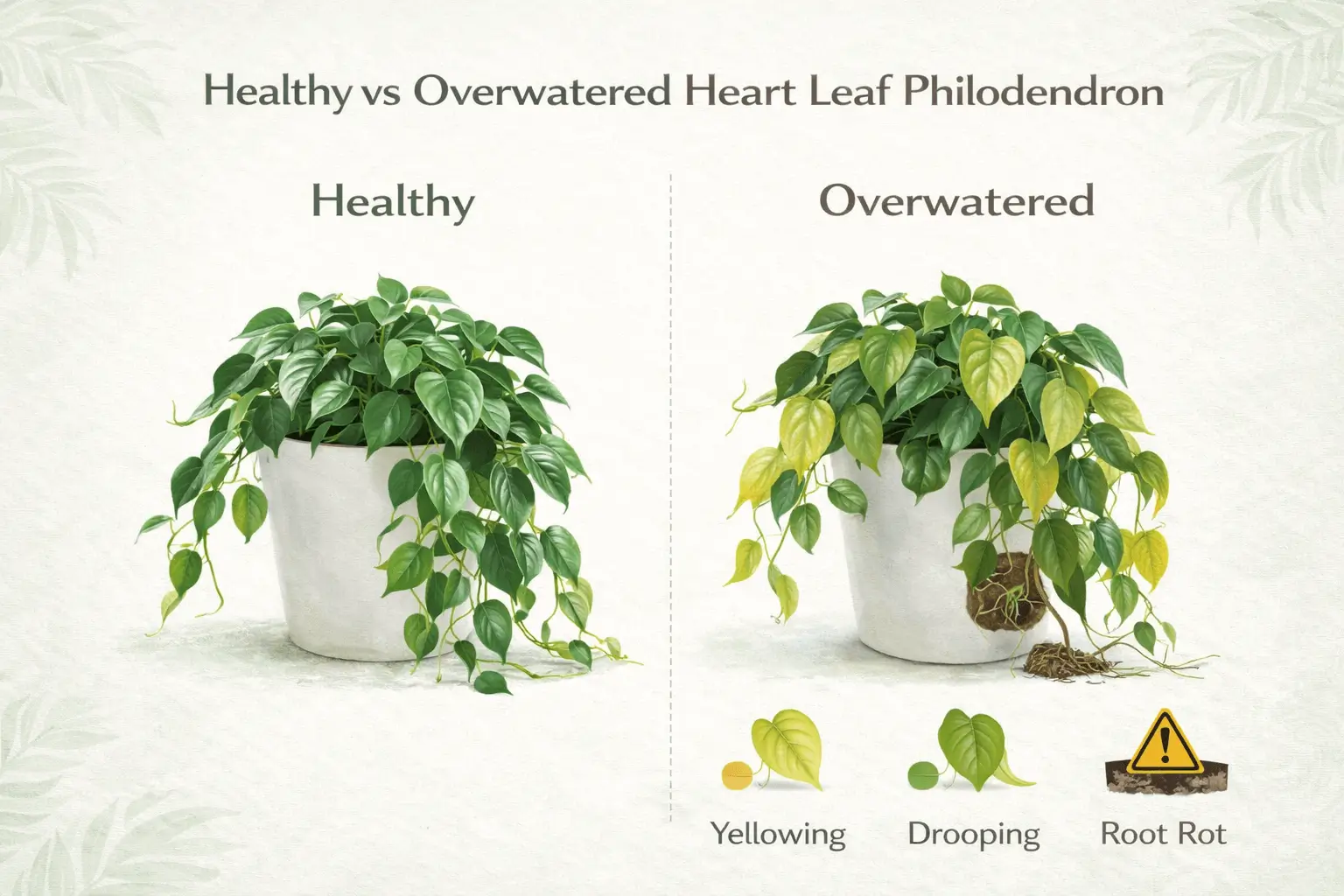
Proper watering is one of the most important philodendron watering requirements to get right. The soil should be kept lightly moist but never soggy. Allowing the top inch of soil to dry before watering helps protect the roots. Clear signs of overwatered heart leaf philodendron include yellowing leaves, drooping vines, and a musty smell from the soil. In severe cases, roots may rot and stems can soften. Similar symptoms are often seen in overwatered philodendron brasil, making it a useful comparison when diagnosing watering problems. Consistent watering habits are more important than frequent watering.
Temperature & Humidity Needs
The ideal philodendron temperature range falls between 65°F and 85°F, which aligns well with normal indoor living conditions. Sudden temperature drops, cold drafts, or exposure to heaters can stress the plant. Stable warmth supports steady growth and healthy foliage. For humidity, philodendron scandens adapts well to average indoor air, but it grows best in slightly humid environments. Ideal indoor conditions include moderate humidity, which can be improved with occasional misting or by placing the plant near other houseplants.
Soil & Potting Mix
Using the best soil for healthy roots ensures strong growth and prevents common issues like root rot. A loose, well-aerated potting mix that retains some moisture while draining excess water is ideal. Adding perlite or orchid bark improves airflow around the roots. Drainage importance cannot be overstated, as stagnant water in the pot leads to root damage and poor plant health. Always use pots with drainage holes to allow excess water to escape freely.
How to Care for Philodendron Scandens Indoors
General Care Tips
The care of philodendron plants indoors focuses on consistency rather than complexity. Knowing how to take care of a philodendron starts with placing it in a stable environment where light, temperature, and watering remain predictable. This plant prefers indirect light, evenly moist soil, and a well-draining pot to keep roots healthy. As part of a reliable philodendron plant care guide, regular checks for dust on leaves help maintain proper photosynthesis, while rotating the pot every few weeks encourages even growth. Fertilizing lightly during the growing season supports leaf development without overwhelming the plant. With basic attention and minimal adjustments, philodendron scandens adapts easily to indoor living.
Keeping Philodendron Bushy
Maintaining a full appearance depends on smart philodendron bushy growth tips rather than letting vines grow unchecked. One key method for avoiding leggy philodendron growth is providing enough light, as low light causes stems to stretch toward the source. Regular pruning encourages side shoots, which creates a denser plant. Philodendron small leaves causes often include insufficient light, lack of nutrients, or vines growing too long without trimming. Cutting back long stems and pinching growth tips helps redirect energy into producing fuller foliage instead of thin, extended vines.
Pruning & Trimming Philodendron Scandens
How and Where to Cut
Knowing where to cut heart leaf philodendron is essential for keeping the plant healthy and attractive. Cuts should always be made just above a leaf node, as this is where new growth emerges. When learning how to trim a philodendron, use clean, sharp scissors or pruning shears to avoid damaging the stems. Many plant owners ask, how do you trim a philodendron without harming it, and the answer lies in making precise cuts rather than removing large sections at once. Trimming long or unruly vines not only improves appearance but also encourages fresh, compact growth from the nodes below the cut.
Fixing Leggy Growth
Understanding leggy philodendron causes helps prevent the problem from returning. Leggy growth usually results from low light, irregular pruning, or long periods without trimming. When vines stretch excessively, the plant focuses energy on length instead of leaf production. This is where how pruning encourages fuller growth becomes important. By cutting back elongated stems, the plant redirects energy into producing new side shoots and leaves, resulting in a thicker, bushier overall shape. Regular pruning combined with proper light creates a balanced and healthy philodendron scandens.
Propagating Philodendron Scandens
Philodendron Scandens Cutting Method
The most reliable way to propagate this plant is through a step-by-step philodendron scandens cutting process. Start by selecting a healthy vine with at least two to three leaves and a visible node. Cut just below the node using clean, sharp scissors, as roots will form from this point. After removing the lower leaves, you can choose between water vs soil propagation. Water propagation allows you to monitor root development easily, while soil propagation encourages faster adjustment to long-term growing conditions. Both methods are effective when the cutting is kept warm, well-lit, and consistently moist.
Rooting Tips
Understanding when to use rooting hormone for philodendron can improve success, especially for slower-growing or woody cuttings. While philodendron scandens roots easily without it, a light application of rooting hormone may speed up root formation in soil propagation. Clear propagation success signs include the appearance of white, firm roots and the emergence of new leaf growth at the top of the cutting. Once roots are well developed, the cutting can be transferred to a permanent pot and cared for like a mature plant.
Common Philodendron Scandens Problems
Overwatering & Root Issues
One of the most frequent issues seen in an overwatered heart leaf philodendron is declining root health caused by excess moisture. When soil stays wet for too long, roots are deprived of oxygen and begin to rot. Common warning signs include yellowing leaves, persistent drooping, and a soft or mushy stem near the base. In advanced cases, yellowing, drooping, root rot signs may also include a foul smell from the soil and blackened roots. Addressing the problem requires reducing watering frequency, improving drainage, and repotting into fresh, well-draining soil if root damage is present.
Growth & Leaf Problems
Several growth concerns can affect philodendron scandens, and looking at philodendron brasil problems can help identify similar patterns. Issues such as small leaves, slow growth, leggy vines are often linked to low light, nutrient deficiency, or a lack of pruning. When light levels are too low, the plant stretches toward the source, producing longer stems with fewer leaves. Inadequate feeding during the growing season can also limit leaf size and vigor. Correcting these conditions restores balanced growth and healthier foliage over time.
Common Philodendron Scandens Problems
Overwatering & Root Issues
An overwatered heart leaf philodendron is one of the most common problems growers face indoors. Excess water fills air pockets in the soil, preventing roots from breathing properly. Over time, this leads to stress and decline. Typical yellowing, drooping, root rot signs include soft, yellow leaves, limp vines, and a consistently wet potting mix. In more advanced cases, roots may turn dark, mushy, and emit an unpleasant odor. Correcting the issue requires allowing the soil to dry partially between waterings, ensuring proper drainage, and repotting if root rot is already present.
Growth & Leaf Problems
Many growth-related concerns seen in philodendron scandens closely resemble philodendron brasil problems, making them useful for comparison. Small leaves, slow growth, leggy vines usually indicate insufficient light, poor nutrient availability, or long periods without pruning. Low light encourages vines to stretch, resulting in sparse foliage and elongated stems. A lack of balanced feeding during active growth can further limit leaf size and overall vigor. Improving light exposure, maintaining regular care, and trimming back weak growth helps restore healthier, fuller plant development.
Trailing vs Climbing Philodendron Scandens
Trailing Heart Leaf Philodendron
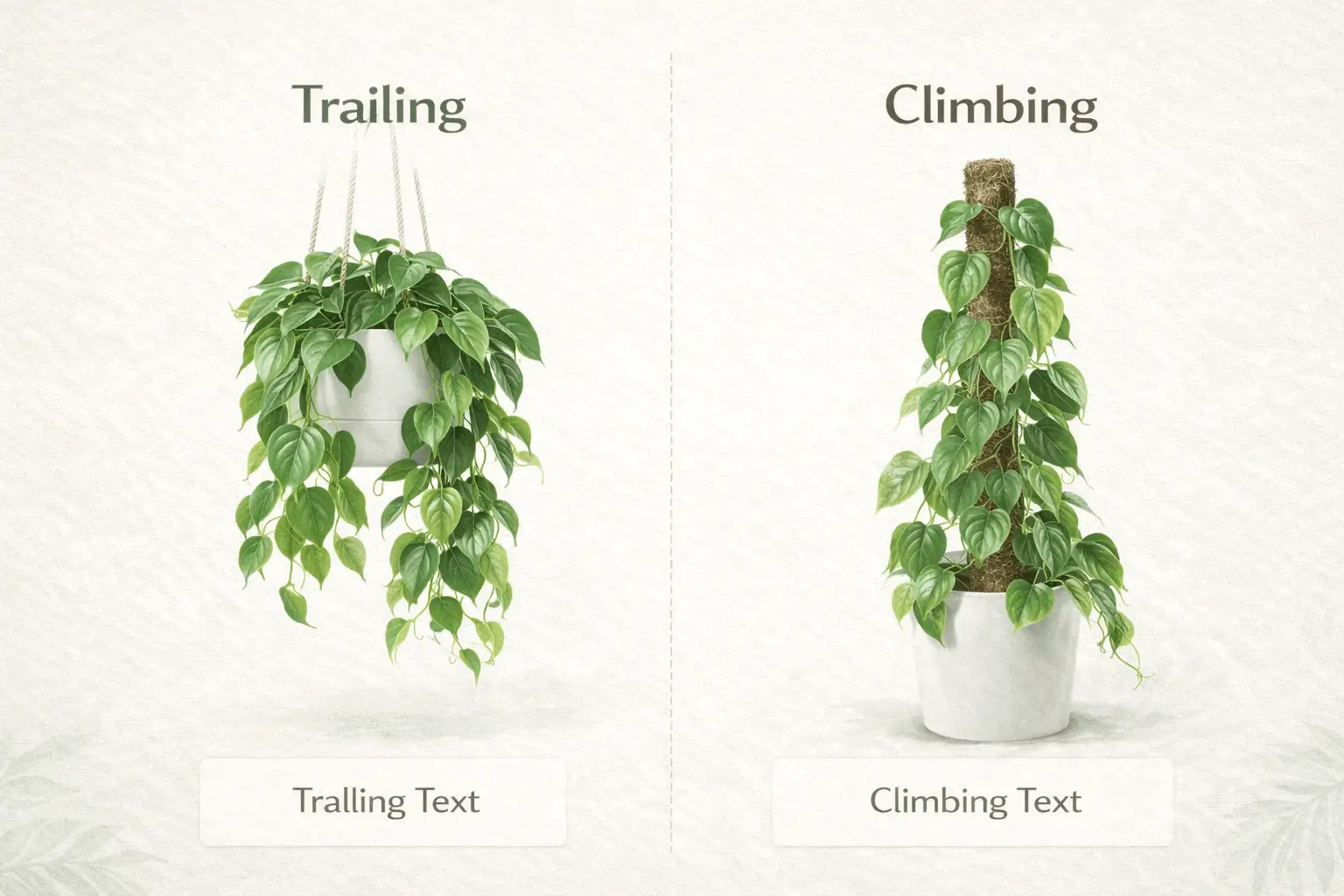
When grown as a trailing plant, philodendron scandens creates flowing vines that work well in hanging baskets & shelves. This growth style allows the stems to cascade naturally, highlighting the plant’s heart-shaped leaves as they drape downward. Trailing heart leaf philodendron styling is especially popular in living rooms, bedrooms, and office spaces where vertical greenery softens the environment. Letting vines trail freely requires minimal intervention, aside from occasional trimming to control length and maintain a neat appearance.
Climbing Philodendron Care
With proper support, philodendron scandens can be trained upward, making climbing philodendron care a practical option for maximizing vertical space. Using moss poles & supports encourages aerial roots to attach and climb, resulting in larger leaves and a more structured growth pattern. Regularly guiding stems toward the support and maintaining consistent moisture around the pole helps the plant establish a strong climbing habit.
Why Philodendron Scandens Is Perfect for Beginners
One of the biggest low-maintenance benefits of philodendron scandens is how forgiving it is of minor care mistakes. It tolerates occasional missed watering, adapts to varying light levels, and does not require constant attention to thrive. This resilience makes it especially appealing to new plant owners who are still learning basic care routines.
Its strong adaptability to indoor spaces allows it to grow comfortably in different environments, from bright rooms to lower-light corners. The plant adjusts well to standard indoor temperatures and average household humidity, reducing the need for specialized equipment.
Because of its compact growth and trailing nature, it is ideal for apartments and offices where space may be limited. It fits easily on shelves, desks, or in hanging planters, providing greenery without demanding complex care or large growing areas.
Conclusion & Call to Action
Caring for philodendron scandens is straightforward when its basic needs are met. Consistent indirect light, balanced watering, stable indoor temperatures, and well-draining soil form the foundation of healthy growth. Occasional pruning helps maintain shape, while proper support allows the plant to trail or climb beautifully depending on available space.
If you are looking for an easy, rewarding indoor plant, philodendron scandens is an excellent choice. Its adaptability and low-maintenance nature make it suitable for nearly any indoor setting. To get even more from your plant, try simple propagation or regular pruning to encourage bushier, fuller growth and expand your indoor plant collection with confidence.
Read Also: 7+ Shocking Causes of Brown Spots on Anthurium Leaves
FAQs
How often should I water philodendron scandens?
Philodendron scandens should be watered when the top inch of soil feels dry to the touch. This usually means watering every 7–10 days indoors, depending on light, temperature, and humidity. Overwatering should be avoided, as consistently wet soil can damage the roots.
Does heart leaf philodendron need direct sunlight?
No, heart leaf philodendron does not need direct sunlight. It grows best in bright, indirect light. Direct sun can scorch the leaves, while very low light may slow growth and cause leggy vines.
Why is my philodendron scandens getting leggy?
Leggy growth is usually caused by insufficient light or a lack of regular pruning. When light is too low, the plant stretches toward the light source. Trimming long vines and improving light exposure helps restore compact growth.
Can I propagate philodendron scandens in water?
Yes, philodendron scandens propagates very easily in water. Cut a healthy stem just below a node and place it in clean water, ensuring the node is submerged. Roots typically form within a few weeks before the cutting can be planted in soil.
How do I make my heartleaf philodendron bushy?
To make a heartleaf philodendron bushy, prune long vines regularly and pinch back growth tips. Providing bright indirect light and balanced feeding during the growing season also encourages fuller, denser foliage.

Written by the LeafyHeaven Editorial Team
LeafyHeaven shares practical gardening tips and simple plant care guides to help you grow, nurture, and enjoy your plants with ease. Our goal is to make gardening feel natural, approachable, and rewarding for everyone.