
Introduction
Photinia robusta vs red robin is a common comparison among gardeners choosing evergreen hedging plants. Both varieties are widely used for privacy screens, boundary hedges, and structured landscaping. However, differences in growth rate, height, spacing requirements, and maintenance can significantly impact long-term performance.
This guide compares Photinia robusta and Photinia × fraseri ‘Red Robin’ from a practical, horticultural perspective. It focuses on plant structure, mature size, hedge suitability, and care requirements—providing clear information for informed planting decisions rather than sales promotion.
What Is Photinia Robusta? (Plant Overview & Key Traits)
Photinia Robusta Common Name & Botanical Identity
The photinia robusta common name is often “Robusta Photinia” or “Evergreen Photinia.” It is a vigorous evergreen shrub or small tree known for dense foliage and strong upright growth.
Key evergreen photinia robusta characteristics:
- Glossy green mature leaves
- Bronze to red new growth
- Dense branching structure
- Suitable for screening and hedging
When comparing trees photinia robusta vs bush photinia robusta, the plant can be grown in both forms. In its natural habit, it develops into a small tree. With regular pruning, it forms a compact hedge.
The difference between photinia robusta tree form vs hedge form depends entirely on pruning style and spacing.
If you’re considering alternative structured hedges, our guide to creating a Teddy Bear Magnolia hedge offers another premium evergreen solution.
Photinia Robusta Height, Size & Mature Spread
Typical photinia robusta height:
- 4–6 metres (13–20 feet) in ideal conditions
Photinia robusta size varies depending on pruning:
- Unpruned: tall, upright tree-like structure
- Pruned hedge: controlled height 2–4 metres
While some references mention under 15′ mature height photinia robusta, realistically it can exceed 15 feet if left untrimmed. Mature spread averages 2–4 metres.
Photinia Robusta Growth Rate & Lifespan
The photinia robusta growth rate is considered fast, often 30–60 cm per year in suitable climates.
It has a long photinia robusta lifespan, typically 20+ years with proper care.
It is well suited for:
- Fast-growing hedge projects
- Tall privacy screens
- Windbreak planting
Photinia Robusta Flowers & Foliage Color
Photinia robusta flowers appear in spring as clusters of small white blooms.
Characteristics:
- White photinia robusta flower clusters
- Mild fragrance
- Attract pollinators
Mature foliage:
- Green photinia robusta mature leaves
- Glossy and leathery texture
- Dense evergreen coverage
What Is Red Robin Photinia? (Photinia × fraseri ‘Red Robin’)
Red Robin Botanical Classification
Photinia red robin, formally Photinia ‘Red Robin’, is a hybrid cultivar of Photinia × fraseri.
The term photinia red robin photinia naming clarification refers to the same plant:
Photinia × fraseri ‘Red Robin.’
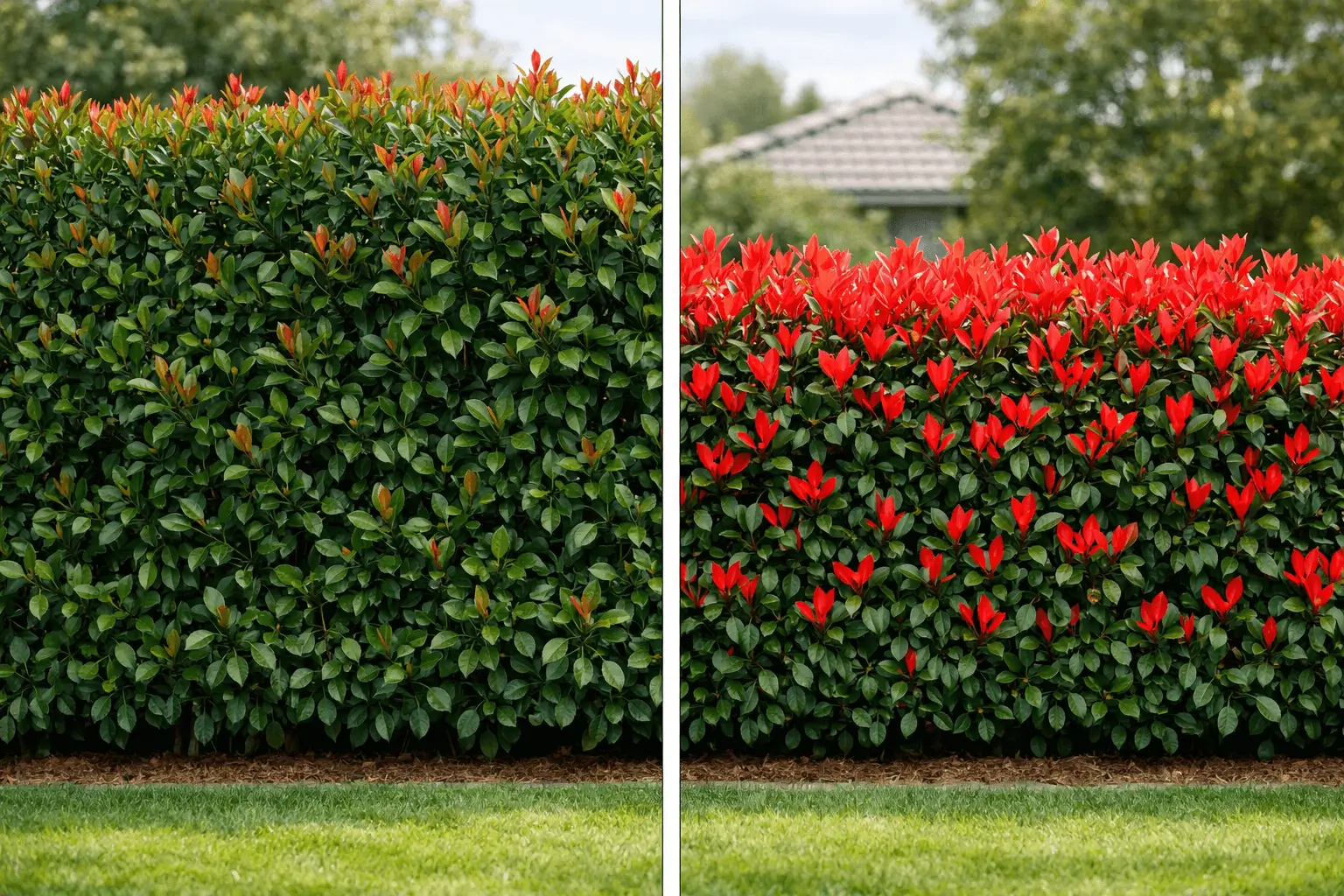
It is known for its intense red new growth and compact habit.
Red Robin Height & Mature Size
Average photinia red robin height:
- 3–5 metres (10–16 feet)
Comparing red robin tree vs red robin hedge:
- Tree form: upright, moderate canopy
- Hedge form: dense and structured with pruning
Spread averages 2–3 metres.
Red Robin Growth Rate & Hedge Performance
The red robin hedge is widely used for suburban privacy planting.
Photinia red robin hedge growth:
- Moderate to fast
- Responds well to shaping
Standard red robin hedge spacing:
- 1–1.5 metres apart for dense screening
It performs well as a formal hedge.
Red Robin Foliage & Seasonal Color
Distinct features:
- Bright red new growth
- Glossy evergreen structure
- Good red robin winter tolerance in mild climates
Color intensity increases with sunlight exposure.
Photinia Robusta vs Red Robin Size Comparison
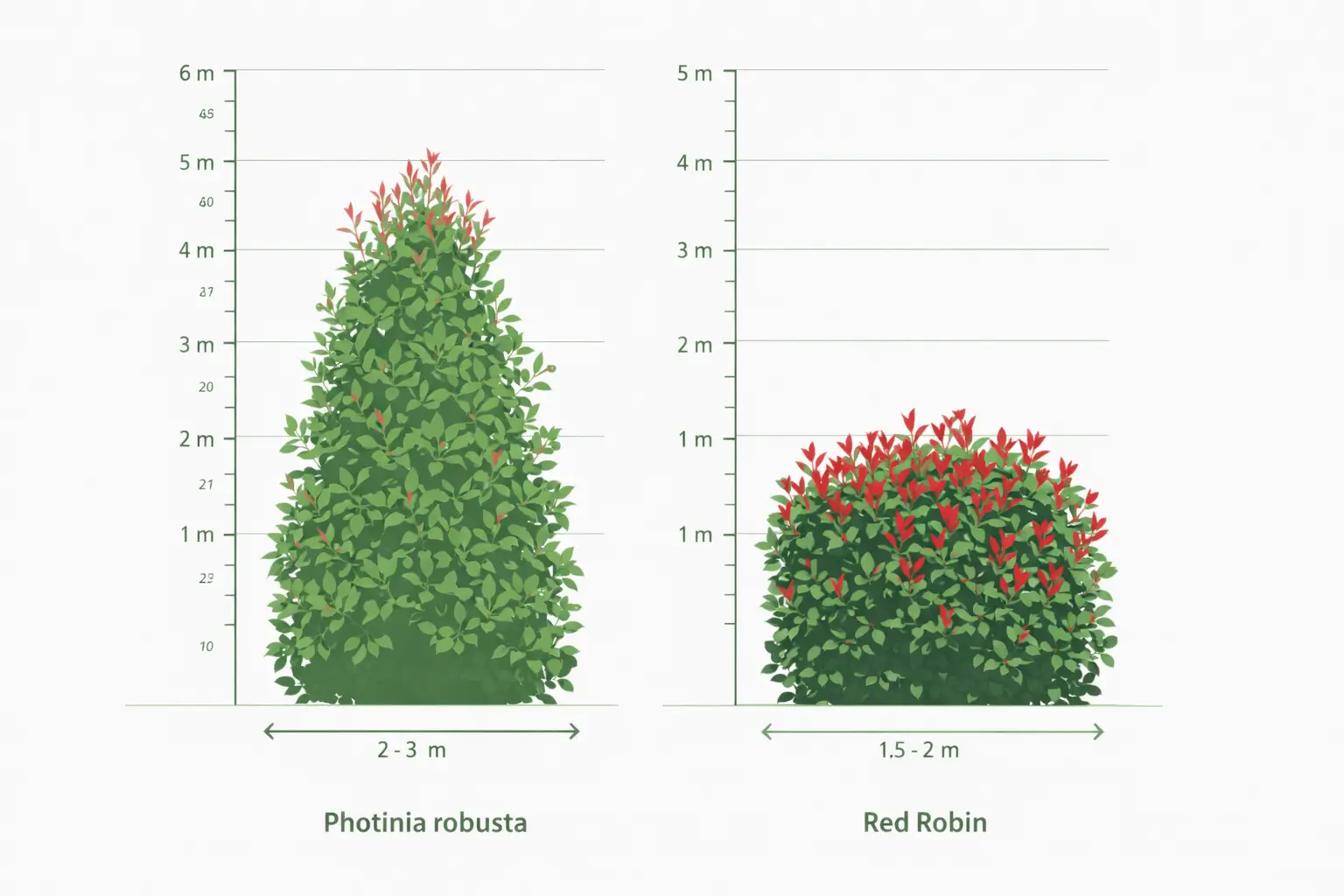
Height Comparison
Photinia robusta height vs photinia red robin height:
- Robusta: up to 6m
- Red Robin: typically 3–5m
Which grows taller?
Photinia robusta generally reaches greater height if unpruned.
Width & Spread Differences
Hedge density differences:
- Robusta: vigorous and slightly broader
- Red Robin: compact and controlled
Compact vs vigorous growth:
- Robusta = strong vertical growth
- Red Robin = dense branching habit
Compact Varieties Explained
- Photinia robusta compacta: smaller, tighter growth
- Photinia fraseri compacta: compact Red Robin variant
Robusta compacta vs standard forms:
- Compacta forms remain lower and narrower
- Standard forms grow taller and faster
Photinia Robusta vs Red Robin Growth Rate
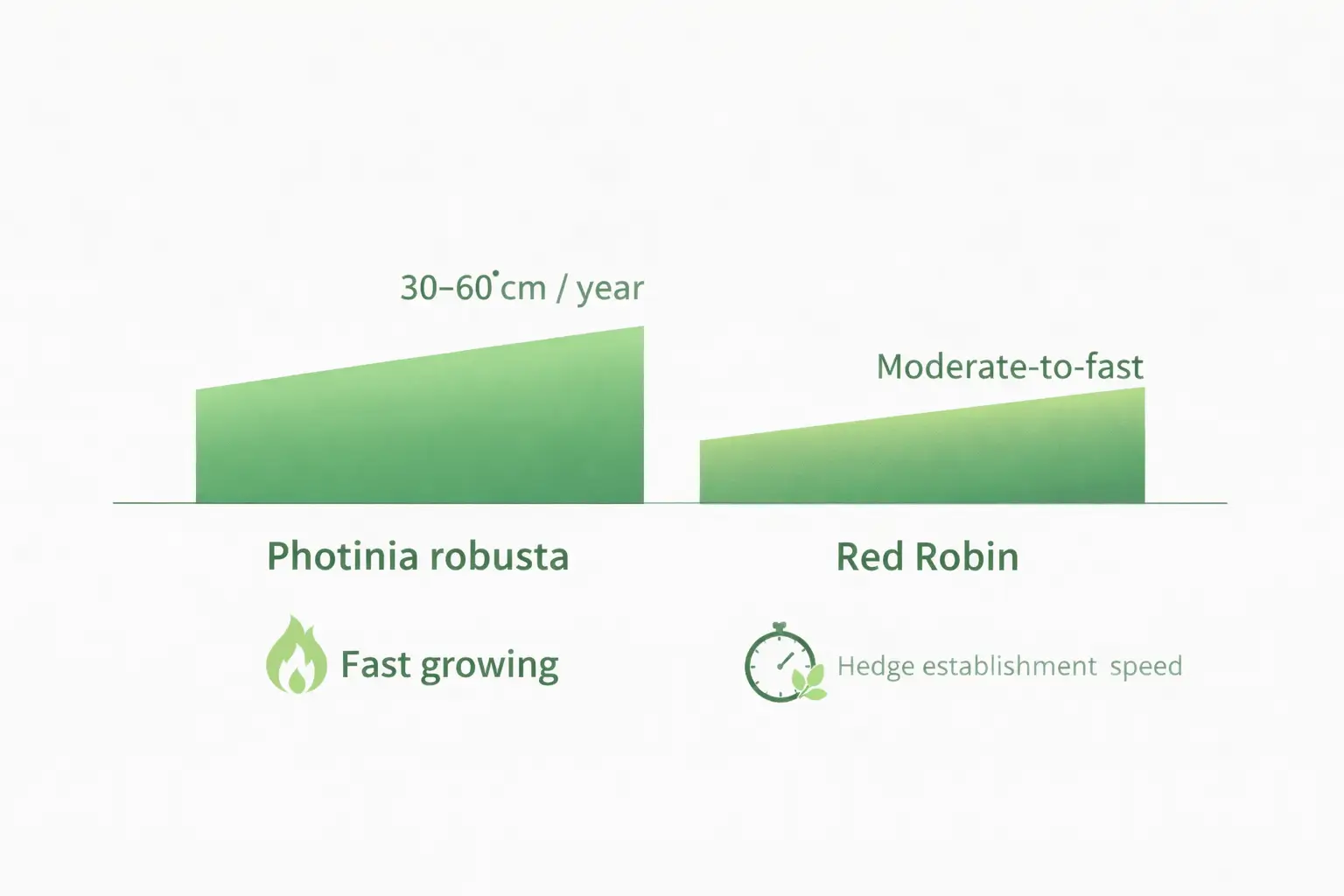
Annual Growth Rate Comparison
Photinia robusta growth rate:
- Faster in warm climates
Red Robin:
- Slightly slower but denser
Which establishes faster?
Robusta typically establishes quicker.
If you’re comparing hedge speed, you may also want to explore how quickly do lilly pillys grow as another popular fast-growing evergreen hedge option in Australian gardens.
Best for Fast Growing Hedge?
Fast hedge suitability:
- Robusta for rapid height
- Red Robin for uniform density
Long-term structural strength:
- Both provide durable hedge structure with pruning.
Photinia Robusta vs Red Robin Spacing Guide
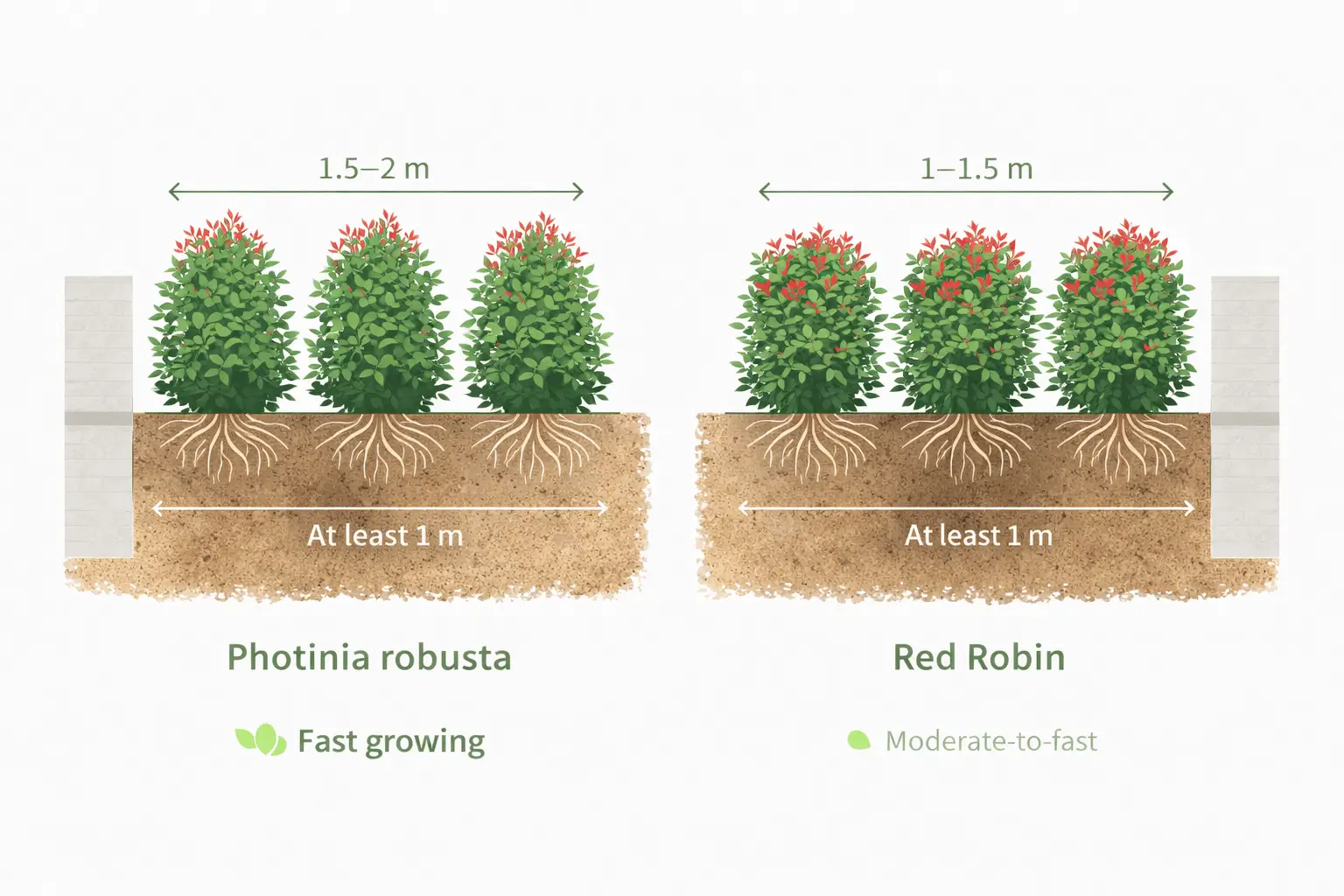
Photinia Robusta Hedge Spacing
Recommended photinia robusta hedge spacing:
- 1.5–2 metres apart
How far apart to plant photinia robusta:
- Closer spacing for dense hedge
- Wider spacing for tree form
Red Robin Hedge Spacing
Standard red robin hedge spacing:
- 1–1.5 metres apart
Photinia robusta vs red robin spacing differences:
- Robusta needs slightly more space
Root System Considerations
The photinia robusta root system is non-invasive but moderately spreading.
Root spread and foundation safety:
- Generally safe if planted 1.5–2m from structures
- Avoid poor drainage conditions
Care Differences – Which Is Easier to Maintain?
Sunlight & Shade Tolerance
Photinia robusta shade tolerance:
- Tolerates partial shade
Red Robin sun preference:
- Performs best in full sun
Pruning Requirements
When to prune photinia robusta in Australia:
- Late winter to early spring
Maintaining hedge density:
- Regular trimming promotes red flush and compact growth
Fertilizer & Soil Needs
Fertilizer photinia robusta:
- Balanced slow-release fertilizer in spring
Soil drainage requirements:
- Well-drained soil
- Avoid waterlogged conditions
These care practices align with the foundational principles outlined in our Gardening & Plant Care Guide for Thriving Plants.
Common Problems & Disease Resistance
Photinia Robusta Problems
Common photinia robusta problems:
- Leaf spot
- Fungal issues
Photinia robusta problems Australia:
- Increased fungal risk in humid regions
Brown photinia robusta leaf issues:
- Often linked to poor drainage or fungal leaf spot
Red Robin Disease Issues
Leaf spot concerns:
- Susceptible in humid climates
Environmental stress comparison:
- Both varieties require airflow to reduce disease risk
Photinia Robusta vs Red Robin in Australia
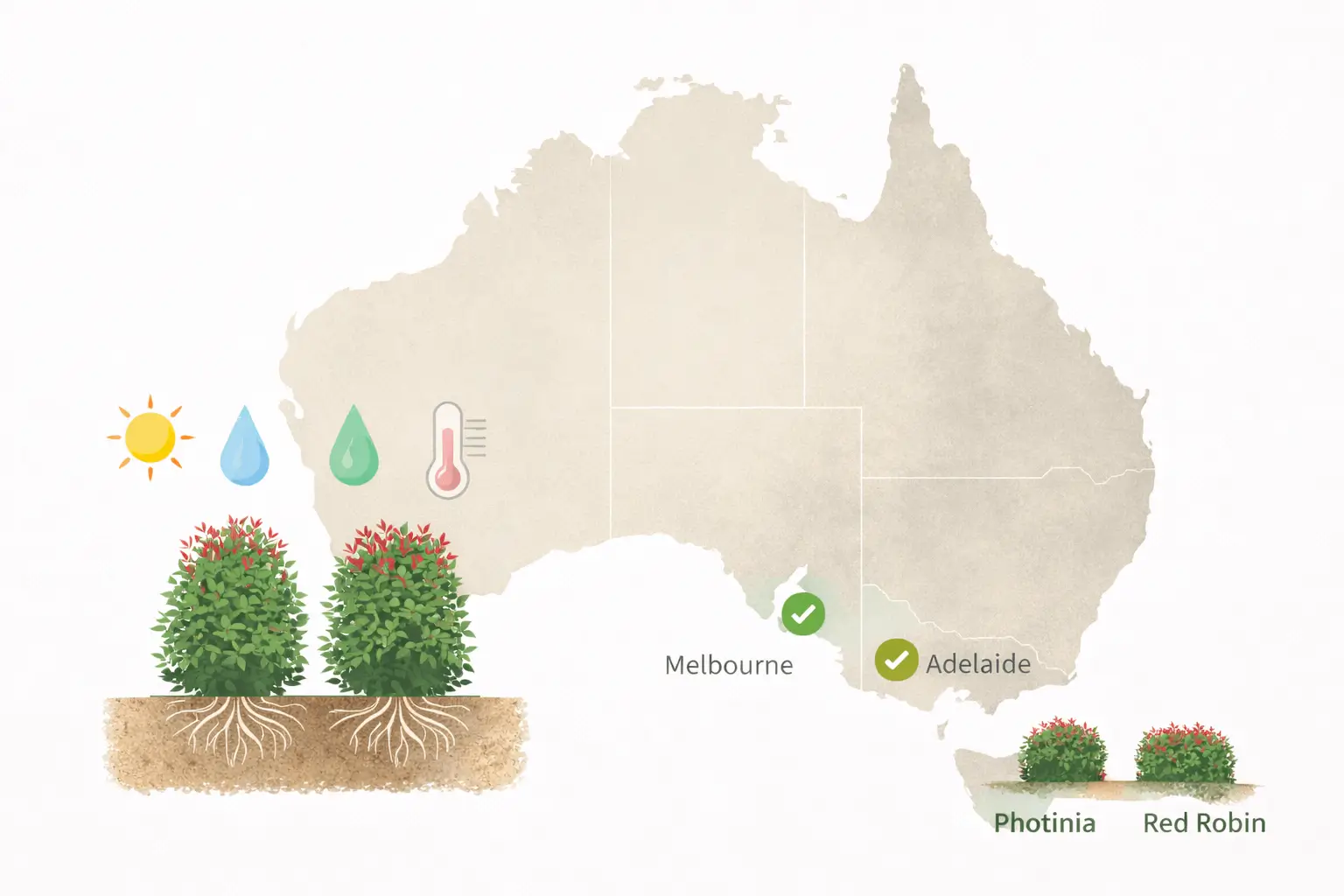
Climate Suitability
Photinia robusta vs red robin Australia:
- Both adapt well to temperate climates
Best time to plant photinia robusta Australia:
- Autumn or early spring
Regional Adaptation
Photinia robusta Melbourne:
- Performs well in cool temperate zones
Photinia robusta Adelaide:
- Thrives in Mediterranean climate with irrigation
Which One Should You Choose?
Best for Tall Privacy Hedge
If height is priority:
- Choose Photinia robusta
Best for Compact Garden Hedge
If space is limited:
- Choose Red Robin
Best for Low Maintenance Landscapes
Red Robin requires slightly more shaping, while Robusta grows vigorously but needs space planning.
Conclusion: Final Verdict on Photinia Robusta vs Red Robin
Photinia robusta vs red robin comparison shows that Robusta grows taller and faster, making it ideal for large-scale privacy hedges. Red Robin offers stronger red foliage contrast and a more compact structure for suburban gardens.
Choose Robusta for height and rapid screening.
Choose Red Robin for color intensity and structured hedging.
Assess garden size, climate, and desired mature height before planting.
FAQs
What is the main difference between photinia robusta vs red robin?
Photinia robusta grows taller and faster, while Red Robin is more compact with brighter red foliage.
Which grows taller, photinia robusta or red robin?
Photinia robusta typically reaches greater mature height.
How far apart should I plant photinia robusta vs red robin for a hedge?
Robusta: 1.5–2m apart. Red Robin: 1–1.5m apart.
Which photinia is better for Australian climates?
Both adapt well, but Robusta performs strongly in temperate regions.
Do photinia robusta and red robin have invasive root systems?
No, both have moderate, non-invasive root systems when properly spaced.
Which variety requires less pruning?
Red Robin generally requires more frequent shaping to maintain compact form.

Written by the LeafyHeaven Editorial Team
LeafyHeaven shares practical gardening tips and simple plant care guides to help you grow, nurture, and enjoy your plants with ease. Our goal is to make gardening feel natural, approachable, and rewarding for everyone.