
Introduction
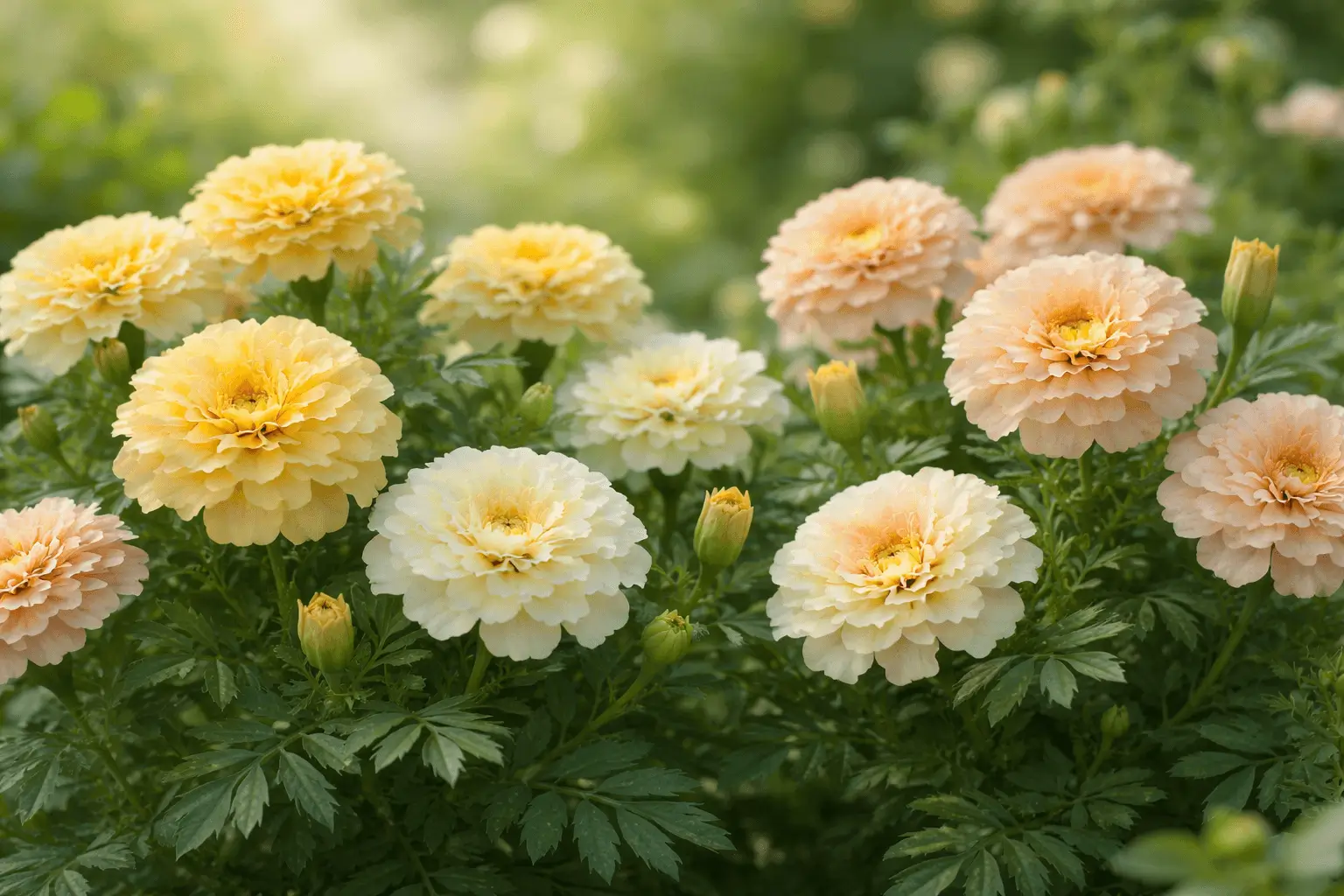
Pink marigolds plants often spark curiosity among gardeners who want softer, pastel tones instead of traditional bright orange blooms. Many buyers wonder whether true pink marigolds plants actually exist or if the name is simply a marketing trend. In reality, marigolds are known for a limited but vibrant color range, and understanding this helps set realistic expectations. This article clarifies the myths versus reality behind pink marigolds plants, explains how hybrids and seed mixes influence appearance, and highlights how market naming can affect perception. By learning about natural marigold shades, hybrid varieties, and buying tips, gardeners can make informed choices and avoid disappointment while still achieving a lighter, softer marigold look in their gardens.
Are Pink Marigolds Plants Real or a Market Term?
Understanding Natural Marigold Flower Colors
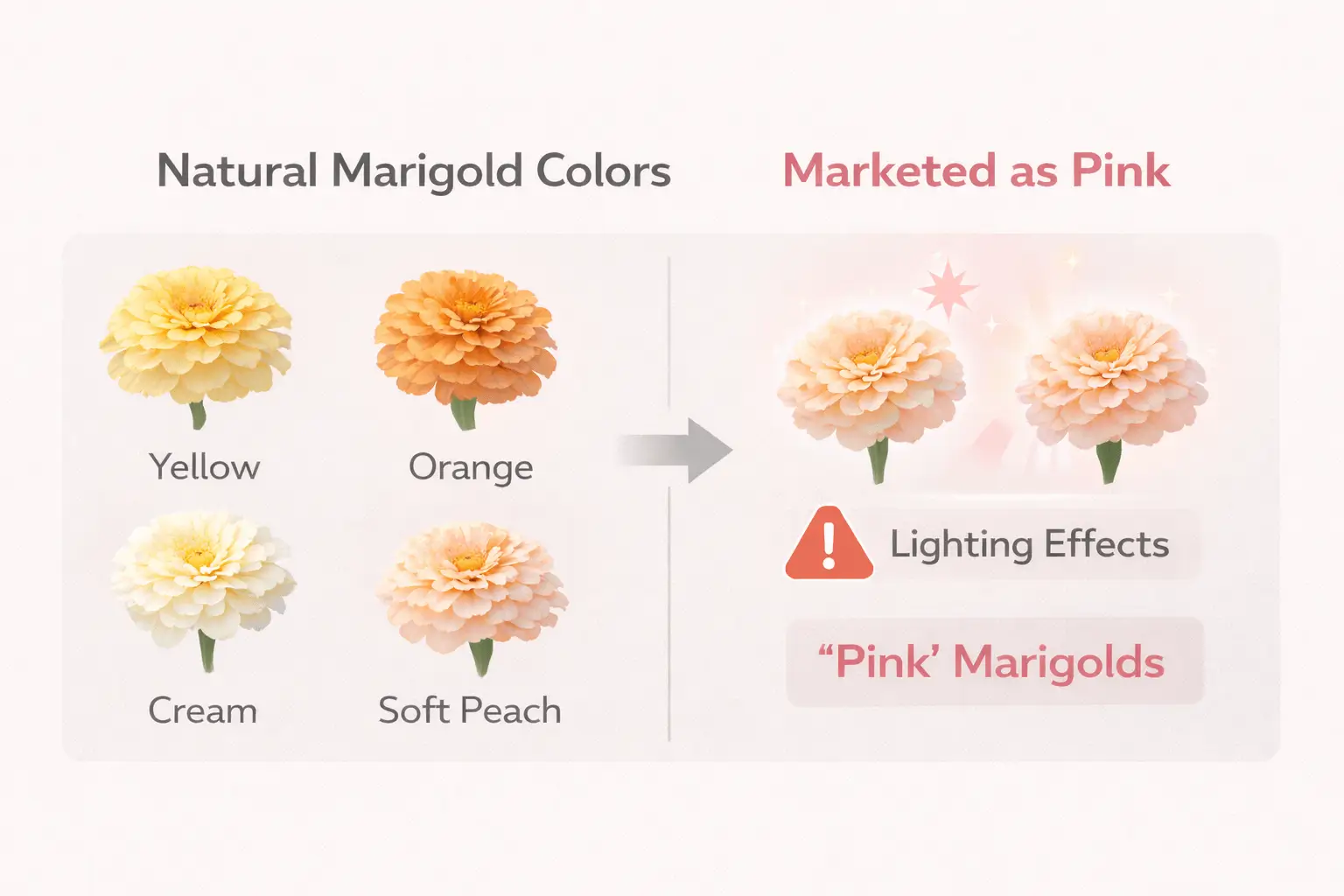
Marigolds naturally bloom in a warm color spectrum. Common natural marigold shades include:
- Bright yellow
- Golden and deep orange
- Cream or ivory tones
- Soft peach hues
True pink marigolds plants do not naturally exist because marigolds lack the pigments required to produce genuine pink coloration. Their genetics are limited to yellow-orange carotenoid pigments, which means any pink label does not reflect a naturally occurring flower color.
Why Some Plants Are Sold as “Pink Marigolds”
Some plants are sold as pink marigolds due to marketing and visual perception rather than botanical accuracy. Key reasons include:
- Seed mix branding and nursery labeling, where lighter-colored blooms are grouped under appealing names
- Lighting, soil conditions, and genetics, which can make cream or peach flowers appear pinkish at certain times of day
- Marigold happy mix, which typically includes cream, pale yellow, and soft peach blooms that may look pink-toned in photos or packaging
Popular Marigold Types Often Confused with Pink Marigolds
Giant Marigold Varieties
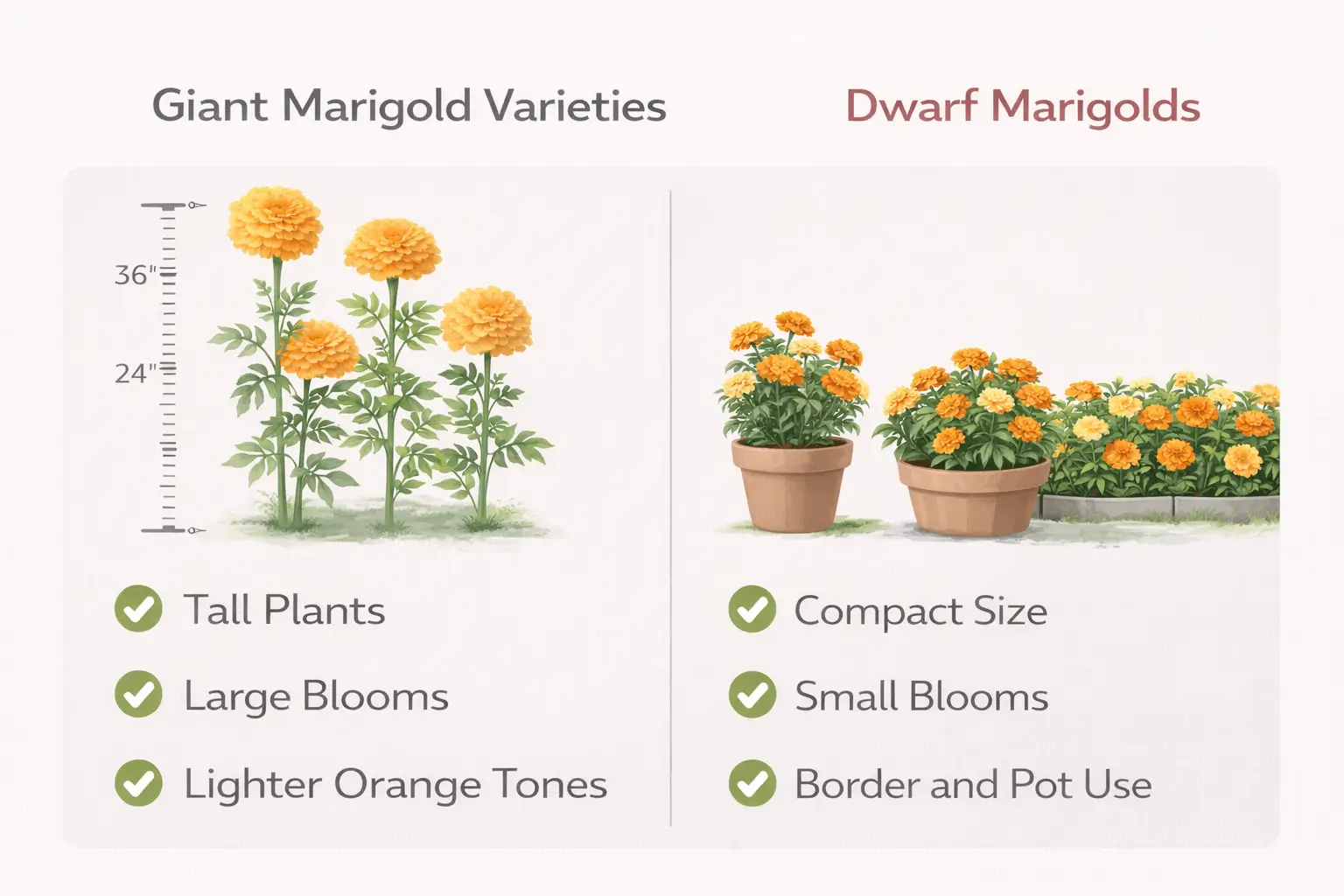
Giant marigold varieties are known for their bold presence and large blooms.
- Flowers can reach 3–5 inches in diameter
- Plants often grow 24–36 inches tall
- Their size creates strong visual impact in gardens
Lighter orange or cream-toned giant marigolds may appear “pinkish” under cool light or during early bloom stages, leading to confusion.
Dwarf Marigolds and Compact Garden Options
Dwarf marigolds are smaller, bushy plants designed for tight spaces.
- Compact height, usually 6–12 inches
- Ideal for pots, borders, and balconies
- Continuous blooming habit
Dwarf marigolds seeds are commonly used in home gardening because they are easy to manage and provide softer visual textures when lighter-colored varieties are chosen.
Buying Pink Marigolds Plants – What to Look For
Pink Marigolds Plants for Sale – What Sellers Actually Mean
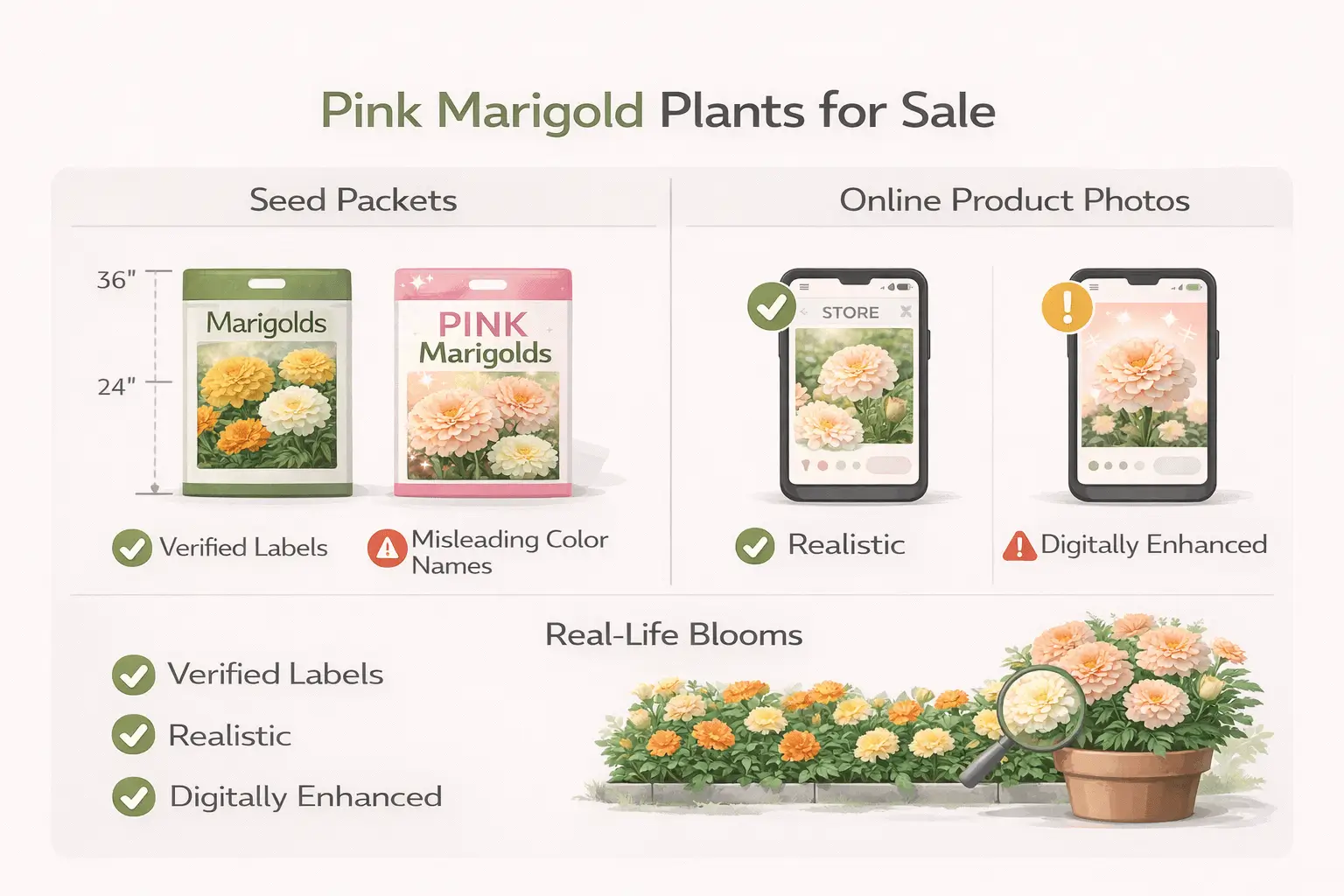
When you see pink marigolds plants for sale, sellers are usually referring to lighter shades rather than true pink.
- Online and nursery listings often rely on enhanced photos
- Real-life results may differ due to growing conditions
- The best buying season is early spring when plants are young and labels are clearer
Checking bloom-stage photos instead of seed packet images improves accuracy.
Comparing Similar Listings in the Market
Understanding naming differences helps avoid confusion:
- Color-based naming focuses on appearance, not genetics
- Botanical classification remains consistent regardless of color labels
- White marigold plants for sale are typically cream or ivory, not pink
Avoid misleading seed packets by checking variety names and expected color descriptions.
Growing Marigolds from Seeds
Choosing the Right Marigold Flower Seeds
Selecting quality marigold flower seeds is essential.
- Choose reputable seed suppliers
- Look for clear variety labeling
- Check germination rates and production dates
Seed origin and accurate labeling directly affect bloom color outcomes.
French and Hybrid Seed Options
French marigolds are popular for compact growth and color variety.
- Shorter plants with dense foliage
- Quick bloom time, usually 45–60 days
- French marigold seeds for sale are often recommended for containers
Hybrid options may produce cream or peach-toned flowers but not true pink blooms.
Care Tips to Achieve Softer, Lighter Marigold Shades
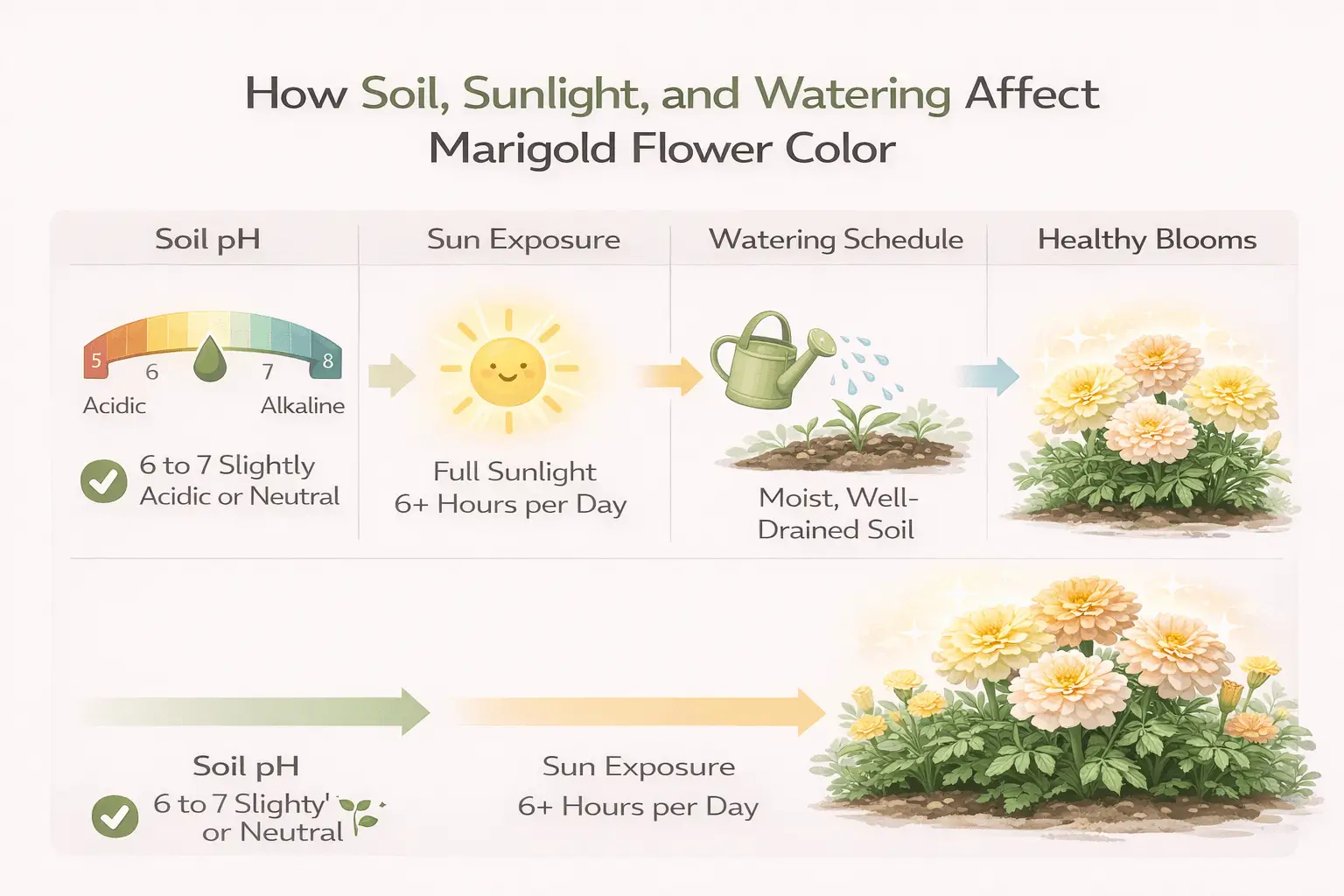
Soil, Sunlight, and Watering Impact on Color
Growing conditions influence flower tone.
- Slightly balanced soil pH supports healthy pigmentation
- Full sun encourages strong blooms, while partial shade softens color
- Consistent watering prevents stress-related darkening
Maintenance for Healthy, Full Blooms
Proper care enhances appearance.
- Regular deadheading promotes continuous flowering
- Adequate spacing improves air circulation
- Prevent nutrient stress to reduce color fading
Landscaping & Decorative Uses
Garden Design Ideas Using Soft-Colored Marigolds
Soft-colored marigolds pair well with:
- Pastel flowers like petunias and alyssum
- Borders and walkways for subtle contrast
- Container styling on patios and balconies
Seasonal and Festive Uses
Marigolds hold cultural and decorative value.
- Widely used in seasonal displays
- Suitable for festivals and outdoor events
- Lighter varieties offer a softer decorative effect
Conclusion & Call-to-Action
Pink marigolds plants are not naturally occurring, but lighter marigold varieties and seed mixes can create a soft, pink-like appearance. Understanding natural color limits and market naming trends prevents confusion. For best results, choose verified varieties or carefully labeled seed mixes that match realistic color expectations.
Read Also: 7+ Stunning Truths About Blue Heart Lilies You Must Know
FAQs
Are pink marigolds plants naturally available?
No, true pink marigolds plants do not exist naturally due to genetic limitations.
Why are some marigolds sold as pink?
They are labeled pink for marketing reasons, usually referring to cream or peach tones.
Can seed mixes produce pink-looking marigolds?
Seed mixes can produce lighter shades that appear pinkish under certain conditions.
Which marigold varieties have the lightest colors?
Cream, ivory, and soft peach varieties are the lightest available.
Are pink marigolds plants good for pots and balconies?
Lighter-toned dwarf marigolds are excellent for pots and balcony gardening.
How long do marigold plants take to bloom from seed?
Most marigolds bloom within 45–60 days after sowing.

Written by the LeafyHeaven Editorial Team
LeafyHeaven shares practical gardening tips and simple plant care guides to help you grow, nurture, and enjoy your plants with ease. Our goal is to make gardening feel natural, approachable, and rewarding for everyone.

[…] Read Also: 5+ Shocking Truths About Pink Marigolds Plants You Must Know […]