
Introduction
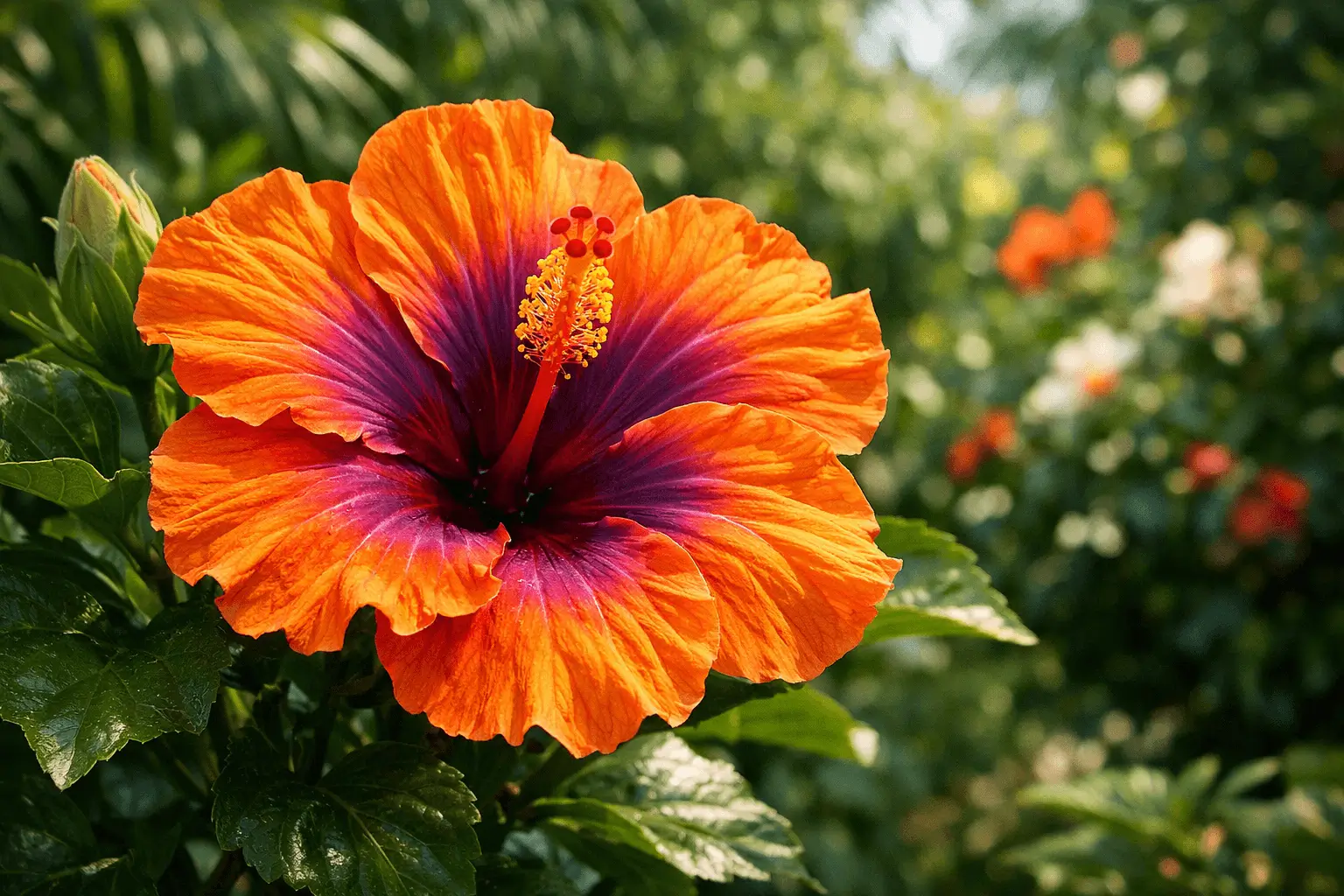
Purple orange hibiscus is gaining attention for its striking blend of warm orange petals layered with deep red or purple undertones. This dramatic color contrast creates a tropical, high-impact look that stands out in gardens, patios, and modern home décor settings. The visual appeal lies in the depth of color—orange blooms paired with darker centers or shaded edges create a dynamic, almost glowing effect. This combination is trending because it complements both lush outdoor landscapes and minimal indoor styling. While some purple orange hibiscus flowers occur due to natural pigmentation shifts, many of the most vivid examples come from carefully developed hybrid cultivars designed to intensify red and purple tones.
What Is a Purple Orange Hibiscus?
Understanding Hibiscus Color Variations
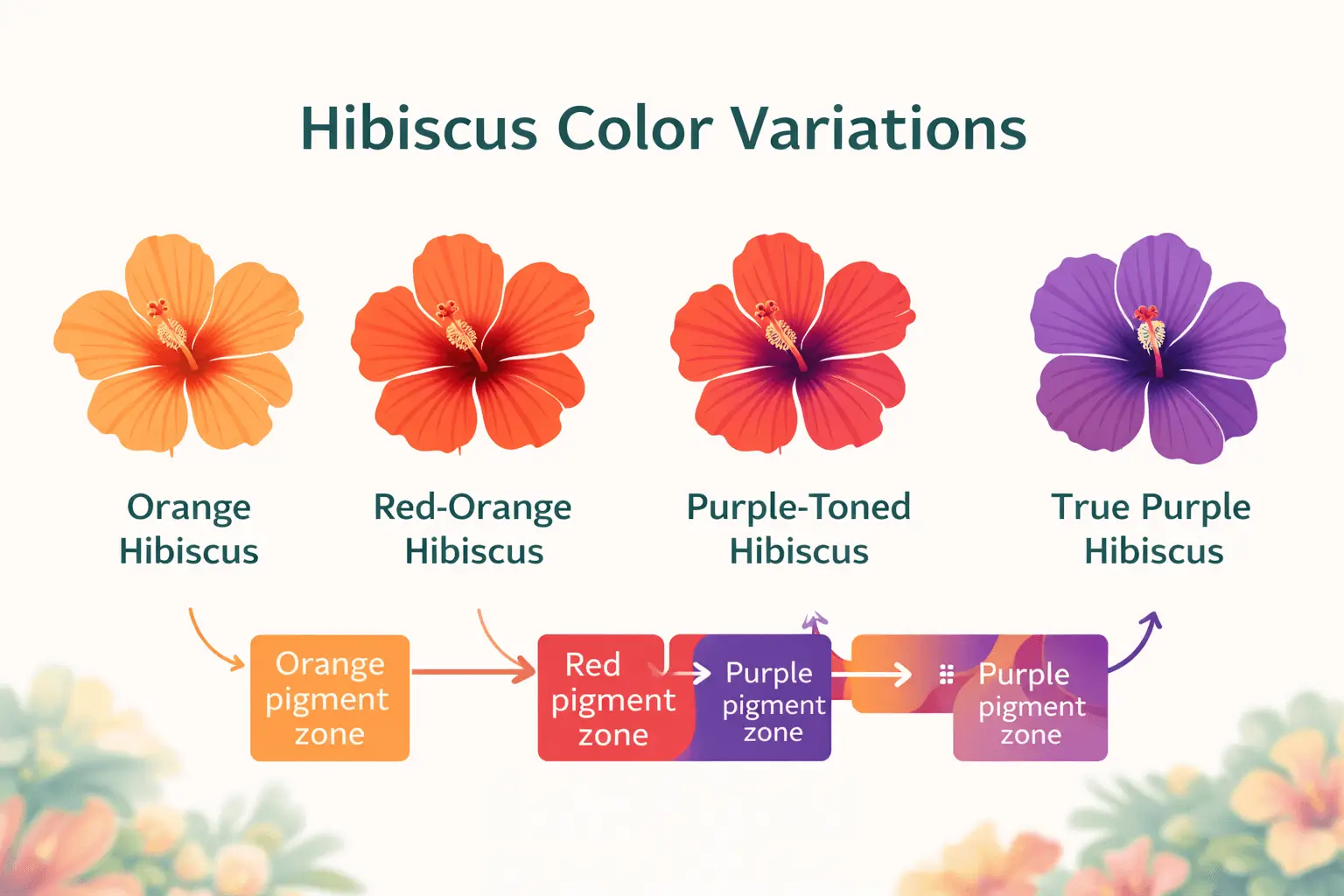
Hibiscus flowers display a wide spectrum of colors due to natural pigmentation compounds such as anthocyanins and carotenoids.
- Orange hibiscus develops red or purple tones when pigment concentration increases in the petal center or veins
- Temperature, sunlight intensity, and plant maturity influence how strong these undertones appear
- True purple hibiscus varieties are genetically distinct, while color-blended varieties combine orange petals with red or purple shading
Is Purple Orange Hibiscus a Natural or Hybrid Plant?
Most purple orange hibiscus plants available today are the result of selective breeding.
- Hybridization enhances darker centers and multi-tone petals
- Environmental factors like sun exposure and soil nutrition can deepen or soften color expression
- Seasonal changes often cause flowers to appear more intense in warm, bright conditions and lighter during cooler periods
Popular Orange Hibiscus Varieties With Purple or Red Tones
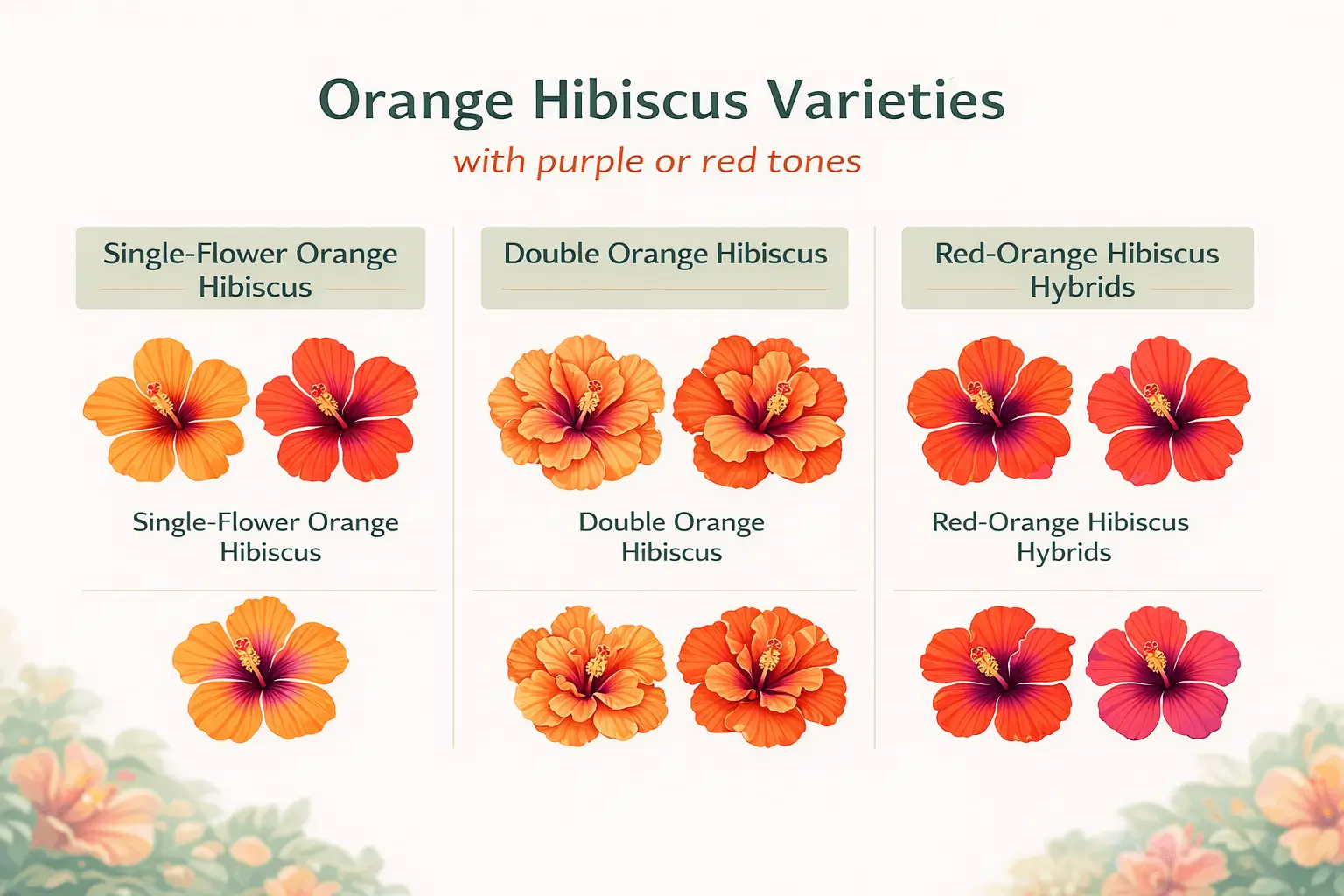
Single-Flower Orange Hibiscus Types
Single-flower orange hibiscus varieties are known for their bold, open blooms.
- Bright orange petals with deep red or maroon centers
- Strong visual contrast that mimics a purple-orange effect
- Ideal for landscapes, hedges, and outdoor garden beds
Double Orange Hibiscus Varieties
Double orange hibiscus varieties feature layered petals that create fuller flowers.
- Dense, ruffled blooms with enhanced color depth
- Purple and red tones appear more pronounced due to petal layering
- Often mistaken for purple-orange blends because of their richness
Red-Orange Hibiscus Hybrids
Red-orange hibiscus hybrids are the closest match to a true purple-orange appearance.
- Deep red centers fading into orange outer petals
- Consistent color intensity across growing seasons
- Best option for gardeners seeking dramatic purple-orange tones
How to Grow Purple Orange Hibiscus Successfully
Sunlight Requirements
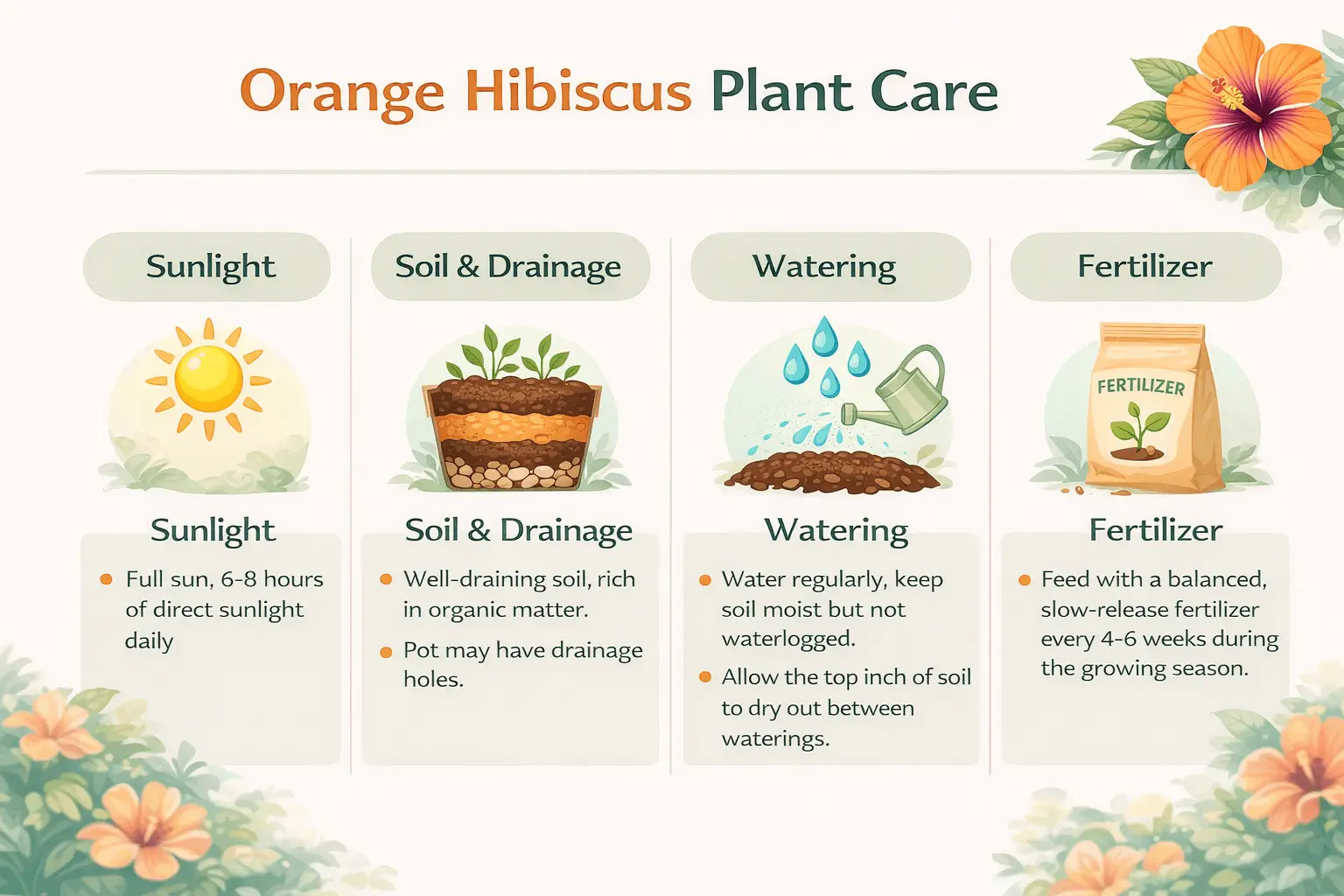
Proper light exposure is essential for healthy growth and vibrant blooms.
- Full sun produces the strongest flower color
- Partial shade may reduce color intensity
- Consistent sunlight enhances red and purple undertones
Soil & Drainage Needs
Healthy roots support stronger blooms and better pigmentation.
- Well-draining, nutrient-rich soil is essential
- Slightly acidic to neutral pH supports optimal nutrient uptake
- Avoid compacted or waterlogged soil
Watering & Fertilization
Balanced care promotes continuous flowering.
- Water deeply but allow soil to dry slightly between watering
- Use balanced fertilizers with added potassium
- Color-enhancing fertilizers support deeper petal tones
Growing Purple Orange Hibiscus in Pots
Choosing the Right Pot Size
Container choice directly affects plant health.
- Pots must have drainage holes
- Adequate root space prevents stress
- Larger pots support better moisture balance
Indoor vs Outdoor Container Growing
Container-grown hibiscus offers flexibility.
- Balconies and patios provide ideal light exposure
- Indoor placement requires bright, indirect sunlight
- Winter protection is necessary in colder climates
Orange Hibiscus Tree vs Shrub Form
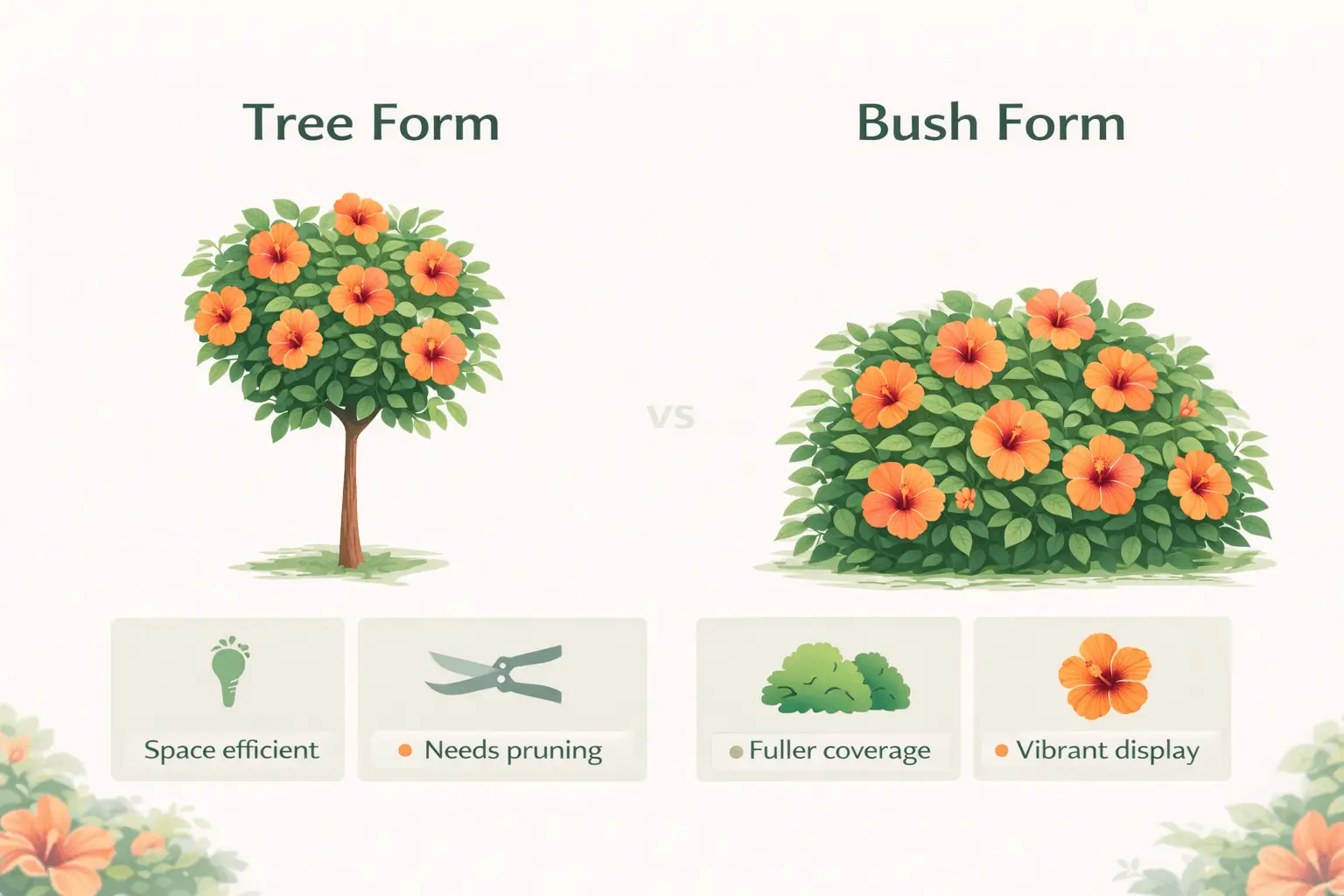
Training Hibiscus Into Tree Form
Tree-form hibiscus offers a structured appearance.
- Regular pruning shapes a single trunk
- Maintenance focuses on canopy balance
- Ideal for patios and focal points
Tree Form vs Bush Form – Which Is Better?
Choosing the right form depends on space and design goals.
- Tree form suits compact spaces and decorative use
- Bush form provides fuller coverage and more blooms
- Visual impact varies based on landscape layout
Buying Purple or Orange Hibiscus Plants
What to Look for When Buying
Healthy plants ensure long-term success.
- Glossy green leaves and unopened buds
- Avoid plants labeled as artificially dyed
- Check for pests or leaf damage
Online vs Local Nurseries
Each option has advantages.
- Local nurseries allow plant inspection
- Online stores offer wider variety selection
- Proper acclimation after shipping is essential
Decorative & Floral Uses of Orange Hibiscus
Garden & Landscape Design Ideas
Orange hibiscus adds bold color to outdoor spaces.
- Works well in tropical garden themes
- Pairs beautifully with green foliage and neutral tones
- Enhances borders, patios, and entryways
Cut Flowers & Bouquets
Hibiscus flowers create dramatic displays.
- Short vase life but intense visual impact
- Best used for same-day arrangements
- Popular for tropical-themed décor
Common Problems With Orange & Purple-Toned Hibiscus
Bud Drop & Poor Flowering
Environmental stress is the most common cause.
- Sudden temperature changes
- Inconsistent watering
- Insufficient sunlight
Pests & Diseases
Hibiscus plants can attract common pests.
- Aphids and spider mites affect leaf health
- Regular inspection prevents infestations
- Neem oil and proper airflow aid prevention
Conclusion & Call to Action
Purple orange hibiscus stands out for its bold color contrast and tropical elegance. By selecting the right variety and following proper care practices, gardeners can enjoy vibrant blooms that enhance both outdoor and indoor spaces. Whether grown as a shrub, tree, or container plant, orange hibiscus hybrids offer unmatched visual impact. Explore available varieties and start growing or add one to your collection today.
Read Also: 7+ Stunning Truths: Are There Purple Sunflowers or Not?
FAQs
Is purple orange hibiscus a real plant or a hybrid?
Most purple orange hibiscus plants are hybrids developed to enhance red and purple undertones.
Can orange hibiscus flowers turn purple over time?
Color intensity can deepen with age, sunlight, and seasonal conditions, but true purple change is uncommon.
Does growing hibiscus in pots affect flower color?
Yes, light exposure and nutrient control in pots can influence color depth.
Are double orange hibiscus flowers harder to care for?
They require similar care but may need more nutrients to support fuller blooms.
Where can I safely buy orange hibiscus plants online?
Reputable plant nurseries and specialty garden stores are the safest options.
Can orange hibiscus be grown as a small tree?
Yes, with proper pruning and maintenance, it can be trained into a tree form.

Written by the LeafyHeaven Editorial Team
LeafyHeaven shares practical gardening tips and simple plant care guides to help you grow, nurture, and enjoy your plants with ease. Our goal is to make gardening feel natural, approachable, and rewarding for everyone.

[…] Read Also: 7+ Stunning Purple Orange Hibiscus Varieties You’ll Love […]