
Introduction
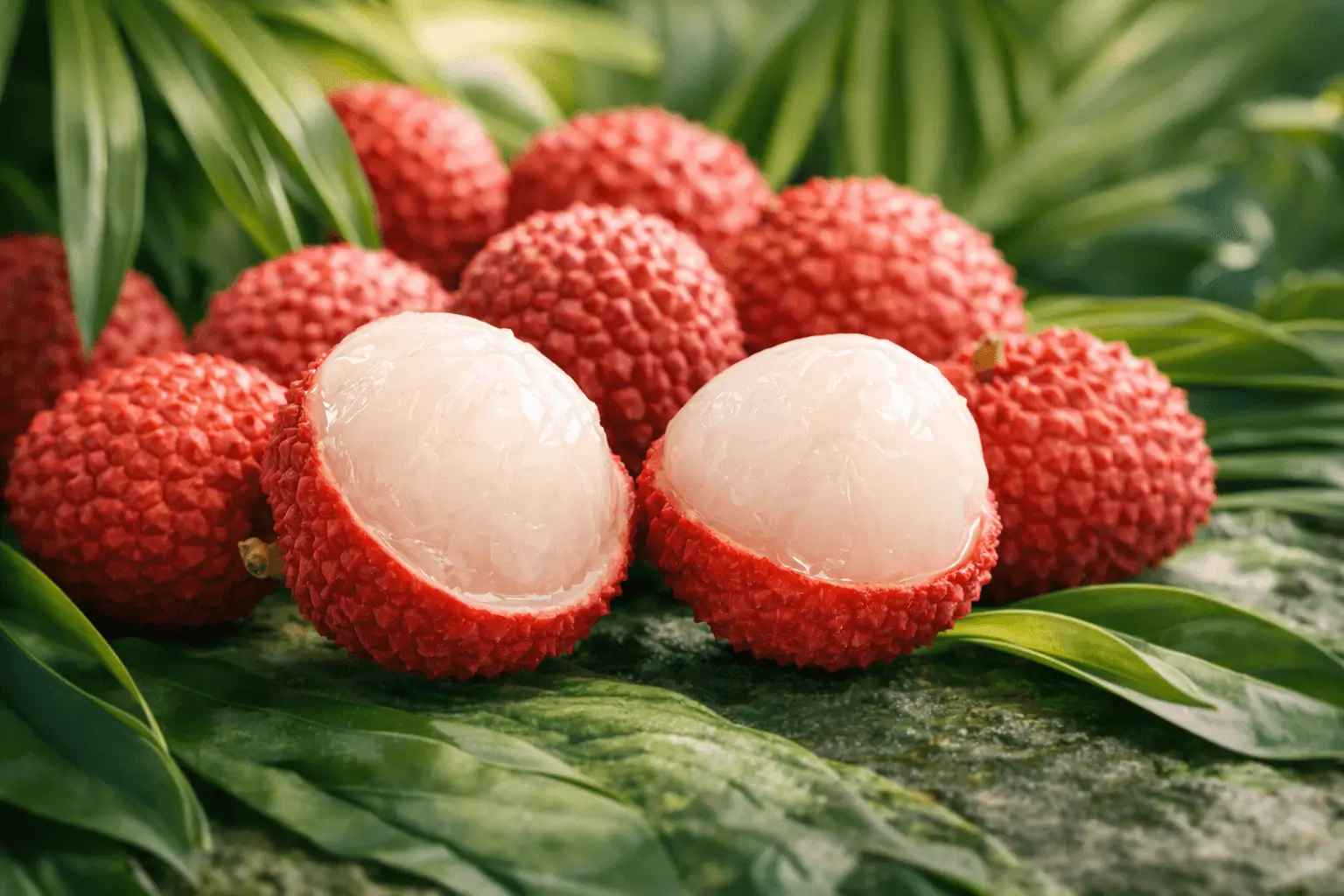
Red lychee is a tropical fruit loved for its eye-catching color, refreshing sweetness, and juicy bite. The red lychee fruit stands out with its vibrant peel and translucent flesh, making it both visually appealing and delicious. Native to warm, humid regions of Asia, it has become popular worldwide for desserts, drinks, and fresh snacking. Many people search for lychee or litchi, and both words refer to the same fruit—the spelling simply varies by region and language. Its exotic look, floral sweetness, and cooling nature make red lychee a favorite summer fruit in many countries.
What is Red Lychee?
Red Lychee Fruit Overview
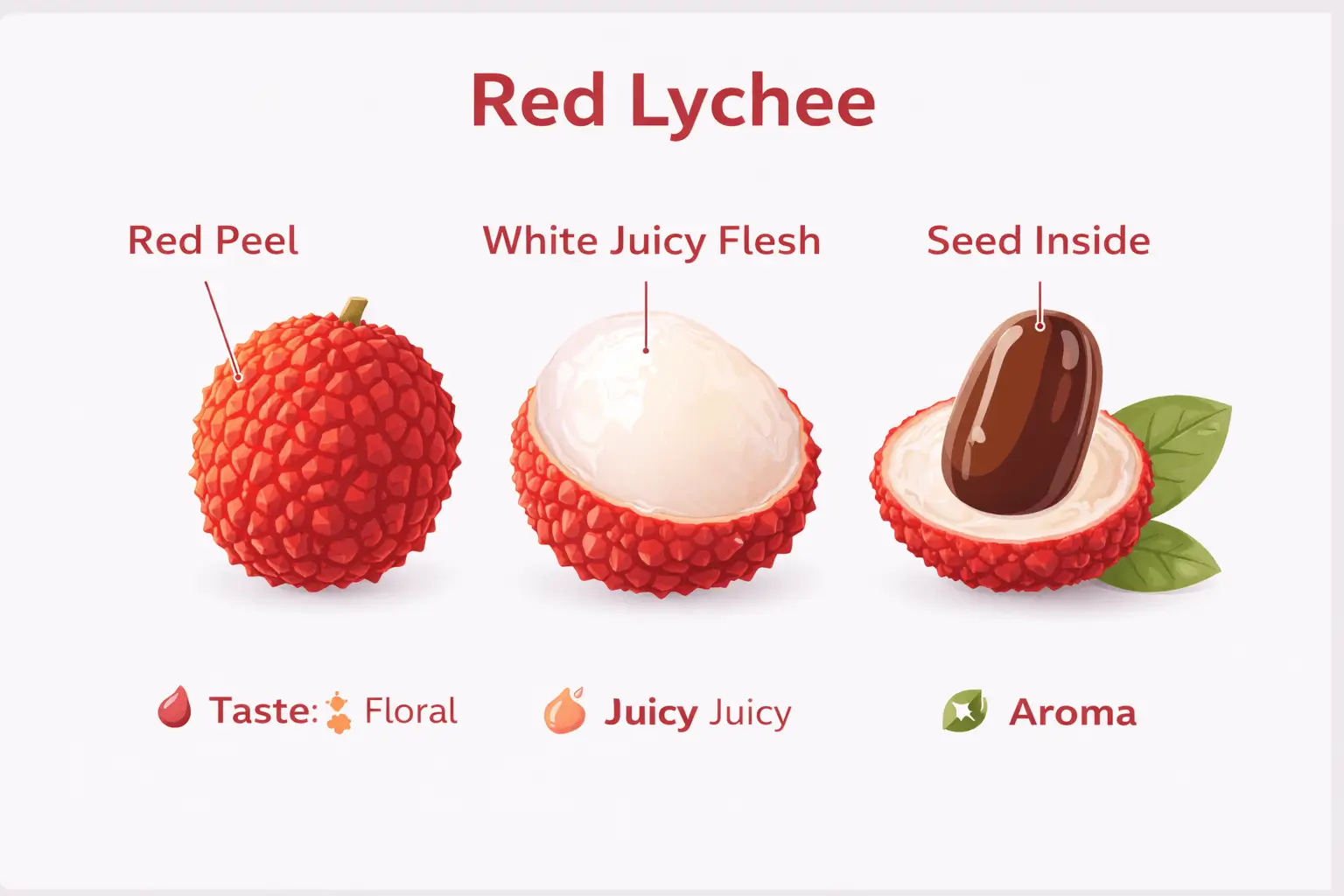
Red lychee fruit is known for:
- Appearance: Rough, bright red peel with white, juicy flesh inside
- Taste: Sweet with a light floral note
- Texture: Soft, slippery, and succulent pulp
- Aroma: Mildly fragrant and refreshing
The edible portion of the litchi fruit is the translucent pulp surrounding a single seed. When ripe, it offers a balanced sweetness that is not overpowering.
Lychee or Litchi — Are They the Same?
Lychee or litchi are the same fruit. The difference is only in spelling and regional usage.
- Lychee: Common in Western countries
- Litchi: Often used in South Asia and some scientific texts
- Meaning: Both refer to the same tropical fruit species
So whether labeled lychee or litchi, the fruit inside is identical.
Red Lychee Plant and Tree Information
How the Red Lychee Plant Grows
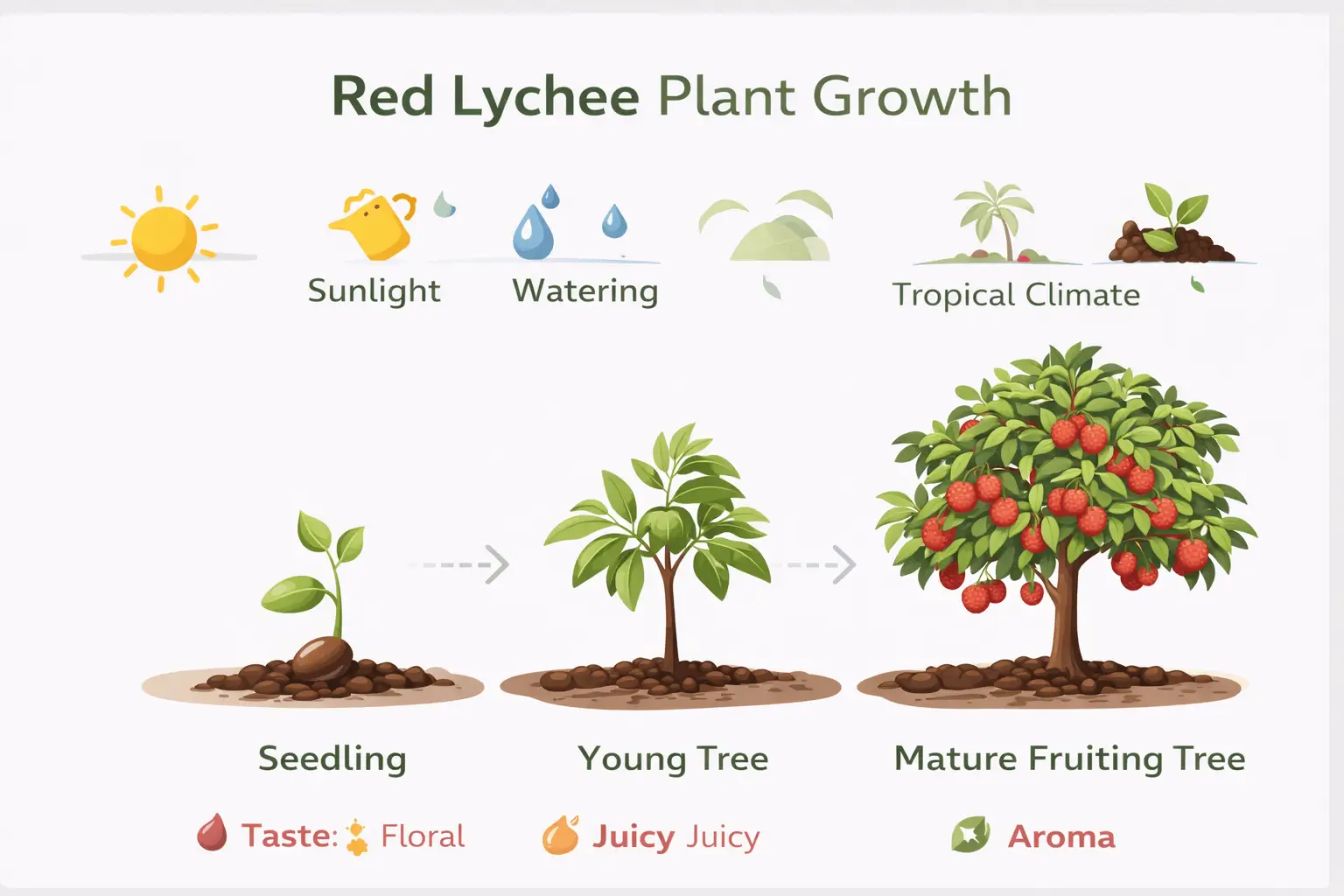
The red lychee plant grows on an evergreen tree suited to tropical and subtropical climates.
- Tree size: 30–40 feet tall at maturity
- Lifespan: Can live and fruit for decades
- Climate: Prefers warm, humid environments
- Soil: Well-drained, slightly acidic soil
- Sunlight: Full sun for healthy fruiting
Consistent warmth and protection from frost are essential for growth.
Growing Lychee at Home
Growing lychee at home requires patience and proper care.
- Plant in a sunny, wind-protected area
- Water regularly but avoid waterlogging
- Use nutrient-rich, well-drained soil
- Mulch to retain moisture
- Fruiting may take 3–5 years or more
Home gardeners succeed best in warm climates or with greenhouse support.
Taste, Texture, and Nutrition of Red Lychee
What Does Red Lychee Taste Like?
Red lychee tastes:
- Sweet with a slight floral hint
- Light and refreshing
- Juicy and smooth
Many compare its flavor to a mix of grapes and pears. The pulp bursts with juice, making it very thirst-quenching.
Nutritional Benefits
Red lychee provides several health benefits:
- High in Vitamin C for immunity
- Contains antioxidants that fight oxidative stress
- Rich in water for hydration support
- Low in calories compared to many desserts
It is a nutritious option when eaten fresh and in moderation.
Understanding Lychee Variations
Green Lychee vs Red Lychee
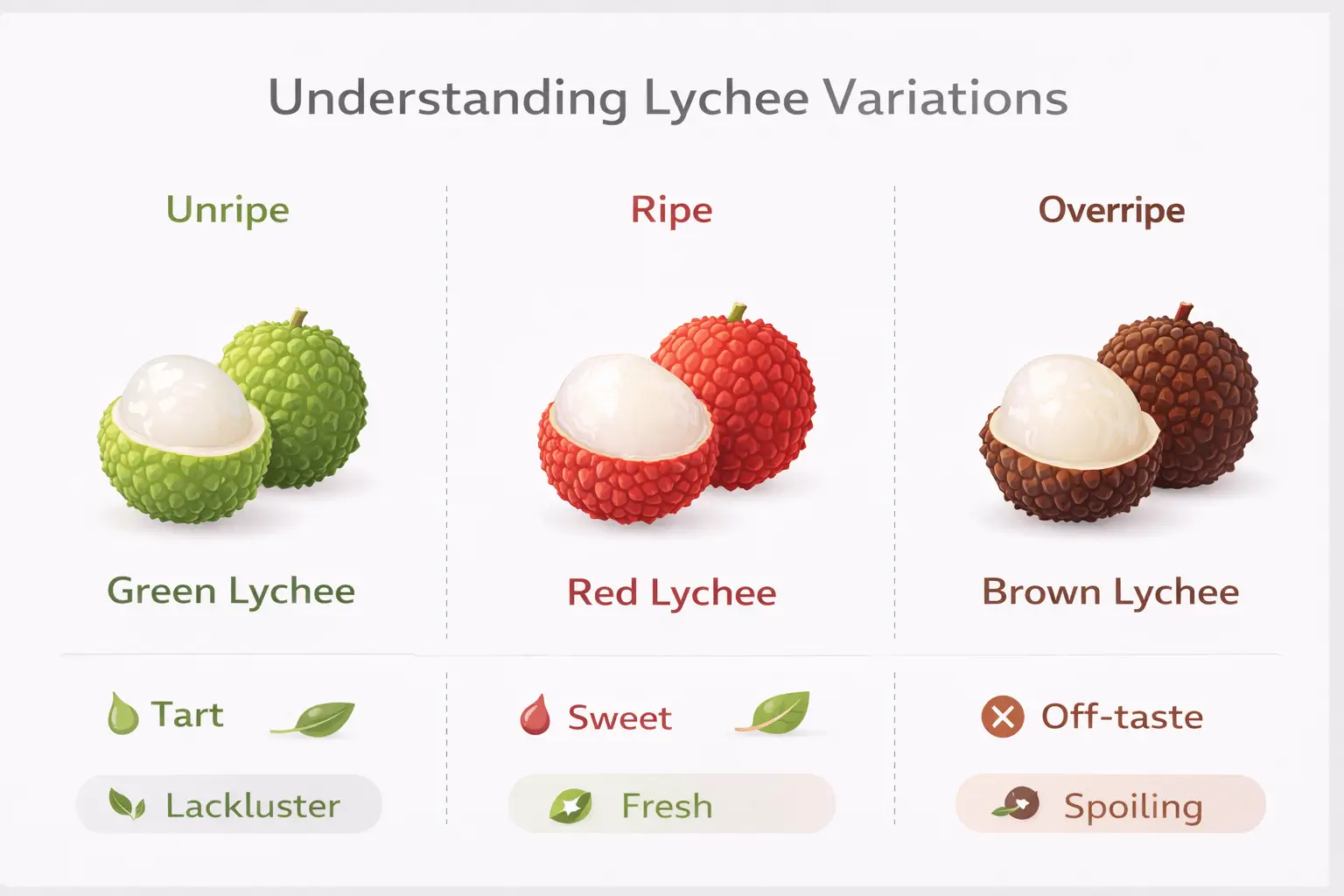
Green lychee and red lychee differ mainly in ripeness.
- Green lychee: Usually unripe, firmer, less sweet
- Red lychee: Fully ripe, sweeter, aromatic
- Taste difference: Ripe red lychees are noticeably juicier
Color change signals readiness to eat.
Brown Lychee — Is It Safe to Eat?
Brown lychee often indicates overripeness or poor storage.
- Browning occurs from moisture loss or age
- Flesh may be dry or fermented
- Slight browning can be safe, but quality drops
- Strong smell or sour taste means discard
Proper storage prevents browning.
Lychee Nut and Seed Facts
What is a Lychee Nut?
A lychee nut is the seed inside the fruit.
- Located at the center
- Hard and dark brown
- Not typically eaten
- Sometimes mentioned in cultural remedies
Only the pulp is meant for consumption.
Red Lychee vs Longan — Key Differences
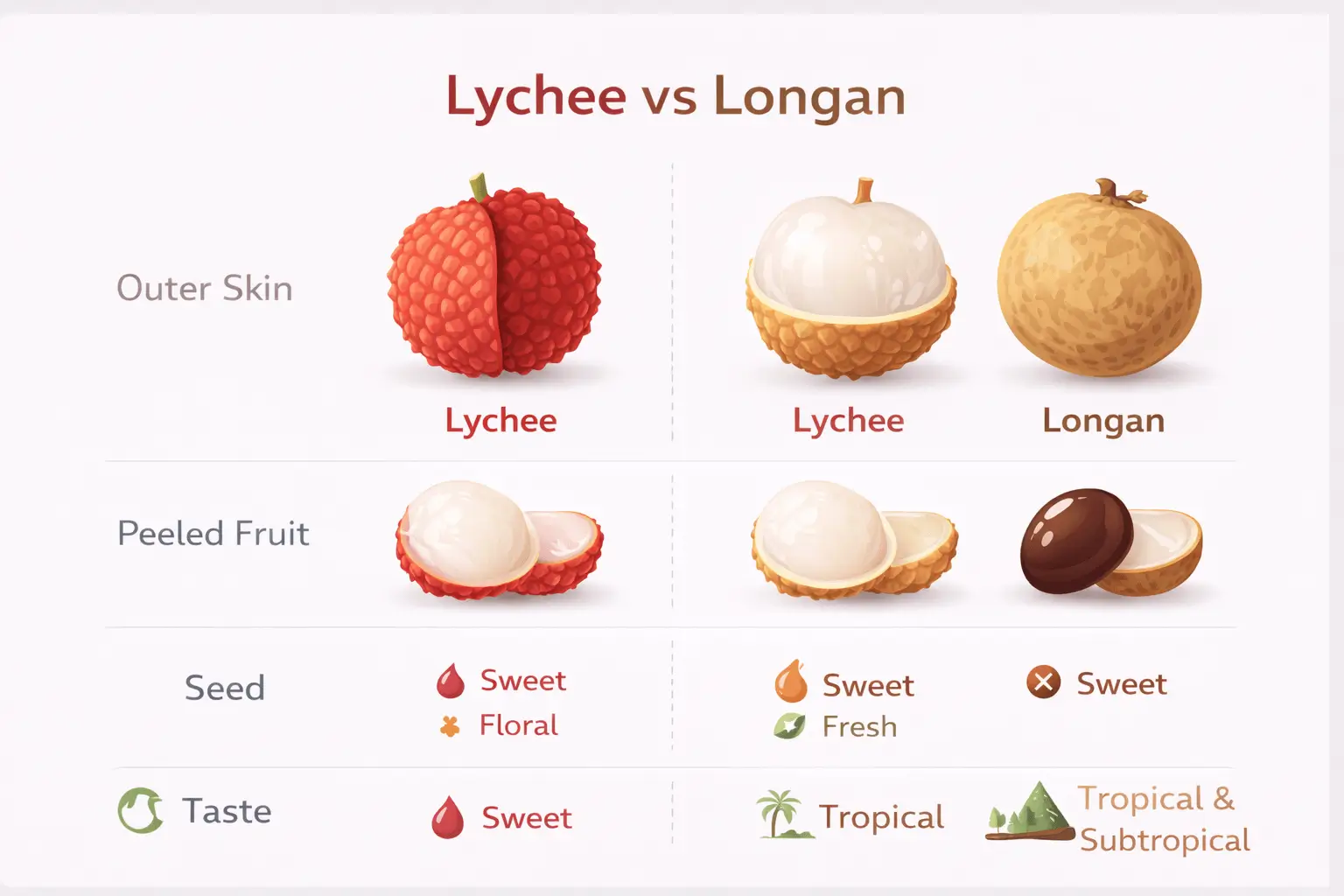
Longan vs Lychee Comparison
Longan lychee comparisons are common because they are related fruits.
- Flavor: Lychee is floral and sweet; longan is milder and musky
- Appearance: Lychee has red textured skin; longan has smooth brown skin
- Growing regions: Both thrive in tropical Asia, but cultivation areas differ slightly
Both are enjoyed fresh and in desserts.
How to Select and Store Red Lychee
Buying Tips
Choose quality fruit using these tips:
- Look for bright red skin
- Select firm fruits
- Avoid cracked or brown skin
- Check for fresh, mild fragrance
Freshness directly affects taste.
Storage Tips
Store red lychee correctly to extend life.
- Refrigerate in a breathable bag
- Keep moisture low
- Shelf life: about 1–2 weeks chilled
- Peel only before eating
Cool storage maintains juiciness.
Conclusion / Call-to-Action
Red lychee is special for its vibrant look, sweet floral taste, and cooling refreshment. From nutrition to home growing, it offers value beyond flavor alone. Whether you enjoy it fresh, in drinks, or desserts, it brings a tropical touch to your diet.
Try fresh red lychee this season or grow your own tree for a tropical treat at home.
Read Also: 7+ Irresistible Facts About Black Finger Grapes
FAQs
Is red lychee sweeter than green lychee?
Yes. Red lychee is fully ripe and naturally sweeter, while green lychee is often unripe and less flavorful.
Are lychee and litchi the same fruit?
Yes. The difference is only spelling and regional preference.
Can you eat lychee seeds?
No. Lychee seeds are not eaten; only the pulp is edible.
Why does lychee turn brown?
Browning happens due to aging, moisture loss, or improper storage.
How long does red lychee last in the fridge?
Typically 1–2 weeks when stored properly.
Can I grow a red lychee plant at home?
Yes, in warm climates with full sun, proper watering, and patience.

Written by the LeafyHeaven Editorial Team
LeafyHeaven shares practical gardening tips and simple plant care guides to help you grow, nurture, and enjoy your plants with ease. Our goal is to make gardening feel natural, approachable, and rewarding for everyone.



[…] Read Also: 7+ Irresistible Red Lychee Secrets You’ll Love […]