
Introduction to Silver Squill
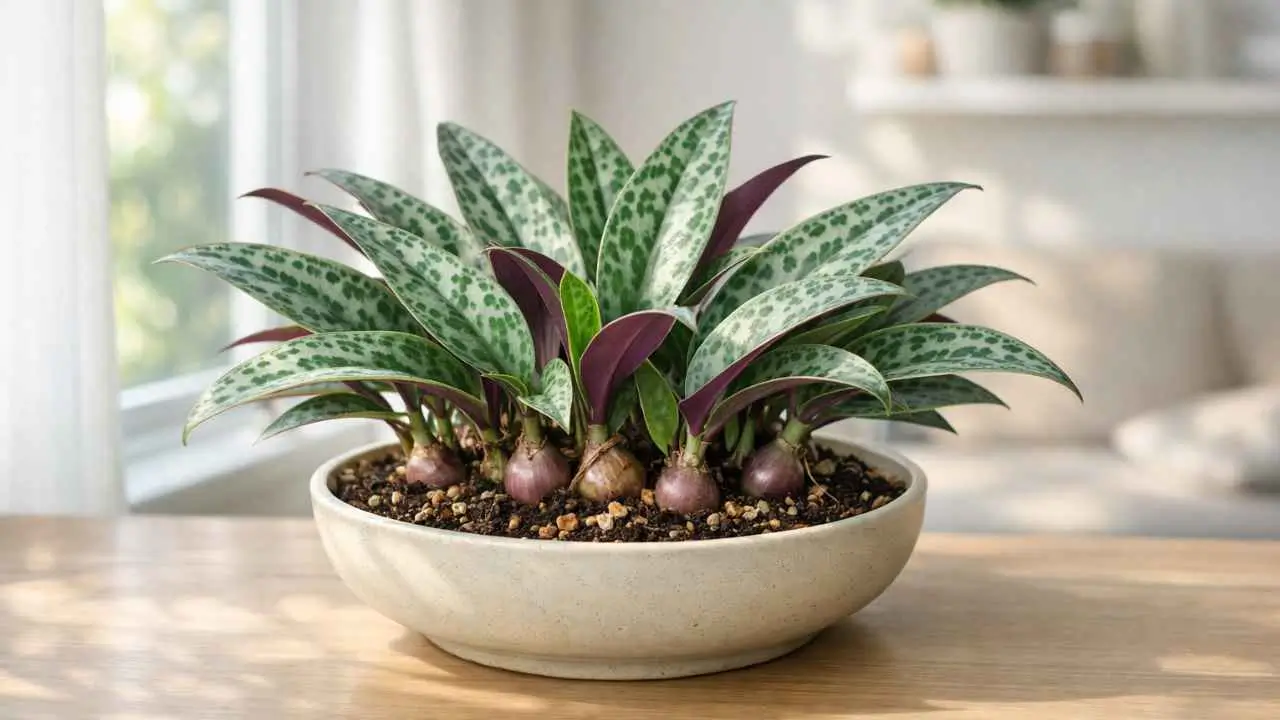
Silver squill is a compact, eye-catching indoor plant known for its silvery patterned leaves, visible bulbs, and low-maintenance nature. Often grown as a houseplant, silver squill stands out because of its unique foliage texture and spreading growth habit, making it a popular choice for shelves, tabletops, and hanging containers. Despite its small size, it delivers strong visual interest and adapts well to indoor environments, even for beginner plant owners.
- From a botanical perspective, silver squill belongs to the species Ledebouria socialis, a bulb-forming plant native to parts of southern Africa. In its natural habitat, it grows close to the ground, often in rocky or sandy conditions, where its exposed bulbs and fleshy leaves help it store moisture and survive dry periods. This growth behavior directly influences how the plant performs indoors, especially its tolerance for infrequent watering and preference for well-draining soil.
- Silver squill is commonly classified as a succulent-type plant due to its water-storing characteristics. While it is technically a bulb plant rather than a true succulent, its thick, fleshy leaves and moisture-retaining bulb function in a similar way to succulents. This overlap is why many indoor gardeners group silver squill with succulents when it comes to care routines. Like succulents, it prefers controlled watering, good airflow, and bright but indirect light, making it easy to integrate into existing indoor plant collections.
- One of the reasons silver squill has gained indoor popularity is its decorative appeal combined with resilience. The leaves feature a silver-green base marked with darker speckles, often paired with purple tones on the undersides. As the plant matures, its bulbs sit partially above the soil surface, adding architectural interest that looks intentional rather than messy. Its trailing and spreading habit allows it to soften hard edges in interior spaces, especially when planted in shallow pots or hanging planters.
- In terms of care and growth, silver squill is considered low effort but structured. It grows slowly to moderately, does not demand frequent repotting, and tolerates a range of indoor conditions when basic needs are met. Proper light, well-draining soil, and careful watering are the main factors that influence healthy growth. When stressed, the plant often shows visible signs—such as leggy growth or leaf discoloration—making it relatively easy to adjust care before serious damage occurs.
- Safety is another important aspect of silver squill ownership. While it is admired for its indoor adaptability, it is not considered completely pet-safe. The plant contains compounds that can be harmful if ingested by cats, which makes placement an important consideration in pet-friendly homes. Understanding both its aesthetic strengths and safety limitations allows growers to enjoy silver squill responsibly.
- Overall, silver squill combines succulent-like toughness, ornamental foliage, and indoor versatility. Its botanical background explains why it thrives with minimal intervention, while its visual features explain why it continues to gain popularity as a houseplant. With the right balance of care, silver squill can remain a long-lasting and attractive addition to indoor spaces without demanding constant attention.
What Is Silver Squill (Ledebouria socialis)?
Botanical Identity of Silver Squill
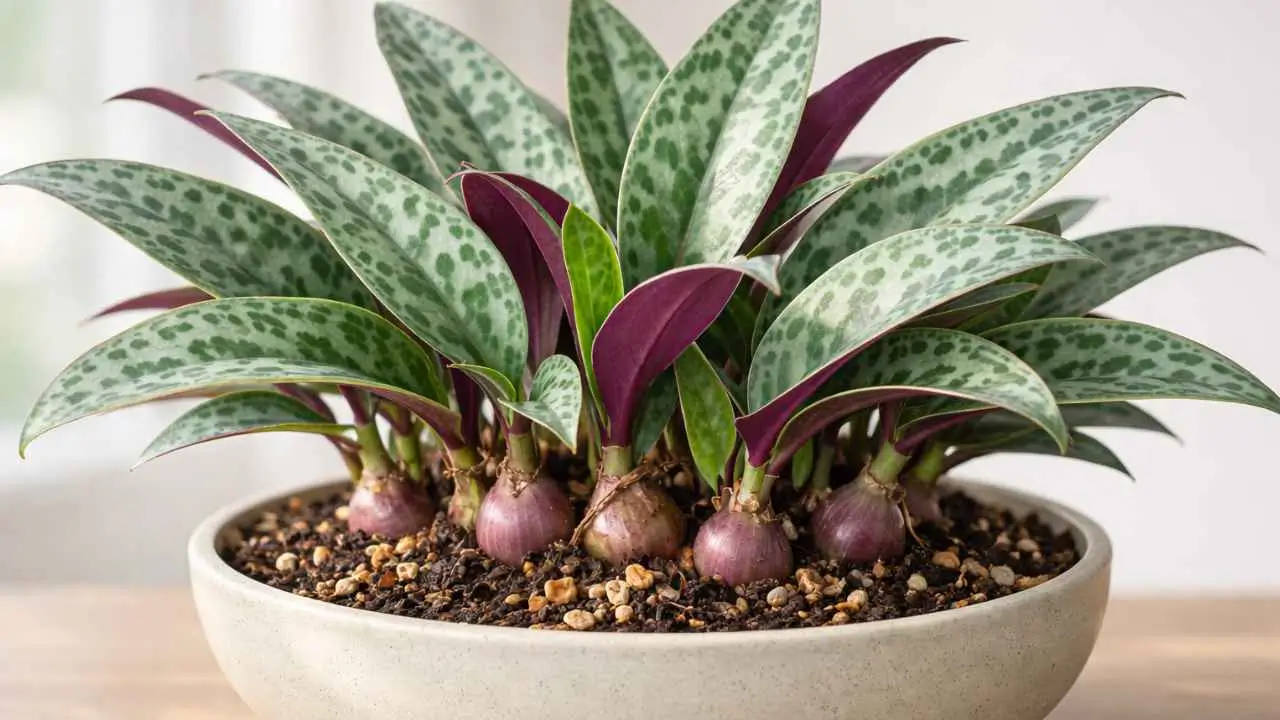
The scientific name of silver squill is Ledebouria socialis, a small bulb-forming perennial plant widely grown as an indoor ornamental. It belongs to the Asparagaceae family and is valued for its decorative foliage rather than its flowers. In plant classification, silver squill is recognized for its compact structure, exposed bulbs, and patterned leaves, all of which contribute to its distinct appearance among houseplants.
Silver squill is known by several common names, including silver squill, leopard lily, and violet squill. These names are largely inspired by its spotted leaf patterns and the subtle purple tones often visible on the undersides of its leaves. Despite the name “leopard lily,” it is not a true lily, and the term is used purely for descriptive and ornamental purposes in horticulture.
In its native habitat, silver squill originates from southern Africa, where it grows naturally in dry, rocky, and semi-shaded environments. It typically spreads along the ground rather than growing upright, forming small colonies through bulb offsets. This growth behavior explains why the plant adapts well to shallow containers and indoor settings. Its ability to store moisture in bulbs allows it to survive seasonal dry periods, which directly influences its drought-tolerant nature indoors.
Is Silver Squill a Succulent?
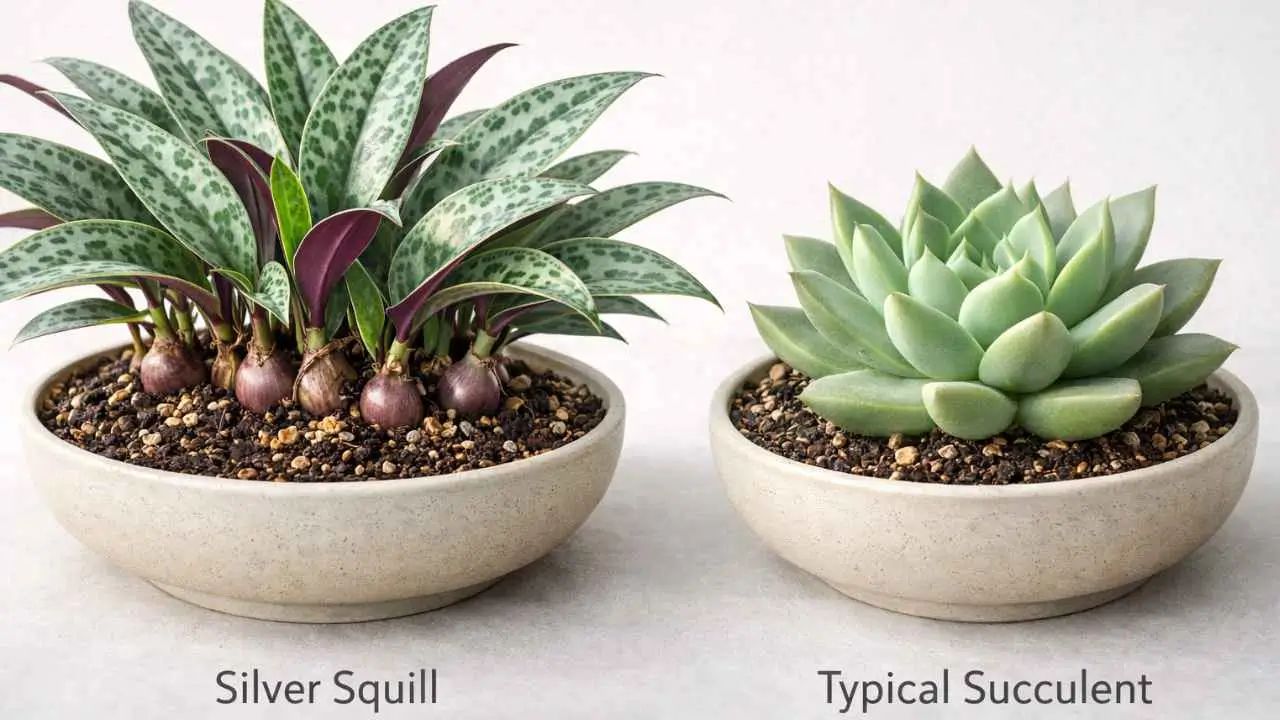
Silver squill is often described as a succulent-type plant, although it is technically classified as a bulb plant. The confusion comes from its physical traits and water-storage behavior. Like succulents, silver squill has fleshy leaves and a moisture-retaining structure, but instead of thick stems or leaves alone, it relies on a bulb to store water and nutrients.
The key difference between succulents and bulb plants lies in how they store resources. Succulents primarily store water in their leaves or stems, while bulb plants store energy and moisture in an underground or partially exposed bulb. Silver squill falls in between these categories. Its bulb sits at or above the soil surface, while its leaves remain thick and slightly fleshy, allowing it to tolerate dry conditions similarly to succulents.
Because of these shared characteristics, silver squill is frequently grouped with succulents in indoor plant care guides and collections. Its watering needs, preference for well-draining soil, and sensitivity to overwatering closely match those of many succulents. From a practical care standpoint, treating silver squill like a succulent—rather than a traditional leafy houseplant—often leads to healthier growth and fewer problems.
This hybrid nature is what makes silver squill especially appealing to indoor gardeners. It offers the structural interest of a bulb plant combined with the low-maintenance qualities of succulents, making it easy to care for while still visually unique.
Silver Squill Plant Characteristics
Leaves, Bulbs, and Growth Habit
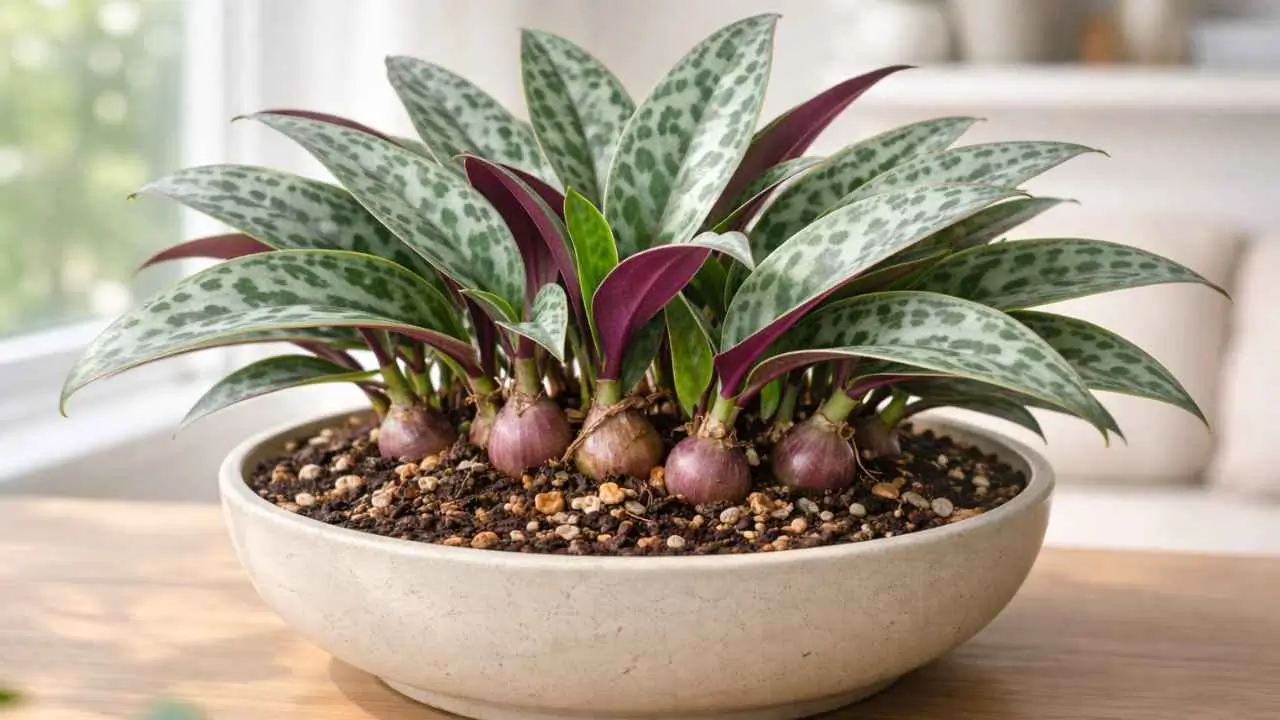
Silver squill is best known for its distinctive silver-green foliage, which features irregular dark green or charcoal spots across the leaf surface. This mottled pattern gives the plant a textured, almost metallic look that remains attractive year-round. The undersides of the leaves often show soft purple or violet tones, adding contrast and depth when the plant trails or spills over the edge of a container.
The bulbs of silver squill are a defining structural feature. Unlike many bulb plants that remain fully underground, silver squill bulbs typically grow partially above the soil surface. These smooth, rounded bulbs store water and nutrients, helping the plant survive dry conditions. Exposed bulb growth is completely normal for this species and should not be covered deeply with soil, as doing so can increase the risk of rot and slow growth.
In terms of growth habit, silver squill develops a low, spreading, and slightly trailing form. Instead of growing tall, it expands outward as new bulbs form offsets around the main plant. Over time, this creates a clustered appearance that works well in shallow pots, wide containers, or hanging planters. Its controlled spreading makes it easy to manage indoors without becoming invasive or overcrowded.
Plants with strong structure and controlled growth, such as manly plants and masculine plants, are also valued for creating balanced and visually grounded indoor spaces.
Silver Squill Varieties
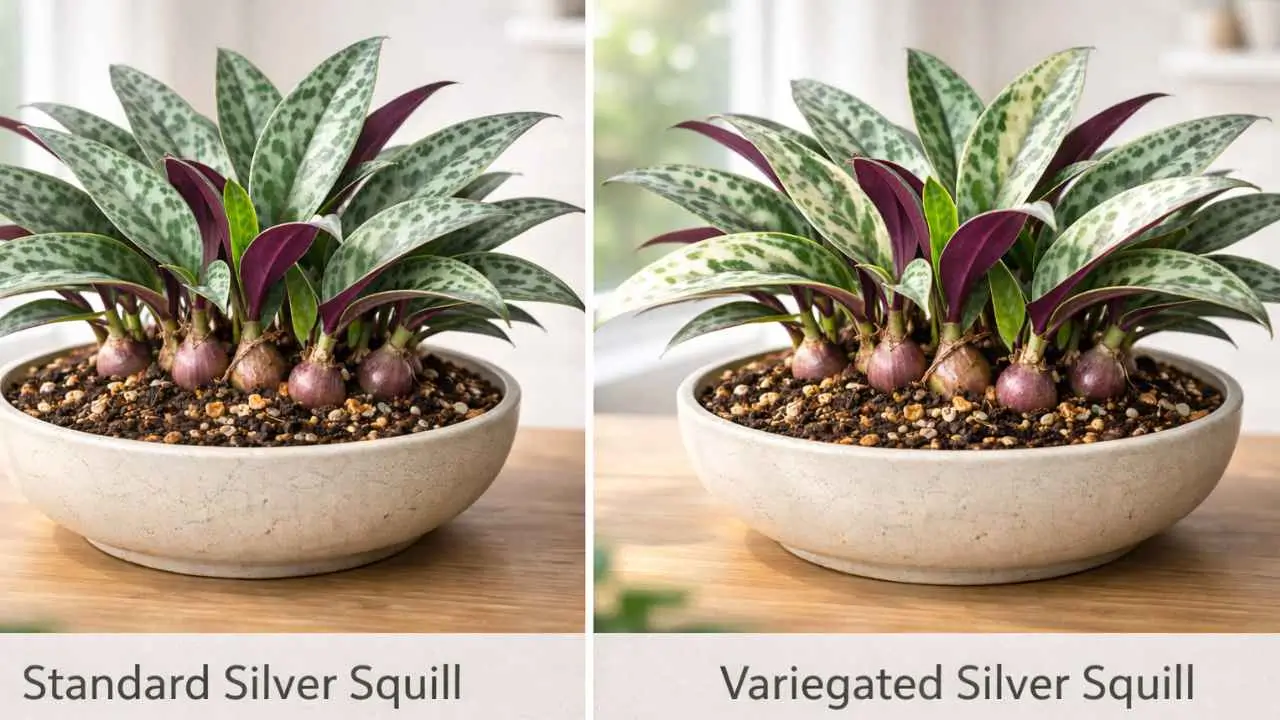
The standard silver squill is the most commonly grown variety and features classic silver-green leaves with dark spotting and purple undersides. This form maintains a compact shape, produces visible bulbs, and spreads gradually as offsets develop. It is valued for its durability, predictable growth, and strong ornamental appeal in indoor environments.
The variegated silver squill offers a more striking visual variation. Its leaves display lighter silver tones combined with creamy or pale green markings, creating higher contrast than the standard form. While visually appealing, variegated varieties may grow slightly slower due to reduced chlorophyll in the leaves. They also tend to benefit from brighter indirect light to maintain clear variegation without losing color definition.
Both varieties share similar growth traits, including bulb exposure, drought tolerance, and spreading habits. The main difference lies in appearance rather than care, allowing indoor growers to choose between subtle patterning or bold visual contrast without changing their maintenance routine.
Silver Squill Plant Care Guide
Silver Squill Light Requirements
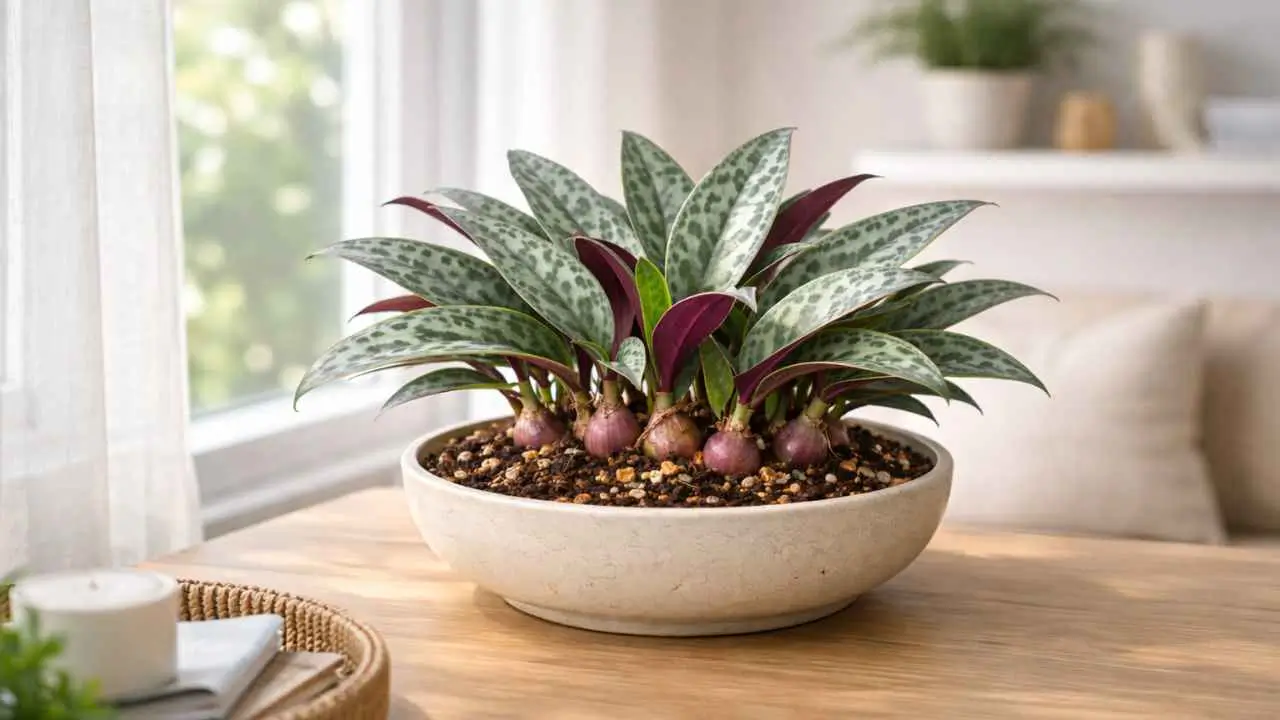
Silver squill grows best in bright, indirect light, where it can maintain compact growth and strong leaf coloration. A position near an east- or north-facing window works well indoors, allowing the plant to receive filtered light without prolonged direct sun exposure. Adequate light helps preserve the leaf spotting and prevents excessive stretching.
In low-light conditions, silver squill can survive but often shows leggy growth and wider spacing between leaves. The foliage may lose some contrast, and overall growth becomes slower and less structured. On the other hand, exposure to strong direct sunlight can scorch the leaves, causing fading or brown patches. Balanced, indirect light is key to keeping the plant visually healthy and well-shaped.
Managing light, watering, and indoor conditions becomes much easier when you understand the basics in a complete gardening and plant care guide, especially for low-maintenance houseplants.
Silver Squill Soil and Potting Mix
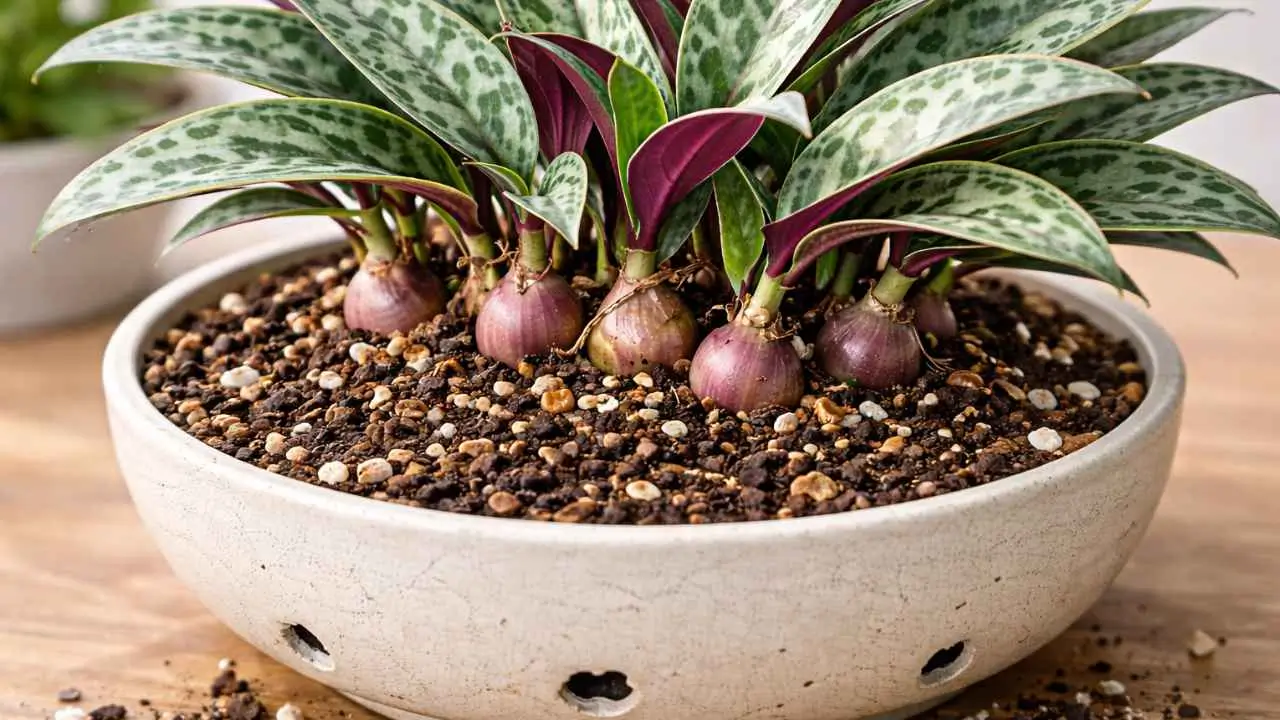
Silver squill requires a fast-draining soil mix to protect its bulbs from excess moisture. A cactus or succulent mix works well, especially when amended with additional perlite or coarse sand to improve airflow around the roots. The goal is to allow water to pass through quickly rather than sit around the bulb.
Container selection is equally important. Shallow pots with drainage holes are ideal, as they support the plant’s spreading growth habit and prevent water buildup. Silver squill bulbs should remain partially exposed above the soil surface, which mirrors how the plant grows naturally. Burying the bulbs too deeply can restrict airflow and increase the risk of bulb rot.
Silver Squill Watering Needs
Silver squill prefers infrequent but thorough watering. The soil should be allowed to dry out almost completely between waterings. During active growth, watering every one to two weeks is usually sufficient, depending on light levels and indoor temperature. In cooler months, watering frequency should be reduced further.
Overwatering is the most common issue with silver squill. Signs include soft or mushy bulbs, yellowing leaves, and a sour smell from the soil. Underwatering symptoms are usually less severe and may include slight leaf wrinkling or slowed growth. When in doubt, it is safer to underwater than to water too often, as the plant stores moisture in its bulb.
Temperature and Indoor Conditions
Silver squill thrives in average indoor temperatures ranging from 65°F to 80°F (18°C to 27°C). It does not tolerate frost and should be kept away from cold drafts, unheated windows, or sudden temperature drops. Stable indoor conditions support steady growth and reduce stress.
Humidity is generally not a concern for silver squill. It adapts well to normal household humidity levels and does not require misting or special humidity control. Good air circulation and consistent temperature matter more than added moisture in the air, making silver squill well-suited for typical indoor environments.
Silver Squill Indoor Care
Silver Squill as a Houseplant
Silver squill performs exceptionally well as a decorative indoor houseplant due to its compact size and adaptable growth habit. It fits naturally into living rooms, home offices, and bedrooms where it can receive bright, indirect light. Because the plant remains low-growing, it works best when placed at eye level or slightly elevated, allowing its patterned leaves and exposed bulbs to be easily seen.
This plant is highly versatile in terms of display.
Other indoor plants such as the spider plant varieties are also popular for their adaptability and ability to enhance shelves, desks, and small indoor spaces.
Silver squill grows well on shelves, where its spreading habit softens hard edges, and in hanging pots, where its trailing leaves create visual movement. It is also suitable for tabletops and windowsills, provided the container has good drainage and is not exposed to harsh direct sunlight. Shallow, wide containers tend to enhance its natural growth pattern and keep the plant balanced indoors.
Common Indoor Care Problems
One of the most common indoor issues is leggy growth, where the leaves become elongated and spaced far apart. This typically occurs when silver squill does not receive enough light. While the plant may remain alive, its compact form and leaf pattern become less defined. Moving the plant to a brighter location with indirect light usually corrects this issue over time.
Leaf discoloration and slow growth are often linked to watering or soil problems. Yellowing leaves may indicate excess moisture around the bulb, while dull or pale foliage can be a sign of insufficient light. Growth may also slow if the plant is kept in overly cool conditions or if the soil remains wet for extended periods. Adjusting light exposure, improving drainage, and allowing the soil to dry properly between waterings typically restores healthy growth indoors.
Silver Squill Flowering
Silver Squill Flower Appearance
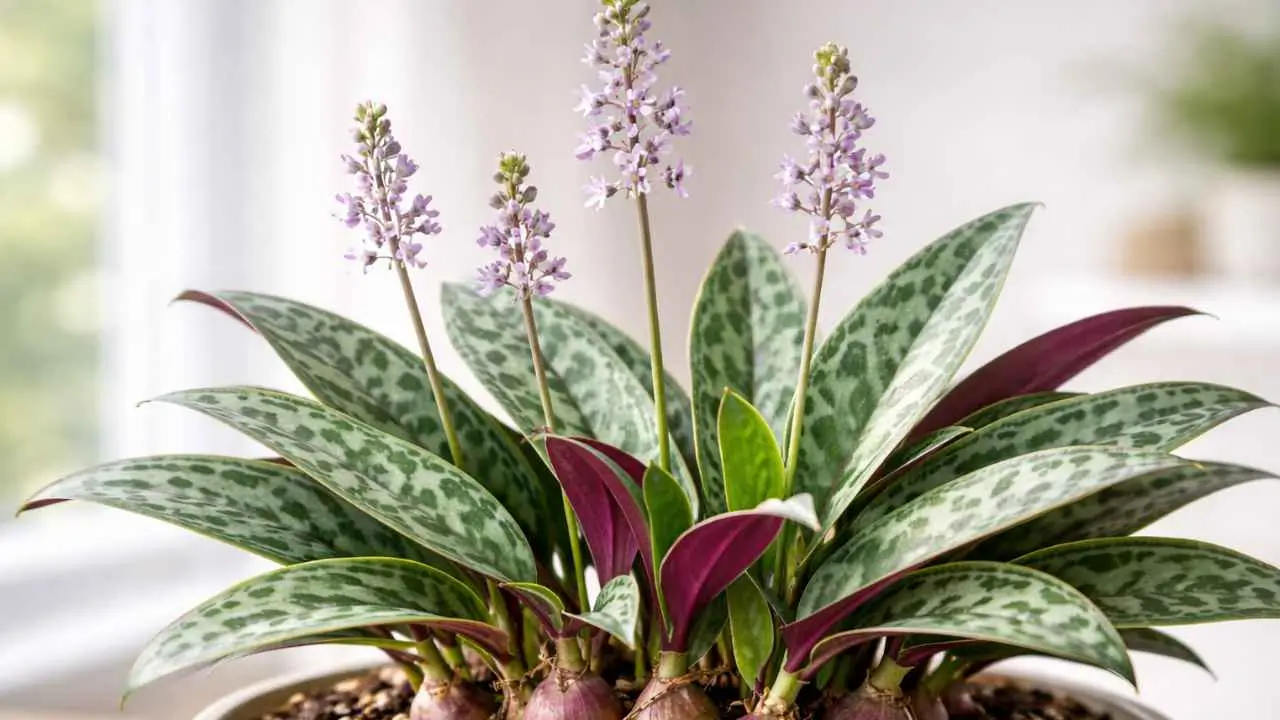
Silver squill produces small, delicate flowers that rise gently above the foliage on thin, upright stalks. The flowers are subtle rather than showy, which means they complement the plant’s patterned leaves instead of competing with them. Their fine structure adds a soft, airy element to the plant during the blooming period.
The blooms are typically pale pink to light purple, sometimes appearing with faint green or white tones depending on growing conditions. Each flower has a simple, star-like shape with slender petals arranged evenly around the center. While the flowers are not the main reason silver squill is grown indoors, they add seasonal interest and signal that the plant is in a healthy growth cycle.
When and How Silver Squill Blooms
Silver squill usually blooms during spring or early summer, following a period of active growth. Flowering is not guaranteed every year, especially indoors, but consistent care increases the likelihood of blooms. The plant focuses energy on leaf and bulb development first, and flowering occurs only when conditions are favorable.
Several factors encourage blooming. Bright indirect light plays the most important role, as insufficient light often prevents flower production. Stable indoor temperatures and a proper watering routine—allowing the soil to dry between waterings—also support flowering. Mild seasonal changes, such as slightly cooler winter conditions followed by warmer spring temperatures, can naturally trigger the blooming process. When these conditions align, silver squill rewards growers with its understated but charming flowers.
Silver Squill Propagation
Silver Squill Propagation from Bulbs
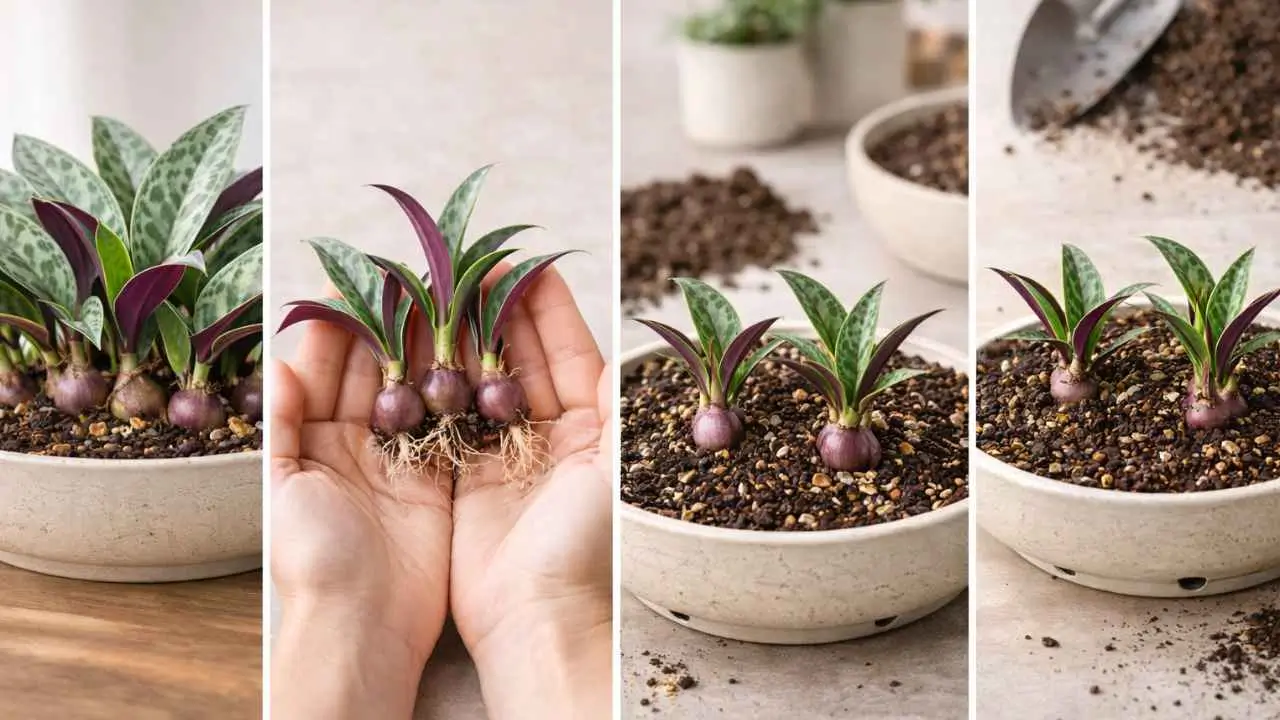
Silver squill is easiest to propagate through offsets and bulb division. As the plant matures, it naturally produces small baby bulbs (offsets) around the main bulb. These offsets eventually develop their own roots and leaves, forming clusters that can be separated to create new plants. This method is reliable because it follows the plant’s natural growth behavior and typically results in fast establishment.
The best time to propagate is during active growth, usually in spring or early summer. At this time, the plant recovers quickly and begins rooting without long delays. To propagate, gently remove the plant from its pot, shake off loose soil, and identify offsets that have at least a few roots. Separate them carefully by hand or with a clean blade if needed. Plant each offset in a well-draining mix and keep the bulbs partially exposed above the soil surface, just as they were in the original container.
Silver Squill Propagation in Water
Silver squill propagation in water is possible, especially for growers who want to observe root development. The key is to keep the bulb and roots in contact with water while preventing the entire bulb from sitting submerged, which can increase rot risk.
Step-by-step overview:
- Select a healthy offset or small bulb with visible growth points.
- Rinse off soil gently and remove any damaged roots.
- Place the bulb in a narrow glass or jar so the roots touch water, but the bulb sits above the waterline.
- Change the water every few days to keep it fresh and reduce bacteria buildup.
- Wait for new roots to strengthen and for small leaf growth to continue.
Once roots are well formed, transitioning to soil should be done gradually. Move the bulb into a dry, well-draining potting mix and water lightly after planting. For the first couple of weeks, keep the soil slightly moist but never soggy, then shift to the normal silver squill routine of watering only after the soil dries out. This helps the plant adjust from water-rooting to soil-rooting without shock.
Silver Squill Problems and Solutions
Common Silver Squill Problems
Root rot is the most serious problem silver squill faces indoors. It usually develops when the plant sits in consistently wet soil or when the bulb is buried too deeply. Because silver squill stores moisture in its bulb, excess water quickly leads to soft, mushy bulbs and a decline in overall plant health. Poor drainage and oversized containers increase this risk.
Yellowing leaves are another common issue and are often linked to watering mistakes. Overwatering is the primary cause, especially when the soil does not dry out between waterings. In some cases, yellowing may also occur due to low light, where the plant cannot photosynthesize efficiently and begins shedding older leaves.
Silver squill is generally pest resistant, which makes it a low-stress indoor plant. However, stressed plants may occasionally attract pests such as spider mites or mealybugs. These are rare and usually appear only when airflow is poor or when the plant is weakened by improper care.
How to Fix Silver Squill Care Issues
Adjusting watering is the most effective solution for most problems. Allow the soil to dry out almost completely before watering again, and always empty excess water from the saucer. If root rot is suspected, remove the plant from its pot, trim away damaged roots or bulbs, and replant only healthy sections in fresh, dry soil.
Light corrections can quickly improve weak or leggy growth. Move silver squill to a brighter location with indirect light if leaves appear stretched, pale, or spaced too far apart. Avoid direct sunlight, as it can scorch the foliage, but ensure the plant receives enough light to maintain compact growth and strong leaf color.
Repotting tips focus on drainage and bulb positioning. Use a shallow pot with drainage holes and a fast-draining soil mix. When repotting, keep the bulbs partially exposed above the soil surface to improve airflow and reduce moisture buildup. Repot only when the plant becomes crowded, as silver squill prefers slightly tight conditions and does not need frequent container changes.
Is Silver Squill Toxic to Cats?
Silver Squill Toxicity Explained
Silver squill (Ledebouria socialis) is considered toxic to cats if ingested. The plant contains naturally occurring compounds in its bulbs and leaves that can irritate a cat’s digestive system. While it is not among the most dangerously toxic houseplants, ingestion can still cause discomfort and should be taken seriously by pet owners.
Symptoms of ingestion in cats may include drooling, vomiting, nausea, and mild gastrointestinal upset. In most cases, symptoms appear shortly after chewing or swallowing parts of the plant. Severe reactions are uncommon, but repeated exposure or ingestion of larger amounts can worsen symptoms. Because cats are curious and may chew plants out of boredom, silver squill poses a moderate risk in pet-accessible areas.
Safety Tips for Pet Owners
Proper placement is the most effective way to reduce risk. Keep silver squill out of reach by placing it on high shelves, wall-mounted planters, or in hanging pots where cats cannot access the leaves or bulbs. Avoid placing it on low tables, windowsills, or floors in homes with plant-chewing pets.
For households with persistent plant-chewing cats, pet-safe alternatives may be a better option. Non-toxic plants such as spider plants, calatheas, or certain palms can provide greenery without safety concerns. If silver squill is already part of your indoor collection, monitoring your cat’s behavior and acting quickly if symptoms appear—by removing the plant and contacting a veterinarian—helps ensure both plant enjoyment and pet safety.
Silver Squill vs Similar Plants
Silver Squill vs Leopard Lily
Silver squill and leopard lily are often confused because they are commonly used to describe the same plant—Ledebouria socialis. The name leopard lily comes from the plant’s spotted leaf pattern, which resembles animal markings, while silver squill refers to the silvery sheen of the foliage. Visually, both names point to the same characteristics: compact size, silver-green leaves with dark spots, purple-toned undersides, and exposed bulbs sitting above the soil.
In terms of care, there is no difference between silver squill and leopard lily. Both require bright indirect light, well-draining soil, and infrequent watering. The confusion arises purely from naming rather than from botanical or care distinctions. When comparing plants labeled as silver squill or leopard lily in nurseries, the growth habit, maintenance needs, and indoor performance are identical.
Silver Squill vs Other Succulent Plants
Silver squill is unique when compared to traditional succulents because it combines features of both bulb plants and succulents. While most succulents store water in thick leaves or stems, silver squill stores moisture primarily in its bulb, with fleshy leaves providing additional water retention. This gives it a slightly different structure and growth pattern from rosette-forming or columnar succulents.
Growth habits also set silver squill apart. Instead of forming tight rosettes or upright stems, it develops a spreading, ground-hugging form with visible bulbs and trailing leaves. In terms of care, silver squill shares similarities with succulents—such as drought tolerance and sensitivity to overwatering—but differs in potting style. Bulb exposure is essential for silver squill, whereas most succulents prefer their stems or bases fully supported by soil.
These differences make silver squill a standout option for indoor gardeners who enjoy succulent-style care but want a plant with more texture, pattern, and architectural interest. It bridges the gap between bulb plants and succulents, offering a distinct look without increasing maintenance complexity.
Conclusion
Silver squill stands out as a low-maintenance indoor plant that fits easily into busy lifestyles and beginner-friendly plant collections. Its ability to store moisture in its bulbs allows it to tolerate missed waterings better than many traditional houseplants. With simple requirements—bright indirect light, well-draining soil, and controlled watering—it remains healthy without constant attention or complex care routines.
Beyond ease of care, silver squill offers strong decorative value. Its silver-green spotted leaves, purple-toned undersides, and exposed bulbs create visual interest that looks intentional and modern in indoor spaces. The plant’s spreading and slightly trailing habit makes it suitable for shelves, shallow pots, and hanging planters, adding texture and depth to interior décor without overwhelming the space.
Silver squill is especially ideal for beginners and indoor gardeners who want an attractive plant that is forgiving of small mistakes. It provides the drought tolerance of succulents combined with the unique structure of a bulb plant, making it both resilient and visually distinctive. For anyone looking to grow a compact, stylish, and easy-care houseplant, silver squill is a practical and rewarding choice for indoor environments.
FAQs
Is silver squill easy to care for indoors?
Yes, silver squill is considered an easy-care indoor plant. It requires minimal watering, adapts well to indoor temperatures, and does not need frequent repotting. As long as it receives bright indirect light and well-draining soil, it remains healthy with basic maintenance.
How often should I water silver squill?
Silver squill should be watered only after the soil has dried out almost completely. In most indoor conditions, watering every one to two weeks is sufficient. Overwatering is more harmful than underwatering because the bulbs store moisture and are sensitive to excess water.
Why is my silver squill growing leggy?
Leggy growth usually indicates insufficient light. When silver squill does not receive enough bright indirect light, the leaves stretch and spacing between them increases. Moving the plant to a brighter location typically restores compact growth over time.
Can silver squill grow in low light?
Silver squill can survive in low light, but it will not grow at its best. Low light often leads to slower growth, faded leaf patterns, and leggy stems. For optimal appearance and healthy development, bright indirect light is recommended.
Is silver squill safe around pets?
No, silver squill (Ledebouria socialis) is not considered pet-safe. It can be

Written by the LeafyHeaven Editorial Team
LeafyHeaven shares practical gardening tips and simple plant care guides to help you grow, nurture, and enjoy your plants with ease. Our goal is to make gardening feel natural, approachable, and rewarding for everyone.



[…] Read Also:7+ Powerful Silver Squill Benefits You’ll Love Indoors […]