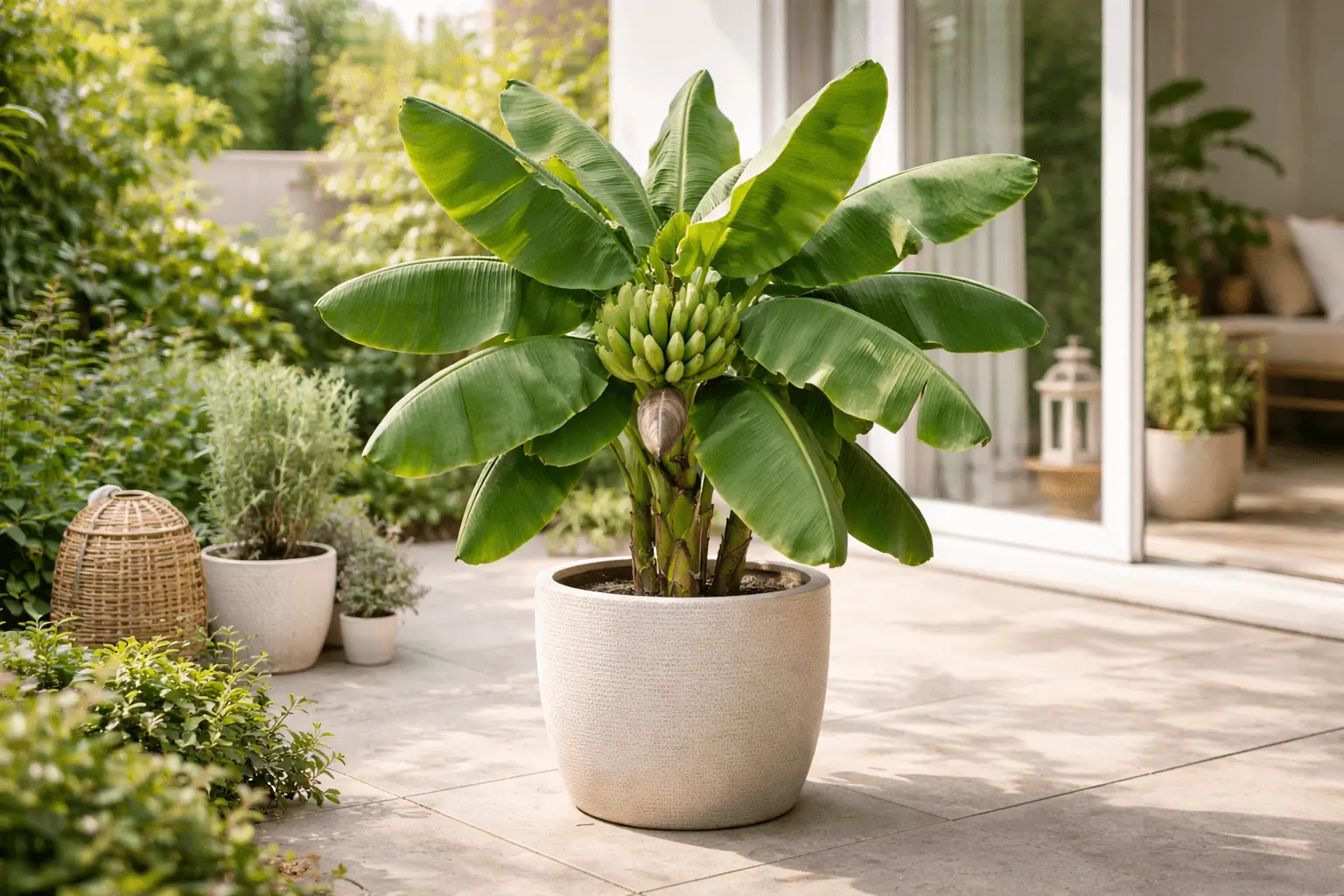

Introduction to Super Dwarf Cavendish Banana
The Super Dwarf Cavendish Banana is a compact variety of cavendish banana developed for small gardens, containers, and indoor growing. Unlike standard cavendish bananas that grow several metres tall, this variety stays short while still producing edible fruit. Its manageable size makes it a popular choice for balconies, patios, and home gardens where space is limited. Often described as a miniature banana, it offers the same familiar taste found in supermarket cavendish bananas but on a smaller plant. Compared to dwarf and full-sized Cavendish varieties, the super dwarf version is easier to maintain, quicker to manage in pots, and better suited to controlled environments.
What Makes Super Dwarf Cavendish Different
Size, Height, and Growth Habit
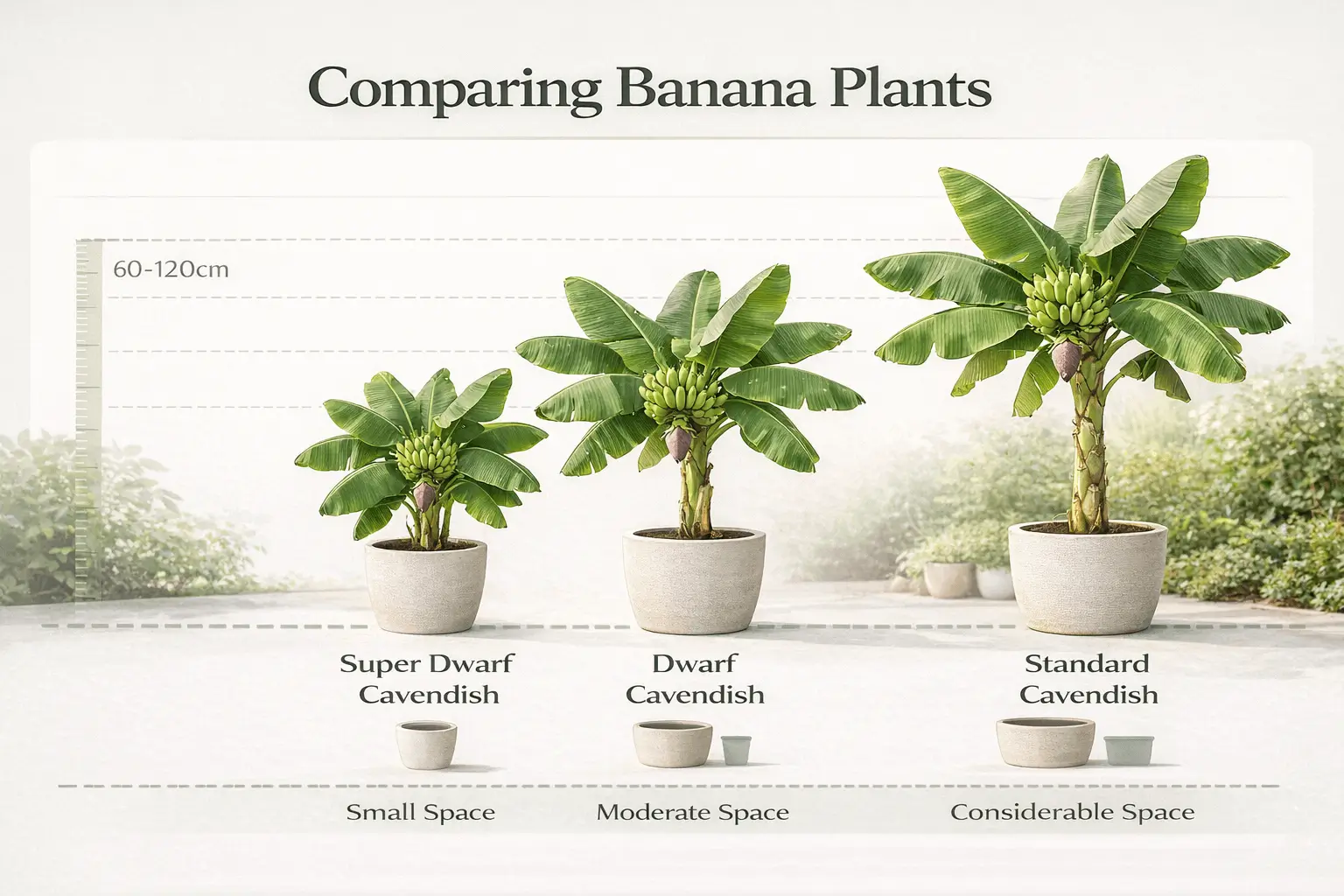
- Average height ranges from 1 to 1.5 metres
- Naturally compact growth with a strong pseudostem
- Smaller leaf spread compared to larger banana plants
Differences in size:
- Super dwarf cavendish stays the shortest and is ideal for containers
- Dwarf cavendish banana tree grows taller and needs more space
- Dwarf banana tree is a broader term that includes several compact varieties
This compact habit allows the plant to thrive on balconies, patios, and even indoors with adequate light.
Fruit Characteristics
- Sweet, classic cavendish flavour
- Slightly smaller fruit size than standard Cavendish bananas
- Produces a modest but reliable yield for home growers
The fruit closely resembles regular Cavendish bananas in taste and texture, making it a practical edible option for small-scale growing.
Super Dwarf Cavendish vs Other Banana Varieties
Super Dwarf Cavendish vs Dwarf Cavendish
- Super dwarf remains shorter and more container-friendly
- Dwarf Cavendish requires more space and stronger support
- Super dwarf is easier to manage in pots
- Fruiting time is similar, but super dwarf is more stable in limited spaces
Super Dwarf Cavendish vs Nathan Banana
- Nathan banana grows taller and wider
- Dwarf Nathan banana still needs more ground space
- Super dwarf is better suited for containers and small gardens
- Nathan varieties are often grown in open ground rather than pots
Growing Super Dwarf Cavendish in Australia
Climate Suitability
Super dwarf cavendish performs well in many Australian regions. It grows best in warm, frost-free climates but can adapt to mild regions with protection.
- Suitable for coastal and subtropical areas
- Performs well where dwarf cavendish banana Australia varieties are grown
- Can be grown as a dwarf banana tree Australia gardeners prefer for containers
Growing in Pots vs Ground
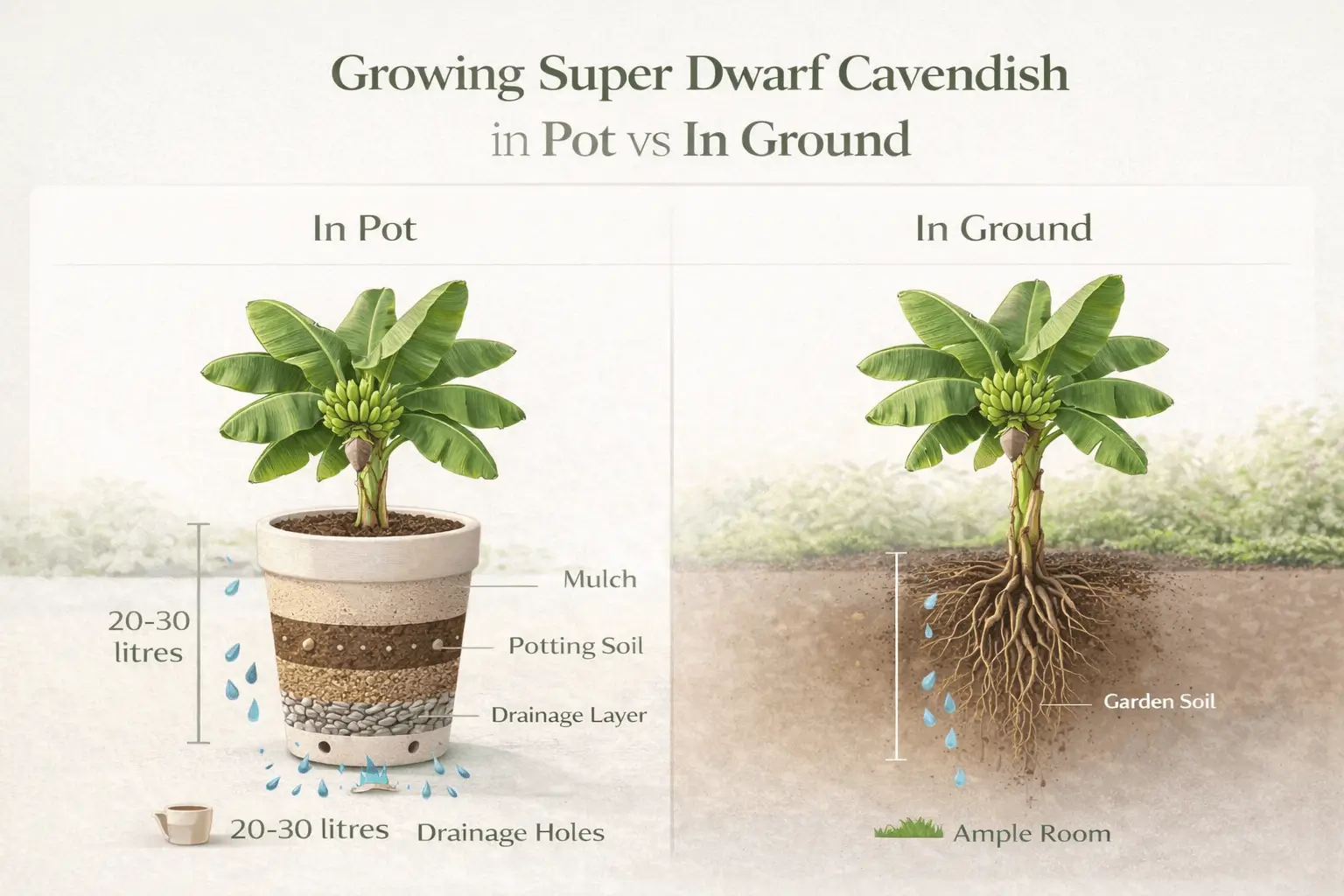
- Recommended pot size: minimum 40–50 litres
- Use a rich, free-draining soil mix with organic matter
- Excellent drainage is essential to prevent root rot
Ground planting allows faster growth, but pots provide better control in cooler regions.
How to Plant a Super Dwarf Cavendish Banana
Choosing a Healthy Plant
When looking to buy a banana plant, choose one with:
- Healthy green leaves
- No signs of pests or disease
- A firm, upright stem
Purchase from reputable nurseries selling cavendish banana plant or cavendish banana tree stock suited to your climate.
Planting Steps
- Choose a sunny location with wind protection
- Prepare soil with compost and good drainage
- Plant at the same depth as the nursery pot
- Water thoroughly after planting
- Allow enough spacing if planting multiple plants
How to Look After a Super Dwarf Cavendish
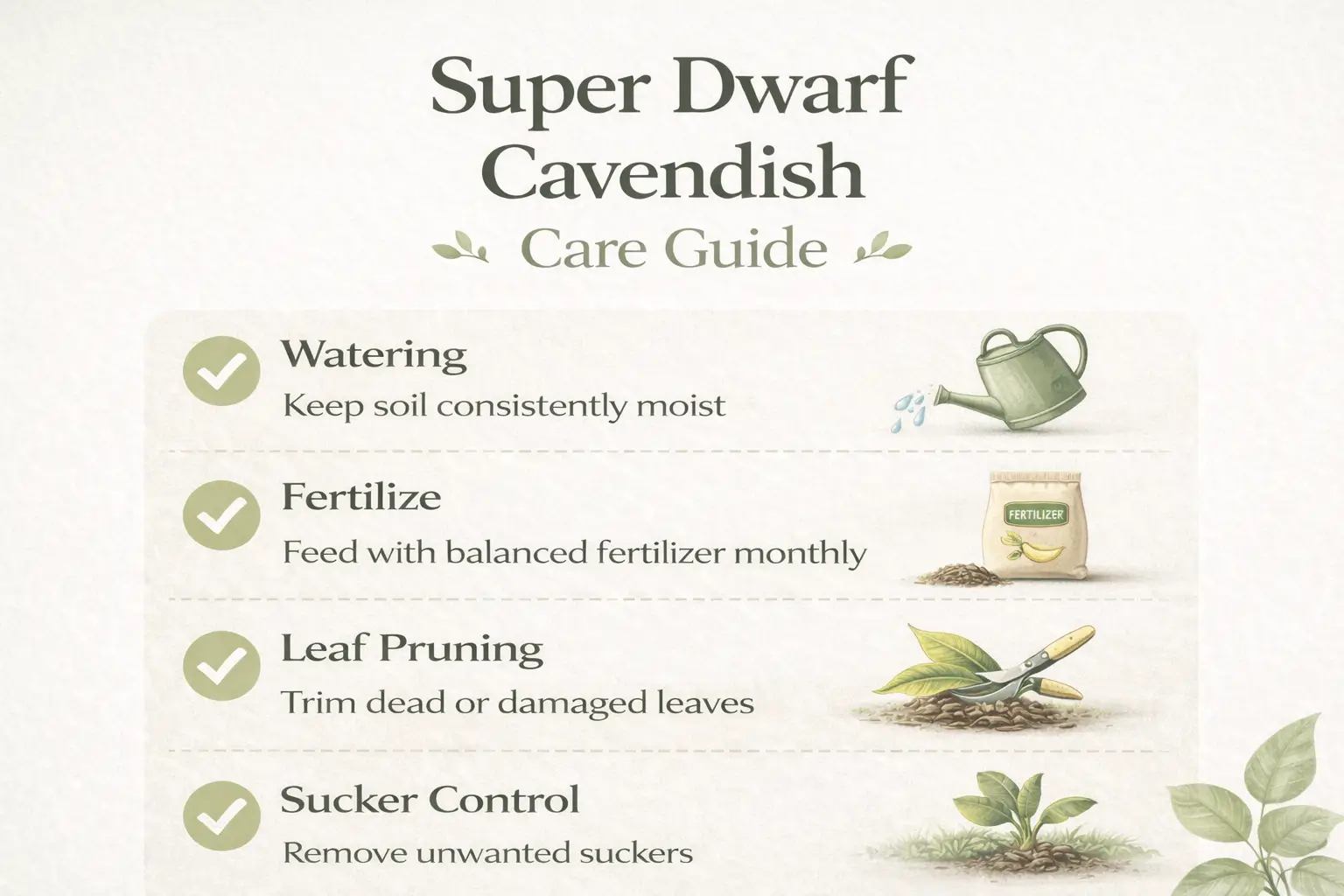
Watering and Feeding
- Water regularly to keep soil consistently moist
- Increase watering during warm months
- Feed with a balanced fertilizer rich in potassium
Proper care follows the same principles as how to look after banana trees in general.
Pruning and Maintenance
- Remove old or damaged leaves regularly
- Limit suckers to one or two strong shoots
- Maintain airflow around the plant
Common Problems and Solutions
- Common pests include aphids and spider mites
- Yellow leaves may indicate nutrient deficiency or overwatering
- Slow growth is often caused by lack of warmth or nutrients
Musa Family and Super Dwarf Cavendish
Understanding Musa Banana Plants
The super dwarf cavendish belongs to the Musa group of banana plants.
- Classified as a musa banana variety
- Grown as a musa banana plant for fruit production
- Structurally similar to a musa banana tree
- Considered a tropical musa plant adapted for compact growth
Can You Grow Super Dwarf Cavendish Indoors
- Requires bright, indirect sunlight or strong natural light
- Large containers support healthy root development
- Regular feeding and watering are essential
Its size makes it suitable as a mini banana tree, and it is commonly described as a miniature banana or one of the most practical miniature banana trees for indoor growing.
Harvesting and Fruit Production
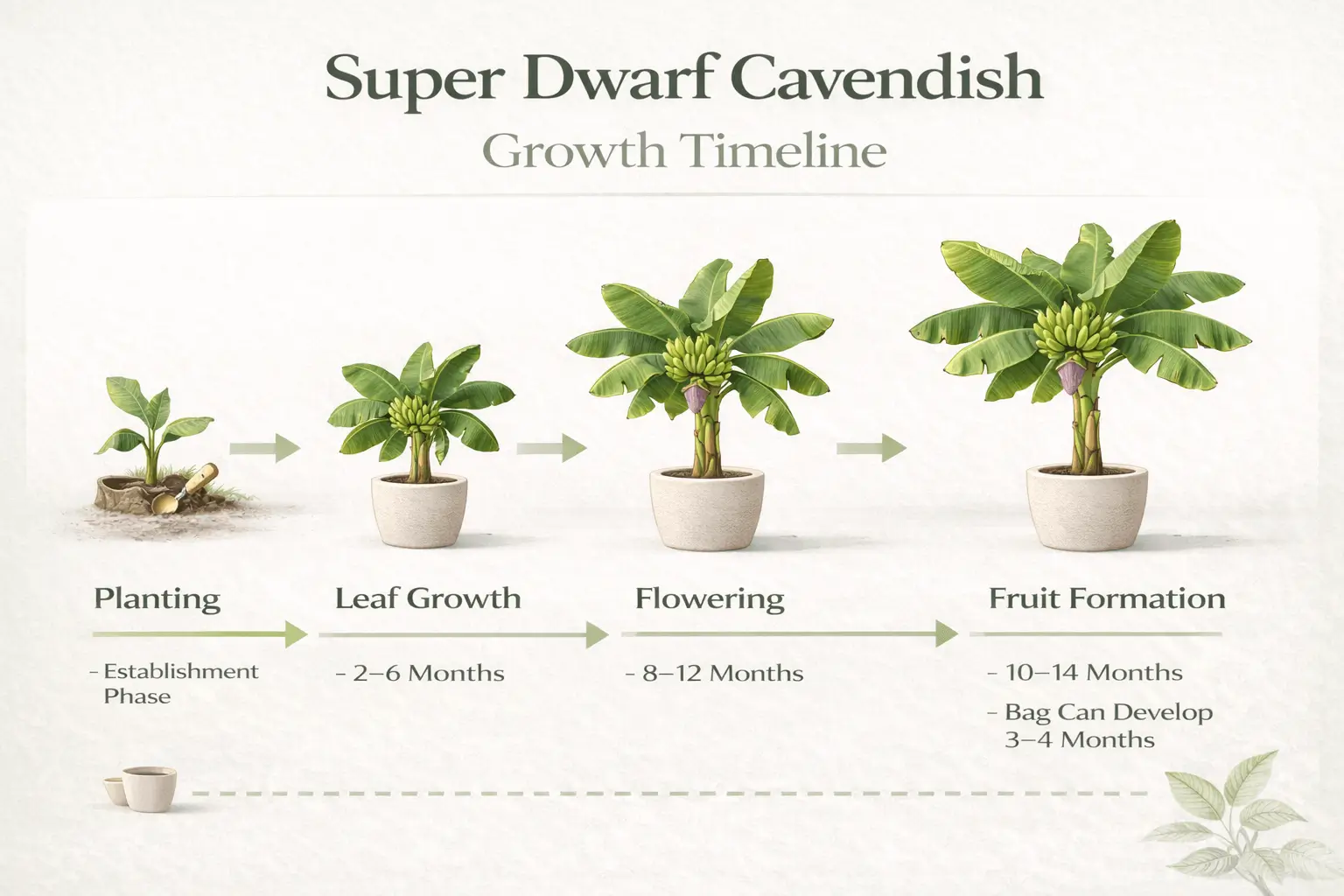
- Fruit typically appears 9–15 months after planting
- Harvest when bananas are full-sized and slightly rounded
- Expect smaller bunches compared to commercial plants
- Home growers can still enjoy fresh, edible bananas
Conclusion & Call to Action
The super dwarf cavendish is an excellent choice for home gardeners seeking an easy, space-efficient fruiting plant. Its compact size, manageable care needs, and adaptability make it ideal for beginners and small gardens. Whether grown in pots, indoors, or in the ground, it delivers both ornamental value and edible fruit. Start growing your own banana plant today and enjoy the satisfaction of harvesting bananas at home.
Read Also: Money Tree Australia: 5+ Powerful Benefits, Care & Buying Guide
FAQs
How tall does a super dwarf cavendish banana grow?
It typically grows between 1 and 1.5 metres tall.
Can super dwarf cavendish be grown in pots?
Yes, it is one of the best banana varieties for container growing.
How long does it take for super dwarf cavendish to produce fruit?
Fruit usually develops within 9 to 15 months under good conditions.
Is super dwarf cavendish suitable for Australian climates?
Yes, it performs well in warm and mild regions across Australia.
How often should I water a super dwarf cavendish banana plant?
Water regularly to keep the soil moist, increasing frequency during hot weather.

Written by the LeafyHeaven Editorial Team
LeafyHeaven shares practical gardening tips and simple plant care guides to help you grow, nurture, and enjoy your plants with ease. Our goal is to make gardening feel natural, approachable, and rewarding for everyone.


[…] Read Also: 5+ Powerful Reasons to Grow Super Dwarf Cavendish at Home […]