
Introduction
Syngonium plant care focuses on providing balanced light, proper watering, and adaptable growing conditions that support healthy growth. This plant is popular as both an indoor and outdoor option because it adjusts easily to different environments and requires minimal maintenance. Its beginner-friendly nature makes it a preferred choice for new plant owners as well as experienced gardeners. Syngonium adapts well to indoor containers, shaded outdoor areas, traditional soil setups, and even water-grown conditions. With simple care practices, the plant develops attractive foliage and steady growth without demanding constant attention. Understanding the basics of syngonium plant care helps ensure long-term plant health across indoor spaces, outdoor gardens, soil-based pots, and water-grown arrangements.
Understanding the Syngonium Plant
What Is a Syngonium Plant?
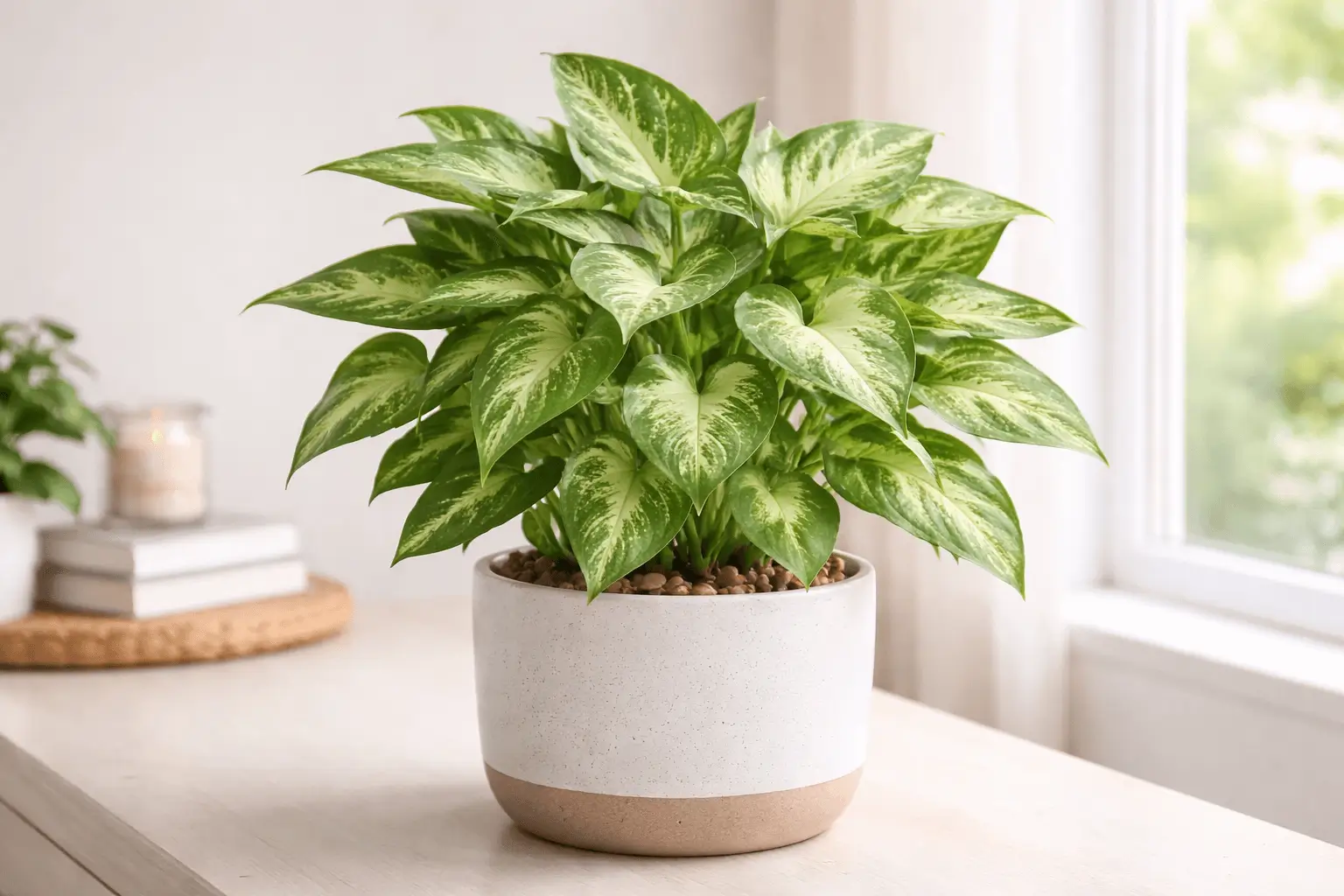
Syngonium is a fast-growing foliage plant known for its arrow-shaped leaves and vining growth habit. As it matures, the plant may shift from compact growth to a trailing or climbing form. Commonly referred to as arrowhead plant or goosefoot plant, it naturally grows in warm, humid regions where it spreads along forest floors or climbs supports. Its adaptable structure allows it to thrive in containers, hanging baskets, and ground planting under suitable conditions.
Popular Syngonium Varieties
Syngonium varieties differ mainly in leaf color, pattern, size, and growth rate. Some varieties feature green foliage with light veining, while others display pink, cream, or variegated tones. Compact varieties remain bushy and controlled, whereas vining types grow longer stems that require support or pruning. Certain colorful varieties may prefer brighter light to maintain leaf patterns, while green-leaf types tolerate lower light, slightly affecting care needs.
Syngonium Plant Care Indoors
Ideal Light Conditions for Indoor Syngonium
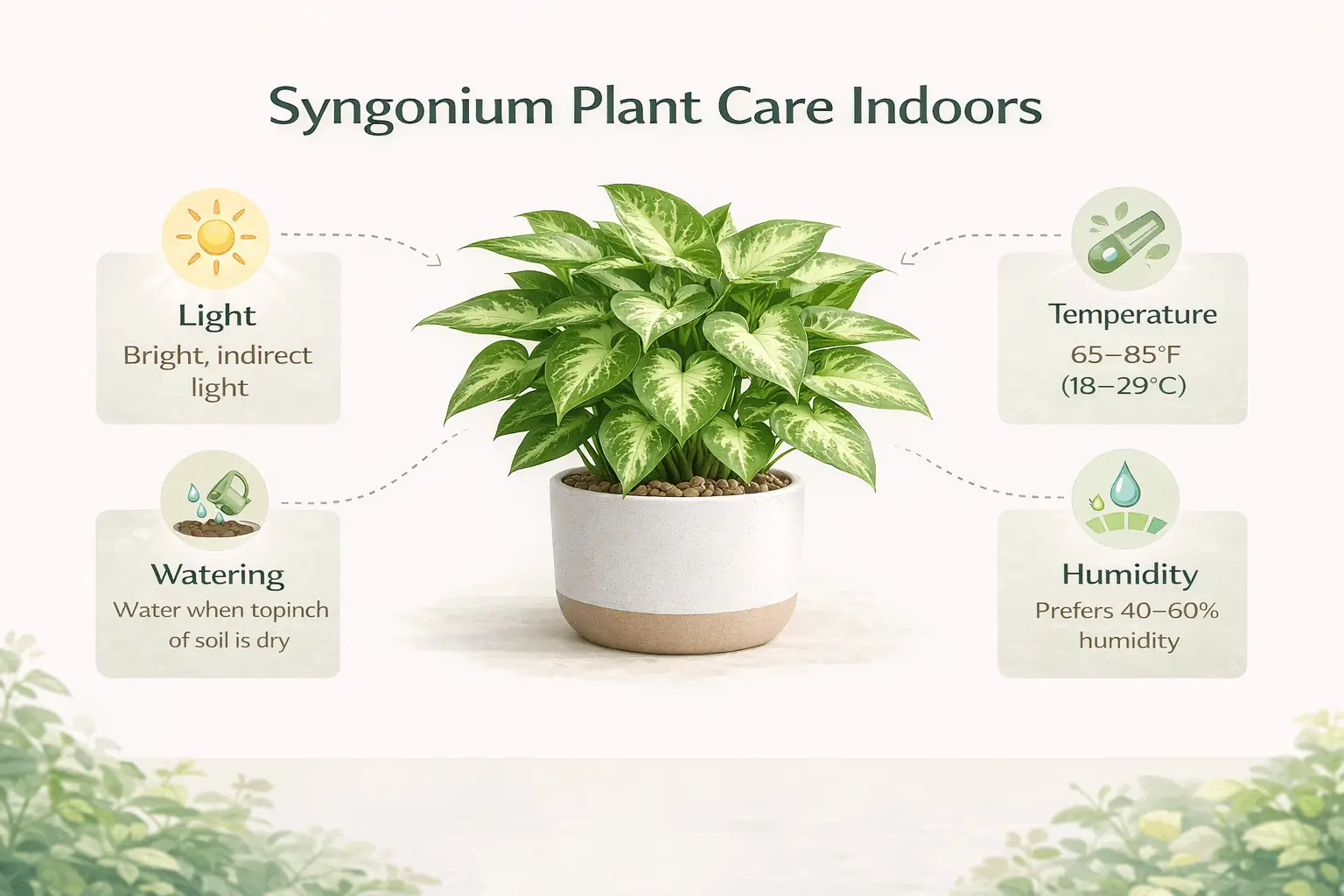
Syngonium grows best in bright, indirect light but tolerates low-light conditions without major issues. Direct sunlight should be avoided, as it can scorch the leaves. Ideal placement includes near windows with filtered light, on shelves, or in rooms with consistent ambient brightness. Low-light areas slow growth but generally do not harm the plant.
Temperature and Humidity Requirements
The ideal temperature range for syngonium is between 18°C and 30°C. Stable indoor temperatures support continuous growth. Moderate to high humidity keeps leaves healthy and prevents browning edges. Normal indoor humidity is usually sufficient, but occasional misting can improve leaf appearance.
Syngonium Indoor Plant Benefits
- Helps improve indoor air quality
- Enhances room aesthetics with decorative foliage
- Requires minimal maintenance
- Suitable for homes, offices, and small spaces
Syngonium Plant Care Watering Guide
How Often to Water Syngonium
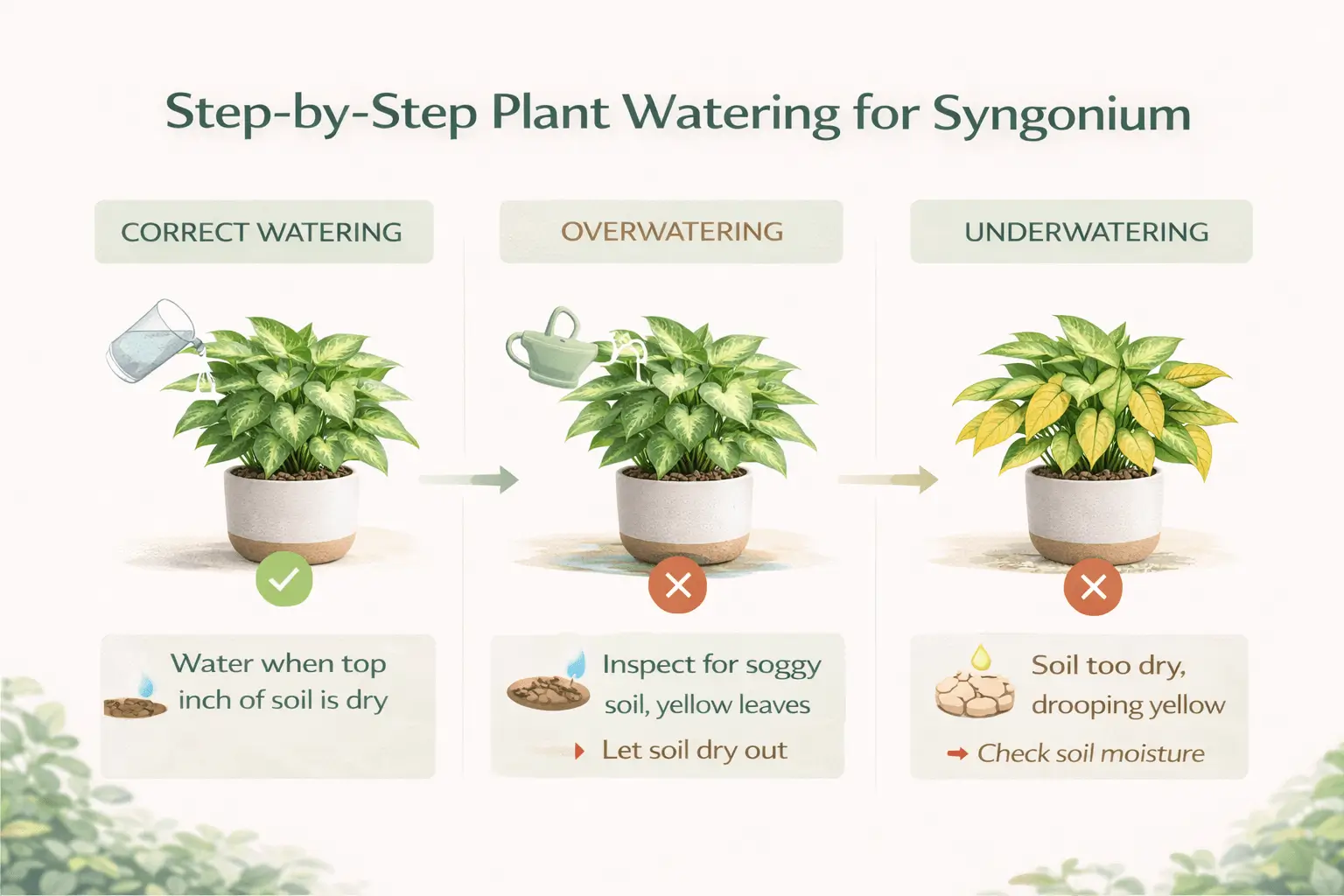
A proper syngonium plant care watering schedule involves watering when the top layer of soil feels dry. During warmer months, watering is usually needed more frequently due to active growth. In cooler seasons, watering should be reduced to prevent soggy soil. Consistent moisture without waterlogging supports healthy roots.
Signs of Overwatering and Underwatering
Overwatering leads to soggy soil, root stress, and drooping leaves, while underwatering causes dry soil and leaf curling. Prolonged watering mistakes weaken the plant and slow growth. Observing soil condition and leaf response helps correct watering issues early.
Syngonium Plant Care for Yellow Leaves
Common Causes of Yellow Leaves
- Overwatering causing root stress
- Poor drainage trapping excess moisture
- Low light exposure reducing photosynthesis
- Nutrient deficiency affecting leaf color
How to Fix Yellow Leaves on Syngonium
Syngonium plant care yellow leaves problems can be corrected by adjusting watering frequency, improving drainage, and ensuring adequate indirect light. Using well-draining soil and balanced feeding helps restore leaf color. Preventive care includes avoiding water accumulation and maintaining stable growing conditions.
Syngonium Plant Care Outdoor
Can Syngonium Grow Outdoors?
Syngonium can grow outdoors in warm, frost-free climates. It performs best in regions with mild temperatures and consistent humidity. Extreme cold limits outdoor growth.
Outdoor Soil and Sunlight Needs
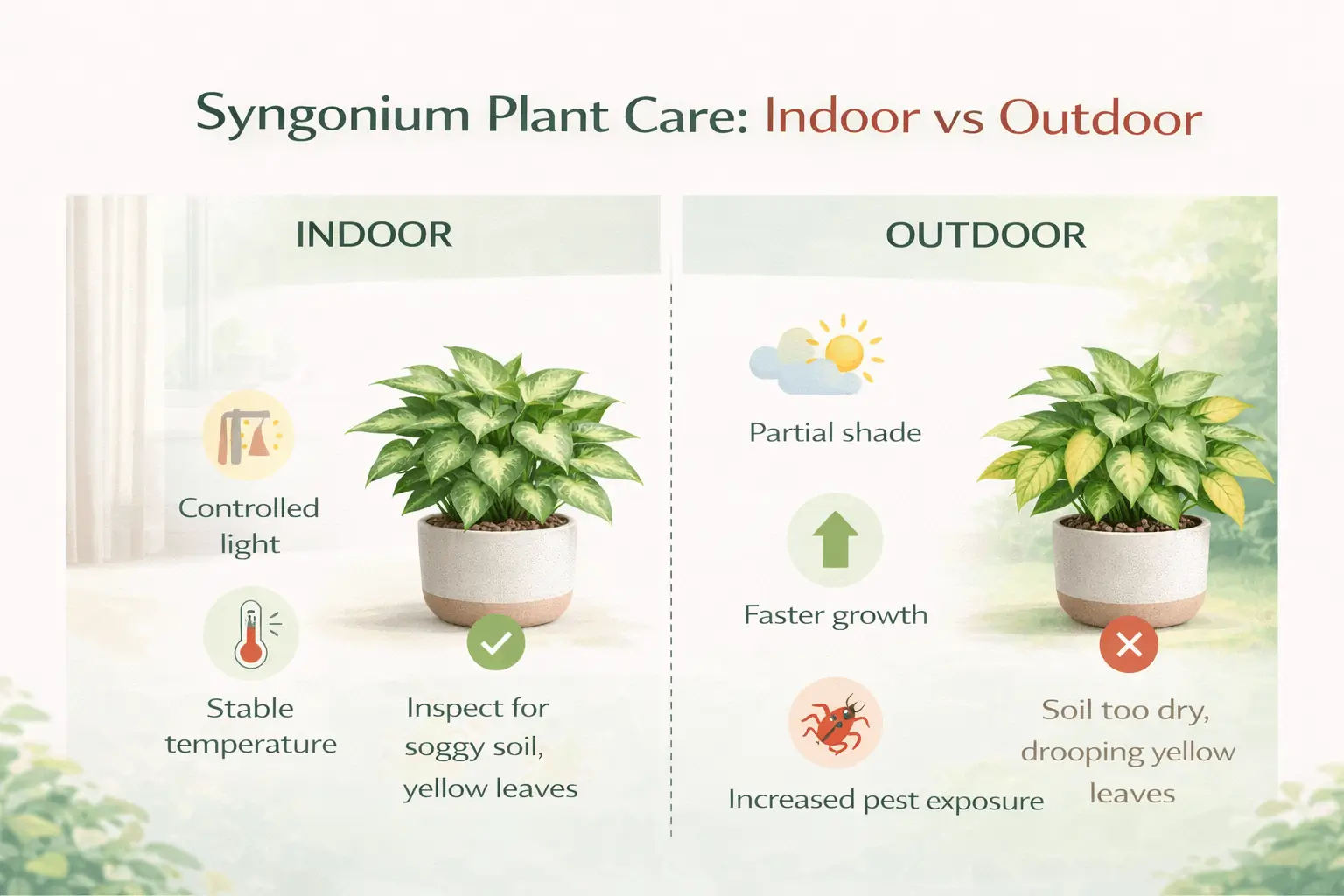
Partial shade is ideal for outdoor syngonium to protect leaves from direct sun. Well-draining soil prevents root issues and supports steady growth.
Outdoor Care Differences vs Indoor Care
- Faster growth outdoors
- More frequent watering needed
- Increased exposure to pests
Syngonium Plant Care in Water
Growing Syngonium in Water
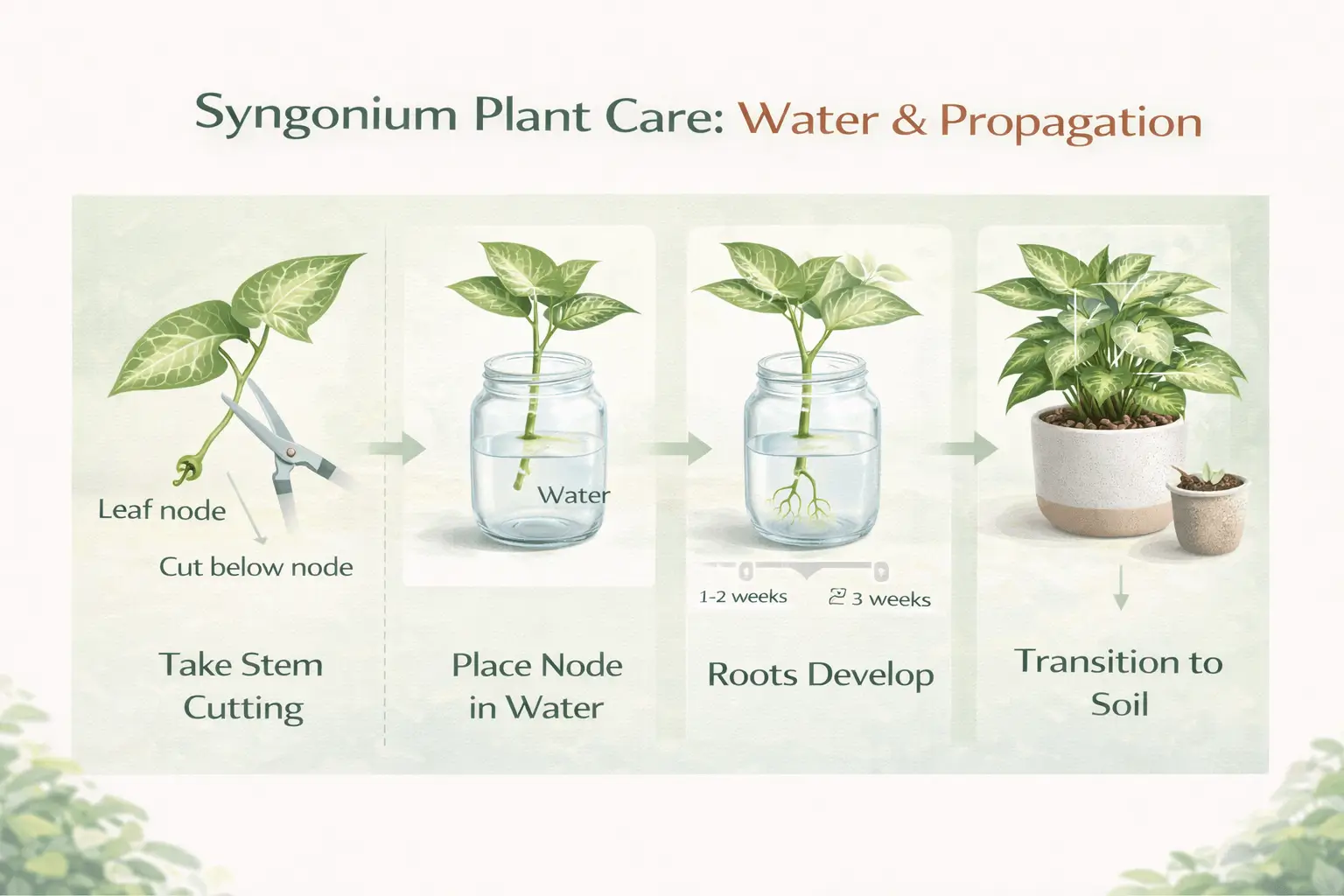
Syngonium plant care in water involves placing healthy cuttings in clean containers filled with fresh water. Transparent containers help monitor root development. Clean, chlorine-free water supports healthy growth.
Water Change and Maintenance Tips
- Change water every 7–10 days
- Rinse roots during water changes
- Add diluted nutrients occasionally
Syngonium Plant Propagation
Best Time for Propagation
The ideal time for syngonium plant propagation is during active growth periods when the plant is mature and healthy.
Propagation Methods
- Water propagation: Place cuttings in water until roots develop
- Soil propagation: Plant cuttings directly into moist, well-draining soil
After-Propagation Care
Roots usually develop within a few weeks. Once established, plants can be transitioned from water to soil gradually to reduce stress.
Common Problems and Maintenance Tips
Pests and Diseases
Common indoor pests include aphids and spider mites. Early signs include leaf spots, discoloration, and reduced growth.
Pruning and Shaping Syngonium
Regular pruning encourages bushier growth and controls vines. Trimming long stems keeps the plant compact and healthy.
Conclusion & Call to Action
Syngonium plant care is simple, flexible, and suitable for various growing methods. Whether grown indoors, outdoors, in soil, or in water, the plant adapts well with basic care. Choose the approach that fits your space and lifestyle, and start growing or propagating syngonium confidently.
Read Also: Red Globe Grape: 8+ Powerful Benefits, Taste & Nutrition Facts
FAQs
How often should I water a syngonium plant?
Water when the topsoil dries, adjusting frequency by season.
Why are my syngonium plant leaves turning yellow?
Yellow leaves usually result from overwatering, poor drainage, or low light.
Can syngonium grow well indoors year-round?
Yes, it thrives indoors with stable light and temperature.
Is syngonium plant care in water better than soil?
Both methods work; soil offers long-term growth, while water is low-maintenance.
What are the best syngonium varieties for beginners?
Green-leaf and compact varieties are easiest to maintain.
Can syngonium plants grow outdoors in all climates?
They grow outdoors only in warm, frost-free climates.

Written by the LeafyHeaven Editorial Team
LeafyHeaven shares practical gardening tips and simple plant care guides to help you grow, nurture, and enjoy your plants with ease. Our goal is to make gardening feel natural, approachable, and rewarding for everyone.



[…] Read Also: Syngonium Plant Care: 7+ Expert Tips for Lush Growth […]