
Introduction
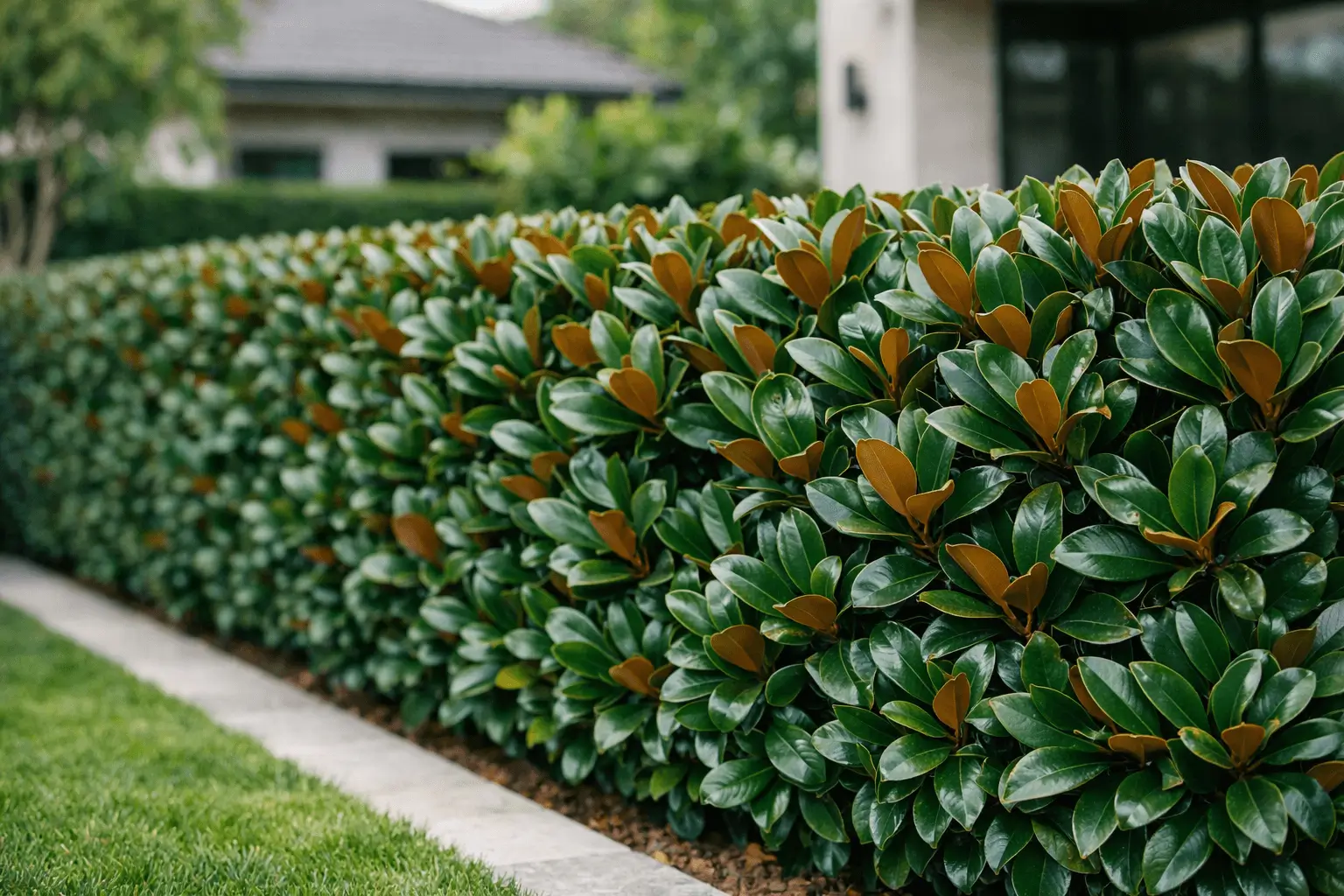
A teddy bear magnolia hedge is one of the most refined evergreen privacy solutions available for modern gardens. This compact form of Magnolia grandiflora combines dense foliage, upright growth, and year-round greenery, making it ideal for structured screening. Homeowners often choose teddy bear magnolia, also known as magnolia teddy bear or evergreen magnolia teddy bear, for its neat shape and manageable size. The cultivar magnolia grandiflora teddy bear delivers both privacy and ornamental appeal. This complete guide explains spacing, growth rate, hedge height, common problems, and how it compares with Little Gem for hedging purposes.
What Is a Teddy Bear Magnolia Hedge?
Origin and Botanical Background
Magnolia grandiflora ‘Teddy Bear’ is a compact Australian-bred cultivar selected for its tight branching and smaller mature size. Unlike traditional Southern magnolias, this variety forms a dense, upright structure. Many gardeners refer to it as magnolia trees teddy bear, magnolias teddy bear, or simply a teddy magnolia tree. It maintains glossy dark-green leaves with rich brown undersides, adding depth and contrast.
Why It Works Perfectly as a Hedge
- Dense, compact foliage blocks unwanted views
- Naturally upright growth reduces excessive pruning
- Evergreen structure provides year-round coverage
- Excellent for teddy bear magnolia landscaping projects
Its narrow profile makes it suitable for boundary hedges and structured privacy walls.
Teddy Bear Magnolia Hedge Height & Size
How Big Do Teddy Bear Magnolias Grow?
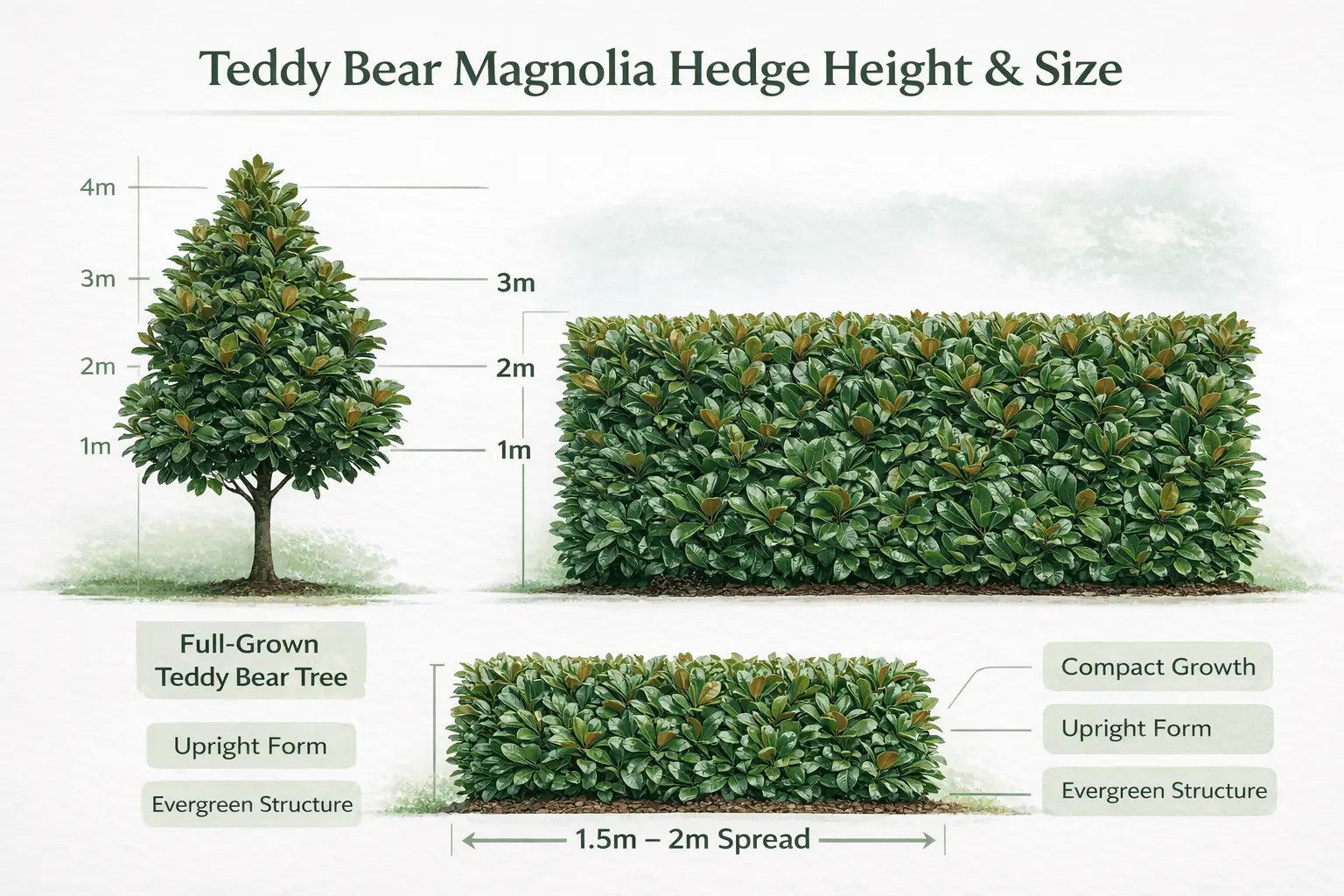
Many gardeners ask, how big do teddy bear magnolias grow? A full grown teddy bear magnolia typically reaches 3–4 meters (10–13 feet) in height and 1.5–2 meters in width. Compared to standard Southern magnolia varieties, its magnolia height remains compact and controlled.
Teddy Bear Magnolia Hedge Height
When grown as a hedge, the teddy bear magnolia hedge height commonly ranges between 2.5–4 meters depending on pruning. The teddy bear magnolia hedge size can be maintained through annual shaping. A full grown teddy bear magnolia tree offers vertical privacy without excessive spread, and the magnolia teddy bear size makes it manageable for residential gardens.
Teddy Bear Magnolia Hedge Growth Rate
Annual Growth Expectations
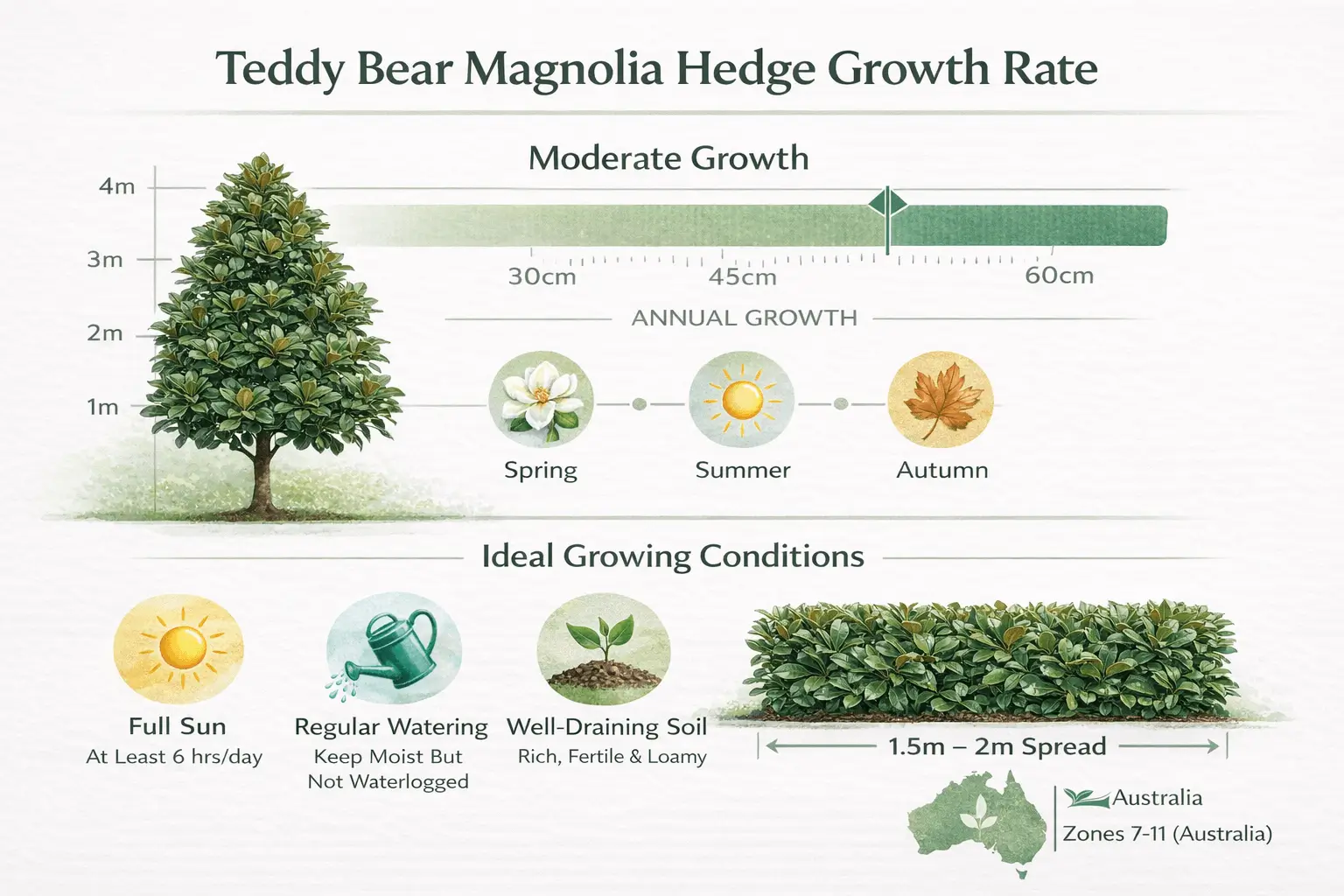
The teddy bear magnolia growth rate is moderate, averaging 30–60 cm per year under ideal conditions. The magnolia teddy bear growth rate remains steady with proper care. For privacy screens, the teddy bear magnolia hedge growth rate allows full coverage within a few growing seasons.
Factors That Affect Growth
Growth performance depends on:
- Climate (well-adapted in regions like teddy bear magnolia Australia)
- Well-draining, nutrient-rich soil
- Full sun to partial shade
- Consistent watering, especially during establishment
Teddy Bear Magnolia Hedge Spacing Guide
Ideal Teddy Bear Magnolia Hedge Spacing
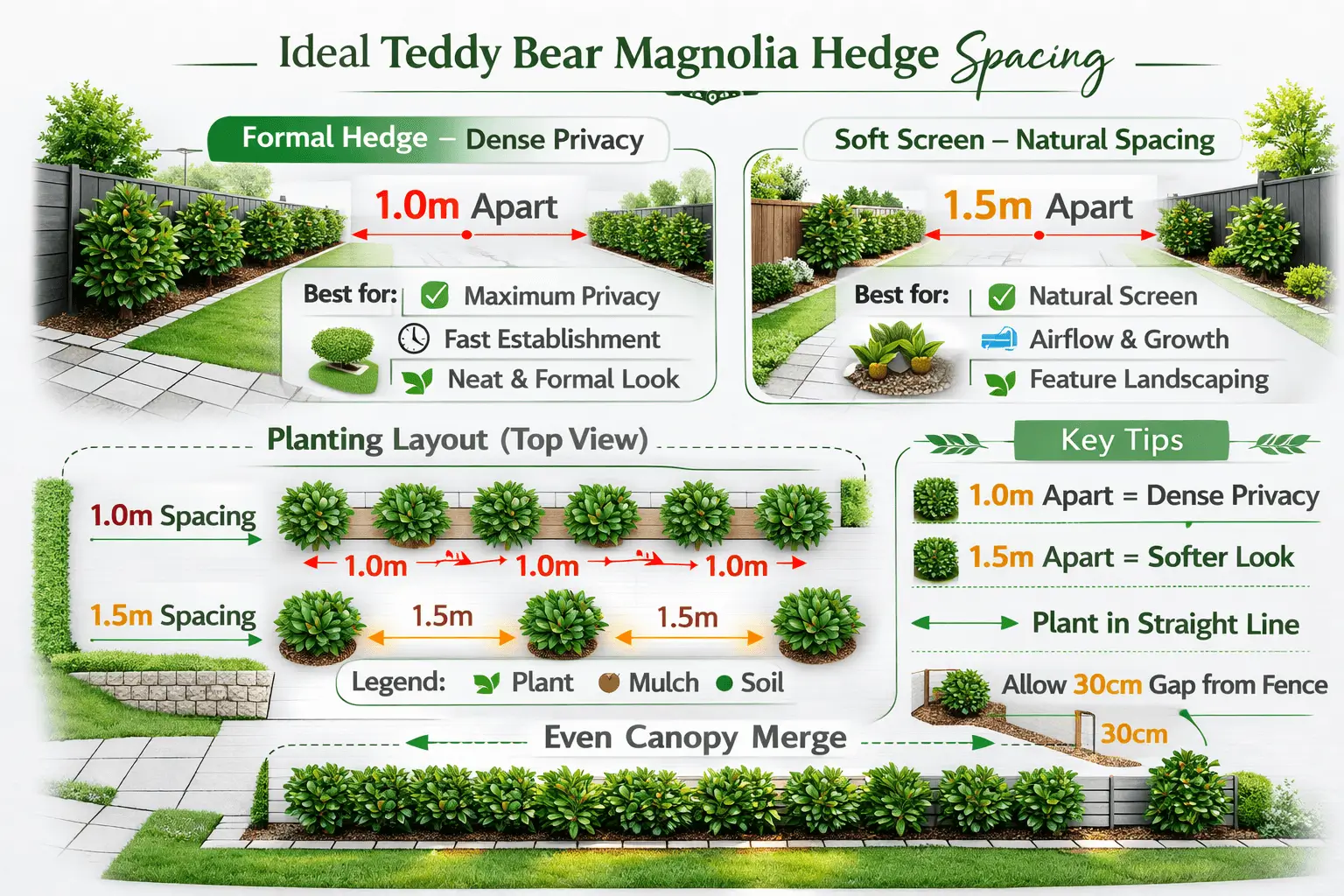
Proper teddy bear magnolia hedge spacing ensures dense coverage. Plant trees 1–1.5 meters apart for a thick privacy hedge. Closer spacing encourages quicker canopy merging.
Spacing Based on Desired Hedge Thickness
- Formal hedge: 1 meter apart
- Softer natural screen: 1.5 meters apart
Correct spacing helps the teddy bear magnolia hedge develop evenly without overcrowding.
Teddy Bear Magnolia Care for a Healthy Hedge
Watering & Soil Requirements
Effective teddy bear magnolia care includes:
- Deep watering during dry periods
- Well-draining, slightly acidic soil
- Balanced slow-release fertilizer
Consistent magnolia teddy bear care ensures long-term health. The teddy bear evergreen magnolia thrives when soil remains moist but not waterlogged.
Pruning for Hedge Shape
- Light pruning after flowering
- Maintain compact vertical form
- Remove crossing or damaged branches
This prevents overgrowth and preserves structure.
Flowering and Visual Appeal
The teddy bear magnolia flower is creamy white and fragrant. Peak teddy bear magnolia flowering occurs in late spring to summer. Mature hedges produce abundant teddy bear magnolia flowers, adding ornamental value to privacy planting.
Common Teddy Bear Magnolia Hedge Problems
Yellowing Leaves & Poor Drainage
Most teddy bear magnolia hedge problems result from waterlogged soil. Yellowing leaves often indicate poor drainage or root stress.
Slow Growth Issues
- Fertilizer imbalance
- Compacted soil restricting root expansion
Pest & Environmental Stress
Occasional scale insects or harsh winds may affect growth, but healthy plants resist most issues.
Teddy Bear Magnolia vs Little Gem – Which Is Better for Hedges?
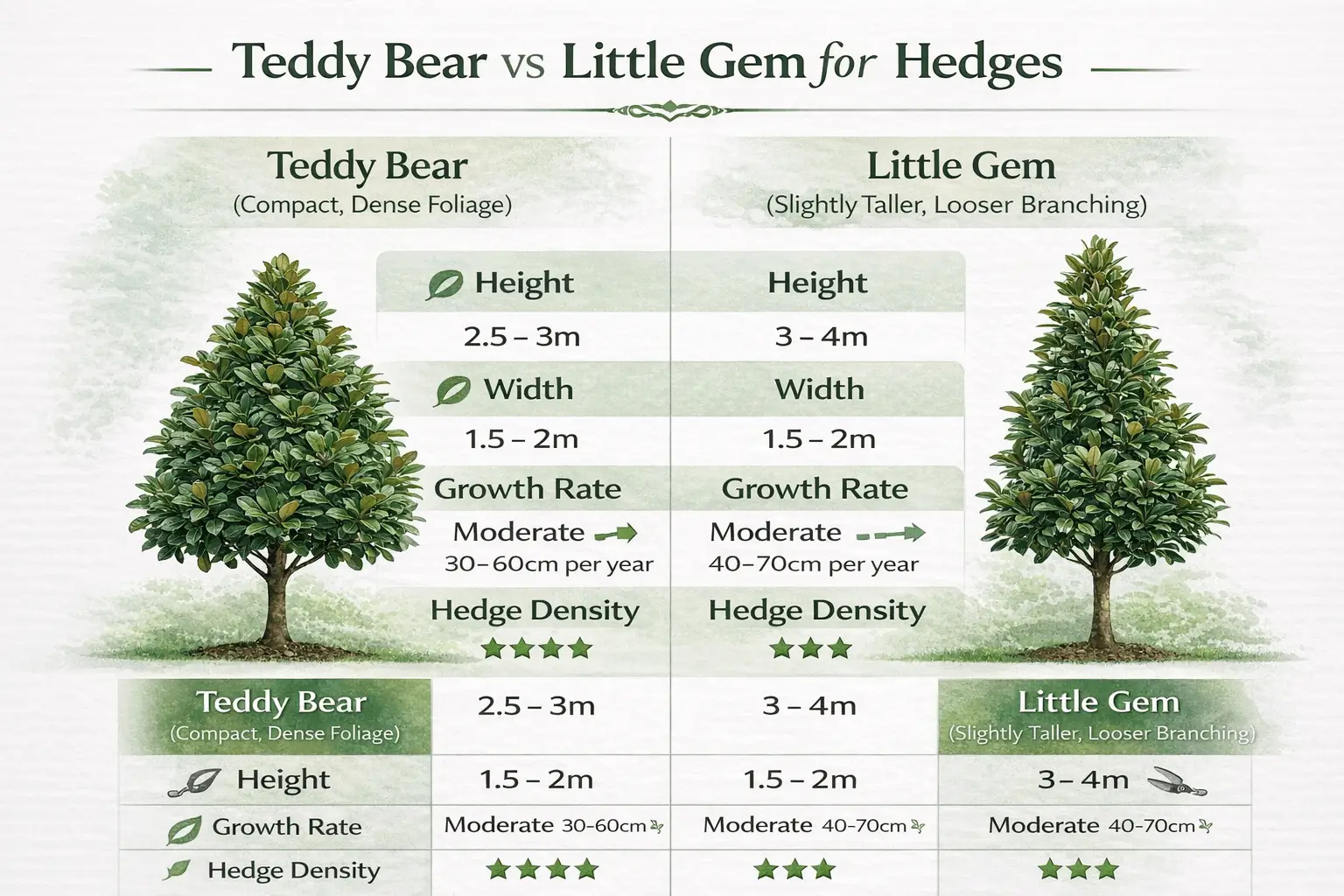
Size & Structure Comparison
Comparisons like teddy bear magnolia vs little gem, little gem magnolia vs teddy bear, and little gem magnolia vs teddy bear magnolia often focus on density. In little gem vs teddy bear magnolia, Teddy Bear is more compact. The debate around magnolia little gem vs teddy bear shows Teddy Bear has tighter foliage. Many prefer teddy bear magnolia tree vs little gem for structured hedges. In Australia, magnolia teddy bear vs little gem Australia discussions highlight Teddy Bear’s neater growth.
Growth Rate Differences
Little Gem grows slightly faster but may require more pruning to maintain shape.
Which Is Better for Small Gardens?
For narrow spaces, Teddy Bear’s compact habit makes it ideal.
Landscaping Ideas Using Teddy Bear Magnolia Hedge
- Formal boundary hedge
- Driveway lining
- Privacy wall screening
Professional teddy bear magnolia landscaping uses symmetrical planting for architectural impact.
Where to Buy Teddy Bear Magnolia
When looking to buy teddy bear magnolia, search reputable nurseries offering healthy specimens. Options may include teddy bear magnolia for sale, teddy bear magnolia trees for sale, or teddy bear magnolias for sale. Compare magnolia teddy bear price, magnolia teddy bear prices, and teddy bear magnolia price carefully. Before purchasing, check root health, foliage color, and trunk structure.
Conclusion – Is a Teddy Bear Magnolia Hedge Right for You?
A teddy bear magnolia hedge offers dense privacy, structured growth, and evergreen beauty. Its compact size, moderate growth, and ornamental flowers make it ideal for residential boundaries. With proper spacing and care, it creates a long-lasting privacy solution.
Read Also: 5+ Powerful Differences: Teddy Bear Magnolia vs Little Gem
FAQs About Teddy Bear Magnolia Hedge
1. How fast does a teddy bear magnolia hedge grow?
The teddy bear magnolia growth rate averages 30–60 cm annually. The teddy bear magnolia hedge growth rate depends on climate and care.
2. What is the ideal teddy bear magnolia hedge spacing?
Recommended teddy bear magnolia hedge spacing is 1–1.5 meters apart for dense coverage.
3. How tall does a full grown teddy bear magnolia hedge get?
A full grown teddy bear magnolia hedge typically reaches 3–4 meters depending on pruning.
4. What are common teddy bear magnolia hedge problems?
Common teddy bear magnolia hedge problems include yellowing leaves from poor drainage and slow growth due to soil compaction.
5. Is teddy bear magnolia better than Little Gem for hedging?
In most cases, teddy bear magnolia vs little gem comparisons favor Teddy Bear for tighter structure and compact form.

Written by the LeafyHeaven Editorial Team
LeafyHeaven shares practical gardening tips and simple plant care guides to help you grow, nurture, and enjoy your plants with ease. Our goal is to make gardening feel natural, approachable, and rewarding for everyone.



[…] Read Also: 7+ Powerful Secrets to a Perfect Teddy Bear Magnolia Hedge […]
[…] an evergreen, structured screen, a teddy bear magnolia hedge can be a strong option where you want height without heavy […]
[…] you’re considering alternative structured hedges, our guide to creating a Teddy Bear Magnolia hedge offers another premium evergreen […]