
Introduction
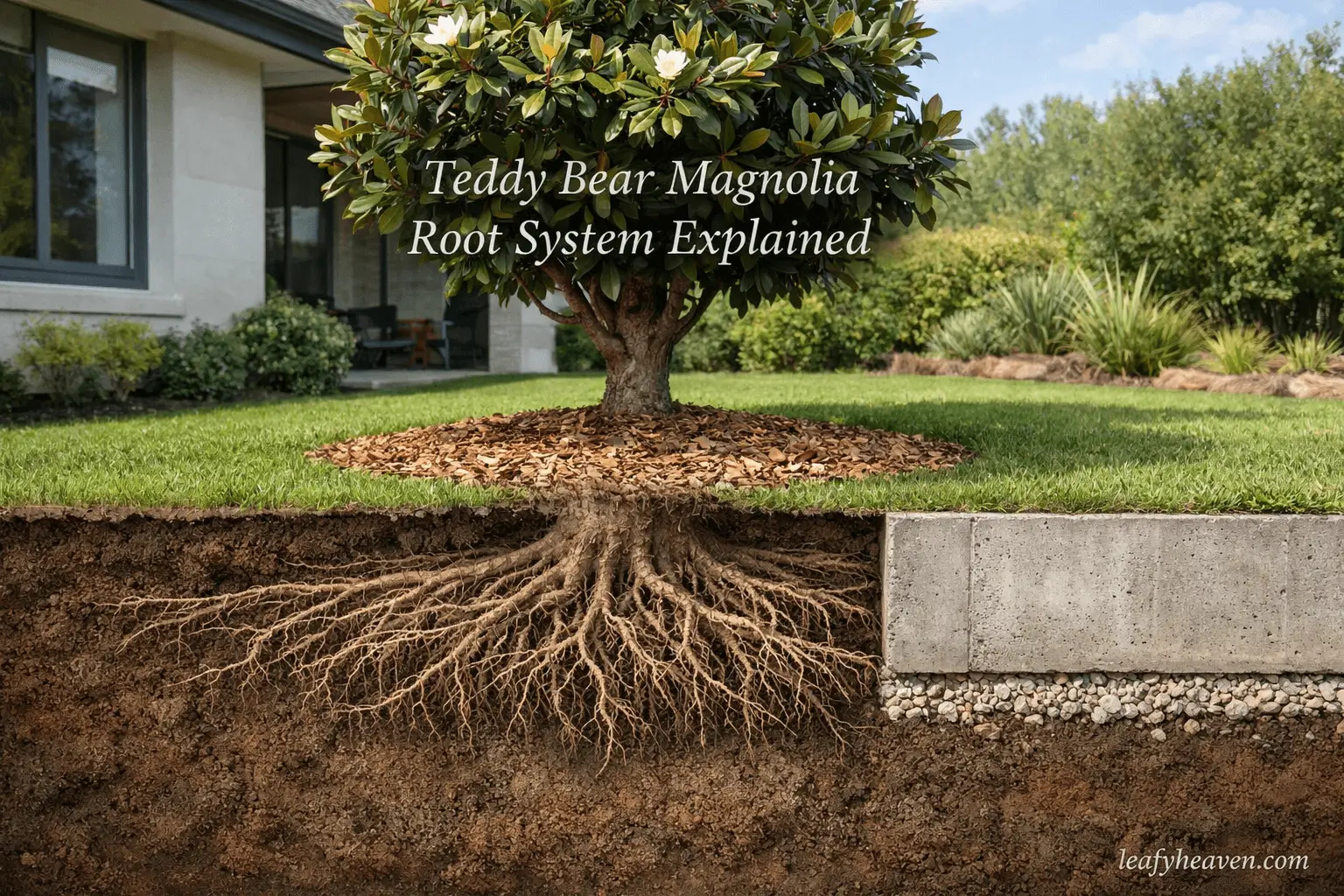
The teddy bear magnolia root system is one of the main reasons homeowners choose this compact evergreen for modern gardens. While admired for its glossy leaves and creamy white blooms, many people worry about how magnolia roots behave near houses, pipes, and concrete foundations. Concerns about cracked driveways, blocked drains, and invasive tree roots often influence planting decisions. As a cultivated form of Magnolia grandiflora, this variety shares similarities with the broader magnolia tree root system but differs in size and spread. This article explains root depth, horizontal spread, invasiveness, and how it compares to Little Gem, helping you understand whether magnolia roots are truly a structural risk in residential landscapes.
What Is Teddy Bear Magnolia?
Botanical Background
Teddy Bear is a compact cultivar of Magnolia grandiflora. Officially known as Magnolia grandiflora ‘Teddy Bear’, it is commonly referred to as the teddy bear evergreen magnolia due to its dense foliage and velvety brown undersides of leaves.
Unlike the standard Southern Magnolia, this variety was developed for controlled growth and structural balance. It is particularly popular in Australia, where gardeners prefer evergreen trees that provide screening without excessive canopy spread. Its upright form and manageable proportions make it ideal for suburban blocks and narrow garden beds.
Size & Growth Characteristics
Understanding above-ground size helps predict root behavior.
- Teddy bear magnolia height: Typically grows 3–5 metres tall.
- Teddy bear magnolia size: Maintains a narrow, pyramidal shape.
- Teddy bear magnolia growth rate: Moderate; generally 30–60 cm per year under good conditions.
- Teddy bear magnolia full grown dimensions: Around 3–4 metres wide at maturity.
- How big do teddy bear magnolias grow: Smaller than traditional Southern Magnolias, making them more suitable for compact gardens.
A full grown teddy bear magnolia tree remains proportionate, meaning its root system develops in balance with its canopy. Compared to a large magnolia teddy bear tree planted decades ago, today’s cultivated selections are intentionally compact, which influences root spread and density.
Understanding the Teddy Bear Magnolia Root System
Root Type & Structure
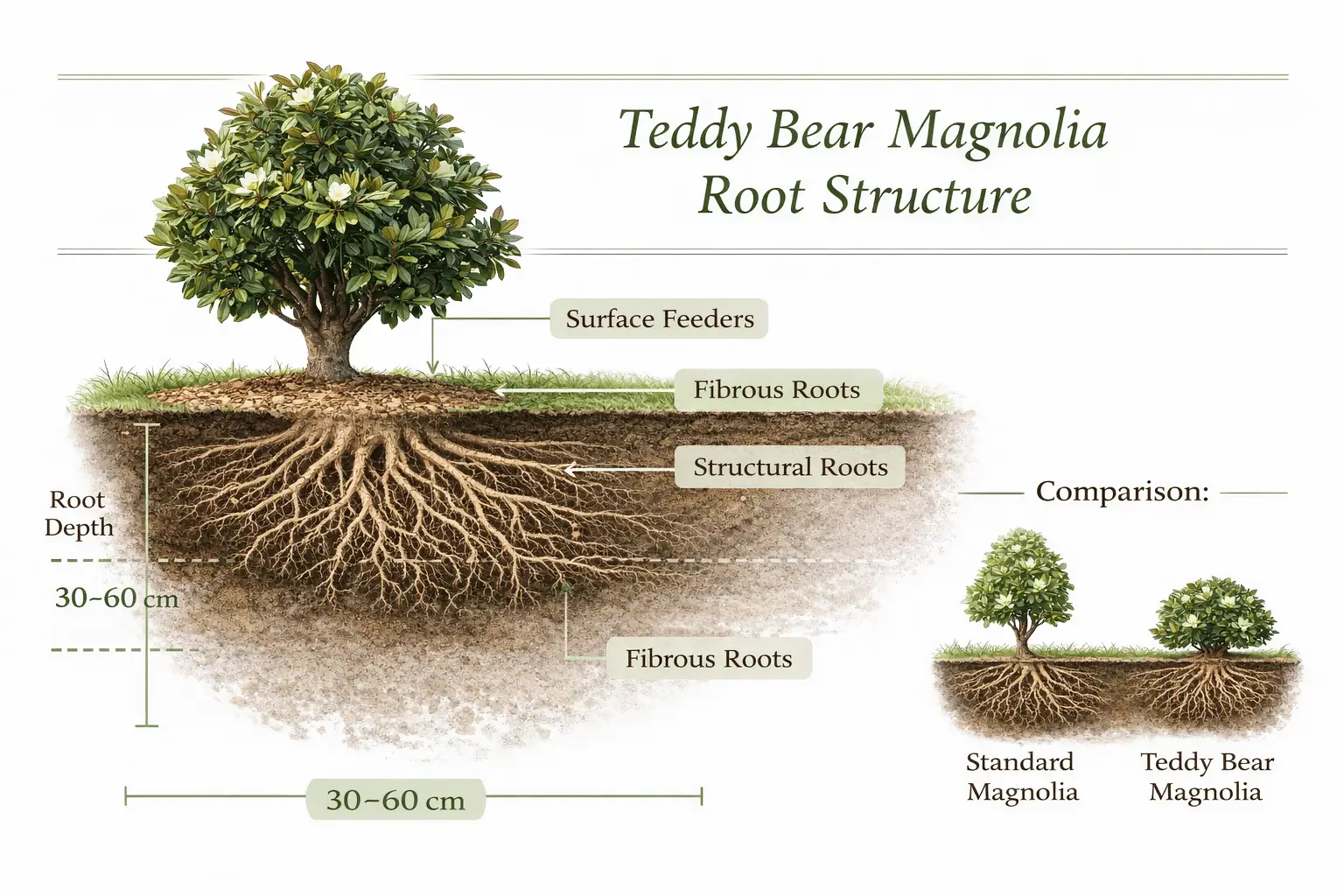
The teddy bear magnolia root system is fibrous rather than dominated by a single aggressive taproot. Like most magnolia tree roots, it forms a wide network of lateral roots that spread outward for stability and nutrient absorption.
Compared to the general magnolia tree root system of older Magnolia grandiflora varieties, Teddy Bear’s roots are less expansive due to its smaller canopy. Roots typically develop:
- Shallow feeder roots near the surface
- Structural roots slightly deeper for anchorage
If you viewed a conceptual magnolia root system diagram, you would see broad lateral growth rather than deep vertical penetration. Surface roots may appear in compacted soil, but they are not forcefully invasive.
How Deep Do Teddy Bear Magnolia Roots Grow?
Most teddy bear magnolia roots grow within the top 30–60 cm of soil. Depth depends heavily on soil conditions:
- Well-drained loamy soil encourages moderate downward growth.
- Compacted or clay-heavy soil keeps roots closer to the surface.
Like other Magnolia grandiflora roots, they are not known for extreme depth. Instead, stability comes from lateral expansion rather than vertical penetration.
How Far Do the Roots Spread?
Root spread is generally proportional to canopy width. In most cases, magnolia roots extend roughly as wide as the tree’s drip line.
Under Australian climate conditions, the magnolia root system Australia gardeners observe is influenced by:
- Rainfall frequency
- Soil drainage
- Urban compaction
Magnolia tree roots adapt to climate. In drier regions, they may spread further horizontally in search of moisture. However, magnolia trees roots remain relatively manageable compared to aggressive species such as figs or poplars.
Are Teddy Bear Magnolia Roots Invasive?
Do Magnolias Have Invasive Roots?
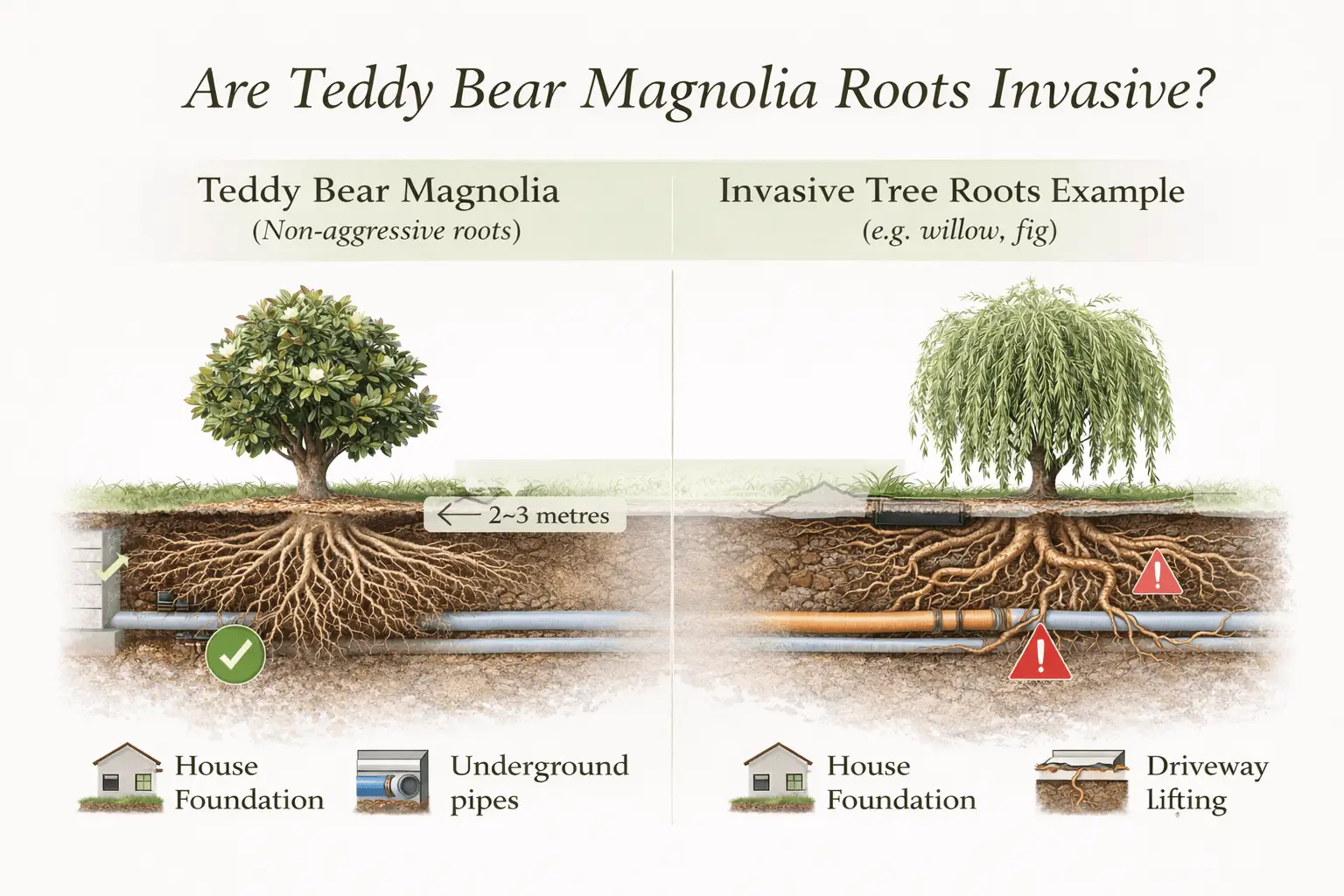
Generally, magnolia roots are considered non-invasive.
When homeowners ask, “are magnolia roots invasive?”, the answer is usually no. Unlike trees known for invasive tree roots—such as willows or certain eucalyptus species—magnolias do not aggressively seek water sources or penetrate intact foundations.
They can lift paving slightly if planted too close, but this is due to natural radial expansion, not destructive force.
Will Magnolia Tree Roots Damage House Foundations?
Concerns about whether magnolia tree roots damage house foundations are common.
Key considerations:
- Safe planting distance is typically 2–3 metres from foundations.
- Avoid planting directly over underground pipes.
- Minor surface lifting can occur if roots grow beneath thin paving.
In stable soil and with correct spacing, structural damage is rare.
Teddy Bear Magnolia vs Little Gem Root System
Root System Comparison
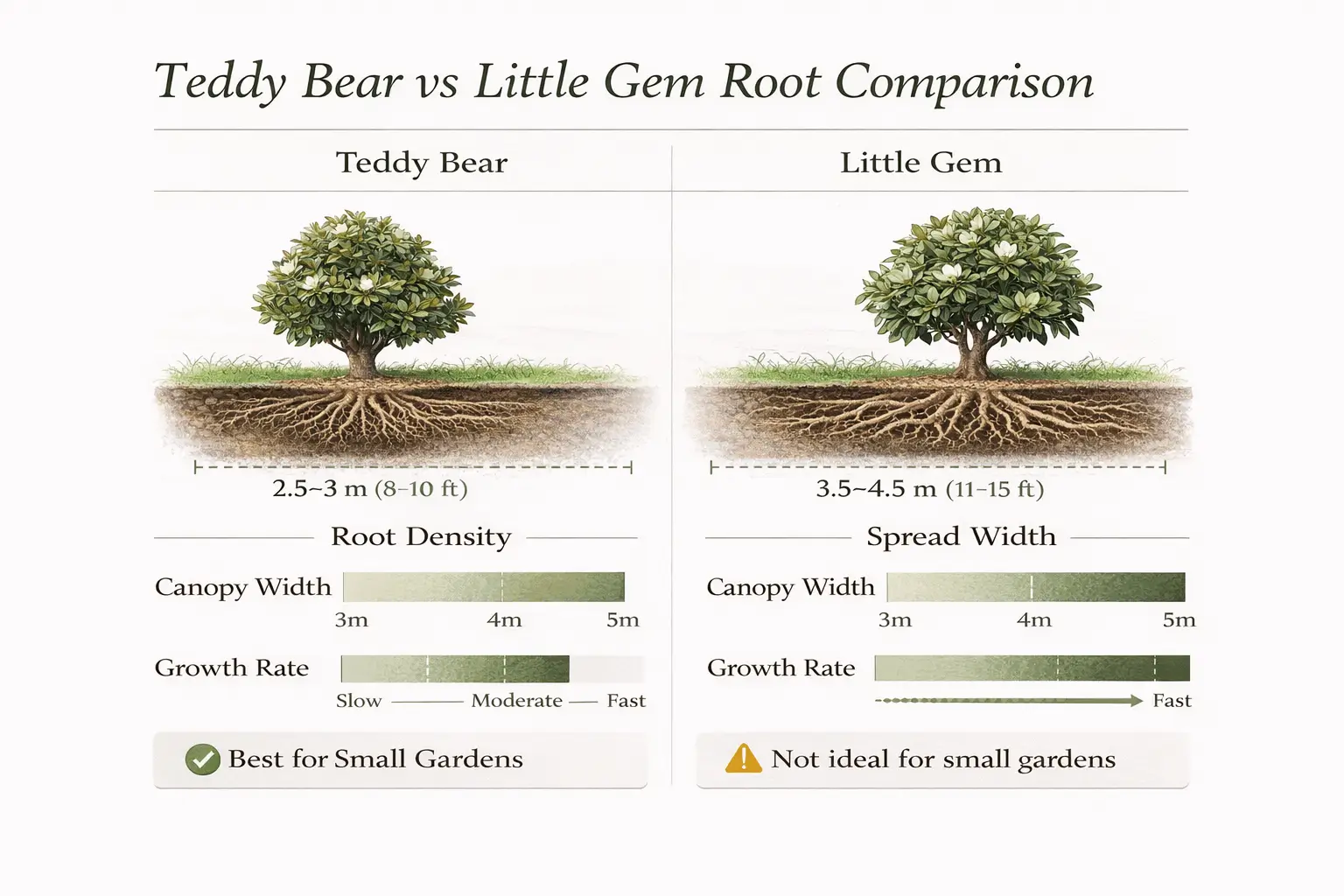
Both Teddy Bear and Magnolia grandiflora ‘Little Gem’ share similar fibrous root patterns.
- Little gem magnolia root system: Compact and lateral.
- Little gem magnolia tree root system: Slightly broader due to marginally wider canopy.
- Magnolia little gem root system: Comparable depth but potentially wider spread over time.
Both varieties are far less aggressive than full-sized Southern Magnolias.
Growth Rate & Root Spread Differences
Teddy bear magnolia growth rate is moderate, while little gem magnolia growth rate is often slightly faster in optimal conditions.
Little Gem may develop marginally denser roots due to quicker canopy expansion. However, differences remain minimal for residential settings.
Which Is Better for Small Gardens?
In comparisons like teddy bear magnolia vs little gem, both suit compact gardens.
In magnolia teddy bear vs little gem Australia discussions:
- Teddy Bear offers tighter vertical form.
- Little Gem spreads slightly wider.
For hedges, spacing should allow 1.5–2 metres between plants. In little gem vs teddy bear magnolia evaluations, Teddy Bear often wins for narrow boundaries.
Planting Teddy Bear Magnolia to Protect Structures
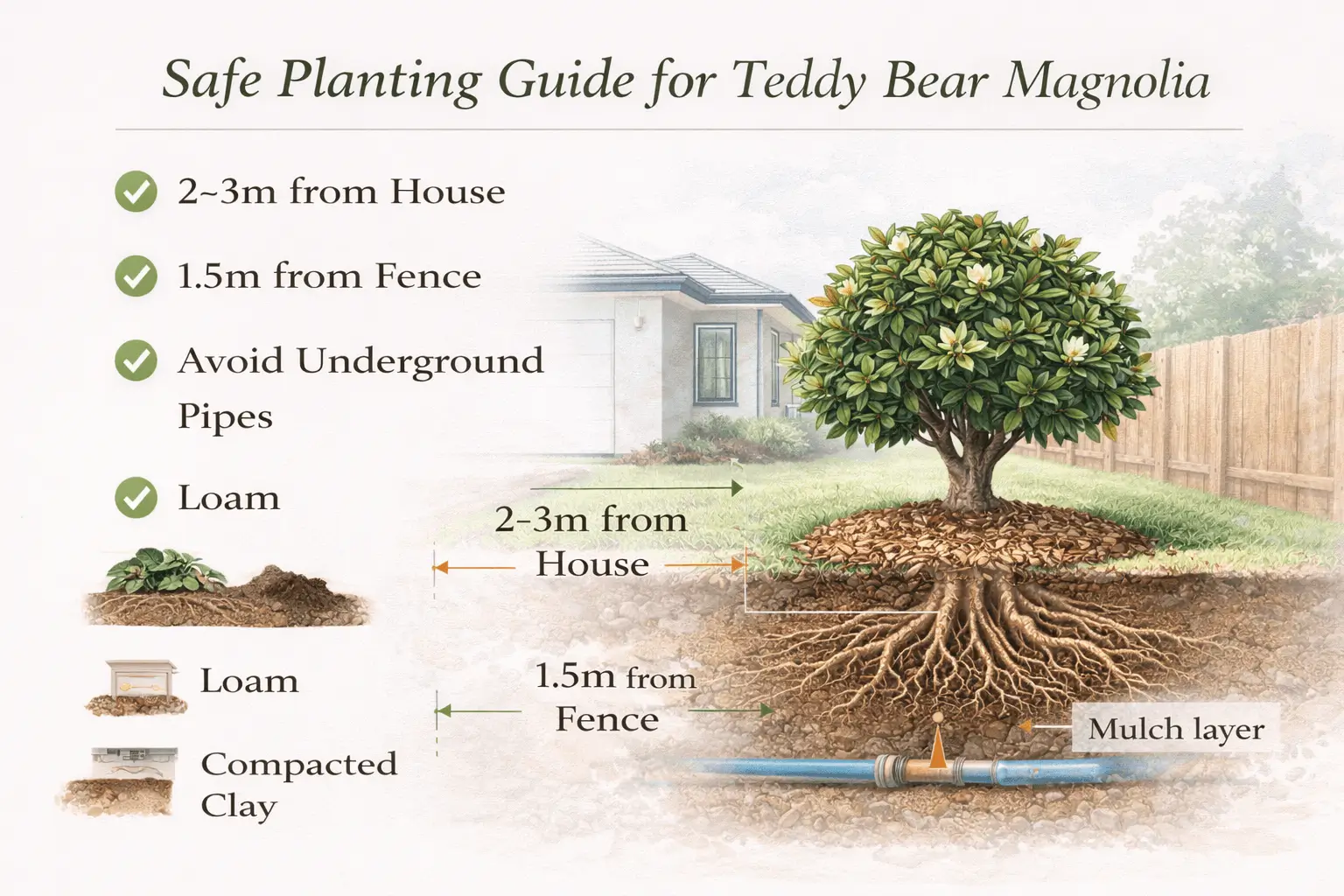
Ideal Planting Distance
- Minimum 2–3 metres from house foundations
- 1.5 metres from fences
- Avoid direct planting over drainage lines
Soil & Drainage Considerations
Compacted soil encourages surface rooting. For stable growth:
- Use well-draining loam
- Avoid waterlogged areas
- Improve heavy clay with organic matter
Container & Small Yard Suitability
The compact root system makes it suitable for suburban blocks. In Australia, teddy bear magnolia Australia landscaping trends show strong demand due to its predictable size and root behavior.
Root Care & Maintenance Tips
Watering for Healthy Root Development
- Deep watering promotes stronger anchoring roots.
- Shallow watering encourages surface growth.
Consistent irrigation supports balanced teddy bear magnolia care.
Mulching Benefits
- Retains moisture
- Reduces soil temperature fluctuation
- Encourages deeper roots
- Protects the magnolia teddy bear root system
Avoiding Root Stress
- Prevent construction damage near root zones
- Avoid overwatering
- Maintain proper drainage
Good magnolia teddy bear care ensures stable, non-problematic roots.
Conclusion
The teddy bear magnolia root system is compact, fibrous, and non-aggressive. When planted correctly, it remains safe for residential gardens and rarely causes structural issues. Compared with Little Gem, differences in root spread are minimal, though Teddy Bear offers slightly tighter growth. Proper spacing, soil preparation, and consistent care ensure healthy root development.
Planning to plant a teddy bear magnolia? Make sure you understand its root spread before choosing the perfect spot.
Read Also: 7+ Powerful Fast Growing Evergreen Trees Australia
FAQs
1. How invasive is the teddy bear magnolia root system?
It is generally non-invasive. Roots spread laterally but do not aggressively damage structures when planted at safe distances.
2. How deep do teddy bear magnolia roots grow?
Most roots grow within the top 30–60 cm of soil, depending on drainage and soil type.
3. Can teddy bear magnolia roots damage pipes?
They typically do not damage intact pipes but may exploit existing cracks if planted too close.
4. What is the difference between teddy bear and little gem magnolia root systems?
Both have fibrous, lateral roots. Little Gem may spread slightly wider due to canopy size.
5. What is the ideal planting distance from a house?
Plant at least 2–3 metres away from foundations for safe growth.
6. Does soil type affect magnolia root spread?
Yes. Compacted or clay soil encourages surface roots, while well-drained soil supports balanced root depth.

Written by the LeafyHeaven Editorial Team
LeafyHeaven shares practical gardening tips and simple plant care guides to help you grow, nurture, and enjoy your plants with ease. Our goal is to make gardening feel natural, approachable, and rewarding for everyone.



[…] Read Also: 7+ Crucial Facts About Teddy Bear Magnolia Root System […]