
Introduction
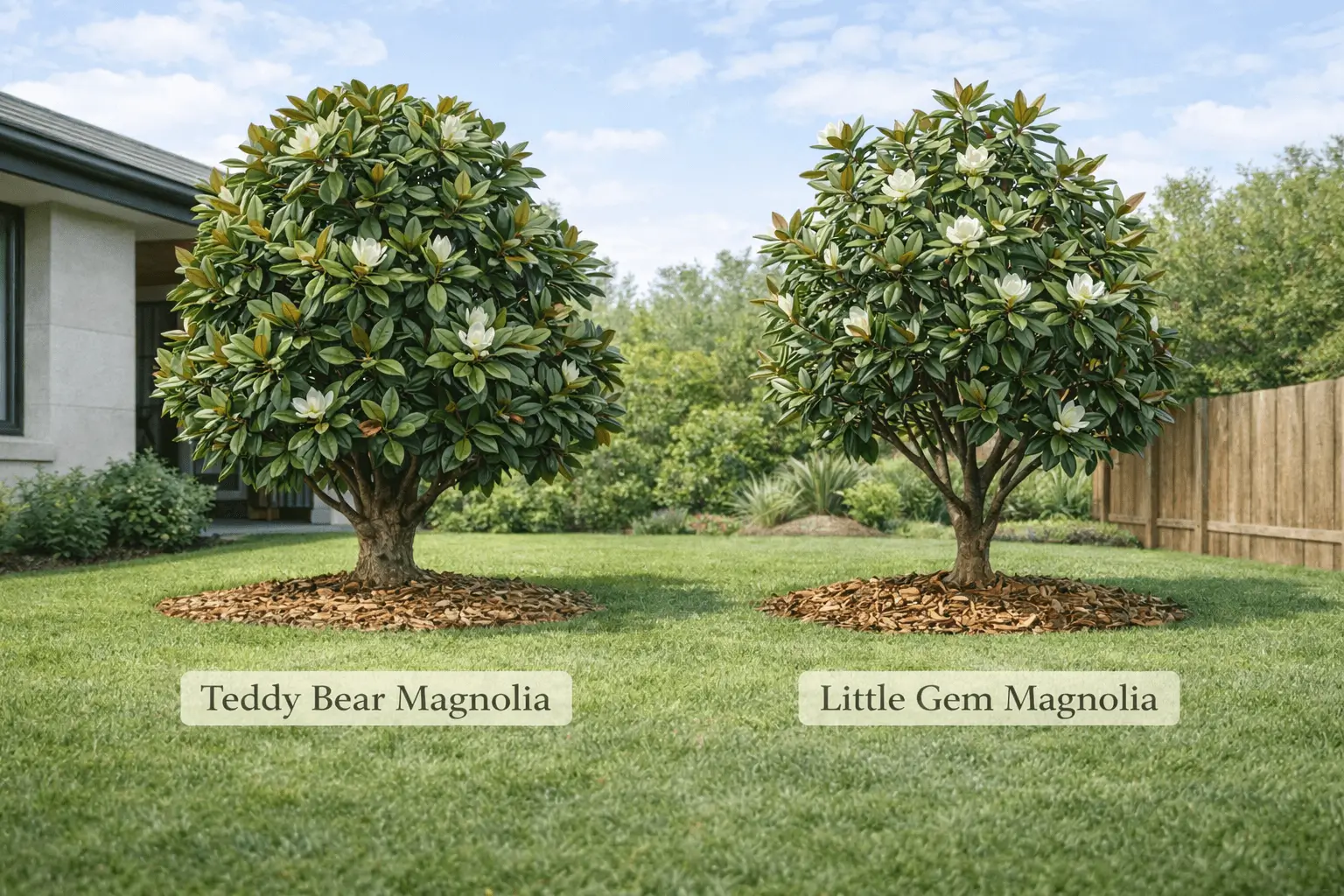
The teddy bear magnolia vs little gem comparison is one of the most common questions gardeners ask when choosing compact evergreen magnolias for Australian landscapes. Both varieties belong to the Magnolia grandiflora family, including magnolia grandiflora teddy bear and little gem magnolia grandiflora. While they share similar glossy foliage and creamy blooms, their mature size, growth rate, structure, and flowering performance differ in meaningful ways. Choosing the right one affects long-term maintenance, screening ability, and garden design. This guide compares height, growth rate, mature size, flower characteristics, and the best planting uses to help you make a confident decision.
Overview of Teddy Bear Magnolia
What Is Teddy Bear Magnolia?
The teddy bear evergreen magnolia is a compact cultivar of Magnolia grandiflora. Known botanically as magnolia grandiflora teddy bear, this variety was developed for tighter spaces and structured landscaping.
The teddy bear magnolia tree forms a naturally dense, upright cone shape. Often referred to as the magnolia teddy bear tree, it is prized for its thick foliage and strong vertical growth. Among compact evergreen varieties, magnolias teddy bear stand out for their uniform shape and minimal pruning needs.
Full Grown Size and Height
A full grown teddy bear magnolia is smaller and denser than traditional southern magnolias.
- Full grown teddy bear magnolia tree height: typically 3–4 metres
- Teddy bear magnolia height spread: around 2–3 metres
- Magnolia teddy bear size: compact and columnar
For gardeners asking, “how big do teddy bear magnolias grow,” expect a manageable medium-sized evergreen suited for suburban gardens.
Growth Rate and Structure
The teddy bear magnolia growth rate is considered moderate. Under ideal conditions, it grows steadily without becoming leggy.
Similarly, the magnolia teddy bear growth rate supports strong vertical structure while maintaining tight branching. Its dense foliage makes it ideal for privacy screening and structured hedging.
Flowers and Appearance
The teddy bear magnolia flower is large, creamy white, and highly fragrant.
Teddy bear magnolia flowers typically appear from late spring through summer, with occasional repeat blooms. The leaves feature glossy green tops and distinctive rust-colored undersides, adding ornamental contrast year-round.
Overview of Little Gem Magnolia
What Is Little Gem Magnolia?
The little gem magnolia is another compact selection of Magnolia grandiflora. The little gem magnolia tree is widely planted in Australian gardens for its versatility and reliable flowering.
Also known as the magnolia little gem tree, this variety has been popular for decades. Among magnolia trees little gem, it remains a favourite due to its manageable size and repeat blooming. As an evergreen magnolia little gem, it retains foliage year-round.
Full Grown Height and Spread
The little gem magnolia height generally reaches 4–6 metres when mature.
- Full grown little gem magnolia tree: taller than Teddy Bear
- Magnolia little gem height: 4–6 metres
- Magnolia height spread: 2–3 metres
Its natural shape is slightly more open and less tightly conical compared to Teddy Bear.
Growth Rate
The little gem magnolia growth rate is moderate to slightly faster than Teddy Bear under optimal conditions.
The magnolia little gem growth rate allows it to establish screening more quickly, though pruning may be needed to maintain structure.
Flowering Characteristics
Little Gem produces creamy white flowers slightly smaller than traditional magnolias but blooms more frequently throughout the warmer months. Flowering can extend from spring into autumn in suitable climates.
Teddy Bear Magnolia vs Little Gem — Key Differences
The debate around little gem magnolia vs teddy bear often centres on size and density. When comparing little gem magnolia vs teddy bear magnolia, structure and maintenance are key considerations.
Gardeners also compare magnolia little gem vs teddy bear for screening, while landscape designers evaluate teddy bear magnolia vs little gem magnolia based on vertical space. In practical terms, the teddy bear magnolia tree vs little gem difference becomes noticeable as plants mature. Overall, teddy bear vs little gem magnolia depends on garden scale.
Height Comparison
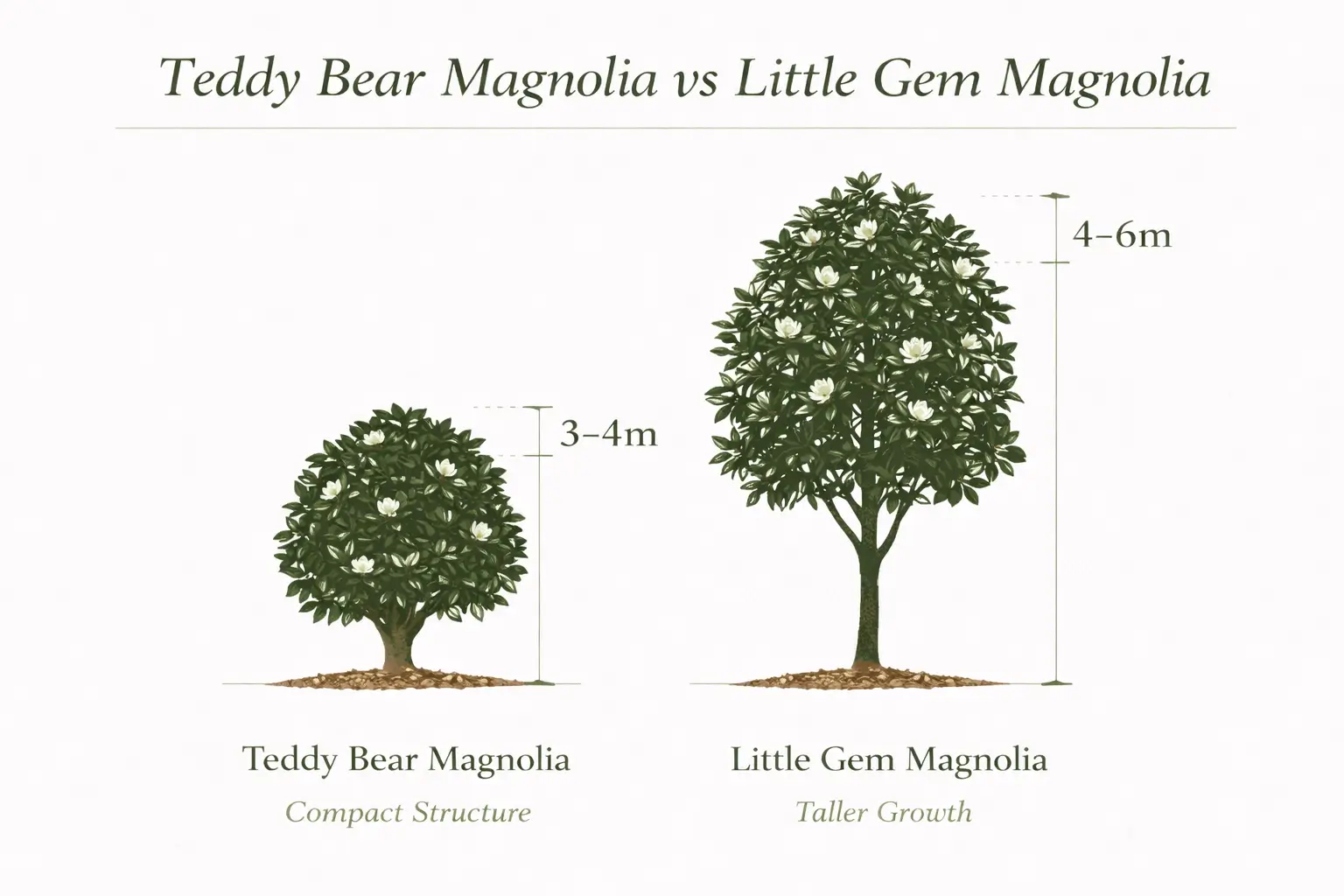
- Teddy Bear: 3–4m
- Little Gem: 4–6m
Little Gem grows taller overall.
Growth Rate Comparison
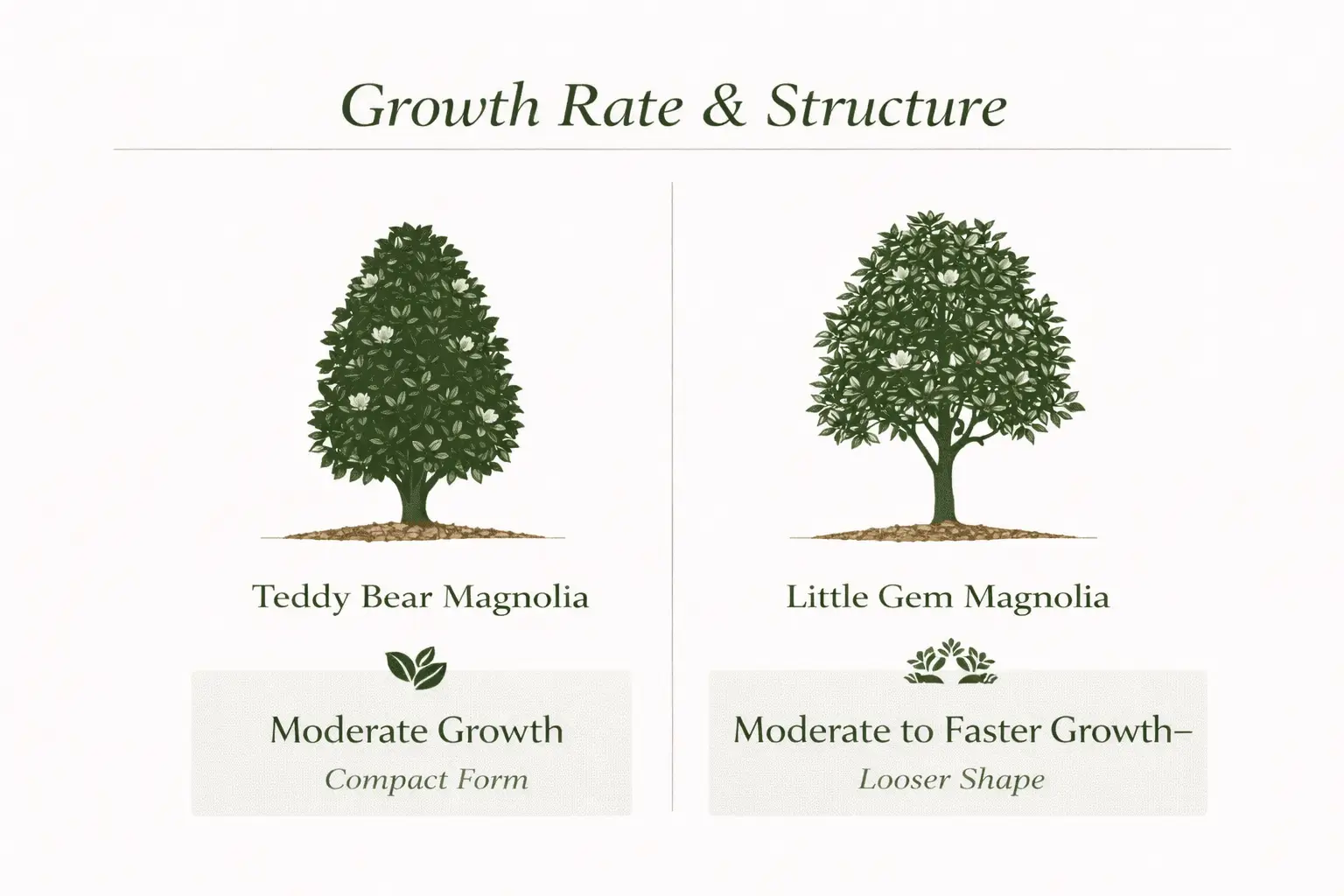
- Teddy Bear: Moderate
- Little Gem: Moderate to slightly faster
Leaf Density & Shape
- Teddy Bear: Dense, compact cone shape
- Little Gem: Slightly looser, more open branching
Flower Size & Bloom Frequency
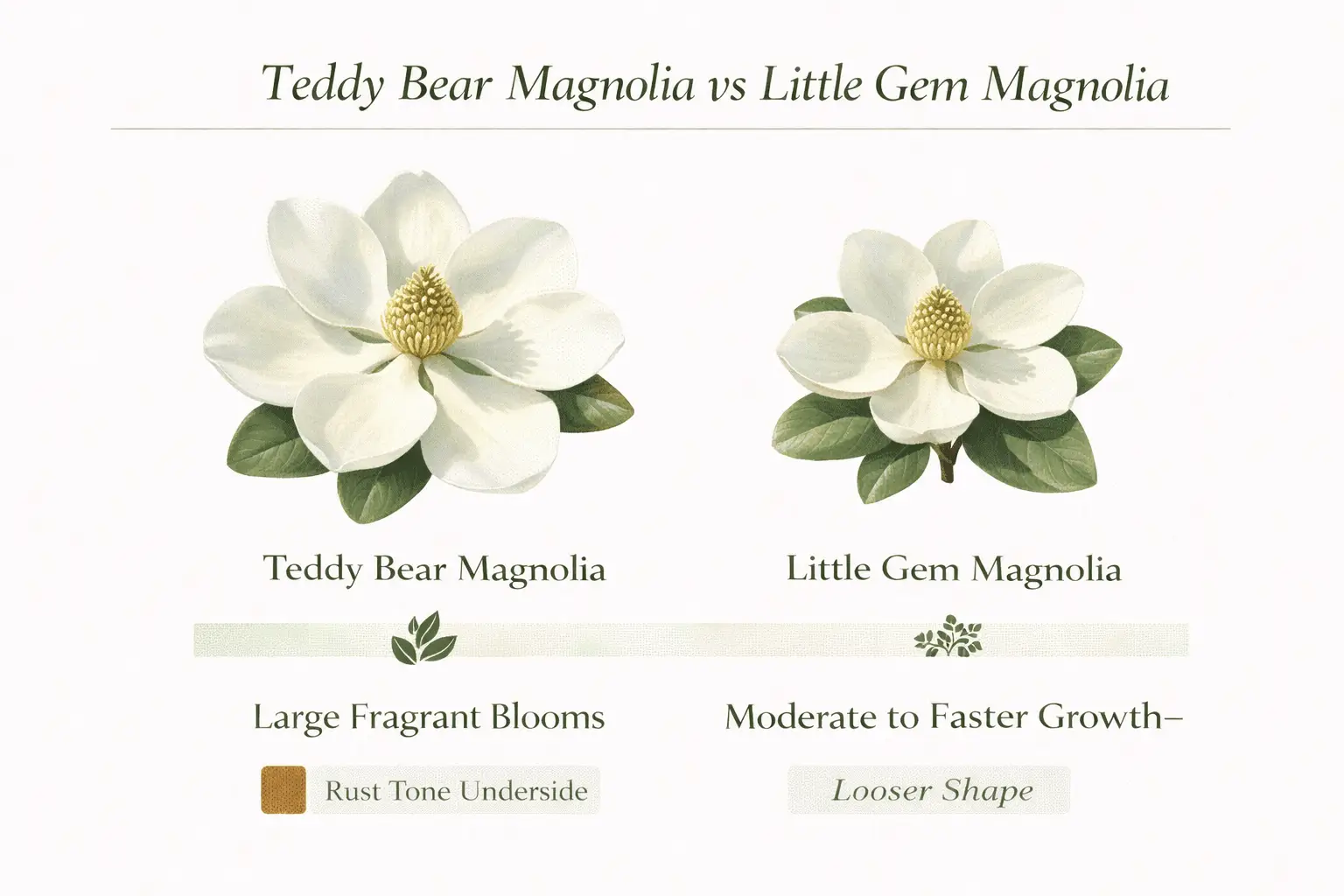
- Teddy Bear: Larger blooms, strong presence
- Little Gem: Slightly smaller but more frequent flowering
Best Landscape Uses
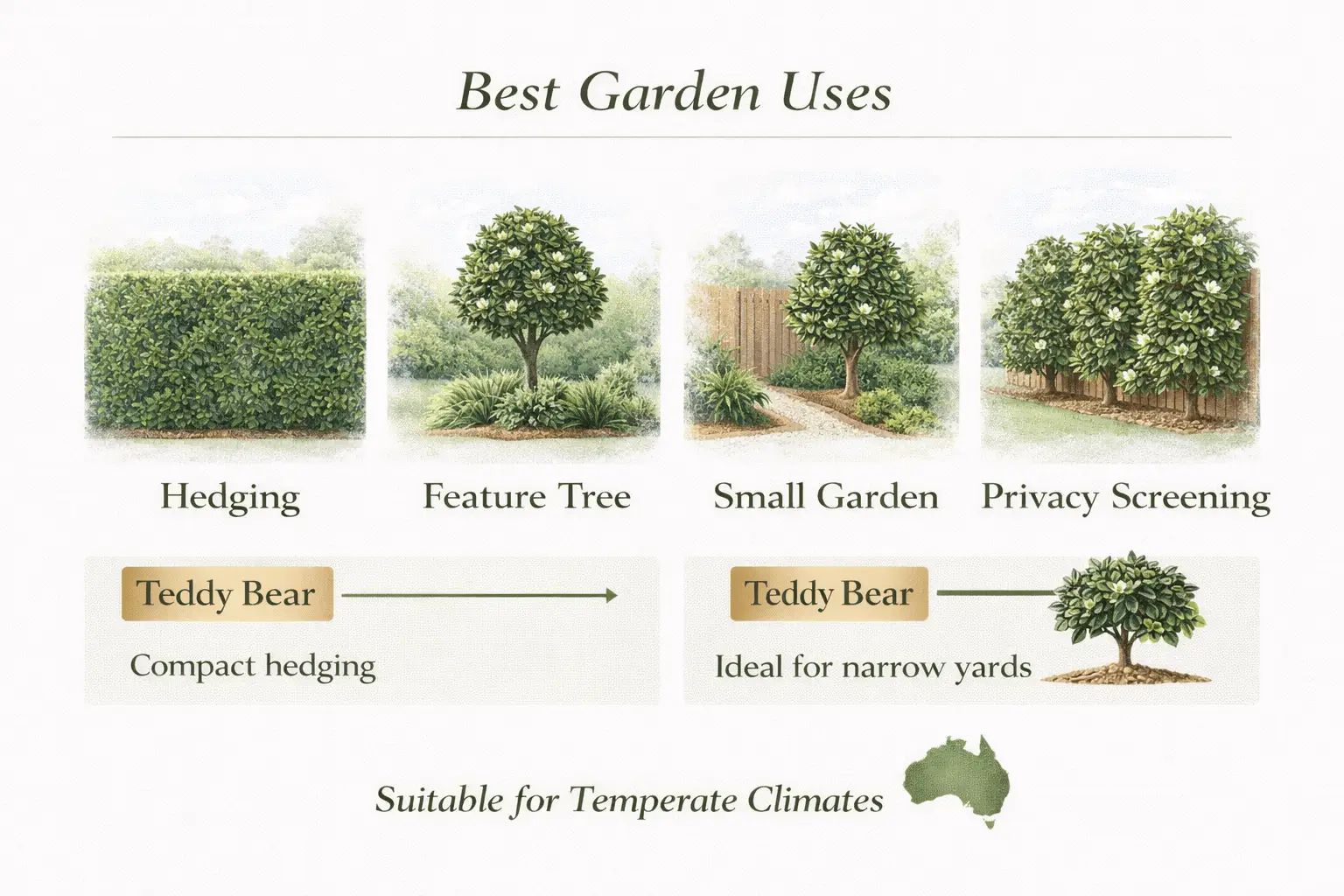
- Hedging: Teddy Bear for tighter hedges
- Feature tree: Both suitable
- Small gardens: Teddy Bear ideal
- Screening: Little Gem establishes faster
In magnolia teddy bear australia, compact structure suits suburban blocks. When evaluating magnolia teddy bear vs little gem australia, climate adaptability is similar across temperate regions.
Which One Is Better for Small Gardens?
For narrow side yards, Teddy Bear offers superior space efficiency. Its compact root system and vertical growth minimise spread.
Little Gem suits slightly larger lawns or open garden beds. Maintenance for both is manageable, though Little Gem may require occasional shaping.
Care Requirements for Both Varieties
Soil and Sunlight
- Full sun to partial shade
- Well-drained, slightly acidic soil
- Suitable for most temperate Australian climates
Watering Needs
- Regular watering during establishment
- Drought tolerant once established
Pruning and Maintenance
- Minimal pruning required
- Light shaping maintains structure
- Remove damaged branches annually
Common Growing Issues
- Yellowing leaves from poor drainage
- Leaf spot in humid climates
- Root stress in compacted soil
Both magnolia teddy and teddy magnolia tree varieties benefit from mulch and consistent watering. A mature little gem tree or grouped little gem trees perform best in open airflow conditions.
Conclusion — Teddy Bear Magnolia vs Little Gem
The teddy bear magnolia vs little gem comparison highlights one core difference: compact density versus taller structure. Teddy Bear remains tighter, denser, and ideal for smaller spaces. Little Gem grows taller and slightly faster, making it suitable for broader screening.
If space is limited, choose Teddy Bear. If height and quicker coverage matter more, select Little Gem. Always assess mature size before planting to ensure long-term garden balance.
Read Also: 7+ Crucial Facts About Teddy Bear Magnolia Root System
FAQs
1. How big does a teddy bear magnolia grow compared to little gem?
Teddy Bear typically reaches 3–4 metres, while Little Gem can grow 4–6 metres tall.
2. Is little gem magnolia faster growing than teddy bear?
Yes, Little Gem generally grows slightly faster under ideal conditions.
3. Which magnolia is better for hedging in Australia?
Teddy Bear is preferred for tighter hedging due to its dense structure.
4. Do teddy bear and little gem magnolias flower at the same time?
Both bloom from spring through summer, though Little Gem may flower more frequently.
5. Which one requires less pruning?
Teddy Bear requires less pruning due to its naturally compact shape.
6. Can both varieties grow in small backyard gardens?
Yes, but Teddy Bear is better suited to smaller backyard spaces.

Written by the LeafyHeaven Editorial Team
LeafyHeaven shares practical gardening tips and simple plant care guides to help you grow, nurture, and enjoy your plants with ease. Our goal is to make gardening feel natural, approachable, and rewarding for everyone.



[…] Read Also: 5+ Powerful Differences: Teddy Bear Magnolia vs Little Gem […]